
Pasta, wine, craft beer, gelato, cheese, and beautiful fresh breads made the idea of visiting Rome mouthwatering. John Daum, awakened the gastronomic sense in the audience of Armchair Travel to Rome on Friday, January 31. “Travel” was hosted by the Loudoun County Public Library, Lorraine Moffa, Program Coordinator. Aptly, the event took place at Old Ox Brewery – Ashburn.

Image curtesy of John Daum
An avid traveler and tour guide, John Daum is a fifth grade teacher at The Hill School in Middleburg, Virginia. He teaches his students about Renaissance art history, architecture, mythology, and oher brilliant subjects. Armed with enticing slides, a cold beer, and fantastic stories, John whisked his audience off on a Roman adventure replete with secret passageways, underground treasures, and tourist-free zones.
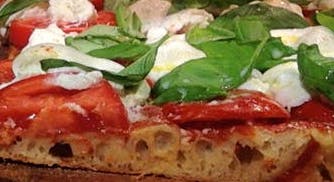
“I truly believe that if you go to Rome and have a bad meal, you should go home. And cancel your passport.” John told the audience. “Roman food is very basic, “ he continued. Rome was a peasant city, unlike the merchant and trade cities of Venice and Florence. A basic meal in Rome includes “A little cheese, some bread, tomatoes, and some pork. What they have is very tasty. Nothing fancy and it all goes great with wine. Roman pizza is fantastic, and they don’t burn it. They have some of the best gelato in Italy. I believe firmly that you should have gelato with every meal. The coffee is amazing and how it is made is like a state secret. Gain some weight. Your carry-on luggage should be in your stomach,” said John with a smile.

Rome is very special. Very few cities in the world can claim to have been the head of a vast empire and continue today with significant power. According to John, traveling to Rome must be experienced not merely observed. “Pick a hotel you’ve never heard of, without reward points, and be a part of the old city,” He explained that the experience of staying in a family-run hotel typically comes with great breakfasts and will better immerse the traveler in the city’s culture and people. He recommended staying in the areas of Piazza Navona, Campa Fiori, and the Pantheon.
Upon arrival, John suggested experiencing the Piazza Navona. There, while awaiting hotel check-in, John recommends people watching and getting into the flow of the city. See how the Romans move about and carry on in their daily lives. The Piazza is on the site of the old race track. “Hang out. Have a coffee, a beer, whatever you want and spend some time there. It is a beautiful space, it is open and at night it is very atmospheric. It has a gorgeous fountain in the middle, this Fountain was a comeback piece for Bernini, the Fountain of the Four Rivers. Each statue represents one of the four major rivers – Danube, Ganges, Nile, and Rio de la Plata of South America,” John told his guests and continued, “Rest up at the Piazza because dinner in Rome starts at 11 PM.”
Just to set the perspective of vastness, the Coliseum held 50,000 people. The Horse Races held 350,000. Piazza Navona is enormous. “At night, it is very romantic,” said John.

Image curtesy of John Daum
To set the scope and scale of the city of Rome within its historic context, John told us that at its peak, one million people lived in Rome. There were 60 million people under the Roman Empire. The Empire covered from England across Europe, to Africa, and the Middle East. It was vast and advanced
From his energetic and enlightening lecture, there were three take-aways (with much sub texts): The food is great; there are three very special and off-tourist adventures to take in; and water was very important during the Roman Empire and many of the edifices remain today.

San Clemente Basilica 
Behind the door and down the stairs… 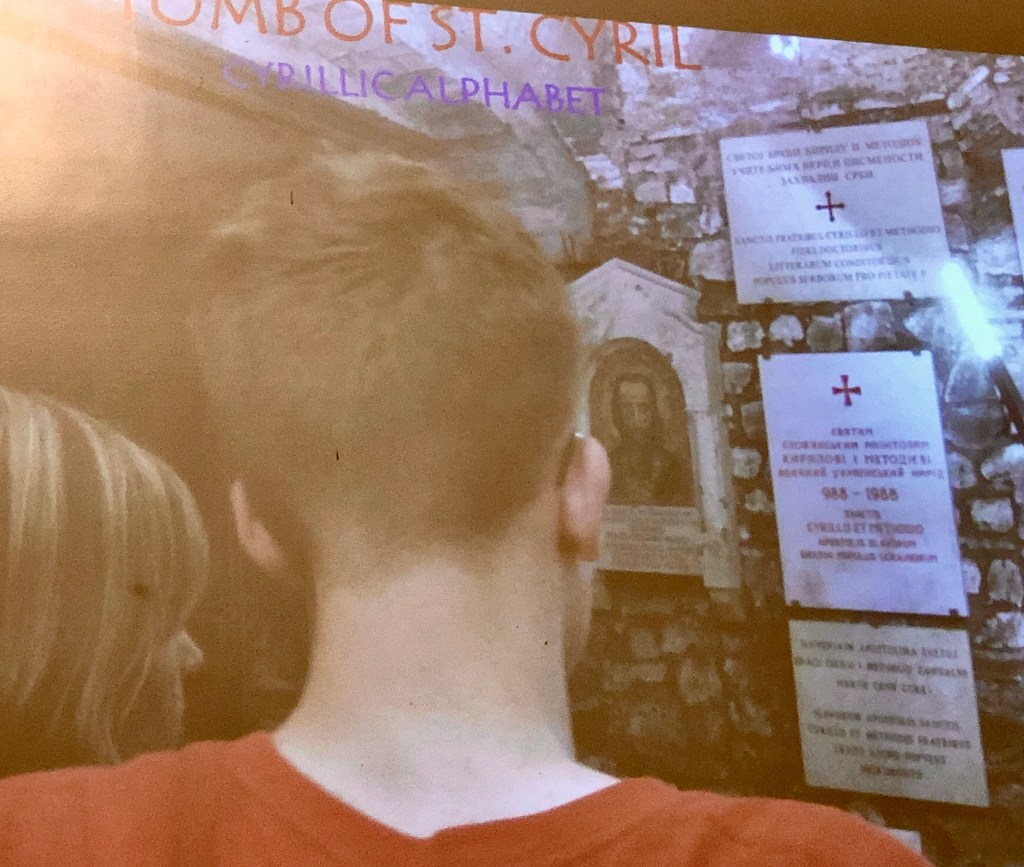
Tomb of St. Cyril 
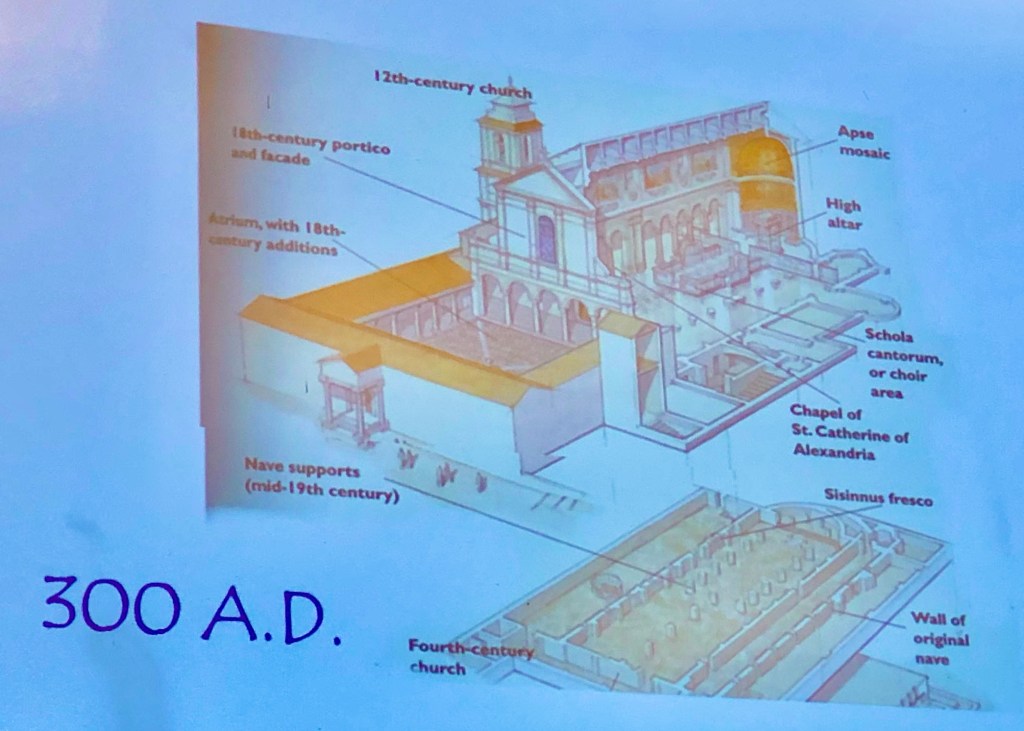
Image curtesy of John Daum
Thousands of people visit the Coliseum daily, the San Clemente Basilica, the first of the three important structures, is just beyond it but gets few visitors. It holds the doorway and stairs to nearly 2000 years of Roman history. You can find yourself standing and walking on the original Romans streets of 100 AD. The present basilica is from the 1100’s and not that old relative to the Roman timeline. There are beautiful mosaics and frescoes. Admission is free. The real story and interest comes from the Normans who invaded Rome and burned the church. Below the floor of the 1100’s church, the original church dating to 300 AD unearthed. It had been burned and buried. “Today, you can visit this, one of the oldest churches in Rome for about 2 Euro, go down 2 flights of stairs and go back in time 800 years. Suddenly the church from the year 300 AD appears. It is dark, dank, and creepy – the tomb of Saint Cyril is just beyond a side door,“ John told the spellbound audience. “Then there is another set of stairs to a room dating to 100 AD on the original street in ancient Rome. It is surreal and otherworldly. Get lost in time,” he continued. Time travel from the 21st Century to the 1100’s to 300 AD and then to 100 AD for just 2 Euro!
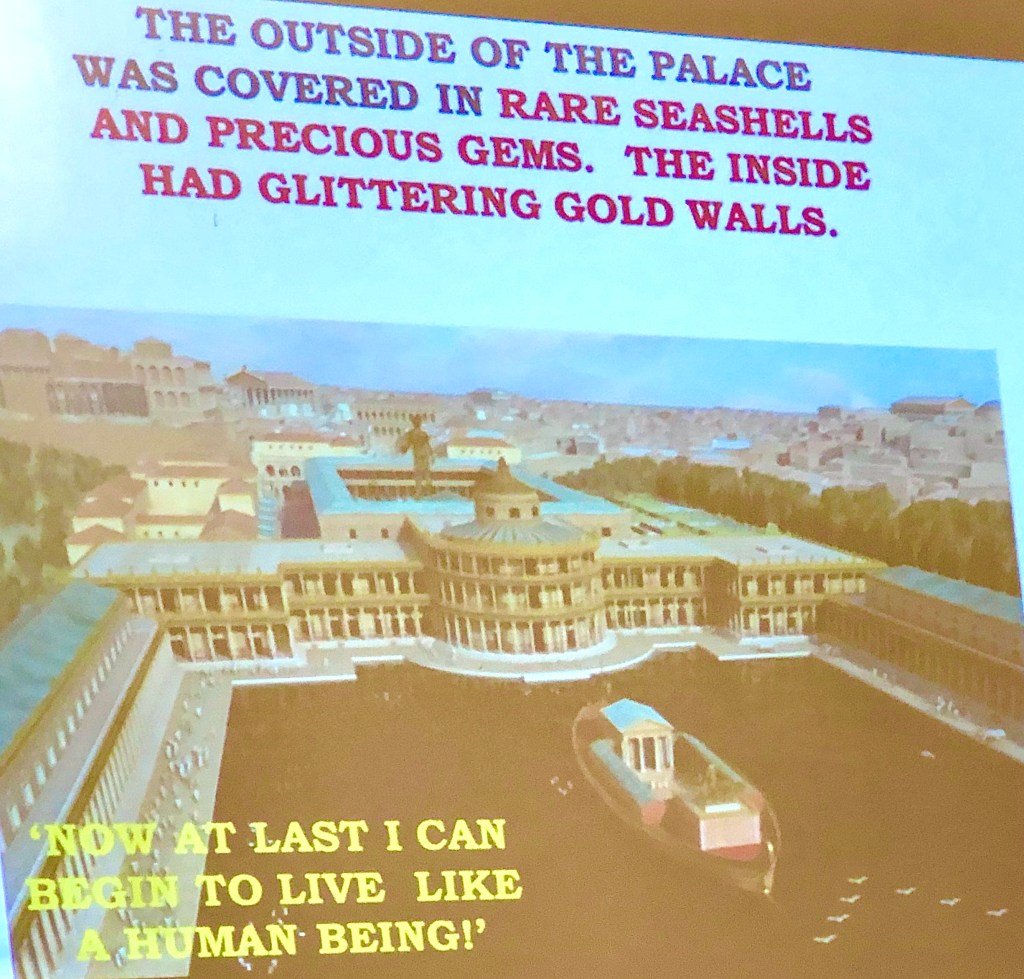
Image Curtesy of John Daum

The Race Track Held 350,000 spectators 
Inside the Domus Aurea
Hard Hat Zone
John putting it in perspective 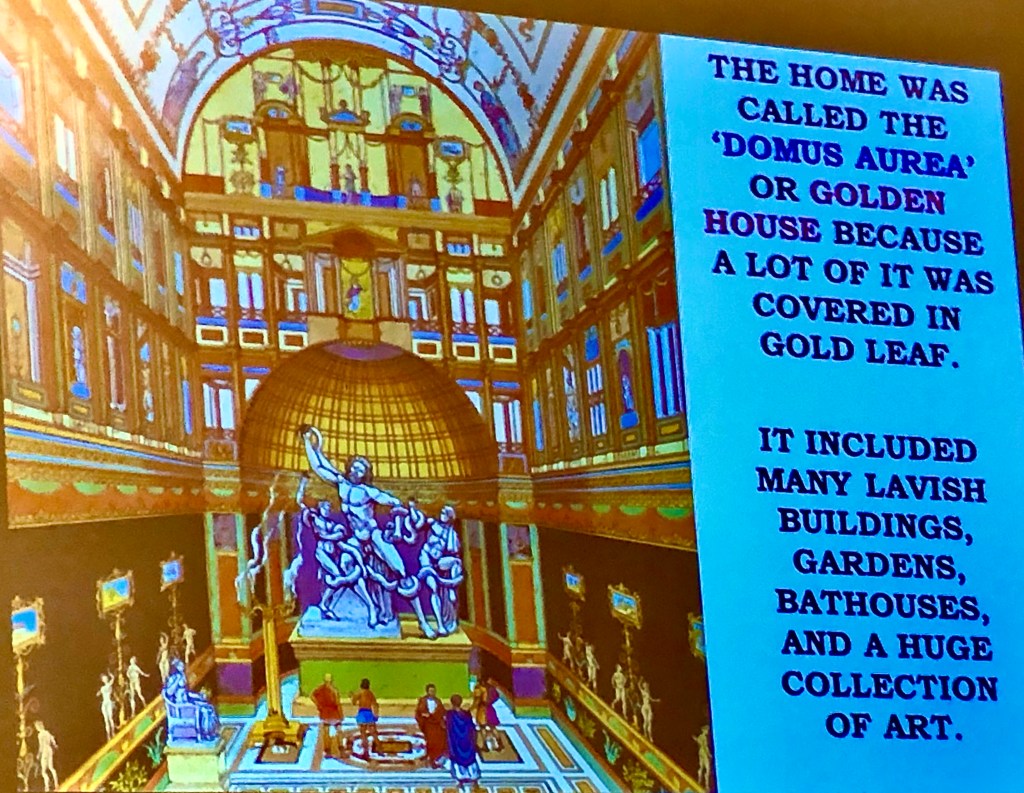
The second extraordinary place to visit is Emperor Nero’s golden palace, Domus Aurea. “Nero fiddled while Rome burned,” is a popular legend and not fact. However, as a result of the Great Fire of 64 AD that destroyed a large section of the city, Nero appropriated the lands of the burned properties for himself and constructed an opulent golden palace complete with a lake. The walls and ceilings were covered in gold, gems, ivory, and shells. After his death, the palace was buried and covered over for centuries. Six hundred years ago, the palace was discovered when a young Roman fell through a cleft in a hillside and found himself in a strange cave filled with painted figures. Raphael and Michelangelo went below to study the art that helped shape the artistic direction of the Renaissance. Today, certain sections have been secured and tours are possible. Hard hats are required. “Hard hats make the kids more excited about the tour,” said John.
After the Domus Aurea was buried, the Coliseum was built on top of Nero’s lake. It was an engineering feat to secure the massive building which remains today.

Images curtesy of John Daum
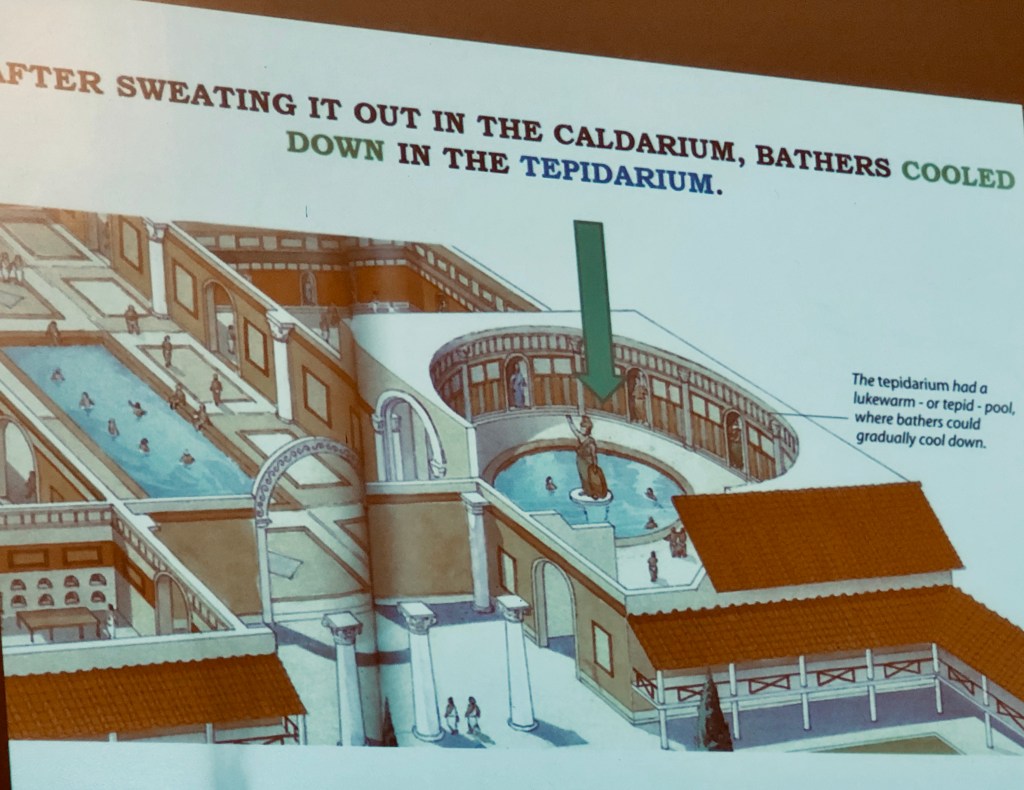
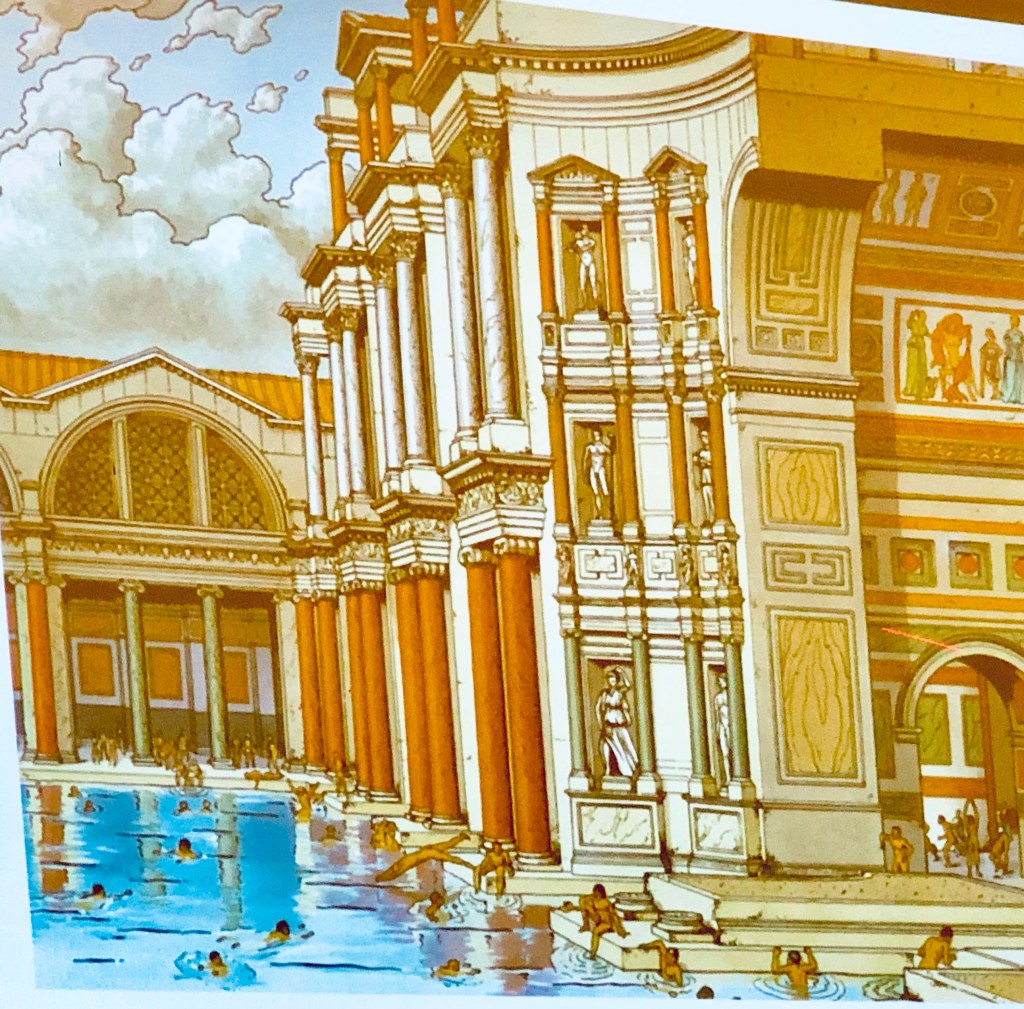
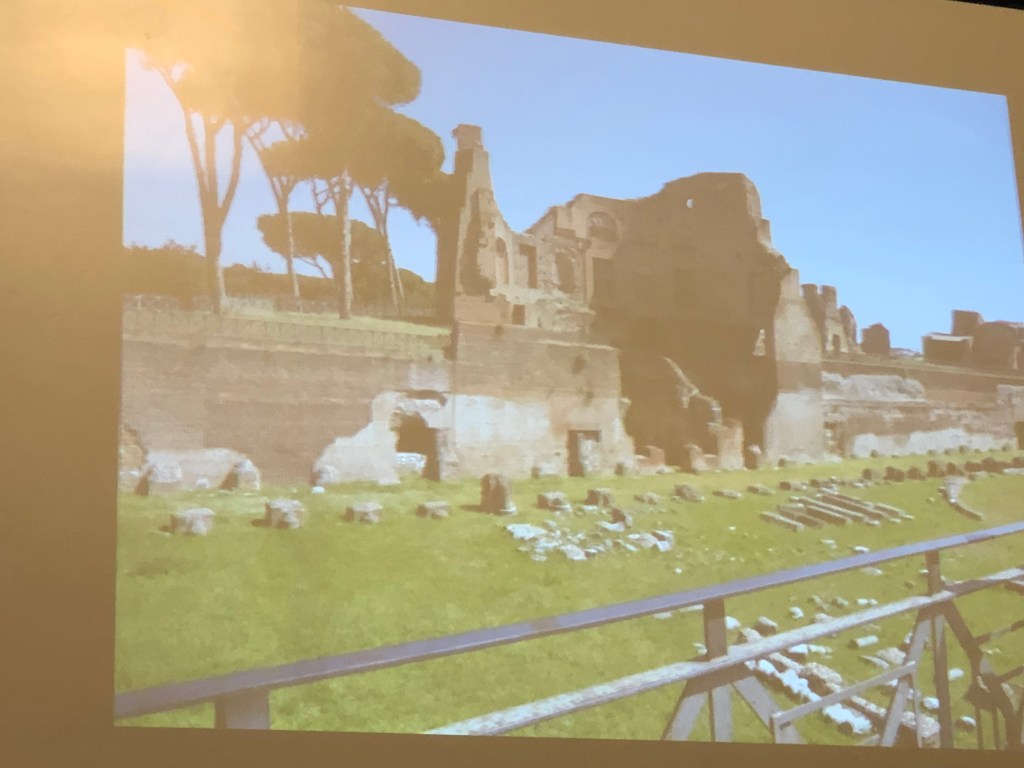
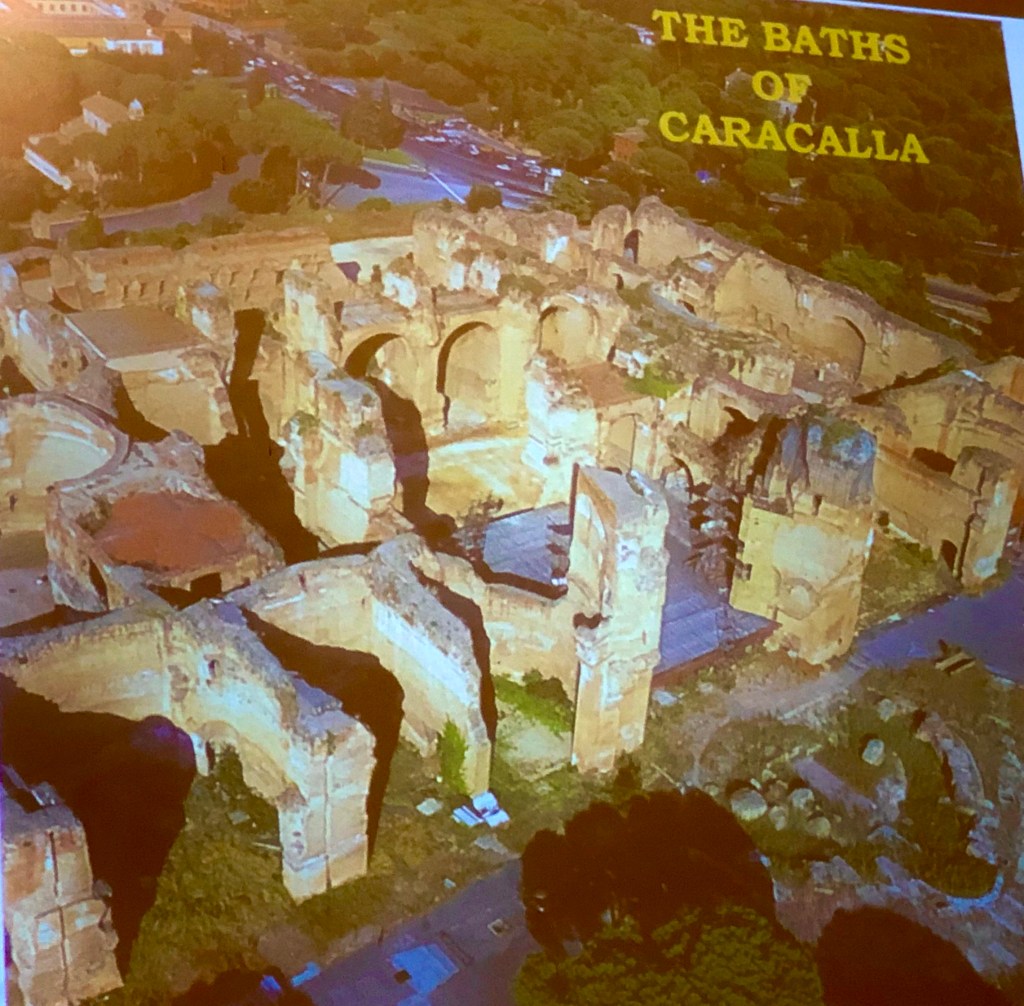
The third important place is the Baths of Caracalla. “Remember the Three Tenors performance? They performed there,” John reminded the audience. This was a bath house for the people of Rome to enjoy. “This is the true genius of Roman architecture and building. Their engineering of the water systems, the heating system, the architectural scope, and the breadth and sheer expanse of the structure,” John said. These baths were designed not merely to clean the population. They were designed and equipped with gymnasiums, swimming pools, hot and cold; locker rooms, library, conference rooms, lounging rooms, and other luxuries. They were free to the public of Rome. This area provided physical exercise, intellectual opportunities, and entertainment. The goal was not entirely benevolent. The ruling class knew that happy citizens do not rise up and revolt.


Images curtesy of John Daum
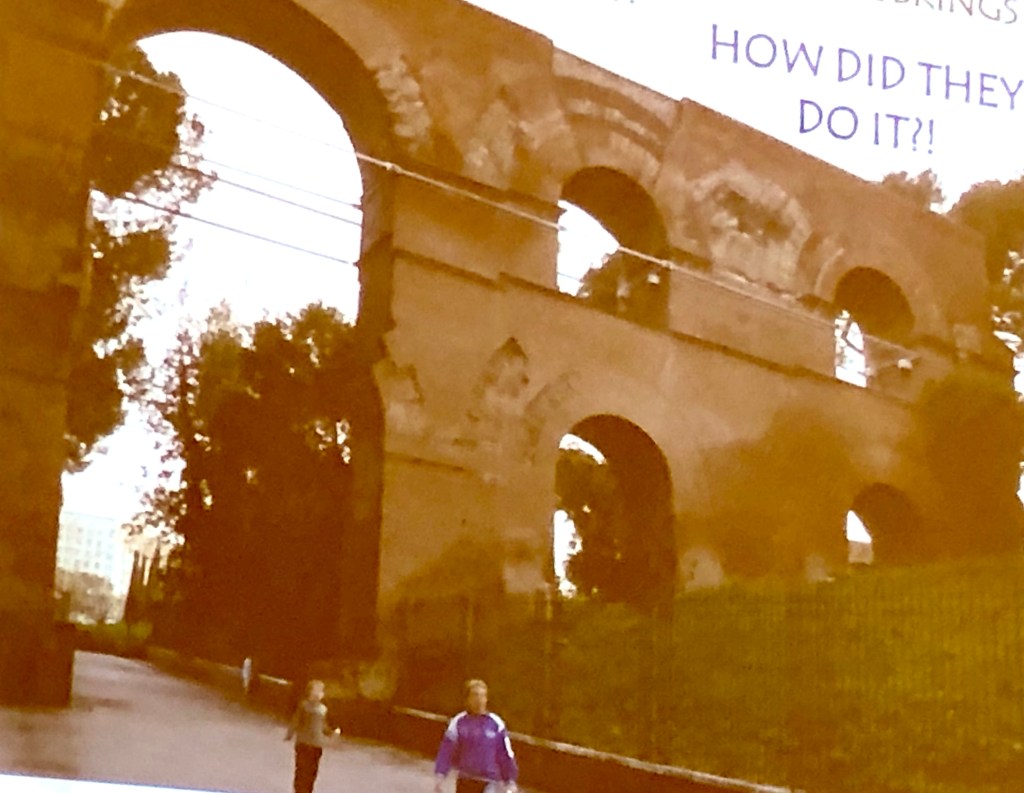
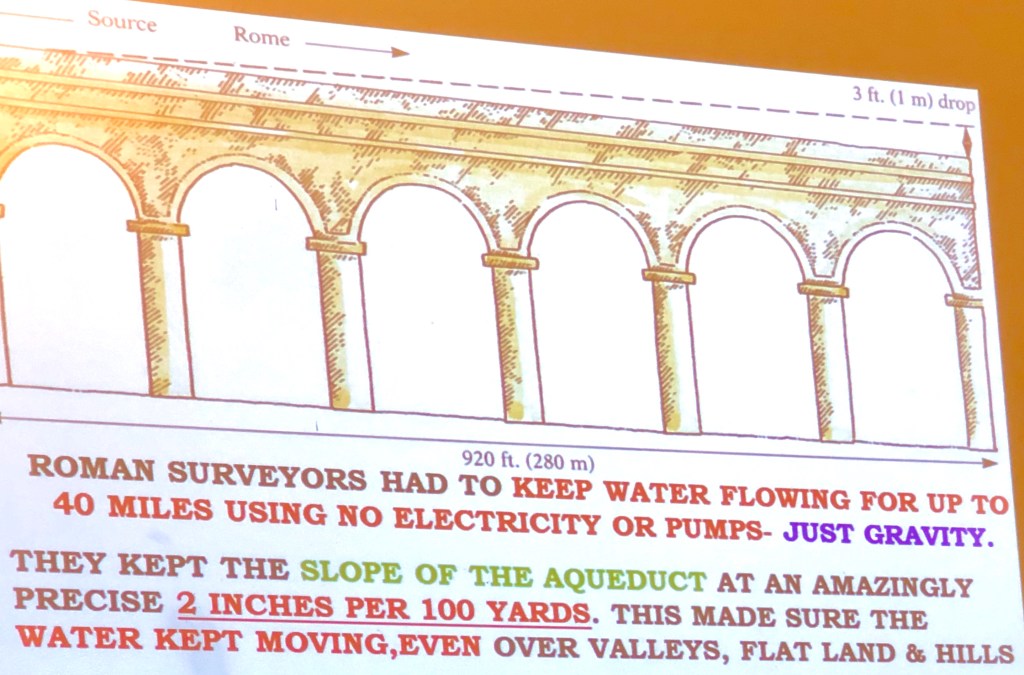
Water was very important to the Empire and to the city. Romans brought in 250 million gallons of water per day. The engineering was amazing. This was done all over the Empire. They did it with aqueducts carrying water by gravity alone. Contrary to popular belief, aqueducts were not above ground but underground to limit evaporation and keep the water cold. The water flowed throughout the Empire. Topography dictated the placement of the arcades, the above ground systems, what we think of as aqueducts. The aqueducts supplied the baths, latrines, fountains, and households.
Because water was considered critical to the survival of the city, fountains were constructed throughout the city. Many of the fountains remain. One of the most famous is the Fountain of Trevi. However, there are many beautiful fountains to enjoy that are less crowded.

Image curtesy of John Daum
“Visit the mosaic workshop to make your own souvenir. Once you try to do it, when you later see mosaics in a church, you will have a new appreciation,” stressed John. He emphasized the value of handmade souvenirs rather than buying them.

Photo credit: Jon Henkel
John referred to Rome as a “layer cake.” There are many layers under the city to be discovered. Best not to try to do it all in a single visit. After all, Rome wasn’t built in a day. And . . all roads lead to Rome. So, when in Rome, do as the Romans do. Eat, drink, explore, observe, immerse yourself. Let the city, its people, the food, and the art architecture touch your soul.
Buon Appetito!
 Good News. Reviews. Events.