
“Musical Gardening” at the Strathmore Music Center
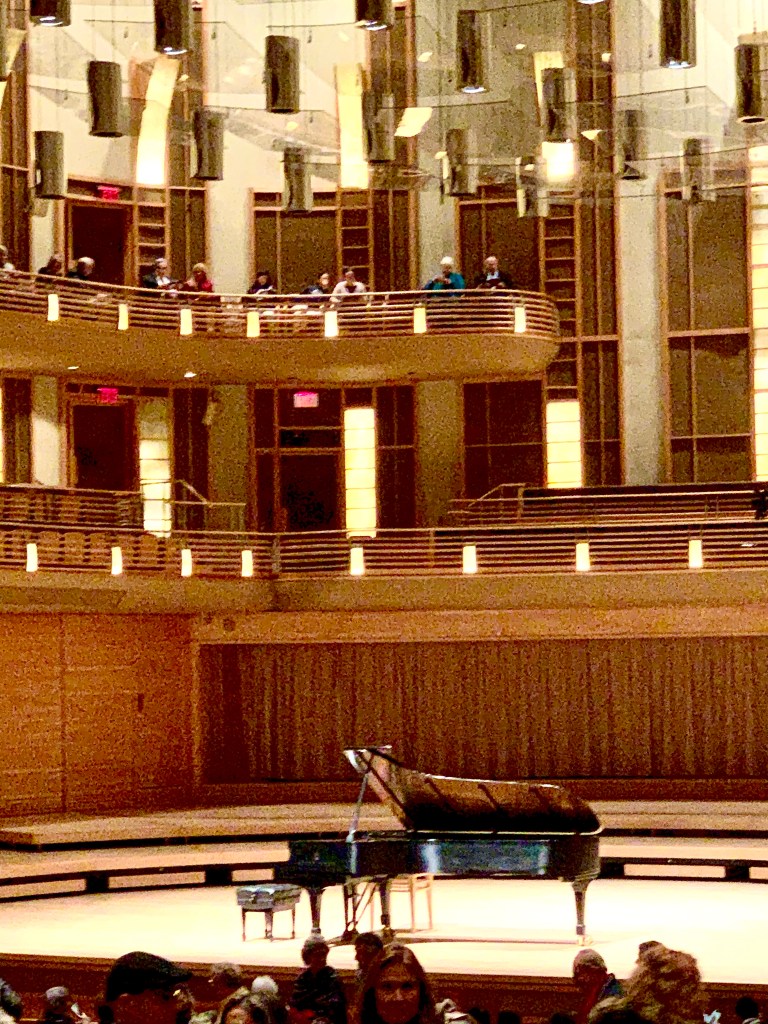
The black Steinway – D Concert Grand Piano dominated the stage. The audience filed into their seats. There was energy and anticipation at the Strathmore Music Center in Bethesda, Maryland. Pianist, Brian Ganz, would soon take the stage and awaken the piano.
Brian Ganz, is passionate. Ganz, a world renowned, Loudoun County Virginia, based classical pianist on the quest to play every note of every composition that Frederic Chopin composed. The 250 works composed by Chopin technically total 18 hours of music. However, the process of interpreting, learning, and refining performances is time and energy intensive therefore, Brian is on a 15-year plan. On Saturday, February 1, Ganz presented his tenth Chopin recital at Strathmore in collaboration with the National Philharmonic, Piotr Gajewski, Music Director and Conductor.
A hush fell over the audience when Ganz took the stage. He sat down at the piano and simply began to play six of Chopin’s Mazurkas. His interpretation and execution are clear, precise, unaffected, and emotionally charged. Mazurkas are compositions based on Polish folk dances and during Chopin’s time signaled ideas of nationalism.

Photo: Jay Mallin
When he concluded the Mazurkas, Brian addressed the audience, “I am using the metaphor of Musical Gardening. The early works of Chopin contain seeds of his genius, later ones demonstrate the full flowering of that genius. Musical gardening is a paradigm that I thought useful to demonstrate the growth of Chopin’s genius. Tonight, the entire recital is devoted to musical gardening. You will hear musical works that Chopin chose not to publish and I invite you to listen inquiringly – where are the flashes of genius and where are the seeds?“
Brian explained that Chopin only published the works that he considered worthy. Chopin’s deathbed orders to his sister were that all unpublished manuscripts be destroyed, “We have his dear sister, Ludwika , to thank for knowing that not all deathbed wishes should be honored. They salvaged a treasure trove of music. Op 66 – Fantasy Impromptu – can you imagine a world without a Fantasy Impromptu? Neither can I. Tonight the works in the Opus 70s are early works that he chose not to publish. We will listen for the sprouts then watch them grow. There are five genres of music for the evening. The mazurkas are one. I will let the music speak for itself.”
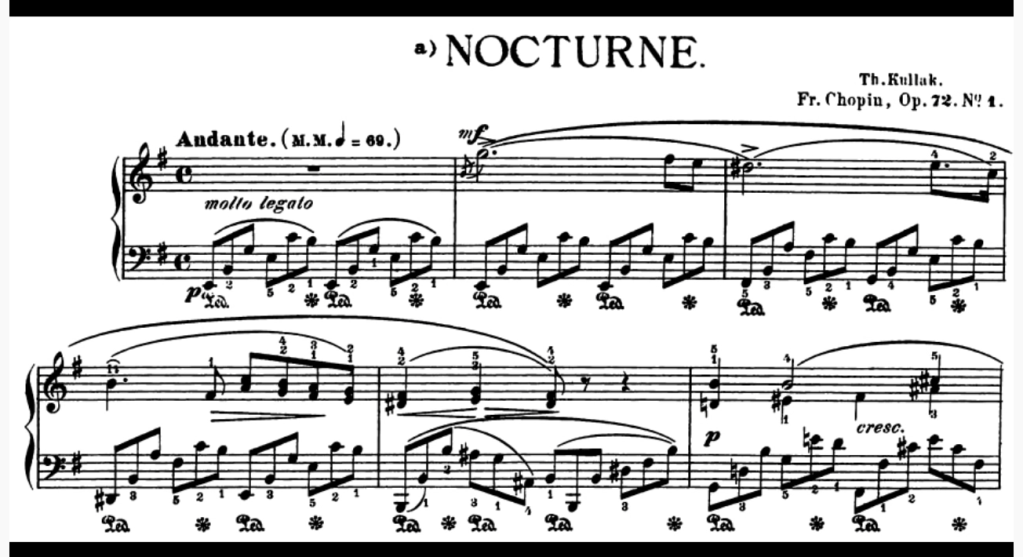
The Nocturns – an early Op. 72 and later Op. 27, both deal with the subject of grief, loss acceptance and ultimately transcendence. When he was 17, the family lost his younger sister, Emelia. We hear a very elegant expression of his grief. His story-telling powers are clearly budding but they have not yet sprouted. In OP 27 C# minor, he struggles with grief then gives a wide ranging story, then a wide array of emotions of acceptance, but to transcend grief he returns to it deeper. Exactly what he does is the music of acceptance and tenderness. In the second Nocturne there is acceptance and blue skies. I invite you to listen to climax then the most brilliant ray of musical sunshine ever composed for the piano. See if you can not only hear, but see that ray of sunshine.”
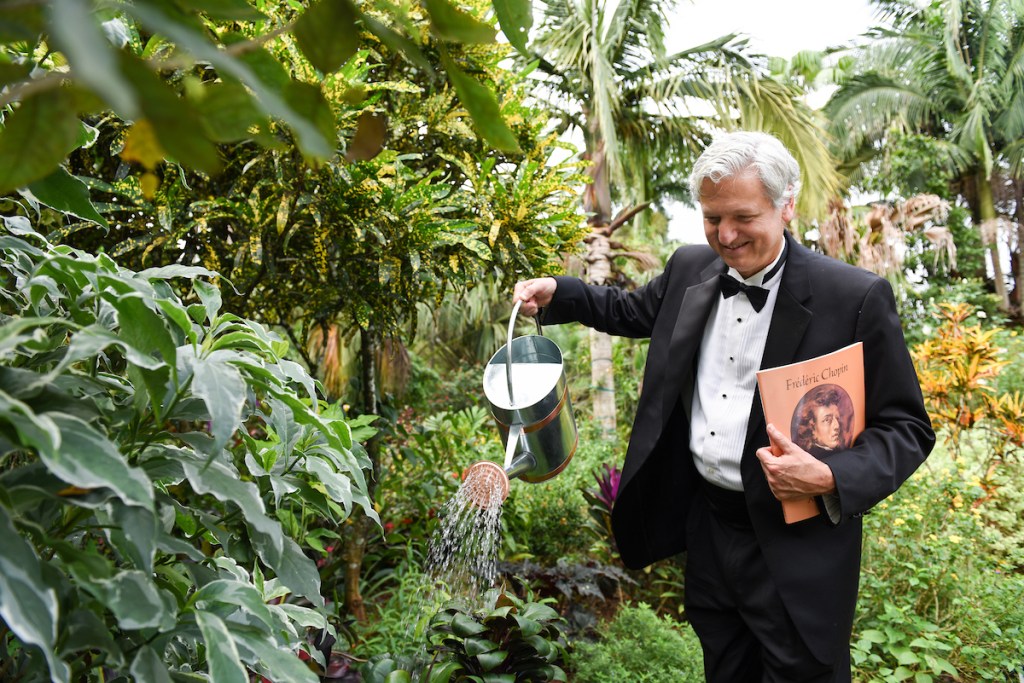
photo: Christina Mendenhall
As Brian began to play Nocturne in E minor OP. 27, the rolling “waves” of consuming grief struck. Suddenly, tears streamed down my cheeks landing on my black velvet jacket. Where did that come from? It occurred to me that Brian’s performance is highly personal. When he spoke and when he played it was as though it were just to me. Like Chopin, he is a master at communicating from the heart.
The next National Philharmonic concert will be Black Classical Musical Pioneers on February 22 at Strathmore Music Center.
 Good News. Reviews. Events.