
An Evening with the Chamber Dance Project

Mariah Miranda Photography, courtesy of Chamber Dance Project
Dancers breeze through space as though on wings. Creativity of motion, shape, and energy captivates the audience. Just as important as the dance are the costumes. They are often taken for granted because they are so carefully integrated into the production that they become one. However, it is costuming that punctuates the effect of space, shape, and movement.
On February 11, Bekah Nettekoven Tello, Costume Designer and Wardrobe Master, of the Chamber Dance Project, shared her creative process in colorizing and texturizing dance for the company. “Costume Design for the Dance,” a part of Chamber Dance Project’s “Evening with the Artist Series,” brought an intimate look at the creative process of costuming.
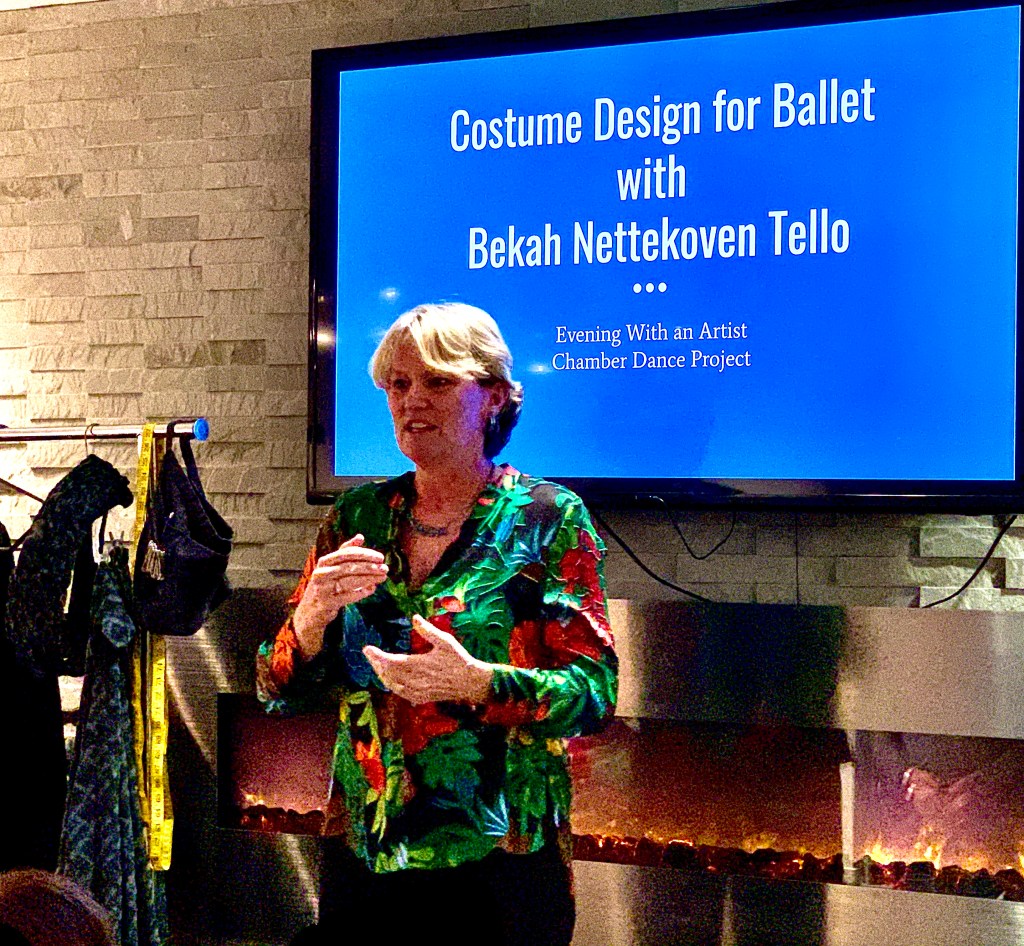
Diane Coburn Bruning, Founder and Artistic Director, introduced Bekah, “She runs our whole wardrobe department.” She went on to welcome the guests to the first of three “Get Closer to the Art” events for friends and members of the Company.
Bekah asked the audience for questions regarding costume creating. “Why don’t seams ever split?” was one question. Another was about the engineering of the garments for movement. Bekah addressed those and many other very interesting aspects of the process.
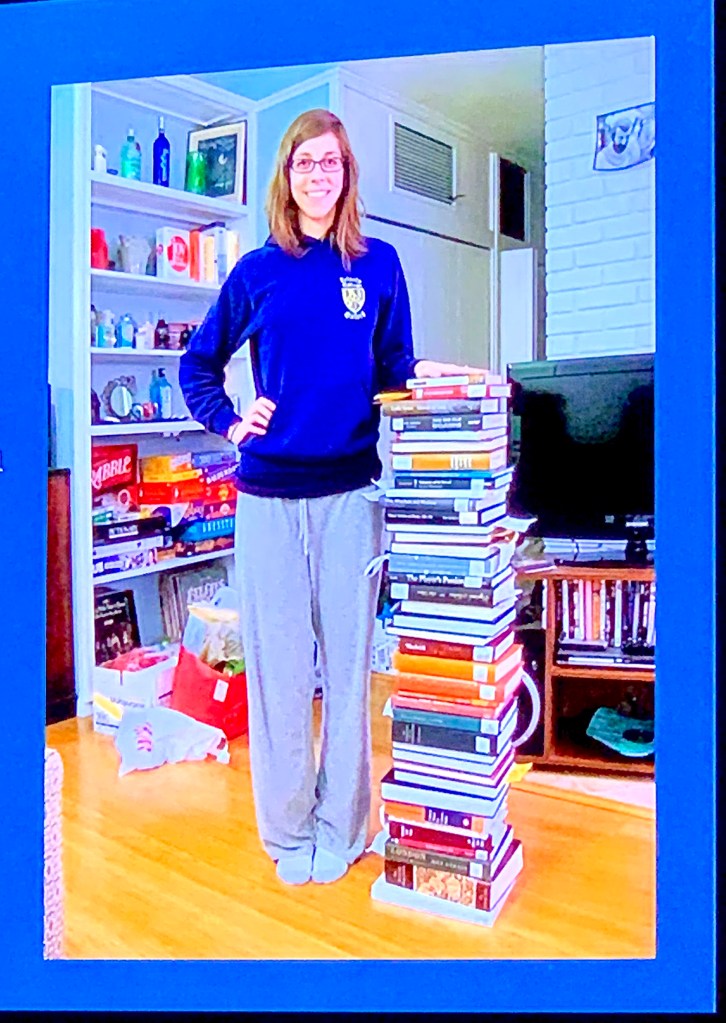
Image curtesy of Bekah Nettekoven Tello and Chamber Dance Project
“Costumes sometimes precede choreography. We work to convey the ideas and imagination of the artistic director to the costume. Part of the designer’s job is to address the choreographer’s vision of movement,” said Bekah. “We communicate visually with costuming. Seams sometime split,” she continued. With an undergraduate degree in Comprehensive Theater and a master’s degree in Theater History and Literary Criticism, her passions have merged into the creative process of dressing dancers. Before joining the Chamber Dance Project, Bekah worked in costume design with the Washington Ballet and the Shakespeare Theater.
From her early childhood, Bekah has been passionate about theater. She merged her passions for theater and “thrifting” in her profession. “My love of thrifting is one of the reasons I have wound up on costume design. I have always loved thrift stores. Thrifting has helped me to learn to see color, texture, and patters better. The best thrift stores are not organized. What makes this good is that you can see colors and textures and patterns up against each other that no one would ever think to put together. It gives information. They also give information about other cultures. I get ideas that have helped me expand some of the ways that I design costumes and some of the problems I have had to solve.”


Images curtesy of Nettekoven Tello and Chamber Dance Project
What makes a costuming project exciting? “I love the research. When I start a design project, after initial conversations, I love to dive into the research,” she said. Part of the research includes how the movement and physicality is addressed. She explained that costuming for theater and dance is a very different process, “What I love about dance, because of the movement, not that you can’t be precise, there is a whole lot more physical demands on the costume but at the same time there much more freedom to move and work with the fabrics and patterning in a different way. I have learned so much from the costume shop here as well as from the Washington Ballet. It is such a privilege to be here at Chamber Dance Project.”

Image curtesy of Bekah Nettekoven Tello and Chamber Dance Project
Bekah took the audience on a journey of costuming ideas through brilliant slides of dance and costume challenges. “Lampshade or hat?” she asked. She has converted sweaters to pants and blankets into dresses. She explained that with the advent of new fabrics, choreography has changed and expanded ranges of motion. Shape, movement, partnering, quick changes, are just some of the design considerations.
In creating costuming, there are two options, create and build or buy and adapt. Both test the designer’s creativity. In addition to the creative process, the financial and business aspects play important roles in decision making.
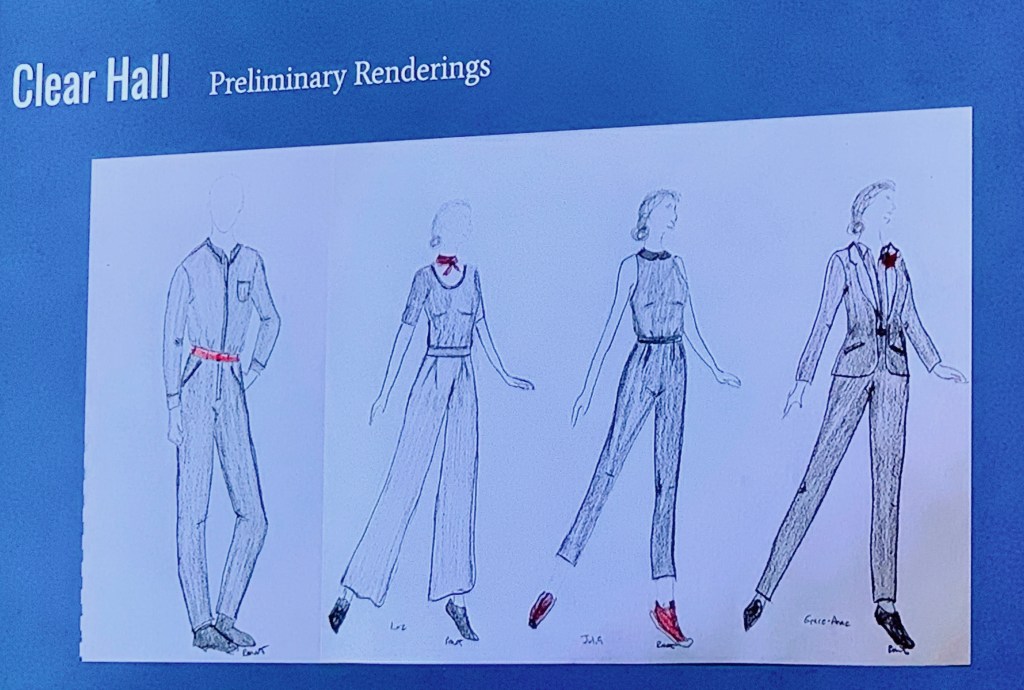
Image curtesy of Bekah Nettekoven Tello and Chamber Dance Project
The audience engaged in a mock costume shopping exercise. We shopped for garments for male and female dancers in shades of gray. Decisions of the types of red accents were discussed. The specific dancers’ measurements were shared. We took to our smartphones to try to procure the items. Key considerations were price, available quantities, textures, fabric cleanability, available sizes, return policies, comparison with the sketches, and speed of delivery. Products located included blouses, red mesh sneakers, black jazz shoes, men’s button shirt, red belt, and ladies’ cropped trousers.
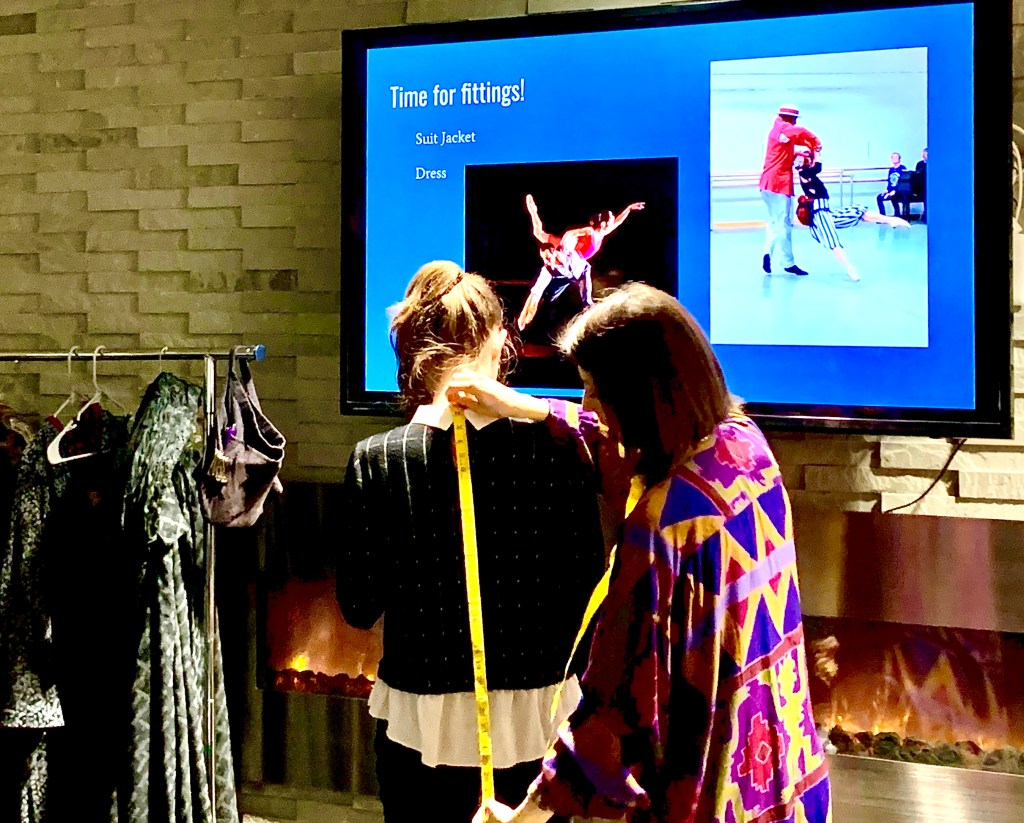

The planning, coordination, and execution of a single costume can be daunting. Multiply that by 16 dancers, nine choreographies , and 18 performances. The task, to the lay person, suddenly becomes overwhelming. Bekah takes the design process in stride with thorough planning, research, and timing.
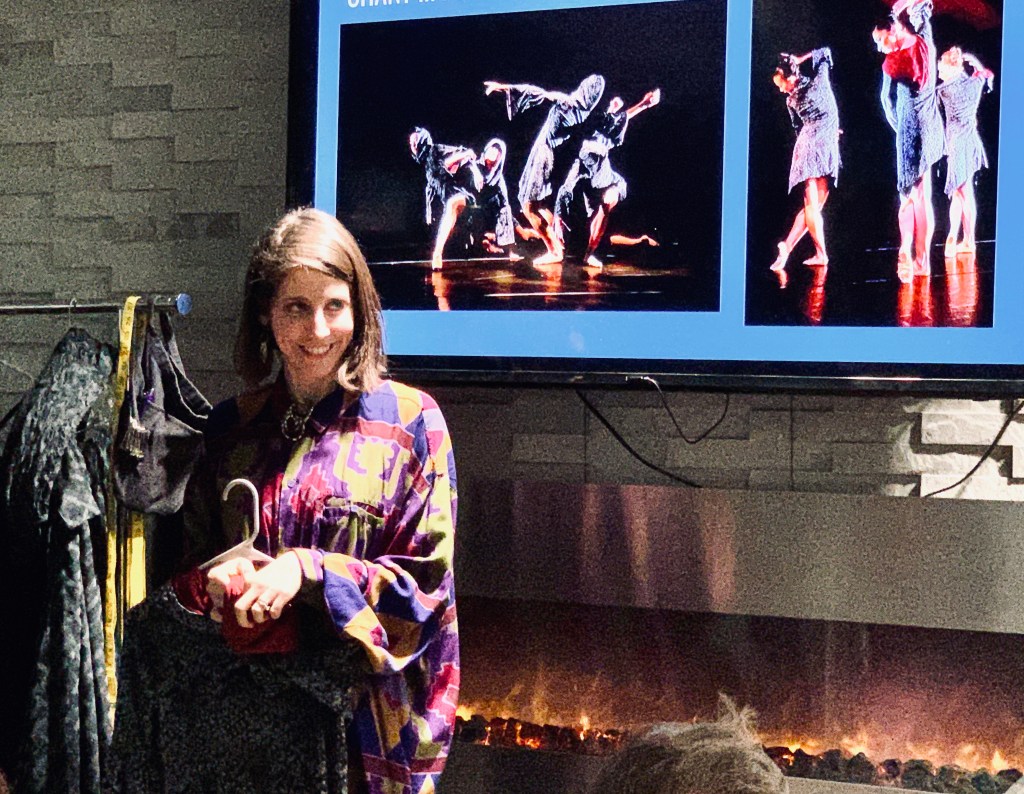

The costuming process involves many stages. These stages include conversations, research, creating image boards, swatching fabrics, watching choreography and rehearsals, renderings, modifications, and fittings while always keeping detailed notes. A key is to always keep alive the vision conversation.
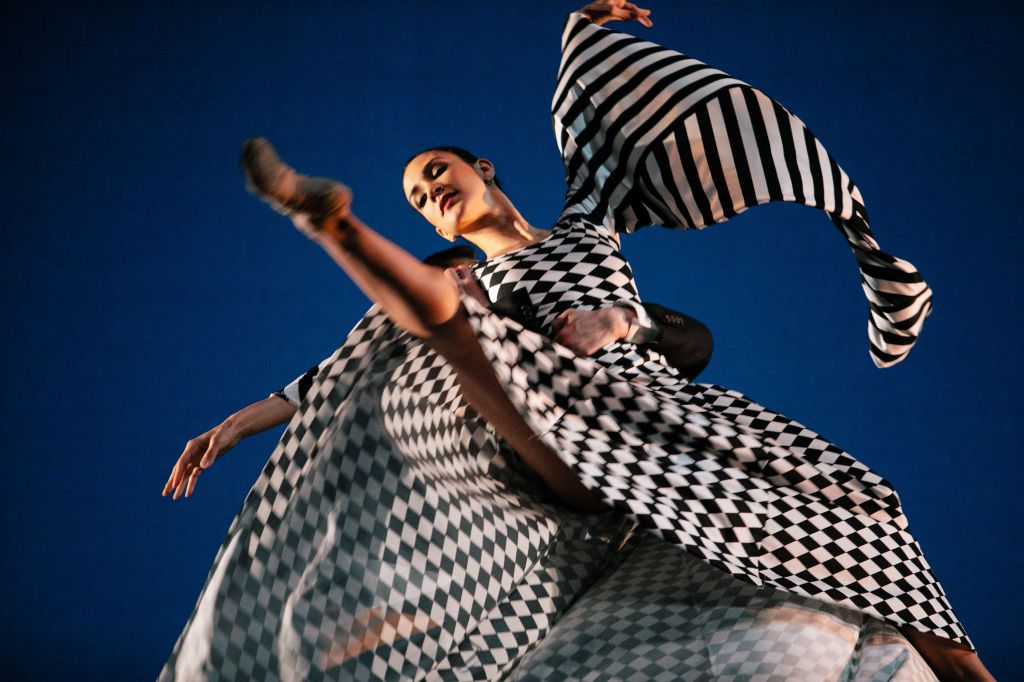
movement, shape, and texture of the choreography
photo curtesy of Chamber Dance Project
The Chamber Dance Project was founded by Diane Coburn Bruning with the mission to “… create extraordinary and personal experiences in contemporary ballet with live music.” They perform in collaboration with live musicians. They have a busy and engaging season which includes conversations, a Gala, and an ambitious performance season. Please visit their website for details and to buy your tickets.
 Good News. Reviews. Events.