Virginia National Ballet’s Nutcracker:

A Study in Balance and Intention
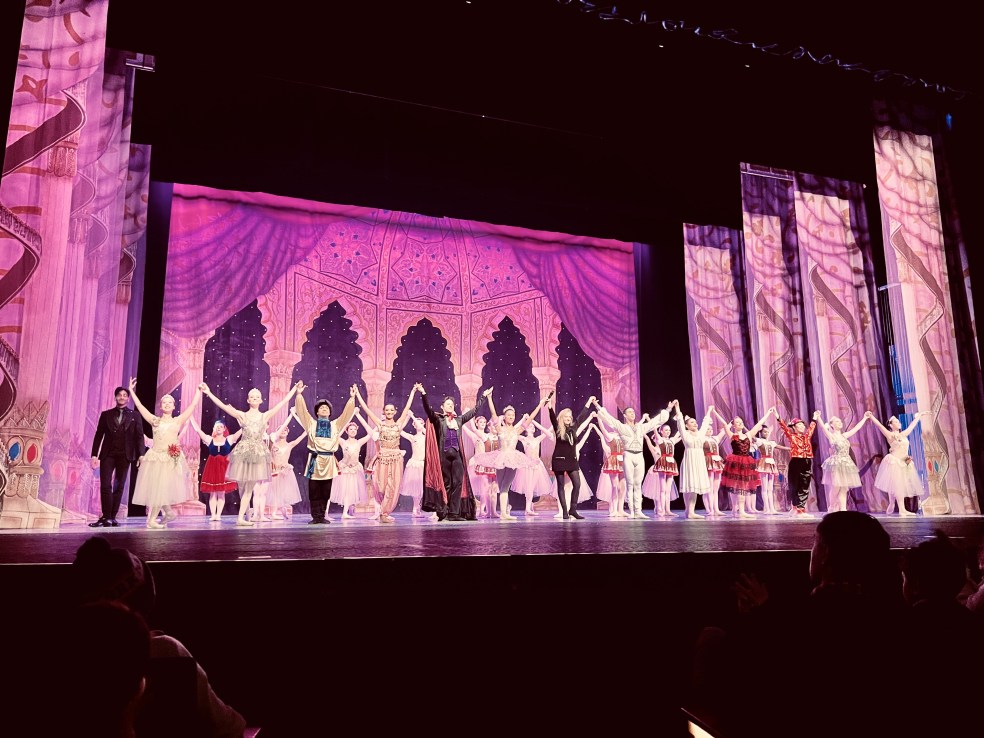
Virginia National Ballet brought heart, warmth, and brilliant dance to Capital One Hall. PC: Krasi Henkel

Mastery, Restraint, and Courage Silenced the Full House

Having attended countless productions of The Nutcracker, I could live happily without another one. Yet Virginia National Ballet made me reconsider my conviction. I attended this performance because I love these dancers and this company. I arrived not seeking novelty or nostalgia, but prepared to watch for creativity, interpretation, and intention.

What unfolded was a joyful celebration of the art of ballet. Correct, energizing, and clean.

Character interpretation and presentation were classical yet carried subtle twists. I caught myself thinking, “How understated, and how clever . . .” This Nutcracker was offered with nuance and a luxurious license to entertain, without tipping into excess or spectacle for its own sake. Lightness was mastery. From the houseguests to the naughty boys, from the magical uncle to the presented toys, the opening scene was effervescent.
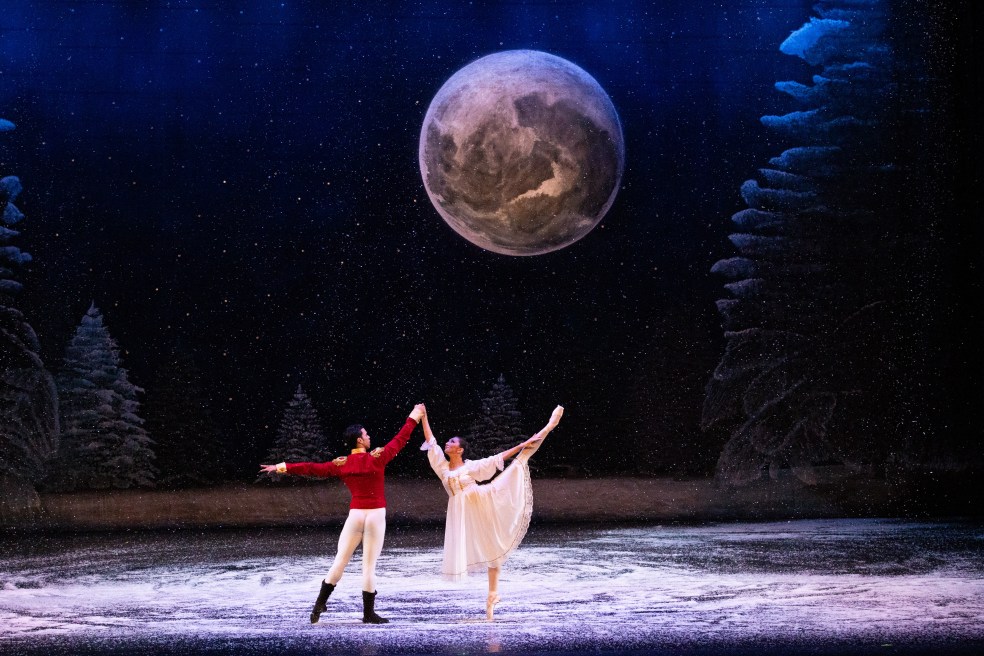
Snow, the ethereal scene – photo by Dave Pearson

The sets were creative, economical, and effective. There was just enough and nothing fussy.

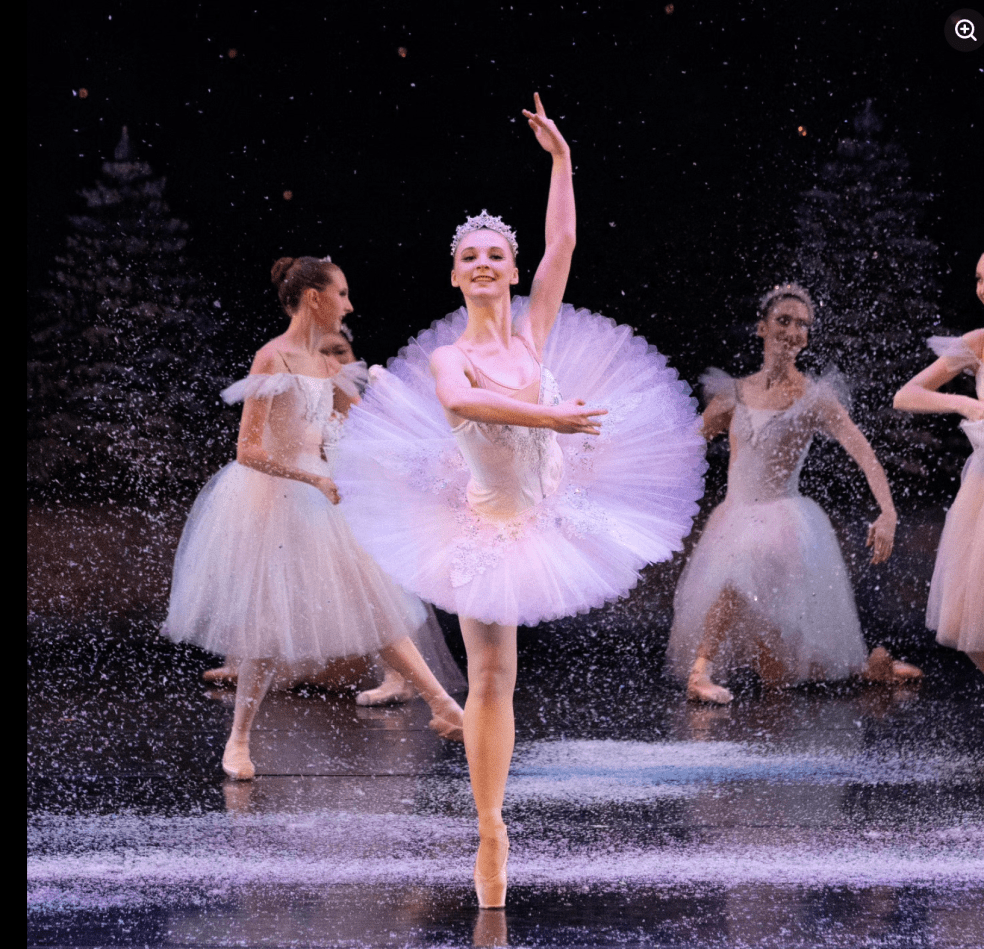
Clara’s princess tutu was debuted for this production. From my seat, it evoked spun sugar. Combined with her elegant technique and storytelling, she set the standard for excellence throughout the production.

Princess Clara’s new tutu demonstrates attention to every detail. Photo by Krasi Henkel

From sparkles to snowflakes, the performance delivered masterful artistry, complete storytelling, and thoughtful structure. Nothing lingered too long. Nothing asked for attention it had not earned. What distinguished this production most clearly was courage in choice.
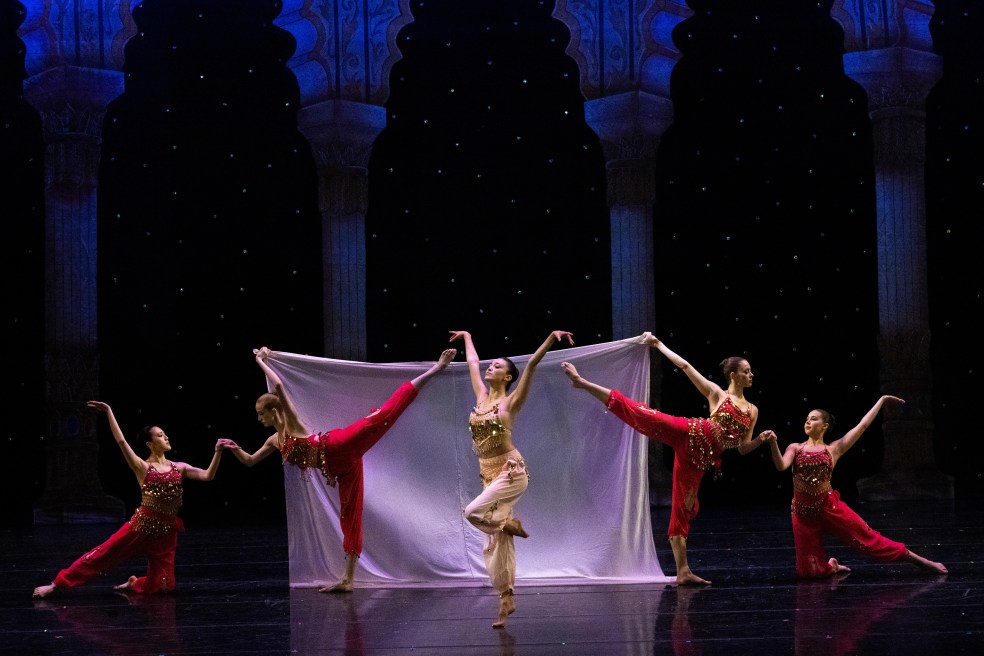
Arabian Scene photo by Dave Pearson

The Arabian scene was performed barefoot – no pointe shoes. That was a new twist in my experience and yet it felt authentic. A singular square of fabric defined the space, evoking a desert tent. Color and costume fused movement with intrigue. The barefooted ballerinas changed the atmosphere of the room. Their freedom from constraint allowed grounded power and presence to take center stage. This was intentional vulnerability.
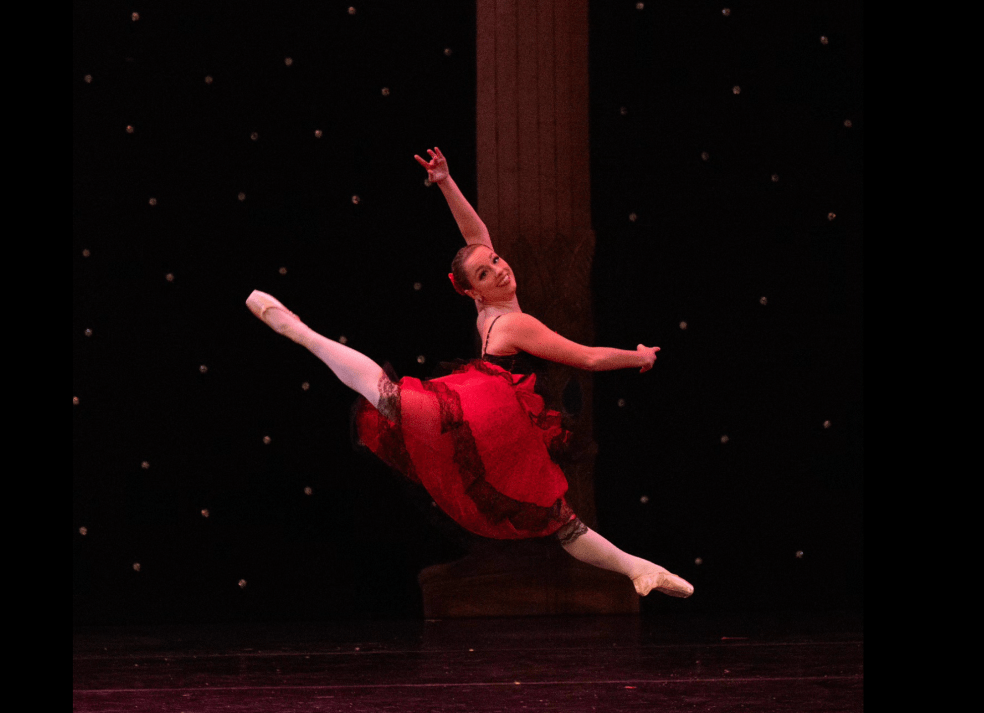
Spanish Scene Photo by Dave Pearson

That same intelligence appeared throughout the production. A single dancer, Alexa Glomp, performed the Spanish variation on the very large stage. Although petite, she filled the stage with power, artistry, and enthusiasm. Her presence carried the moment.
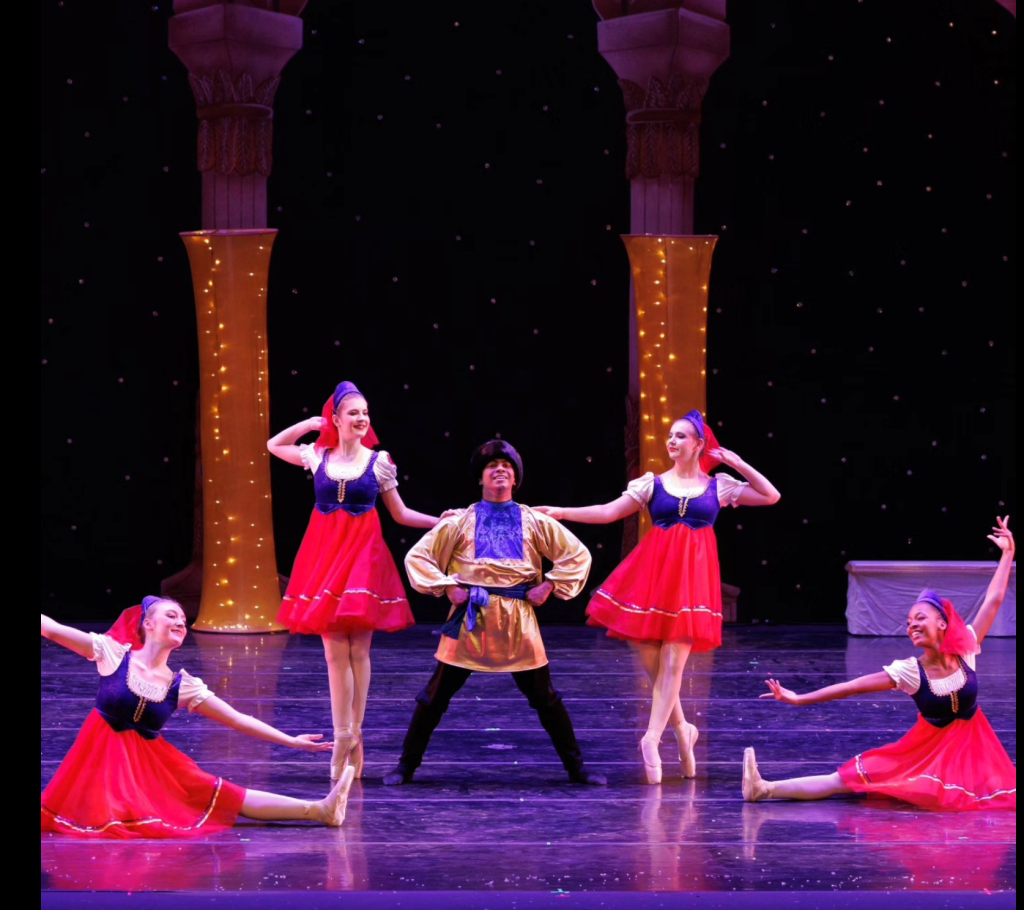
Trepak scene – Photo by Dave Pearson

The Eastern European influence in costume and of course, music set the Trepak scene. The soloist’s choreography was delightfully modern from gravity-defying leaps to spins, and even a nod to break dancing. It brought freshness to a stereotyped musical score.
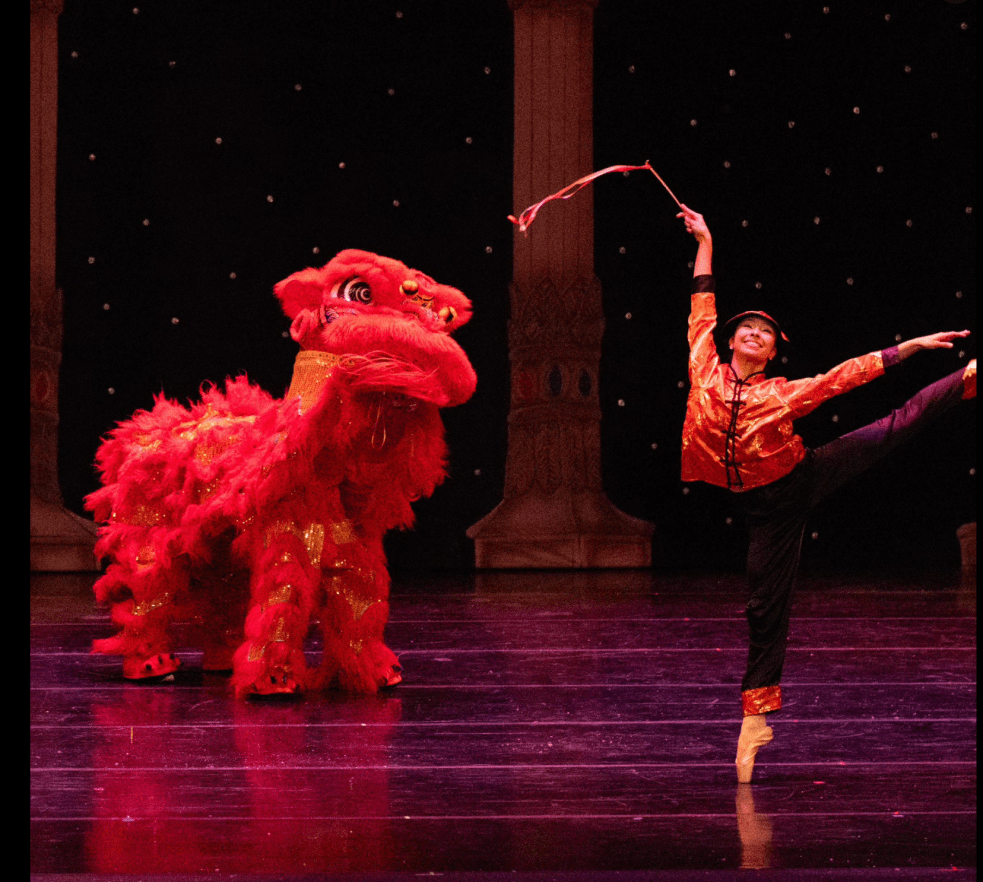
Chinese Scene – photo by Dave Pearson

In the spirit of visual economy, the Chinese scene resonated brilliantly with a single brilliant dancer and lovable dragon. The interplay between the two lent humor and whimsy.
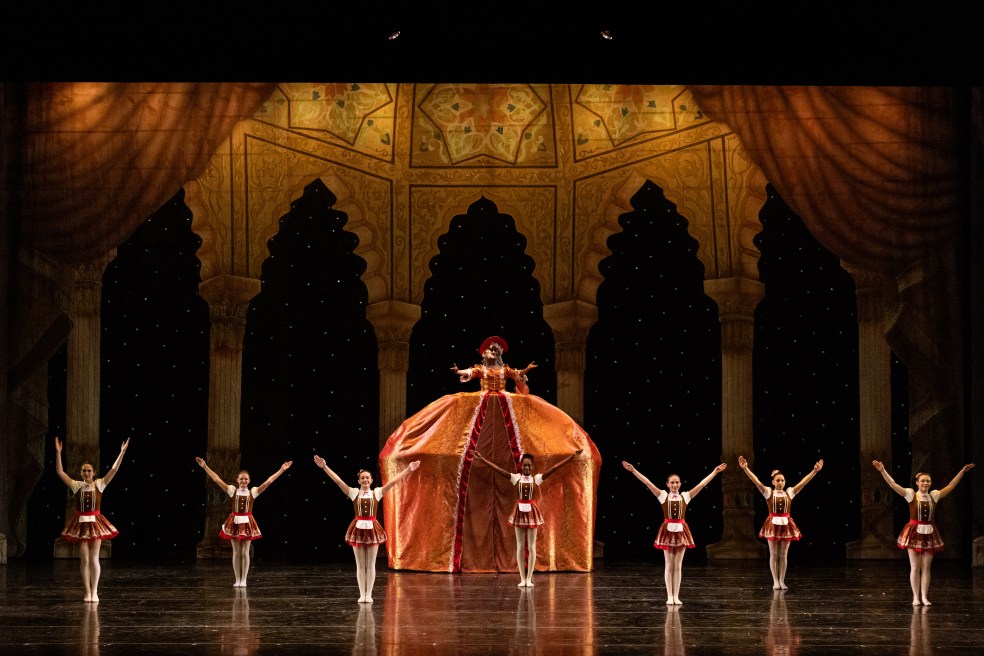
Mother Ginger with the gingerbread dancers – Photo by Dave Pearson

No Nutcracker is complete without Mother Ginger. Dressed in shades of ginger, she concealed an army of gingerbread dancers both large and small. The tiny dancers tugged on heartstrings while the larger dancers carried the scene.
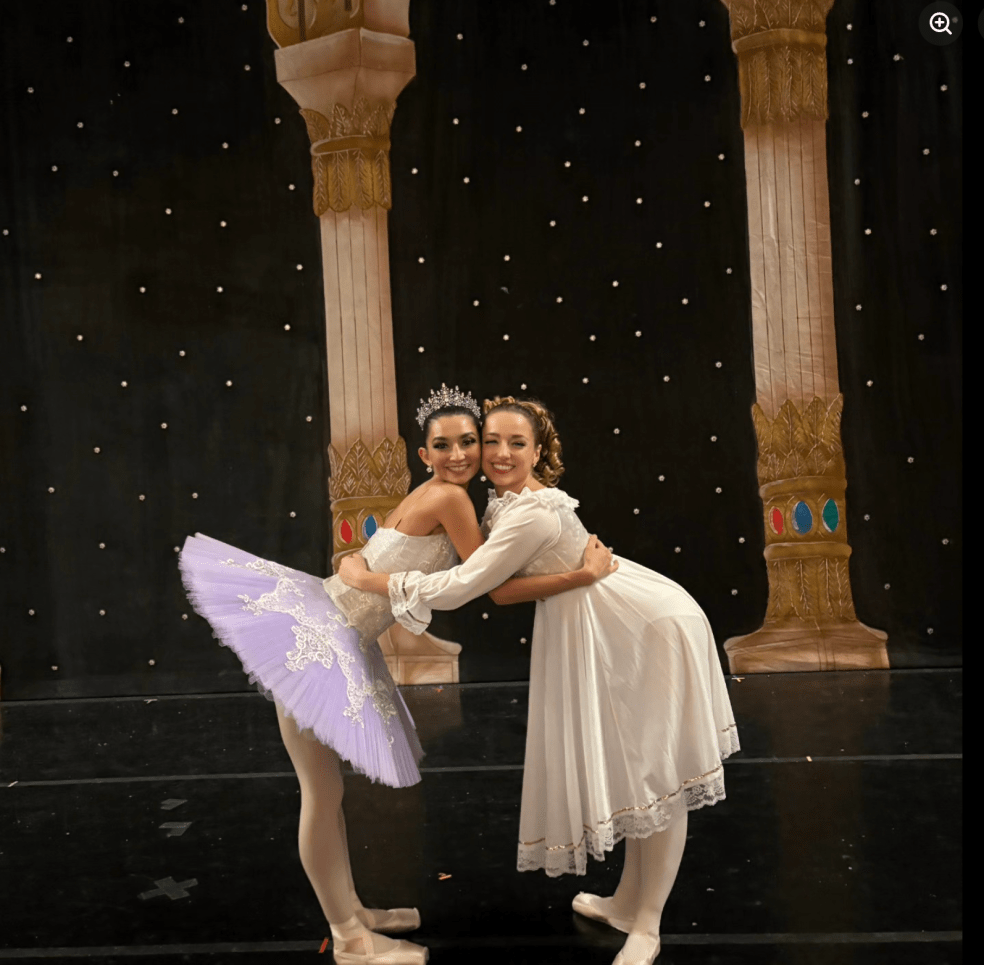
Young Clara embraces her “princess” self. Photo by Dave Pearson

I loved that the Sugar Plum Fairy was Clara, as her dream. Her arc transformed her into a princess then returned her to the child who loved her Nutcracker. The pas de deux was effortless and weightless, as it unfolded in a dream. Display for its own sake was absent, allowing the story to remain clear, confident, and complete.

The choreography dignified the company dancers. It matched real bodies and their spectacular abilities. Costumes, movement, sets, and music were integrated with confidence and restraint.

Professional dancers and ballet students harmonized organically. Technique and storytelling were equally respected. Children as mice and soldiers enhanced holiday unity. This is the mark of leadership that serves talent and allows it to flourish.
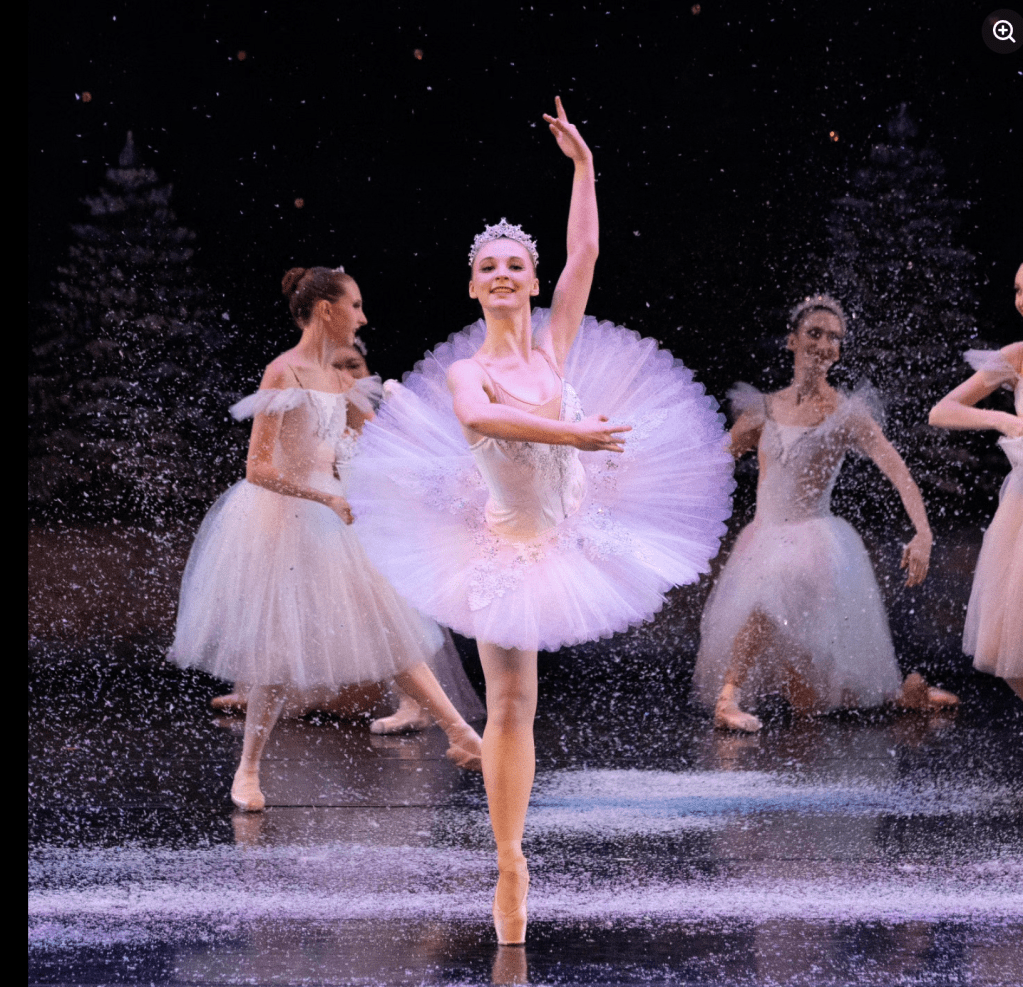
Snow magically appeared. Photo by Dave Pearson

There were moments when I felt carried away. Suddenly the people behind me stopped rustling paper and kicking my seat. There was a stillness throughout the auditorium. I knew then that this performance was an absolute success.

Stillness means the audience is no longer evaluating, no longer fidgeting; no longer anticipating. It means they were fully inside the experience. On this evening, approximately 1,200 people shared that stillness.

That leadership style was visible at curtain call. When co-founders Rafik Hegab, artistic director and choreographer, and Elysabeth Muscat, Managing Director, came on stage, they first applauded the dancers. Rafik stood to the far side, took a brief bow, and remained focused on the dancers. Ego was absent. Excellence was present. The joy was shared.

I left edified. Nothing had asked me to tolerate it. As spectator, I was invited to participate, intelligently, quietly, and fully.
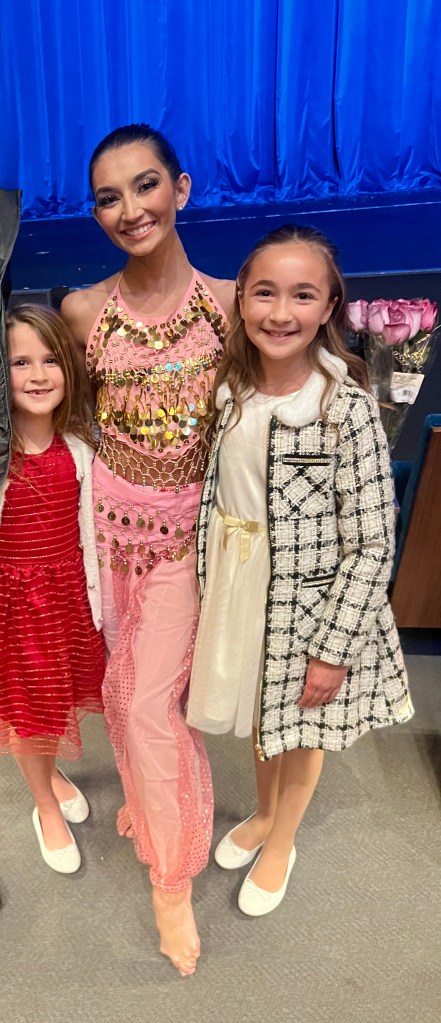
Following the performance, future ballerinas were warmly greeted by Sierra Stipetich and Alexa Glomp

This Nutcracker was light without being thin, precise without stiffness, joyful without excess. It was designed to carry us through the story and safely return us when the curtain closed.
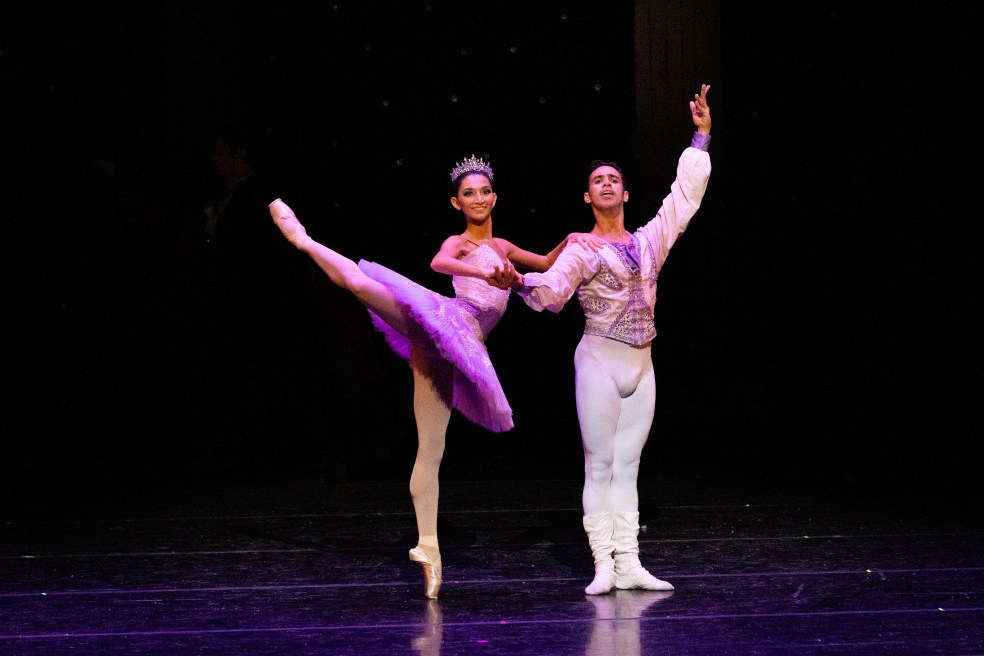
Princess Clara and her prince. Photo by Dave Pearson

Would I see The Nutcracker again? Theirs? Yes. Always.

The next performance for Virginia National Ballet will be the timeless Swan Lake – March 20, 2026 at Hylton Performing Arts Center and March 28, 2026 at Capital One Hall. An online silent auction will be launched in late January. You will be able to bid on trips, art, tickets, and much more. The auction items will be available at both performance venues. Click here for more information on the auction or for tickets.

Where Passion Meets Purpose: Inside the Duke Ellington School of the Arts Student Exhibition

Last Friday, I had the privilege of attending the Visual Arts Student Show 2025 at the Duke Ellington School of the Arts (DESA) in Washington, D.C. As I walked through the exhibition with my goddaughter, Nicoletta, a freshman in the Visual Arts Department, I witnessed firsthand how this extraordinary institution transforms artistic potential into polished expression.

“The Vienna Flood ’24” by Lucia Gonzalo Sebastian – 2D Concepts – New Yorker – Nikki explains, “This is difficult medium because of the many details involved in its creation – selection of just the right shades of color papers, assembling meticulously to smoothly apply each piece while keeping the surface clean of glue and staining. But it is so much fun to see the result.”

A Dream Realized

For Nicoletta, DESA represents the fulfillment of a lifelong passion. Even as a toddler, while other children played with dolls, she gravitated toward pencils, paints, and clay. Her journey to DESA wasn’t easy—the school’s rigorous admission process admits only 25 visual arts students annually from hundreds of applicants, requiring portfolio presentations and in-person drawing auditions. As her Godmother, her parents invited me to attend the “Family Meeting.”

“To have professional instruction, to be moving art forward, and be in the moment where ideas, vision, and expression move smoothly, is my ideal,” Nicoletta explained as she guided me through the exhibition. The school’s unique structure, dedicating three hours daily to arts education, has transformed her academic experience as well, leading to recognition for her outstanding GPA.

” I loved creating this collage where I incorporated photographs, textures, and graphics. I think I can say that I am happy that it was selected for the show.” Nikki Zapryanov

Team Building Creativity

“Sculpture Left Standing Work” Nikki – Arm, Eliana – Leg, Khepra – Torso, Luana – Head; Luana – Leg

The centerpiece of the exhibition featured four nearly life-size ballerina sculptures created by freshman student teams. Each sculpture represented a beautiful example of collaborative artistry—individual students crafted specific body parts that were later assembled into cohesive wholes under the guidance of their sculpture teacher, Mr. Wesley.

“I carried that leg around with me for months and worked on it at home and at school. I have grown accustomed to having its company,” shared Eliana, pointing to her beautifully extended ballet leg with its perfectly pointed foot.

What made these sculptures even more impressive was their construction material: cardboard. When asked about creating such fluid forms from such a rigid medium, one student explained, “We softened it by hand by repeatedly bending and smoothing until it yielded to our shapes.”

A Nurturing Environment

Beyond the impressive artwork, what is striking is the atmosphere of the school itself. The architecture, with its vast, inspiring spaces, creates an environment where creativity flourishes. But it’s the community that truly distinguishes DESA.

“I have made wonderful friends. We are a close community where everyone is supportive and lends help when needed. Criticism is constructive, kind, and very valuable,” Nicoletta shared as she introduced us to many of her classmates.

The faculty’s approach reflects this supportive philosophy. When asked about their teaching methods at a previous event, one visual arts teacher explained, “We teach the fundamentals and basics of art—technique, tools, media, and vision. We feel that this is the best way to help prepare our students for the rigors of their future education and ultimately, life.”

Growing Artistic Vision

As we explored intricate skull drawings that would inspire next year’s projects, Nicoletta reflected on her artistic development: “This year, my eye has become more developed. I calculate and observe better. I can see differences and note details, symbolism, and emotions.”

Drawings from Students in Drawing II

The exhibition culminated with award presentations, including a historic first—a sculpture titled “Right Standing Work” winning Best in Show. Department Chair Ms. Elana Casey recognized the excellence of the faculty while emphasizing, “We are so honored to be supporting our students’ vision.”

In a world that often undervalues artistic development,  DESA remind us that nurturing creative talent isn’t just about producing art—it’s about developing young people who see the world with greater depth, collaborate with genuine respect, and approach challenges with both technical skill and imaginative vision.

BEST IN SHOW – The first time that a sculpture has been awarded in this category – “Sculpture Sitting Right

Like many instructions in today’s economic environment, funding has been cut in many ways. The Visual Arts Department field trip to New York’s Metropolitan Museum of Art had to be cancelled due to cessation of funding. Instead of complaining, Department Chair,  Ms. Casey, said, “This is a wonderful opportunity for you guys to DONATE and support our mission.”

Walking back to our car through the rain, I hardly noticed the weather. My mind was still discovering details in the exceptional student creations I had  just witnessed- it was an highly engaging immersive experience—each piece a testament to the transformative power of dedicated arts education.

From Rock Anthems to Moonlight: Virginia National Ballet’s Bold Artistic Expression

The familiar notes of Queen’s iconic “Bohemian Rhapsody” echo through the studio as dancers leap, lunge, and spin with unexpected intensity. I’m standing at the front of the rehearsal room of Virginia National Ballet’s rehearsal space, watching a rock masterpiece transform into classical movement before my eyes. This is no ordinary ballet rehearsal, and what’s coming to the stage is certainly no ordinary performance.

A Triple Bill of Transformation

Virginia National Ballet’s upcoming production dissolves boundaries with an ambitious triple bill showcasing their versatility and technical prowess. Back by popular demand, “Bohemian Rhapsody” returns after its 2017 debut, joined by the revival of “Tango Nights,” a sophisticated ballet set to Astor Piazzolla’s music, and “Moonlight Sonata,” a beautiful world premiere by Artistic Director Rafik Hegab.

“We wanted to create something that honors both Queen’s revolutionary spirit and ballet’s timeless grace,” explains Elysabeth Muscat, Founder of Virginia National Ballet. “But this program goes further—it demonstrates our dancers’ ability to completely reinvent themselves across different musical worlds in a single evening,” she adds.

When Rock Meets Ballet: “Bohemian Rhapsody”

Returning after its acclaimed 2017 debut, “Bohemian Rhapsody” stands as the Virginia National Ballet’s most audacious offering. This enhanced production captures Mercury’s vocal journey with stunning fidelity—dancers physically transform as the music shifts from tender ballad to operatic crescendo to hard rock intensity. The masterful blend of classical ballet storytelling with rock-inspired movement creates a visual symphony that reveals entirely new dimensions in Queen’s familiar anthem.

“Just as the song shifts from ballad to operatic drama to hard rock, our dancers embody these transitions physically. It’s not just about dancing to music; it’s about becoming the music’s physical manifestation,” explained Muscat.

I’ve heard “Bohemian Rhapsody” hundreds of times, but never like this. The music crashes through the studio as the dancers respond, and in these fleeting moments, I witness the perfect marriage of rock and ballet—two art forms that shouldn’t work together, yet somehow create something entirely new in their collision.

Passion and Precision: “Tango Nights”

Without pausing, the rehearsal flows into “Tango Nights,” and the studio’s atmosphere immediately shifts. Bodies that moments ago were interpreting rock now embody the sophisticated language of tango. Set to Astor Piazzolla’s evocative compositions, this ballet explores sensuality and passion through movement that feels both precisely calibrated and dangerously spontaneous.

The dancers’ expressions change, their postures transform, and suddenly we’re transported to the intimate milieu of Argentine dance halls. Rather than echoing vocal complexities as in “Bohemian Rhapsody,” the dancers’ bodies now capture the distinctive tensions and releases in Piazzolla’s bandoneon, creating visual manifestations of the instrument’s breathing quality.

Ethereal Contemplation: “Moonlight Sonata”

The rehearsal included Artistic Director Rafik Hegab’s latest creation, “Moonlight Sonata.” If “Bohemian Rhapsody” represents bold artistic fusion and “Tango Nights” embodies passionate sophistication, then “Moonlight Sonata” offers yet another transformation—into ethereal contemplation.

Beethoven’s haunting composition guides dancers through movements that seem to capture moonlight itself—from the First Quarter, to the Full, to the Waning Moon—sometimes clear and defined, other times elusive and mysterious. With remarkable sensitivity, Hegab has created choreography that responds to the music’s tonal qualities, allowing dancers to become physical embodiments of Beethoven’s emotional landscape. A highlight of this program is a striking pas de trois featuring two men and one woman, showcasing lifts, shapes, and “tosses” so innovative I have rarely observed them, much less in a single variation.

What makes this program so remarkable isn’t just the juxtaposition of these diverse pieces, but the seamless resonance the company achieves between sound and movement across wildly different musical worlds.

The Art of Shapeshifting

The dancers of Virginia National Ballet demonstrate remarkable versatility as they navigate through this ambitious triple-bill program. Moving from Queen to Piazzolla to Beethoven in a single performance showcases not just their technical mastery but their extraordinary artistic adaptability. This constant metamorphosis is evident in every aspect of the rehearsal. Dancers transform from classical technicians to rock interpreters to tango masters with seamless fluidity—a shapeshifting quality that demands an entirely new approach to both training and performance.

Sweat glistens on foreheads (mostly the men) as dancers move with precision through the complex choreography. This is a working rehearsal – as the intensity gears up, the dancers shed layers, from full leggings and sweater wraps to bare legs and spaghetti straps. Yet even in these practical moments, their commitment to artistic transformation never wavers.

Sitting in on Virginia National Ballet’s rehearsal, I’m witnessing familiar anthems and classical masterpieces reimagined through the language of dance in ways I never imagined possible. Three distinct musical voices. Three unique movement vocabularies. One company bold enough to transform itself completely, multiple times in a single evening.

Virginia National Ballet’s upcoming performance promises to be a masterclass in artistic shapeshifting—a journey through sound and motion that audiences won’t soon forget. Based in Manassas, Virginia, this company is quietly creating and producing incredible, high-quality productions. But make no mistake—their “Bohemian Rhapsody” will be anything but quiet! I can’t wait to experience this production.

Virginia National Ballet’s triple bill featuring “Bohemian Rhapsody,” “Tango Nights,” and the world premiere of “Moonlight Sonata” will be performed at Hylton Performing Arts Center, Manassas, Virginia on Sunday, April 27 at 3 PM. Purchase Tickets. I purchased 10 tickets ! Everyone I have mentioned this performance is fascinated. Get your tickets soon.

You can see it in New Yor City on May 17 at the Ailey Citygroup Theater – buy tickets here.

Photo Credits: Professional photos curtesy of VNB

A Valentine’s Day Fairytale:

Virginia National Ballet Presents ‘Snow White’

Love was in the air on Valentine’s Day when the curtain rose on the Virginia National Ballet’s “Snow White.” Their timing was perfect – what better way to celebrate the season of romance than with one of the most beloved fairytales of all time?

Snow White (Nicole Ramirez) and The Prince (Livan Gonzalez) surrounded by the Woodland Creatures performed by VNB Students

The audience came to engage and enjoy with much sparkle and finery. My party consisted of my friend and her young ballerina daughter. We arrived after battling Friday evening rush hour in full sparkle and pink regalia. I caught myself smiling throughout the performance.

Under the direction of award-winning choreographer, Rafik Hegab, the production transformed the classic Disney fairytale into an endearing ballet for audiences of all ages. The choreography presented seamless imagery while highlighting the talents of the dancers. The dancers brought to life themes of love’s victory over darkness, bonds between friends, and a pure heart’s ultimate success.

The sophisticated staging and beautiful costuming served as the perfect canvas for the company’s masterful artistry. They truly transported the viewer into an enchanted realm. The lush backdrops created a mysterious forest, a cold castle with a “live” mirror, and the dwarves‘  adorable cottage. The lyrical musical score of Bogdan Pavlovsky sounded familiar yet refined while featuring tunes from the movie. The multiple layers of nostalgic charm, eye-opening scenery, and excellent storytelling through professional ballet made this production sparkle.  The inclusion of ballet school students as the woodland creatures gave the audience and the dancers a taste of  preparation and performance. The stage of the Hylton Performing Arts Center in Manassas, Virginia made a perfect setting for the ballet.

The joyful Dwarves, each with unique choreography brought peels of laughter from the audience

The company’s international ensemble of twenty dancers brought elegant depth to this performance. The diverse cast represents talent from eight countries including the USA, Brazil, Cuba, Japan, Colombia, Uzbekistan, Nicaragua, and Canada. Each dancer imbued the production with a rich tapestry of artistic excellence. Their technical accuracy and emotional expressiveness brought each character beautifully to life – from Snow White’s  impressive graceful innocence  to the exquisitely menacing Evil Queen and her “Shadows,”  to the mysterious Huntsman and the beguiling Prince, and of course, the Dwarves . . .  pure joy! My favorite? The Queen.

The Evil Queen (Sierra Stipetich) and the Huntsman (Leonardo de Almeida)

The company’s decision to present “Snow White” during the Valentine’s season reflects their culture of bold programming. They have been voted the Best of Prince William County in Inside Nova’s Best Of for three years 2022-2024. The Virginia National Ballet pushes artistic boundaries while honoring classical traditions. Under the leadership of Managing Director Elysabeth Muscat and Artistic Director Rafik Hegab, the Company has earned their place among Virginia’s premier ballet institutions. The company performs a broad variety of ballet from “Led Zepllelin” last April to the holiday favorite, Nutcracker, at Christmastime. This is a company with a “two edged” sword. It is not surprising that almost every seat was taken.

For those seeking an affordable quality ballet experience, this one will put a smile on everyone’s face. There is one more chance to enjoy this production on March 1 at Capital One Hall. Visit the website for tickets. Here is a brief video from an earlier season https://www.youtube.com/watch?v=mF2mSJ_irlc.

As a first-time viewer and a bit of a ballet sceptic, I was delighted by the authenticity, technical accuracy, and charming emotional storytelling by the company. This production has made me eagerly anticipating the company’s  April 27th  Bohemian Rhapsody , at the Hylton Performing Arts Center.

I wish Virginia National Ballet the best as they prepare for their exciting NYC debut of Bohemian Rhapsody in May at the Ailey Citigroup Theater in New York City.

*Photo Credit: Photos by Dave Pearson – courtesy of Virginia National Ballet Company

The Washington Ballet Takes Center Stage Virtual Gala

Celebrating 75 years  of the Washington School of Ballet

Rising Star – Katherine Barkman PC: Screenshot of web production

Ballet lovers from around the world were invited to tune in for the first-ever LIVE online celebration of The Washington Ballet! Performances by The Washington Ballet artists and stories from students and faculty highlighted the event.

Ballet in Washington, D.C., under Artistic Director, Julie Kent, was beginning to soar and rival many American and international ballet companies. Their 2020 season promised to deliver breathtaking performances of classical ballets and repertoire. The season started with their exceptional production of Balanchine + Ashton in February to be followed by the full-length Swan Lake – music by Tchaikovsky. The classic ballet, Coppélia, to the music of Léo Delibes, was scheduled to premiere in May.  Casting, choreography, costuming, and rehearsals were in progress. I planned to attend Coppélia and write a blog article about the performance.

PC: Screenshot

Producing a full length classical ballet is an very expensive and laborious process. The costuming alone, is extremely expensive with a single tutu potentially costing over $3000. The cost of costumes added to the salaries, overhead, and theater rental runs into the hundreds of thousands of dollars. Sold out productions, sponsors, grants, and patrons help cover these expenses. What happens when the curtain does not rise? The last Washington Ballet rehearsal was held on March 13 where snippets of a dress rehearsal of Act 3 were filmed.

The company staff and dancers are incredibly supportive, gracious, and optimistic for something wonderful to emerge from the current circumstances. Having been president of a pre-professional ballet company, I am aware of the magnificent cost involved in the production of every ballet.

Ballet Dancer Corey Landolt was honorary Mixologist for the Gala PC: Screenshot

Tonight’s public virtual Gala was a wonderful way to bring the Washington Ballet to the City and to the world. The Gala were beautifully produced. There was a mix of executive, sponsor, and philanthropic recognitions along with a generous portion of stunning ballet performances. The 75th anniversary of the Washington School of Ballet begun by Mary Day and her mentor, Lisa Gardiner, was celebrated with joy and dignity.

Artistic Director, Julie Kent PC: Screenshot

The growth of The Washington Ballet under Julie Kent in just under four full years, has been remarkable. Like many Company patrons, I was eagarly anticipating the brilliance and excitement of the upcoming season. The Gala was elegant, classic, and was generously shared with the City and the world free of charge. The hope, being that donations would offset expenses and generate funds. During the event, donations came in ranging from just a few dollars to some with a several zeros at the end.


Monica Stephenson, Head of School, Southeast Campus.
PC: Screenshot

In recognition of the 75th anniversary of the Washington School of Ballet, The Washington Ballet expressed their focus and goal of reaching city dancers and providing teaching and training opportunities regardless of dancers’ economic circumstances. Monica Stephenson, Head of School, Southeast Campus, The Washington Ballet, shared, “For our community of 1200 students, we kindle love, passion, interest and commitment. We encourage talent, creativity and integrity on all levels of the art stressing excellence in the classroom and on the stage. “  The interactive on-line ballet classes are helping students stay involved,  active, and healthy. Ms. Stephenson emphasized the goal of,  “Engaging in relevant dialogues in an unwavering commitment to our aspiration for the extraordinary. We work toward equitable excellence in artistic education and expanded diversity in classical ballet. It feels wonderful to be a part of dancers’ growth.”


“You can inspire the world with you dancing.” DC ballet student. PC: Screenshot
Students of The Washington School of Ballet PC: Screenshot

Ms. Kent, in her mild, soft-spoken manner, introduced “An incredible evening of inspired performances.”  Five performances, all very different and extremely engaging culminated with the final rehearsal of Act 3 of Swan Lake. At the end of each, I wished for  “just a little more,” the mark of an exceptional artistic director.


Rench Soriano from the Philippines is a Washington Ballet Studio Company dancer performing 5 Variations on a theme by David Fernandez PC: Screenshot


Women of the Company performing “Summer’s Heat” reliving the “Center Stage” movie experience. PC: Screenshot


Katherine Barkman and Masanori Takiguchi in rehearsal of Act 3 Swan Lake PC:Screenshot

Ms. Kent closed the evening by saying, “At this time of tremendous loss and vulnerability, dance art is a celebration of humanity. We, at The Washington Ballet are ensuring artistic hopes and careers will live on and thrive. Thank you for your love and support.”

What can we do to support The Washington Ballet? Consider donating The art of dance transforms lives every contribution will help.

Nimble and Creatively Flexible

The Chamber Dance Project of Washington, D.C. Carries on Their Mission

When circumstances derail plans, creativity sets artists free to experiment with and present exceptional virtual opportunities to even more people than would have originally enjoyed performances. Such is the case for the Chamber Dance Project (CDP) in Washington, D.C.

Artistic Director and choreographer, Diane Coburn Bruning, founded the CDP because she believed that dance should be a collaborative process between dancers, musicians and the audience. That process, she says, “Deepens the audience’s experience.”  They have grown to be Washington’s  premier contemporary ballet company.

Their ballet season takes place in the summer when other companies and dancers are off. Because of this, CPD attracts and features exceptional dancers. Two such dancers are Austin Powers and his wife, Grace-Anne Powers. They are slated to dance in this summer’s CDP performances.

With theaters being dark now, this is an opportunity to expand creativity and communication with audience and patrons. CPD has moved their Open Rehearsals and Evenings with the Artist to on-line adventures via Zoom.  

A recent Evening with the Artist featured Emmy Award – Winning ballerina, Grace-Anne Powers. She is a ballerina with Ohio’s BalletMet in the regular season. Grace-Anne met us from her living room in Ohio where she and her husband built a sprung wood floor upon which to rehearse. Typically, a dance floor is covered with a sheet of plastic called Marley which is both smooth and anti-slip for safe dancing.  Resourcefully, the couple covered their floor with a fish pond liner instead. This decision was made based on economics and size of the floor.

The Shoe Must FitGrace-Anne Powers via Zoom

Pointe shoes are the quintessential piece of equipment for a ballerina. Pointe shoes are  generally pink satin with pink ribbons that crisscross over the ankles. What else is there? Grace-Anne calls them, “The most beautiful and torturous item.” She spoke about the manufacturers, the construction, the fragility, and the importance of perfect fit of the beloved pointe shoe in a recent CDP Evening With An Artist.

Grace-Anne’s favorite pointe shoes are made by Freed of London. Every shoe is handmade by highly skilled craftsmen. The craftsmen each have their own mark that they place on the leather sole of the shoe. The “Butterfly” is the shoe that she finds most comfortable. The shoes are handmade just for her. “When I get a new pair of pointe shoes, I have to prepare them for dancing. The toe box is round. The first thing I do is flatten it so that it sits flat on top of my foot,” she demonstrated the process of putting the perfectly new shoe on the floor and unceremoniously stomps on it with her foot. The process continues with the insoles – tearing and cutting away until the arch is in the perfect place. Elastics and ribbons are sewed on and more maneuvering of the shoe continue until it fits like a glove. “It takes about two hours to prepare a pair of pointe shoes,” she told us.  

A pair of shoes costs up to $125. Grace-Anne gets 40 pairs of pointe shoes form her home ballet company. “I have bendy feet that are stronger, so I tend to go through my shoes faster,” she explained. She tries to extend their lives with some unorthodox techniques involving jet glue.

There is a fine line between being perfectly comfortable and “dead.” Dead shoes are not fit for dancing and can be harmful to the dancer. Did you know that the life of a pointe shoe is very short? Sometimes it is just a week and sometimes two weeks. Let’s see, they are satin, there is a leather outer sole, the sides are canvas with a satin outer shell. The “box” is made of fabric and cardboard and biodegradable materials like water soluble glue.  Perspiration tends to dissolve the hardening materials of the box. For that reason, Grace-Anne has devised  to coat inside of her well-fitting shoes with jet glue.

“There can be no movement in my shoe, so I double the elastics to keep them tight against my foot. Also, my ribbons are not just ribbons, I like my ribbons to give a little so they have some stretch and give. After the shoes have been flattened, potions cut out, and glued, Grace-Anne darns the pointe part of the shoe and creates a “box.” That also extends the life of the shoe and provides a flat space to “stand.” She uses a doubled macramé cord to create the rim then  sews it onto the satin of the shoe. This further helps save the shoe in the contemporary repertoire when the angles become more exaggerated. “I wear a shoe that is a little larger than my foot to help me pad so that I keep corns and bunions from forming.”

Ill fitted shoes can cause blisters, bruised toe nails, bunions, even stress reactions. Properly fitted shoes are key to successful classes and performances. Grace-Anne experimented with different shoes, “Some had plastic in the toe. They lasted longer, but did not give me the correct fit and I could not fully articulate my foot. The Freed of London shoes give me the fit and articulation for artistry that I need. It is hard finding the right shoe. When you find the right shoe, it is no longer a foot inside a shoe, but it becomes a part of you.“

A world-class ballerina, Grace-Anne, is comfortable with both the classical ballet repertoire and the contemporary realm. She is a perfect fit for CDP with her classical background and ability to extend into the extraordinary. “Contemporary ballet pushes you beyond the vertical  and many times off-center. That is when pointe shoes deteriorate even faster since the contact with the floor changes dramatically and parts touch and wear faster,” she explained.

What does Grace-Anne find rewarding in dancing with CDP? “Working in smaller groups is very satisfying. Getting to know the people and the creativity is exciting,” she shared. She likes having the musicians on stage, “They help make dance spontaneous and interactive.” This season she and her husband, Austin, will have the opportunity to dance together. It will be a new experience for them to dance in a partnering capacity.

Grace-Anne Powers
pc: Jennifer Zmuda
Image courtesy of Grace-Anne Powers

Concluding the evening’s program, Grace-Anne and Austin demonstrated some partnering techniques and the resilience of their new floor. “With a partner, there is greater scope of movement, extension, and reach,” explained Grace-Anne and Austin. They are both able to stay in shape by working together, doing their own barre workouts, Austin works with weights, and there is lots of gardening for the both of them at their new home.

About the 2020 Season, Diane Coburn Bruning said, “I have utmost optimism for our season. For now, we will remain virtual. We are Nimble and creatively flexible.”

Powers’ presentation and Q&A is the first of four planned for May with dancer Julia Erickson discussed transitioning from classical to contemporary ballet roles on May 12.  Luz San Miguel and Davit Hovhannisyan will demonstrate classical ballet partnering on May 19 and contemporary ballet partnering on May 26. For further scheduling, please visit the CDP website.