
A Study in Balance and Intention
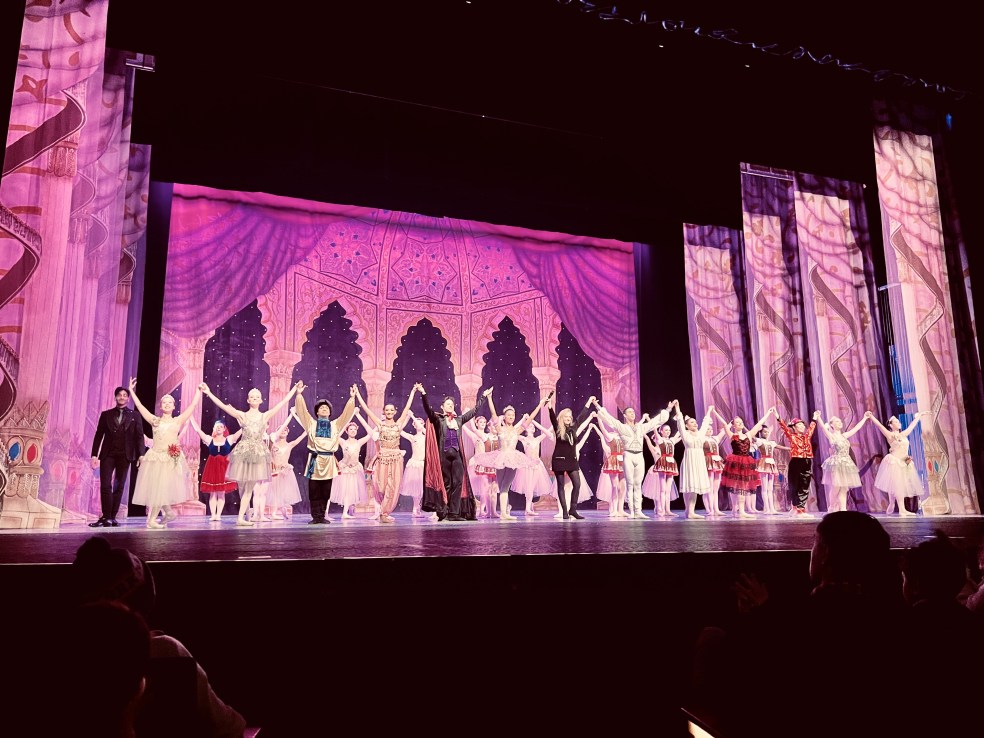
Virginia National Ballet brought heart, warmth, and brilliant dance to Capital One Hall. PC: Krasi Henkel
Mastery, Restraint, and Courage Silenced the Full House
Having attended countless productions of The Nutcracker, I could live happily without another one. Yet Virginia National Ballet made me reconsider my conviction. I attended this performance because I love these dancers and this company. I arrived not seeking novelty or nostalgia, but prepared to watch for creativity, interpretation, and intention.
What unfolded was a joyful celebration of the art of ballet. Correct, energizing, and clean.
Character interpretation and presentation were classical yet carried subtle twists. I caught myself thinking, “How understated, and how clever . . .” This Nutcracker was offered with nuance and a luxurious license to entertain, without tipping into excess or spectacle for its own sake. Lightness was mastery. From the houseguests to the naughty boys, from the magical uncle to the presented toys, the opening scene was effervescent.
Snow, the ethereal scene – photo by Dave Pearson
The sets were creative, economical, and effective. There was just enough and nothing fussy.
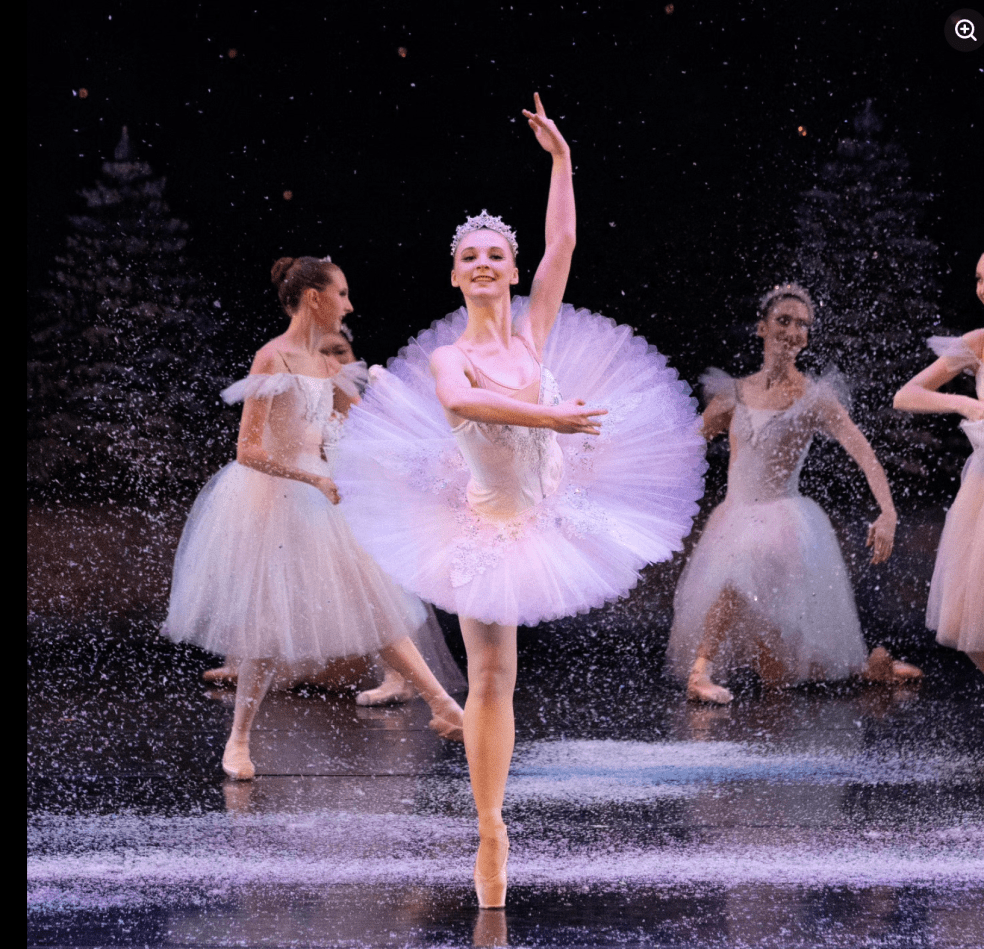
Clara’s princess tutu was debuted for this production. From my seat, it evoked spun sugar. Combined with her elegant technique and storytelling, she set the standard for excellence throughout the production.

Princess Clara’s new tutu demonstrates attention to every detail. Photo by Krasi Henkel
From sparkles to snowflakes, the performance delivered masterful artistry, complete storytelling, and thoughtful structure. Nothing lingered too long. Nothing asked for attention it had not earned. What distinguished this production most clearly was courage in choice.
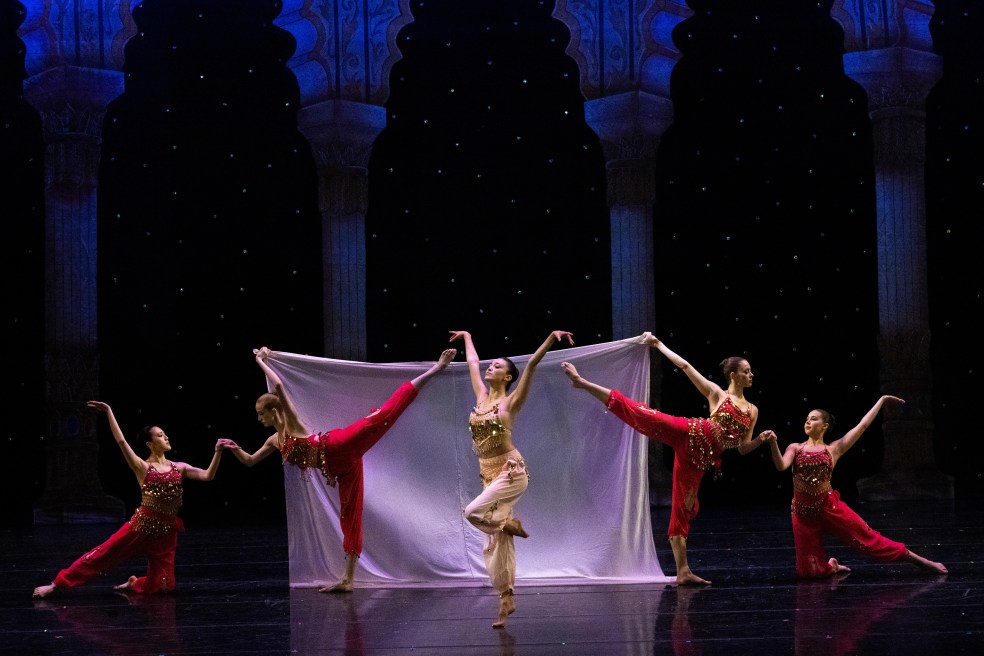
Arabian Scene photo by Dave Pearson
The Arabian scene was performed barefoot – no pointe shoes. That was a new twist in my experience and yet it felt authentic. A singular square of fabric defined the space, evoking a desert tent. Color and costume fused movement with intrigue. The barefooted ballerinas changed the atmosphere of the room. Their freedom from constraint allowed grounded power and presence to take center stage. This was intentional vulnerability.
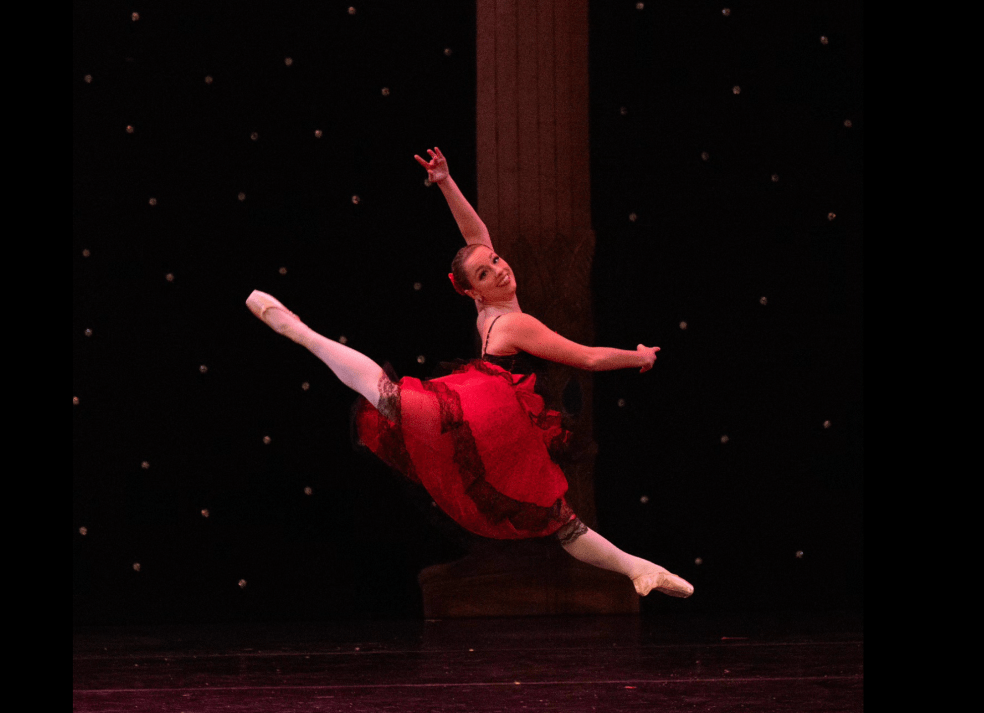
Spanish Scene Photo by Dave Pearson
That same intelligence appeared throughout the production. A single dancer, Alexa Glomp, performed the Spanish variation on the very large stage. Although petite, she filled the stage with power, artistry, and enthusiasm. Her presence carried the moment.
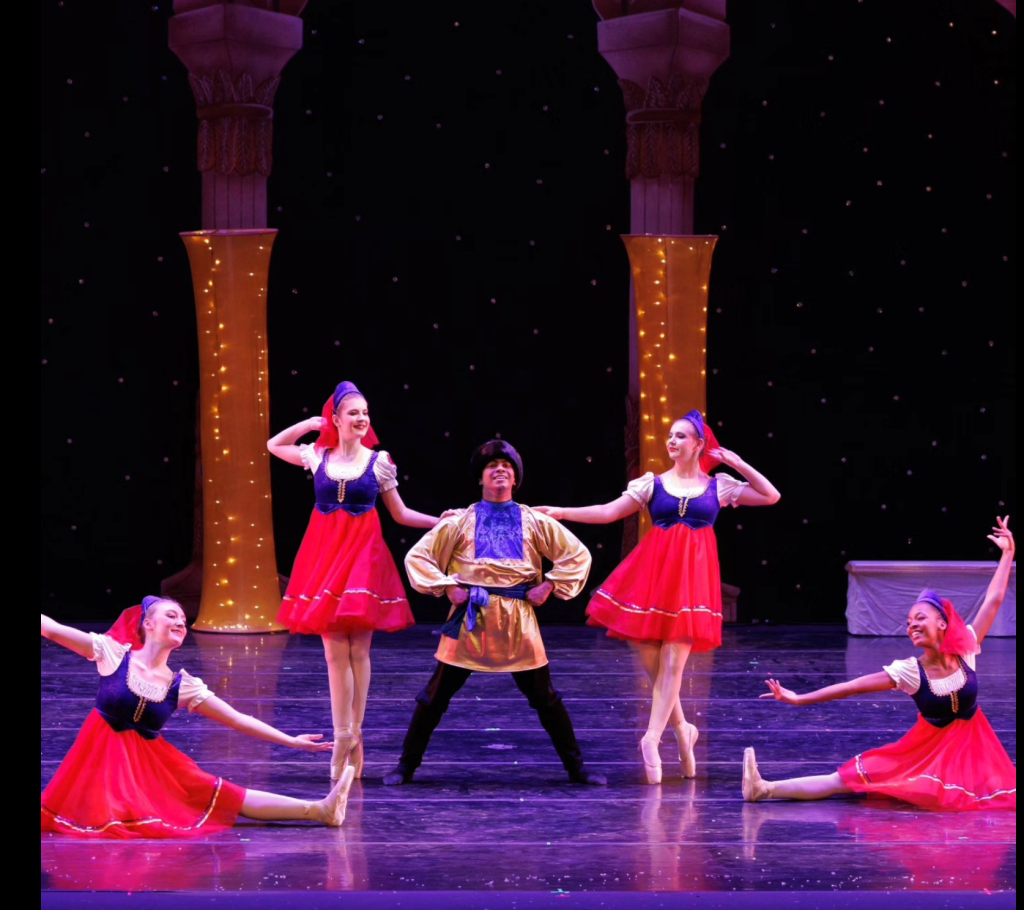
Trepak scene – Photo by Dave Pearson
The Eastern European influence in costume and of course, music set the Trepak scene. The soloist’s choreography was delightfully modern from gravity-defying leaps to spins, and even a nod to break dancing. It brought freshness to a stereotyped musical score.
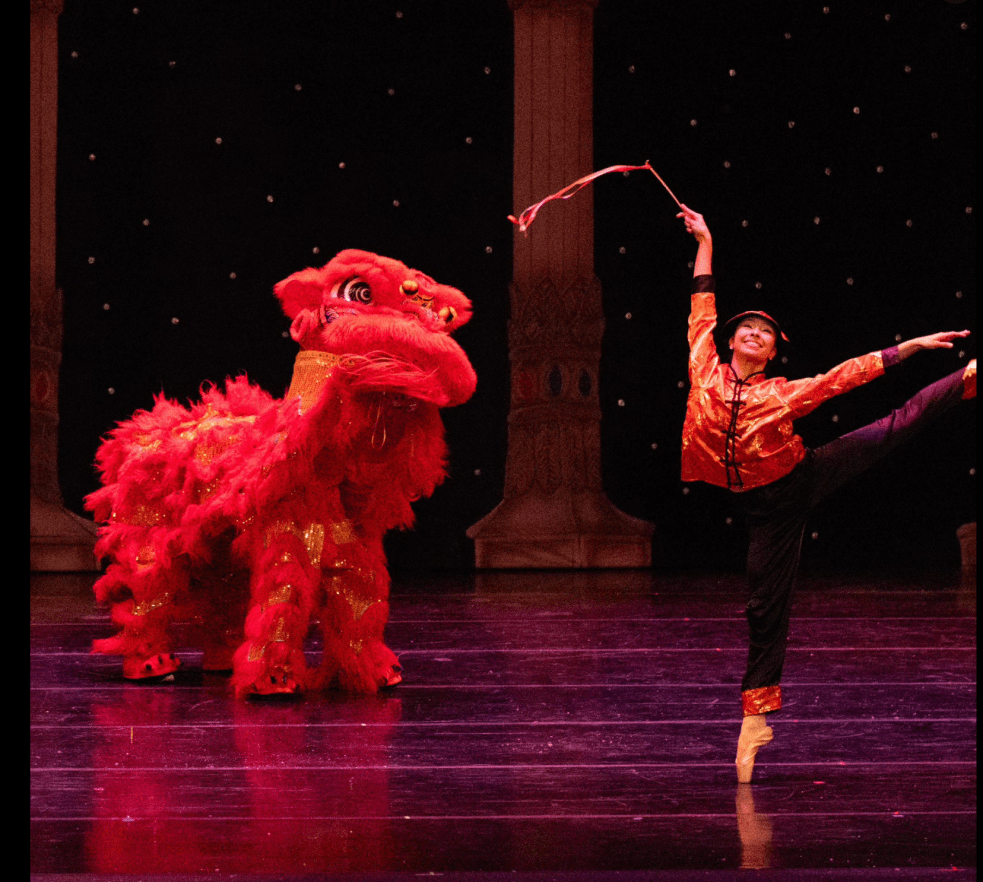
Chinese Scene – photo by Dave Pearson
In the spirit of visual economy, the Chinese scene resonated brilliantly with a single brilliant dancer and lovable dragon. The interplay between the two lent humor and whimsy.
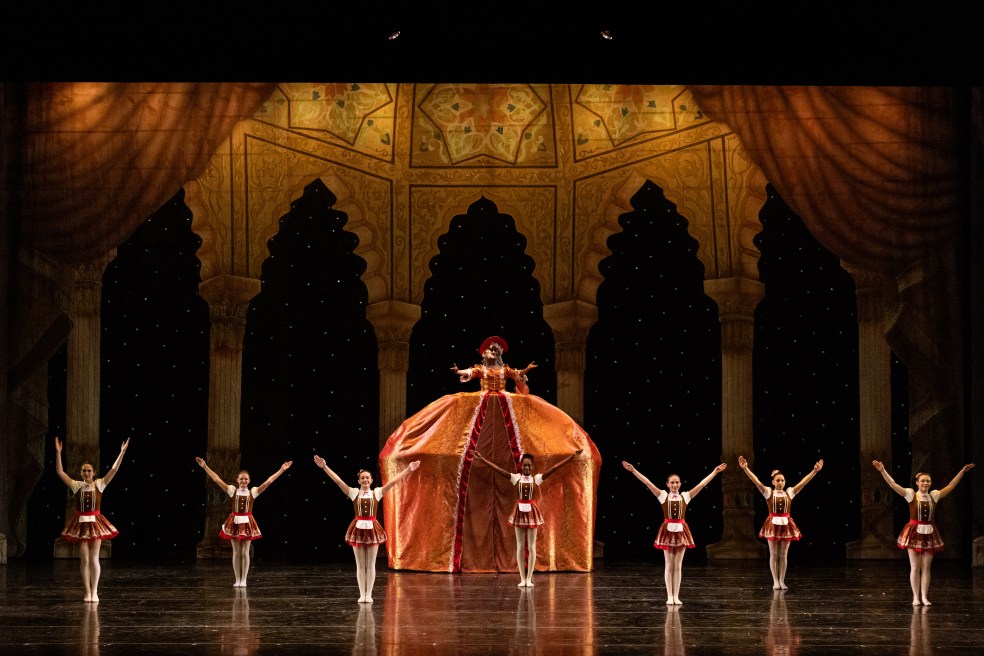
Mother Ginger with the gingerbread dancers – Photo by Dave Pearson
No Nutcracker is complete without Mother Ginger. Dressed in shades of ginger, she concealed an army of gingerbread dancers both large and small. The tiny dancers tugged on heartstrings while the larger dancers carried the scene.
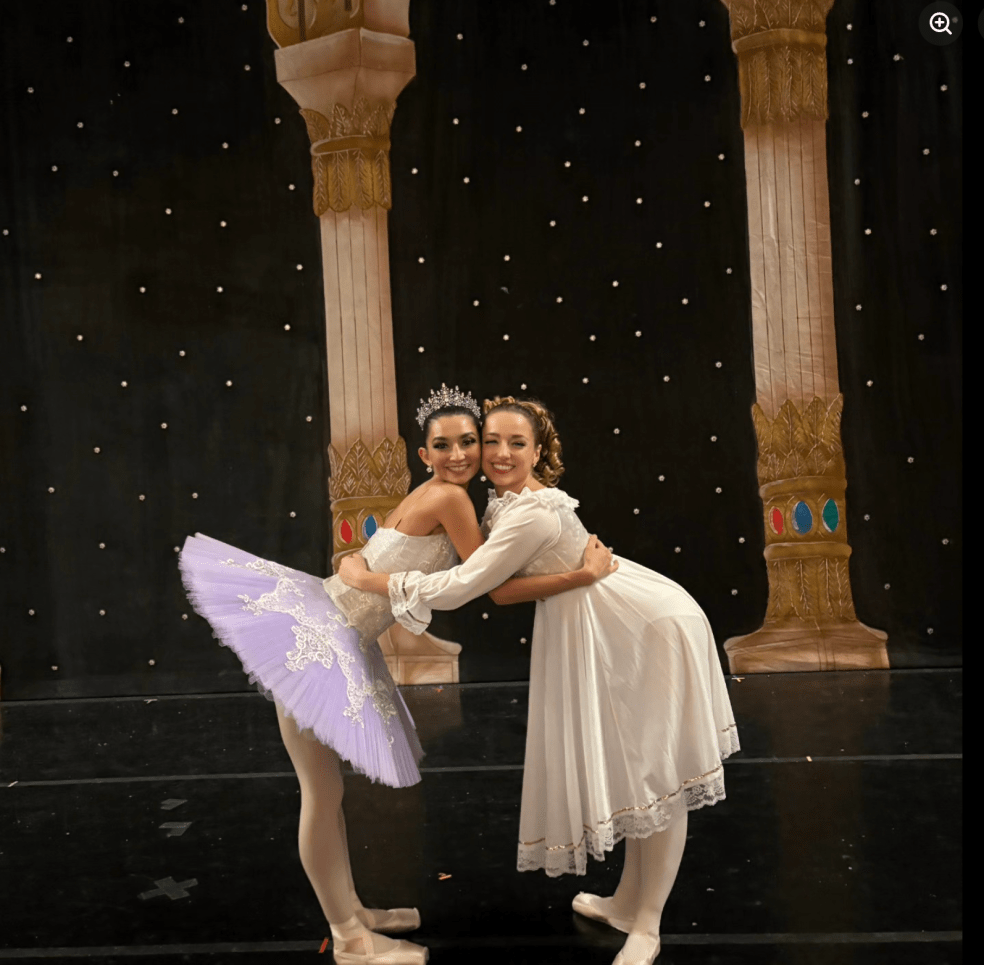
Young Clara embraces her “princess” self. Photo by Dave Pearson
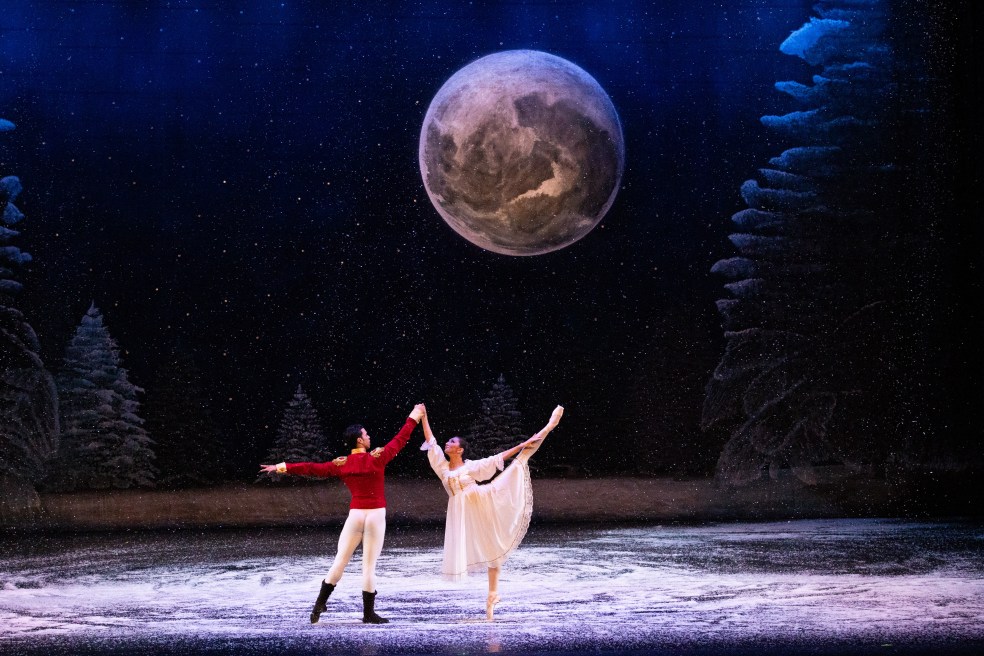
I loved that the Sugar Plum Fairy was Clara, as her dream. Her arc transformed her into a princess then returned her to the child who loved her Nutcracker. The pas de deux was effortless and weightless, as it unfolded in a dream. Display for its own sake was absent, allowing the story to remain clear, confident, and complete.
The choreography dignified the company dancers. It matched real bodies and their spectacular abilities. Costumes, movement, sets, and music were integrated with confidence and restraint.
Professional dancers and ballet students harmonized organically. Technique and storytelling were equally respected. Children as mice and soldiers enhanced holiday unity. This is the mark of leadership that serves talent and allows it to flourish.
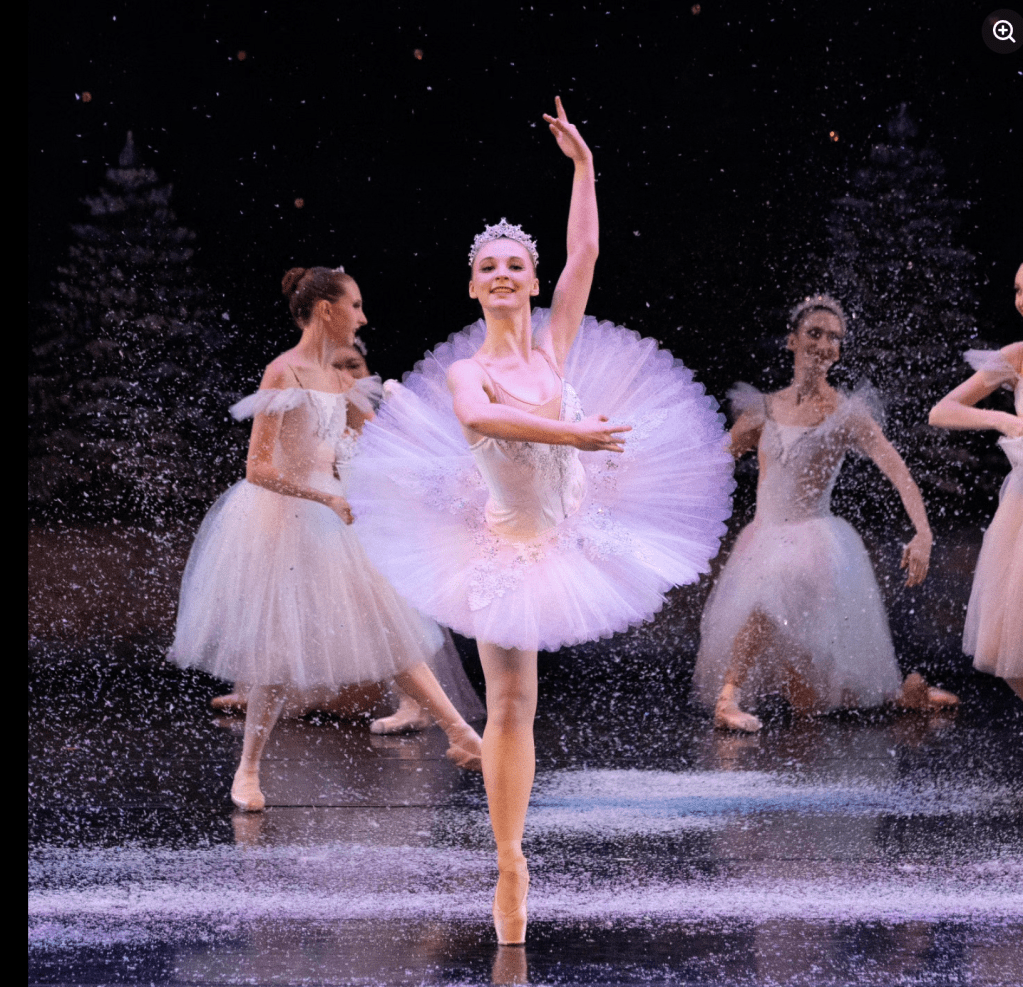
Snow magically appeared. Photo by Dave Pearson
There were moments when I felt carried away. Suddenly the people behind me stopped rustling paper and kicking my seat. There was a stillness throughout the auditorium. I knew then that this performance was an absolute success.
Stillness means the audience is no longer evaluating, no longer fidgeting; no longer anticipating. It means they were fully inside the experience. On this evening, approximately 1,200 people shared that stillness.
That leadership style was visible at curtain call. When co-founders Rafik Hegab, artistic director and choreographer, and Elysabeth Muscat, Managing Director, came on stage, they first applauded the dancers. Rafik stood to the far side, took a brief bow, and remained focused on the dancers. Ego was absent. Excellence was present. The joy was shared.
I left edified. Nothing had asked me to tolerate it. As spectator, I was invited to participate, intelligently, quietly, and fully.
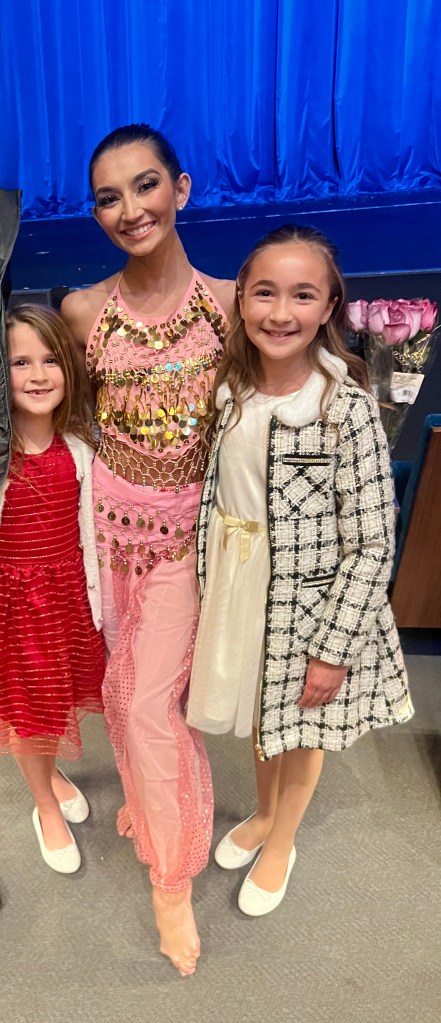

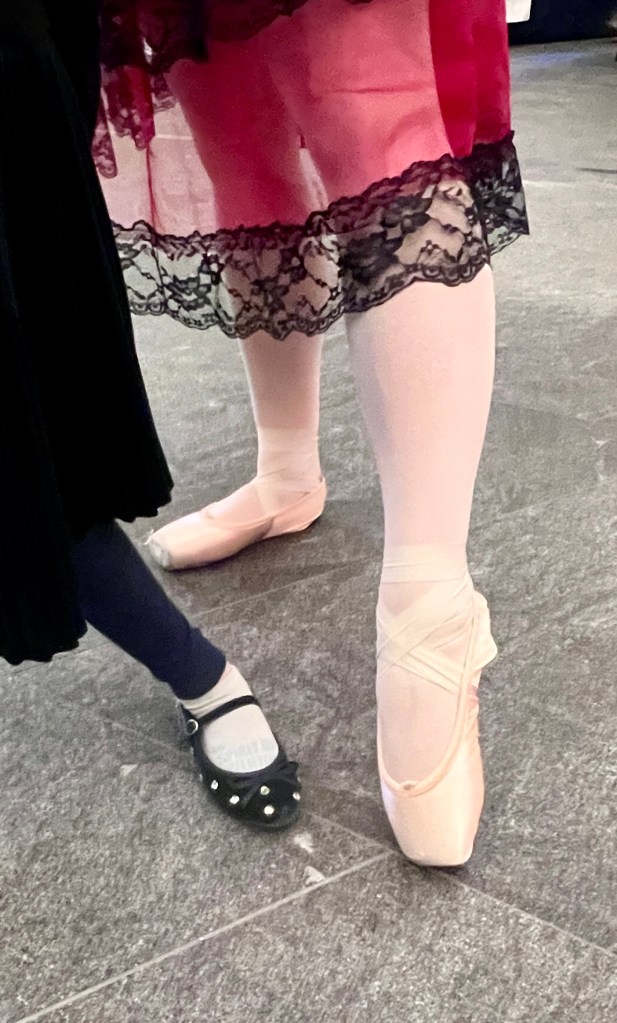
Following the performance, future ballerinas were warmly greeted by Sierra Stipetich and Alexa Glomp
This Nutcracker was light without being thin, precise without stiffness, joyful without excess. It was designed to carry us through the story and safely return us when the curtain closed.
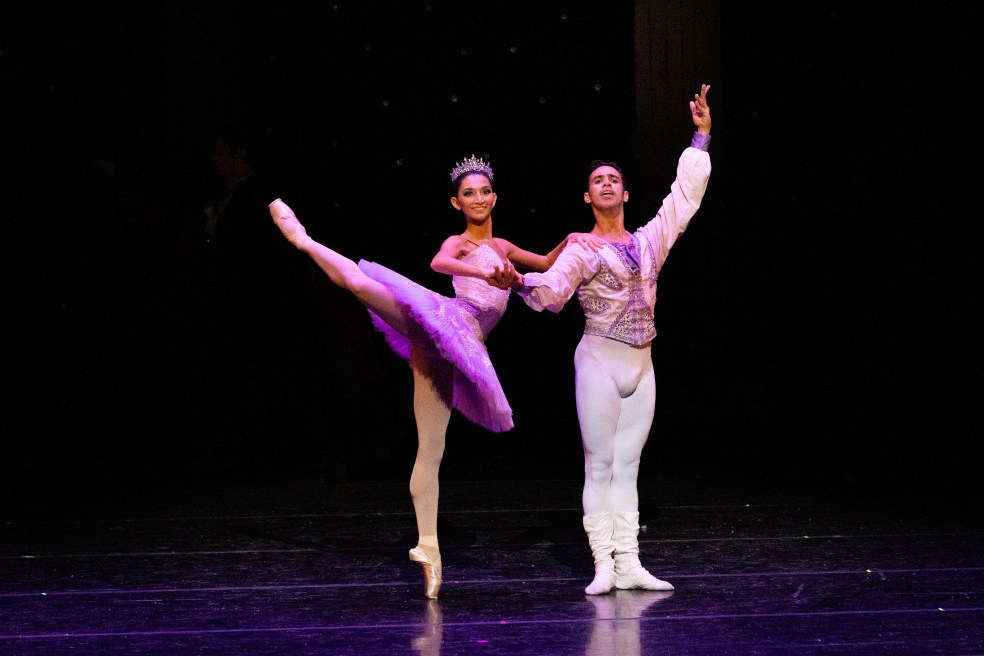
Princess Clara and her prince. Photo by Dave Pearson
Would I see The Nutcracker again? Theirs? Yes. Always.
The next performance for Virginia National Ballet will be the timeless Swan Lake – March 20, 2026 at Hylton Performing Arts Center and March 28, 2026 at Capital One Hall. An online silent auction will be launched in late January. You will be able to bid on trips, art, tickets, and much more. The auction items will be available at both performance venues. Click here for more information on the auction or for tickets.






 Good News. Reviews. Events.