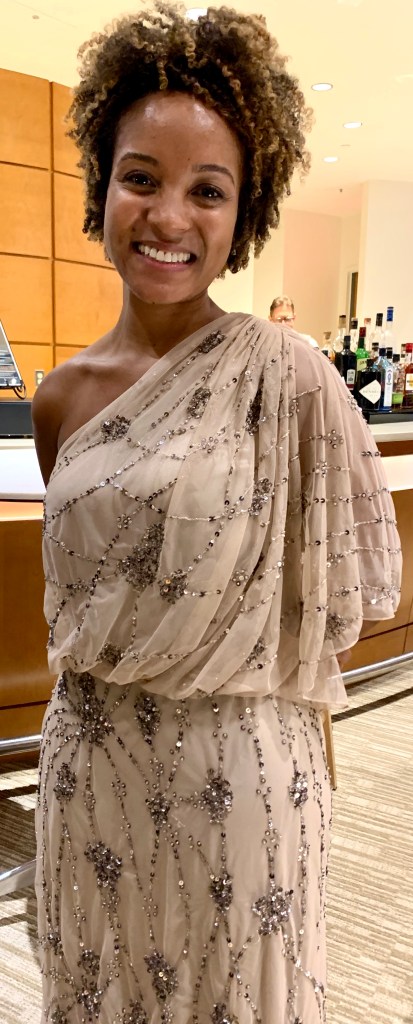
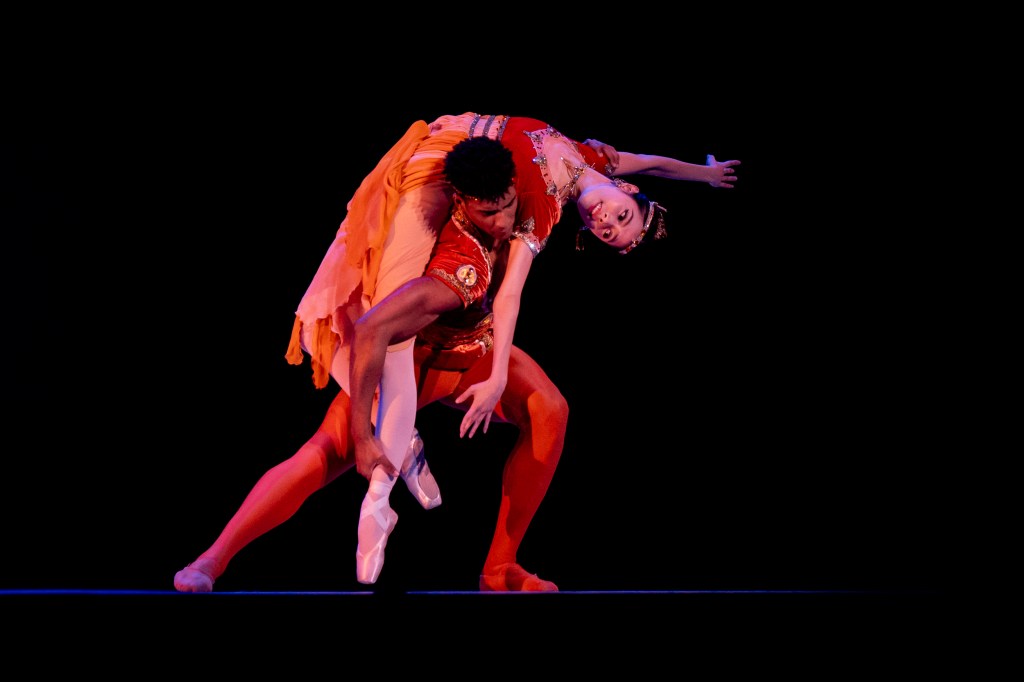
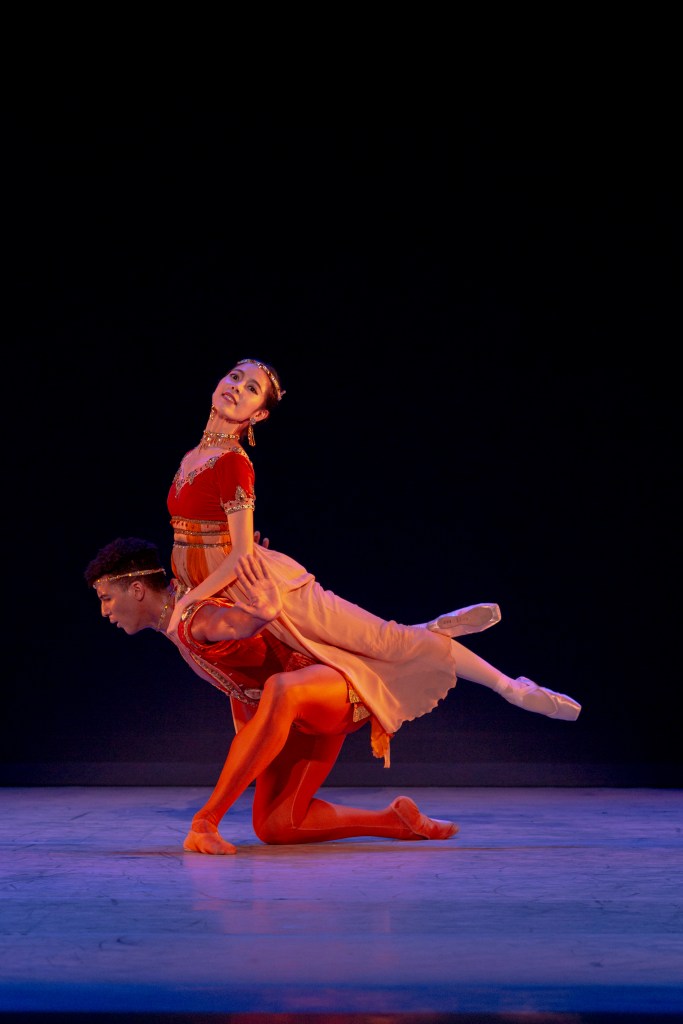
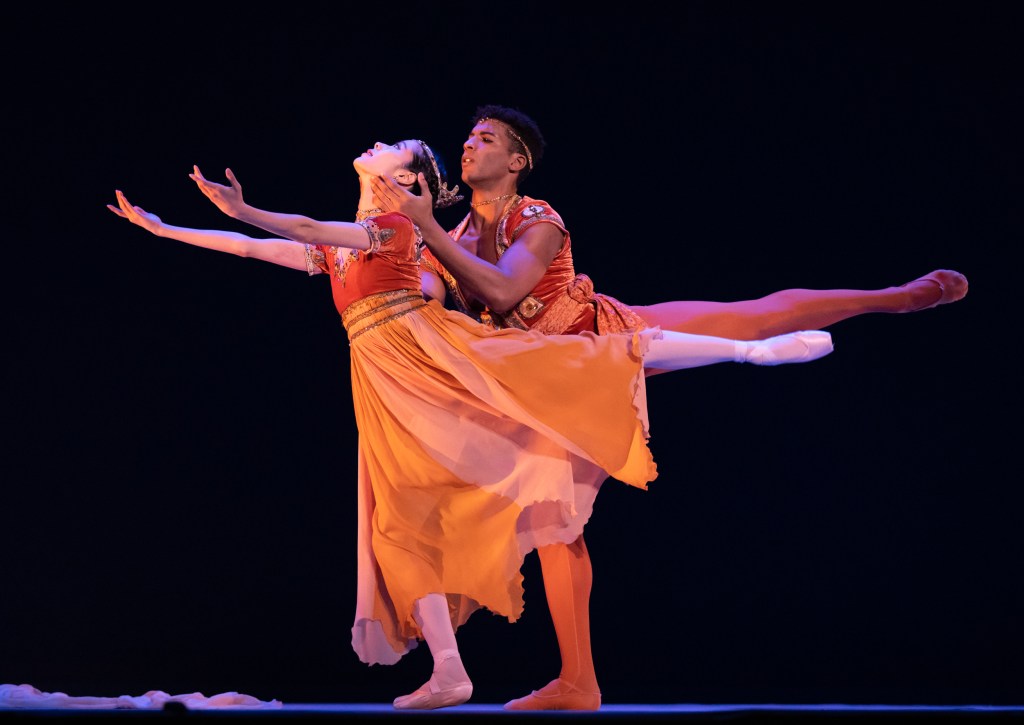
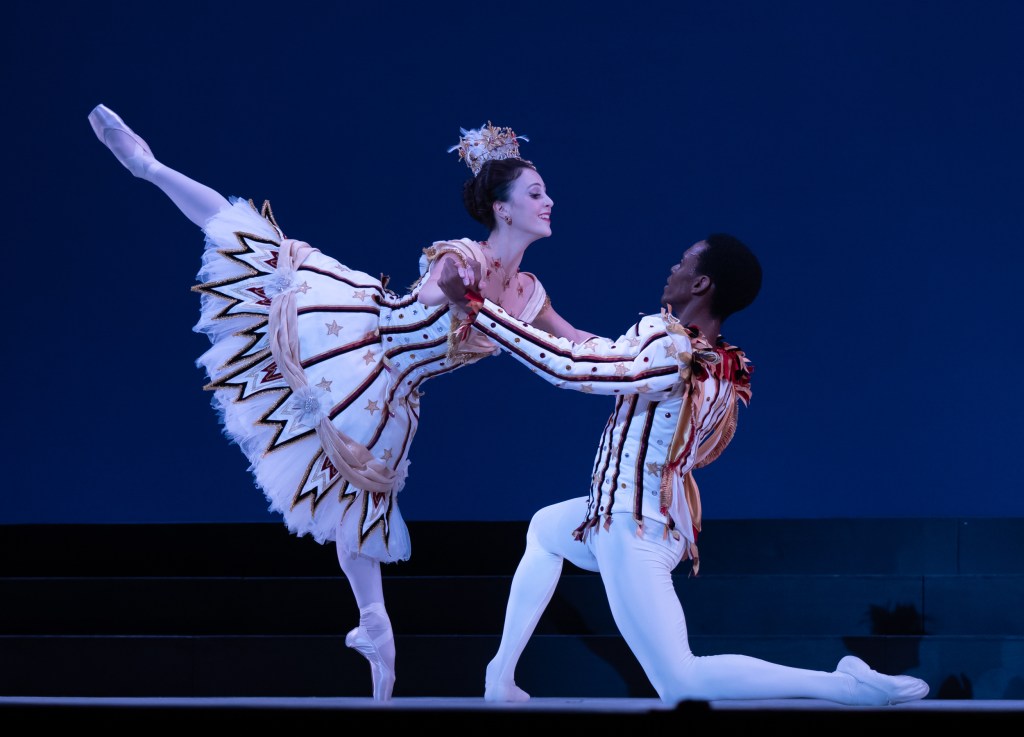
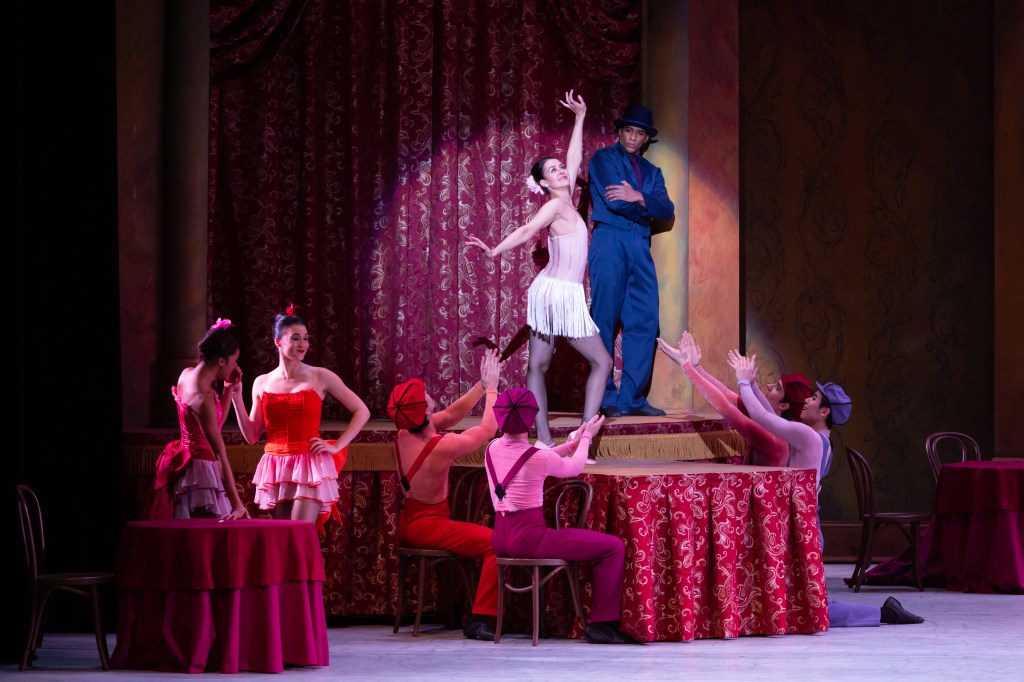
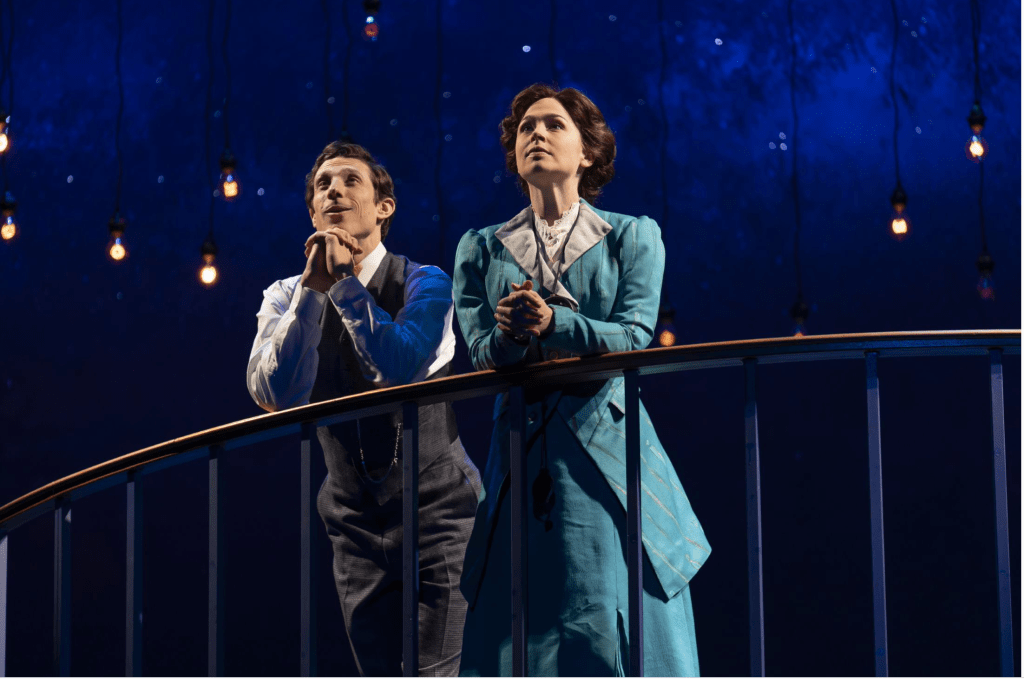
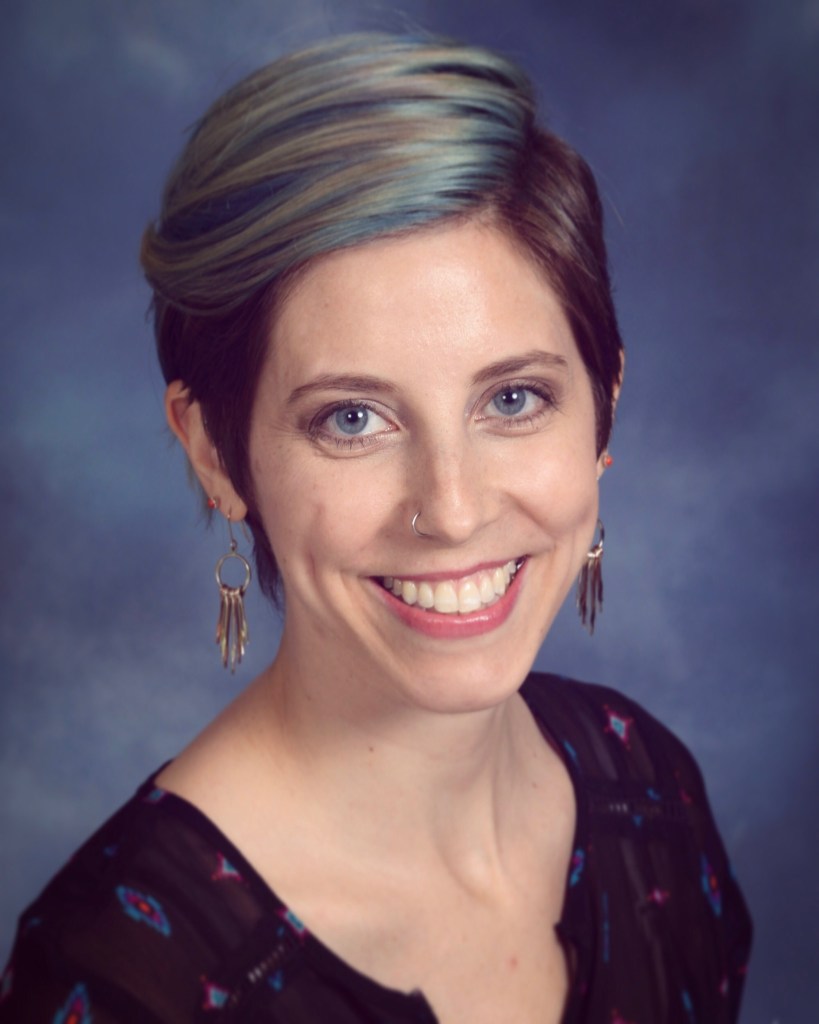
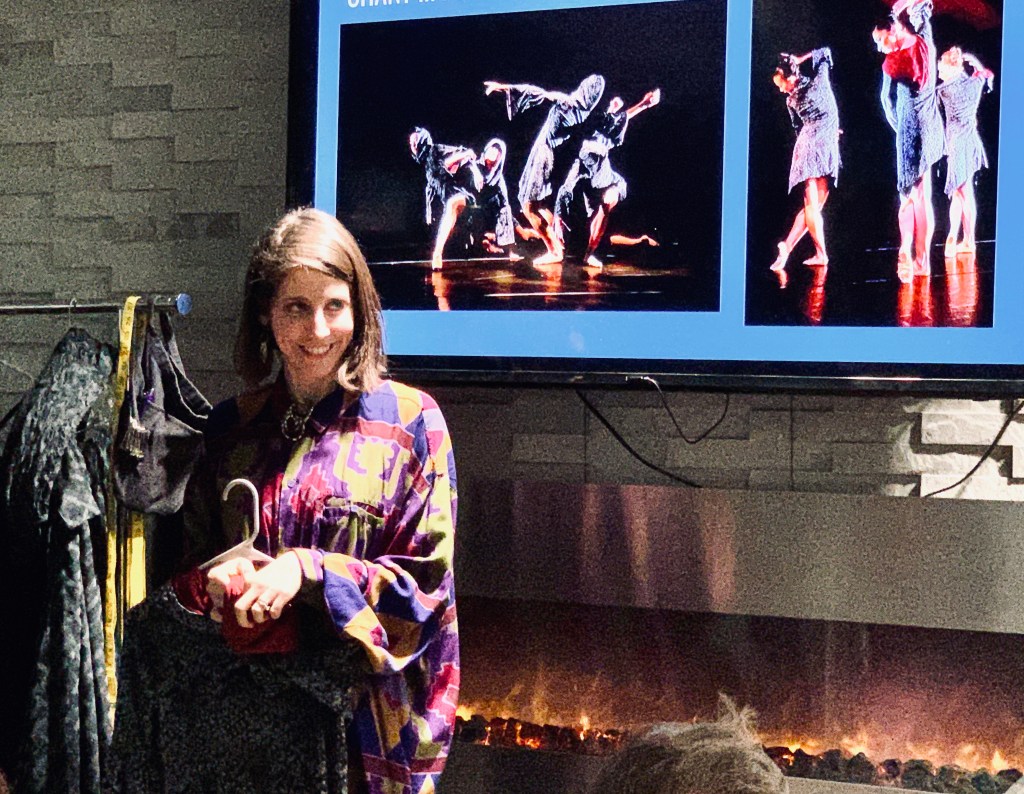
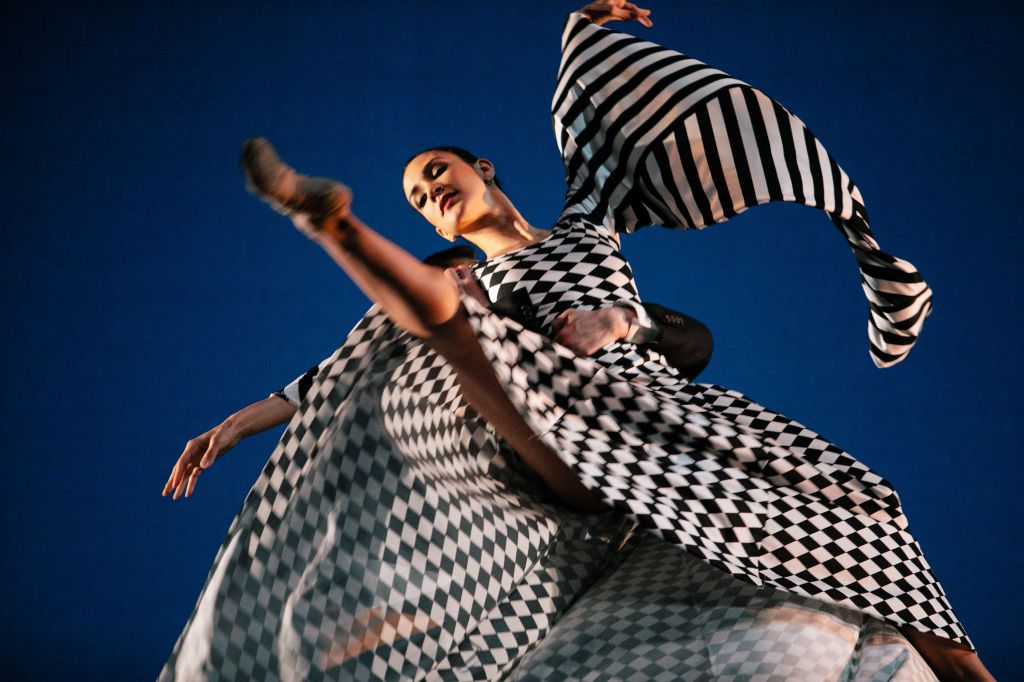
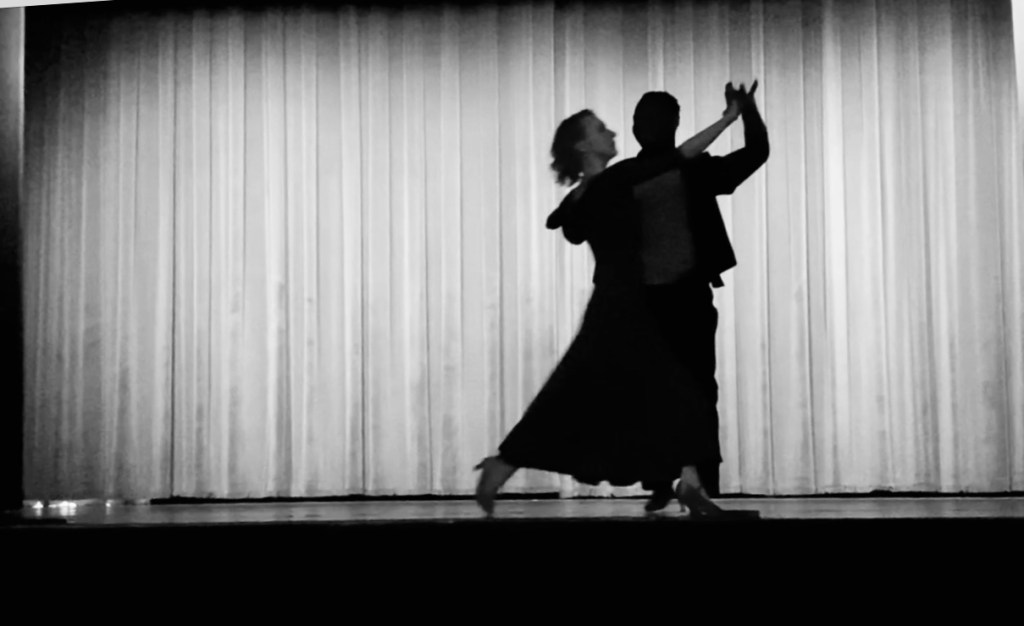
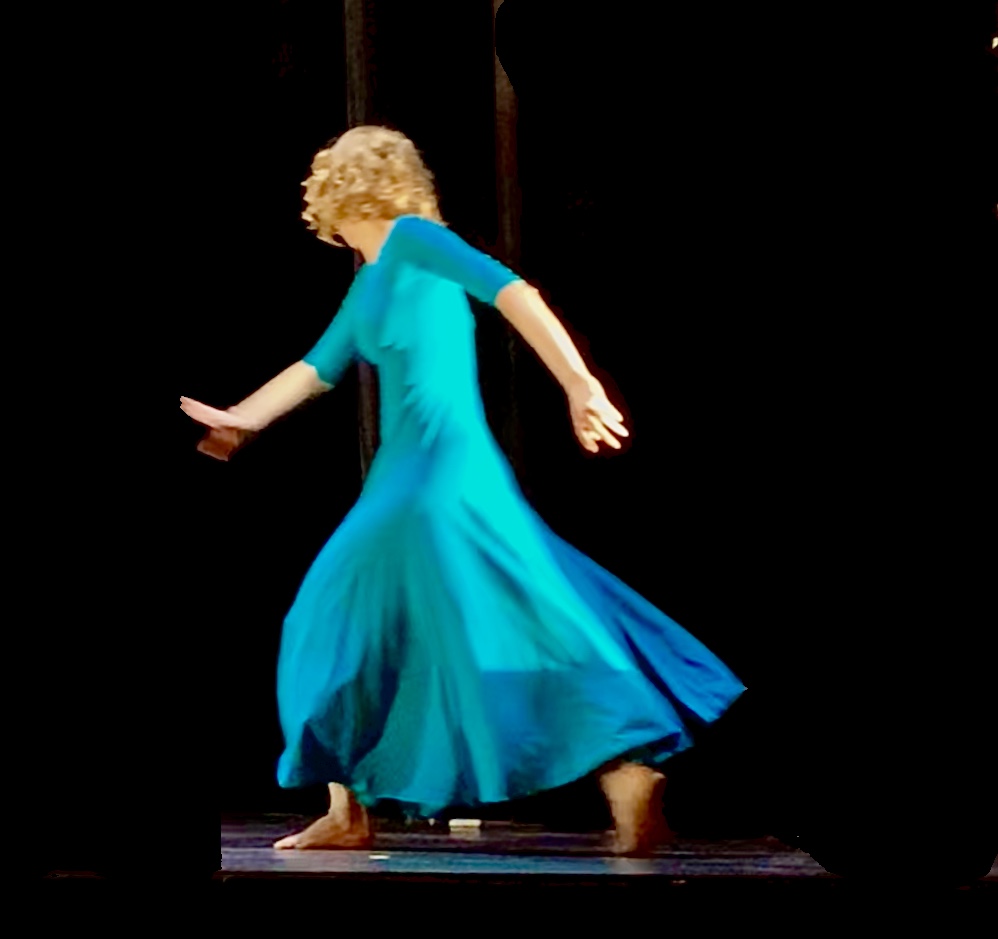
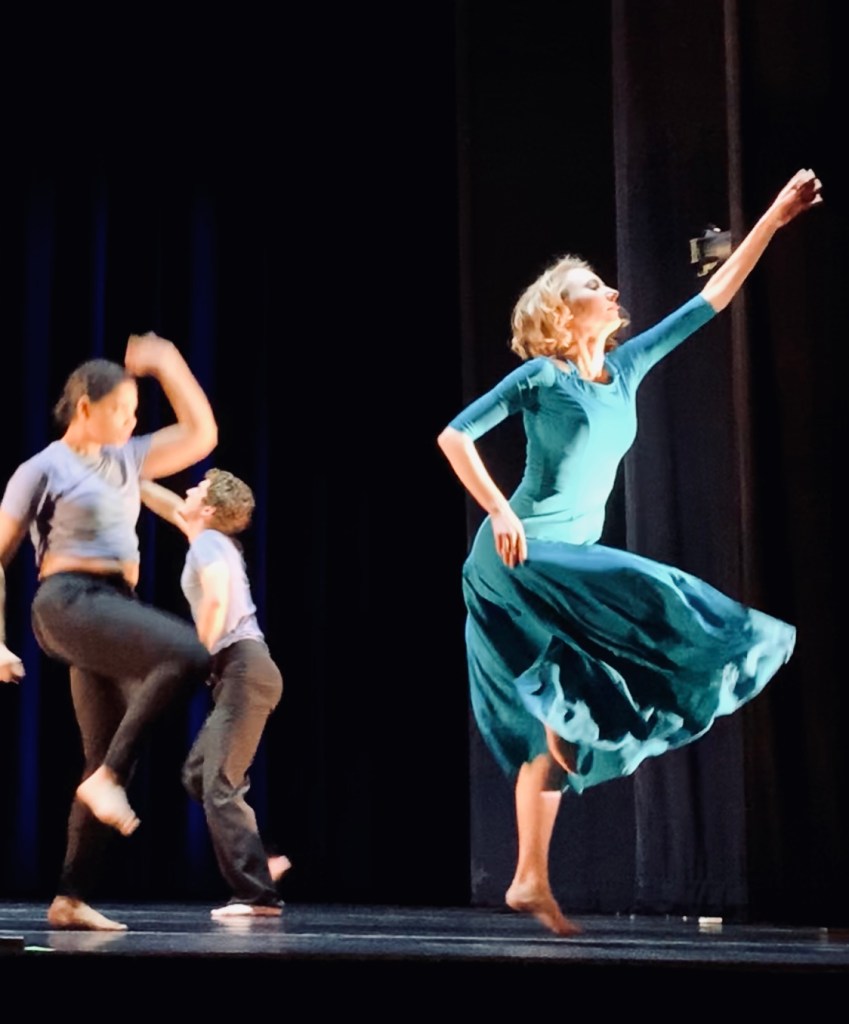
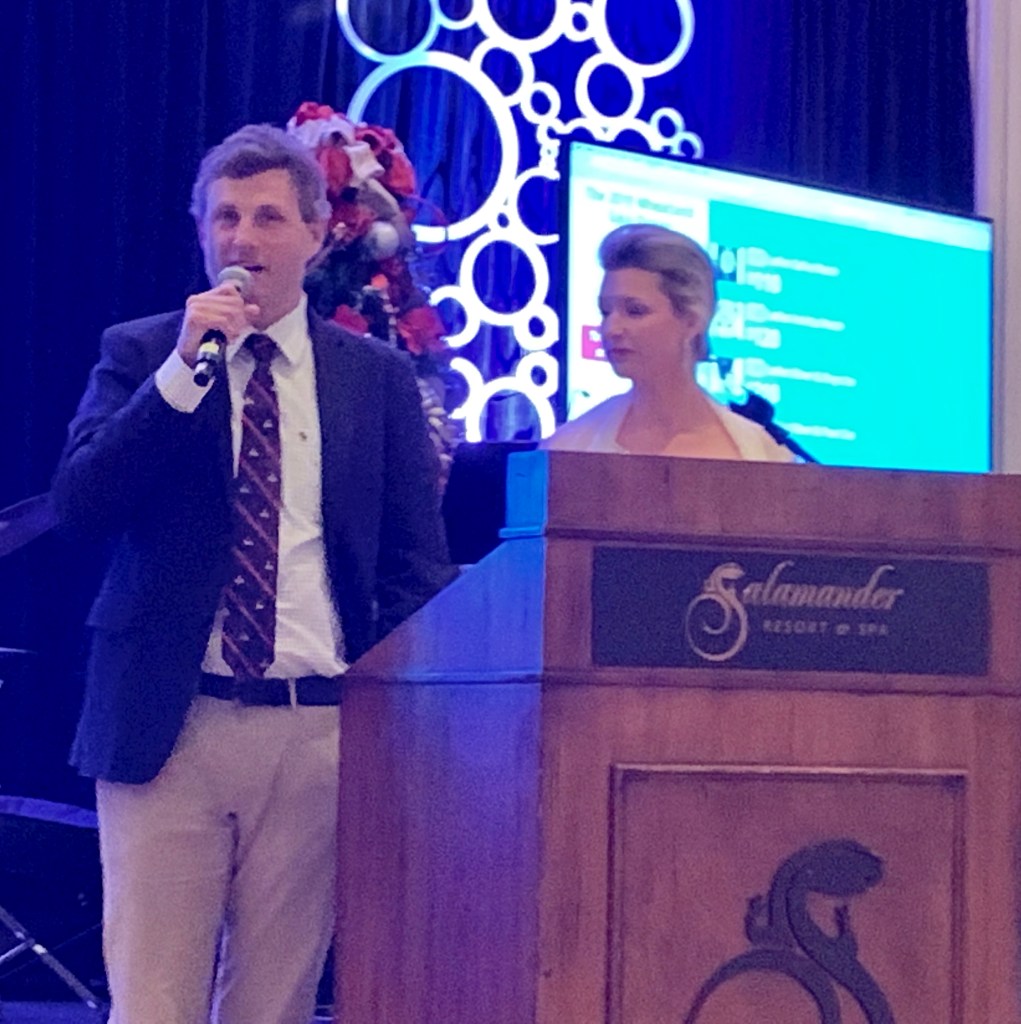
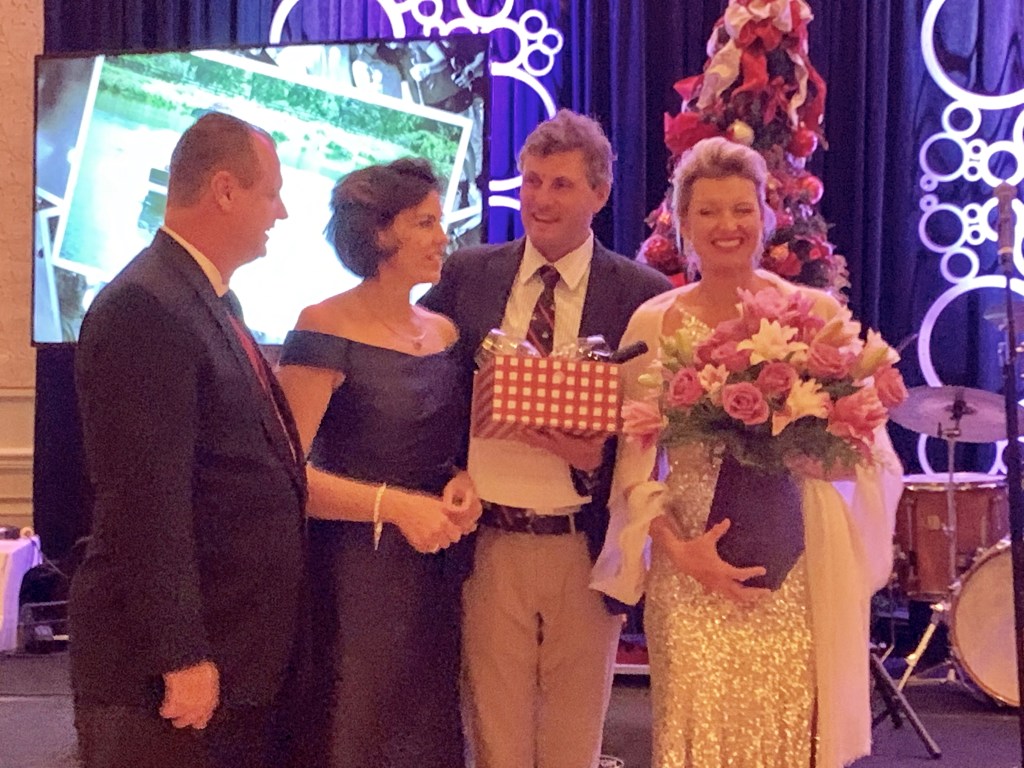
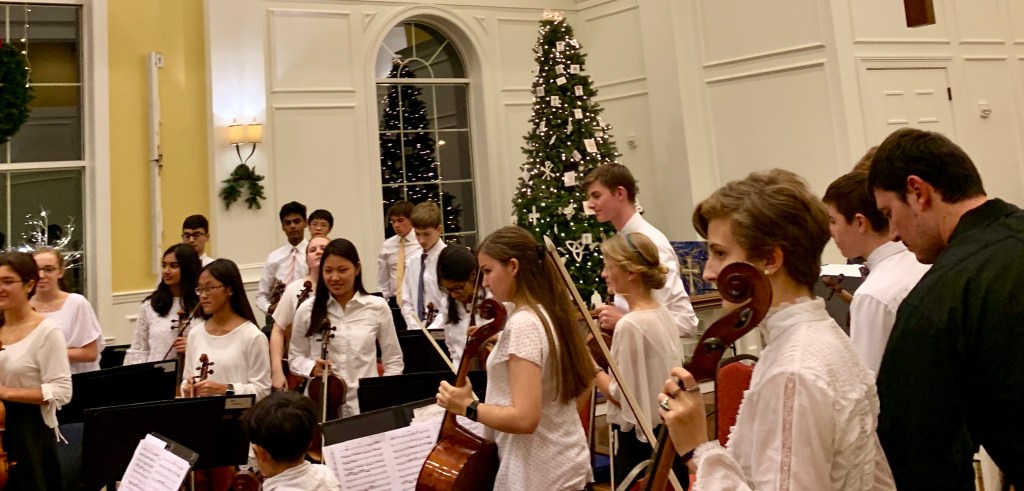
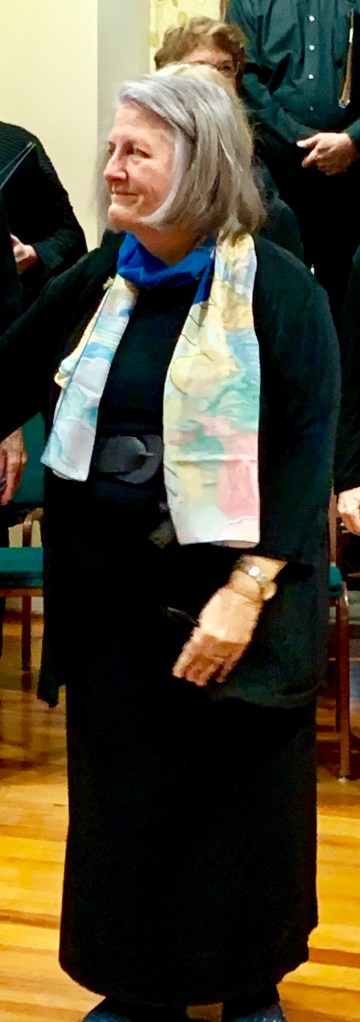
Eight months after becoming a mother, Heather Hutt Iyer waltzed across the Kennedy Center’s Millennium Stage on February 6. She was a member of the Sinclair Dance performance, Kaleidoscope of Tuts.
How did it feel to dance after having a baby? Heather shared, “I have a new body and had to get used to moving it in space. I am so grateful for muscle memory. My 15 years of ballet helped keep me from having to start all over. My arms knew what to do and I sent the energy through my fingertips.”
Heather loved, “swirling around the dance floor” in the waltz. She explained, “Waltz is the ballet of ballroom. Keeping the waltz attitude and dancing with such an accomplished dancer was like a dream. Being a perfectionist, there were many things that I would have liked to have done better.” Her performance was beautiful!
Heather comes by her natural dance ability genetically. Her mother is a National Fox Trot Champion. Her aunt and grandmother are dance teachers. She began her ballet training while in preschool. What does her family think of her dancing? “My family thinks that I am beautiful and are big supporters and encouragers. Their support means the world to me. My husband loved seeing me dance again,” said Heather.
Kaleidoscope of Tuts was created and choreographed by Heather’s ballroom teacher, Sinclair O’gaga Emoghene, for the Millennium Stage. The piece is predominantly modern dance choreography punctuated by a ballroom opening sequence. Heather called upon her extensive dance experience to express the contemporary vocabulary. Sinclair’s choreography symbolized his emigration and immigration struggles from his native Nigeria to the USA.
Sinclair is an Assistant Profession of Dance at Virginia Commonwealth University in Richmond, where his research strives to broaden cultural knowledge through performance. He has a residency at The Reach, the new collaboration and experimental portion of Kennedy Center’s Millennium Stage. He reached out to Heather to dance the opening sequence of his dance program.
Sinclair Dance
Millennium Stage of the Kennedy Center is the free performance venue in the Grand Foyer. It is part of Kennedy Center’s “Performing Arts for Everyone” imitative. Artists from local to international renown present programs there. To perform there can be a dream come true.
“To dance in this prestigious place is amazing. I am so grateful to the Kennedy Center for having this beautiful performance space,” said Heather. Her participation in this performance has invigorated her desire to dance and compete again. Dancing brings great joy and freedom to her spirit.
“Musical Gardening” at the Strathmore Music Center
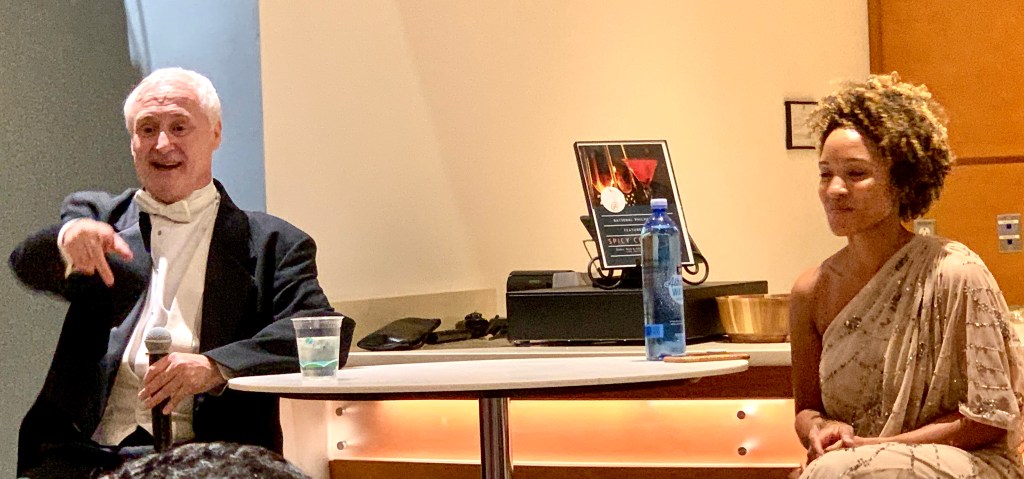
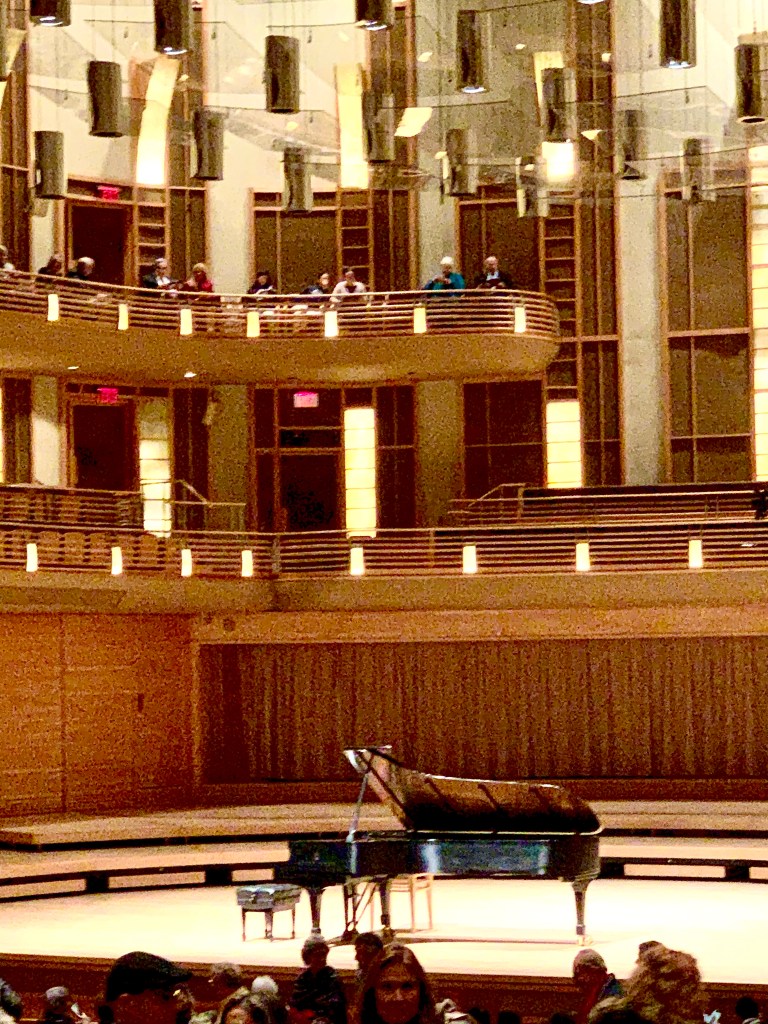
The black Steinway – D Concert Grand Piano dominated the stage. The audience filed into their seats. There was energy and anticipation at the Strathmore Music Center in Bethesda, Maryland. Pianist, Brian Ganz, would soon take the stage and awaken the piano.
Anticipation
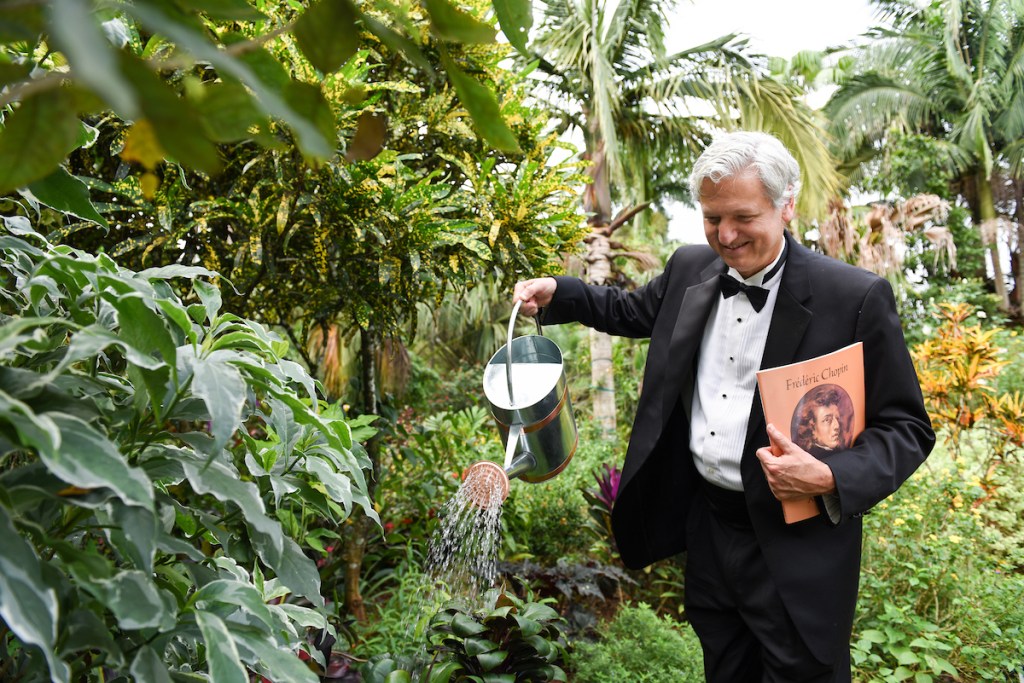
Brian Ganz, is passionate. Ganz, a world renowned, Loudoun County Virginia, based classical pianist on the quest to play every note of every composition that Frederic Chopin composed. The 250 works composed by Chopin technically total 18 hours of music. However, the process of interpreting, learning, and refining performances is time and energy intensive therefore, Brian is on a 15-year plan. On Saturday, February 1, Ganz presented his tenth Chopin recital at Strathmore in collaboration with the National Philharmonic, Piotr Gajewski, Music Director and Conductor.
A hush fell over the audience when Ganz took the stage. He sat down at the piano and simply began to play six of Chopin’s Mazurkas. His interpretation and execution are clear, precise, unaffected, and emotionally charged. Mazurkas are compositions based on Polish folk dances and during Chopin’s time signaled ideas of nationalism.
Brain Ganz performs with joy, clarity, and finesse Photo: Jay Mallin
When he concluded the Mazurkas, Brian addressed the audience, “I am using the metaphor of Musical Gardening. The early works of Chopin contain seeds of his genius, later ones demonstrate the full flowering of that genius. Musical gardening is a paradigm that I thought useful to demonstrate the growth of Chopin’s genius. Tonight, the entire recital is devoted to musical gardening. You will hear musical works that Chopin chose not to publish and I invite you to listen inquiringly – where are the flashes of genius and where are the seeds?“
Brian explained that Chopin only published the works that he considered worthy. Chopin’s deathbed orders to his sister were that all unpublished manuscripts be destroyed, “We have his dear sister, Ludwika , to thank for knowing that not all deathbed wishes should be honored. They salvaged a treasure trove of music. Op 66 – Fantasy Impromptu – can you imagine a world without a Fantasy Impromptu? Neither can I. Tonight the works in the Opus 70s are early works that he chose not to publish. We will listen for the sprouts then watch them grow. There are five genres of music for the evening. The mazurkas are one. I will let the music speak for itself.”
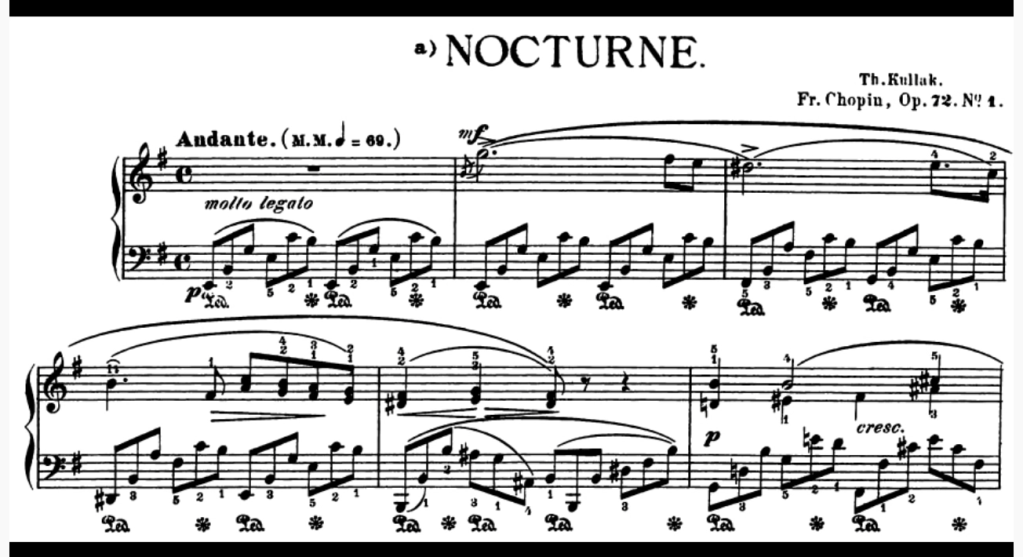
The Nocturns – an early Op. 72 and later Op. 27, both deal with the subject of grief, loss acceptance and ultimately transcendence. When he was 17, the family lost his younger sister, Emelia. We hear a very elegant expression of his grief. His story-telling powers are clearly budding but they have not yet sprouted. In OP 27 C# minor, he struggles with grief then gives a wide ranging story, then a wide array of emotions of acceptance, but to transcend grief he returns to it deeper. Exactly what he does is the music of acceptance and tenderness. In the second Nocturne there is acceptance and blue skies. I invite you to listen to climax then the most brilliant ray of musical sunshine ever composed for the piano. See if you can not only hear, but see that ray of sunshine.”
Musical Gardening from the heart Brian Ganz Style photo: Christina Mendenhall
As Brian began to play Nocturne in E minor OP. 27, the rolling “waves” of consuming grief struck. Suddenly, tears streamed down my cheeks landing on my black velvet jacket. Where did that come from? It occurred to me that Brian’s performance is highly personal. When he spoke and when he played it was as though it were just to me. Like Chopin, he is a master at communicating from the heart.
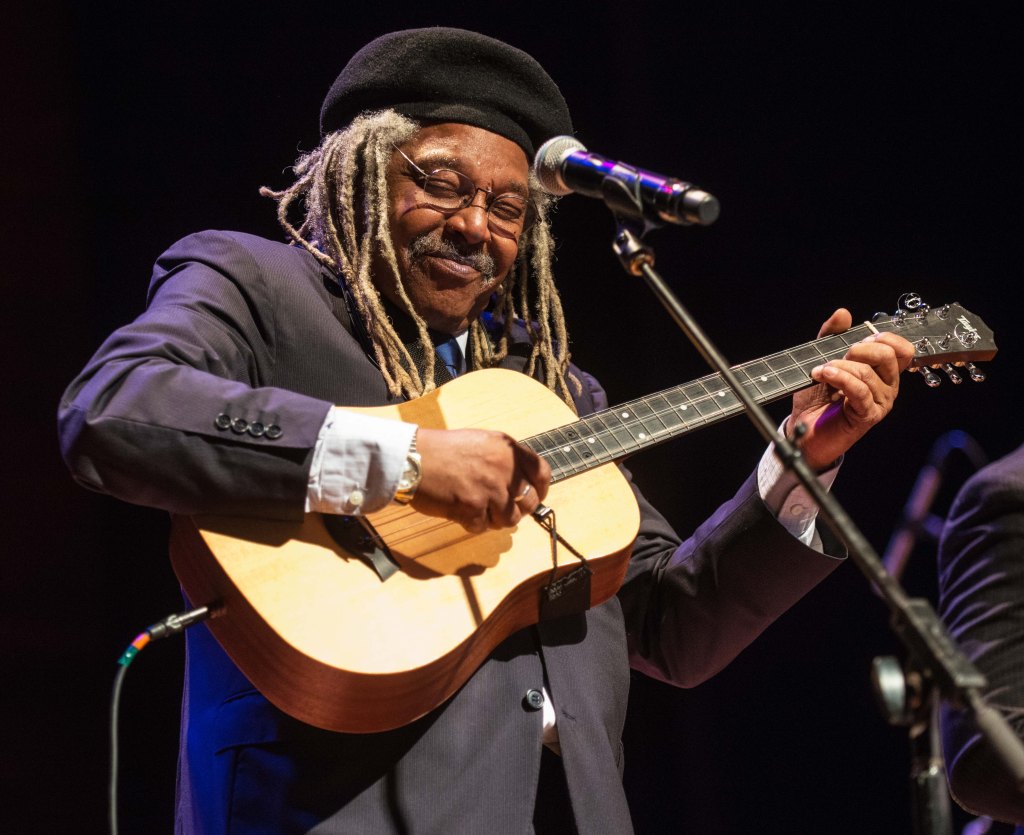
Juan de Marcos – founder of the Afro-Cuban All Stars Press Package photo
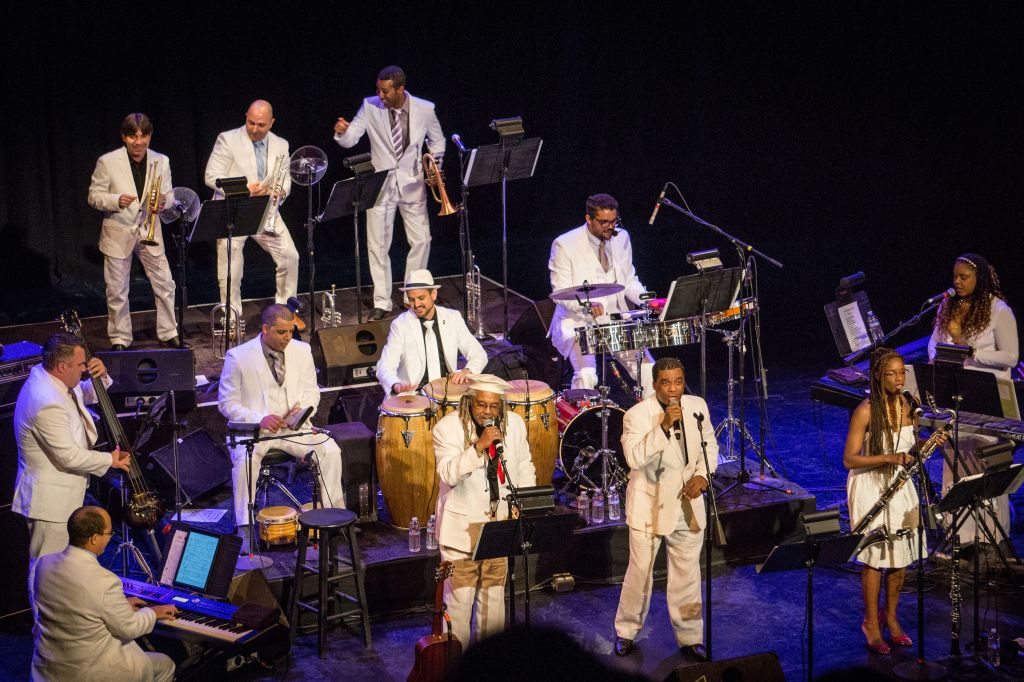
A force to be reckoned with is the best way to describe Juan de Marcos and Afro-Cuban All Stars when they took the stage at Strathmore Music Center in Rockville, Maryland on Friday, January 31. They owned the audience from the first notes.
Supreme band leader and showman, de Marcos, led the band in Latin rhythms that blended with the African and European heritage of Cuba. Sitting still in my chair was hard. His engaging performance left the audience wanting more. He obliged with several encores full of energy and zest.
De Marcos shared that music is his passion. He comes from a musical family. His father insisted that he have an education and a “real” career. Being the good son, he earned his doctorate in science and engineering. However, his heart was in music. After his father passed away, Juan “attacked” his passion and never looked back.
In his youth, de Marcos was a fan of American and British rock and roll which was largely forbidden in Cuba. Later, he rediscovered his musical roots and made it his goal to preserve and keep traditional Cuban folk music alive for future generations.
Juan de Marcos and the Afro-Cuban All Stars Band Press package photo
I first discovered de Marcos’ music through my interest in the Buena Vista Social Club, a predecessor band to today’s Afro-Cuban All Stars. I love the smooth, classy, tones and rhythms as well as pianist, Ruben Gozalez (1919 – 2003). When I noticed the Strathmore announcement of the arrival of de Marcos, I knew where I would be on the 31st.
De Marcos’ said that for him, it all about family. The beautiful ladies on stage in the gorgeous evening gowns were his wife and their two daughters – Laura Lydia Gonzalez, plays clarinets and Gliceria Gonzalez, plays vibes, keyboards and sings. His wife and business partner, Gliceria Abreu, plays percussion and dances. Laura Lydia’s clarinet performance of 1920’s Cuban tunes made me think, “Benny Goodman, move over!”
They Make a Great Sound! Press Package Photo
Dancing in the Aisles and the balconies
The show was great fun, very elegant, and very respectful. The band members, in well-tailored suits and flowing evening gowns engaged the audience for an uninterrupted show of nearly two hours. Their energy was contagious! Because words cannot capture the spirit, click here to hear their sound. If one can burn calories watching a concert while seated, many calories were burned that night. As the show neared the end, de Marcos invited us to dance! Dance we did – in the aisles. The trick was not to slide down the inclined floor.
Arian and Lissa teach the dances D.C. Casineros Dance Company
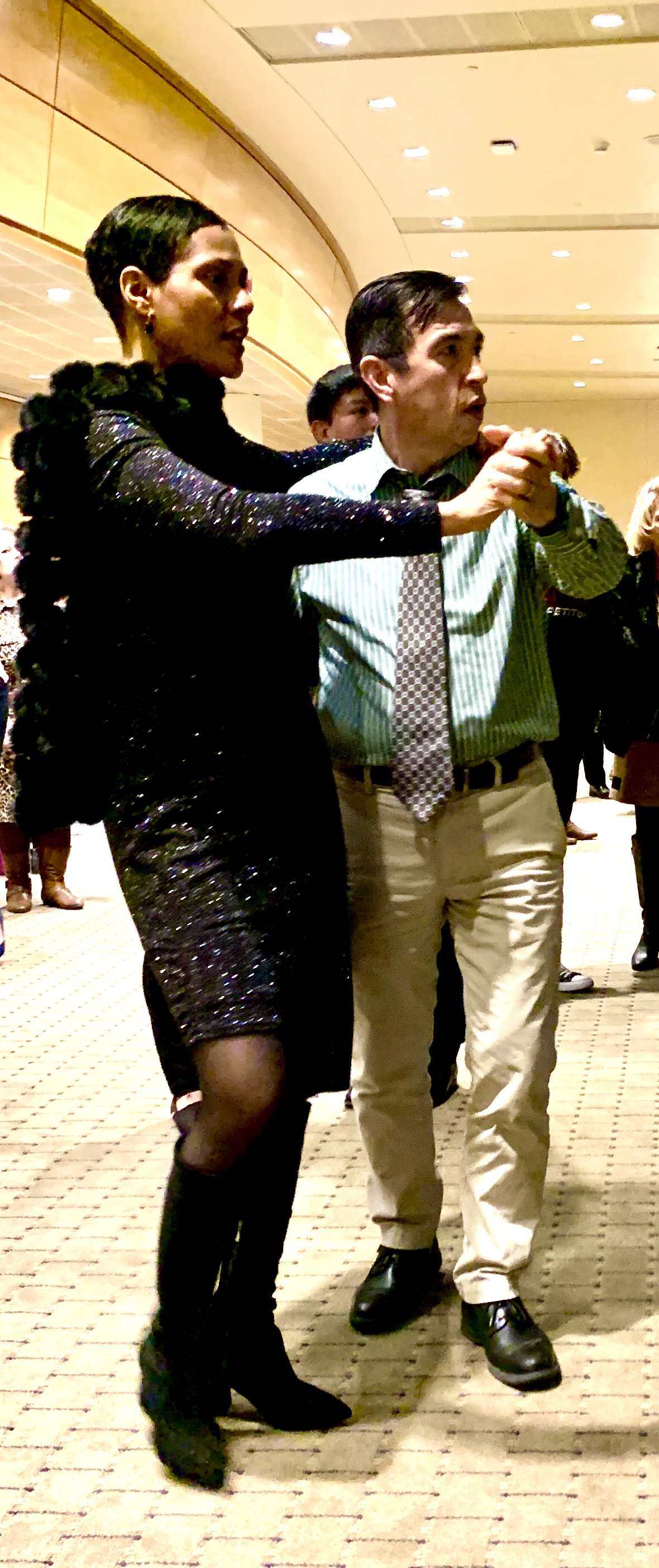
Cliff Collins and Andi Cullins, and Drs. Defoe and Jimenz study the steps and movements of the dance.
Before the show, Arian Valdivia with D.C. Casineros Dance Company taught and demonstrated classic Cuban dances including So. The lobby at Strathmore filled with guests learning the danzion and Cuban Rhumba. Company members demonstrated a showcase of dances. By the close of the session, the lobby filled with swaying bodies and the staircase was packed with spectators.
Dr. Deirdre Defoe and Dr. Antonio Jimenez learning the SO
A huge thank you to Strathmore Music Center for bringing this band to us. The acoustics and environment are the perfect venue to enjoy music of all kinds.
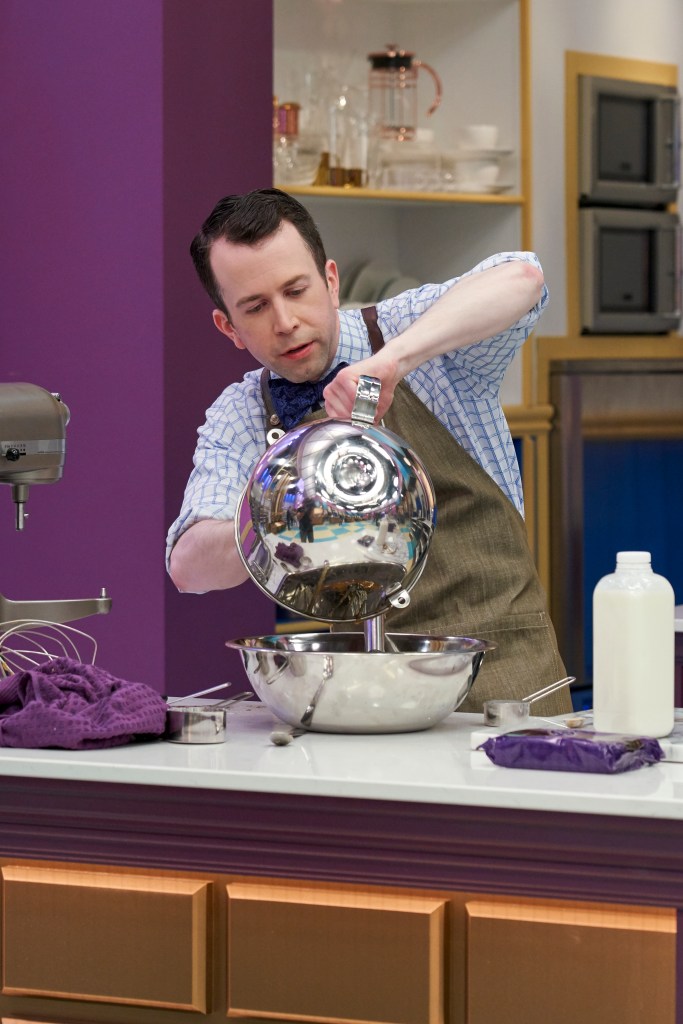
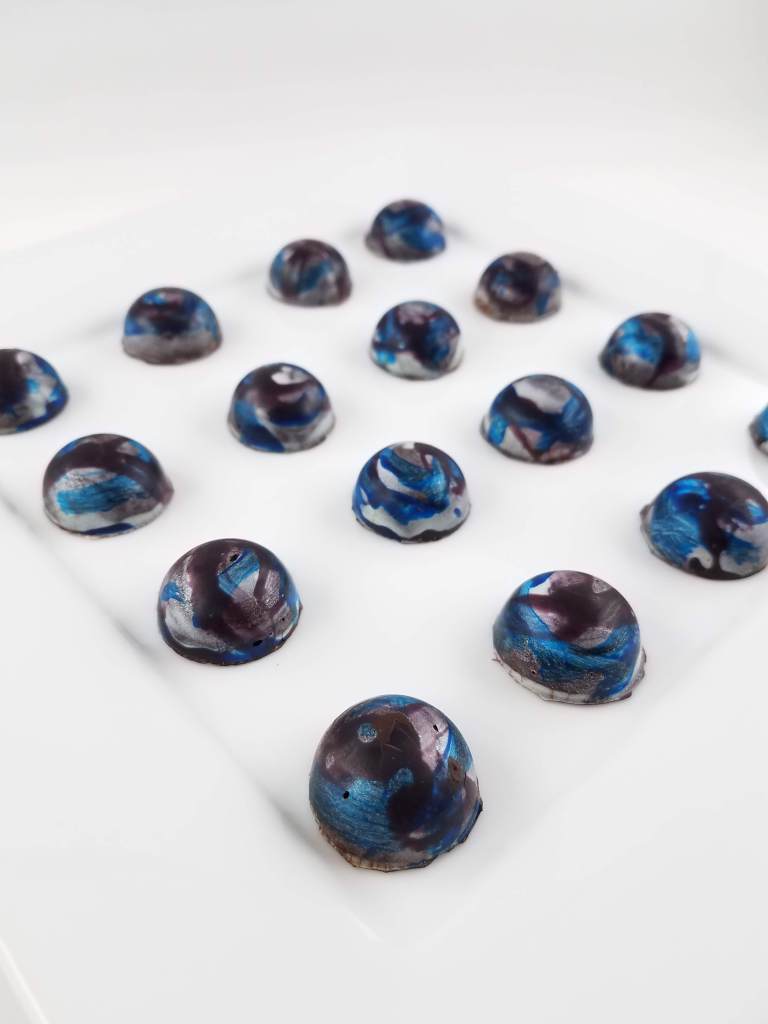
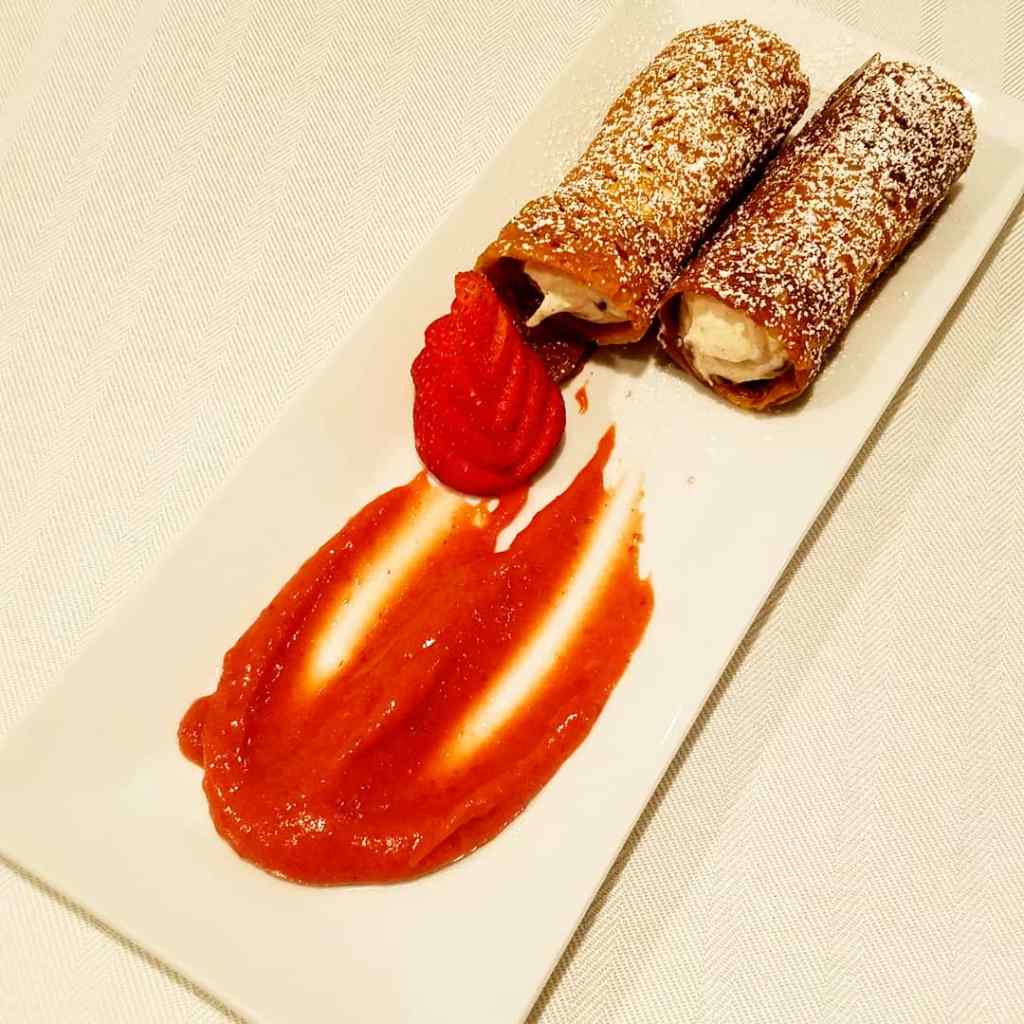
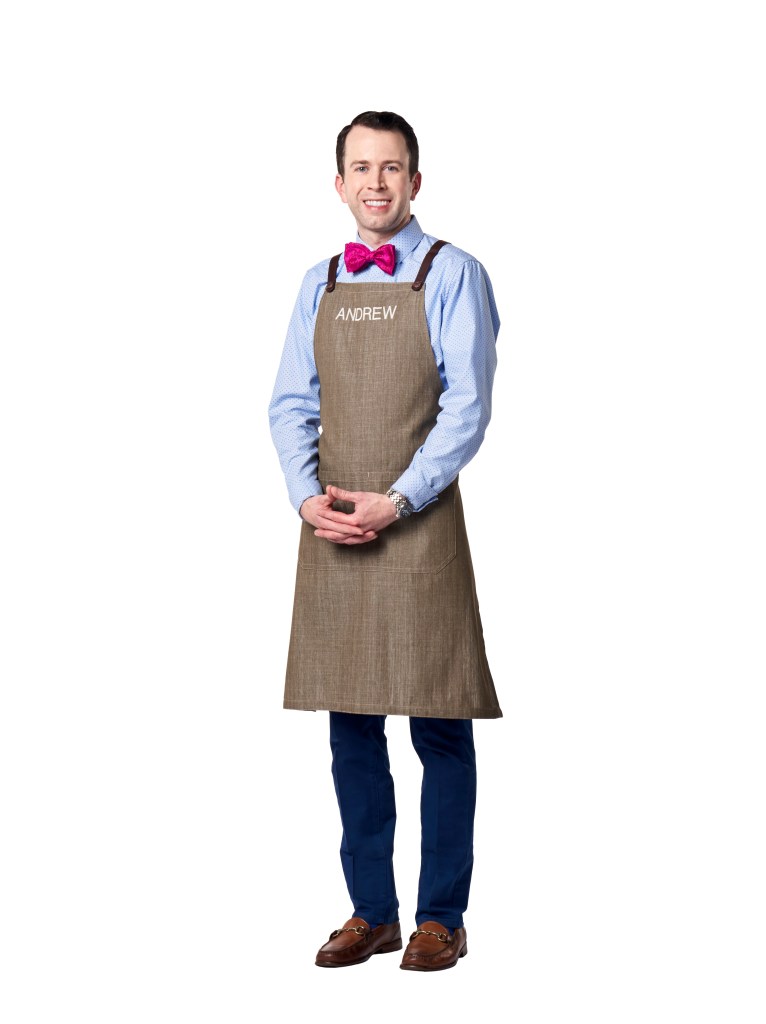
Cupcakes infused with bourbon, buttery Madeleines, and chocolate delights… This from a professional pastry chef, yes? This is from a financial consultant, amateur home baker with a passion for fine flavors and textural balance. “Baking is a creative stress release,” says baker extraordinaire, Andrew Keen.
Andrew Keen “by day” images curtesy of Andrew Keen
Keen, a financial consultant with a major government contractor, holds degrees in international relations from the College of William and Mary, and managerial finance from Cornell University. He is a bow tie aficionado. I first noticed Andrew while attending William and Mary Alumni Association events. His crisp, precise turnout always left a great impression. . . With Facebook and Instagram, Andrew has revealed his many interesting facets and passions. One of his recent posts announced his participation in the Great Chocolate Showdown on Canada Food Network.
Look at all that chocolate! Photo curtsy of Food Network Canada
Andrew brings his “A Game” to Canada Photo Curtesy of Food Network Canada
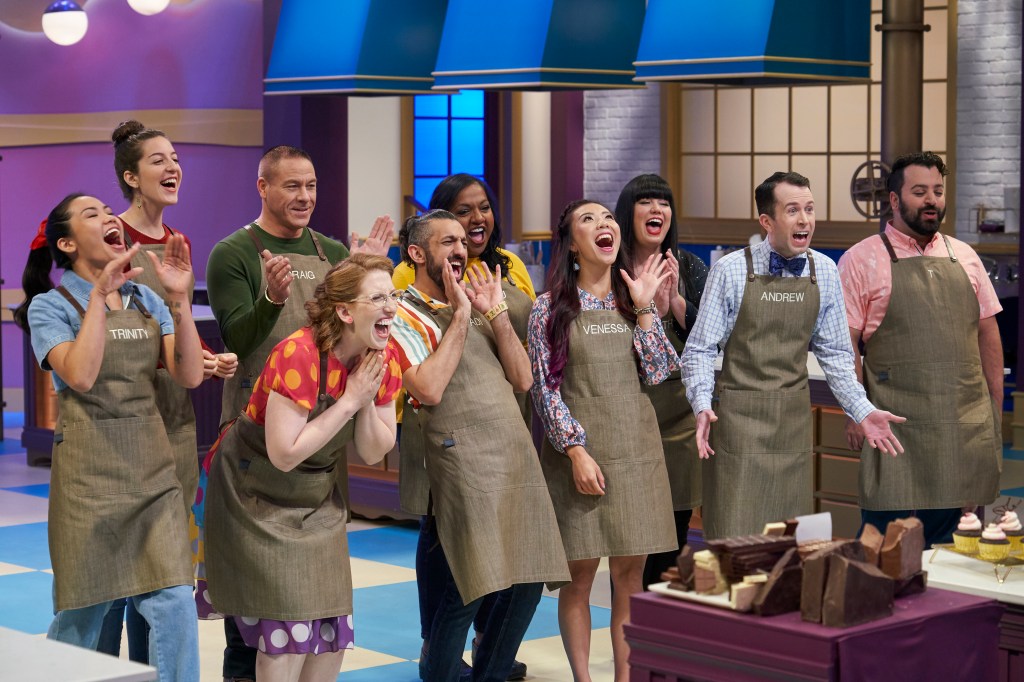
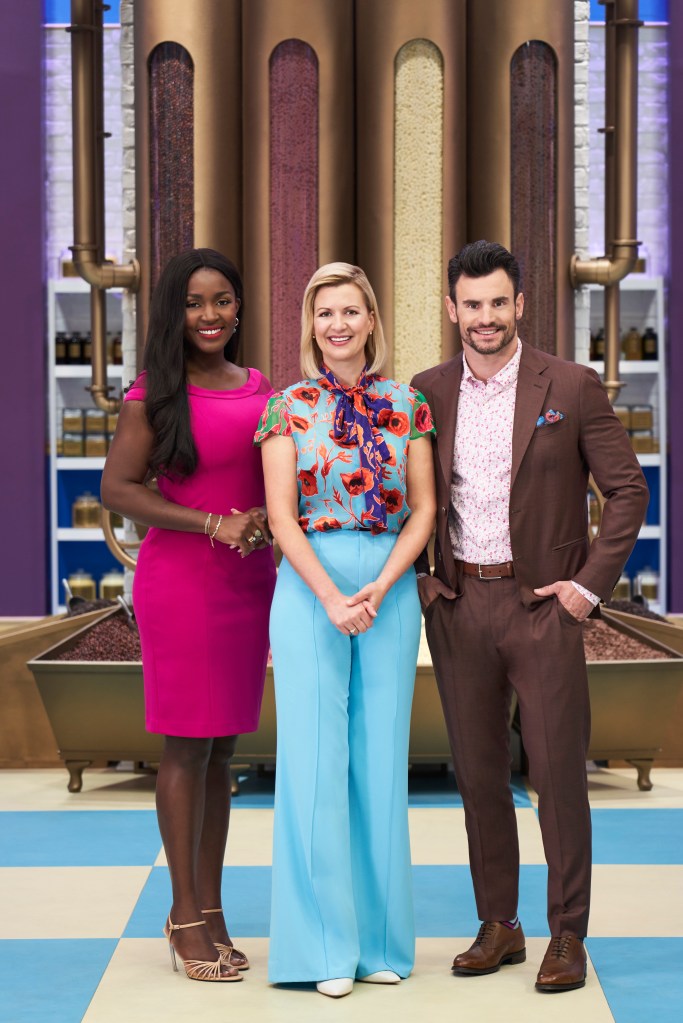
The Great Chocolate Showdown Judges: Cynthia Stroud, Ana Olson, Steven Hodge Photo curtesy of Food Network Canada
The Great Chocolate Showdown premiered on Tuesday, February 4. On the show, ten home bakers compete to be “crowned the ultimate Great Chocolate Showdown champion.” Three judges mentor and evaluate every creation. The judges are Anna Olson, Cynthia Stroud, and Steven Hodge. Andrew, creative, precise, and passionate, will surly give the other contestants a good run.
How did a home baker and government consultant gain a spot on a major network competition? “My Instagram posts captured the attention of the show’s producers,” Andrew told me. The photography of his creations rivals professionals’ shots and the items beckon the viewer to gain a pound or two.
Asked how he developed an interest in baking, Andrew told me he has been baking since his undergraduate years at William and Mary. “When I finally got a kitchen large enough for a stand mixer, I started experimenting.” He likes to bake what he thinks is “delicious and interesting.” Does he do it for profit? No, “I bake whatever I like then I give it away.” Who are the lucky recipients? “Friends, family, and co-workers,” said Andrew.
Tour of Makers Mark facility in Kentucky; sealing with red wax drip Images curtesy of Andrew Keen
A complimentary passion for Andrew is fine whiskey, bourbon, and Scotch. His passion sprang from his visit to Kentucky where he experienced the home of fine whiskey. While visiting the Makers Mark facility, he sealed his own bottle with the red wax drip. He has approximately 25 bottles of scotch, whiskey, and bourbon. “My love of whiskey led to my baking practice,” said Andrew.
“Bourbon is most durable for baking. It is a natural fit for baking because its flavor comes through better,” said Andrew. He has tried scotch and whiskey but found them less compatible for baking.
Whiskey, Scotch, and bourbon are not synonymous. The main differences between Scotch and whiskey is that Scotch is made in Scotland from malt barley. Whiskey is made in the USA, primarily in Kentucky, and is distilled from corn. Bourbon and whiskey are differentiated by their process. To be considered bourbon, the grain mash must be at least 51 per cent corn, contain no additives, and be stored in charred oak containers.
Designing and creating is the balance of skill and finesse Images curtesy of Andrew Keen
Andrew’s Bourbon Cupcakes have become his signature product. He enjoys experimenting and shared, “Adding more bourbon does not add to the flavor.” I asked Andrew if he sees himself a chemist or an artist. “That is the discussion now – should cooking be scientific or more just seeing what works,” explained Andrew.
“I like to see what works. I am deliberate with how I work. I make small changes and see what I like. I keep notes and evaluate based on the last effort until I arrive at the desired flavor,” Andrew told me. While flavor is a key factor in his baking, the texture is as important. “It is really the package of smell, look, taste and texture and how the ingredients interact to create the right balance,” he continued.
Seeking out the best; always growing – with Bobby Flay Image curtesy of Andrew Keen
Andrew comes from a close family where his father enjoys baking pies, and his mother baked M&M cakes for his school celebrations. His sister’s gluten allergy helped inspire his gluten-free experimentation. “Gluten free flour makes some baking better,” he told me. His family is his taste testers and the recipients of many of his creations.
Andrew described his kitchen, “It is a condo kitchen with room on the counter for my four and a half quart stand mixer. I use an electric oven but hope for a gas oven in my next kitchen.
Great Chocolate Showdown– Andrew Keen Image Courtesy of Food Network Canada
Of his experience on the Great Chocolate Showdown, Andrew shared, “I learned a great deal from the competitors and the judges. There are so many ways to work with chocolate to create tantalizing desserts. I learned secrets that I can employ in my baking practice in the future. To be mentored by the great bakers, Anna Olson, Cynthia Stroud, and Steven Hodge, was a dream come true. They gave me many ideas and ways to grow. The competition demanded that I grow very quickly and bring my A game. I enjoyed the experience a lot.”
Form, texture, flavor – it is all in the presentation Images curtesy of Andrew Keen
Asked what his favorite baking format is, he told me, “Hand-helds, small format desserts are what I enjoy most. I think of it as ‘edible art.’ Eat first with our eyes.”
A secret he shared, “Beat batter just enough to get all ingredients moist. Don’t over-beat.”
Best of luck, Andrew! Keep posting your magnificent creations – your creations are indeed, works of art.
Pasta, wine, craft beer, gelato, cheese, and beautiful fresh breads made the idea of visiting Rome mouthwatering. John Daum, awakened the gastronomic sense in the audience of Armchair Travel to Rome on Friday, January 31. “Travel” was hosted by the Loudoun County Public Library, Lorraine Moffa, Program Coordinator. Aptly, the event took place at Old Ox Brewery – Ashburn.
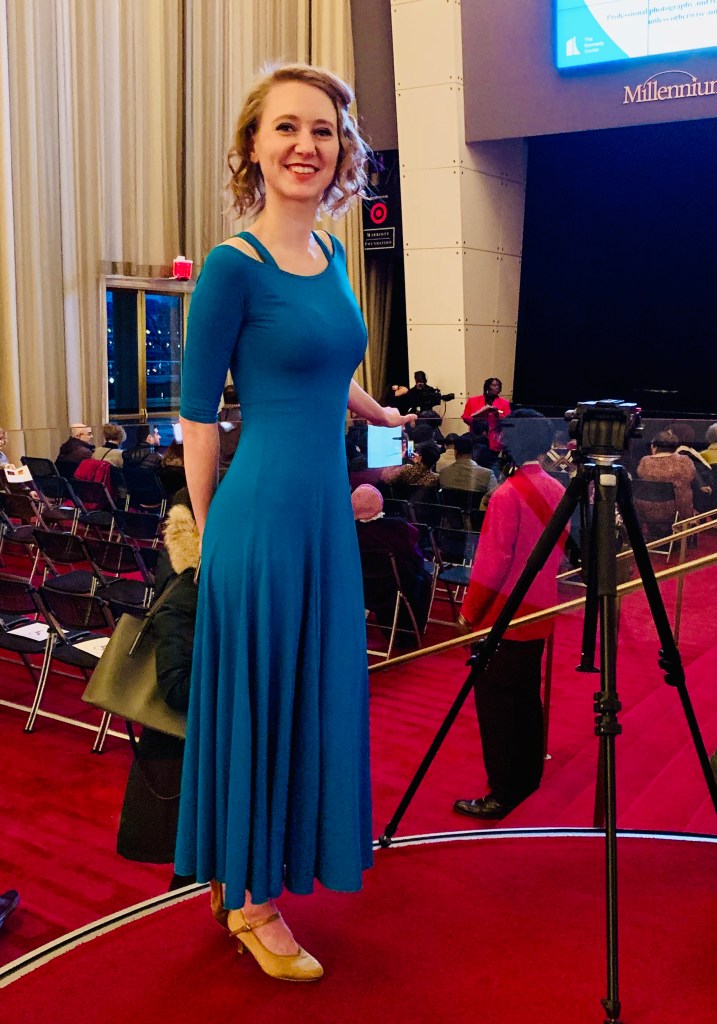
The food! Image curtesy of John Daum
An avid traveler and tour guide, John Daum is a fifth grade teacher at The Hill School in Middleburg, Virginia. He teaches his students about Renaissance art history, architecture, mythology, and oher brilliant subjects. Armed with enticing slides, a cold beer, and fantastic stories, John whisked his audience off on a Roman adventure replete with secret passageways, underground treasures, and tourist-free zones.
“I truly believe that if you go to Rome and have a bad meal, you should go home. And cancel your passport.” John told the audience. “Roman food is very basic, “ he continued. Rome was a peasant city, unlike the merchant and trade cities of Venice and Florence. A basic meal in Rome includes “A little cheese, some bread, tomatoes, and some pork. What they have is very tasty. Nothing fancy and it all goes great with wine. Roman pizza is fantastic, and they don’t burn it. They have some of the best gelato in Italy. I believe firmly that you should have gelato with every meal. The coffee is amazing and how it is made is like a state secret. Gain some weight. Your carry-on luggage should be in your stomach,” said John with a smile.
Image Curtesy of John Daum
Rome is very special. Very few cities in the world can claim to have been the head of a vast empire and continue today with significant power. According to John, traveling to Rome must be experienced not merely observed. “Pick a hotel you’ve never heard of, without reward points, and be a part of the old city,” He explained that the experience of staying in a family-run hotel typically comes with great breakfasts and will better immerse the traveler in the city’s culture and people. He recommended staying in the areas of Piazza Navona, Campa Fiori, and the Pantheon.
Upon arrival, John suggested experiencing the Piazza Navona. There, while awaiting hotel check-in, John recommends people watching and getting into the flow of the city. See how the Romans move about and carry on in their daily lives. The Piazza is on the site of the old race track. “Hang out. Have a coffee, a beer, whatever you want and spend some time there. It is a beautiful space, it is open and at night it is very atmospheric. It has a gorgeous fountain in the middle, this Fountain was a comeback piece for Bernini, the Fountain of the Four Rivers. Each statue represents one of the four major rivers – Danube, Ganges, Nile, and Rio de la Plata of South America,” John told his guests and continued, “Rest up at the Piazza because dinner in Rome starts at 11 PM.”
Just to set the perspective of vastness, the Coliseum held 50,000 people. The Horse Races held 350,000. Piazza Navona is enormous. “At night, it is very romantic,” said John.
Fontana del Quattro Fiumi (The Fountain of the Four Rivers ) circa 1651 Image curtesy of John Daum
To set the scope and scale of the city of Rome within its historic context, John told us that at its peak, one million people lived in Rome. There were 60 million people under the Roman Empire. The Empire covered from England across Europe, to Africa, and the Middle East. It was vast and advanced
From his energetic and enlightening lecture, there were three take-aways (with much sub texts): The food is great; there are three very special and off-tourist adventures to take in; and water was very important during the Roman Empire and many of the edifices remain today.
San Clemente Basilica
Behind the door and down the stairs…
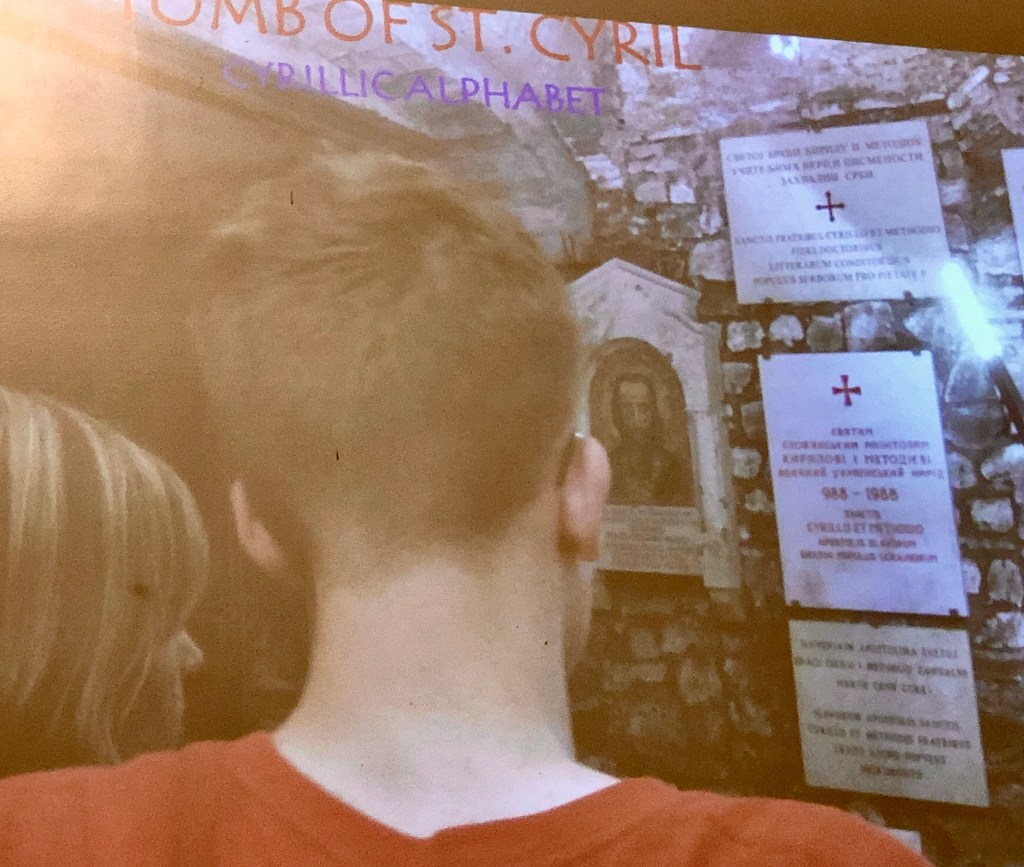
Tomb of St. Cyril
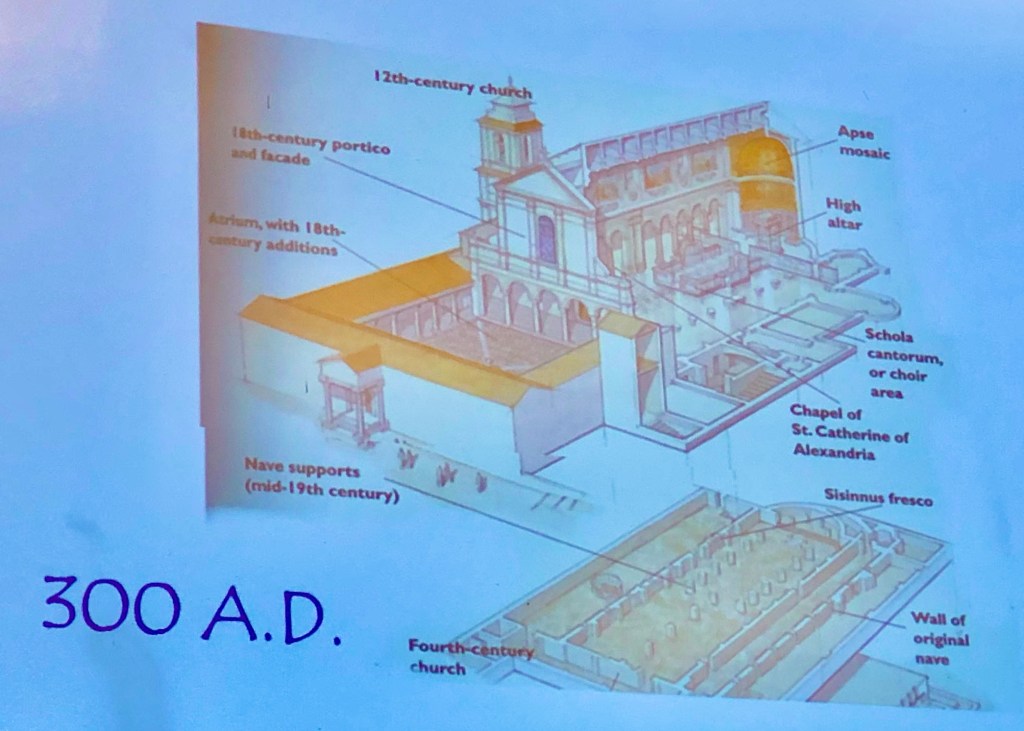
Image Curtesy of John DaumSan Clemente Basilica Layers Image curtesy of John Daum
Thousands of people visit the Coliseum daily, the San Clemente Basilica, the first of the three important structures, is just beyond it but gets few visitors. It holds the doorway and stairs to nearly 2000 years of Roman history. You can find yourself standing and walking on the original Romans streets of 100 AD. The present basilica is from the 1100’s and not that old relative to the Roman timeline. There are beautiful mosaics and frescoes. Admission is free. The real story and interest comes from the Normans who invaded Rome and burned the church. Below the floor of the 1100’s church, the original church dating to 300 AD unearthed. It had been burned and buried. “Today, you can visit this, one of the oldest churches in Rome for about 2 Euro, go down 2 flights of stairs and go back in time 800 years. Suddenly the church from the year 300 AD appears. It is dark, dank, and creepy – the tomb of Saint Cyril is just beyond a side door,“ John told the spellbound audience. “Then there is another set of stairs to a room dating to 100 AD on the original street in ancient Rome. It is surreal and otherworldly. Get lost in time,” he continued. Time travel from the 21st Century to the 1100’s to 300 AD and then to 100 AD for just 2 Euro!
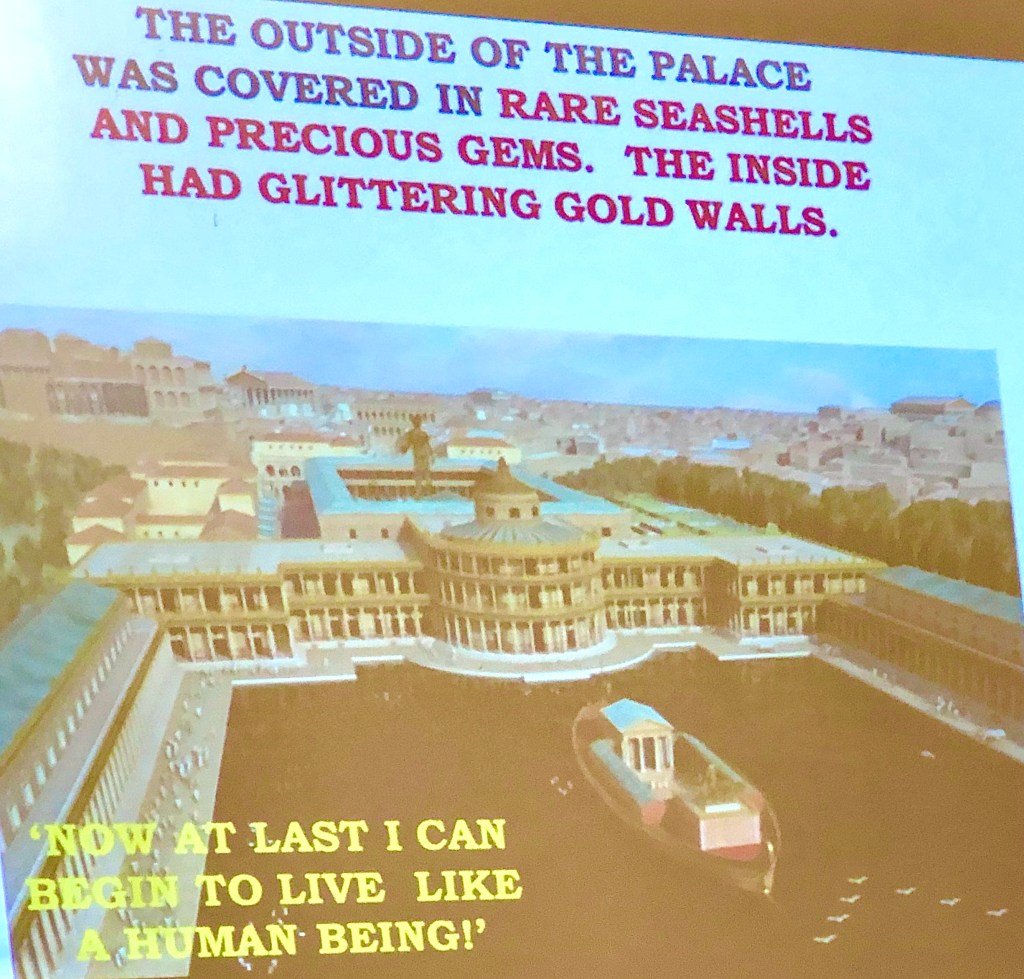
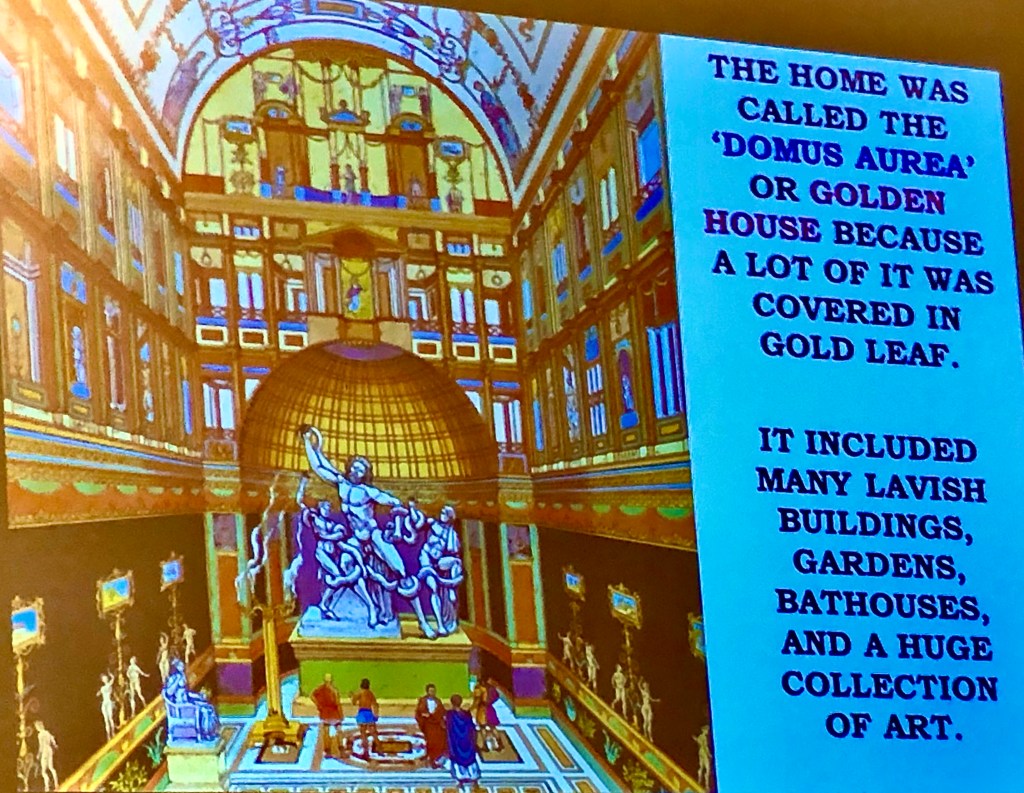
Domus Aurea – Nero’s Golden Palace Built atop the burned grounds of his subjects. Perhaps a reason he did little to contain the Great Fire?? Image Curtesy of John Daum
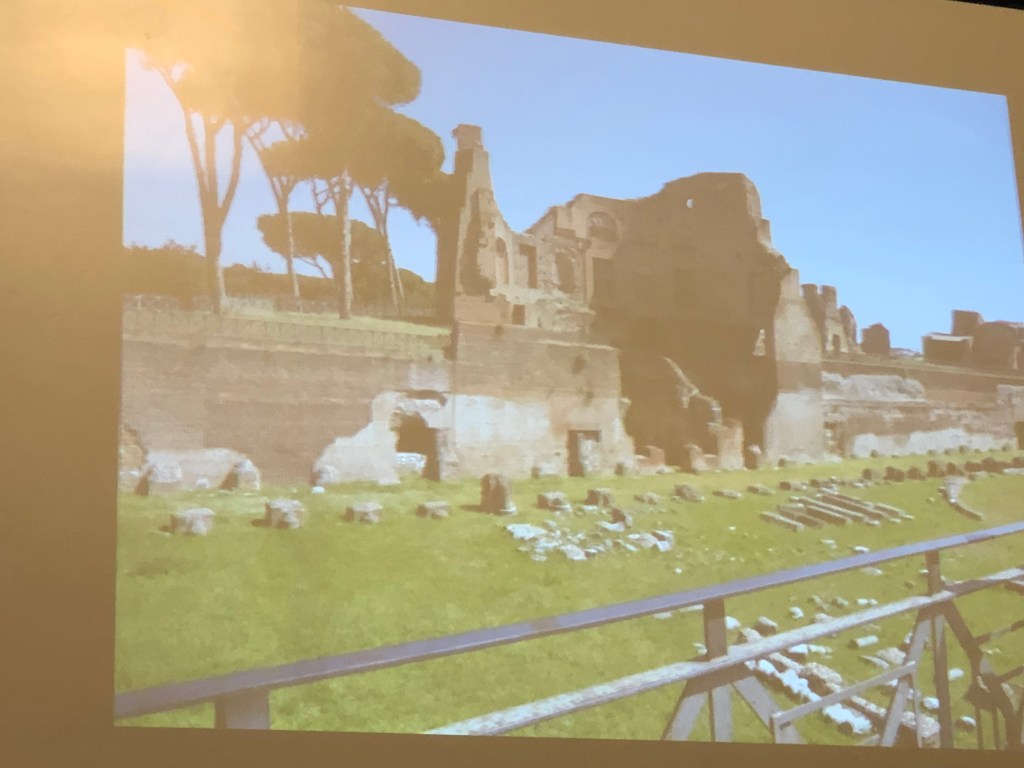
The Race Track Held 350,000 spectators
Inside the Domus Aurea Hard Hat Zone
John putting it in perspective
Images curtesy of John Daum
The second extraordinary place to visit is Emperor Nero’s golden palace, Domus Aurea. “Nero fiddled while Rome burned,” is a popular legend and not fact. However, as a result of the Great Fire of 64 AD that destroyed a large section of the city, Nero appropriated the lands of the burned properties for himself and constructed an opulent golden palace complete with a lake. The walls and ceilings were covered in gold, gems, ivory, and shells. After his death, the palace was buried and covered over for centuries. Six hundred years ago, the palace was discovered when a young Roman fell through a cleft in a hillside and found himself in a strange cave filled with painted figures. Raphael and Michelangelo went below to study the art that helped shape the artistic direction of the Renaissance. Today, certain sections have been secured and tours are possible. Hard hats are required. “Hard hats make the kids more excited about the tour,” said John.
After the Domus Aurea was buried, the Coliseum was built on top of Nero’s lake. It was an engineering feat to secure the massive building which remains today.
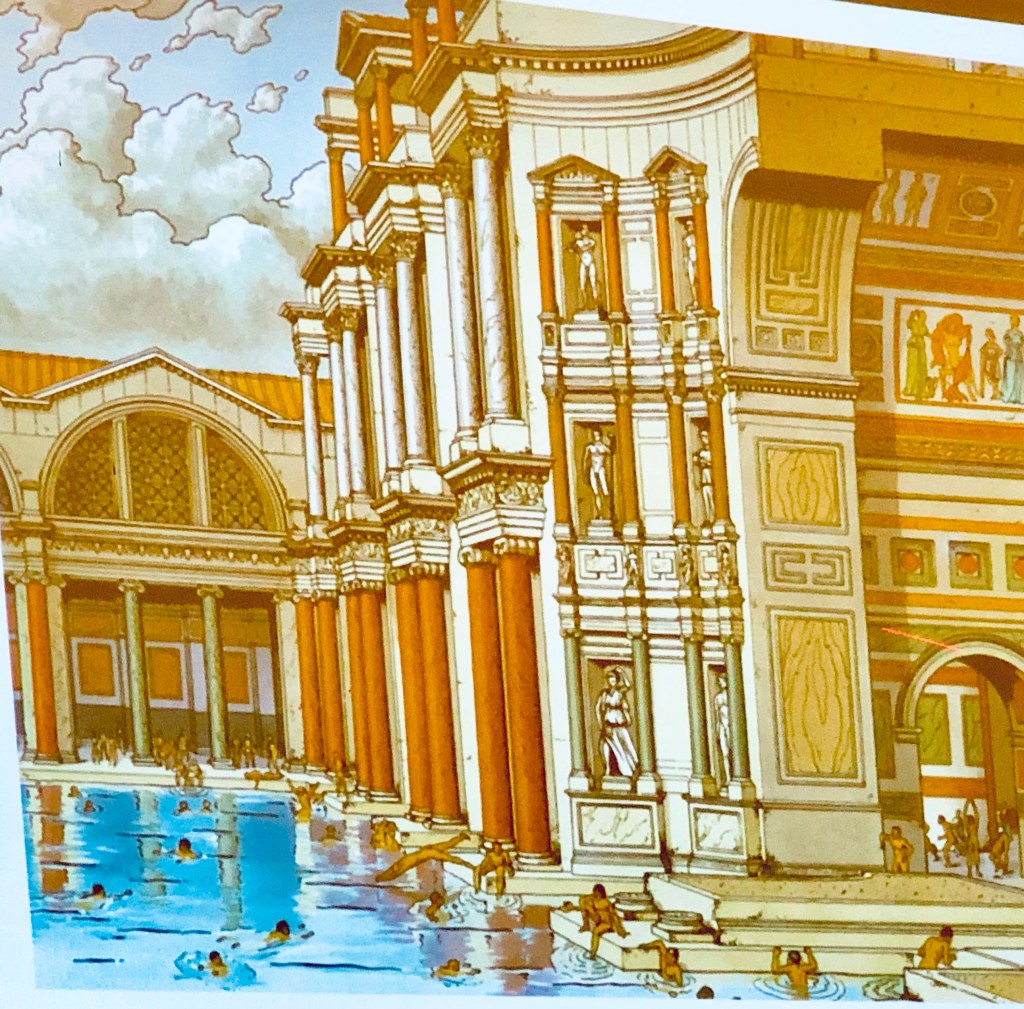
The Baths of Caracalla Images curtesy of John Daum
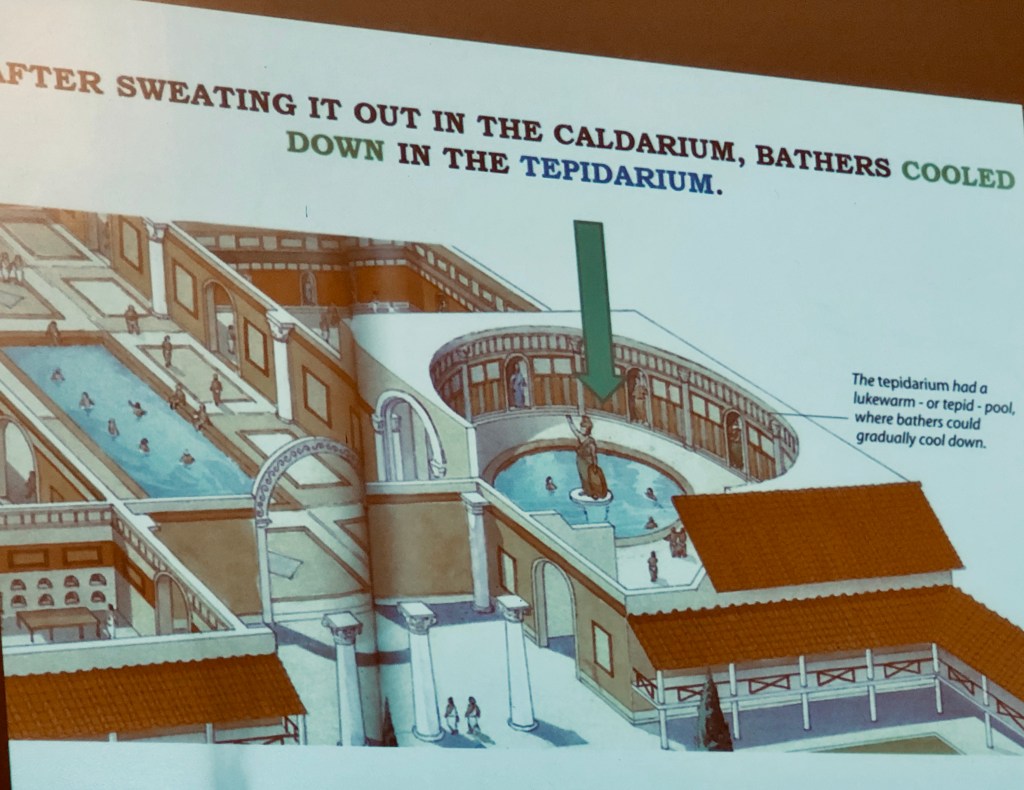
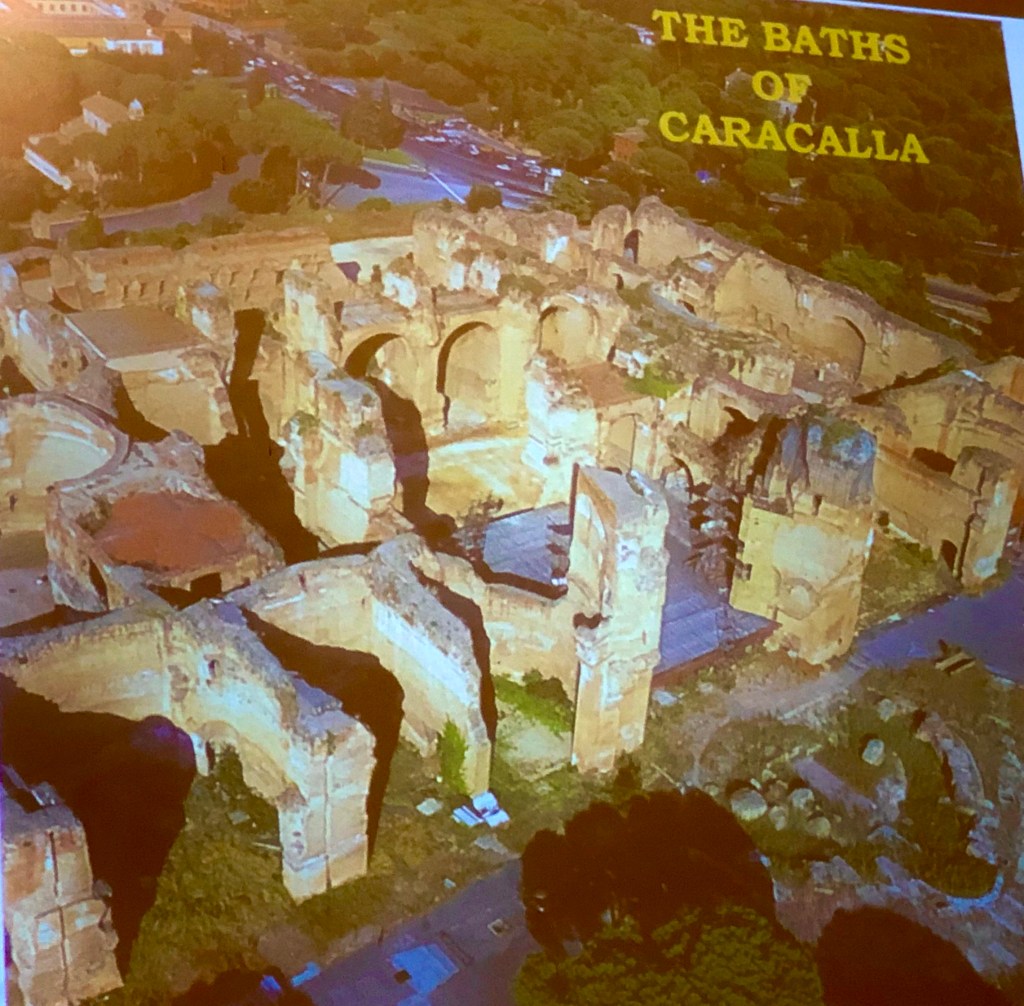
The third important place is the Baths of Caracalla. “Remember the Three Tenors performance? They performed there,” John reminded the audience. This was a bath house for the people of Rome to enjoy. “This is the true genius of Roman architecture and building. Their engineering of the water systems, the heating system, the architectural scope, and the breadth and sheer expanse of the structure,” John said. These baths were designed not merely to clean the population. They were designed and equipped with gymnasiums, swimming pools, hot and cold; locker rooms, library, conference rooms, lounging rooms, and other luxuries. They were free to the public of Rome. This area provided physical exercise, intellectual opportunities, and entertainment. The goal was not entirely benevolent. The ruling class knew that happy citizens do not rise up and revolt.
Water was very important and very well engineered Images curtesy of John Daum
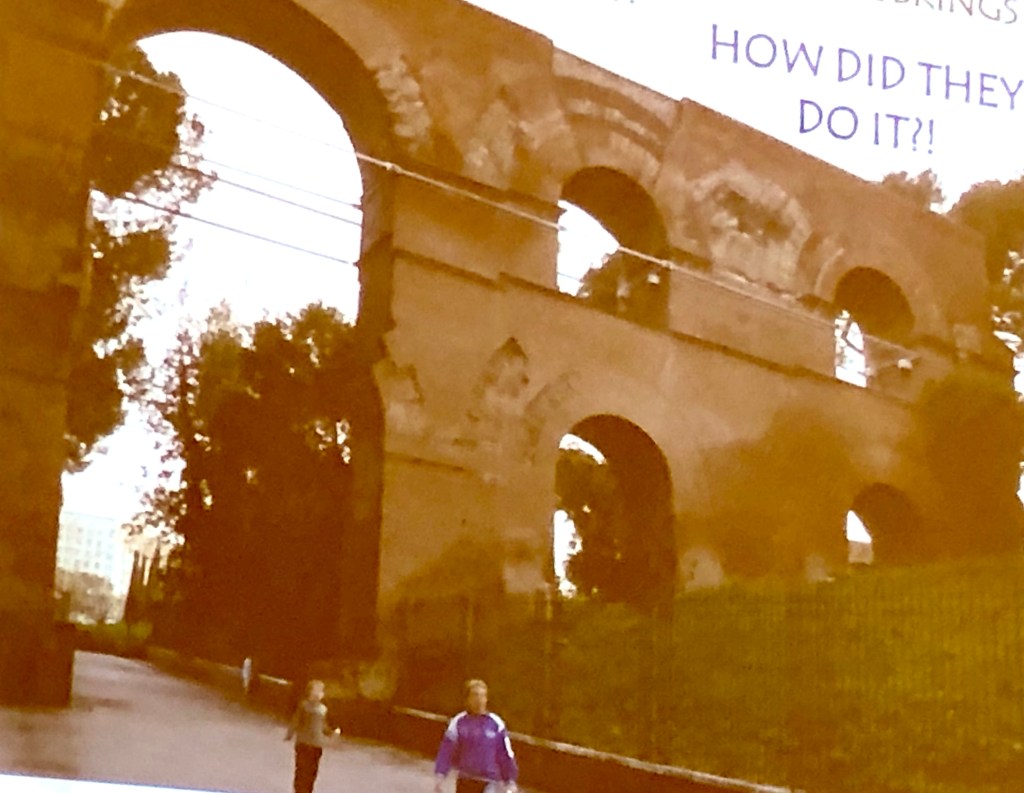
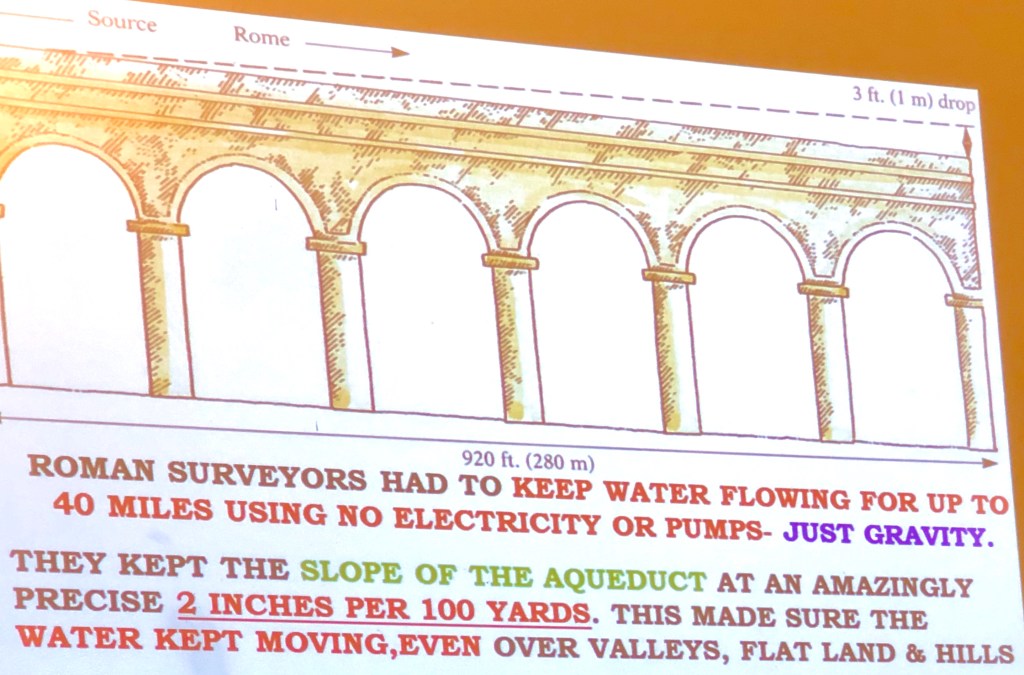
Water was very important to the Empire and to the city. Romans brought in 250 million gallons of water per day. The engineering was amazing. This was done all over the Empire. They did it with aqueducts carrying water by gravity alone. Contrary to popular belief, aqueducts were not above ground but underground to limit evaporation and keep the water cold. The water flowed throughout the Empire. Topography dictated the placement of the arcades, the above ground systems, what we think of as aqueducts. The aqueducts supplied the baths, latrines, fountains, and households.
Because water was considered critical to the survival of the city, fountains were constructed throughout the city. Many of the fountains remain. One of the most famous is the Fountain of Trevi. However, there are many beautiful fountains to enjoy that are less crowded.
Mosaic Workshop instills appreciation for the art Image curtesy of John Daum
“Visit the mosaic workshop to make your own souvenir. Once you try to do it, when you later see mosaics in a church, you will have a new appreciation,” stressed John. He emphasized the value of handmade souvenirs rather than buying them.
Our Tour Guide, John Daum Photo credit: Jon Henkel
John referred to Rome as a “layer cake.” There are many layers under the city to be discovered. Best not to try to do it all in a single visit. After all, Rome wasn’t built in a day. And . . all roads lead to Rome. So, when in Rome, do as the Romans do. Eat, drink, explore, observe, immerse yourself. Let the city, its people, the food, and the art architecture touch your soul.
With every step, I grow closer to seeing my friends. My friends are trees that I have grown to love during the miles of walks that my two dogs and I have taken.
To be outdoors, surrounded by nature, in the company of my dogs is what I love so. Let it rain. The wind can blow. The temperatures can drop. We walk. We have discovered magical secret places and mystery in the ordinary.
Had I known that I would fall for trees with bare branches and walk, even run to greet them, I would have laughed. Trees? Really? Yes. Trees. Until this year, I only liked trees bedecked with lush green foliage and my heart would plunge into despair as the last leaves drifted to the ground.
Last fall, something happened. It was a gift. My eyes were opened to the textures, colors, shapes, decorations, and outlines of bare branches against brilliant skies. From the ordinary cedar to the oak, to the sweet gum tree with its spiny fruit, to the many varieties of holly, to sycamores with pin cushion fruit, and magnificent evergreens of unexpected shapes – I love them all.
Our walks have taken us to arboretums, parks, and paths. My choice is to take the road less traveled. I smile when I reflect upon poem, “The Road Not Taken”
“…Two roads diverged in a wood, and I- I took the one less traveled by, And that has made all the difference.” Robert Frost
Walking with my sweet dogs at my side, with my ear pods secured by ear warmers, poetic music streaming through my iPhone, my mind wanders through stanzas and Sonnets. People who pass us must find me strange smiling at a tree.
“When lofty trees I see barren of leaves, Which erst from heat did canopy the herd, And summer’s green all girded up in sheaves, Borne on the bier with white and bristly beard, Then of thy beauty do I question make,” Shakespeare Sonnet XII
This season I experience something different and have tried to understand that difference. Simply focusing upon the shapes and movements of the grasses and tree limbs has transformed my dreary winter existence into flourishing friendships with unexpected flora!
There are trees and then there are TREES! All I had to do was see. I saw a whole world of bare trees of incredible grace. There are outlines of branches against the sky and shadows on the ground. I laughed out loud at trees in shapes that would have delighted Dr. Seuss and caught my breath at the majesty of enormous trunks and sturdy limbs. Trees form canopies above meandering paths, and dot bucolic landscapes of resting fields.
Exploring secluded horse trails or traversing paved paths, there is always something new to spy. “And above all, watch with glittering eyes the whole world around you because the greatest secrets are always hidden in the most unlikely places. Those who don’t believe in magic will never find it.” – Roald Dahl
Ending our walks take much discipline –
“…The woods are lovely, dark and deep, But I have promises to keep, And miles to go before I sleep, And miles to go before I sleep.” From “Stopping By Woods on a Snowy Evening” by Robert Frost
Just before Christmas, I stopped in one of my favorite tack and feed stores, Tri-County Feeds, Fashions, and Finds in Marshall, Virginia, for a little last minute shopping. On the counter I saw a notice of a book signing by a horsewoman I have known for quite some time. Her resume was enticing and the book looked like a great gift idea. The next day, I returned with my pen and notepad ready to learn about the book and the author. When our interview ended, I purchased a dozen books which author, Joyce D’Auqila, carefully autographed for each of my friends.
Breaches is a relatable, warm story about Kate, a horse-crazy girl willing to do anything for the opportunity to be with and near horses. A woman with a dream and a plan, “She remained relentless in her thirst to know more and do better.”
A well-written, intelligent story about hearts and horses, Joyce capably describes the “unseeable” – how does one rider get performance from a horse that another rider cannot? In one case, it was, “Stronger seat and legs, a more demanding attitude…” Only an experienced rider and horseperson can delve so elegantly into that subject. Her description of a rider managing a difficult ride with a difficult horse, “Quiet persistence of patience – just being cool – … [the horse] not going to draw him into her drama . . . [the horse] changed her mind and began . . . to agree…” It is refreshing that a book about horses and riders is written by an experienced horsewoman. My need to cringe and shake my head never arose.
Those of us who ride or have ridden can so easily relate to the trials and tribulations, the emotions, the joys and the terrors of the heroine, Kate. Anyone who has seriously ridden a horse has had a rough landing at one time or another. Sometimes, those landings determine a rider’s future. This book emphasizes the need to get back on.
Joyce D’Aquila began her horse riding odyssey as a ten-year-old. She told me, “I was the hardest of the hardcore horse girls. I think that my first word was ‘horse.’ I slept with a plastic model horse of Trigger. It had hard stiff legs and often my mother would have to move it away from me if it was sticking into my side while I slept.”
“My parents were not terribly encouraging or supportive of my riding. I played the violin. It was very scary to have to tell them that I would be stopping violin but would continue with the horses,” recalled Joyce. Graduating with a degree in veterinary science, she worked for a veterinarian for a decade. She realized that while she worked very hard to maintain her horses, she was not seeing or riding them, “That is when I made the decision to go into horses professionally. I rode the tough ones, the ones that nobody wanted. You know, horses have a unique way of bonding and it has been determined that horses are very therapeutic. I have a good eye and can bring the best out of them. I can think like a horse and read their body language.”
“Are you Kate,” I asked. “No, not exactly, but my parents kept waiting for me to outgrow my horse passion,” she replied. ”The events and relationships, are fictional. The characters are composites of experiences and students that I taught. Some were students in private schools and others were in Pony Clubs,” she said. “Like Kate, I went against all odds and got on with it. I taught a ” Kate, “ who was a breath of fresh air. She was sharp and cool and so enthusiastic. Her hair would be flying around all the time. She was a little bit lacking in confidence because she was a little bit plump in school. Later, she became a beautiful woman.” Joyce told me.
D’Aquila is an experienced upper level “event” rider. Eventing is a riding discipline with three phases – dressage (obedience), cross country (galloping and jumping large “natural” obstacles in the open), and stadium jumping (jumping in an arena on a prepared surface). At the upper levels, this discipline, perhaps over others, takes enormous bravery on both the riders’ and horses’ parts. “There are so many horse-crazy girls and I wanted to capture the serious side, the commitment, the ethics as well as the personalities,” said Joyce. A key factor for Joyce is that the welfare of the horse always comes first, which is so aptly described in the story.
Breaches addresses trust and betrayal, love and pain, and pride and fear. These are thoughts and emotions that every horseperson experiences on some level most of the time. Yet, Like Kate, we persevere at all cost. Very engaging, this book has me waiting for the next volume. To purchase books, email Joyce at moedaq1@aol.com .
“Try to get the window seat on the right side of the aircraft when you are flying into Venice. You will see the ‘Big Fish” or Two Kissing Fish’, so fly during the day, ” said art historian, fifth grade teacher and travel enthusiast, John Daum. “It is a dream come true to stand here and know that we have this incredible brewery and all of these wonderful people in our community who have come out on a Thursday night, here, in this place that we all love, called Middleburg,” continued Daum. The January 9th talk was hosted by the Loudoun County Public Library at the Old Ox Brewery, Middelburg.
John Daum
Having seen this event promoted on Facebook, I was not sure that a library event was something I wanted to attend. I saw the promotion repeatedly and until an hour before the start, I was vacillating. Finally, I googled John Daum. What I discovered was a man who is passionate about art, travel, and his students. He is a teacher at the Hill School in Middleburg, his fortunate students learn about art history from this art-loving, traveling, enthusiastic man! OK! May I please be a fifth grader for his class? Needless to say, I picked up my notepad and pen and headed for Middleburg.
We were treated to a virtual tour of the mystical and magical city of Venice. No packing, No TSA, No connecting flights. Just a cold craft beer, some time with friends, and listened and watched as John delighted us with abundant images of well-known and many not-so-well known aspects of Venice.
The Windged Lion of Venice – the symbol of Venice
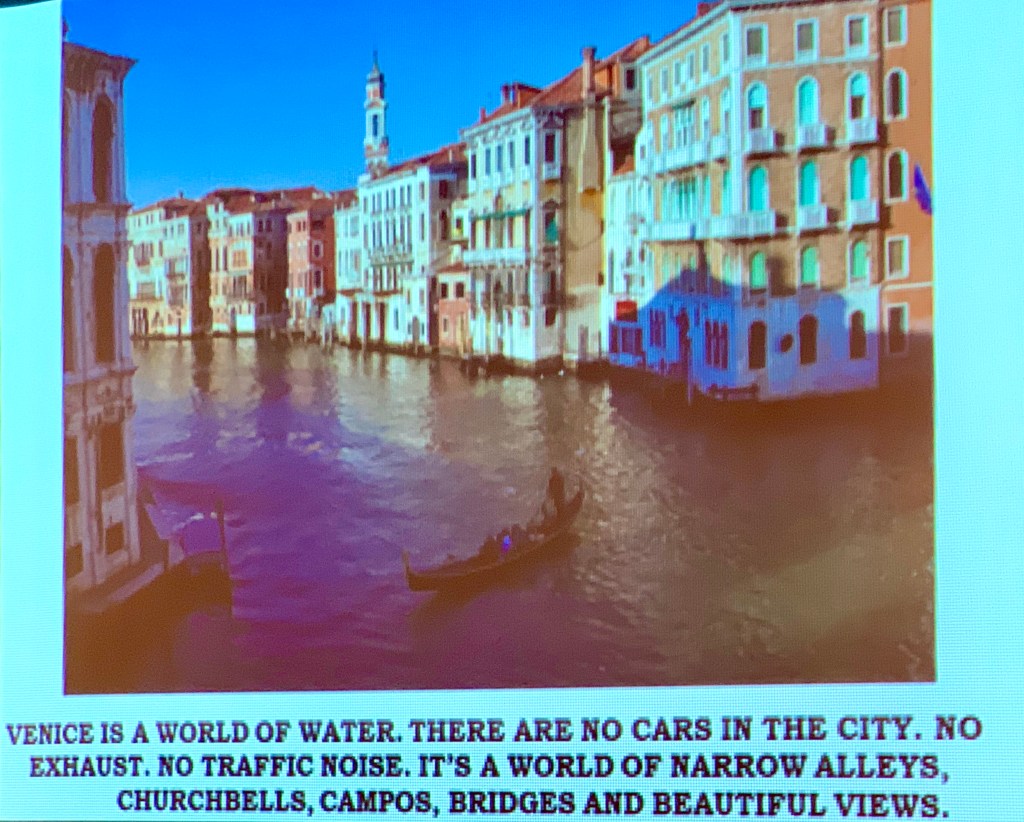
No streets no cars
Peaceful canals in out-of-the-way places
Images curtesy of John Daum
“Venice is one of my favorite places in the world…”, said Daum. He stressed that there are countless, “cool and unusual things about this city.” “It shouldn’t be there. But it is. This is a Disneyland and should have never happened. But it did happen and it was a world superpower for hundreds of years and a cultural hotspot even today. If you get lost in Venice – it’s ok because you are in Venice and it is an island. So get lost,” Daum told us.
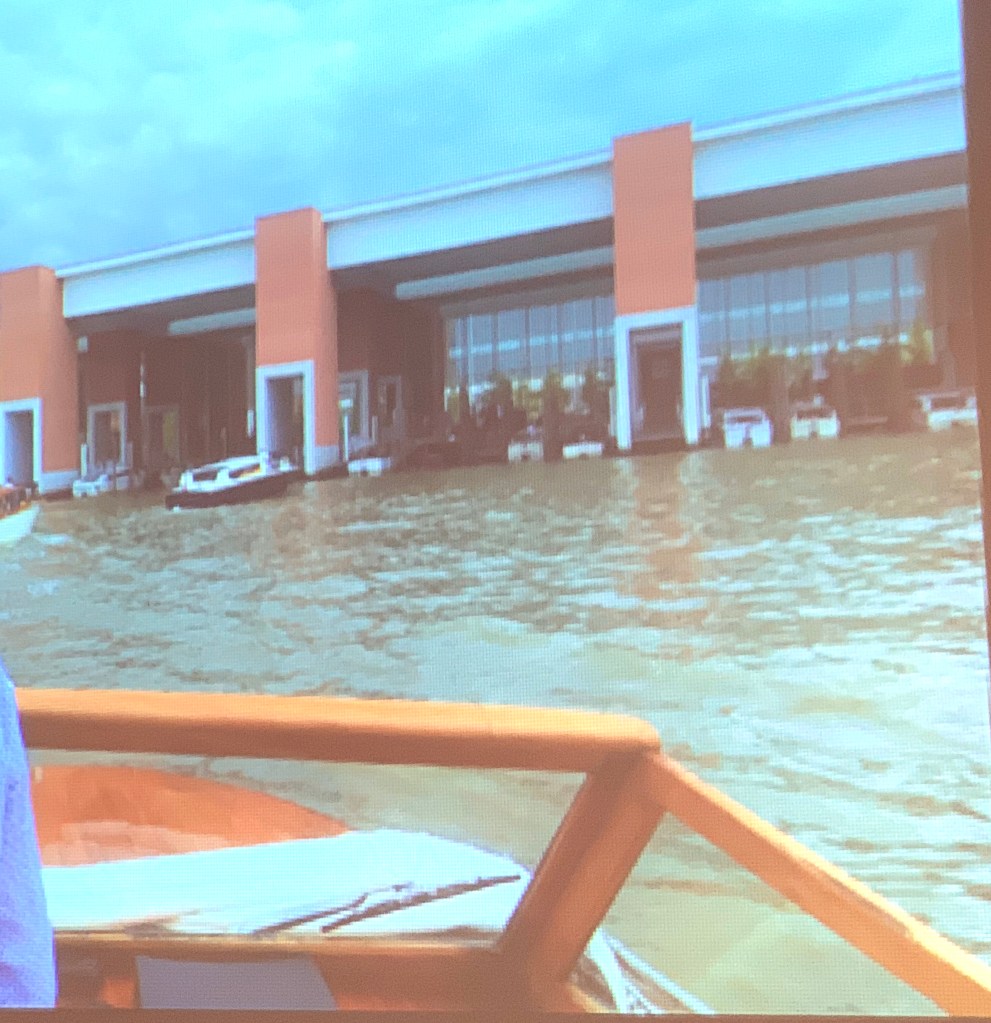
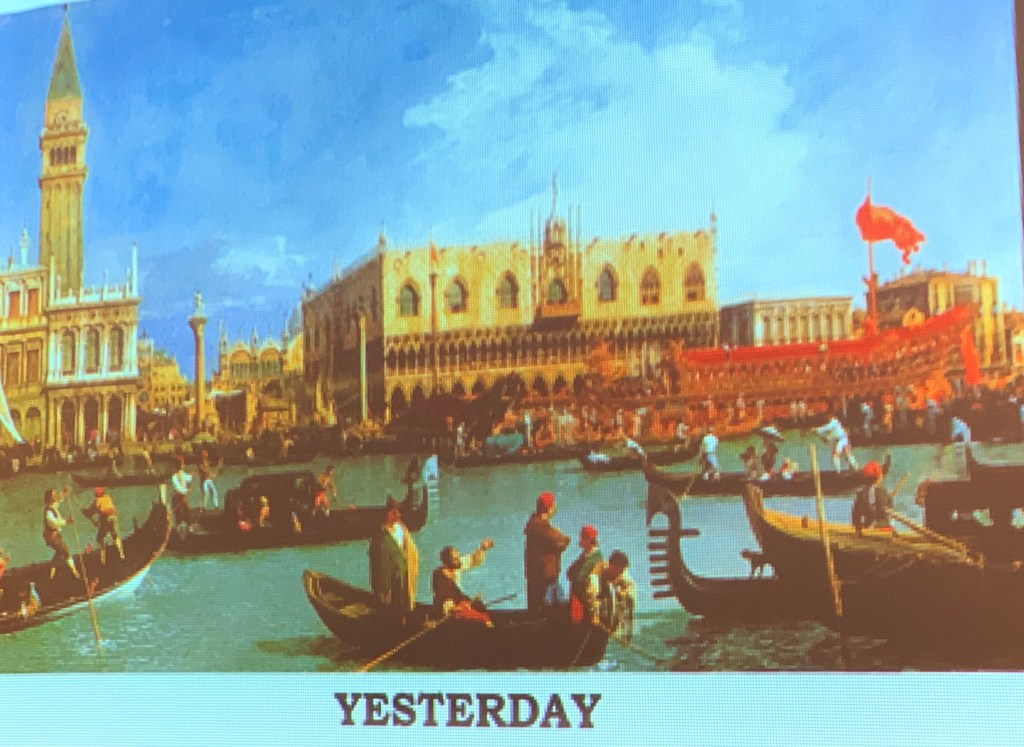
“Upon arriving in Venice by plane or train, a boat will pick you up and whisk you into Venice in about 30 minutes. There are no streets, no cars – all water and beautiful buildings. All of these buildings would be a marvel in other cities but in Venice, there are so many, they can appear ordinary. Most of the buildings are original,” continued, Daum after sipping his favorite beer (#11 on the menu, I believe). He compared Canaletto’s painting of Venice with a current photo of the city – little or no change is evident. “Nothing makes sense in Venice – maps do not help. You can find yourself down an alleyway – you can see ‘laundry day,’” John joked.
Water taxi at the airport
No cars – just boats
Images curtesy of John Daum
“Anything that you have heard about Venice that is negative, is ‘complete BS,’” according to John. He continued, “If you have been there and did not like it, you did something wrong. Going in on a cruise ship or just for the day is shortchanging the experience. Hanging out in St. Mark’s Square is not actually being in Venice. It is the equivalent to going to NY and just going to Times Square. A lot of what makes Venice special is outside of the tourist area. 85% of the people who visit Venice come in for the day, not spend the night and leave. The economy of Venice is surviving on just 15% of the visitors who really engage with the city. If you go – be the good tourist who spends some time there, book a hotel room, spend some money and enjoy these areas that are beautiful and that are waiting for you. It is really a time capsule of a different era.”
Painting by Canaletto
Today
Images curtesy of John Daum
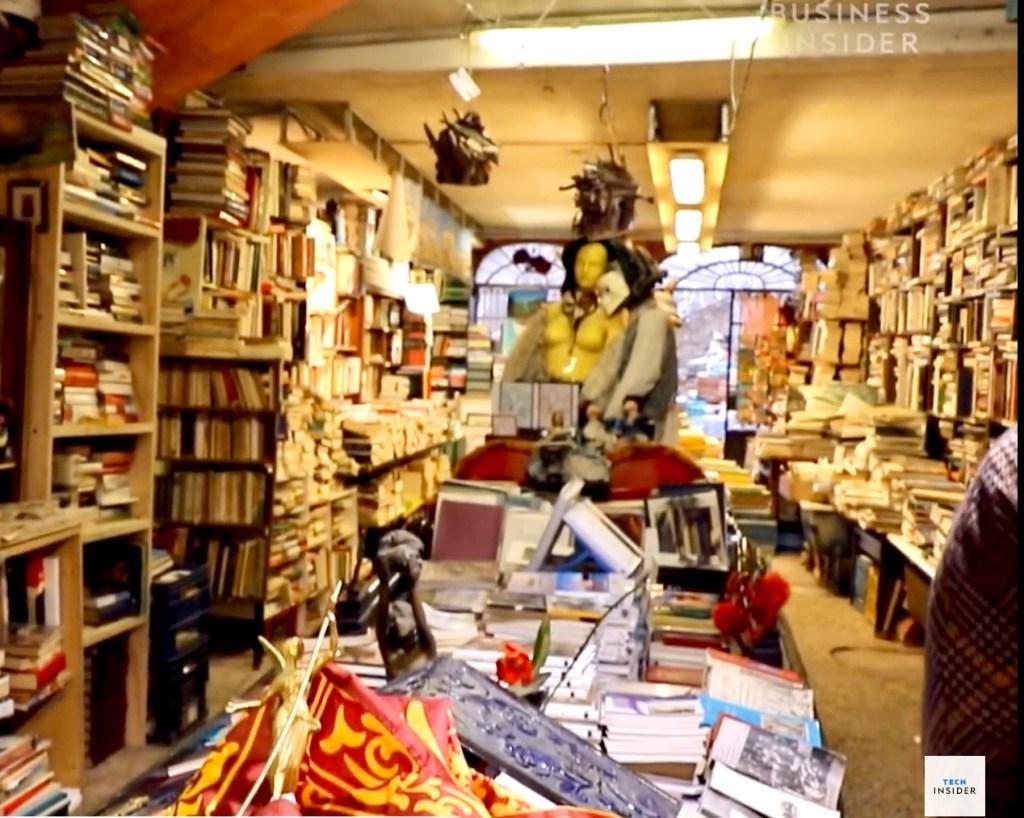
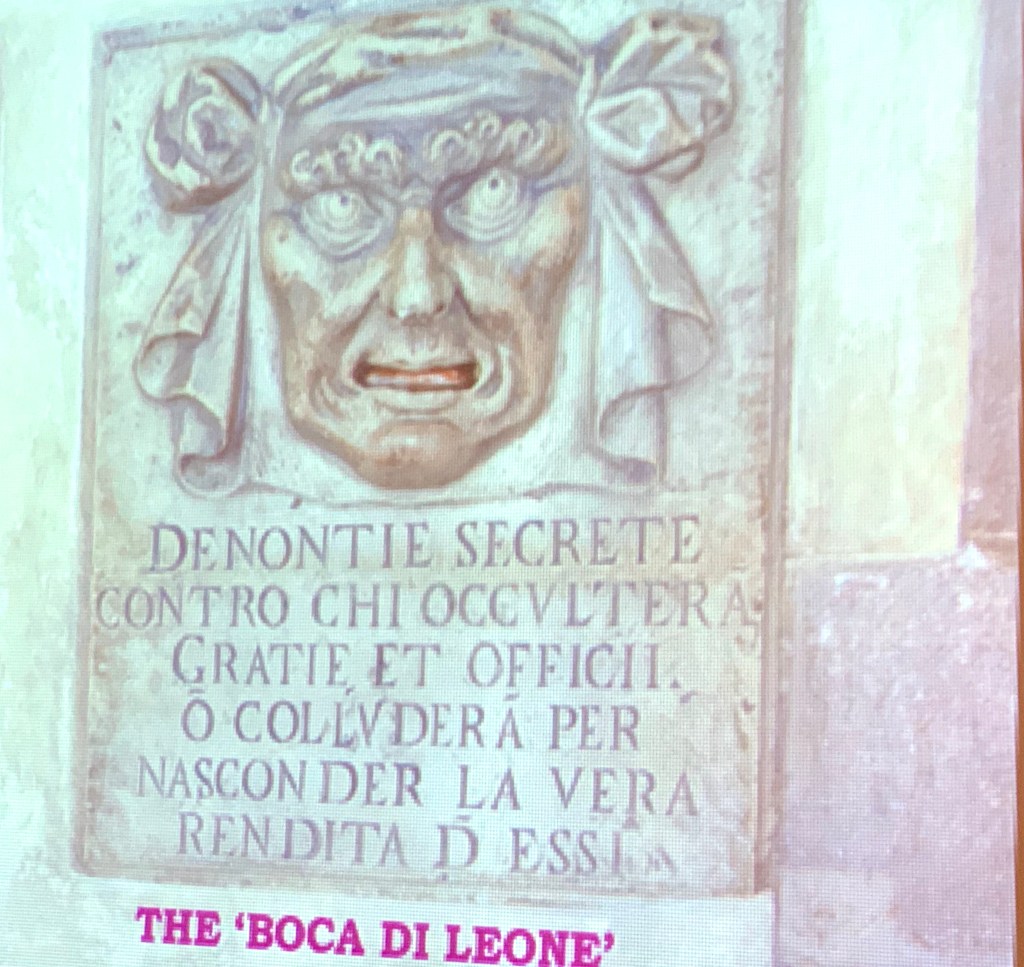
“Venice is a place that expects you to be lost and welcomes you. Go treasure hunting for unique items like the Aqua Alta bookstore where there are books in a gondola and a bathtub filled with comic books. It is ready to go if the floods come. See if you can find the only bridge without railing. Find the few remaining ‘informant boxes.’ Wander, enjoy the atmosphere. Slow down, there is a lot of enjoying the atmosphere. Early mornings and on weekend it is very quiet – nobody is out. Stroll,” suggested Daum.
Aqua Alta Bookstore
Slow Down and get lost in the city. Discover the Aqua Alta bookstore, the bridge without railings, find the remaining “informant boxes,” and meander back alleyways
Venice has rediscovered their spirits, Grapa. Italy, particularly Venice, is enjoying a renaissance of Grapa. There is such a thing as high end grapa. “You should try Venetian grapa – smooth powerful and very tasty. There are also a lot of handcrafted beers. They are fantastic! Ask for the local beer and the locals will love you,” recommended Daum.
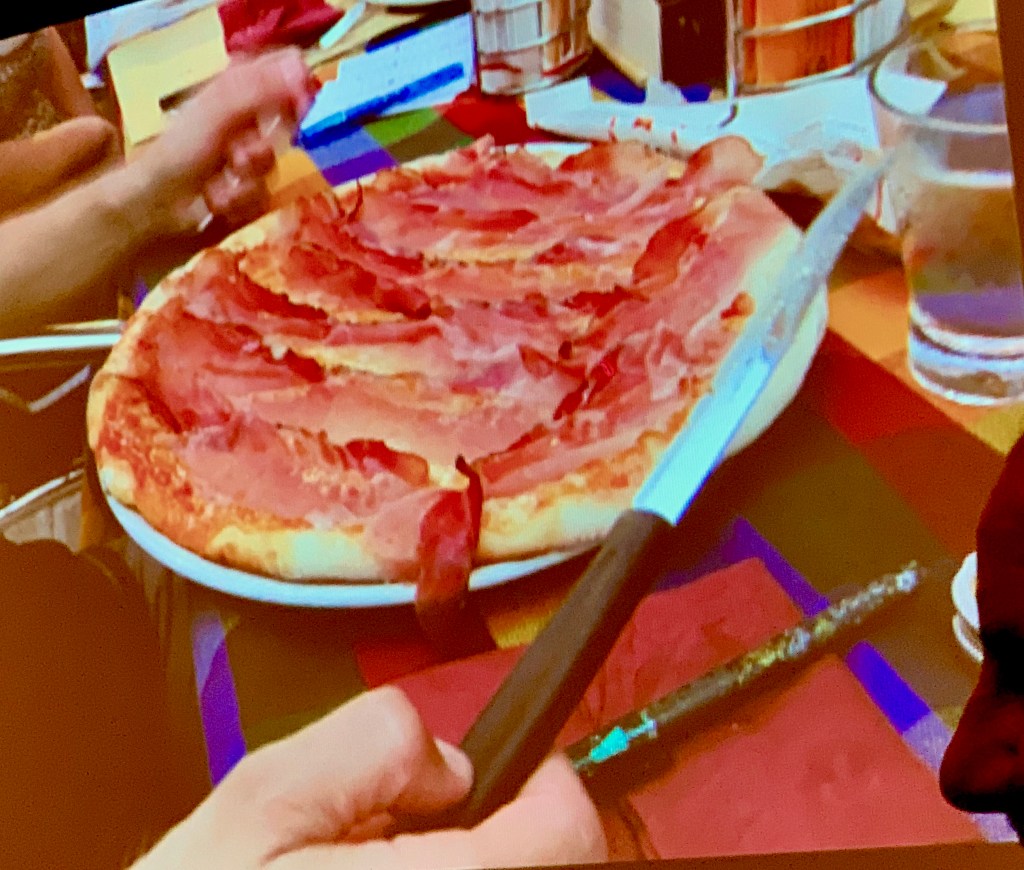
John’s descriptions of restaurants, the food (gourmet pizza, gnocchi, and more), the beverages, and atmosphere were beguiling. I was mentally packing my carry-on suitcase.
Pop-up wine bars
Pizza!
Images curtesy of John Daum
John discussed that gondola rides are popular and can be fun. He told us that the front of the gondola has a “ferro” and the “teeth” represent the 6 neighborhoods of Venice. A Gondola cost about $80K. Gondolier licenses are difficult to get and are typically kept in families. A 20 minute gondola ride will cost about $120. “Do it away from St. Marks in order to avoid the ‘It’s a small world’ experience. There are now women gondoliers. For a different experience – you can learn how to row your own boat. A great way to see a different side of Venice,” suggested Daum.
Gondola with ferro at head and the map of Venice showing the 6 neighborhoods Images curtesy of John Daum
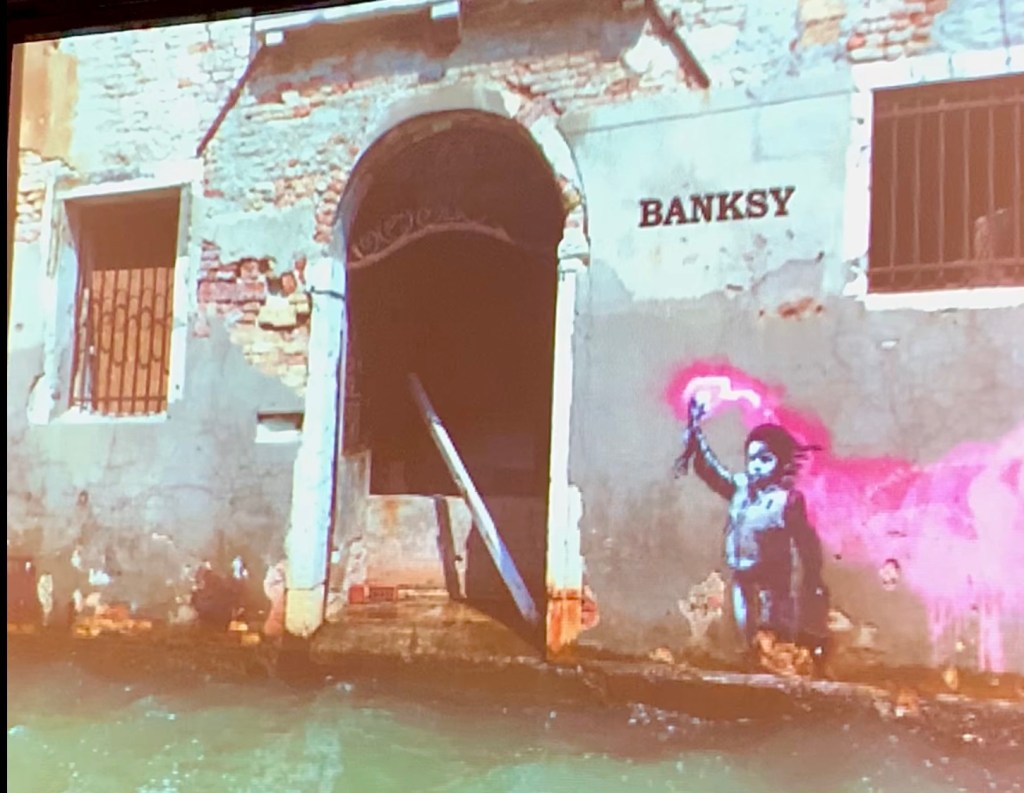
As old as Venice is, it attracts a lot of modern art. Last summer Banksy was there. Festivals and exhibitions attract artists and travelers throughout the season.
Venice is home to tremendous arts and artisans. Make your own mask, learn to blow glass, visit the fabric shop, have local gelato, enjoy great pop-up wineries. “You can get some of the best wine for 3 bucks,” said Daum.
Make a mask
Modern Art is welcomed
Images curtesy of John Daum
No visit to Venice would be complete without experiencing the unique Venetian specialties –
Gelato. There is much to be known about this amazing delicacy. There are great and amazing gelato places. Did you know that Gelato should be made fresh every day? It should be made and displayed in small containers. Who knew?
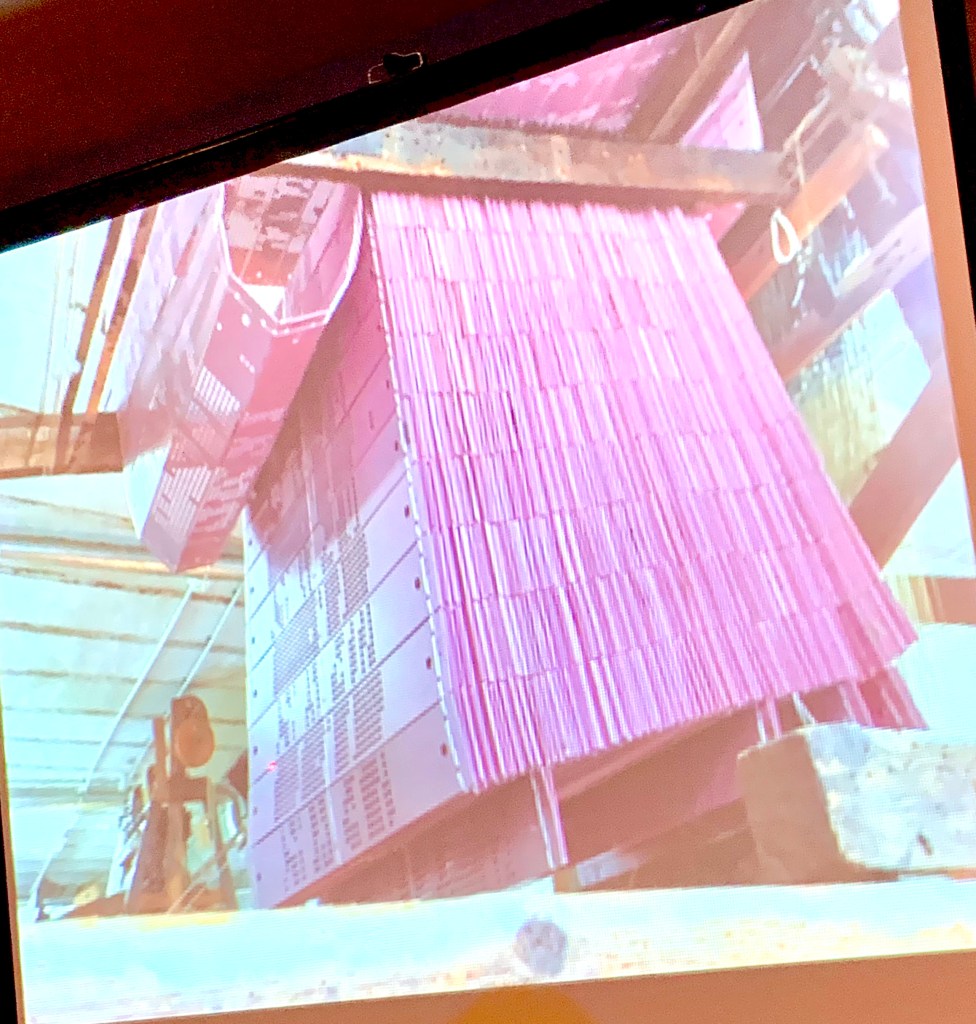
Fabrics. There is one textile handmade plant that makes some of the finest fabrics – silk velvets. They say that they are the ones who invented velvet. You can watch it being made on old machines using punch cards. Purchases of fabric or artifacts support the local economy.
Glass. Murano glass is made on its own island. It was kept away from the main city to prevent fires. John shared a little-known story, “Two artisans from Murano were bribed by the King of France and they made the mirrors for the Hall of Mirrors in Versailles.”
Colors. .John told us about an island named, Burano, a “technicolor island” where they make lovely lace. “It is hard to take a bad photo of this island. The locals are very pleasant and happy for tourists,” said Daum.
SIlk Velvet
Punch Cards for Silk Velvet Design
“Technicolor” Island
Images curtesy of John Daum
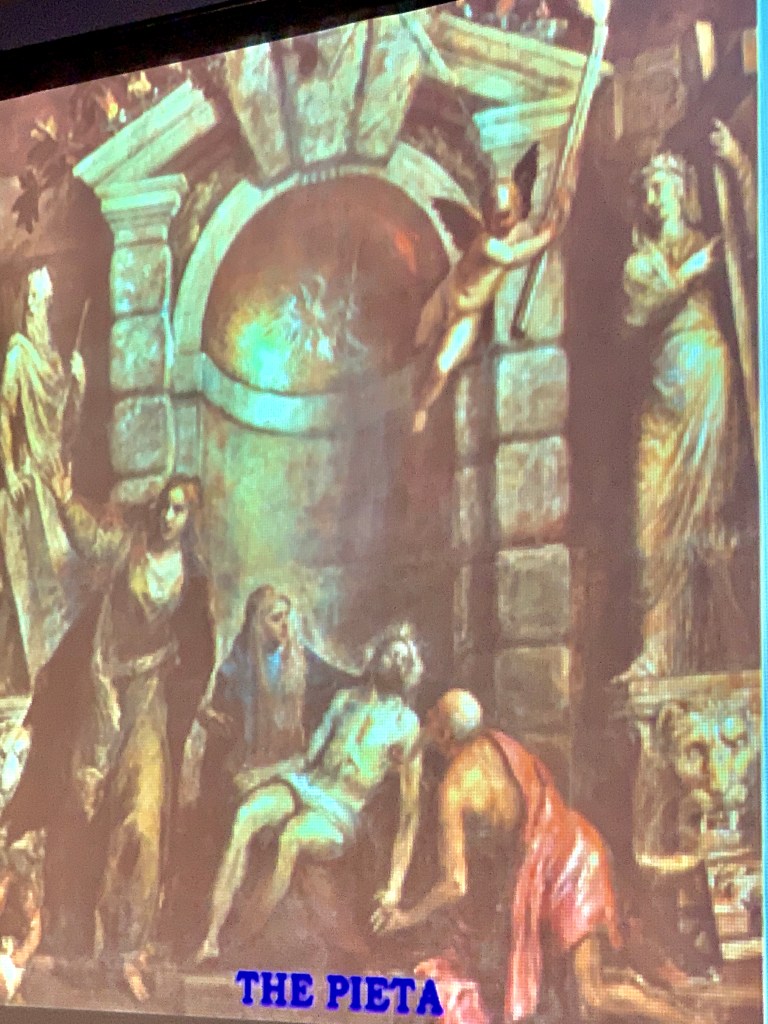
Art. That the art in Venice is amazing, is a well-known fact. John touched upon just a couple of artists – Bellini and Titian. John focused primarily on Titian’s The Pieta. It has been recently restored. It was painted around 1575 during the plague. Titian’s son died of plague while he was painting The Pieta. Not long after, Titian himself succumbed to the deadly disease leaving the painting unfinished. Because it is in a local museum, it is possible to get up close and see “the brushstrokes and even his fingerprints,” John told us. He continued, “Titian was painting in the impressionist style long before the French movement. In his advanced years, he drained his palette of the bright colors and he kept growing and challenging himself to do something new.”
Painting – the Pieta by Titian Images curtesy of John Daum
Our whirlwind tour of Venice concluded with a round of enthusiastic applause. The event continued with the tasting of more interesting beers and fascinating conversation. John Daum will present future lectures on Rome as well as the architecture of New York City, all hosted by the Library.
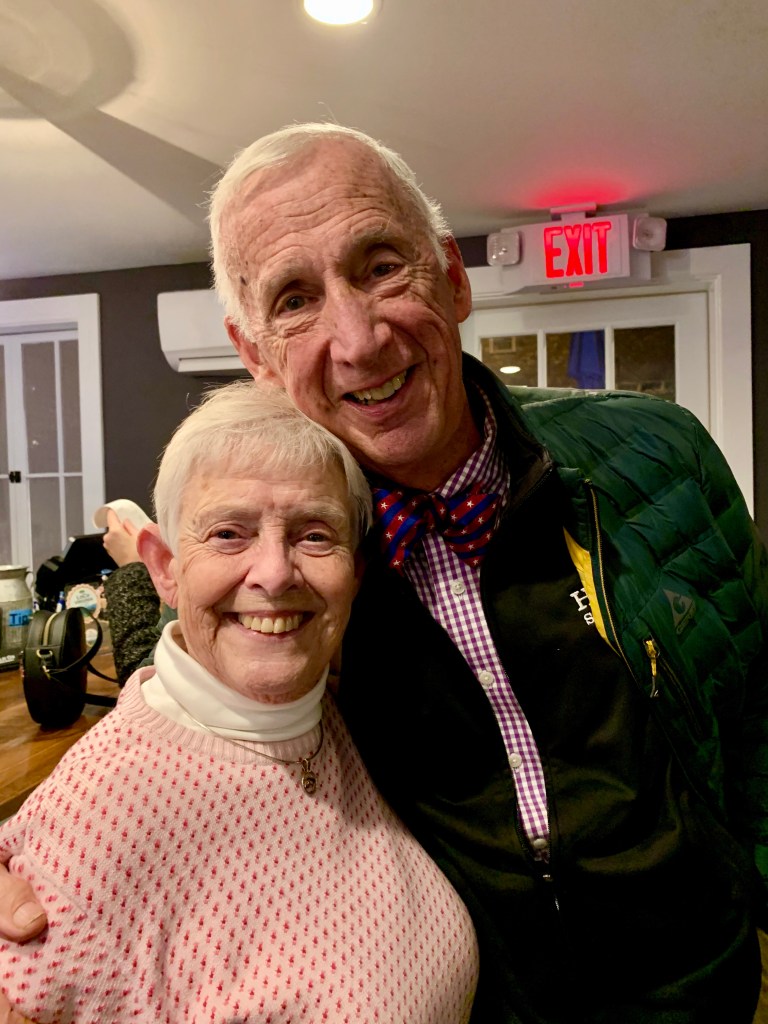
Mary and Don Woodruff of the Hill School
John Daum and Krasi Henkel
A delightful tour of Venice stimulated our appetites for a real visit
Thomas Stearns Eliot was a poet who lived between 1888 and 1965. He wrote a series of poems about cats for his godchild. In 1939, he published a collection of some of those poems as Old Possum’s Book of Practical Cats. He called himself Old Possum.
In 1981 Andrew Lloyd Webber produced the hit musical, CATS. That musical opened in London’s West End then came to Broadway. For 18 years, Cats played at the Winter Garden Theater. According to Amanda Harding of the Showbiz CheatSheet, CATS is the “tenth most popular Broadway musicals of all time.” The play is the fourth longest running play and grossed over $342 million.

A Cat’s Plot: Food
On Christmas Day 2019, the film, CATS, directed by Tom Hopper opened to negative reviews. “How was this possible?” I have seen the musical on Broadway several times; in Washington, D.C., I saw it every time it came to town (including last fall at the Kennedy Center); I saw the 1998 film; and helped coach the dancing segments for my daughter’s middle school production where she was Jennyanydots – the Old Gumbie Cat. I love and know the musical. I am also a big T.S. Eliot fan for which I earned scathing looks in a college lit course.
Now, with the stellar cast including some of my Royal Ballet favorites – Steven McRea and Francesca Hayward (I saw her perform Juliet in London in May ’19); and other celebrity favorites – Jennifer Hudson, Ian McKellen, Jason Derulo, and Judy Dench, how can it go wrong?
I was certain that there must have been some sort of political rift between the movie creators and the critics. The reviews have been scathing and some outrightly inaccurate. So, I went to watch my favorite musical in hopes of proving the critics wrong.
The critics, in general, seem to miss the point that the compilation of poems was written to a child about Eliot’s observation of cats’ behaviors and attitudes. There was no plot intended. I have read and studied the works of T.S. Eliot and like his work. Was there a plot in the crazy successful Broadway production? Not really. By adding the Grizabella character (Eliot had considered her too sad for children and therefore omitted her from the initial book), the vying for “another life,” created a tension and climax that was necessary to keep audiences engaged.
In the original CATS production, the actors performed, moved, and behaved like cats. They were sleek, flexible, and mobile. In the current film, with small exceptions, cats costumes covered people as cat caricatures. I was left with the feeling that the film tried to be all things to all people and address today’s concerns of feminizing characters over male characters. Well, fine, but in the poem by Eliot, Deuteronomy is most certainly male, “ He’s a Cat who has lived many lives in succession. He was famous in proverb and famous in rhyme….Old Deuteronomy’s buried nine wives and more–I am tempted to say, ninety-nine; . . . his numerous progeny prospers and thrives . . .the village is proud of him in his decline.” So, how will this become a female? Poor Judy Dench did what she could with it, but her character was neither faithful to the spirit nor the letter of the poem.
Steven McRea, principle dancer with London’s Royal Ballet, is my favorite current male dancer (my all-time favorite is Baryshnikov). McRea danced his heart out. Beautifully. He was a credible Skimbleshanks, the Railway Cat. I fully enjoyed his stellar tap performance. His costume was refreshing as he was not a hairy human.
When I first learned that Francesca Hayward, also of the Royal Ballet, was cast as Victoria, the White Cat, I couldn’t wait to watch her dance. What happened? First, this Victoria is NOT a white cat. While her face was angelic, her body was not lithe. She looked bulky with oversized thighs and what happened to her feet? She’s a ballerina! The dancing she performed in the film, I could have done myself. Her talent was completely wasted. Victoria in the original production only danced. In this production, they went out of their way to teach a non-singer to sing and took away her dancing. Why? The role and the production did not showcase this amazing ballerina in the slightest. Ok, yes, this is about good news, so the good news is that I enjoyed seeing her just because.
The two stand out performers of the film are Jennifer Hudson and Ian McKellen. They both gave 100 percent heart and talent and brought forth a recognizable poignant character. They were easy to love – still.
For the name and stature of Taylor Swift, she too, was underutilized. I had to look twice to be sure it was her. She sort of showed up, sang looking overweight, not fluffy, then vanished.
Director, Tom Hopper, in a pre-release interview, claimed that he had seen the play as an eight-year-old child and had fallen in love with it. Well, I am certainly glad he hadn’t hated it. Imagine what might have turned up. He tried too hard to use technology and today’s political correctness to create, as Eliot describes Rum Tum Tugger’s actions, “A horrible muddle.”
To my beloved ballet dancers, Francesca and Steven; Jennifer Hudson and Ian McKellen; I thank you for giving us your best under difficult circumstances. I regret that for the Royal Ballet dancers, who took time from their professional pursuits to try to make a beautiful addition to a beloved show, they have been subjected to horrible reviews. They deserve better.
To the critics, my suggestion is to read, and perhaps, study T.S. Elliot’s poetry and stop looking for plots and points that don’t exist. How about enjoying the poetry for what it is – descriptions of alley cats’ distinctions and similarities. This is not rocket science.
Ultimately, I loved the music; a little bit of the dancing; Gus; Grizabella; and Skimbleshanks. In a play with so much to love, this is not great news, but it’s my best attempt of being positive.
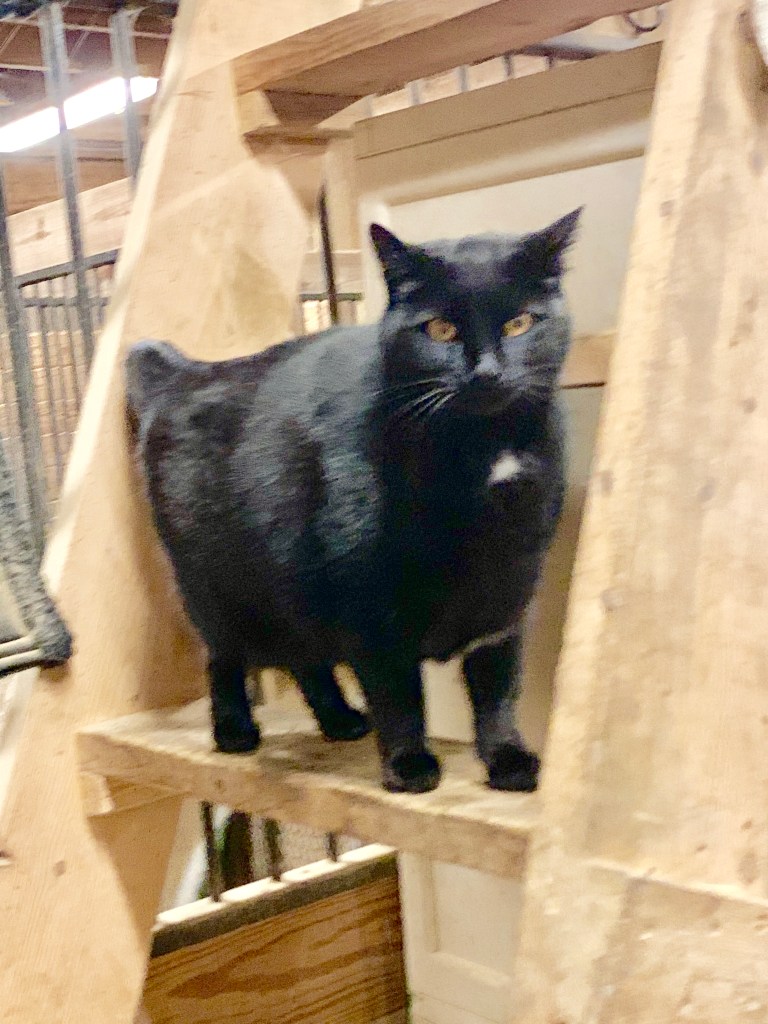
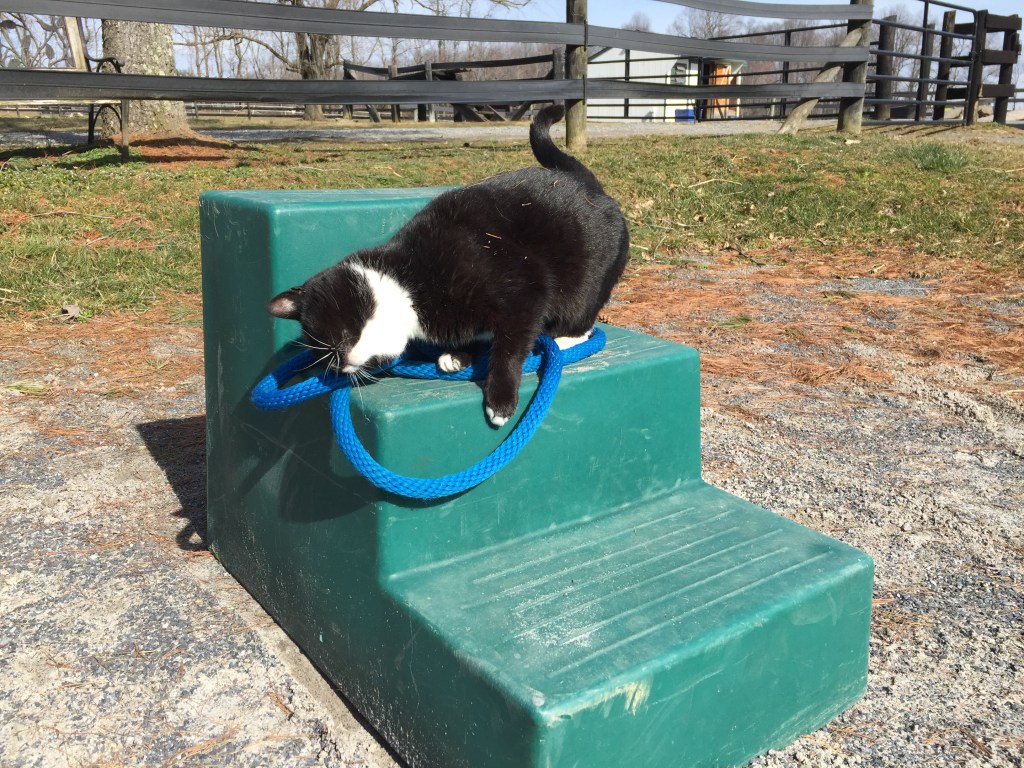
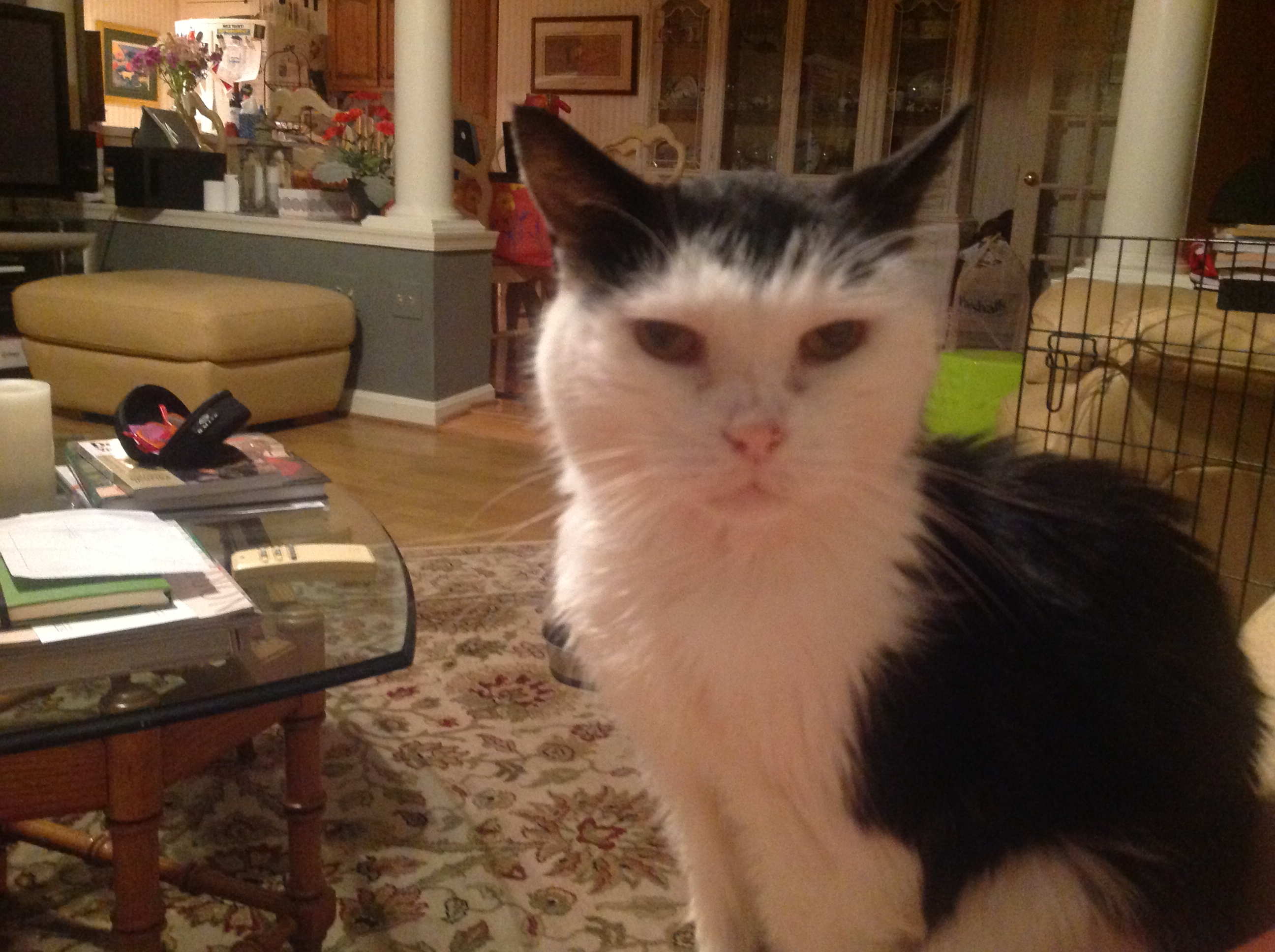
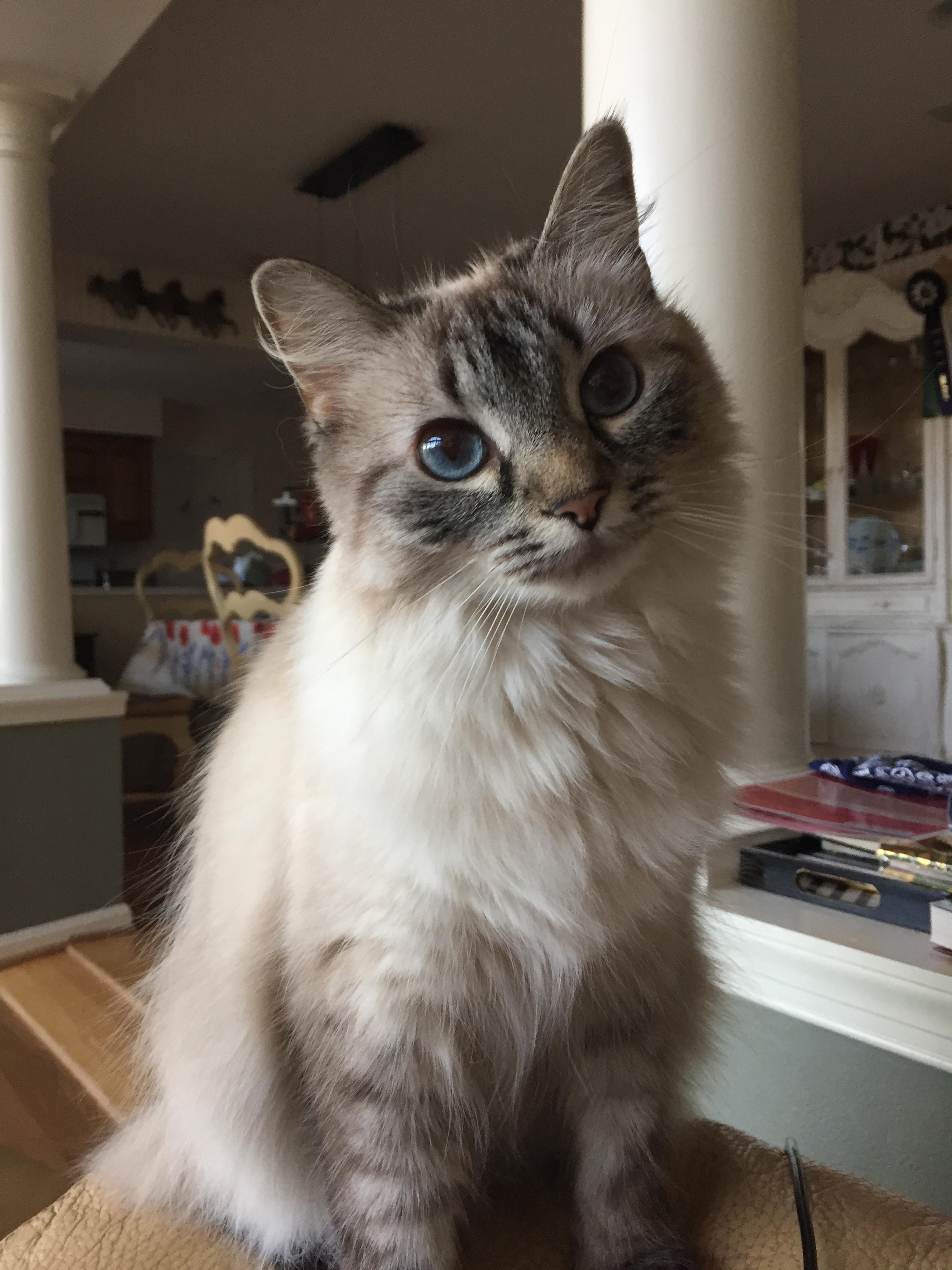
The photographs in this blog are of my cats – past and present. I am impressed by Eliot’s astute observation of cats. He was spot on for each cat, and I speak from experience.
It would not have been possible for me to appreciate T.S. Eliot’s poetry or most other important literature, were it not for my tenth grade English teacher, William Teunis, from whom I discovered the beauty of others’ worlds through their words. From him, I learned everything I ever learned in high school.
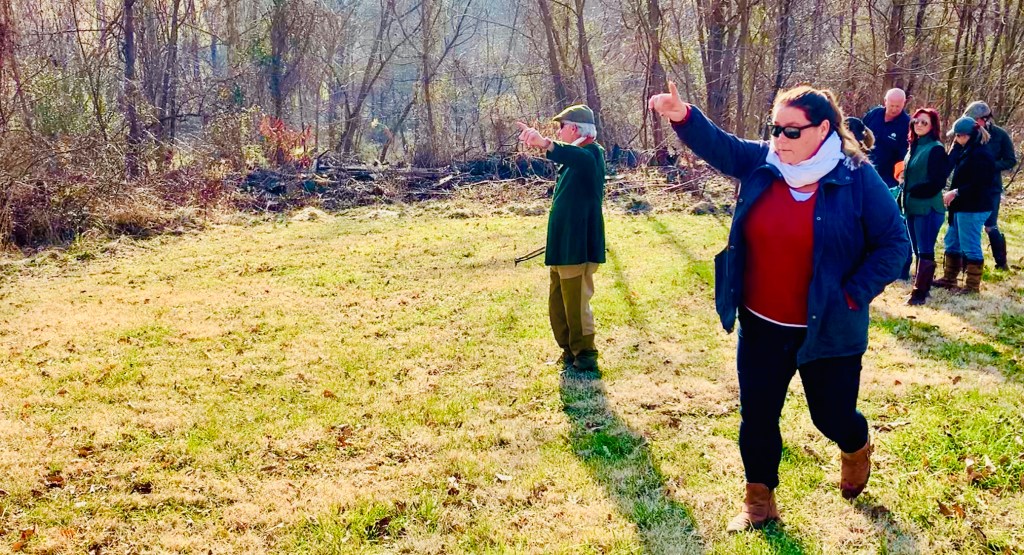
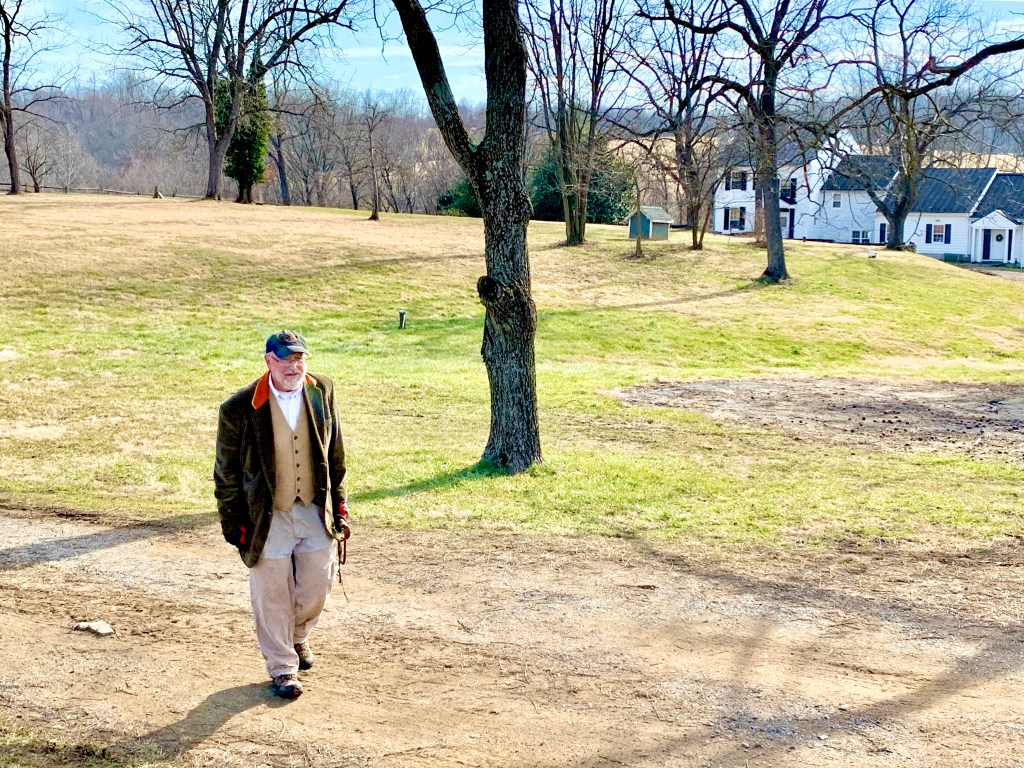
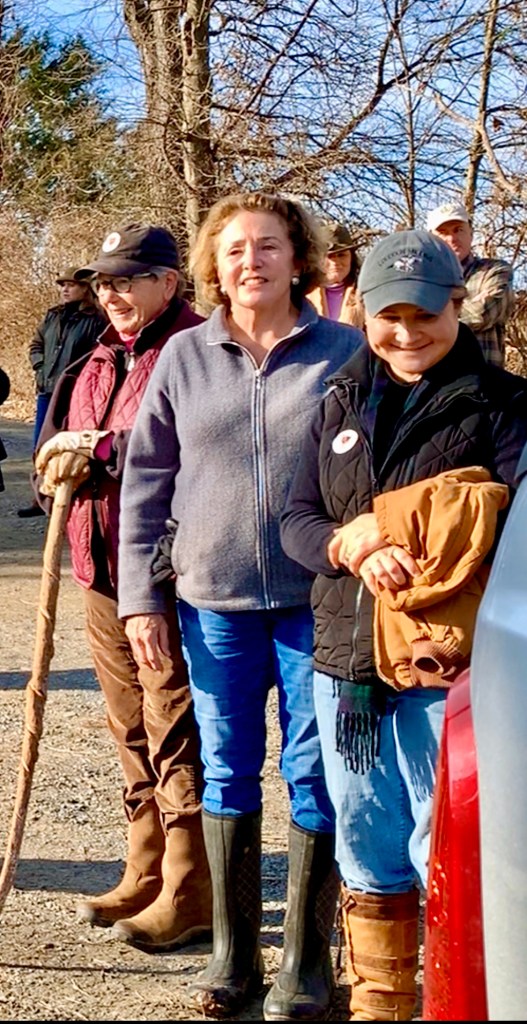
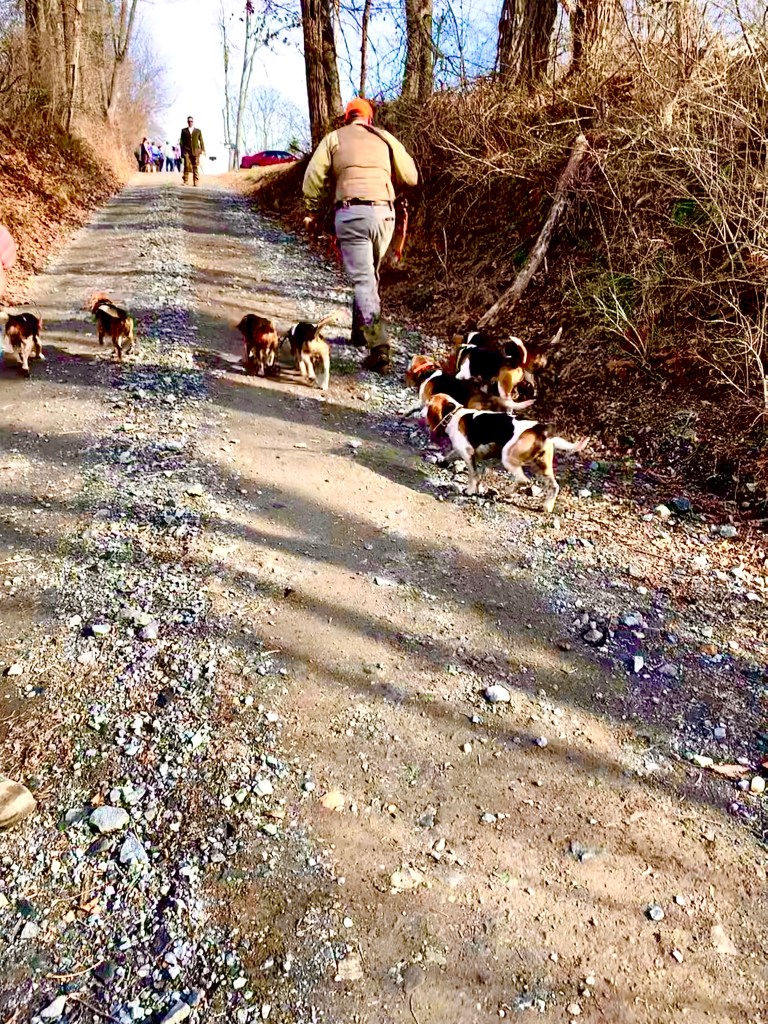
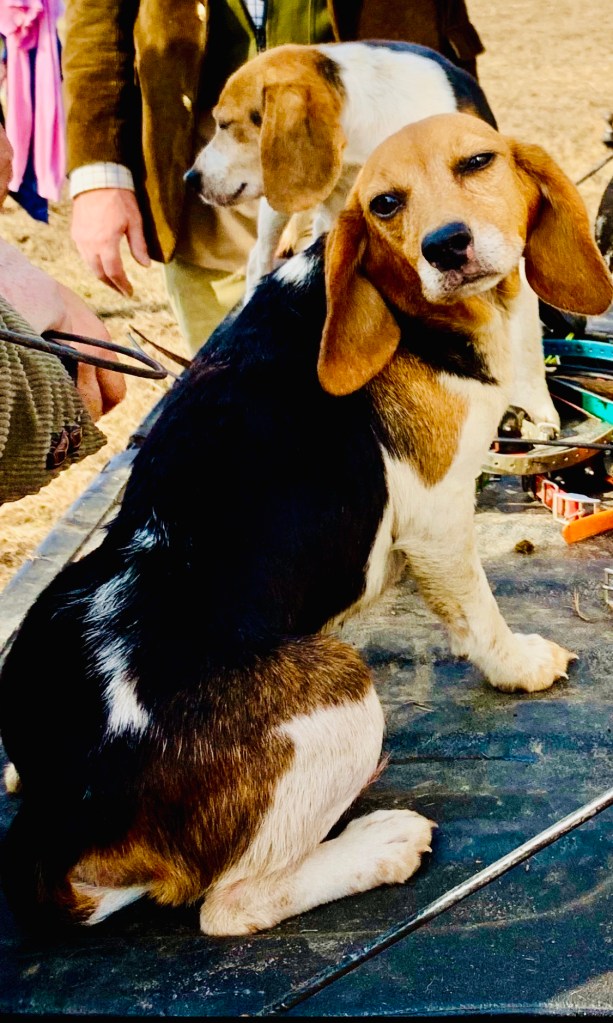
A foot hunt – no horses! The Middletown Valley Beagles introduced the Loudoun Fairfax Hunt and The Loudoun Hunt to foot hunting on December 28 at the LFH kennels at Overbrook; Hamilton, VA.
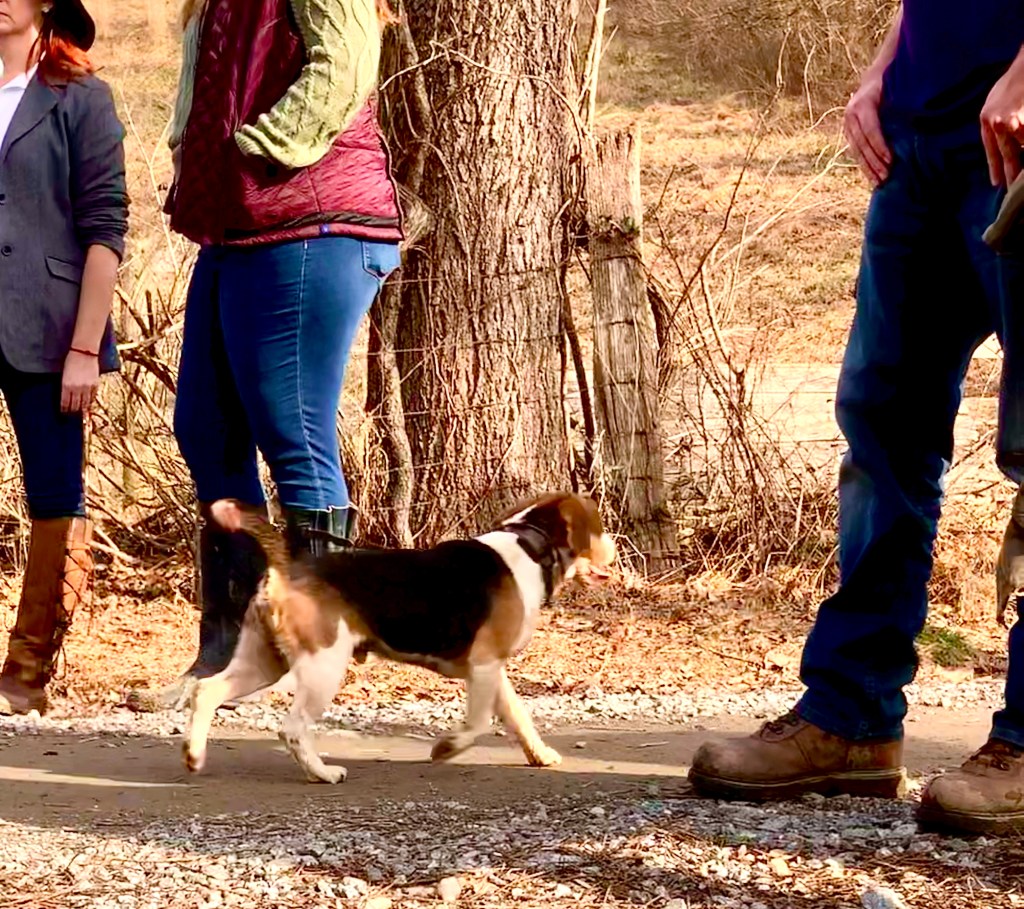
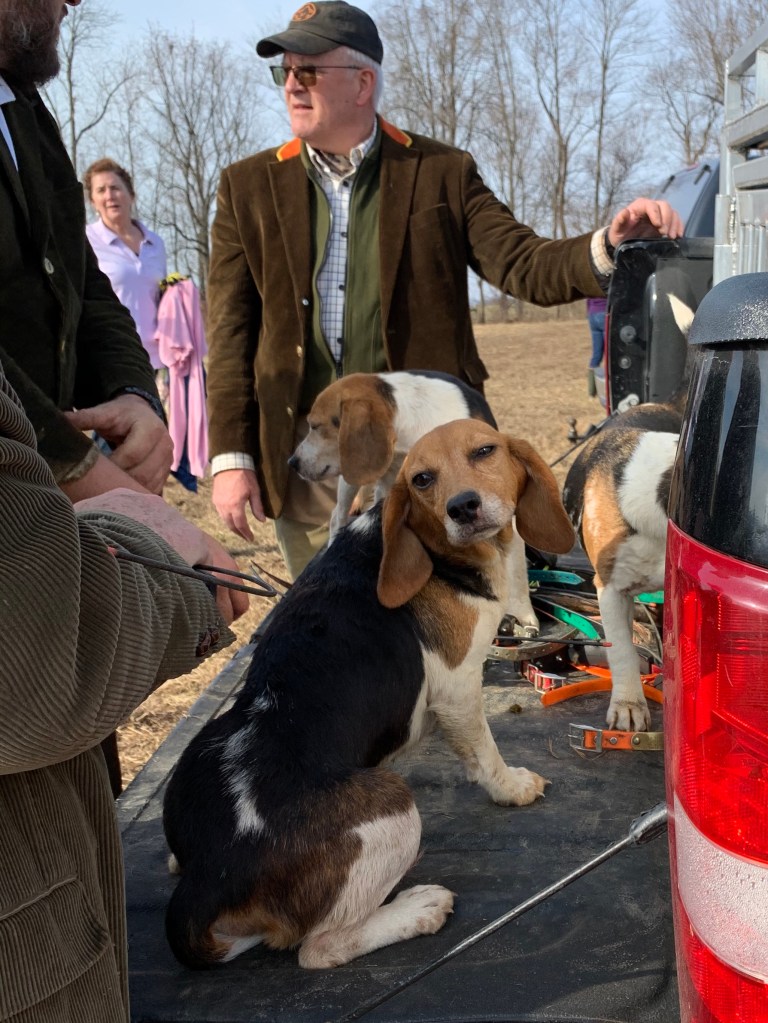
The Middletown Valley Beagles masters and staff arrived in style, complete with adorable beagles with huge eyes and long ears. The day was fair and the skies were blue. It was ideal for a walk across open fields, jumping over a few ditches, picking our way through low-lying muddy areas, to observing the hard working beagles, and catching glimpses of smart rabbits.
On the scent!
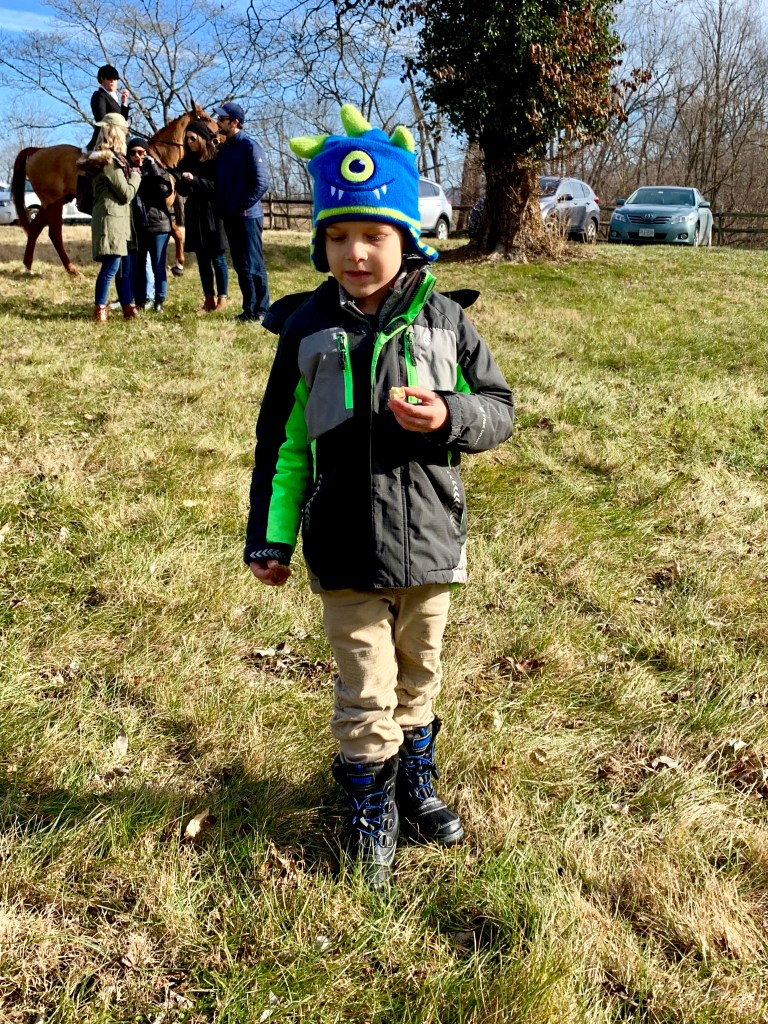
A delight for children
The View!
Bill Kopp, 1st Whipper-In
Alasdair Storer, MB and Huntsman
Their tails pointed up; their noses were to the ground. All at once, there was a symphony of beagle voices alerting us that they were on the scent of a rabbit! My heart skipped a beat with delight. It has been a long time since I have heard hounds work and now I see how much I have missed them. Fond memories flooded my mind.
As riders, we take hills for granted
Steffanie Burgevin
Steffanie Burgevin, Linda Devan, MFH LFH, Hannah Rogers Tucker
Rita Kaseman
Michelle Johns and Gretchen Kuney
It was a wonderful time to catch up with friends, and business associates whom I never would have expected to be avid fox hunters. We walked, we stopped, we listened and watched. All of a sudden, a rabbit darted out from a thicket, across a large open field and back into a wood. The beagles, in pursuit, stopped at the edge of the thicket to sniff for the rabbit. While they sniffed, their prey disappeared into the woods.
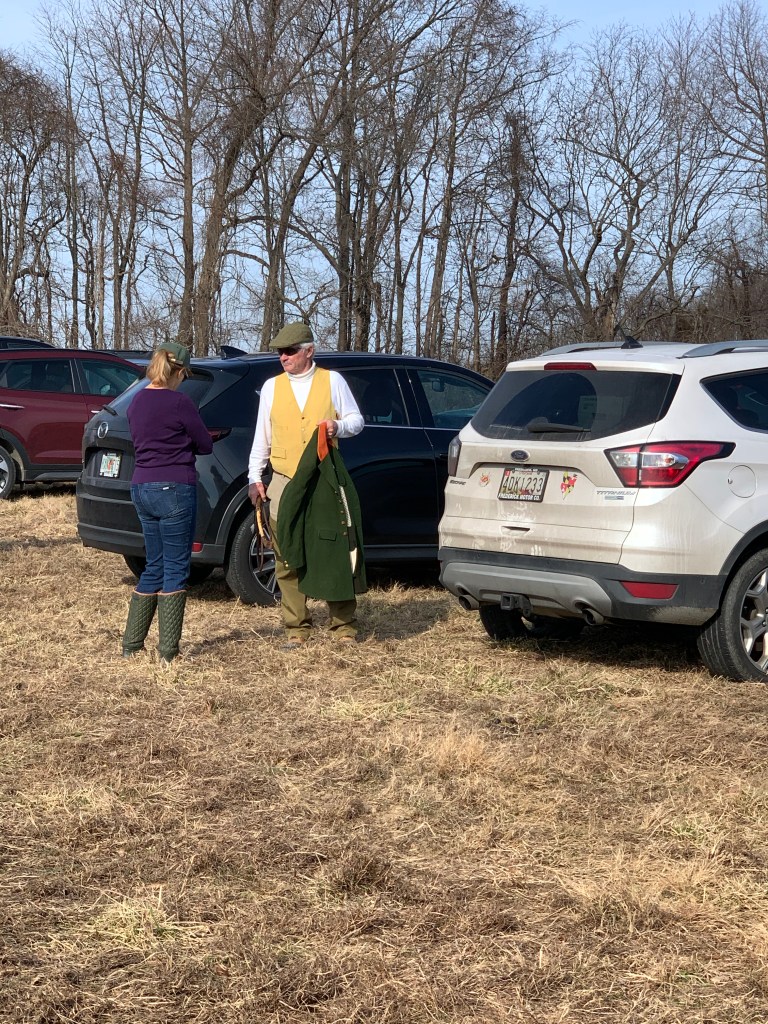
Much like a formal fox hunt, the Middeltown Valley Beagle staff and masters were dressed in their formal attire. Unlike fox hunts where scarlet coats are worn, the masters wore green coats with their club’s colors on the collars. The foot hunters enjoyed watching the beagles work. Their sweet melodic voices brought us to attention. The huntsman and his helpers never stopped walking and running; directing and following the beagles. The huntsman must be extremely fit because he never paused and ran up and down hills, over roads and through ravines.
On to business
Serene Views
The Day is Done – Heading Back
Overbrook
Paul Wilson, MFH LFH; Steffanie; Linda Devan, MFH LFH
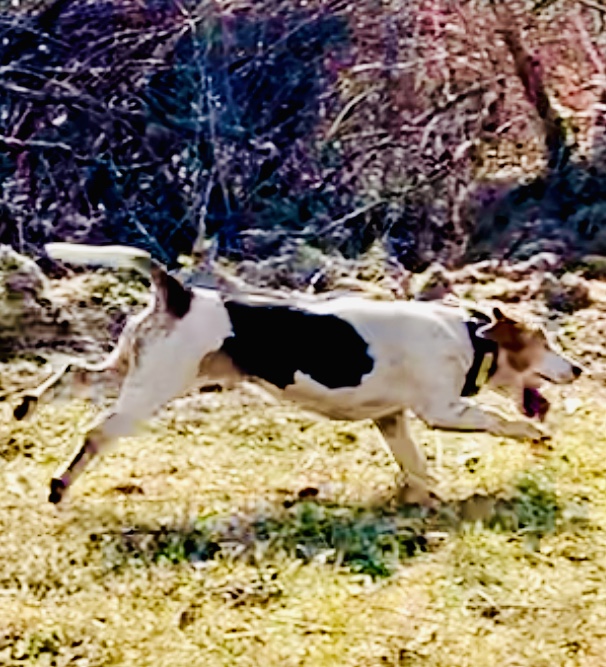
The beagles were attentive and busy. They were expert sniffers and great communicators. They ran, they sniffed, they listened to the huntsman’s horn. Being much smaller than fox hounds, watching them work put us at a different and more intimate vantage point.
What a great learning experience! In my more than 20 years of fox hunting, I never appreciated the hounds’ work because I was focused on my horse and those near us. On foot, there were no distractions and we got much closer to the action. At the end of the hunt, no rabbits were harmed, three rabbits were discovered with each giving the beagles good sport, and the “hunters” enjoyed an interesting adventure with great camaraderie.
Honorary Field Master, Randy Medd
One of the 10 (5 couple) beagles
Sport under blue skies
Lt. Col. Ken Jacobsen, DVM, Kennel Veterinarian and Whipper-In speaking with Steve Minnick, Whipper-In
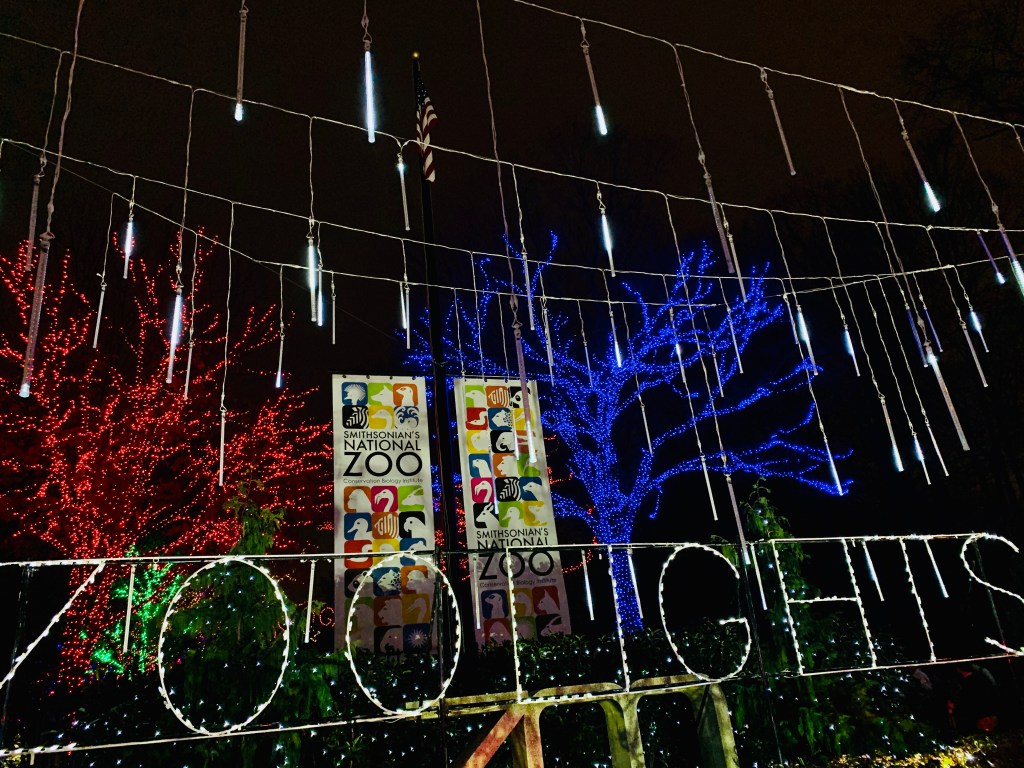
Sparkling, shining lights brighten winter at the National Zoo!
Enticing!
My friend, Vicki, and I met at the front entrance to the Zoo on Connecticut Avenue. We were instantly “captured” by the brilliance of the displays. We both love shiny sparkly things and this certainly suited our sensibilities.
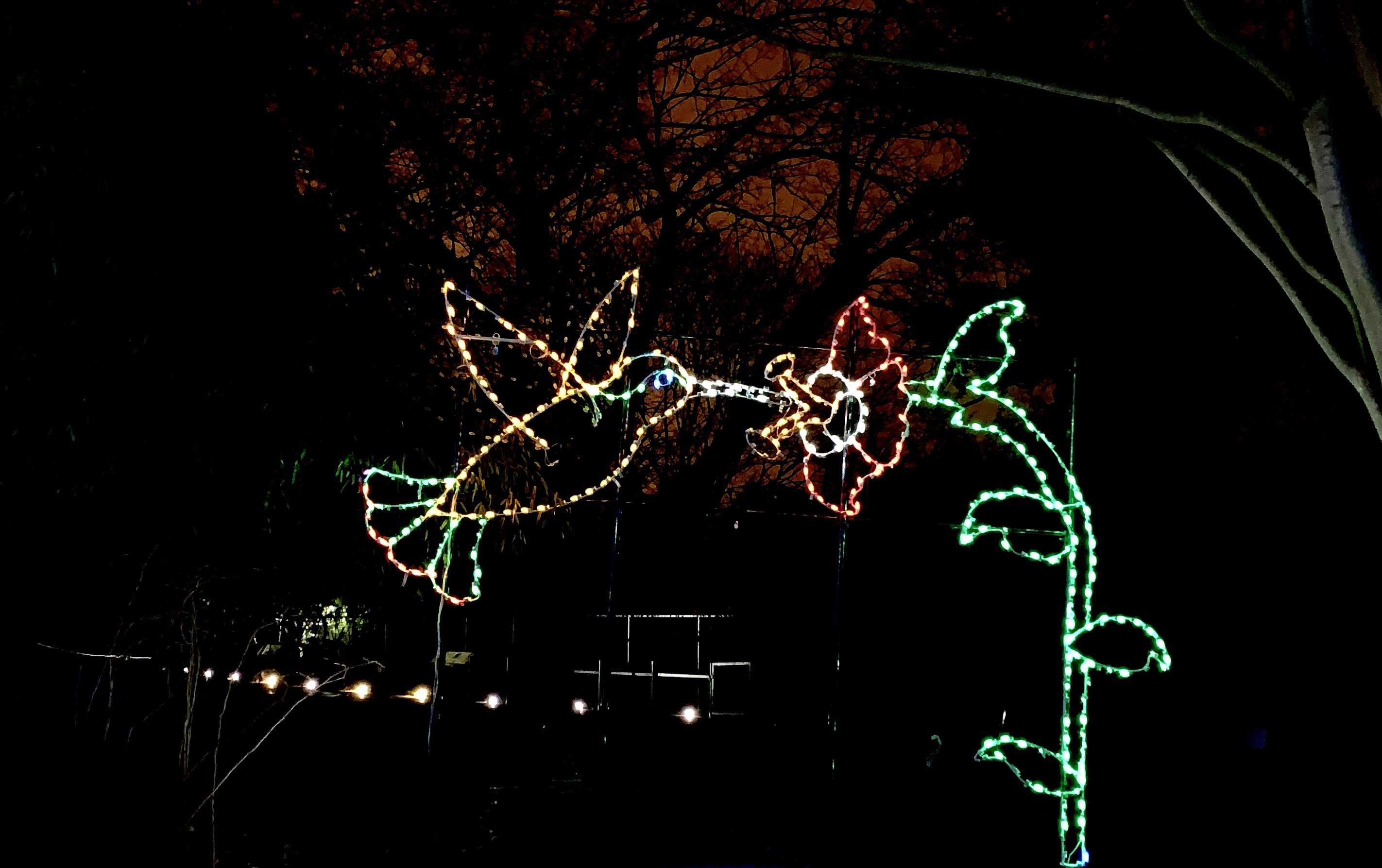
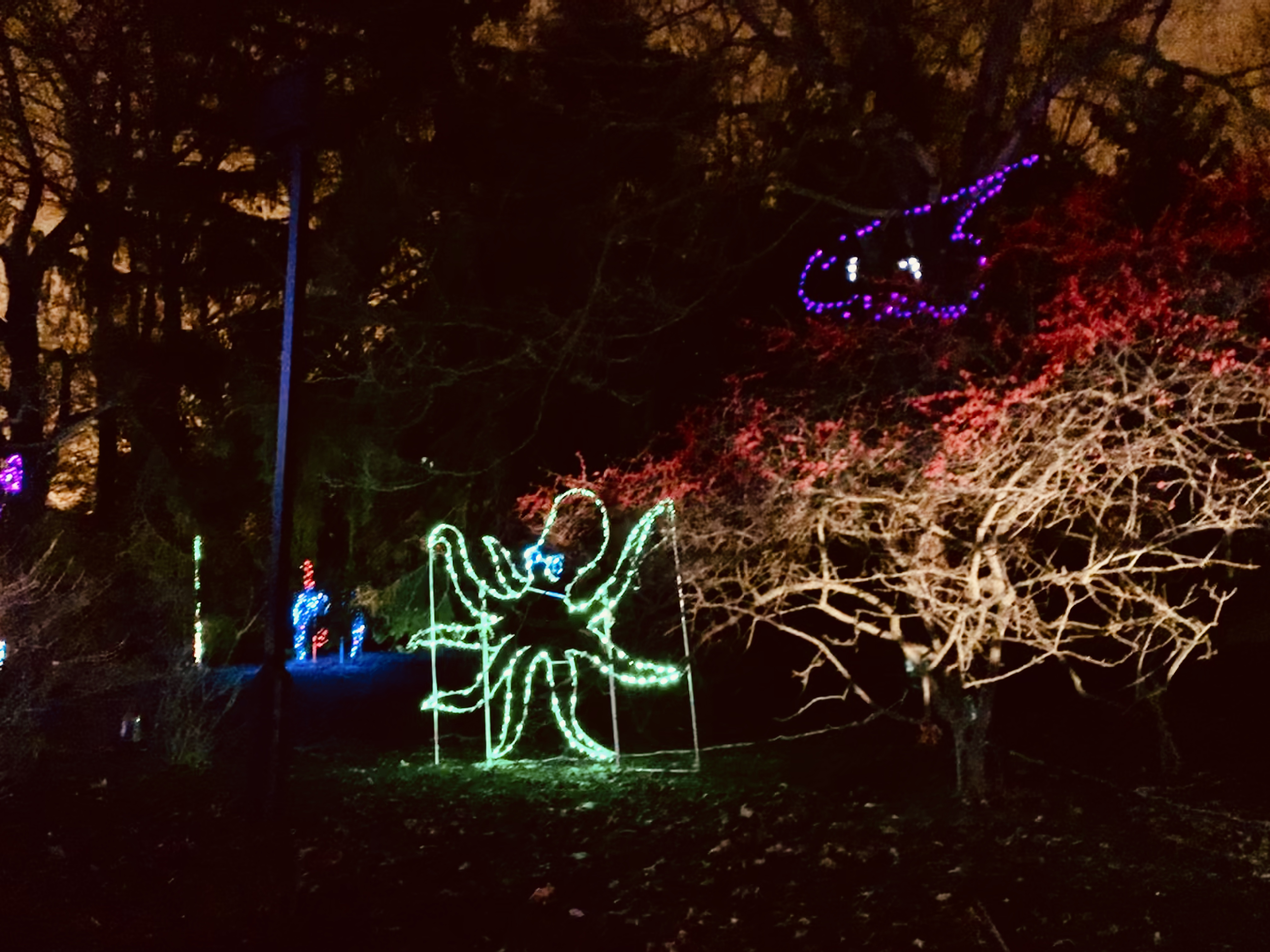
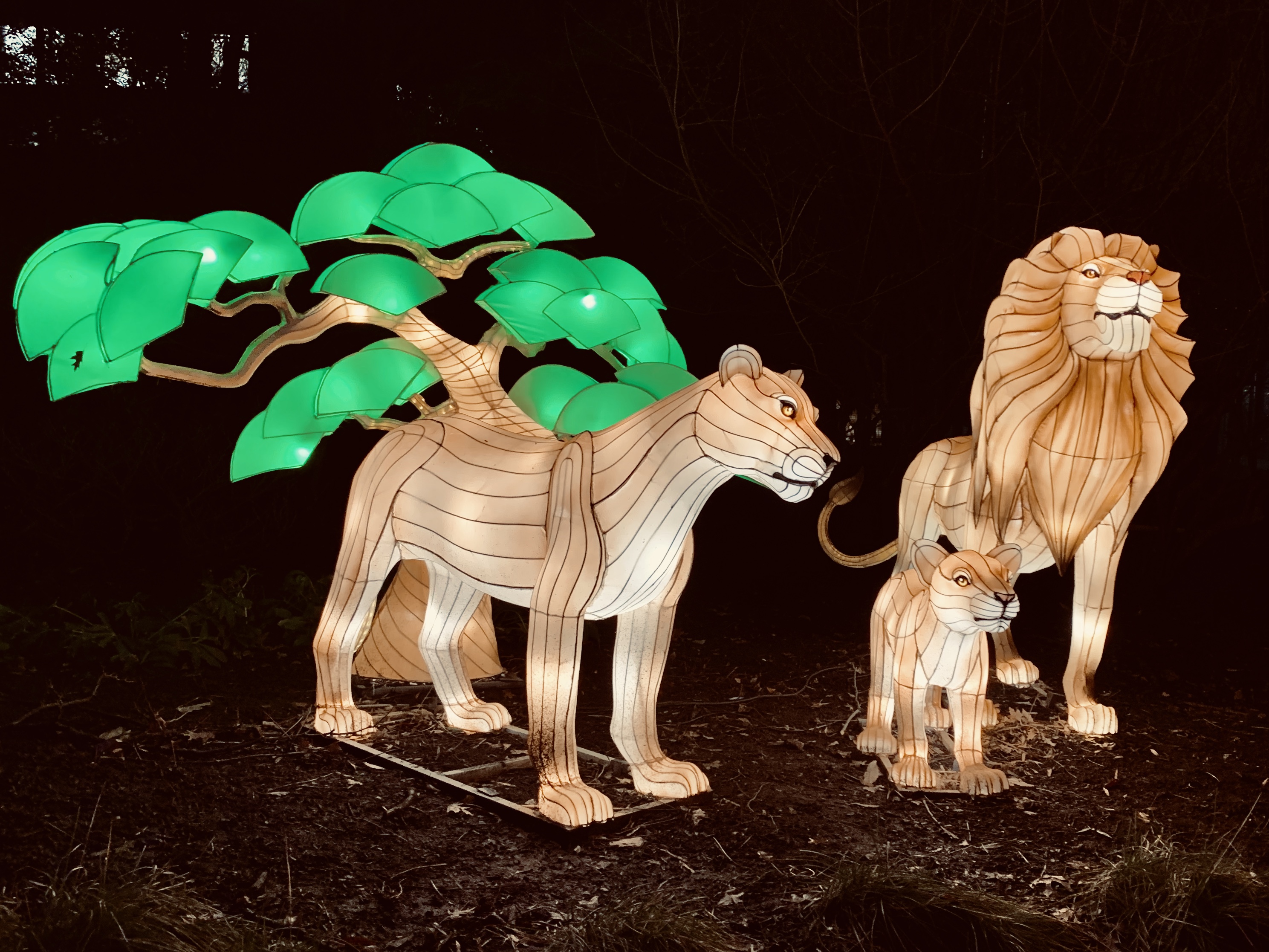
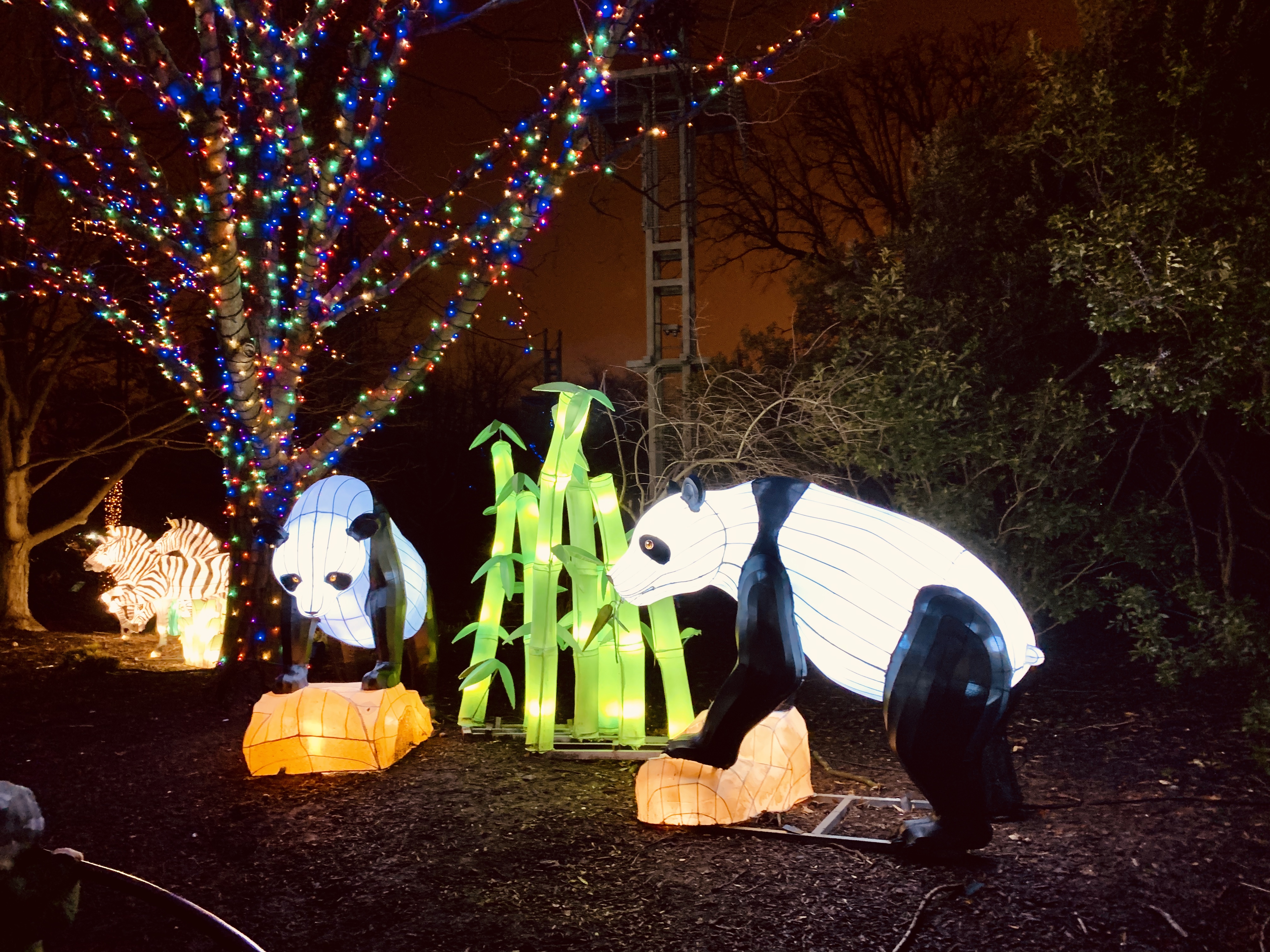
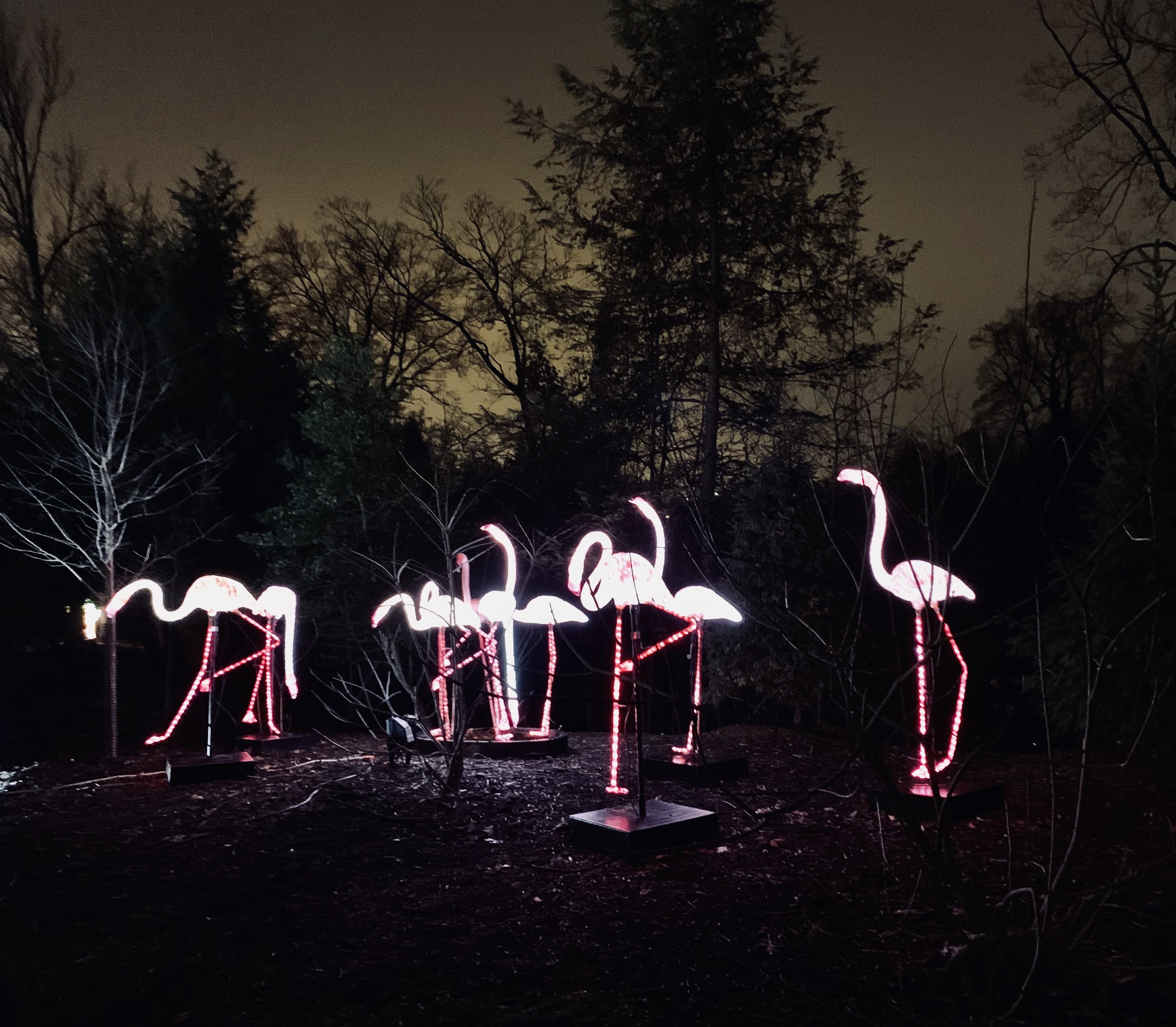
While I have known about the ZooLights at the National Zoo, I was not sure how the animals were reacting to the crowds and lights. Silly thoughts because the displays are well shielded from the animals. They slept while we strolled. There were plenty of animals to admire. The creativity and execution amazed and delighted us. “How did they figure this out?” asked Vicki. “This looks like satined glass,” I exclaimed. The animals, we learned, are called “lanterns.” They were crafted in China and lit from within.
On our illuminating stroll, we came upon a troop of young Irish Dancers. Their energy and enthusiasm was contagious. We were ready to dance along the pathways after their show ended.
Dancers from Southern Academy Irish Dance, Northern Virginia
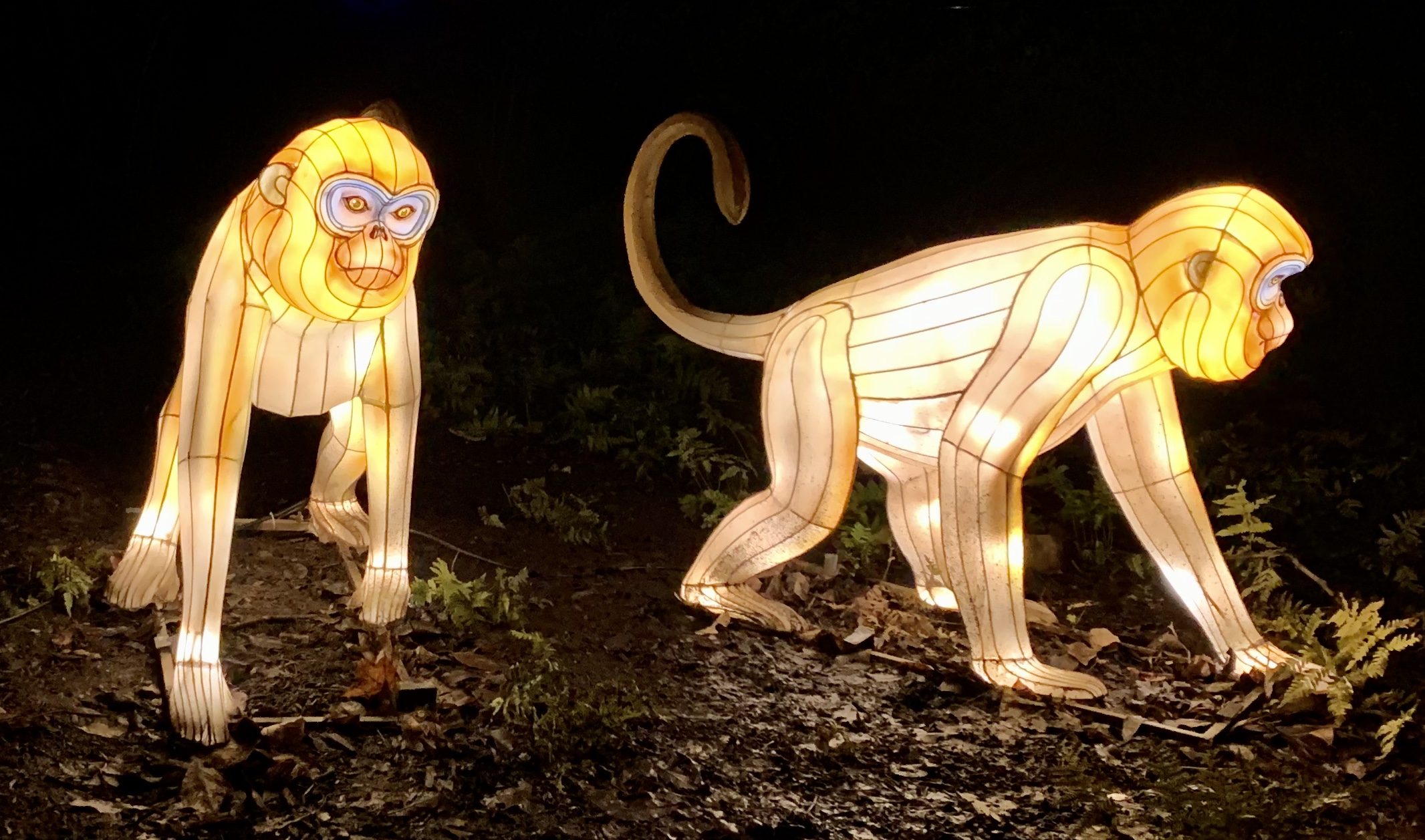
Our visit was filed with surprises. Vicki, being very observant and detailed, caught many interesting details that I, being a “big picture” spectator, would simply never notice. Look – can you find the monkeys in the trees?
Can you find the monkeys?
The ZooLights experience was enchanting and provided great conversation.
There was always something to see although the real monkeys were in their house.
ZooLights closes on New Year’s Day. If you want something spectacular with which to begin your year, go, take an illuminating stroll.
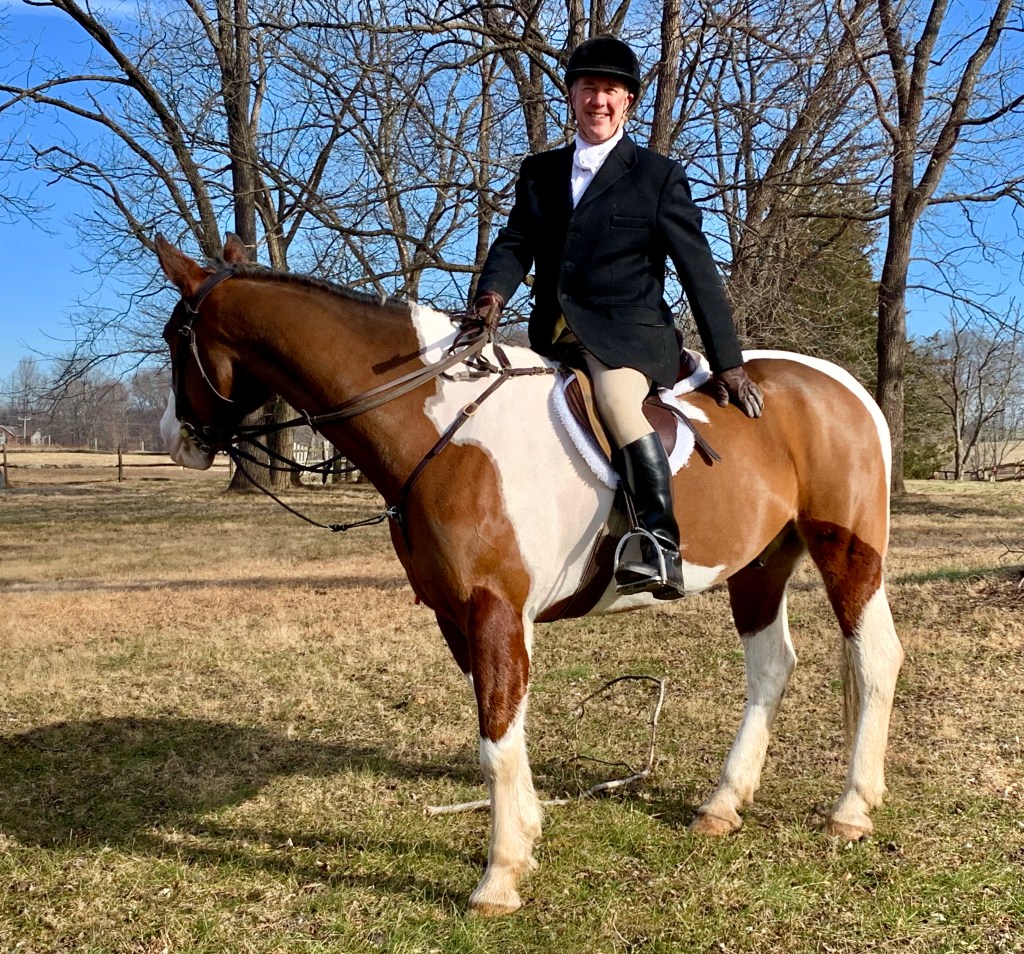
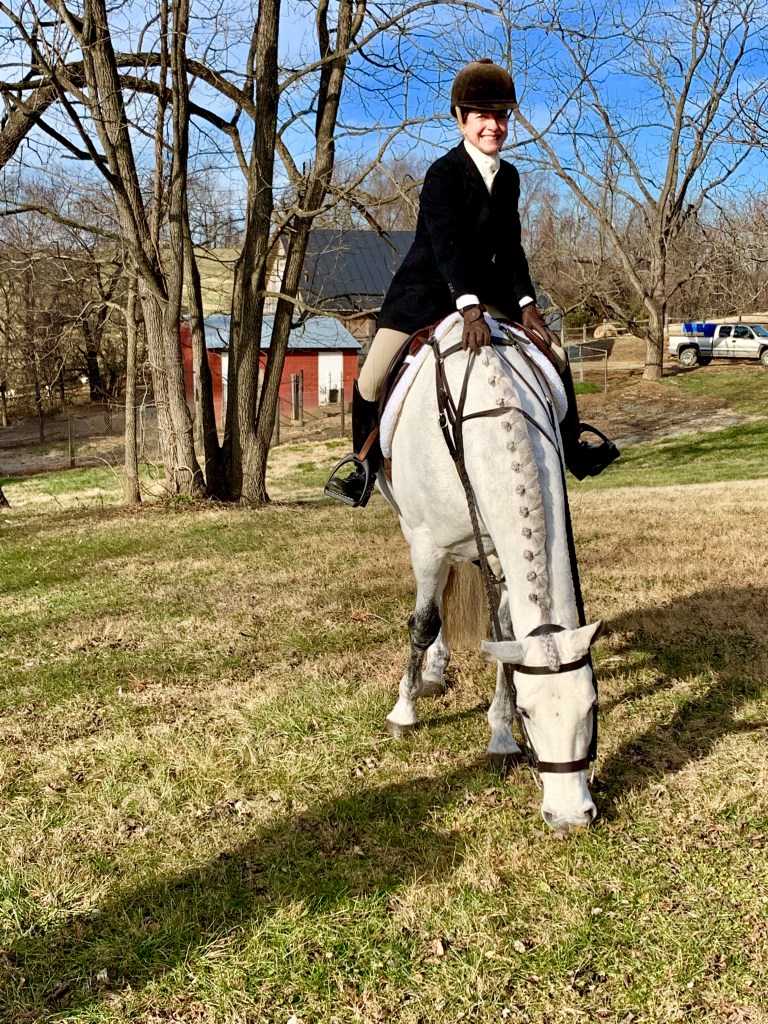
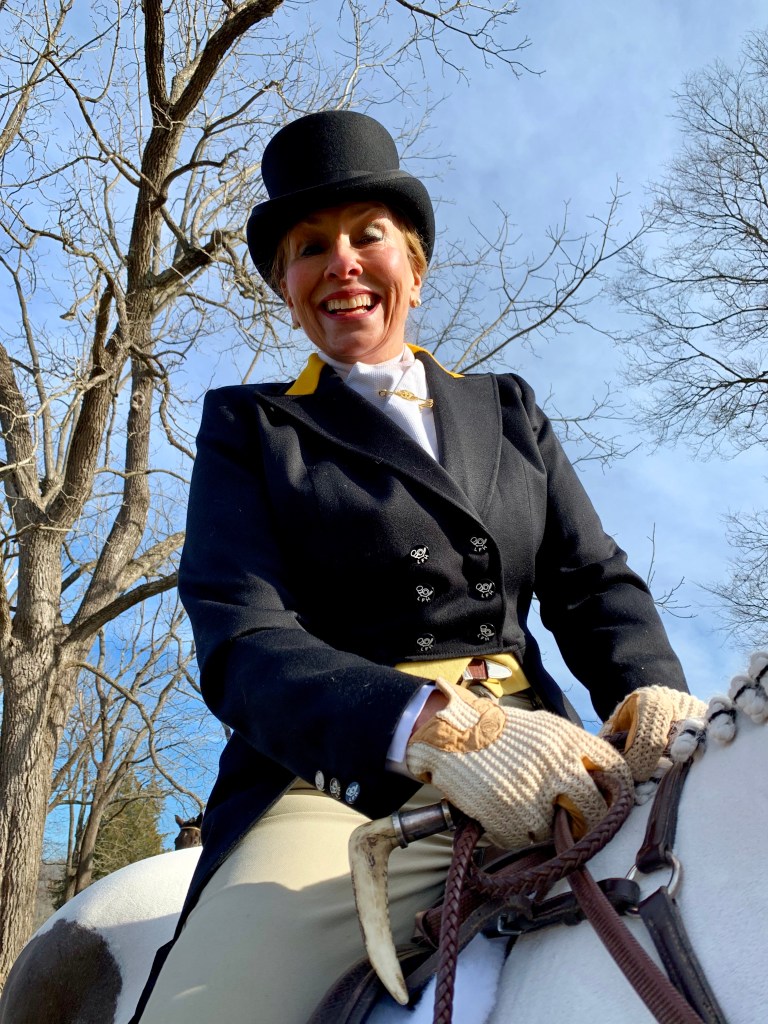
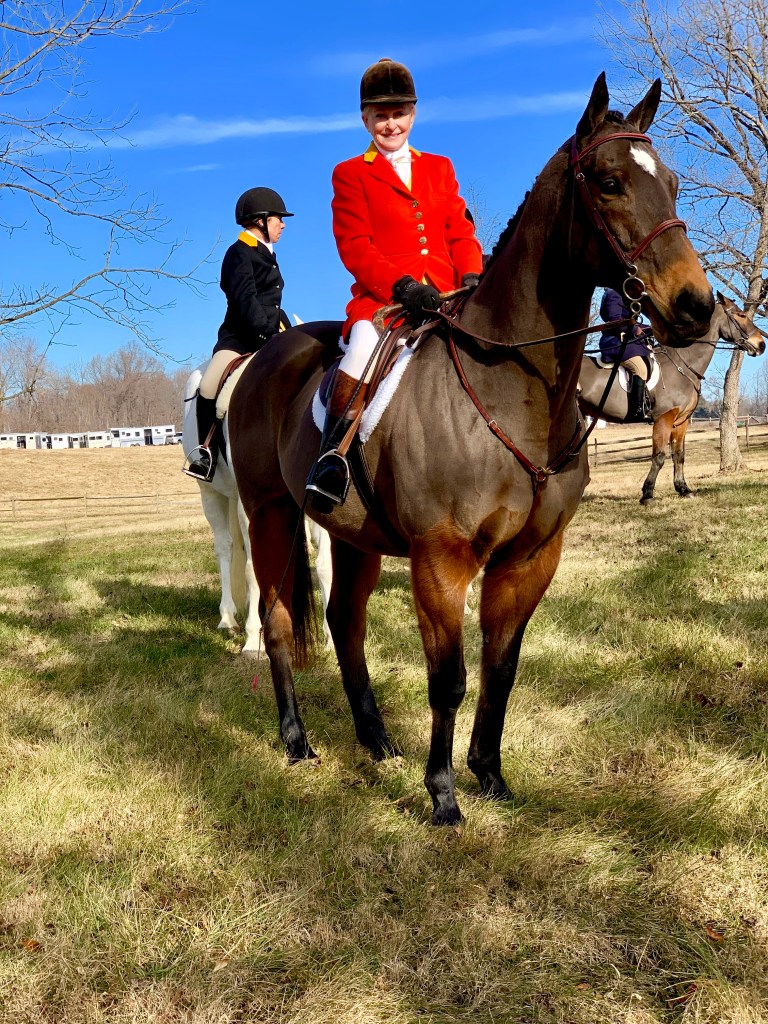
Spotless horses, with braided manes; meticulously turned out riders wearing shining boots and scarlet coats; happy hounds sniffing and rolling; and the exchange of greeting – this is the stuff of the fox hunting tradition. The Opening Meet of the Loudoun Fairfax Hunt was replete with traditional pageantry and plenty of fellowship. While fox hunting has been portrayed in many movies and recently, on the show and movie, Downton Abbey, this event was authentic and highly anticipated.
Gin Richardsonvon McQuire
Michael Herper, MFH
Steve Collins
Ann D’Iganzio on Maeve
Joseph Keusch
Lynn Pirozzoli
Gretchen Kuney on Jack Frost
Dr. Ann Ma
Huntsman, Neil Amatt with Zara on her tiny pony
Brooke Rogers Ware with Gretchen Kuney
Rita Kaseman
Masters’ Welcome
Donna Rogers, MFH on Glide King
“Opening Meet” is the first formal event of the hunt season and marks the beginning of the season. The Meet took place on December 22. “It’s wonderful to be out again, and all together!” said Gretchen Kuney, who was going to lead the third field.
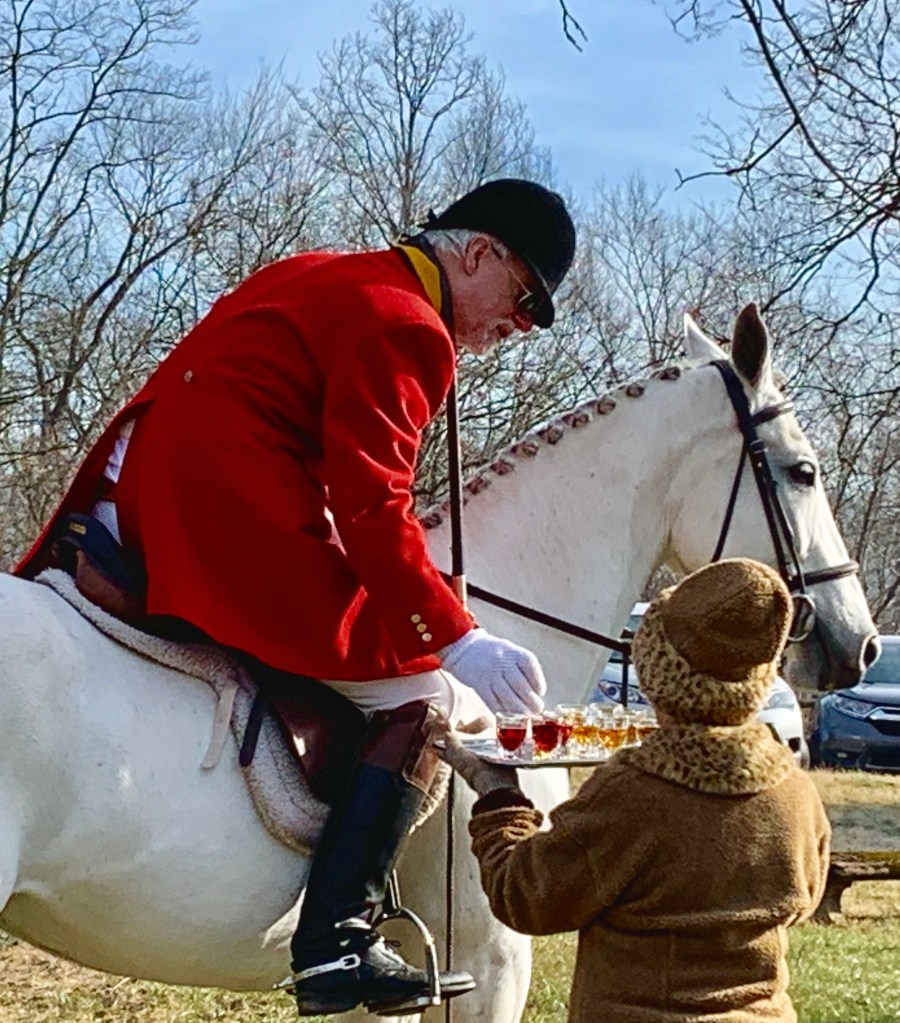
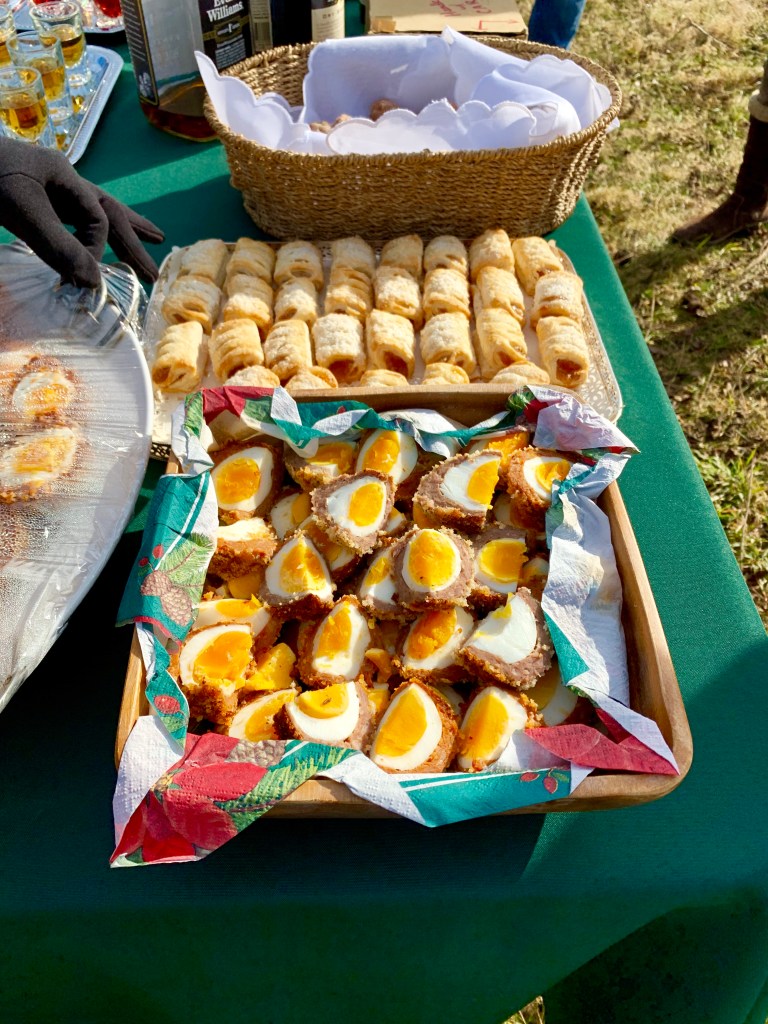
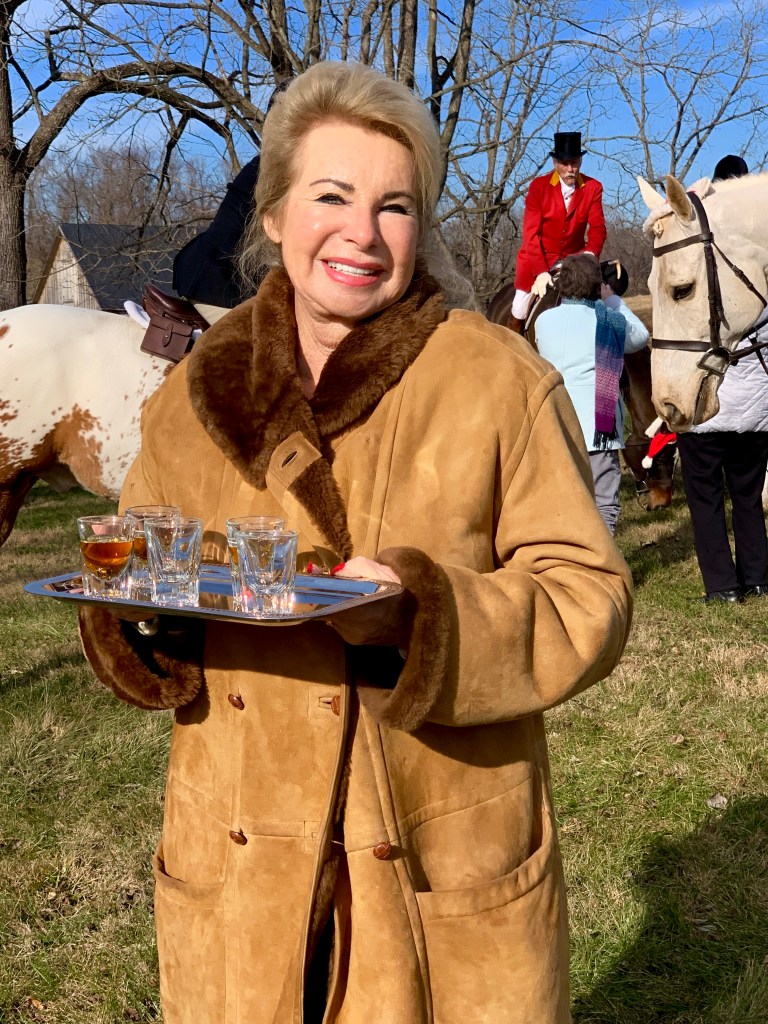
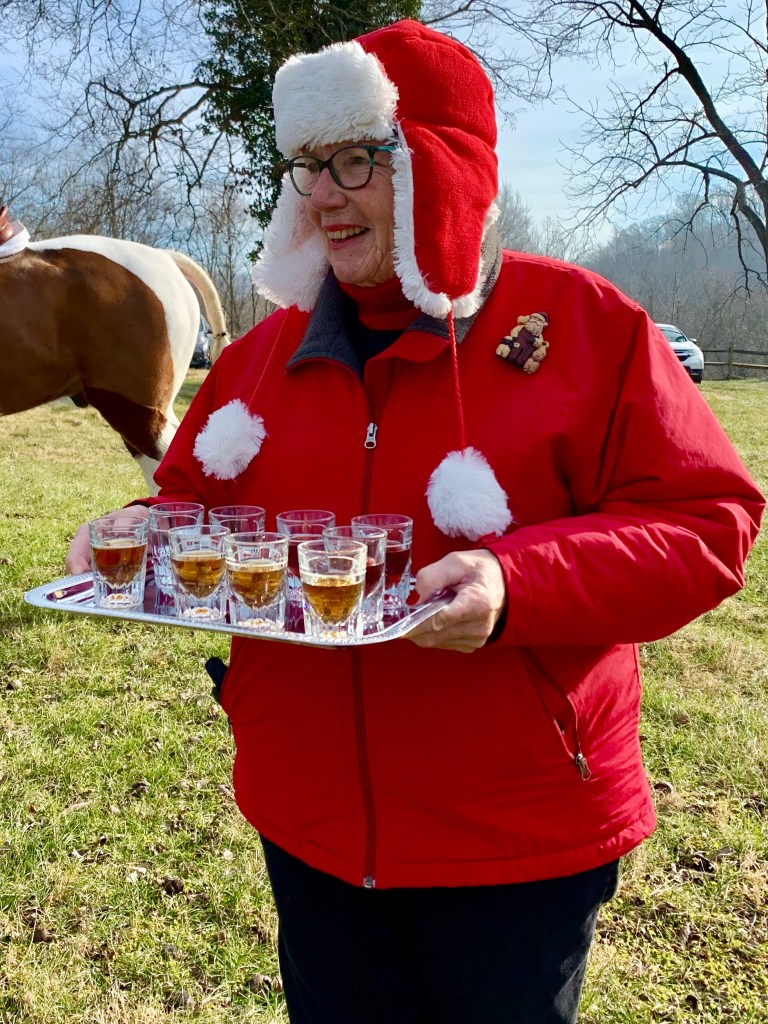
To toast the Opening of the Season, a “stirrup cup” was served. The pre-ride refreshments were served to the mounted riders and included port, sherry, brandy as well as small pastries.
Sirrup Cup – Diane Ingoe and Steffanie Burgevin
Barbara
Steffanie
Linda Devan, MFH
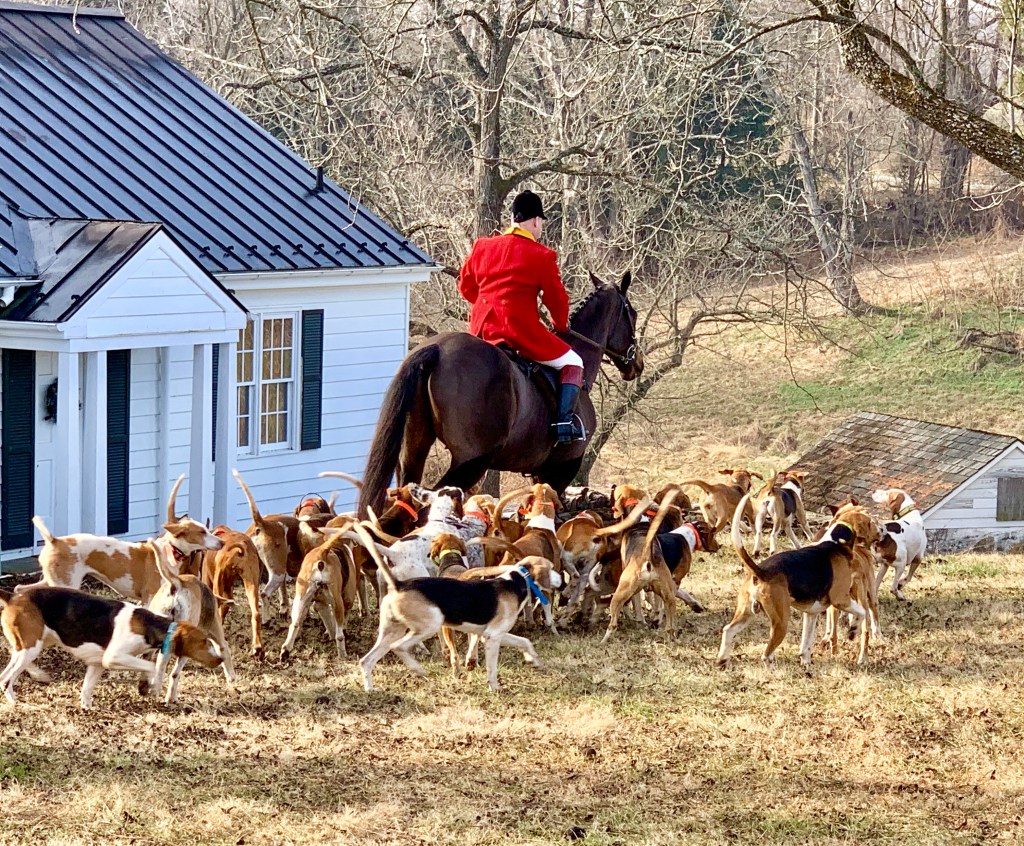
True to tradition, the Masters welcomed the members and their guests in their remarks and gave the annual Christmas gift to Huntsman, Neil Amatt. As Neil accepted the gift, the hounds (more than 30) gathered around him. The Huntsman was accompanied by his adorable two-and-a-half year-old daughter, Zara, on her small pony.
The Masters, Huntsman, and “field” moved off at eleven o’clock. After an exhilarating day of riding and hunting, a potluck “breakfast” was held at Overbrook Farm that evening.
Let the hunt begin! Huntsman, Neil Amatt, and hounds
Future Fox Hunter
Hannah Rogers Tucker with her future hunter
Kassie Kingsley
The future of fox hunting
Jean Stafford sporting a beautiful vintage hat
Fox Hunters – Past – Present- and Future
Fox hunting dates back to the sixteenth century in England when fox was considered vermin that threatened farmers’ livestock. According to the Masters of Foxhounds Association of America, Englishman, Robert Brooke was the first to bring his pack of hounds and his horses to America in 1650. The red fox was imported from England to the eastern seaboard America in the seventeenth century. In America, Thomas, sixth Lord of Fairfax established the first organized hunt group in 1747.
In the United States today, the fox is a more and more a protected and revered member of the tradition as coyotes threaten the countryside. The sport today, is often called “fox chasing” inasmuch as a view of the fox makes for a great day of “hunting.”
Early arrivals got the best parking spots
Having hunted for more than twenty years, there is something magical about the crisp air, the crunch of leaves under eager hooves, the song of hounds as they catch a scent, and the brilliant tones of the Huntsman’s horn. There are starts and stops, jumps over coups and stone walls, gallops across open fields, and some patient waiting. Riding to hounds is not for the fainthearted. It requires bold equestrian skills and physical fortitude. There was nothing I enjoyed more than cantering through trees in the woods like a slalom course, when I would duck behind my horse’s neck and let her see her way around each tree. Often, we emerged with scratches and snags on my breeches.
With due respect to tradition, riders opt for safe and secure head gear, safeguarding their top hats from low limbs and brambles
Tally-Ho! – To fox viewing and to riding another day.
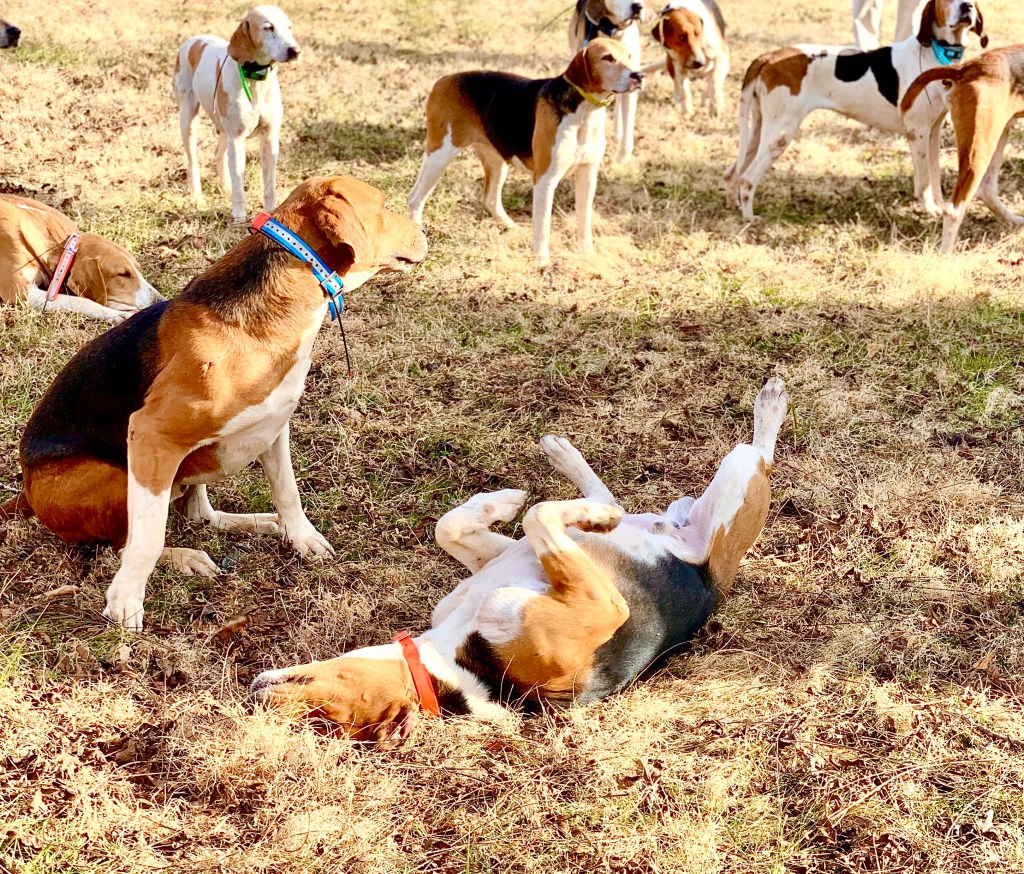
The Hounds with their new GPS collars purchased with Hunt Ball proceeds
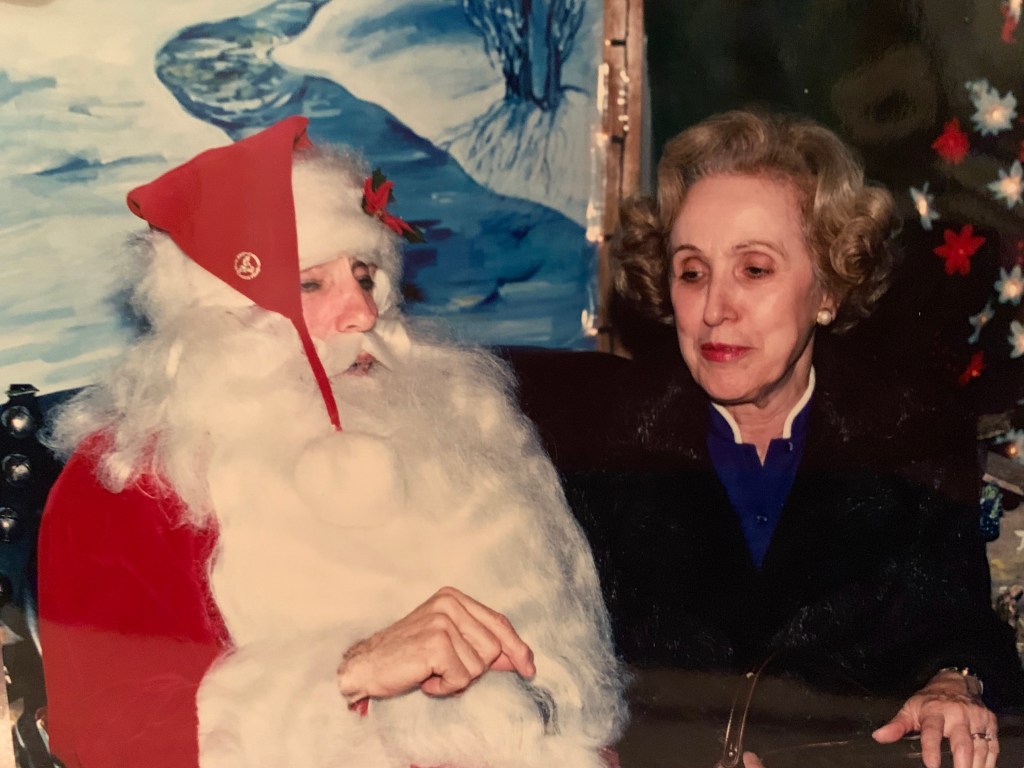
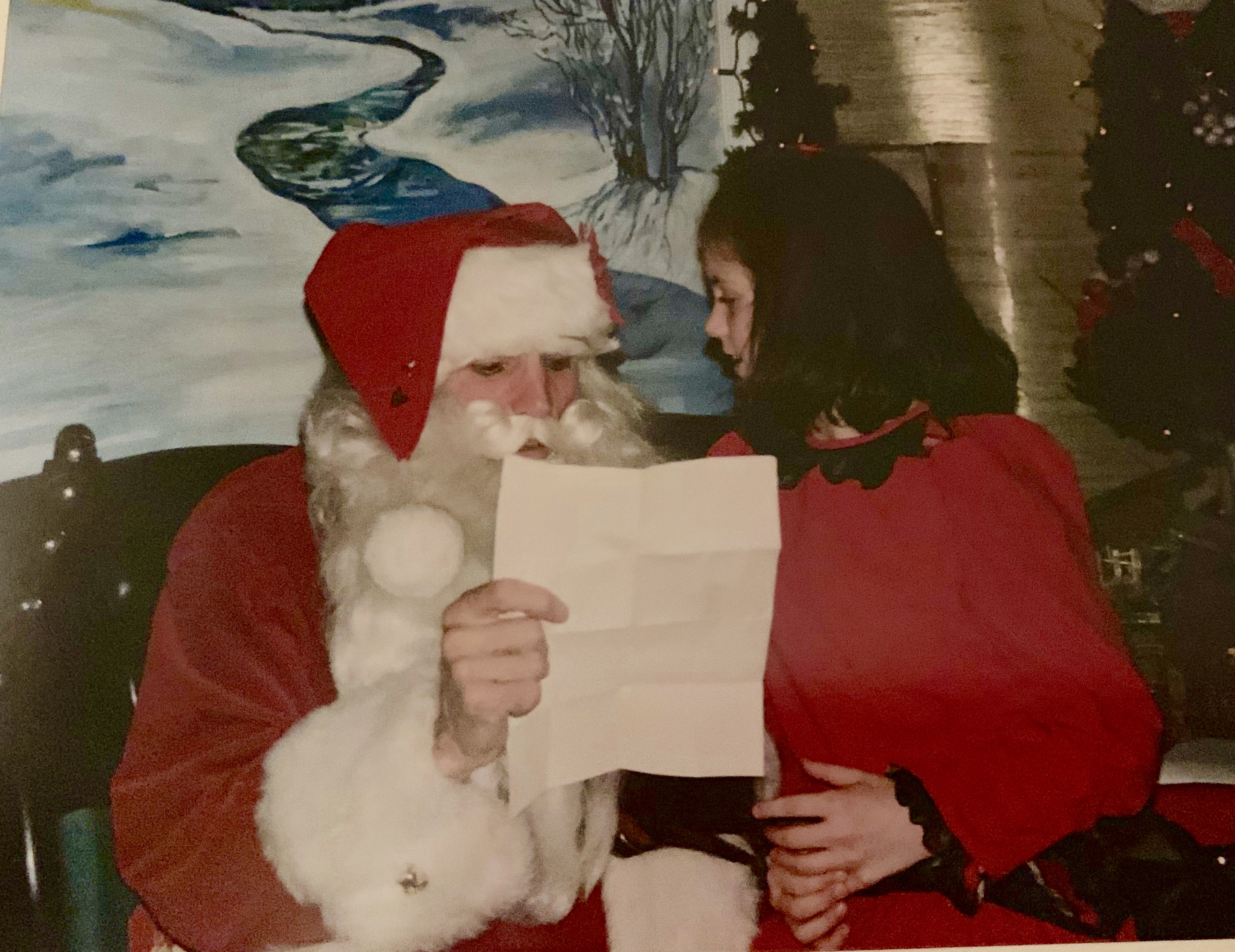
His beard and whiskers were white as snow. His red velvet suit showed wear, particularly on his lap where thousands of children sat. His sleigh was shiny red and just right for standing or sitting. He reminded his guests that the real meaning of Christmas was not “what” children will get for presents, but “who” came to earth on Christmas.
With his supreme diplomacy, Santa suggested and never lectured on the true meaning of Christmas. He encouraged children to discuss those details with their parents.
We stood in long lines that did not seem to advance. Our daughter was one year old when we first visited. She was fascinated by the tiny low windows where miniature toys depicted scenes of Christmas toys and the train that chugged along a track high above our heads. The years rolled on and then she was five, ten, twelve, fifteen, and on. We always went and he was always there.
There was a letter-writing station with pencils and papers in case someone had left their letter behind or that their dog ate it. Children as well as parents and grandparents wrote letters that Santa carefully read.
The lollypop tree to the right
A visit to The Real Santa was an adventure and a production. He would arrive at his Santa House the day after Thanksgiving and return to the North Pole several days before Christmas. During his stay, he would meet, greet, hear, and consider every child. He would nod if he approved of the requested gift and sometimes he would look up from a letter in alarm and say, “Mom or Dad . . . how would you feel if I delivered such a gift? Maybe I’ll bring you a blue scooter, instead.” We still remember the shock on his face when our daughter asked for the Dirty Dancing movie.
He could read hearts
Families lined up at Santa’s door sometimes hours before his arrival. There was popcorn and hot chocolate to tide hungry youngsters. Santa’s house was a work in progress. Every year, a new feature would be added to his beautiful displays. There were albums with letters and photos with/to Santa from the parents (when they were children) of the children standing in line.
Santa carefully red every letter and heard every whispered secret. His promises and instructions were to be followed exactly. “On Christmas Eve, I want you to place a small white plate on the kitchen table. On that plate place eight pieces of carrot for my reindeer and one cookie for me. In the morning, you will find a present wrapped in green tissue paper and tied with string. That will be a surprise for thee from me,” Santa told one spellbound child. Parents took copious notes. Before stepping away from the sleigh, Santa would smooth his beard, reach to his right, and produce a lollypop from his lollypop tree along with a beautiful small card depicting the Nativity . “Remember the real reason for Christmas,” he would tell the child while handing them the card and candy.
Time for poems and stories
He was no “mall” Santa. He gave every child their due time and parents ample photography opportunities. As his house became more crowded and the lines grew longer, Santa would take a break and climb to the top of his roof . He spoke to his guests. He lead them in Christmas songs or read them stories or poems. Sometimes he spoke to the adults. One very memorable poem by an anonymous author, goes like this:
Santa attended to his visitors with love and understanding. “He knew if you were good or bad” and would call actions out, much to the surprise of his guest. Several incidences still have us wondering – how did he know?
When my daughter was four years old, she loved to leap into our bed at the crack of dawn. That Christmas, we visited Santa. As she prepared to step out of his sleigh, Santa called her back. Holding her tiny hand in his big hand, he looked her in the eye and said, “Now, you must stop jumping in your parents’ bed and stay in your own bed. Promise me that you will try. I will bring you a special present wrapped in white ribbon and will put it in front of your bedroom door.” Our early morning visits ended. Sure enough, there was a special present wrapped in white ribbon on the floor in front of her bedroom door. How did he know?
The year that my father passed away, my mother accompanied us on our visit. She stood near the sleigh to hear Santa’s instructions and reactions. He stopped, turned toward her and invited her into his sleigh. “Grandma, to you, I wish peace and calm. It will get better. He gave her a lollypop and a card. How did he know??
Because time with Santa transcends age, we visited him even when our daughter grew up. She loved to introduce children to the Real Santa. She loved when her younger cousin visited. One year, her cousin was perplexed because she did not think that Santa would be able to find her at our house. As the girls were preparing to leave the sleigh, Santa cleared his throat, looked into the little girl’s eyes and softly told her, “Don’t you worry about my finding you. I always know where you are.” How did he know?
In a later year, again, with a younger friend, Santa listened and nodded to the younger child and to our daughter. Our daughter was a freshman in high school. As she was leading the young child out of the sleigh, Santa cleared his throat and tapped her on the shoulder and said, “You know, the things that hang on the rod of your closet are not mobiles. They are clothes hangers. You should use them. Hand up your clothes on those hangers and cleanup your room.” My husband and I were speechless as was she. How did he know?
Waiting to see Santa was filled with beautiful discoveries. My Goddaughter made special memories with Santa
In 2018, Santa decided to take a break from the hustle and bustle of crowds and focus on his workshop. With internet and mobile phones, he adapted to the new technology. In his house, instead of his beautiful sleigh, was a blue mailbox for paper letters. Of course, supplies were provided. My Goddaughter drew him a beautiful picture as a gift and did not ask nothing for herself. We experienced the magic of Santa for 33 years and introduced many children and their families to him. Our memories with the Real Santa are priceless. Our Christmas tradition always included a visit to Santa at his house. We marveled at his creativity as each year, he added more and more displays. He never wavered from the true meaning of Christmas.
Leading songs from his sleigh
Wishing you and yours a merriest of Christmases and that you can carry the meaning of the season in your hearts throughout the New Year. And . . . Send Them to Bed with a Kiss.
New beginnings and the casting away the old year’s cares were celebrated at the William and Mary Alumni Association, Washington, D.C. chapter on December 19. The traditional and sophisticated celebration was held at The Army and Navy Club at Farragut Square, Washington, D.C.
This annual event, with its roots dating to the 1930’s, is the highlight of the alumni events season. Recent William and Mary graduates mingled with alumni from classes of the 1960s and all decades in between. Conversations were jovial and many reconnections were made. The reception featured a crepe bar, passed h’orderves, the wine bar included hot toddies and mulled wine, as well as beautifully decorated holiday cookies.
US Coast Guard Commander, Michael Krause
Past Chapter President, Tiffany Henkel and Rob Kelly
Victoria and Todd Sievers
Patrick Costanzo and Anna Mahalak
Brandon Williams and Katherine Ford
Alma Mater Song
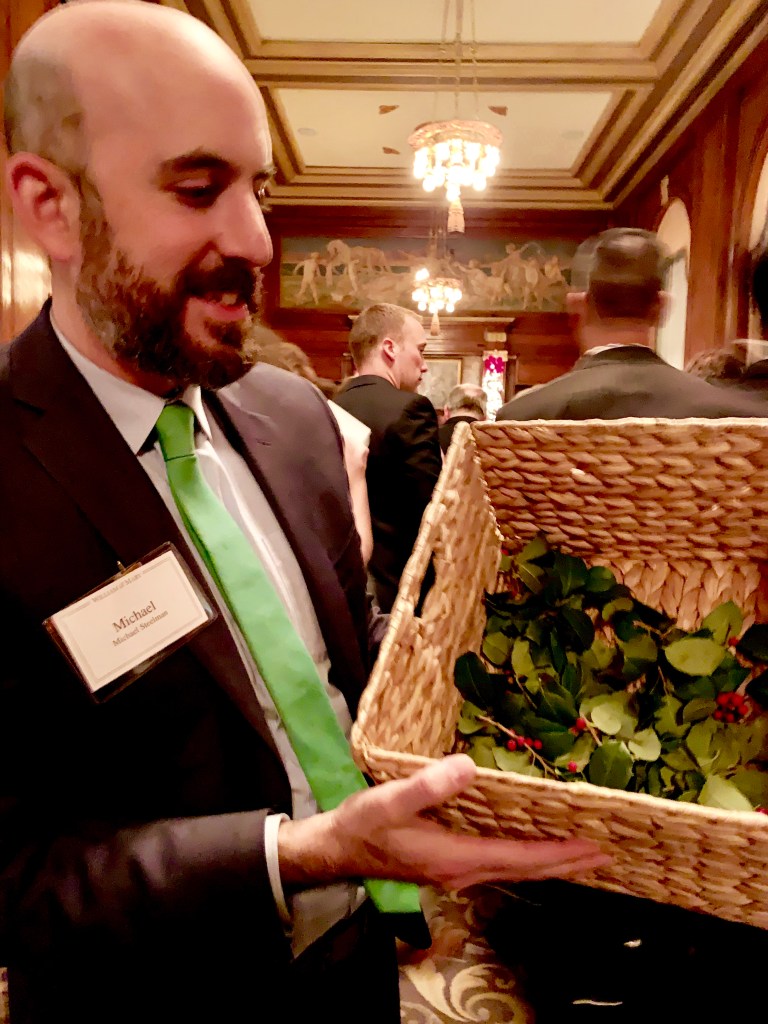
Guests took holy sprigs from the passed basket and lined up to cast the sprig beating the past cares and the hopes for the future on the “fire of the yule log.” The holy was symbolically cast.
Michael Steelman
Holy Sprigs at the fire
Two good news “sub-plots” came to my attention which deserve mention.
Jonathan Overstreet
University Philanthropy specialist, Jonathan Overstreet, shared with me that he was accepted into the Fulbright Program where he will be an English Teaching Assistant at the Nelson Mandela University in South Africa. His appointment is for nine months beginning in January 2020. Jonathan explained that, “The mission of the program is to create mutual understanding between the rest of the world and the US. We will be practicing public diplomacy. I leave at the end of January and am looking forward to sharing and learning.”
Katherine Ford wearing her grandmother’s vintage Pendleton skirt
On the fashion front, guest, Katherine Ford, wore a very special vintage Pendleton blue and red paid skirt. Katherine explained that the skirt had belonged to her grandmother and was from the 1940s, “I was a fashion major and I love this skirt because it is in perfect condition. It is easy to wear and it fits perfectly. I feel a very special fondness for my beautiful grandmother when I wear this skirt. She passed away several years ago.” Katherine paired the beautifully matched plaid skirt with a black velvet jacket. She look every bit on trend and very elegant.
The holy was collected to be delivered to Williamsburg, Virginia where it will be thrown on the authentic yule log just before Christmas.
William & Mary loved of old Hark upon the gale, Hear the thunder of our chorus Alma Mater – Hail.
Hanukkah – the celebration of light and thanksgiving for the miracle of the oil. In the year 139 BC, the Macabees’ victory over the Syrian-Greek occupiers liberated Jerusalem. This event was recognized by the lighting of the Menorah but the oil supply was sufficient for barely one day. Miraculously, the oil lasted for eight days. Therefore, the eight days of prayers and thanksgiving at Hanukkah. This event is historical and not biblical, therefore is not a major holiday, according to my Jewish sources. The thanksgiving is for God’s provision and extending the tiny bit of oil from barely one day to eight, reminding the Israelites that He is with them.
Friends from many parts of the world shared some beautiful memories and traditions of their Hanukkah celebrations.
Jam-filled Hole-less doughnuts – sufganiot
Jonathan – Ra’anana – a suburb of Tel Aviv Israel
Jonathan spent much of his childhood and youth in Canada and the United States. He told me. “You can see lit menorah candles in peoples’ windows. Israelis love to eat hole-less doughnuts called “sufganiot” filled with various creams and jams. We ate fried potato pancakes, latkes, with apple sauce,” he said.
Recalling his childhood, he told me that his family followed the German-Jewish custom, “My parents would buy gifts, set them on the table, and cover them with a sheet. After we lit the candles and sang the religious prayers, we would head to the dining room and they would remove the sheet. My sister and I would get our gifts on the first night. I would play with my new toys and we would play games together. I remember getting a toy plane with lights. It was fantastic!”
Jonathan shared one particular memory of holiday times as a five-year-old kindergartner in Canada – “The teacher asked us to sit in a circle cross-legged and sing Christmas songs. My non-Jewish neighbor and friend (his father had served in the Wermacht) was also in the circle. When I couldn’t sing any of the songs, the teacher was quite cross. She asked me angrily why I wasn’t singing the Christmas songs with the other children. I told her that I was Jewish and was not familiar with the songs. She told me to leave the circle and to sit by myself. A few minutes passed and my friend, also five years old, realized the unfairness of it all. He stood up and stated angrily, ‘If my friend, Jonathan, will not be allowed to sit with us in the circle, then I’d prefer to sit outside the circle with my friend!”
Also in Canada, Jonathan and his friend visited Santa. He remembers, “When it was my turn to sit on Santa’s lap, I was hesitant but curious. When he asked me what I wanted for Christmas, I whispered in his ear that I was Jewish. He told me, ‘That’s OK, so am I!’”
Danielle – Leesburg, VA
Family Time Photo Credit – Marc Sirinsky
“When I was a child, Hanukkah was not commercial and there were not many holiday decorations in the stores. My sister and I would make paper chains and decorate our house. One year at school, I noticed that there were Christmas decoration but nothing for Hanukkah. There were not many Jewish children in my school. I asked my teacher if we could have some Hanukkah decorations. She told my sister and me that we could make some and they would be put up. My sister and I made decorations and they were installed along with the other ones,” recalled Danielle.
Pot Roast
Latkes
Photo Credit – Marc Sirinsky
“Hanukkah is not a high holiday. It is a celebration. So, we usually stay close to home with immediate family. My sister is a cantor in a synagogue so we will go there on the first night. We eat latkes – fried potato pancakes and there is a bakery that makes the hole-less doughnuts,” explained Danielle. On the first night, the first candle in the menorah is lit and three prayers are said/sung. On the subsequent seven nights, two prayers are said as each night one more candle is lit.
“We give one large gift and then smaller gifts during the celebration. Our first night is bigger so we have a larger meal, usually a pot roast, and give and receive the largest present,” explained Danielle. The fried foods represents the miraculous oil, she told me. Danielle’s husband and two daughters enjoy family time during the celebration.
Dreidel Game
Joan – Purcellville, Virginia; originally from Brooklyn, New York
“We are a multicultural family today so we celebrate Hanukkah as well as Christmas. Typically, we don’t put up the Christmas tree until after Hanukkah. This year we put up the tree early because Hanukkah falls at Christmastime,” explained Joan. “I grew up in Brooklyn. On Christmas Eve, we were always at our neighbor’s Chinese restaurant. They were good friends. I never sat with my parents, I sat with the owner’s children and we ate authentic Chinese food,” said Joan.
In her family, the first day of Hanukkah is the day that has the biggest present and the one the recipient wants. On the second day, the gift is major but is what the parents believe the child needs – “Typically shoes. On the third day, it will be socks, the pajamas, and on down the list of importance. This can be called the festival of feet,” said Joan.
‘We played dreidel with pennies. Some people use gold chocolate coins,” explained Joan. The dreidel is a four-sided spinning top. On each of the four sides a Hebrew character is inscribed. The meaning of the each of the characters – none (you win nothing); half (you win half the pot), All (you win the entire pot), and sorry, you have to put in another coin. The game ends when the latkes are gone or the sun comes up, or the players lose interest.
From Canada to Israel, from Chicago to Leesburg and from Brooklyn to Purcellville, the prevailing tradition of Hanukkah is one of thanksgiving and family. Wishing all of my Jewish friends a happy Hanukkah!
Opulence and magnificent attention to details present Christmas decorations and trees to capture the imagination. For a brief moment the visitor is transported to a time of grace, elegance and luxury.
With only one hour between appointments, I felt the need to spend that time at Hillwood, the warm and festive museum estate of Marjorie Merriweather Post. The estate is nestled in the hills of Rock Creek Park in Washington, D.C. Inside, five distinct and ever so creative Christmas trees cast the joyful glow of the home. My mission was to visit with each tree and take in the ideas, execution, and festivity of the displays. I have long ago given up hope of recreating any such displays myself, but a little bit of time amid the beauty is good for the soul.
An Appropriate Greeting at the Front Door
This year’s theme for the Christmas decorations springs from the latest illustrated biography about Ms. Post, Marjorie Merriweather Post the Life Behind the Luxury as well as inspiration from the work of mid-century photography master, Alfred Eisensteadt.
This is a pictorial presentation of the best of the holiday decorations. Photography does not do it justice – steal a few hours and experience it for yourself.
If you have not yet visited Hillwood, add it to your 2020 resolutions.
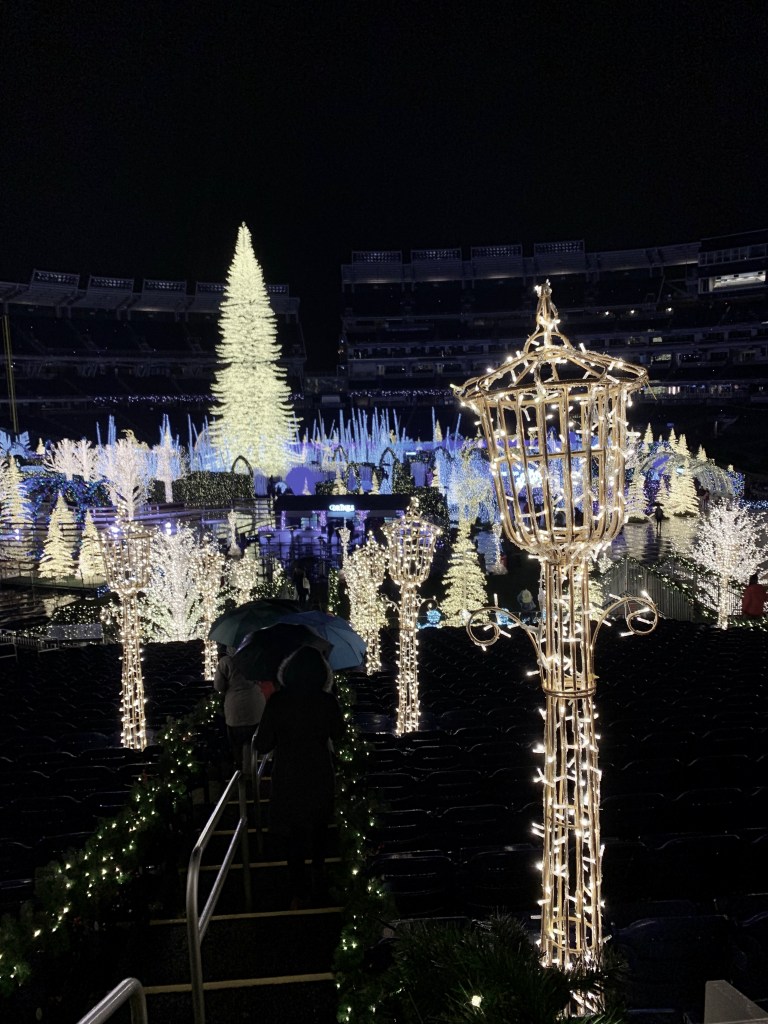
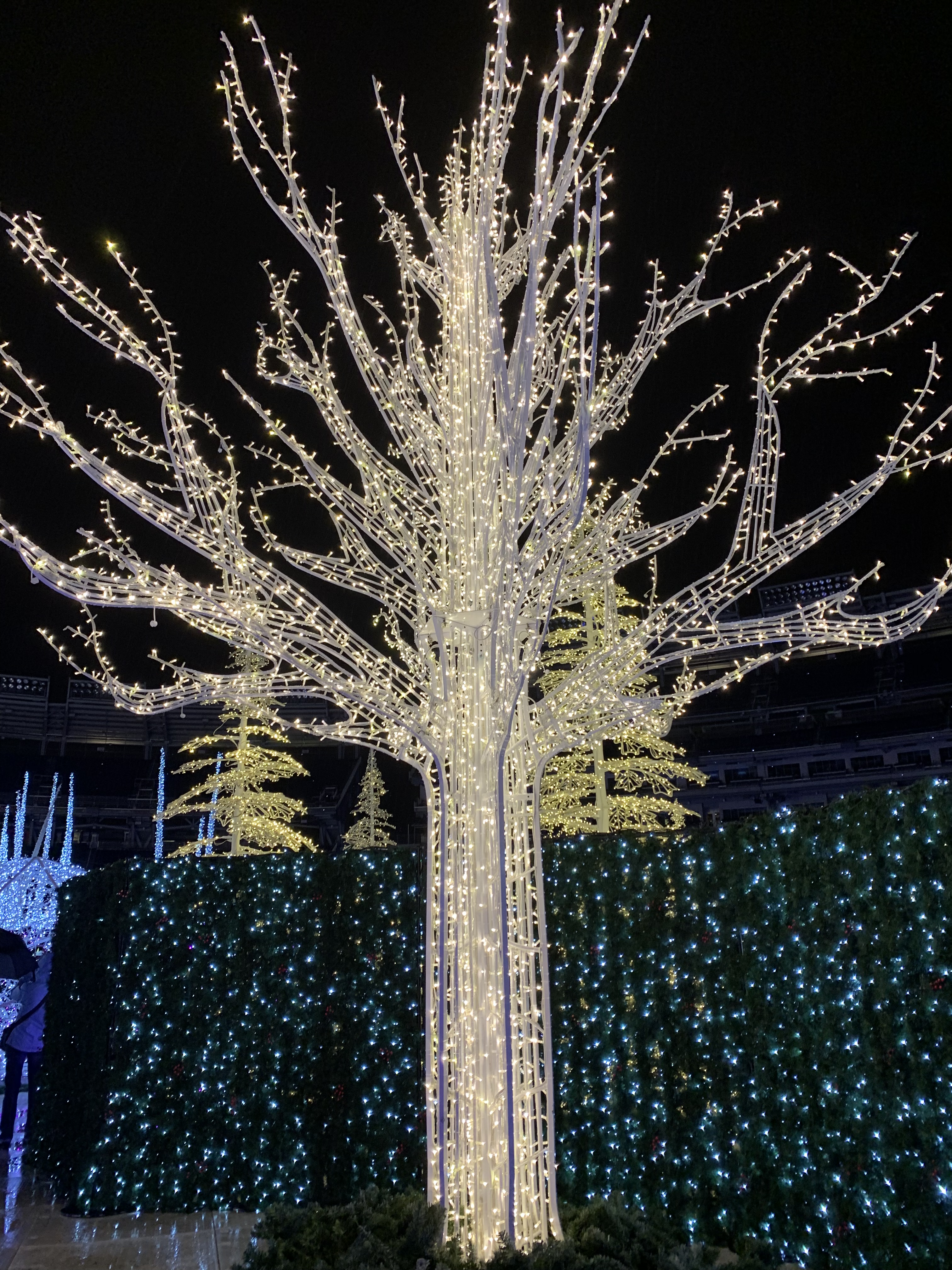
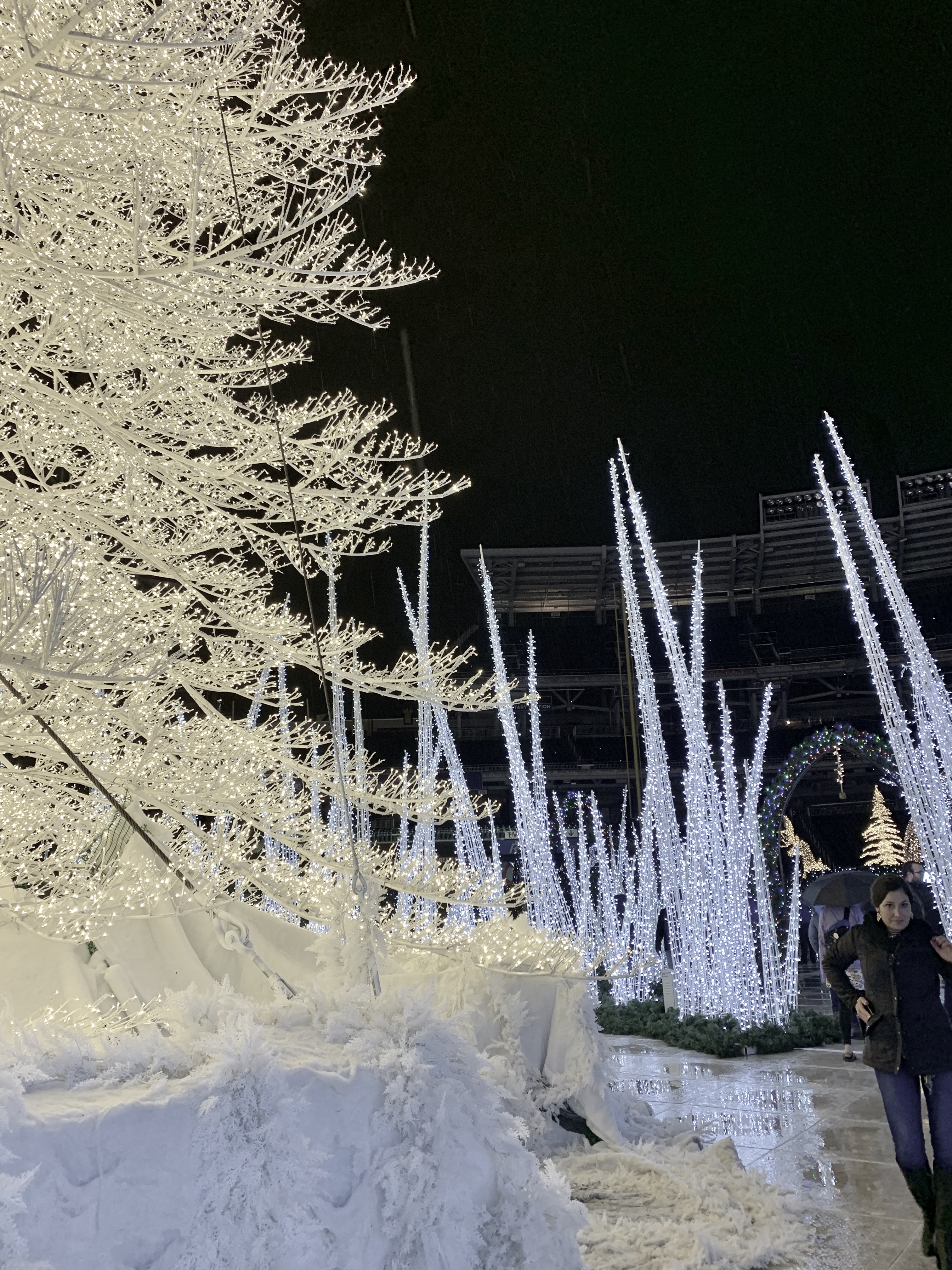
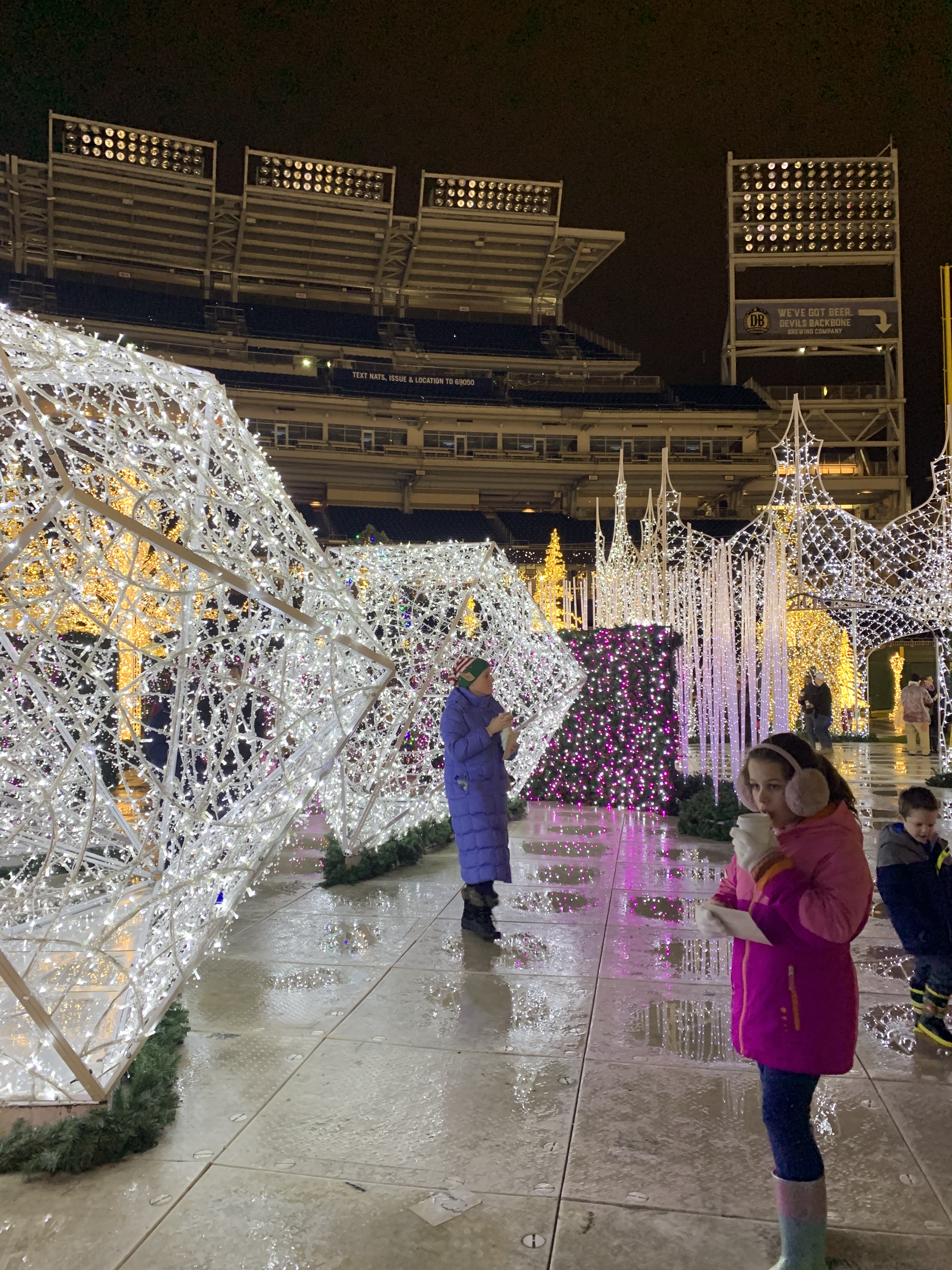
A white 100 foot tree aglow with 250,000 lights, 90,000 feet of brilliant maze, an ice skating trail, a Christmas Market reminiscent of the old country, and some interesting beverages delighted visitors at the Nationals Park – Enchant Christmas. Visiting as many Christmas light displays as possible was my goal for this holiday season. Why? I love the creativity and imagination. When Enchant Christmas was announced, I put it on my list.
The night we visited was chilly and rainy. Armed with raincoats, boots, and umbrellas, my friends and I braved the D.C. rain-soaked rush hour traffic; scolded WAZE for giving us directions to turn left at a “no left turn” sign; could not find our email confirming that we had paid for parking; and were ever so sternly turned away from the poorly marked entry gate because our tickets were NOT VIP tickets. How was this going to get better?
When we finally entered through the “correct” gate, the attendant told us that the skate trail was closed and that the shops on the main level were open. She motioned to below and said something to the effect that we could walk around the maze if we wanted. We peered over the railing and saw lights – lots of lights and a very large white tree. Since we had not come to shop, but to see the lights, we descended the stairs to the Nationals’ playing field. The stairs were decorated with charming lamp posts covered by tiny lights. We were standing on the ground where the World Series Winners, the Washington Nationals, play baseball! That in itself was exciting (and I am not a huge baseball fan)!!
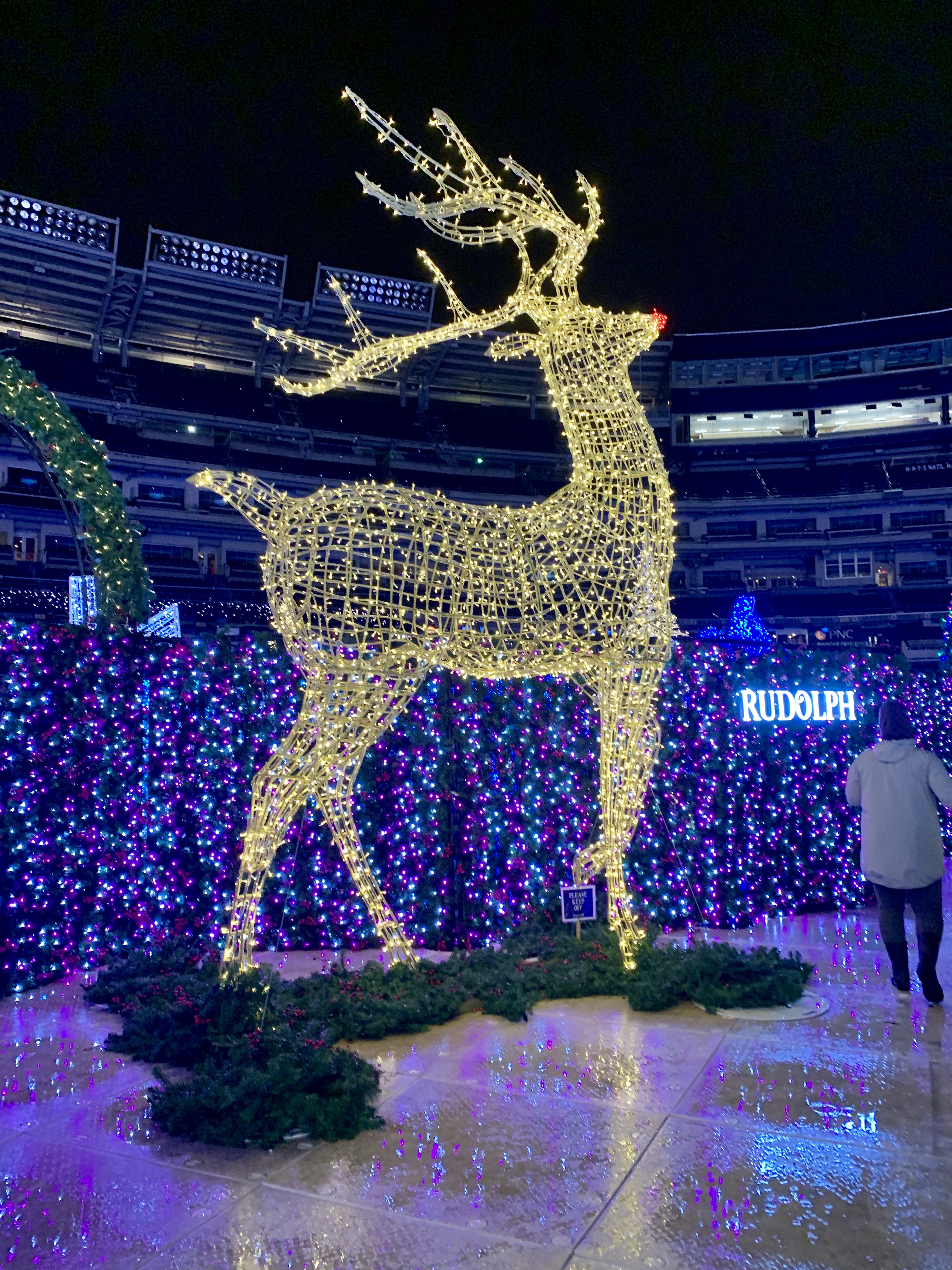
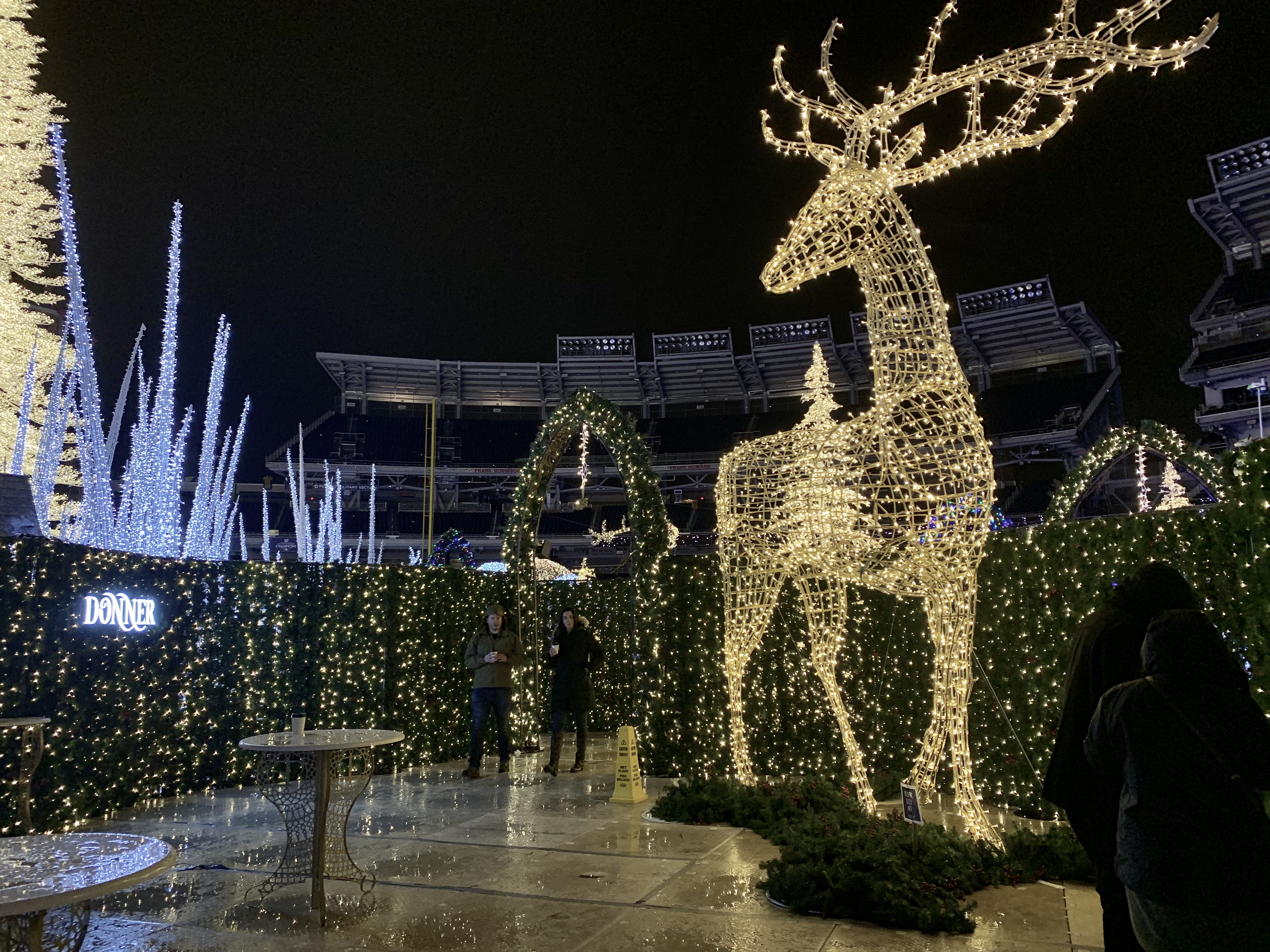
My annoyance with our arrival experience quickly melted away as I was enveloped in brilliant lights, perfectly formed trees, towering reindeer, and one enormous diamond ring! Understandably, the skating trail was closed due to the standing rain water. The drizzle and occasional rain did not thwart my friends’ and my enthusiasm for the adventure. There were nooks and crannies that revealed interesting shining objects. We went on a reindeer hunt to find Donner, the reindeer after whom my friend’s Olympic horse was named. There was an interesting warm aroma that lingered in the air. Coffee? It was hot chocolate. My friend offered me some hot chocolate. Most of my life I have shunned and disliked the stuff; this was warm, rich, and tasty. We noticed people carrying “lighted light bulbs” which turned out to be adult beverages called the Light Bulb (I believe). The people who were carrying the blub-shaped glass told us that it was delicious.
The 100 foot tree is amazing! Because it is not real, every branch and every light were in the right place. As we looked all the way up to the top, we wondered what crane or cherry-picker was able to get into the stadium and then assemble the enormous tree. My friend, an engineer, remarked about the huge cables and toggles that secured it. Not only were there mazes and displays, but looking up into the seats, there were twinkling lights and “falling snow” projections creating an enveloping atmosphere.
Because the weather was inhospitable, there were no crowds. We lingered, doubled back, and took thousands of photos. We people watched. There was a family with three small children in colorful rain ponchos and adorable rain boots; there were young adults and teens dressed in high heels and short skirts; and there were seniors enjoying their stroll. The displays were very photogenic. I improved my skill of taking photos on my iPhone with my left hand while wearing tech-touch gloves.
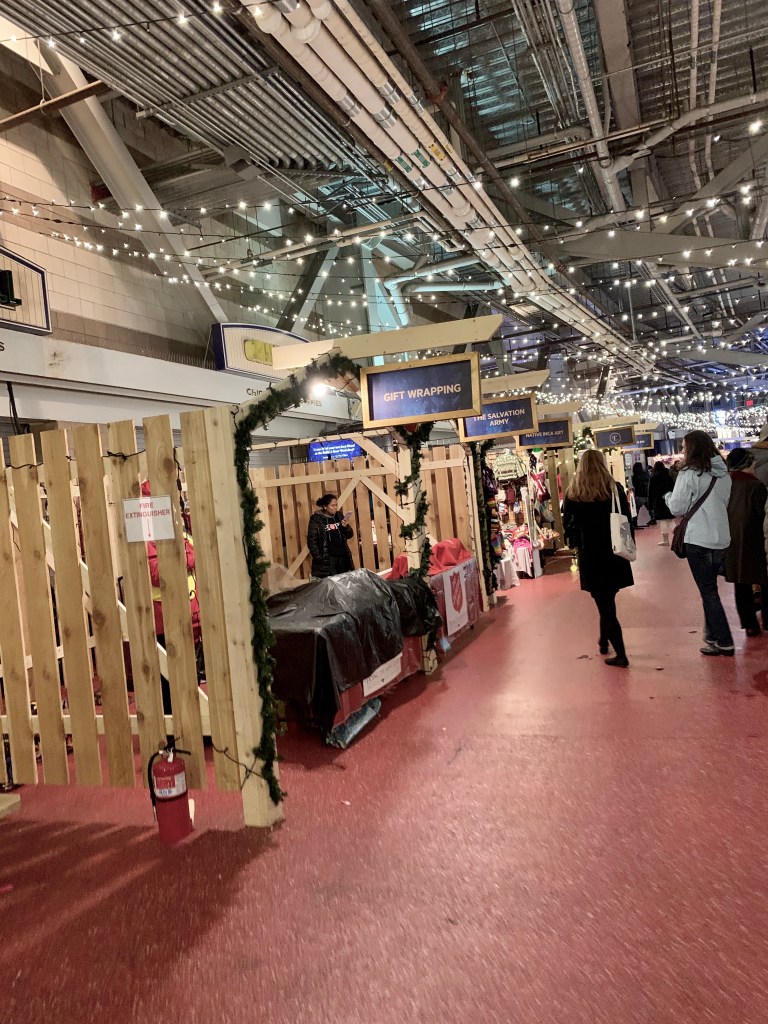
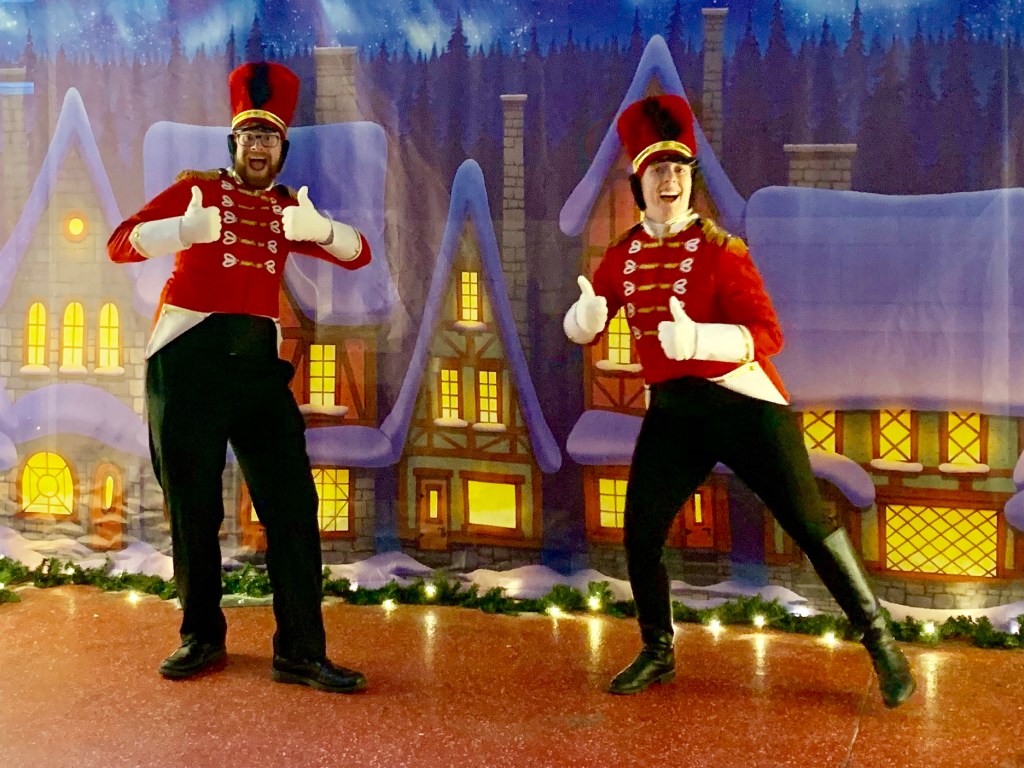
As we finally tore ourselves away from the lights, we climbed back to the top where we were greeted by friendly elves, cheerful toy soldiers, and carolers in Edwardian costumes. The market vendors offered interesting and unusual items ranging from handmade shawls to glass ornaments. The wood of the market stalls smelled like Christmas. The booths were small enough and well stocked.
While this is purely a commercial enterprise we enjoyed ourselves tremendously on many levels. What a great idea to illuminate a winterized ball park and bring the magic of Christmas where for a little while we can leave the rush and schedules behind and count reindeer. Friendly elves handed out chocolate coins as we said good-bye. Oh, and we exited through the VIP gate – the same grouchy attendant wished us a Merry Christmas! Fun.
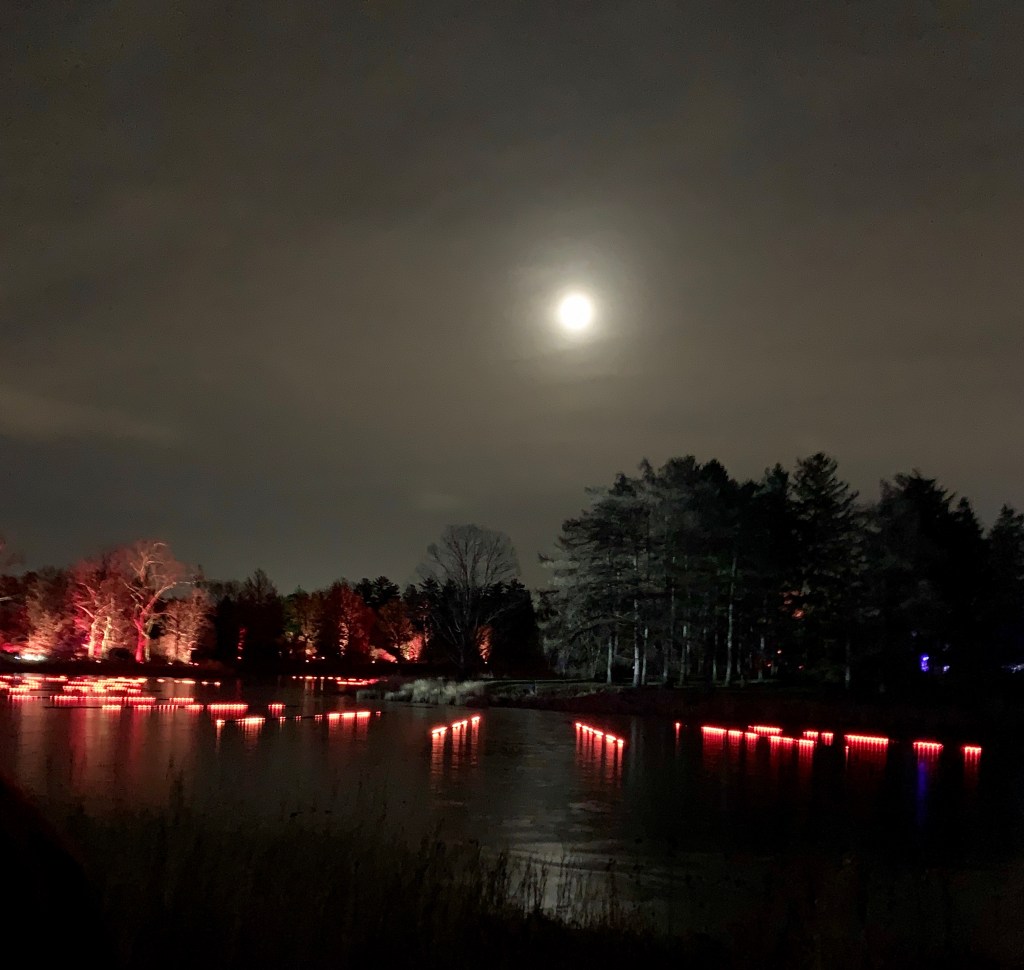
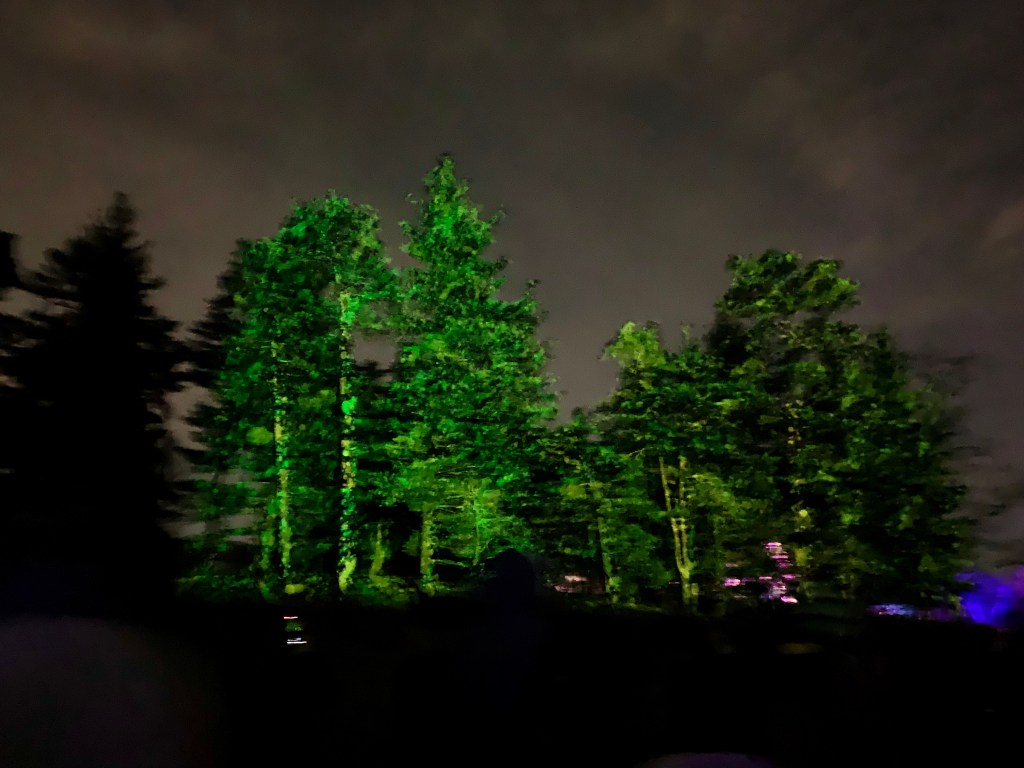
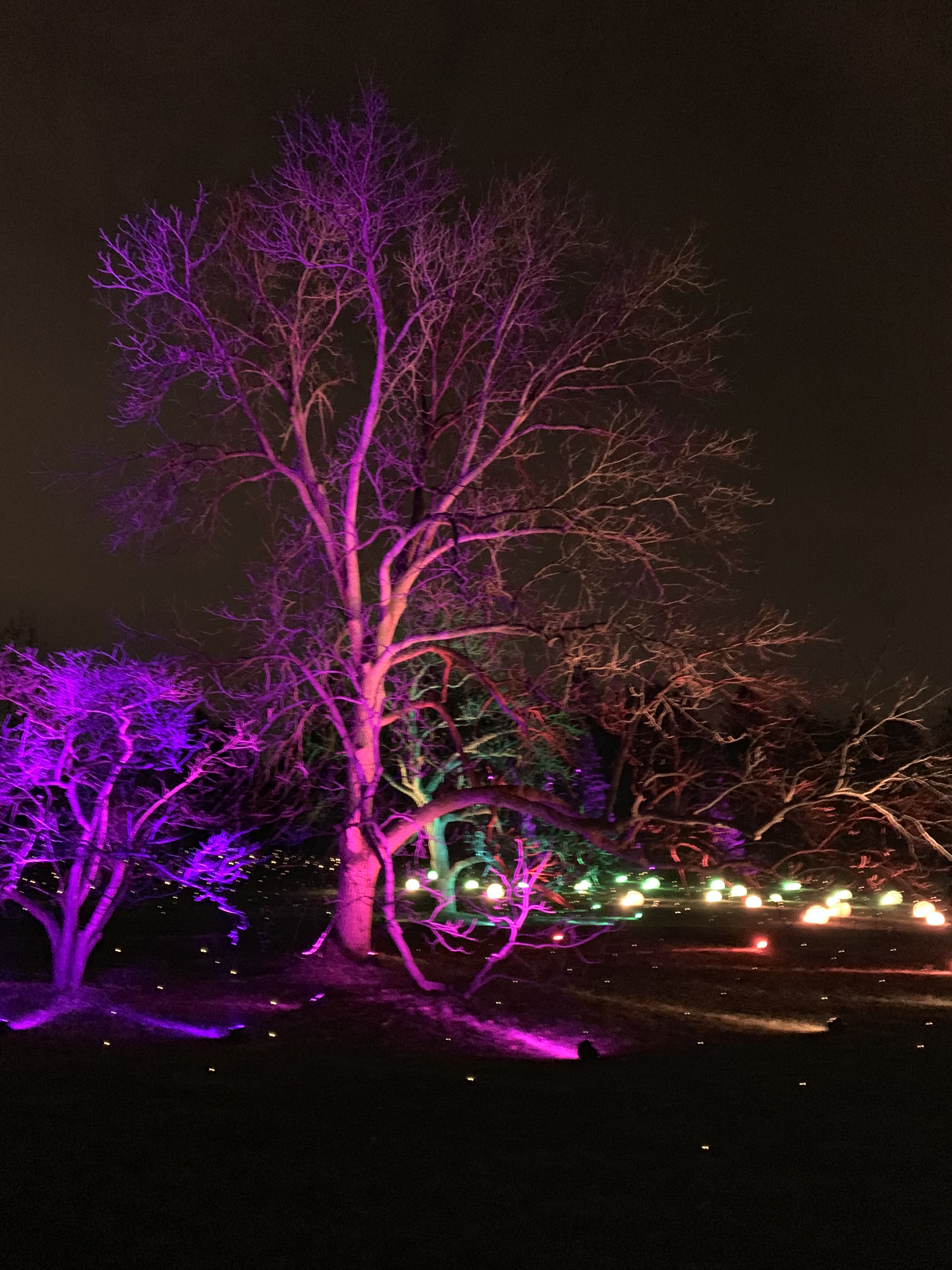
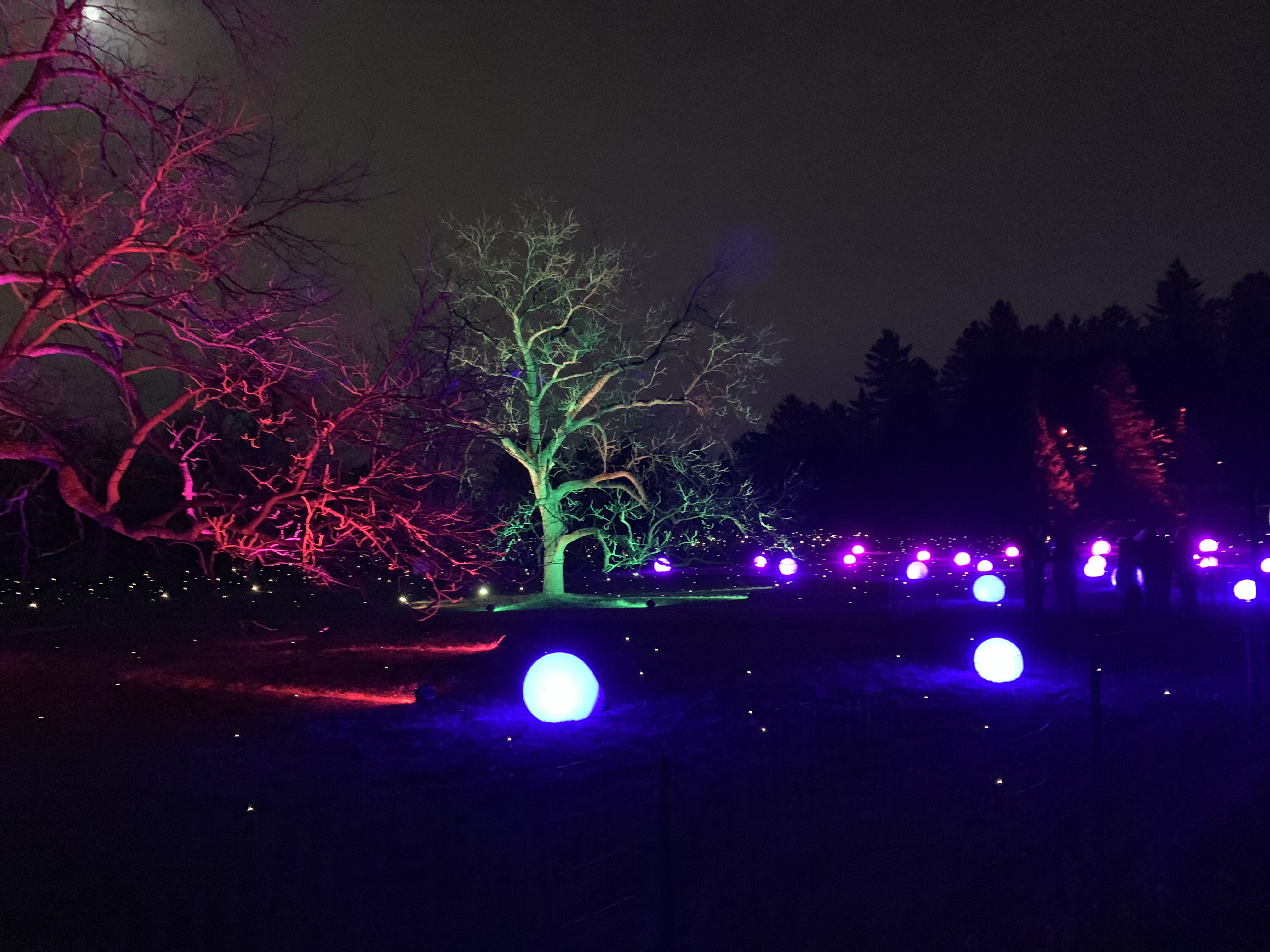
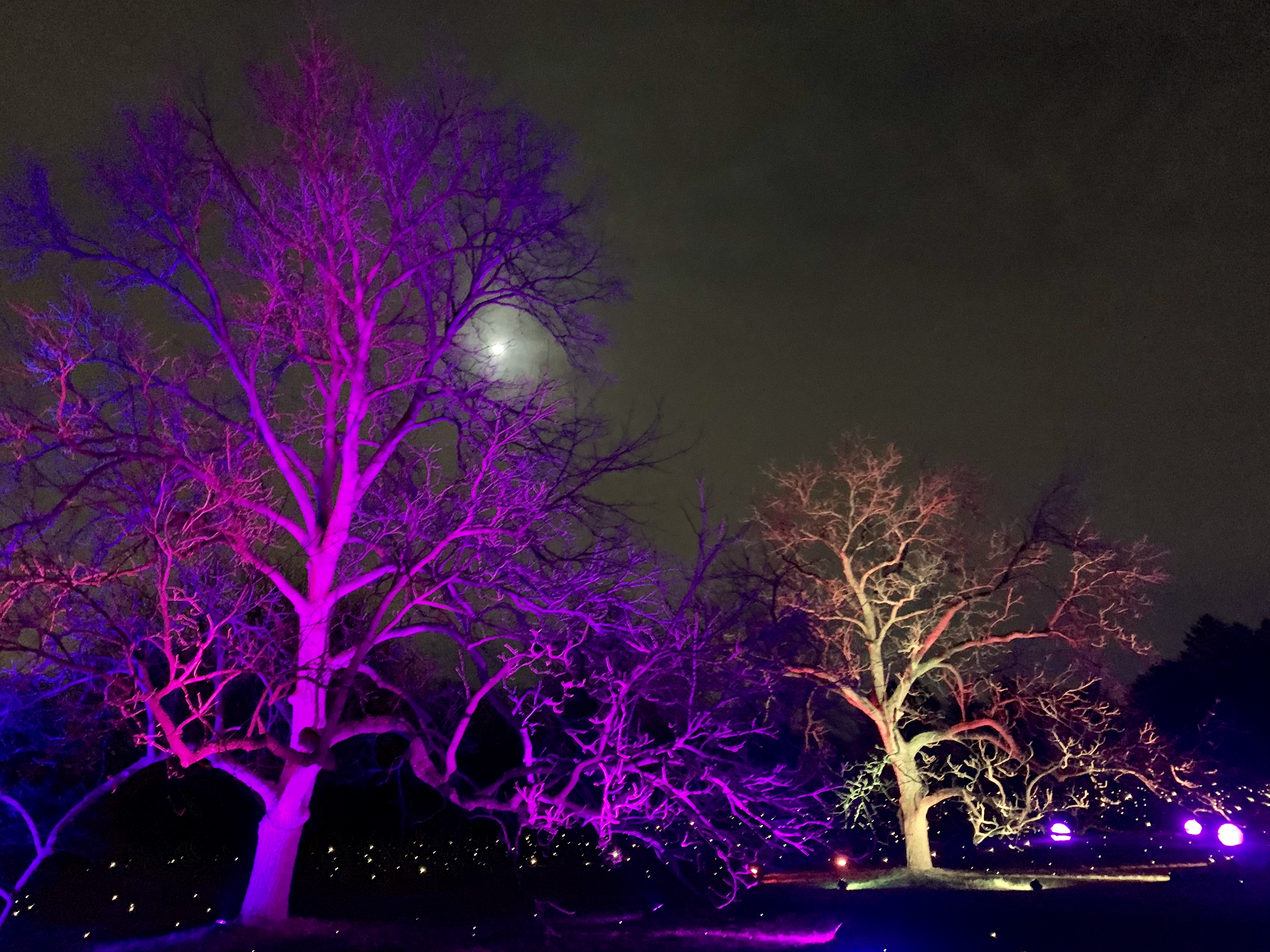
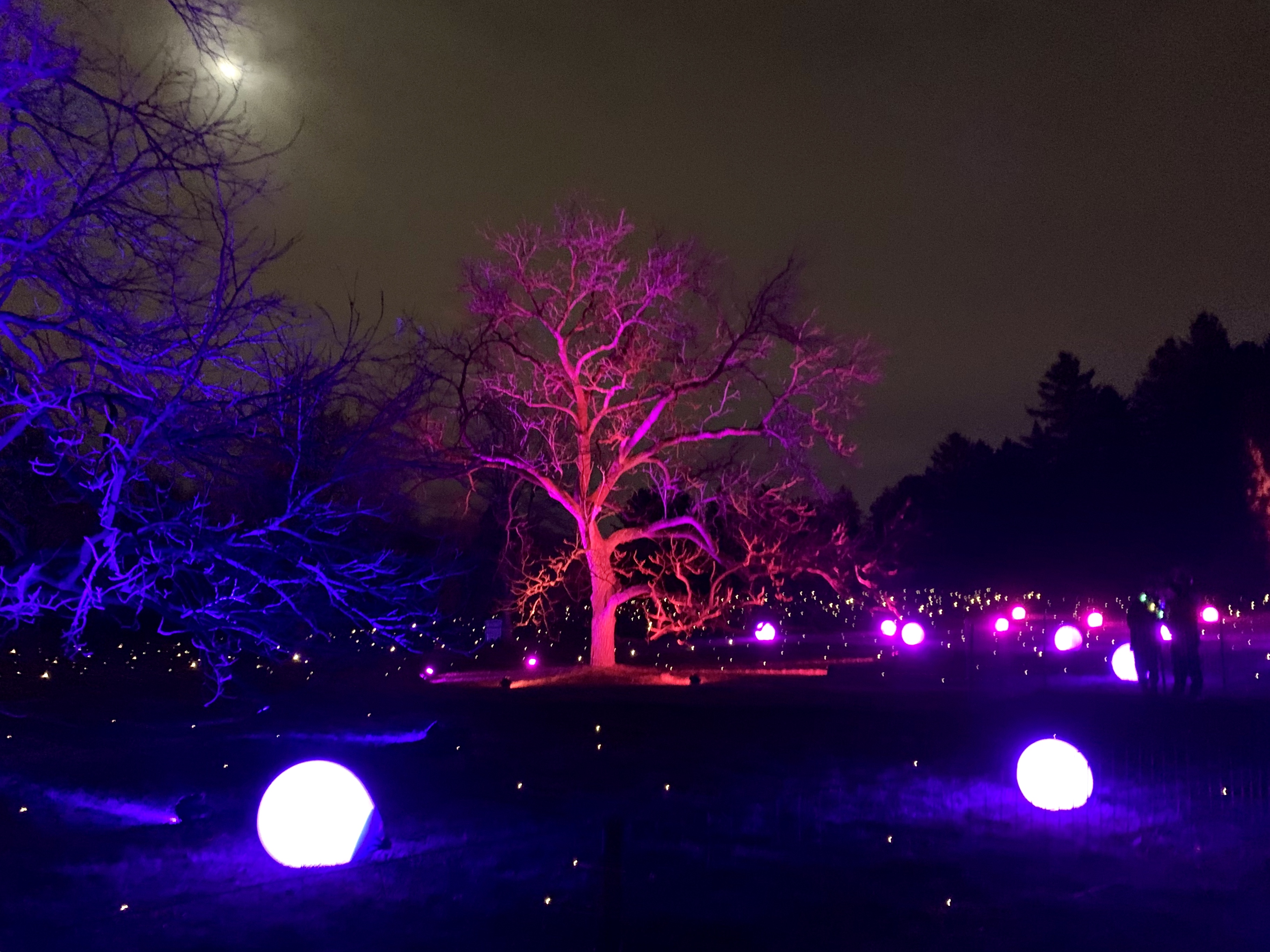
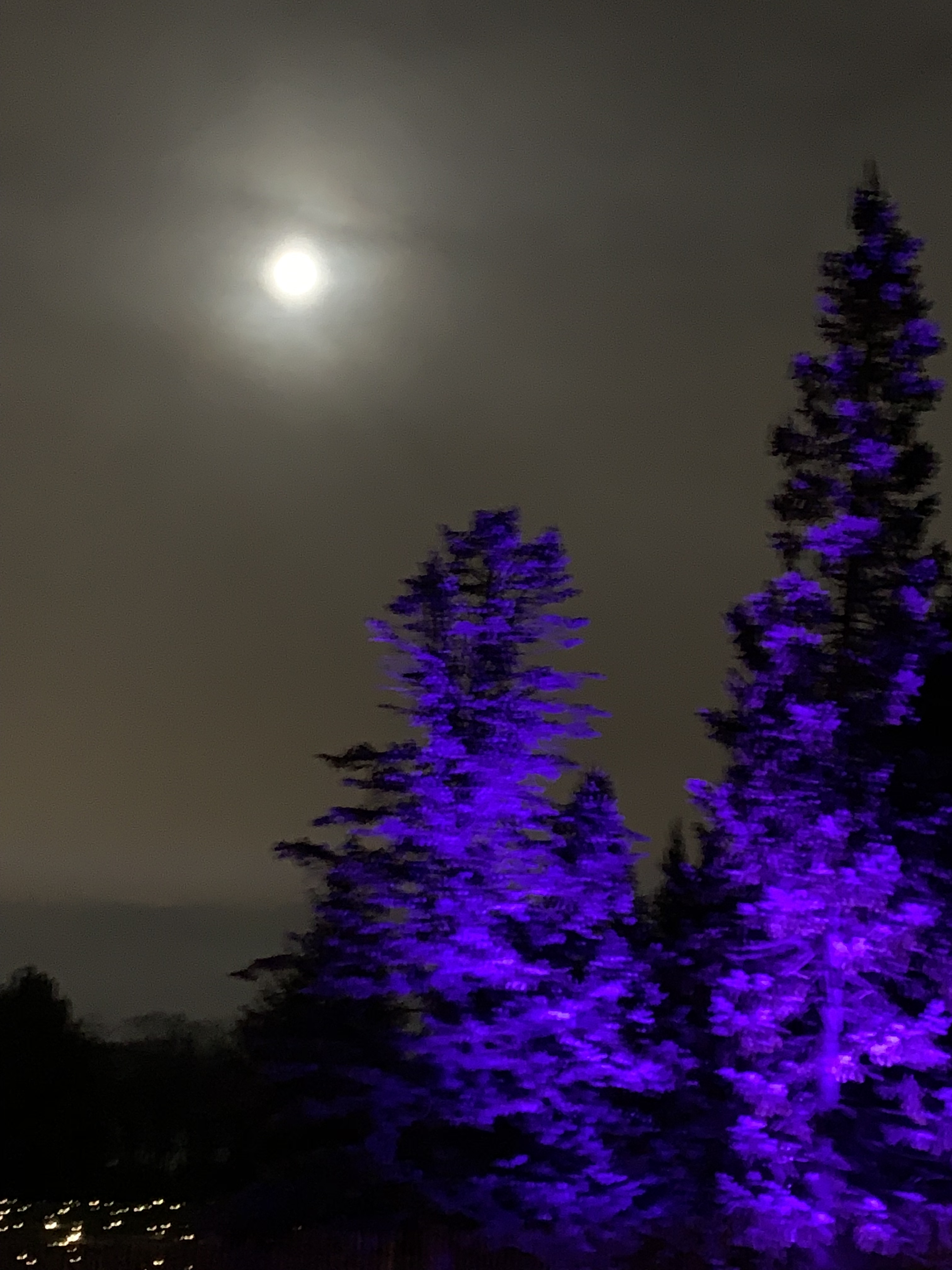
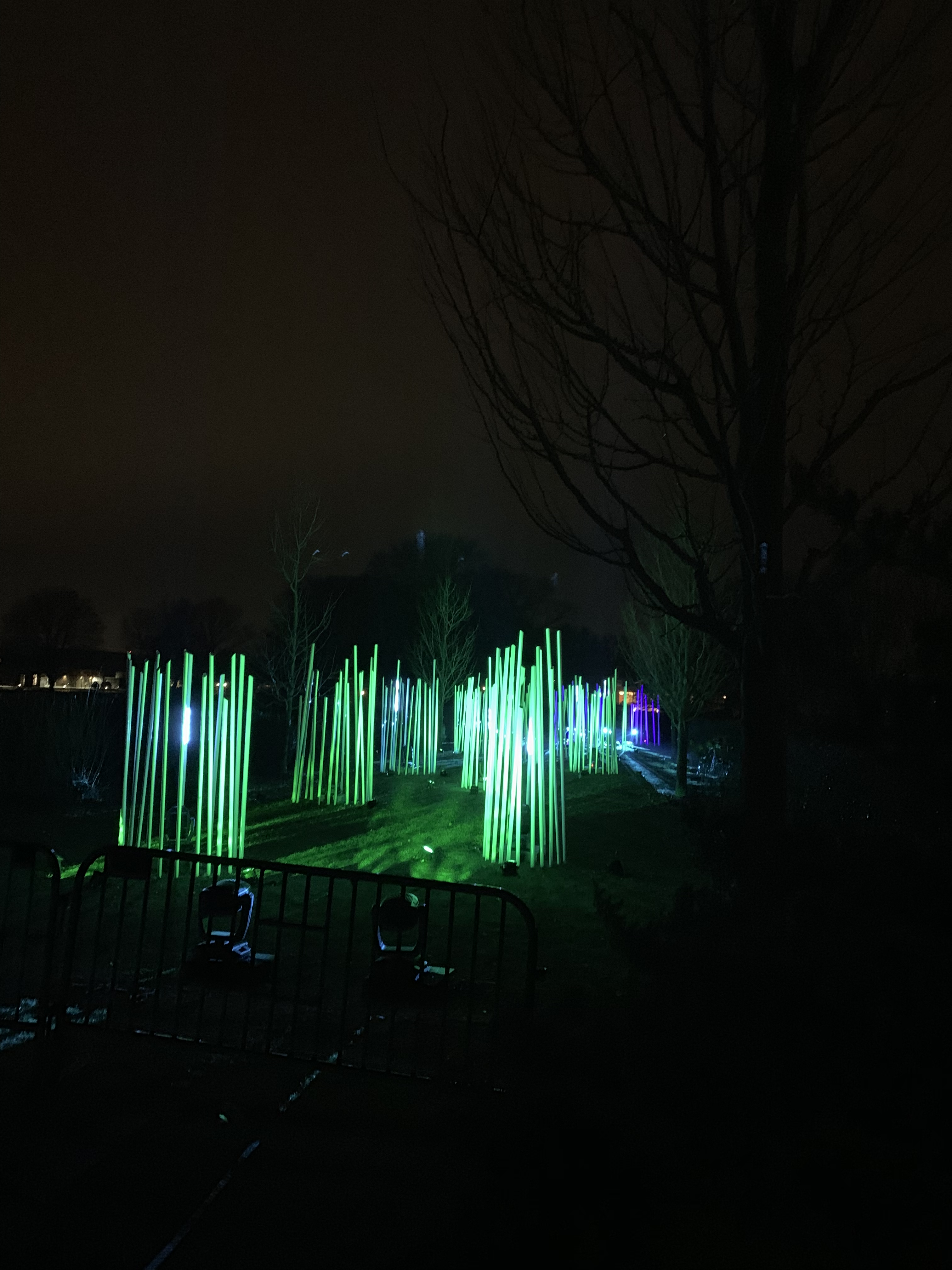
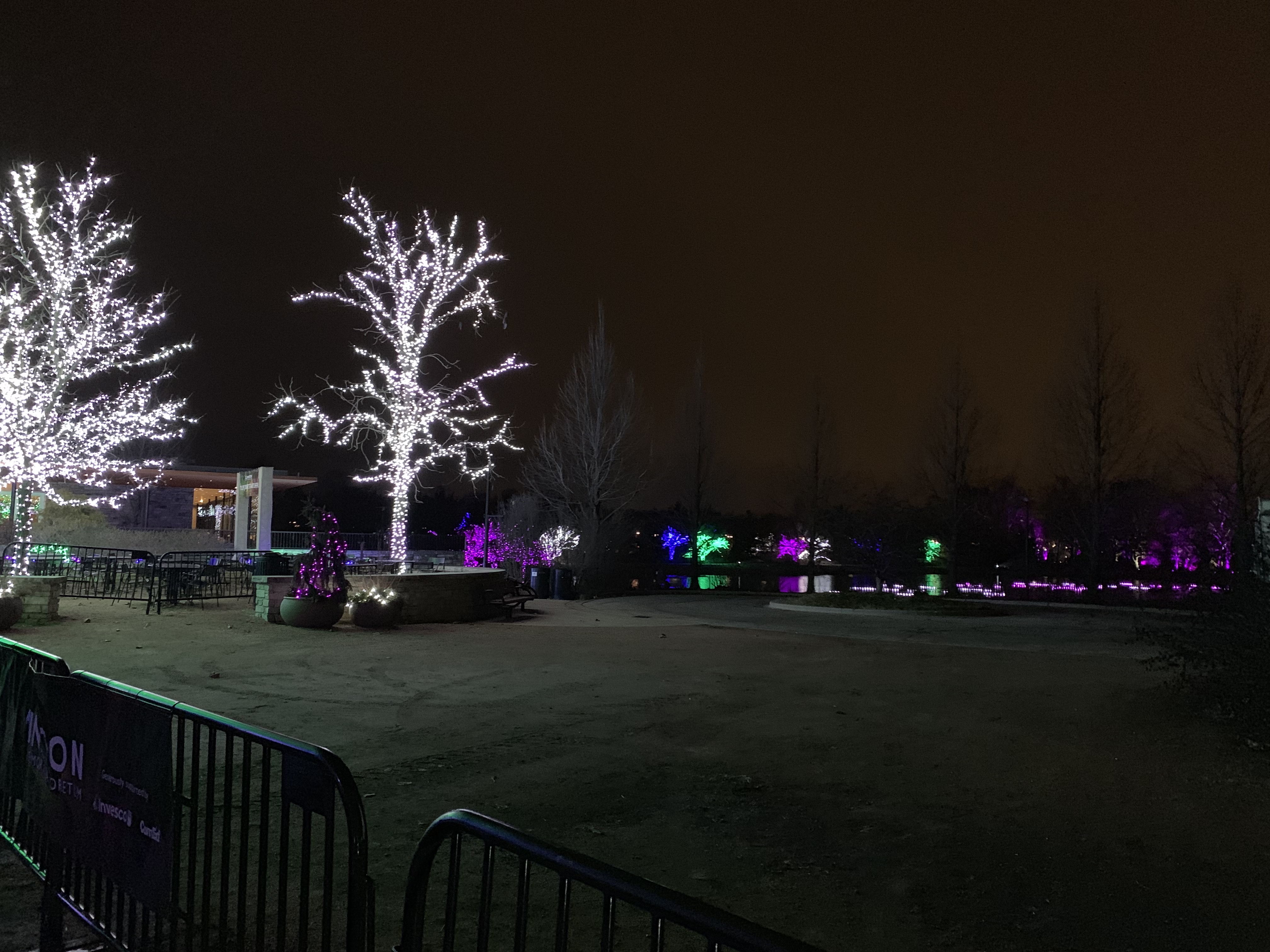
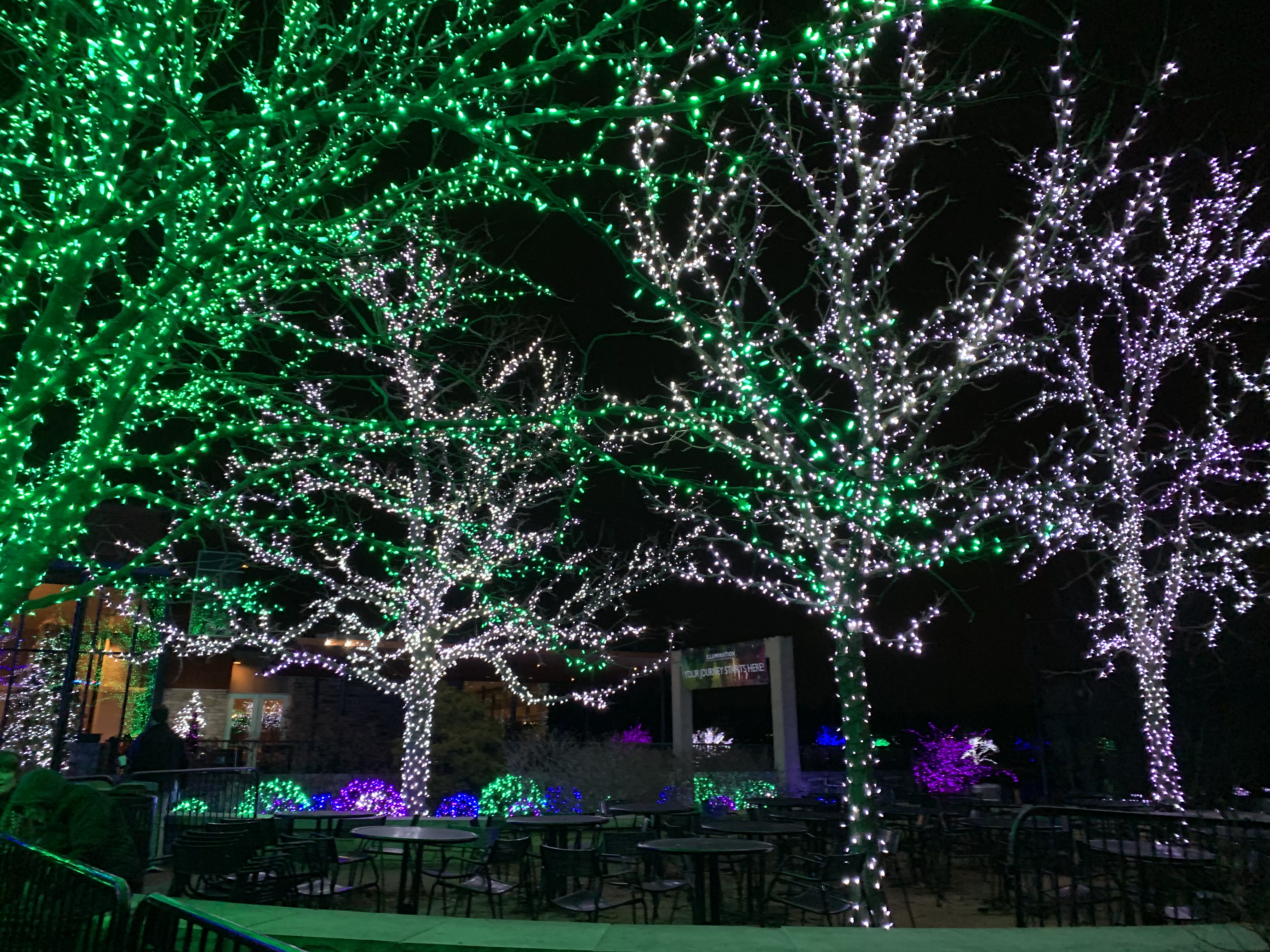
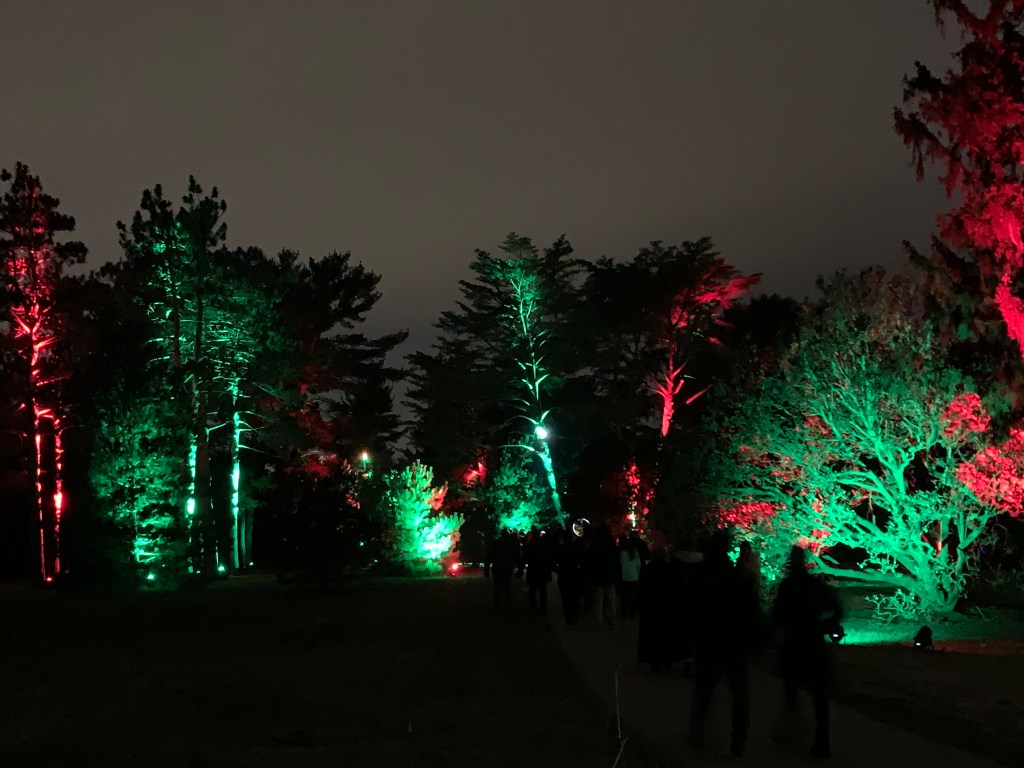
Christmas Illuminations transformed the 1700 acre arboretum into a garden of interactive color and shadows. The exhibit highlighted the beauty of trees in winter The colors, textures, the concepts, and the scope were breathtaking. The blues were bluer, the pinks -more vibrant, colors and textures were ever-changing. There were lit crystal chandeliers hanging in a grove of fir trees!! The illuminations were further enhanced by the brilliance of the full moon in the chilly night sky.
Meadow Lake where the floating lights respond to wind gusts
CrystalChandeliers and columns illuminate the “Crystal Promenade”amid a forest of fir trees
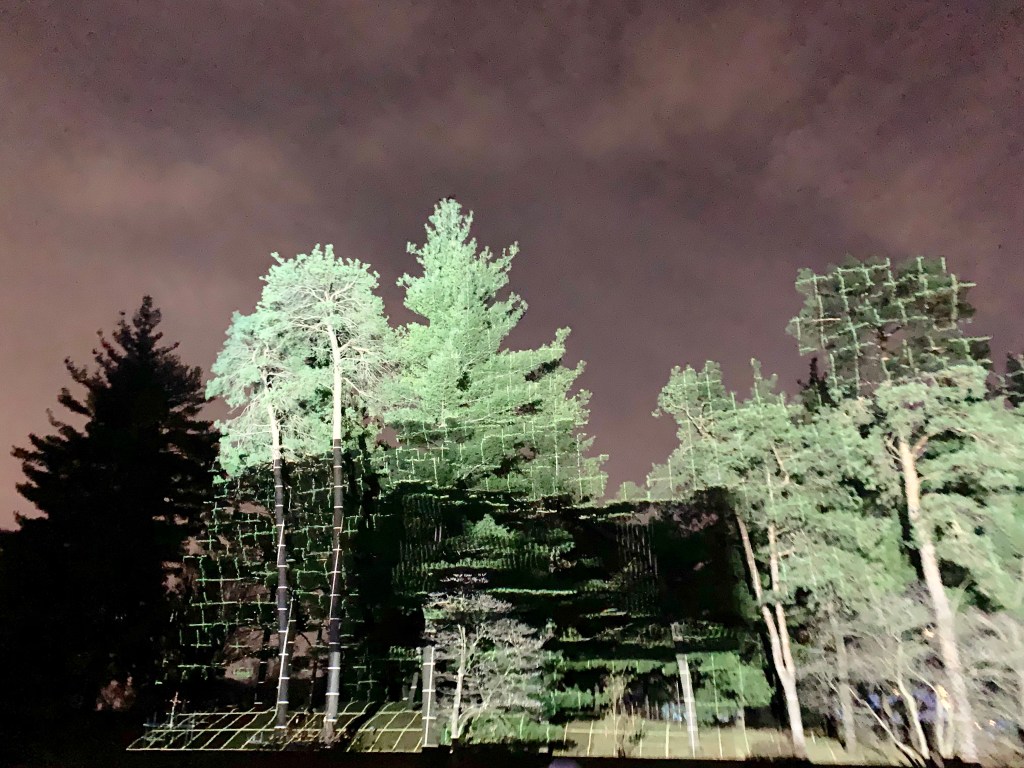
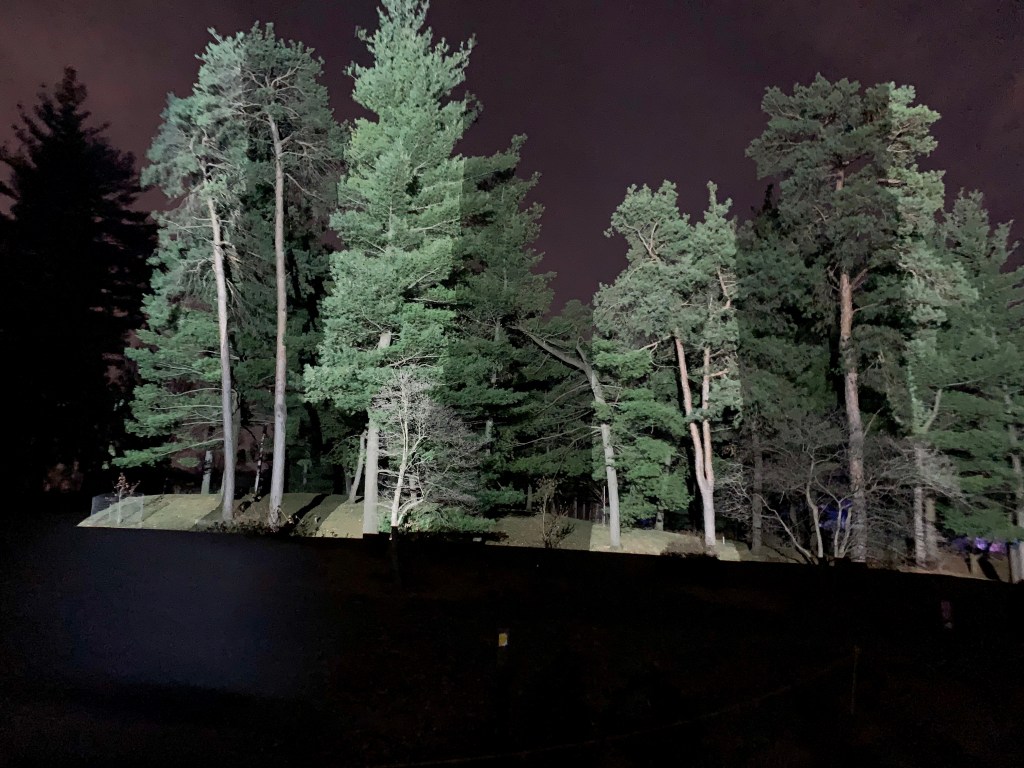
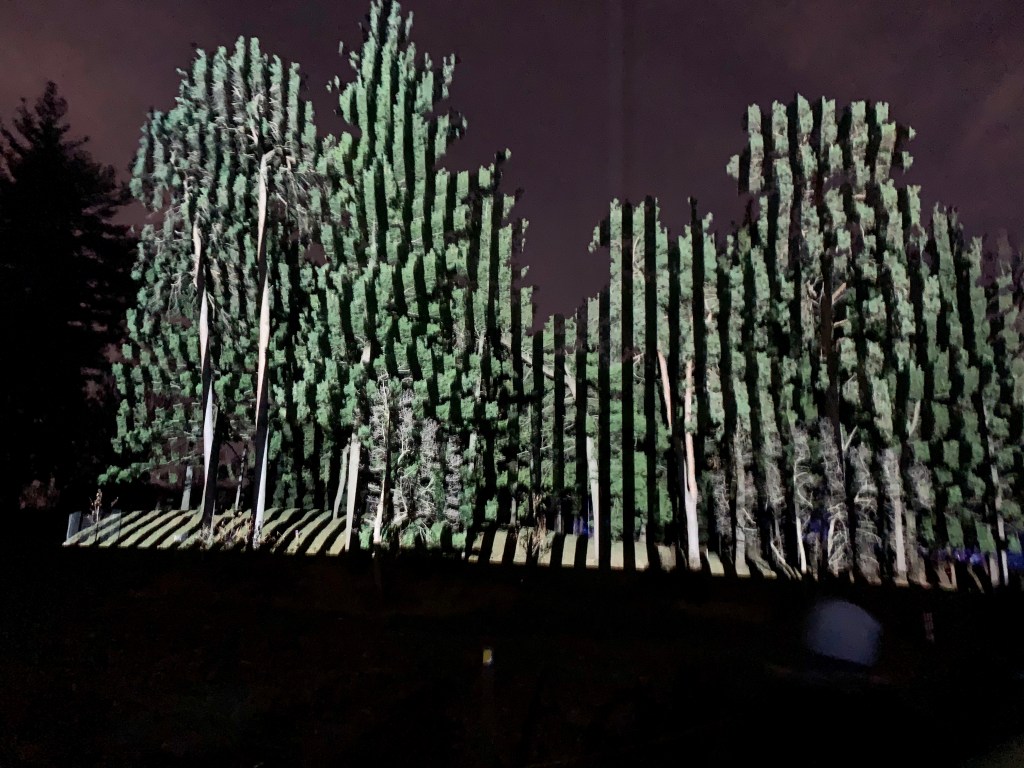
A “wall” of towering pines were the backdrop for a “techno” laser show projecting textures and colors from plaids to stripes, snow falling to strobe lights, to simply brilliant tree trunks. Suddenly, the light would “roll up” a dark screen and reveal a plaid texture with ever-increasing lines and forms.
“Tree Fascination,” Laser Display at the grove of Eastern and Scots Pine Trees – “Techno Trees”
To thwart the cold of the Chicago December night, there were fire pits strategically placed throughout the displays. The aroma of toasting marshmallows was mouthwatering . The fire’s glow cast mysterious and magical shadows. While lights illuminated the trees and plants, the full moon outshone and outwitted the brightest of displays. As the evening progressed, the night haze dispersed the light of the moon to illuminate even the tallest branches.
The Honey Locust – the “Champion Tree”
The Majestic Honey Locust Tree
Roasting Marshmallows
The paved walkways were dark. The lawns were speckled with lights and shadows. Visitors spoke in hushed toned while they strolled and observed. Light displays beckoned and amazed. Rather than wrapping trunks and branches in miles of string lights, most display used interactive lights to illuminate the structures and textures of the trees and plants to “tell their magical” story. Something exciting awaited at each twist and turn.
The Arboretum was developed by Joy Morton of the Morton Salt fortune in 1922. Morton was 65 when the project began. The mission of The Morton Arboretum is “…to collect and study trees, shrubs, and other plants from around the world, to display them across naturally beautiful landscapes for people to study and enjoy, and to learn to grow them in ways that enhances our environment.” Learn more.
Photography of these magnificent displays hardly captures much more than color. Words and pictures alone cannot present the experience of the details; of the feel of the cold air and the warmth of the fire pits; the brilliant hues; and the dynamic displays that are at once white then magenta, then green. A spectacular sensory experience.
The best way to see this display is to personally visit and experience In full glory by the light of the moon
It was an evening of ballgowns and tuxedos, silent and live auctions, recognitions and awards; most of all it was an evening of gratitude. Executive Director, Muriel Forest, and her husband, Mark, were the ever congenial hosts for gala guests – volunteers, sponsors, families, trainers, clergy, and friends. The evening’s master of ceremonies, Connor Forrest, helped keep everyone’s attention on the mission of the event as well as that of Wheatland Farm.
Executive Director, Muriel Forrest
Mark Forrest, Irish Tenor
The gala was held in the beautiful Middleburg Ballroom of the Salamander Resort and Spa in Middleburg, Virginia. Special guests and keynote speakers were none other than Olympic Event Rider, Boyd Martin, and his wife, Silva Martin, Grand Prix dressage rider.
As guests were seated for the elegant dinner, awards were presented. The Volunteers of the Year awards went to Jennifer Carr Connor and Russ Marino. The Perrot Family received the Family of the Year Award. David and Tierney Able received the Service Award.
Wayne and Saskia Florence
Reggie and Linda Cooper
Brooke and Steve Waldron
Silva and Boyd Martin
With the theme of gratitude, Boyd and Silva Martin shared their stories of overcoming very daunting odds. Wheatland Farm offers comprehensive help to families of special needs children who face daunting challenges daily. They provide help with assistive equipment whether repairing a wheelchair so a child can resume riding a school bus; lending wheelchairs and other available equipment to fill a void; they offer swimming lessons, therapeutic riding and hippotherapy to children with special needs as well as to their family members; and an adaptive hair salon.
Boyd and Silva Martin,Keynote Presenters, with Mark and Muriel Forrest
Equestrian therapy is available for the special needs children and their siblings. The Forrests believe that it is important to help keep families together in their activities so that the entire family can enjoy the activities together. In addition to therapeutic riding, Wheatland Farm is a para-dressage center – one of five in the United States. They frequently provide riding clinics for all levels including able-bodied riders. Boyd Martin has held several eventing clinics there this year.
In her “State of the Farm Report,” Muriel told the audience that over 110 children come to Wheatland Farm every week. “In 2019, Wheatland Farm was officially named a United States Pony Club Riding Center. We are most grateful for the encouragement and support of Mrs. Hope Hand, president of the United States Para-Equestrian Riding Association. In 2019, Wheatland Farm was the first Pony Club Riding Center in the United States to hold ratings and competitions for para-equestrian riders and their non-disabled peers riding side-by-side. “ In 2019, every program grew and helped more children and their families.
Fine Dining and Merrymaking
With intentions of excellence in everything that is offered at Wheatland Farm, the Gala, in addition to being a major fundraiser presented thought provoking commentary that every life is precious and should be valued and optimized to the highest degree possible.
Tiny string instruments played by young performers created big and beautiful Christmas music.
On Monday, December 9 at the Village at Orchard Ridge, the Shenandoah Valley Chamber Orchestra (SVCO), strings students from the Winchester and surrounding areas who study at the Shenandoah Conservatory Arts Academy, presented a splendid classical Christmas concert to a full house.
The concert, Christmas-themed, presented an ambitious program of serious classical repertoire. The program included Sleigh Ride by Mozart, movements from Handel’s Water Music, Brandenburg Concerto No 3 in G by J.S. Bach, and Concerto Grosso Op. 6 No. 8 by Corelli. The musical scores were authentic scores, not simplified.
The young performers impressed and delighted the audience with their enthusiasm, passion, and professionalism. The Brandenburg Concerto’s energy and tempo were well presented. As young performers, part of the learning process is coping with and overcoming stressful situations. Every musician stepped up to their responsibilities with utmost professionalism.
The students range in age from eight to late teens. Each performer played an instrument that is scaled for their size. Some violins were 1/10 size and one cello, played by Saul Saucedo was smaller than ¼. “The SVCO provides students the opportunity to learn the traditional repertoire and practices of a chamber orchestra,” said Artistic Director Dr. Alan Saucedo. He continued, “Students are immersed in a program that is structured in a professional orchestra format that will serve them as a bridge into the professional music world. The format includes exposure to a variety of musical genres, masterclasses with distinguished artists, collaboration with guest artists and composers, and the involvement in the community through performances.
Dr. Alan Saucedo, Artistic Director
Dr. Alan Saucedo is a distinguished award-winning cellist. He has performed and presented masterclasses in the United States, Europe, and Latin and South America. He (along with Co-artistic Director Cynthia Saucedo), bring their vast experience of chamber orchestra performance to SVCO, enriching the students’ learning opportunities.
At the conclusion of the program, guest, Dick Gladden, sought out and congratulated the young cellist, Saul Saucedo. He told him, “Your fingering was remarkable. You knew exactly where you were going with the music and you never took your eyes off the conductor. You are a very impressive young musician. You are the next YoYo Ma.” Saul Saucedo is nine years old. He is small and his cello is proportionately small. His chair is also scaled for his size. To see him by himself with his cello one could believe that he was already a professional. Seeing him in relation to the older students shows his diminutive stature.
9-Year-old Saul Saucedo
Guest, Dick Gladden
It takes a lot to impress a knowledgable music lover entering his “10th Decade”
The concert brought great news! Classical music is alive and well among young people and it will endure future generations.
On the third day of Christmas in Middleburg the Piedmont Singers brought beautiful music.
Wendy Oesterling, conductor, and the Piedmont Singers presented “Christmas from West to East,” an elegant program of mostly a capella Christmas music from the 16th through the 20th centuries. The audience was transported from North America to Northern Europe, Western Europe, and finally to Eastern Europe. Some of the composers featured included John Rutter, J.S. Bach, Sergei Rachmaninov, Liguori, and Thomas Luis de Victoria.
The Piedmont Singers under the direction of Wendy Oesterling
The setting of the concert was the delightful Parish Hall of Emmanuel Episcopal Church. The space is bright, open, cheerful, and the perfect venue for this concert. With almost every seat occupied, the voices filled the room with rich melodies and lovely tones.
Wendy Oesterling Introducing O Magnum Mysterium “The Animals Saw Him FIrst”
The Piedmont Singers, under the direction of Wendy Oesterling, have been performing at Emmanuel Episcopal Church for 21 years. The 3:00 PM performance marked the final performance for Ms. Oesterling and the Piedmont Singers in Middleburg. Ms. Oesterling will be retiring as Music Minister of the church as well as conductor of the Singers.
The program; classic, with lovely twists and turns through some lesser-known literature, included audience caroling of beloved Christmas songs from the United States, Scandinavia, and France. After a busy weekend of lights, presentations, shopping, and a parade, the thoughtfully created program offered much-needed grounding and a reminder of the reason for the season.
December 7 & 8 – “On the biggest day of the town . . . I am happy to be a part of this unveiling. It is not a piece of art. It is a piece of community spirit. It is not any one person’s effort, the entire community made it happen.” said Middleburg Mayor Littleton. With those words, the beautiful bronze sculpture created by sculptor, Gosksin Carey, was revealed from under its bright red cover.
Melissa Craig, Chair of the Middleburg Arts Council, welcomed guests gathered in front of the Middleburg Community Center, “From all of us at the Middleburg Arts Council concluding a year of creative collaboration bringing more art and sculpture to the streets of our beloved small town and the chosen subject is one of our most enduring symbols of the town; the fox.” We were blessed to have a teacher and a sculptor and resident artist, Gosksin Carey, she is a member of our Arts Council. She was up to the challenge of creating the fox and poured her heart and soul into this project.” The sculpture was created at the AiM (Artists in Middleburg) Gallery (Sandy Danielson, Director) and viewed and supported by the community throughout its creative process. “Now, we all get to enjoy this beautiful new sculpture sitting at its new home in front of the Middleburg Community Center with the cooperation and support of Olivia Rogers, Director of the Center,” continued Melissa.
Maribe Gardner Chandler; Olivia Rogers,; Sandy Danielson; Viviane Warren; Melissa Craig,; Sculptor, Goksin Carey; Mayor Bridge Littleton; 2 Public Council Members
Raising funds to enable the creation was a community effort with private and merchant sponsors. The Arts Council along with the Middleburg Garden Club were major sponsors of this effort.
“This is an emotional moment,” said sculptor Carey. “All of the town of Middleburg people came to support me and everyone has a little part of their emotion of this project. I love this fox. I didn’t know that she was going to get life in Middleburg town. Thank you so much! “ said Ms. Carey.
There was much merriment and enthusiasm on the Community Center steps and grounds. The audience included townspeople as well as festival guests. The entire town was energetic and incredibly friendly. Children, dogs, neighbors, friends, community leaders, merchants, and law enforcement came together in a warm and inviting spirit to support and admire the efforts and the creation of “Middleburg’s mascot.”
The unveiling and early merriment preceded the Middleburg Christmas Parade and was a lovely segway to the rest of the day’s events. Between the unveiling celebration and the parade, it was a shopping and eating kind of day. Blankets were “parked” in their chosen spots while their owners enjoyed the best that Middleburg has to offer – friendship, hospitality, and delicious refreshments.
Holiday Cheer set up along parade route Joan Madaj and Maggie
Up NEXT: Piedmont Singers Perform final Middleburg concert at Emmanuel Episcopal Church on Sunday, December 8. Stay Tuned!
Saturday, December 7 – Middleburg. Blue skies and a fair breeze punctuated a day perfect for a parade. I was ready to participate in the Middleburg Christmas Parade. Amazing as that is, just the day before, I was debating whether to cover the parade at all. The traffic . . . the parking . . . the volume of people . . . My decision became simple when I met parade organizer, Jim Herbert, at the Middleburg Christmas Tree Lighting the previous evening. I shared my concerns with him. “Come! Park with the other press. In fact, there is a group that can use an extra person in their truck – you can have a ‘go-pro’ experience from inside the parade route,” he told me. All of my excuses vanished.
The last time I was involved in the Middleburg Christmas Parade was in 1995 when my husband and I rode our horses with the Middleburg Hunt through the center of town. My palomino mare danced down the parade route with little regard for order. We survived then. This now, seemed manageable.
The sun warmed the afternoon. The parade route was prepared and the merchants’ decorations enhanced the holiday spirit. I arrived early. As I drove to the appropriate parking spot, I passed a line of antique roadsters all decorated for the day. I stopped my car and jumped out to photograph the wonderful vehicles.
I found a great parking spot. After collecting my gloves, iPhone, notepad, pens, and sunglasses, I organized everything in my tartan plaid handbag and marched off to meet the parade team.
To say that it was dream come true would suggest that I had ever considered such an opportunity. This was beyond my wildest imagination!. Jim made introductions to Matt Blush, the owner and driver of the 1990 Hummer I was going to ride in. Matt is the co-founder of Warrior Aviation / Warrior Flight Team, a non-profit disabled warrior rehabilitation organization. When my iPhone’s battery faltered, the other co-founder, Pat Marsh, loaned me his charging cord. As my phone charged, he shared photos of his two military jets (more on the jets later) that are used for air shows. Pat drove the truck with the Redskins Cheerleader Alumni.
While we waited, I photographed floats, cars, horses, a marching band, the Cheerleaders, and Redskins Alumni Bubba Tyer and Pat Fischer. When the Boxwood Vineyards entry drove to our intersection, a gentleman with a red scarf and Santa hat approached our group. Cheerleader Alum, Terri Lamb, greeted him and turned to introduce me. I held out my hand to shake the hand of the man who told me his name – John Kent Cooke!! I was standing among royalty! My head was exploding!
I watched the orderly staging take place. The high school marching band was warming up across the street. Corgis and their owners kept arriving. There were alpacas with their handlers milling around the corgis. Beyond them were harriers with their basset hounds. Scottish musicians in blue kilts warmed up their instruments. There was so much to learn yet so little time! Finally, it was time for our entry to pull into place. The Fauquier High School Marching Band and their flag corps strode out before us. They were preceded by a long line of the shiny antique roadsters, riders on horseback, lasso exhibitions, and floats by wineries – Greenhill and Boxwood.
Jim gave Matt the clear, and we were off! With my iPhone poised, we turned the corner past Federal Street. There, I saw a tall young man in a neon yellow jacket holding the leash of a black lab service dog. That young man was none other than Forrest Allen. Forrest is the young man who was the subject of the documentary, Music Got Me Here, that played several years ago at the Middleburg Film Festival. My heart smiled to know that he is doing well.
We turned right on John Mosby Highway. Both sides of the street were lined with smiling waving people. At first I felt that I should not wave to not interfere with the Redskin alumni in the back seats. “Go ahead and wave,” Matt told me. Wave I did. Something magical happened as I waved. I connected with many people by simply waving. There were adorable children in cute headbands and hats, matching coats, precious dogs, happy people, and of course, Redskins fans!! Everyone had come to breathe in the special Christmas spirit of the little town of Middleburg. We waved, I waved. The feedback from the crowd was unexpectedly energizing. My face was in a permanent happy smile. We turned right on S. Hamilton Street. There, a serious Redskins fan joyfully jumped up and down and pumped his fists in support – Bubba and Pat waved back. More waves and greetings followed. Then, like that, the parade was over. But the Middleburg Christmas festivities continue.
Merry Christmas and Happy Holidays from Middleburg, Virginia!
Stay tuned for more Festivities coverage – The Unveiling of the Fox Statue at the Community Center, and the Piedmont Singers Concert, the Wheatland Gala at Salamander Resort and Spa, and much more!
December 7; Middleburg, VA. On a brilliant day dedicated to celebrating the beginning of the Christmas season in Middleburg, dogs held center-stage for their owners and their admirers. Hundreds of adorable pups were spectators while many participated in the parade as well. Here are some of the cutest canine images of the day –
Coming Next –
Middleburg Parade. the Statue Unveiling at the Middle Community Center, Wheatland Gala –
Neighbors, Friends, and Visitors Gather for the Tree Lighting at the Pink Box, the Middleburg Visitor’s Center,
Police Chief, “A.J.” Panebianco greets Middleburg Visitors – guests at the Salamander Resort
Dec. 6, 2019 – Middleburg, VA. “Tonight, we stop, pause, and say thank you…” said Pastor, Dan Morgan, of the Middleburg Baptist Church, while he gave the invocation.
Master of Ceremonies, Middleburg Business and Professional Association President, Punkin Lee, spoke about the community saying, ‘Not only are we here tonight to light our town tree, but I think we should take a moment to pause and think about why we live in and around the small town we all call home. We are a generous, caring, and loving community. We will help a neighbor and a friend with volunteers who willingly serve such groups as Seven Loaves, Fish, Middleburg Humane, the Community Center, their churches, and their schools. We love our countryside, our open space, all of our critters, and our people’s way of life. We are all so fortunate to live here and should never take this place for granted. Yes, tomorrow is another fun day of festivities in Middleburg but it is also the 78th anniversary of Pearl Harbor and we should never forget.” With those words Ms. Lee invited Mayor Littleton to the podium.
The Mayor spoke about the importance of the tree and how to fund its lights and ornaments, volunteers called on businesses and residents for donations, “Not a single merchant or person we spoke to said no. Donations ranged from $2 to $500, and we were able to amass, through a community effort, the lights that you are about to see. Just so you know this is a work in progress. I’d like to ask every community member to bring an ornament and make this truly a community tree.”
The large crowd gave a huge round of applause to the town merchants for their support of the Christmas tree effort. After a 10-9-8-7….3-2-1 countdown, the switch for the tree was flipped and beautiful light streamed from the many strands of lights, casting a violet glow on the surrounding buildings and the street below. More carols followed with elves and Mrs. Clause mingling with the guests.
Elves, Perri Obetz and Madeline Wooden distribute programs
Mrs. Clause, Suzanne Obetz, Executive Director of hte Middleburg Museum
Meeting Friends
Jim Herbert, Middleburg Parade Organizer
Mayor Littleton
Many guests came with their dogs. There were straight, pointy, fluffy, and curly tails wagging while friends and neighbors greet one another. The most prevalent breeds of dogs at the lighting were labs, doodles, and golden retrievers. The dogs, although, amid a crowd, were peaceful and happily exchanged wags for pats on their heads.
CHris and Jennifer Chi with Kobe and Lucy
Hilary Hyland with Harper Lee, the Golden Retreiver, and Eileen Hilvert
Ann Rodmna-Shook with Cooper
With the Season officially “open,” a number of social gatherings ensued. Once such event took place just around the corner at the law offices of Bruce R. Smith where guests toasted the upcoming holidays and friends shared their excitement of the season.
Chris Baker, LIzzy Beer, Chalres Carroll
Charles Carroll
Linda and Bruce Smith
Post Tree Lighting Open Houseat the law Offices of Bruce R. Smith
Lara Muller and Janie Rentz
Middleburg – a tiny town in Western Loudoun County with a huge heart. Let the revelry begin!