
Mark Shrager Presents the Legacy of Diane Crump
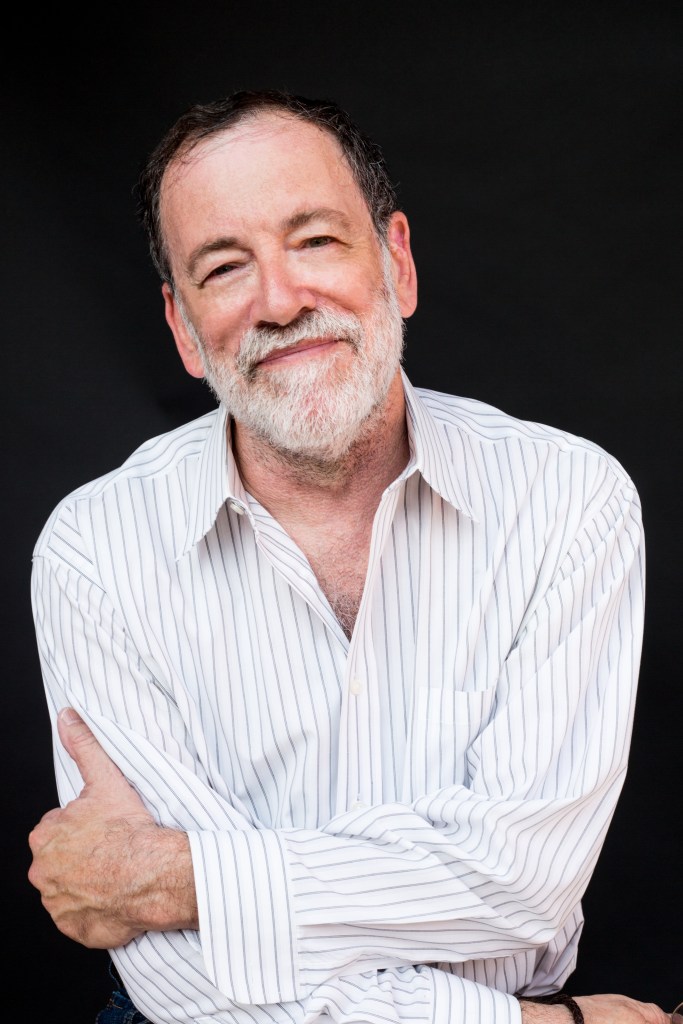
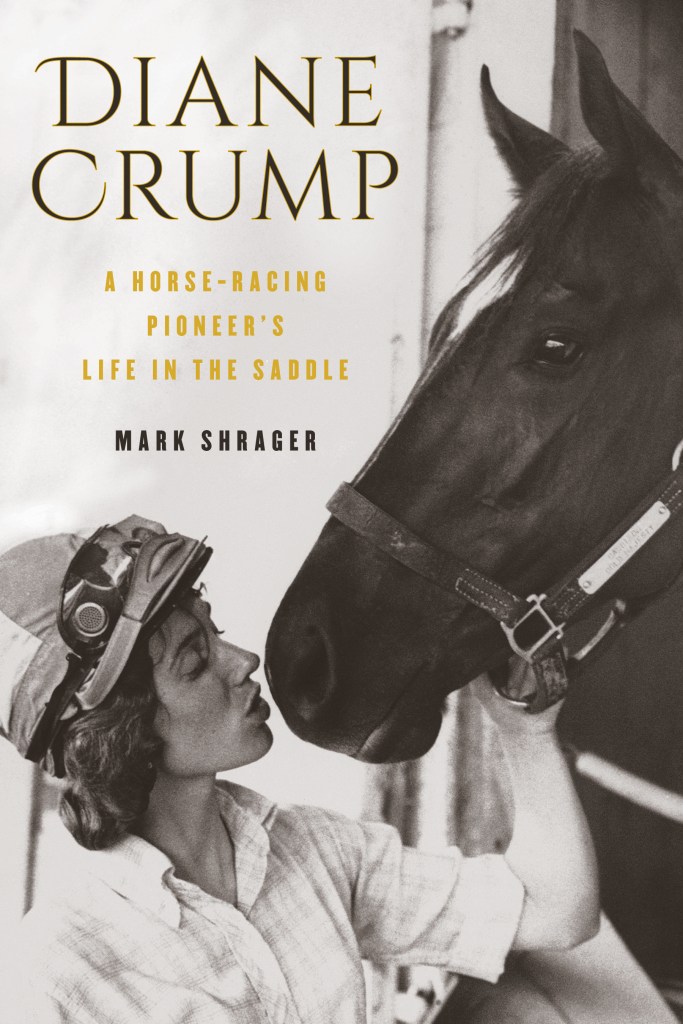
L: Author Mark Shrager R: book cover – Diane kissing her Kentucky Derby horse, Fathom. photos courtesy Lyons Press and Mark Shrager
On a recent evening, Julie Banner, NSLM Clarice & Robert H. Smith Education and Marketing Director, introduced author Mark Shrager. He spoke to an attentive audience in the beautiful ballroom of the National Sporting Library and Museum in Middleburg, Virginia. He had arrived from California to speak about his book, Diane Crump: A Horse-Racing Pioneer’s Life in the Saddle, and about the extraordinary woman whose life he had preserved in its pages.
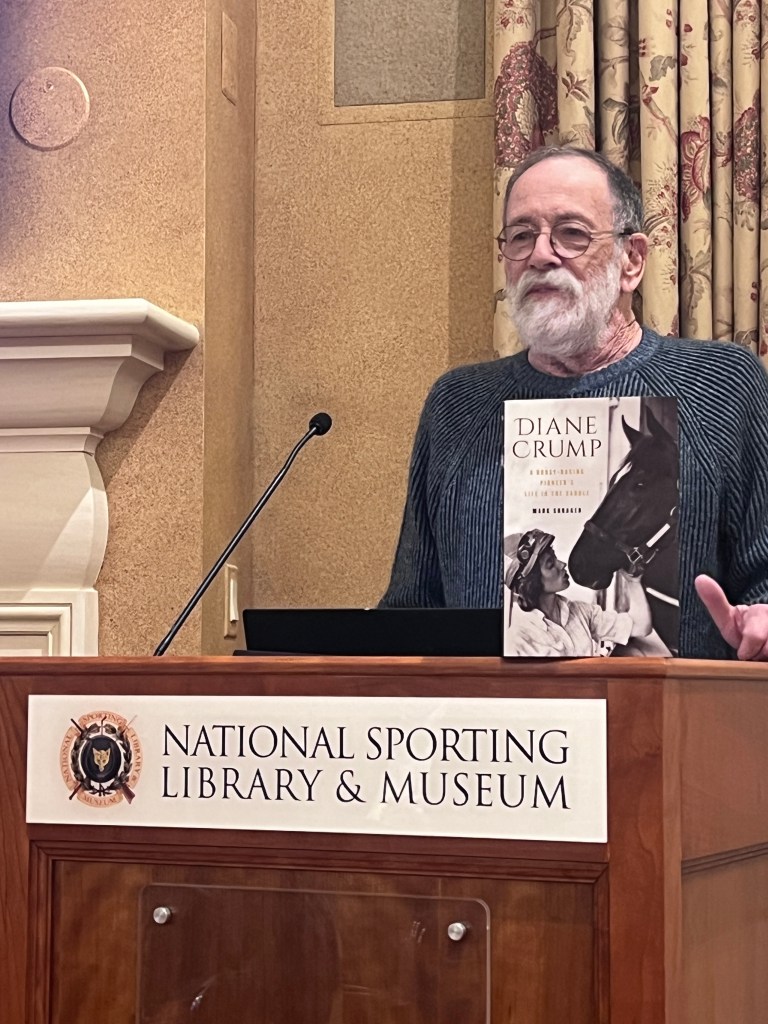
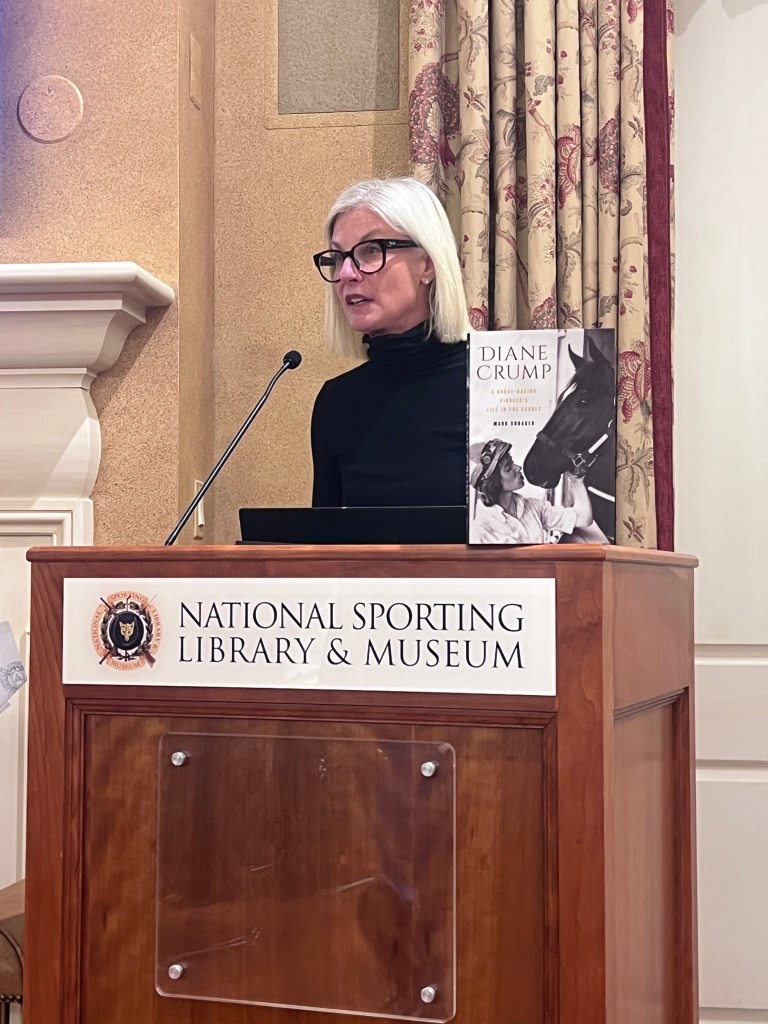
The start of a warm and enlightening discussion. R: Julie Banner NSLM Clarice & Robert H. Smith Education and Marketing Director introduced L. Author Mark Shrager.
What unfolded was a restoration of a legacy.
Shrager did not originally set out to write Diane Crump’s biography. He was searching for his next subject, scanning possibilities without conviction, when a familiar name surfaced. Diane Crump. The first woman jockey to ride in a pari-mutuel horse race in America. A pioneer. A curiosity. A possibility.
He viewed her as a celebrity. He called her. She answered. He was surprised but very pleased.
That moment, Shrager explained, began a partnership grounded in mutual respect, intellectual rigor, and an almost mystical coincidence. Both had been born on May 18, 1948. When he discovered this, he called her immediately. Diane, guided by deep and abiding faith, did not see coincidence. She saw intention. She told him that he had been ‘chosen by God to write’ her story.
What followed was not merely the writing of a biography, but the preservation of a life defined by courage, discipline, and an unyielding commitment to live according to one’s calling.
A Destiny Discovered Early
Diane Crump’s life with horses began at the age of three, when her mother took her to a county fair. She climbed onto a pony and did not want to get off. From that moment, horses were her destiny.
She saved every cent she earned—babysitting, delivering newspapers, running errands—until she could purchase her first horse. As a teenager, she worked at thoroughbred farms, learning every aspect of stable life. Trainers recognized her gift. She possessed, as Shrager described, “a clock in her head,” an intuitive ability to pace a horse precisely and instinctively.
She was fearless. She fell, she rose, and remounted.
She did not merely want to work with horses. She intended to race them.
Entering a World That Refused Her
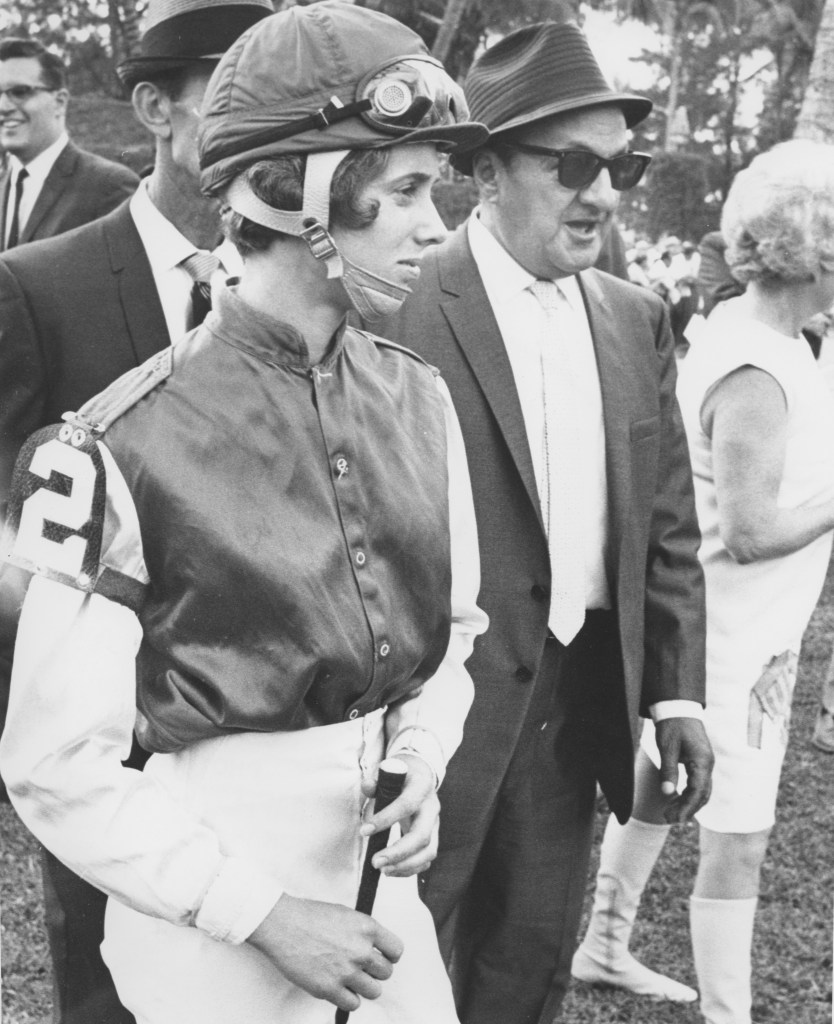
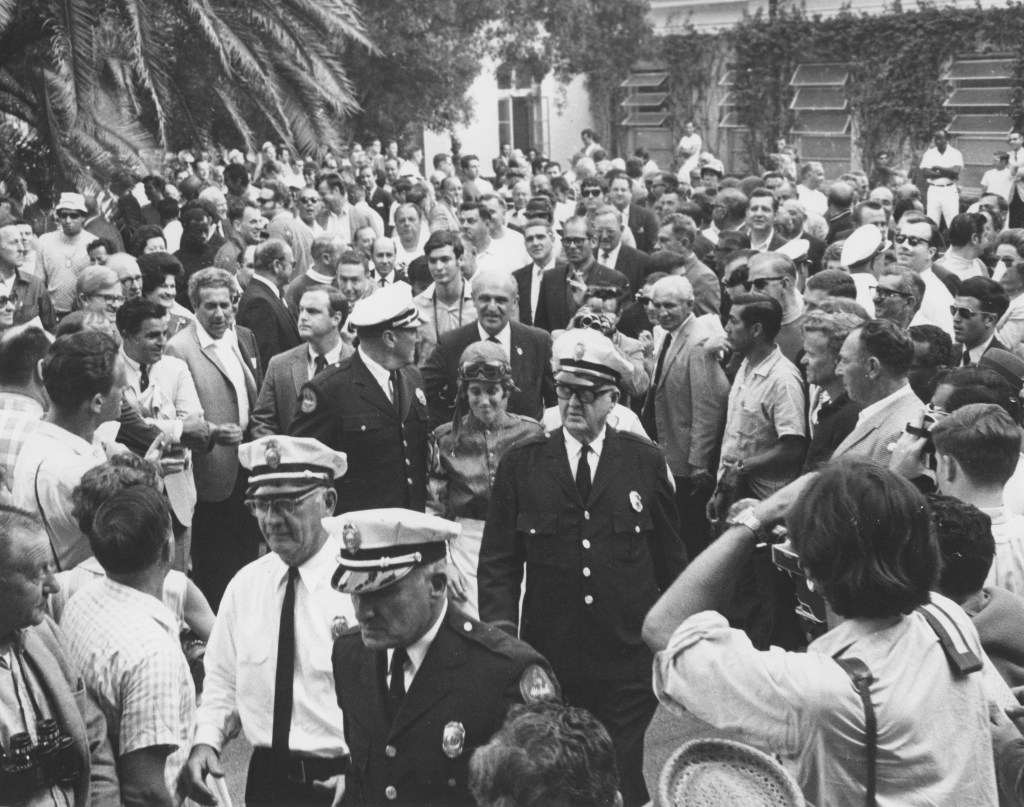
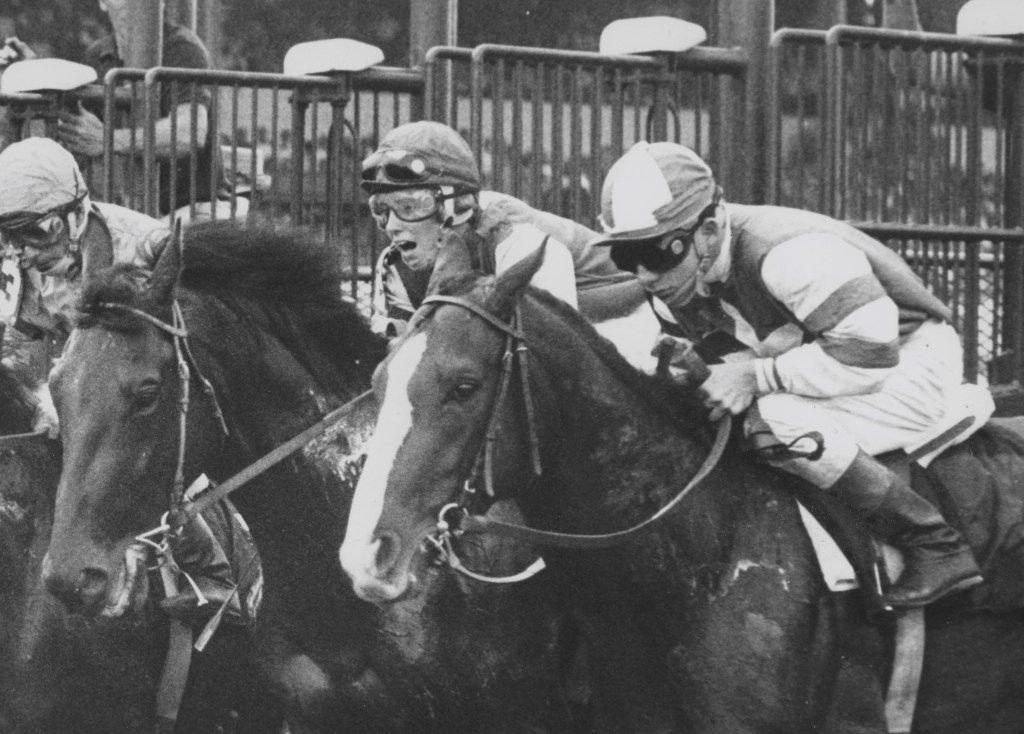
L: Diane discussing pre-race strategy with trainer Tom Calumet – PC: Jim Raftery – Keeneland Library Collection courtesy of Mark Shrager Center: Surrounded and tiny – Diane walks amid guards, nears the Hialeah saddling enclosure before her first race – amid protests of being a female in a man’s sport, “an uppity wannabe.” PC: Jim Raftery – Keeneland Library Collection courtesy of Mark Shrager. Surrounded and tiny R: Diane (second from right) on Bridle ‘n Bit PC: Jim Raftery – Keeneland Library Collection courtesy of Mark Shrager “Out of the gates”
In the 1960s, horse racing was a man’s world. Women could groom horses. They could clean stalls. They could brew coffee. They could not ride.
Even after the Civil Rights Act of 1964 prohibited gender discrimination, the resistance remained entrenched. Trainers refused mounts. Racing commissions delayed licensing. Male jockeys organized boycotts. Women were mocked, threatened, and dismissed. The opposition was systemic and unapologetic. Diane Crump persisted.
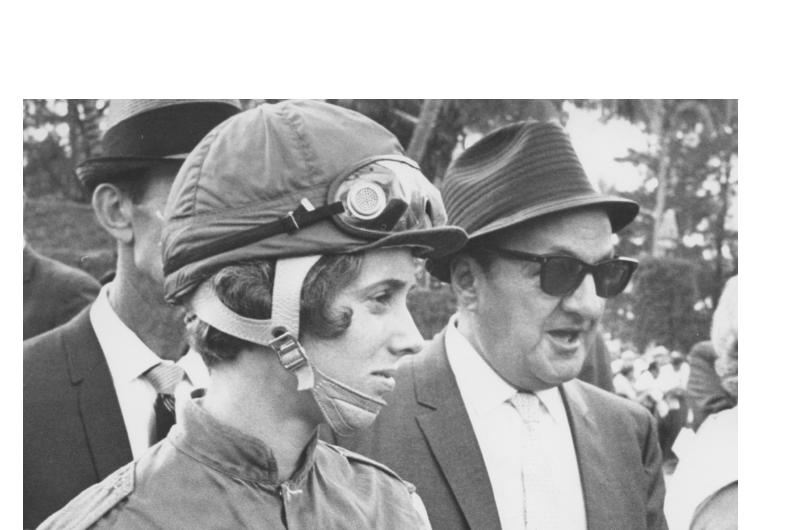
On February 8, 1969, at Hialeah Park in Florida, she became the first woman to ride in a pari-mutuel race in the United States. Because of credible threats, she wore a protective helmet liner beneath her riding cap. As she approached the starting gate, spectators shouted insults and told her to go back where she belonged. She smiled. She rode. She finished tenth. The barrier had been broken.
Her Talent Could Not Be Denied
What distinguished Diane Crump was not that she was first. It was that she was good. Very good.
In 1970, at just twenty years old, she became the first woman to ride in the Kentucky Derby, guiding her mount, Fathom, with composure and skill through one of the most pressure-filled races. Observers noted her poise. Fellow jockeys acknowledged her competence.
Over the course of her career, her winning percentages rivaled those of elite male jockeys. However, she received only a fraction of their opportunities. While leading male riders competed in more than 1,500 races annually, Diane was often limited to fewer than 150. The disparity was not based on ability. It was based on access.
She endured. She rode for decades, accumulating victories, respect, and the admiration of those who understood what she had overcome. She was not merely a woman jockey. She was a great jockey.
The Biographer and His Subject
Shrager described his conversations with Diane as the most meaningful part of writing her biography. She insisted on authenticity. She corrected inaccuracies. She educated him on the realities of equine physiology, psychology, and racing culture.
She did not allow mythology. She required truth.
While she endured ferocious hostility, even having a brick thrown through the window of her horse trailer that she used as her “Jockey’s Room,” her philosophy remained unwavering: live your dreams.
When she signed books, she did not just write her name. She wrote those words, “Live your dreams.”
She had done so herself.
Resilience Beyond the Saddle
Diane’s life was marked by resilience. Severe injuries—including a devastating compound fracture when a horse flipped over, landing on her leg—would have ended most careers. Doctors told her she might not ride again. She returned.
After 30 years of racing, she eventually transitioned into training and later founded an equine brokerage service in Northern Virginia. There, she became known not only for her expertise, but for her integrity. She refused to complete horse sales that were not in the best interest of horse, seller, or buyer, even at financial cost to herself.
Giving to others was key to Diane. She developed a dachshund assistance ministry where she visited hospitals and nursing homes, offering comfort to strangers, and sharing God’s message. She did not introduce herself as a racing pioneer. She introduced herself simply as ‘the lady with the dogs.’
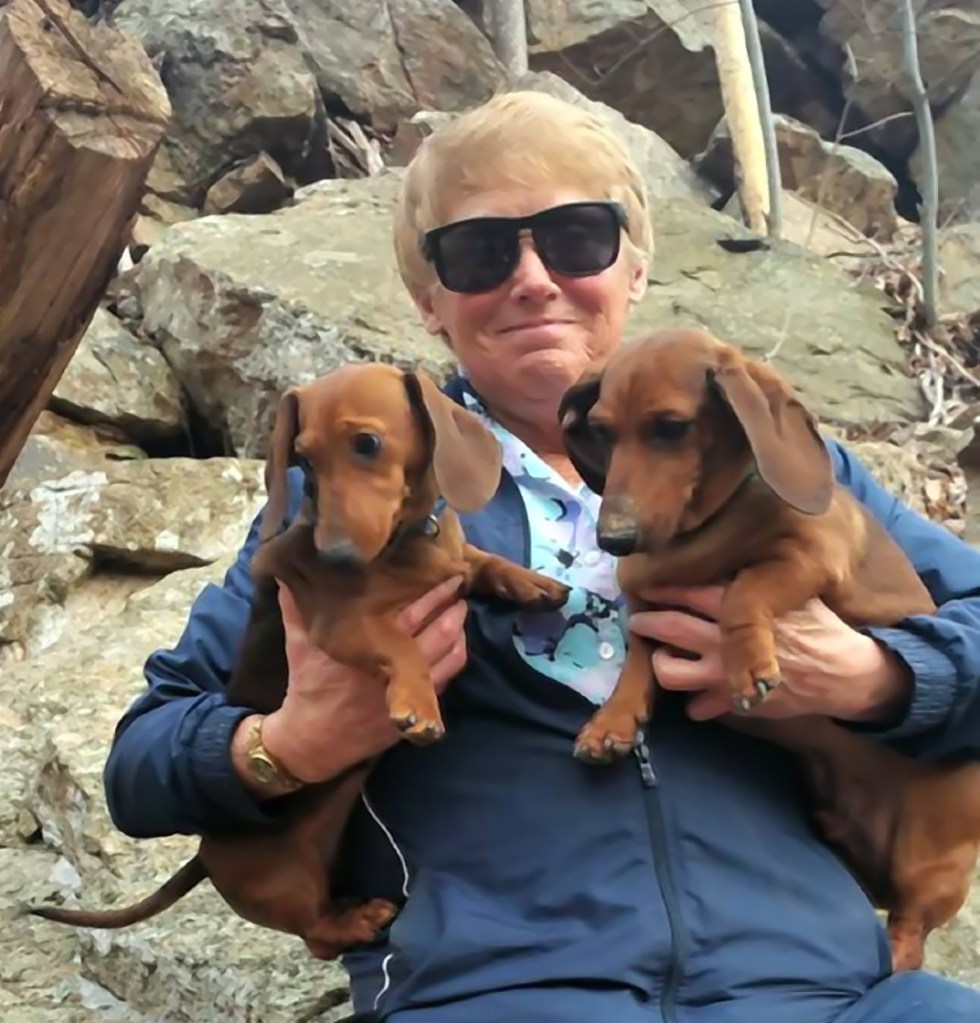
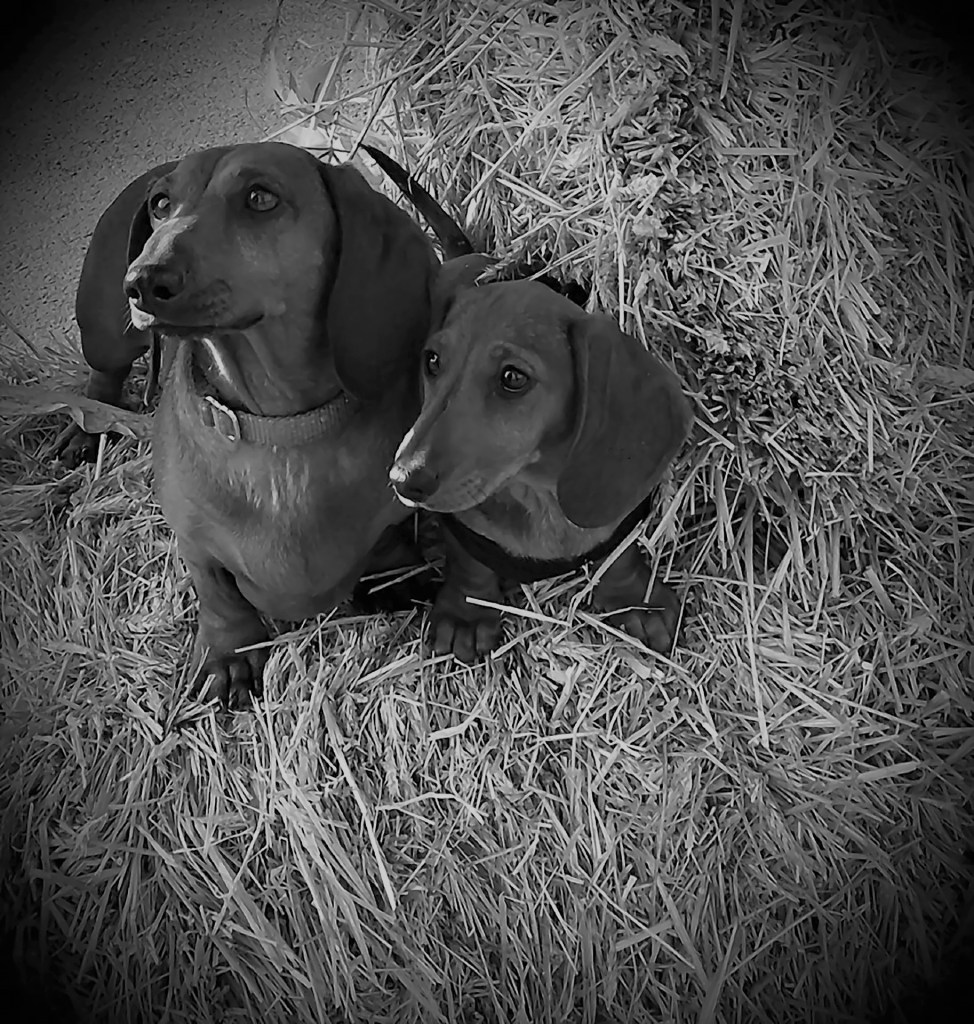
Ever the animal lover, Diane hugs her assistants, Potter and Pipi. Images courtesy of Diane Crump
She believed that life’s value was measured not by recognition, but by contribution.
A Legacy That Must Not Be Forgotten
Despite her accomplishments, Diane Crump has yet to be inducted into the National Museum of Racing and Hall of Fame. Shrager made a compelling case that evening for her inclusion, presenting statistical and historical evidence that her career merits that honor.
One visitor to the presentation shared that the Wall Street Journal published a feature obituary on January 16. This is a distinction reserved for individuals of extraordinary consequence. She was anything but unimportant.
Her daughter, Della, who spoke at the conclusion of the program, described her mother’s final days. While in assisted living, Diane remained focused on others. She thanked caregivers. She apologized for inconveniencing them. She continued, until the end, to seek ways to give.
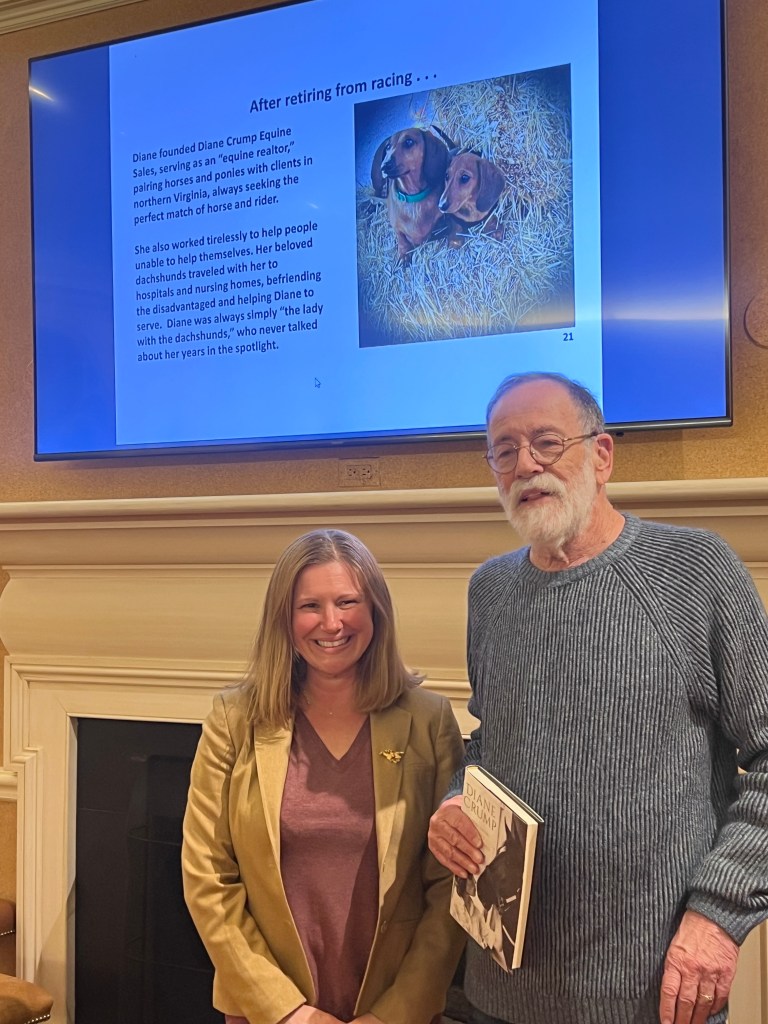
Author Mark Shrager with Della Payne, Diane Crump’s daughter, who spoke at the National Sporting Library and Museum about her mother’s life, legacy, and enduring spirit of helping others.
Living the Dream She Made Possible
Mark Shrager’s presentation accomplished more than recounting history. It restored the humanity behind it.
Diane Crump did not ask permission. She entered the starting gate. She rode.
She lived her dream.
Her legacy lives in every woman who mounts a racehorse without question, without protest, and without needing to prove she belongs.
Diane Crump proved that belonging is not granted. It is earned. Diane earned her place in women’s history and horse racing history.
About Mark Shrager:
Mark Shrager is an award-winning author who has published more than 300 articles on every aspect of horse racing. He has written three books on the sport. His most recent work, Diane Crump: A Horse-Racing Pioneer’s Life in the Saddle, received the 2020 Dr. Tony Ryan Award for the best book on thoroughbred racing. He has written a lovely book about a beautiful woman who just wanted to ride. This book is worth your time to read and share. Click the highlighted title above to buy your copy.
 Good News. Reviews. Events.