The Real Macbeth:

Shakespeare’s Greatest Con Job?

So many theater lovers and English majors banter the name Macbeth. Murderer. Usurper. Tyrant. The ambitious thane manipulated by his evil wife into regicide and madness. We think we know the story. Do we?

Let’s unpack this myth and discover the deception.

Shakespeare was not writing history when he penned Macbeth around 1606. He was writing for his job security. The playwright understood his audience with surgical precision, and his most important audience member had just ascended the English throne three years prior. James VI of Scotland had become James I of England in 1603. Shakespeare needed the new royal patronage. The new Scottish king needed legitimacy on English soil.

The Match Made in Theatrical Heaven

The Historical Macbeth

Mac Bethad mac Findlaích ruled Scotland from 1040 to 1057. That was seventeen years of stable rule in medieval Scotland. This was unheard of in the Scotland of the 1000’s where kings were routinely murdered, deposed, or challenged. Tyrants did not last seventeen years.

The historical Duncan I bears no resemblance to Shakespeare’s wise, elderly, benevolent king. The real Duncan I was young, weak, and foolishly aggressive. He invaded Macbeth’s territory of Moray in 1040. Macbeth slew him in the of Battle of Pitgaveny near Elgin. Warrior to warrior – an honorable death between combatants rather than the stabbing of an elderly sleeping guest in his bedchamber.

Macbeth possessed legitimate claim to the Scottish throne through his wife, Gruoch, granddaughter of King Kenneth III. Under the tanistry system of Scottish succession, Macbeth’s claim stood as valid as Duncan’s. Arguably stronger.

During his reign, Macbeth made a pilgrimage to Rome in 1050 to meet with the Pope – a pilgrimage possible only by a secure monarch. Chroniclers of the period recorded that he “scattered money like seed to the poor.” A guilt-ridden, paranoid murderer does not leave his kingdom for months to distribute charity abroad. Only a secure, prosperous, pious king would do so at the time.

The real Macbeth wore regal clothes. Shakespeare stripped them off and dressed him in villain’s rags.

Why the Lies?

Follow the money. Follow the power. This is how we uncover truth in any century.

James I needed several things when he took the English throne. He needed legitimacy, as a Scottish king ruling England was hardly popular with English subjects. He needed cultural acceptance. He craved flattery of his royal lineage. And he demanded entertainment that reinforced his divine right to rule.

Shakespeare delivered all of it with the precision of a master.

By making Duncan righteous and murdered, James’s ancestor became the martyred good king whose death must be avenged. By making Macbeth the evil usurper, anyone who would challenge rightful succession became damned by association. By making Banquo noble and prophesied to father a line of kings, Shakespeare flattered James’s other claimed ancestor as the hero whose bloodline fulfilled destiny. By adding witches and supernatural elements, the playwright appealed directly to James’s obsession with witchcraft. The king had written Daemonologie and fancied himself an expert on the subject. And by showing divine punishment for regicide, Shakespeare reinforced James’s claim to rule by divine right.

This was not art. This was propaganda dressed in iambic pentameter. Magnificent propaganda, certainly. Effective beyond measure. Propaganda, nonetheless.

The Matilda Connection

The bloodlines become truly fascinating when we examine how Scottish royal heritage eventually claimed the English throne.

After Macbeth’s death in 1057, Malcolm III assumed the Scottish crown. This is the “Malcolm” who defeats Macbeth in Shakespeare’s play, the son who avenges his father Duncan’s death. Malcolm married Margaret of Wessex, an Anglo-Saxon princess who fled to Scotland after the Norman Conquest of England.

Their daughter, Edith of Scotland, was born around 1080. When Edith married King Henry I of England in 1100, she changed her name to Matilda. The name sounded more Norman, more acceptable, less conspicuously Scottish to English ears.

This Matilda, born Edith, became the crucial bridge between kingdoms. Through her, Duncan’s blood flowed into the English monarchy via Malcolm III. Through her mother Margaret, descended from Alfred the Great, Anglo-Saxon royal blood joined the mixture. Matilda became the convergence point of Scottish and English royal heritage.

Matilda’s daughter, Empress Matilda, fought for England’s throne during the civil war known as the Anarchy. Her descendants became the Plantagenet kings who ruled England for centuries. The bloodline continued its steady march through history.

When Elizabeth I died childless in 1603, James VI of Scotland possessed the strongest claim to the English throne precisely because of these bloodlines. They traced back through the centuries, through Matilda the name-changer, through Margaret of Wessex the refugee princess, through Malcolm III the avenger, through Duncan the historical king Shakespeare would later slander.

James was not merely some Scottish king seizing an English throne. He represented the convergence of Scottish, Anglo-Saxon, and Norman royal blood meeting in one person. His legitimacy ran deep, and he knew it. He needed others to know it as well.

Shakespeare ensured they did.

A Small Digression

The Shakespeare 2020 Project founded by author, Ian Doescher, had a complete syllabus and timeframe for reading. I read and listened fast and thoroughly, then dug deep into historical relevance. I often listened to the plays while walking my dogs along the magnificent trails of parks and paths in my area. When I arrived at my ‘magiclands’ to find them closed due to the dread virus, I ushered the dogs back into their seats in my car and drove non-stop to a closer park. Furious, I decided that NOW was the time to hear Macbeth! Hear it, I did! We walked for the entire reading. When I returned to my book – I read it in its entirety with the readings still ringing in my ears. Yet, the play was enough. It did not send me on a single rabbit trail. I was too mesmerized by the psychological depth to worry about historical veracity. Until now, that it. Why? Nothing terribly intellectual – a short YouTube video addressing the very topic. I was hooked and the rabbit trail led me to rooms and rooms of pre-1000’s Scottish, English, and Norman history to the assertion of the throne by Macbeth.

What happened to King Macbeth? He was killed at the Battle of Lumphanan by Malcolm Canmore (later Malcolm III), son of Duncan I.

Why has Macbeth been an ill-fated play – sets fell, and actors died then theatrically referred to as simply “that Scottish Play?” Marginalizing and demonizing a past king? Lincoln quoted lines from Macbeth, “Out, out brief candle…” following the fall of Richmond on April 9, 1865. On April 15, 1865, SIX days later, he was assassinated by John Wilkes Booth who had played the title role in Boston two years earlier. Exactly who assassinated Lincoln? Booth or Macbeth?  Where is Macbeth’s reach?

Perhaps we should view all historical narratives with a skeptical eye. Whether from 1606 or from 2025, those who write the story control what becomes truth. Those who flatter power shape how the past is remembered.

The Lesson

I love Shakespeare for his poetry, his psychological insight, his timeless exploration of ambition, guilt, and the human condition. He was a genius wordsmith. In reality – he was a businessman, a survivor, a man who understood power and how to serve it while appearing to entertain.

Macbeth is splendid theater. The poetry soars across centuries. Lady Macbeth’s guilt, the dagger speech, “tomorrow and tomorrow and tomorrow” are extraordinary achievements in dramatic writing. The play deserves its place in the canon.

History? Not close.

The real Macbeth deserves better than four centuries of slander. He ruled well. He ruled long. He had legitimate claim to his throne. He was pious enough to pilgrimage to Rome and generous enough to scatter money to the poor. History should remember him as he was, not as Shakespeare portrayed him.

Politicians make promises. Playwrights craft myths. The winner writes history. The powerful control narratives.

Whether the emperor wears clothes or stands naked before us depends entirely on who holds the pen.

I like to see for myself.

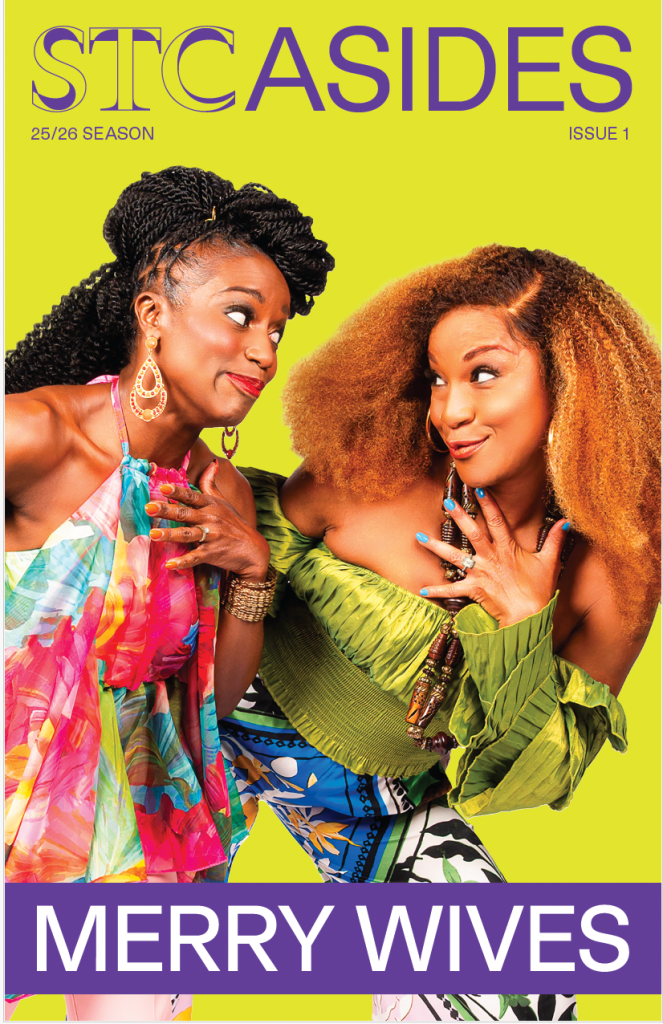
Merry Wives

When Community Meets Comedy

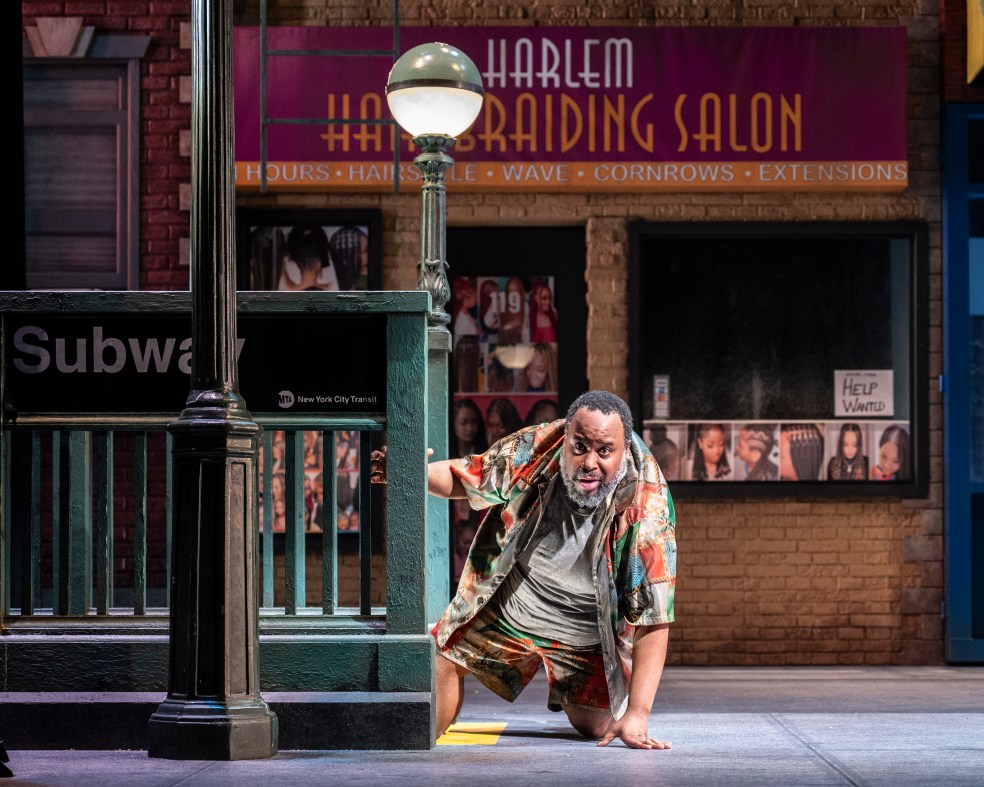
Jacob Ming-Trent in Merry Wives at Shakespeare Theatre Company. Photo by Teresa Castracane Photography.

Last Friday, I witnessed something magical happen in a theater. An entire audience jumped to their feet in spontaneous, thunderous applause. Not the polite, obligatory standing ovation that often closes shows, but the real thing: pure, uncontainable joy erupting from people who had just experienced something extraordinary.

That something was Shakespeare Theatre Company’s brilliant production of Merry Wives.

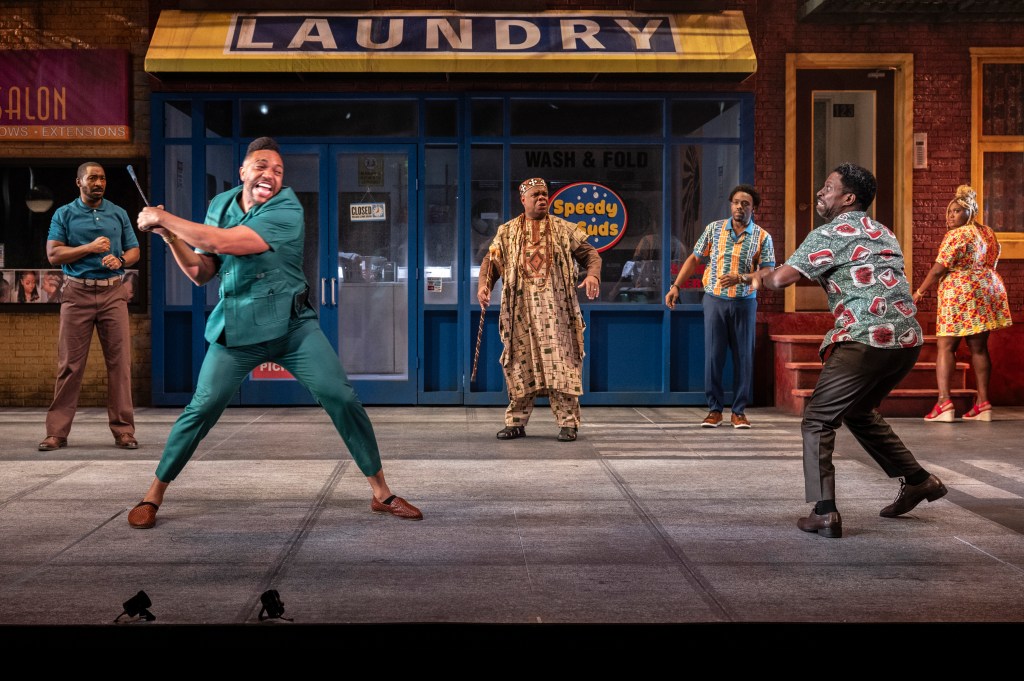
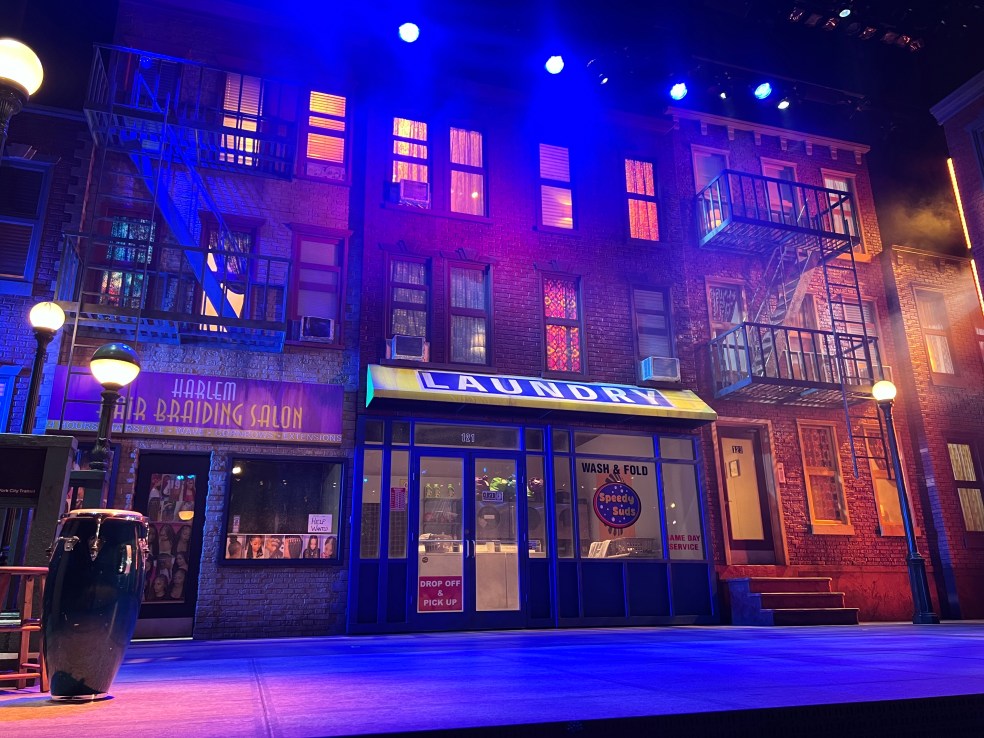
Jocelyn Bioh’s adaptation of Shakespeare’s The Merry Wives of Windsor sets this domestic comedy in modern day Harlem, centered around the neighborhood laundromat. Suddenly, Shakespeare’s 400-year-old tale of clever wives, bumbling suitors, and one roguish Falstaff feels fresh and immediate.

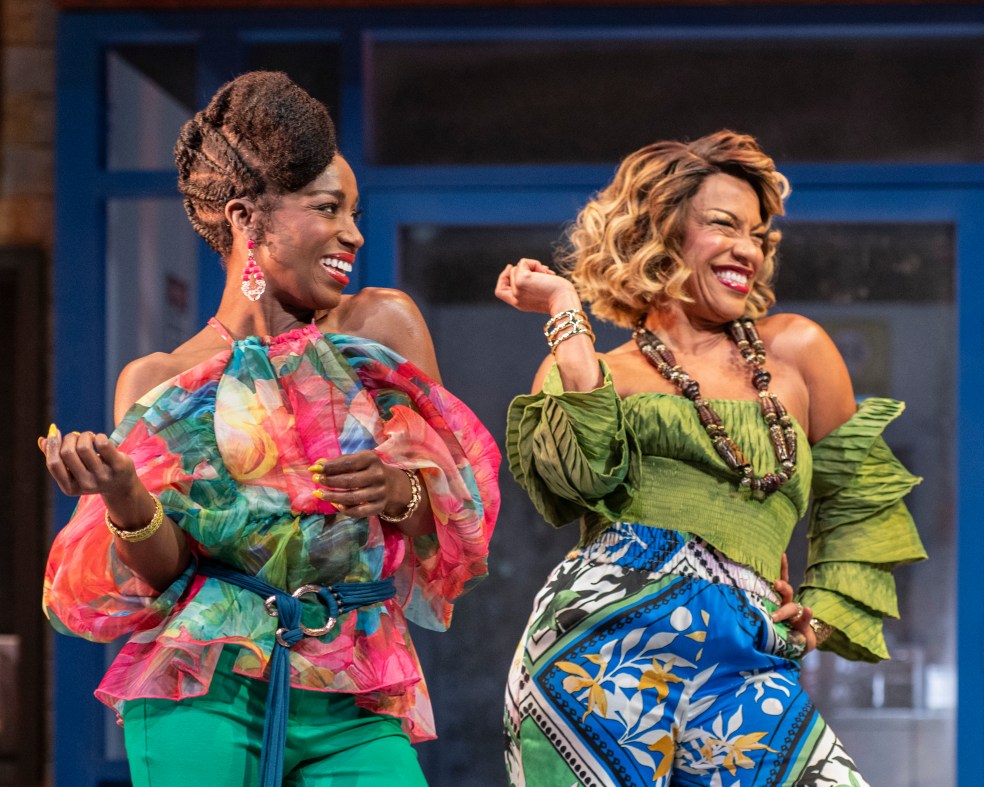
Jacob Ming-Trent, Felicia Curry, and Oneika Phillips The cast of Merry Wives.

Photos by Teresa Castracane Photography

The laundromat becomes the beating heart of community life where everyone knows everyone else’s business, schemes are hatched over folding clothes, and the famous laundry basket scenes take on brilliant new meaning. This is the kind of creative adaptation that makes us think, “Of course! Most every Shakespeare play has a duel – this play is no exception. However, the weapons are a golf club and a baseball bat! What a great place for drama to ‘unfold’!”

This production soars in how perfectly Shakespeare’s celebration of community wisdom translates to Harlem. The Merry Wives – played by Oneika Phillips as Madam Page and Felicia Curry as Madam Ford – are not simple individual characters pulling pranks. They are part of a vibrant neighborhood that looks out for each other, celebrates together, and collectively deals with troublemakers like Falstaff. They provide the wisdom and cunning for the others.

From L- R : (all PC: Teresa Castracane Photography: Felicia Curry, Jordan Barbour, Nick Rashad Burroughs, Sekou Laidlow, and JaBen Early; Felicia Curry, Jacob Ming-Trent, and Oneika Phillips; Jacob Ming-Trent and Kelli Blackwell

Ah, Falstaff! He is a pivotal character in four of Shakespeare’s plays – Henry IV Parts 1 and 2, Henry V, and The Merry Wives of Windsor. The role is a theatrical tightrope walk – he must be funny enough to carry comedy, charming enough to appreciate his schemes, and ridiculous enough to root for the wives to outwit him. When Falstaff works, everything works, and in this production, he works. In the Harlem laundromat setting, he becomes the beloved neighborhood character that everyone knows and tolerates despite his nonsense – probably holding court, spinning tales, completely convinced that he is irresistible to these smart women who are already three steps ahead of him. The knowing eye-rolls and exasperated gestures reveal their collective tolerance. They see through his schemes while enjoying the entertainment that he provides.

The physical comedy works brilliantly in the setting. When the audience delights in Falstaff’s schemes throughout the evening, his final downfall creates the perfect comic climax sending everyone to their feet cheering. The result is comedy that feels both timeless and completely of-the-moment. Shakespeare’s brilliant character dynamics unfold, as a love letter to community strength, female friendship, and the kind of neighborhood solidarity that makes cities feel like home. One audience member shared that she found the natural energy, wisdom, and strength of the “wives” enveloping.

Oneika Phillips and Felicia Curry (All Photos by Teresa Castracane Photography) The cast of Merry Wives

Streaming services or movies cannot produce the electric moments when an entire audience realizes they are experiencing something special together. When Oneika Phillips delivers a particularly brilliant line, when the ensemble moves in perfect comic synchronization, when the costumes and music and performances align to create theatrical dexterity. This is a joint experience of the audience. The costume design tells its own story – the rich colors and fabrics suggest social hierarchy within this Harlem community, while those amazing shoes worn by both Madams Page and Quickly signal their status and confidence. Every visual choice reinforces character relationships.

The shared experience, the collective intake of breath, and bursts of laughter, make live theater irreplaceable. Last Friday’s standing ovation went beyond appreciation for a good performance. It was a roomful of people celebrating the joy of being surprised, delighted, and moved together in one space at one moment in time.

This production does what great theaters do – taking the familiar and showing aspects never before noticed. Shakespeare’s genius for human psychology emerges through how naturally his insights translate across centuries and cultures. Communities have always been strengthened by clever women who refuse to let pretentious men get away with nonsense. The affected speech patterns – characters moving between Shakespeare’s elevated language and natural vernacular – create layers of authenticity that honor both the original text and the Harlem setting.

The laughter is infectious – not polite chuckles of recognizing a clever line, but the deep, surprising laughter that comes when brilliant performers make centuries-old words feel like they were written yesterday for people you could meet on any neighborhood corner – the genius of Shakespeare.

The romantic subplots raise intriguing questions about love versus social maneuvering. Are these genuine affections or strategic alliances? The production suggests that in tight-knit communities, the line between the two often blurs.

Shakespeare Theatre Company has created a production that honors the original text while making it accessible and relevant to the 21st Century audiences. The performance sparkles, the design choices are inspired, and the production feels like a celebration.

Go see this show. Go for the love of Shakespeare or for the fear of Shakespeare. Go because of the curiosity of Harlem’s cultural richness or simply for the desire to discover it. The experience is worth the effort. Some experiences only happen when we are all in the same room, witnessing brilliance together. Go enjoy the creative sets and gorgeous costumes – and of course, the acting.

The Details

Merry Wives is currently running at Shakespeare Theatre Company. Check their website for tickets and showtimes. Do not wait too long. This production closes on October 5. Tickets sell out quickly.

A Room in the Castle – Ophelia’s Story

Lauren Gunderson’s brilliant re-imagining of Shakespeare’s “Hamlet” shifts the spotlight from the brooding prince to the women who orbit his world. In A Room in the Castle, Gunderson accomplishes in 85 minutes what Shakespeare took four hours to convey, creating an intimate portrait focused on Ophelia, her handmaid, Anna, and Queen Gertrude. Kaja Dunn’s elegant directing delivers a thought-provoking production. Gunderson was commissioned to write the play by the Cincinnati Shakespeare Company where it opened before it’s World Premiere on March 9, 2025 at the Folger Theater.

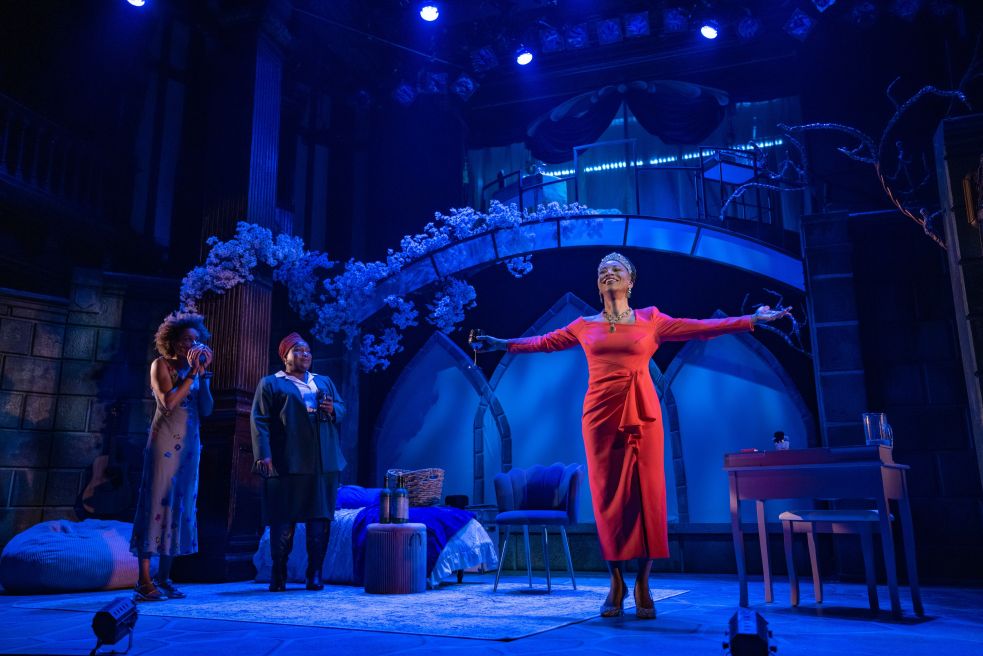
A Room in the Castle Dress Rehearsal 85:Sabrina Lynne Sawyer, Oneika Phillips, and Burgess Byrd in Folger Theatre’s world premiereof A Room in the Castle, written by Lauren M. Gunderson, directed by Kaja Dunn, co-produced with Cincinnati Shakespeare Company, on stage at the Folger Shakespeare Library, March4-April 6, 2025. Photo by Erika Nizborski

With only illusions to the narcissistic, gaslighting Hamlet of the original text, he is never seen. Not even the skull. Instead, we witness the story through the female perspective, exploring Ophelia as a motherless young woman navigating complex relationships and expectations. The production examines her circumstances: torn between her perceived love for Hamlet, her father and brother’s disapproval of him, Anna’s protective caution, and Queen Gertrude’s insistence on their marriage. Perhaps, it is “ . . .not to be.”

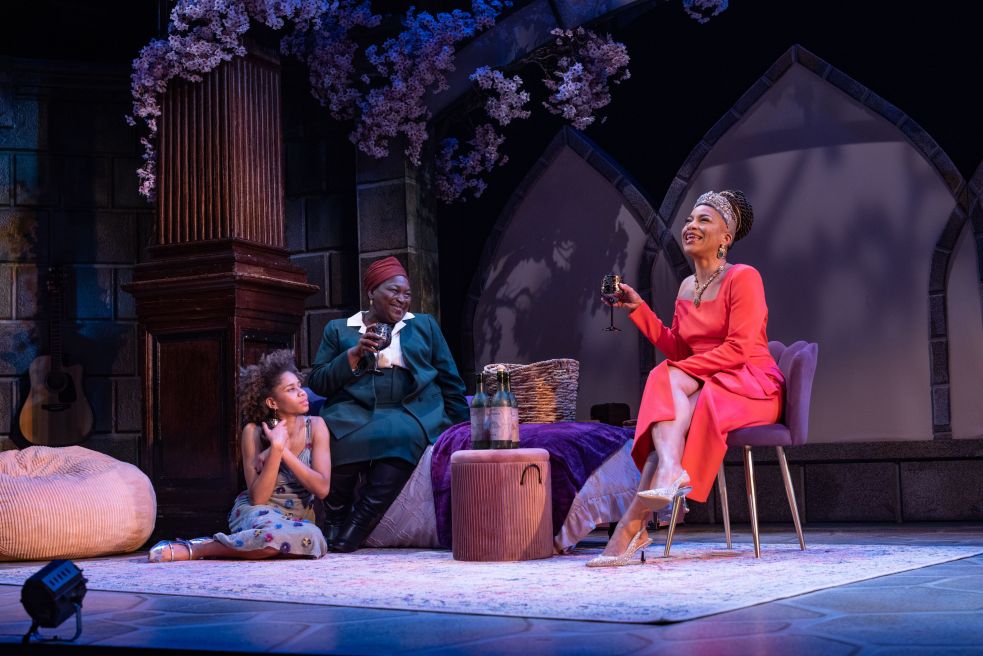
The all-female cast of three, delivers superb performances. Ophelia ( Sabrina Lynne Sawyer) emerges as a fully realized character – sometimes ambivalent, occasionally petulant, but ultimately autonomous. She is transformed from Shakespeare’s tragic figure into someone relatable in the 21st Century. Gertrude (Oneika Philips) commands the stage with regal confidence and impeccable dresses. Anna (Burgess Byrd) brings love and devotion to her role, having lost her own son and finding in Ophelia someone to mother and protect. Costume designer, Nicole Jescinth Smith’s costumes were visually stunning and spoke volumes about status and intent.

A Room in the Castle Dress Rehearsal 68: Oneika Phillips, Sabrina Lynne Sawyer, and Burgess Byrd in Folger Theatre’s world premiere of A Room in the Castle, written by Lauren M. Gunderson, directed by Kaja Dunn, co-produced with Cincinnati Shakespeare Company, on stage at the Folger Shakespeare Library, March4-April 6, 2025. Photo by Erika Nizborski

As we entered the Theater, I asked my guest and daughter, Tiffany, about her expectations of the play and to tell me her take on the original characters. Her immediate reply was that, “Hamlet was a madman, gaslighting Ophelia to her demise.”  I shared that I found, “Both whiny and that she was needy and ‘a few cards short of a full deck.” Tiffany expected see a play about strength and perseverance over narcissistic dysfunction.  I hoped that she was right and that after 425 years of waiting, Ophelia would find her voice.

The audience was greeted by the newly appointed director of the Folger Shakespeare Library, Dr. Farah Karim-Cooper, “I spent the last Twenty years of my life at Shakespeare’s Globe Theater in London. Over there, I was the resident scholar and director of education and research and it’s also where visceral performance informed all of my work, so I know something about theater.  This is why I can say that I’m so inspired by the compelling and inclusive vision that’s emerging from the culture of this theater and our artistic leader Karen Ann Daniels.”  

The intimate theater space enhances the experience, with its warm wood paneling, carved columns, and half-timbered walls – reminiscent of an Elizabethan setting. The set strikes an interesting juxtaposition between the now and then. When does this play take place? That really doesn’t matter.

A Room in the Castle Dress Rehearsal 93: Sabrina Lynne Sawyer, Oneika Phillips, and Burgess Byrd in Folger Theatre’s world premiere of A Room in the Castle, written by Lauren M. Gunderson, directed by Kaja Dunn, co-produced with Cincinnati Shakespeare Company, on stage at the Folger Shakespeare Library, March4-April 6, 2025. Photo by Erika Nizborsk

What makes this production special is that it honors Shakespeare’s world while boldly asking, “why not?” As Gunderson herself stated, “The play dances and duels with Shakespeare’s Hamlet, foregrounding the women in the play and re-imagining them with agency, vitality, and radical hearts eager for a new ending,… ripping a hole in the fabric of their suffocating story… because this play is anything but hopeless and tragic.”

There were frequent laughs and knowing sighs of recognition from the audience. While I won’t reveal the ending, I can say that it offers a satisfying conclusion to Ophelia’s journey. “A Room in the Castle” proves that sometimes the most interesting stories are found not with the titular character, but in the castle’s side chambers where the women speak their truths. “Obey, Agree, Assist?” How about “Rebel, Reject, Resist.”

A Room in the Castle Dress Rehearsal 91:Sabrina Lynne Sawyer, Burgess Byrd, and Oneika Phillips in Folger Theatre’s world premiere of A Room in the Castle, written by Lauren M. Gunderson, directed by Kaja Dunn, co-produced with Cincinnati Shakespeare Company, on stage at the Folger Shakespeare Library, March4-April 6, 2025. Photo by Erika Nizborski
A Room in the Castle Dress Rehearsal 87:Sabrina Lynne Sawyer, Burgess Byrd, and Oneika Phillips in Folger Theatre’s world premiere of A Room in the Castle, written by Lauren M. Gunderson, directed by Kaja Dunn, co-produced with Cincinnati Shakespeare Company, on stage at the Folger Shakespeare Library, March4-April 6, 2025. Photo by Erika Nizborski

Perhaps the most enduring power of Shakespeare lies not in the answers his works provide but in how each generation finds its own questions within them. Through my daughter’s unflinching modern lens, I watched not another classic Hamlet, but a study in how Ophelia finally gets the chance to exist beyond being defined by the men around her.

A Room in the Castle Dress Rehearsal 93: Sabrina Lynne Sawyer, Oneika Phillips, and Burgess Byrd in Folger Theatre’s world premiere of A Room in the Castle, written by Lauren M. Gunderson, directed by Kaja Dunn, co-produced with Cincinnati Shakespeare Company, on stage at the Folger Shakespeare Library, March4-April 6, 2025. Photo by Erika Nizborski

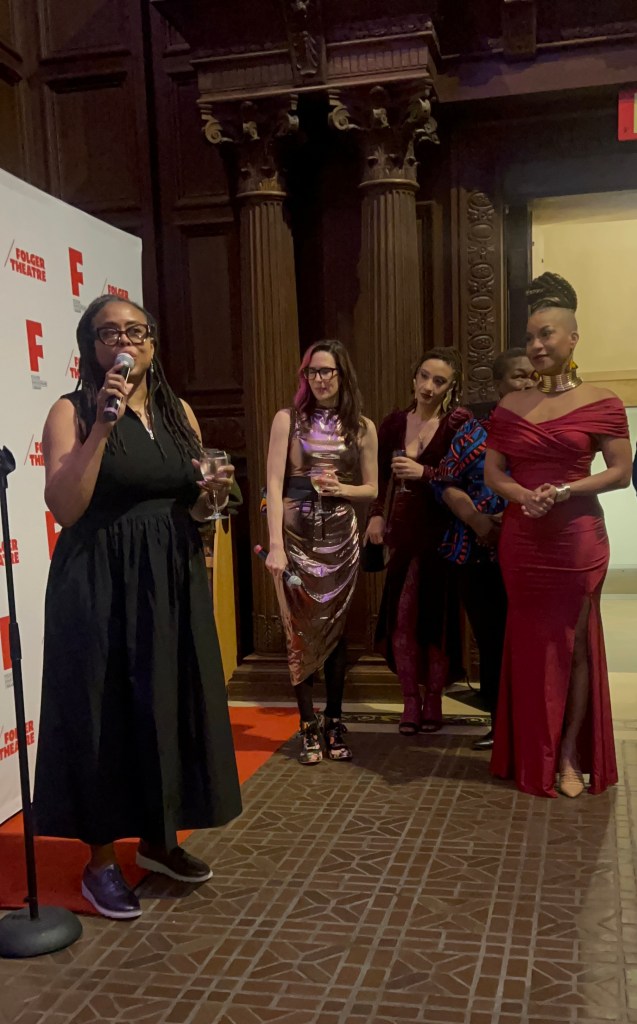
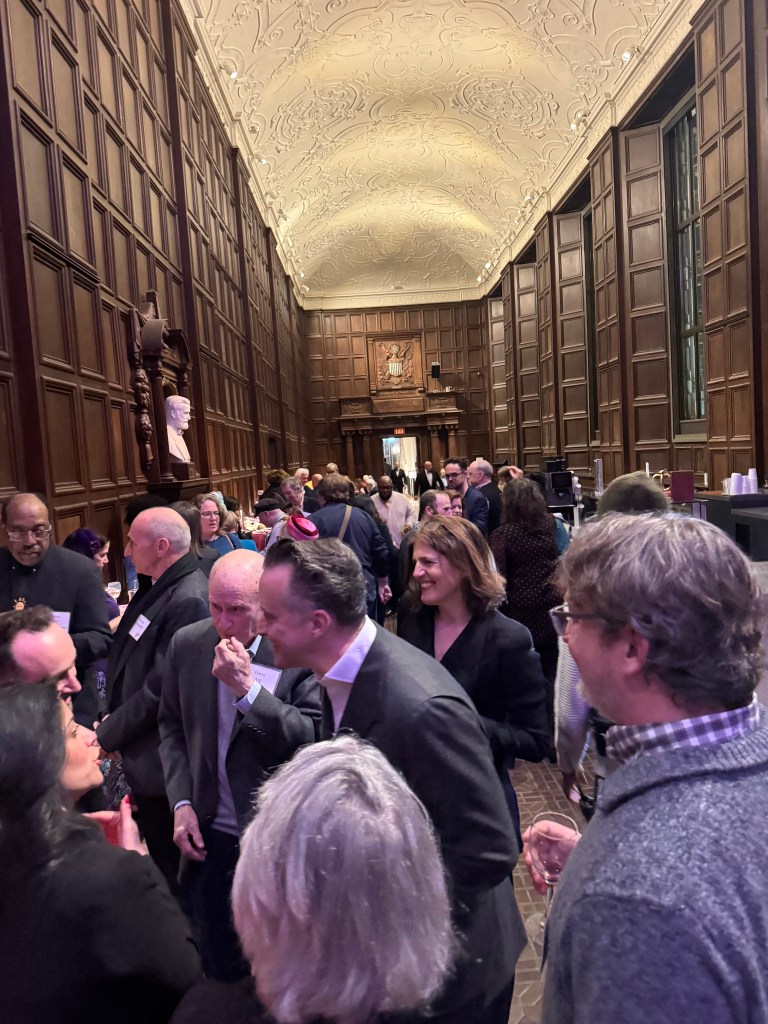
The cast, production team, and Folger staff greeted guests in the Great Hall for an elegant and enjoyable reception. Keeping with the woman theme, DJ, Miss H.E.R., provided invigorating music at the perfect volume for conversation. The reception gave us an opportunity to express our gratitude for the many levels of remarkable talent and work and to share snippets of insight and surprises.  Meeting Dr. Karim-Cooper and Lauren Gunderson was an unexpected pleasure. Their generosity of spirit and depth of intellect and dedication to the Folger was inspiring.

The depth of intellect, knowledge, and commitment to both the production and the Folger Library Theater could have been overwhelming had not everyone been incredibly hospitable, responsive, and gracious.

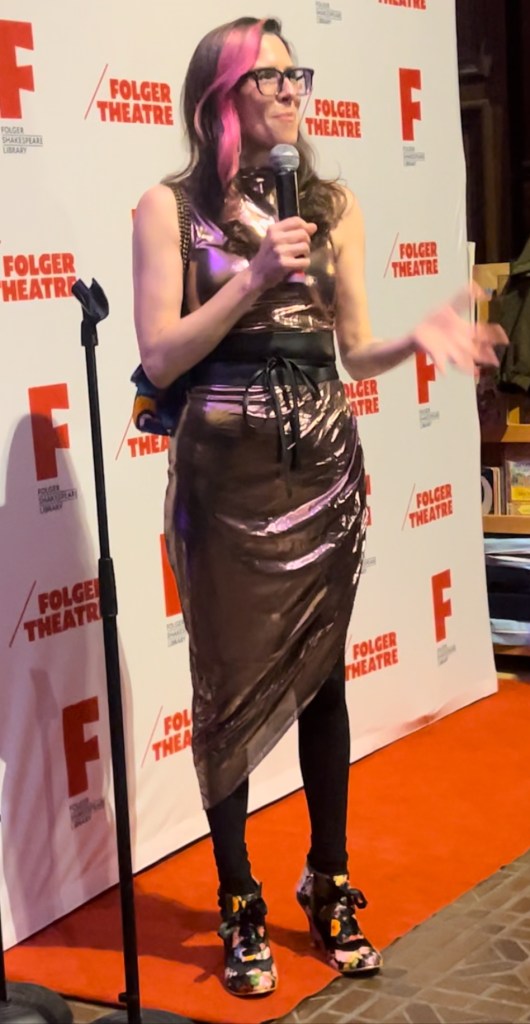
Playwright Lauren Gunderson shares her creative process PC: Henkel

Meeting the cast, Sabrina Lynne Sawyer – Ophelia, and Oneika Philips – Gertrude gave additional focus to the characters. Sabrina is entirely invested in Ophelia. She wanted Ophelia to be liked and appreciated. When I shared my original opinion and how her representation changed my mind, she gave me a genuine hug and thanked me for being flexible and seeing the other side. Oneika, dressed in another stunning gown, this time in scarlet, carried herself as the regal queen that she portrayed. She was born to be the Queen. She complimented costumer, Nicole Jescinth Smith’s vision and impeccable attention to detail. Burgess Byrd and I managed to always be on opposite sides of the Hall – my compliments to her for bringing palpable warmth and love through her talent.

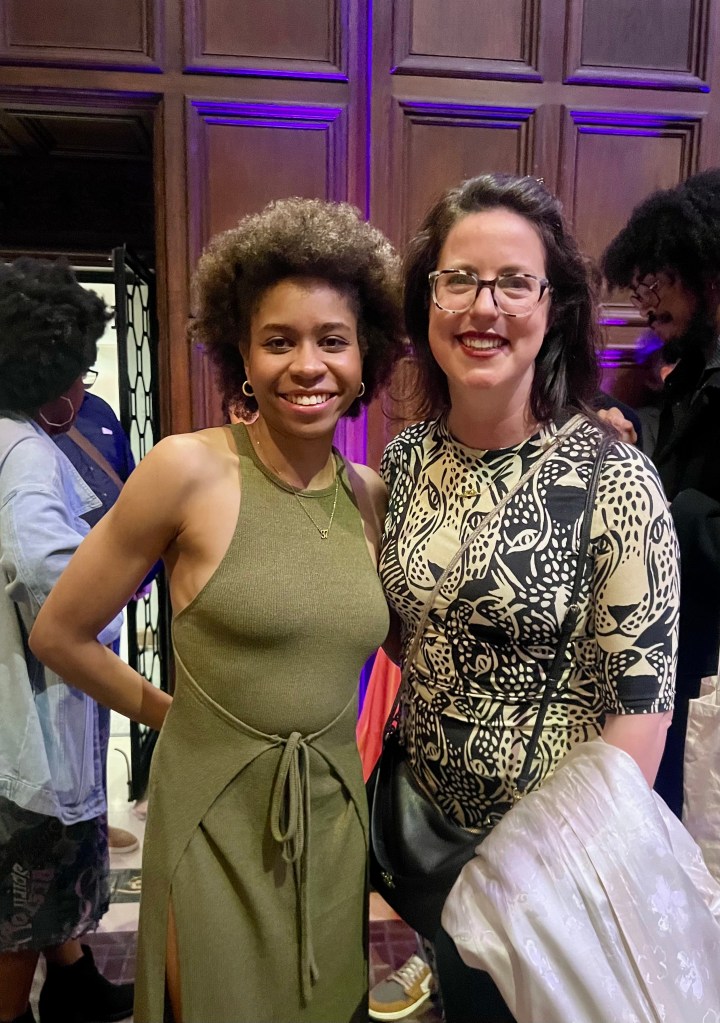
Top: Kaja Dunn, Lauren Gunderson, Nicole Jescinth Smith, Oneika Philips, Burgess Byrd Right: Lauren and Nicole Bottom Left: DJ MissH.E.R. Bottom Center: the Great Halls Bottom Right: Sabrina Lynn Sawyer and Tiffany Henkel PC: Henkel

I want to thank The Folger Press Secretary, Colleen Kennedy, for her generosity for allowing me to participate in this momentous event.  I hope that this Blog will pique your interest to see this play. You will be glad that you did.

This delightful production plays until April 6 at the beautiful Folger Theater in Washington, DC. Tickets are limited. Don’t miss this chance to watch this modern production and see Ophelia in a new light. Click here for tickets

Colleen Kennedy, Right, with Krasi Henkel PC: Henkel

A Year With William Shakespeare

Reading the Entire Canon in 2020

In January 2020, a friend posted a Facebook link to a Shakespeare project, “Shakespeare 2020,” reading all of the plays, Sonnets, and poems by William Shakespeare in 12 months. I did not think twice, I joined the group. What had I just signed up for??? I own a busy real estate brokerage firm, run a horse farm, I have a husband, 2 dogs, and 5 cats, and my 96-year-young mother had come to live with us just before Christmas 2019. And . . Shakespeare too?

Why NOT? I would give it a try. No cost, no commitment except to myself, and I wanted to see if I was smart enough to work through literature for which I had more than a mild curiosity. One compelling reason was to improve and strengthen my writing.

My good fortune is that I attended an unusual and experimental public high school. There, my luck expanded to be placed in an English class with an incredible teacher, William Teunis. He piqued my interest in literature (especially, Shakespeare) through his enthusiasm and exceptional teaching.  In his class, we read plays – acting out roles; we wrote short stories, essays, parodies, and plays. Shakespeare was attainable and most enjoyable. The more we did, the more I reached. My English experience abruptly ended with his drowning at the end of my sophomore year. Since then, I doubt that I have written a sentence without asking myself, “What will Mr. Teunis say about this?”

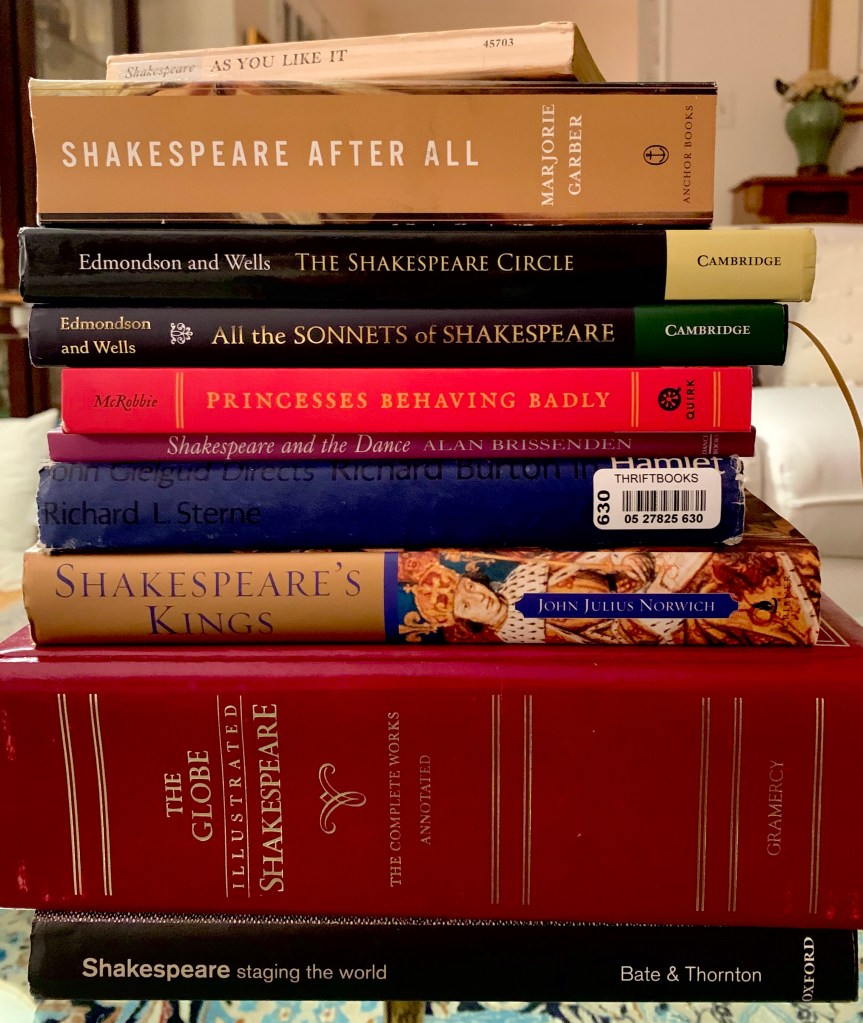
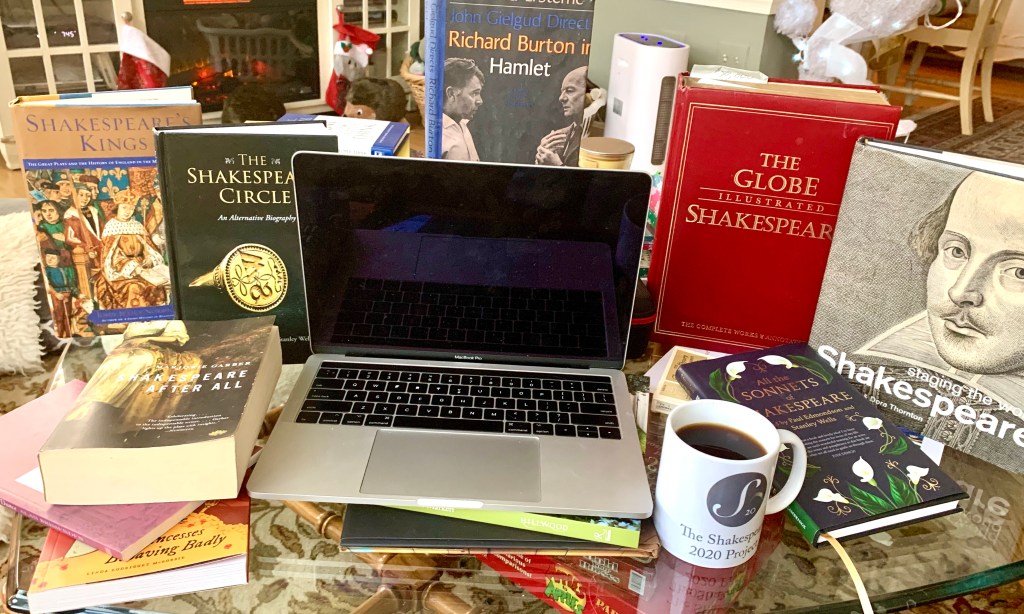
Over the years, my Shakespeare interest was occasionally rekindled whenever I found a book related to the plays. Once, when I was shopping in Costco, I came across the Complete Works of Shakespeare. “This would be a good resource if I ever have the time to sit and read,” I thought, being the eternal optimist. I purchased the book. Other times, also in Costco, I bought, Shakespeare’s Kings, in hopes of one day learning something about the histories (because I glazed over in my British History course in college); another time, I discovered and bought the 3-CD set of the Sonnets which I played in my car for months. So…when the Project appeared, I was armed and dangerous.

My journey began on January 9, 2020 with Twelfth Night. Yikes! The print in my book was microscopic! I focused my eyes and found that the words readable. Somewhere in Act 2, I remembered my English teacher’s remarks that Shakespeare wrote plays which were performed to audiences. He wrote for theater and not for fireside reading. How was I going to do ALL that reading when the plays must be experienced? I discovered Librivox!

On Librivox, talented and generous people joined forces from around the world to read almost all of the plays. YES! I was thrilled by my discovery. Aside from my relentlessly working and riding horses, I am passionate about walking my dogs for miles (we walk a 15 minute mile most days for 2-5 miles). I took Librivox on our walks.

I listened to Hamlet at the magical arboretum where trees took on the personae of the ghost, Gertrude, Hamlet, Laertes, Polonius, Claudius, and a stick in the pond resembled Ophelia. When I was annoyed that Great Falls Park had been closed, we hailed elsewhere where Macbeth was the perfect answer for my dark mood. The early spring blossoms in our sweet town’s yards were a nice backdrop for Measure For Measure. We heard acts of plays in my car or truck en route to our destinations. I have a favorite gas station where I buy inexpensive diesel for my truck. I love that my broadcasts are not interrupted when I turned off the ignition to fuel. I recall something about a “pie” from Titus Andronicus while the diesel flowed into the tank of my bright blue Silverado.

The Shakespeare 2020 project was brilliantly developed to be completed in 12 months. Well, being very curious, and having determined that I would complete the entire canon before Mr. Teunis’ 50th anniversary of his drowning (so that I could write a tribute article about him) I accelerated my reading/listening and behold, I finished the canon. There were times in King Lear and the Rape of Lucrece that the thought of closing the book and deleting the Librivox link were very compelling. HOW can a decent person know about such stuff and write about it, and worse, WHO would want to be entertained by THAT???? I decided not to judge by my values and carried on.

Opportunities to discuss Shakespeare arise in unexpected places

The Project was not just a syllabus, it was a treasure trove of intelligent, knowledgeable, and creative people who already knew a great deal. They shared their insights and enthusiasm with the 4,900 members of the group the Facebook page . The depth of resources, intellect, and understanding was staggering.  My Shakespeare “library” grew along with my curiosity and understanding.

During my haydays in Mr. Teunis’ class, I heard him tell us that theater, during the Elizabethan era, competed for audiences from among other public interests including bear baiting and public hangings. “Uh-hu, OK, whatever,” I thought, at the time. Now it came to back to me why certain plays were so grotesque. The poor playwright had to capture audiences’ attention and be competitive. Therefore, Titus Andronicus, Lear, Rape of Lucrece, among others.

My friends with whom I shared my Shakespeare adventure looked at me sideways most of the time. One friend, much older than I, said to me, “He should have died earlier. There would be fewer plays with which to torture students.” It seems that he is not alone in that opinion and that most people’s literary experiences were not as positive as mine. My friends were surprised that I cared about Shakespeare, let alone that I would embark on this journey.

My book collection grew

Until this Project, I had danced around the periphery of the Bard. I had done my share of academic study with Mr. Teunis, then, watched fabulous ballets including A Midsummer Night’s Dream with New York City Ballet and the Paris Opera Ballet; The Winter’s Tale and Romeo and Juliet with the Royal Ballet and attended Folger Theater performances throughout the years. After completing the canon, I purposed to watch as many plays as possible. I have managed to see about 20 plays, listened to Patrick Stewart reading the Sonnets, and I discovered brilliant lecturers from Harvard, Yale, and the University of Virginia.

The Shakespeare 2020 Project opened a new world of discovery and connections as I never expected. I met (virtually) fascinating people (some of whom I could not find a single point of agreement) who stimulated me to think in different ways. I became acquainted with the creator of the Project, Ian Doescher, a young, creative author who has written many wonderful books in the “Shakespeare style” (do look at his link, you will be amazed by his creativity) on themes including Star Wars, Clueless, Luke Skywalker, and myriad more. My new connections and friendships are treasures. Another bonus is that I connected with high school friends who also valued Mr. Teunis (I should mention that our strange, experimental, free-for-all high school turned out amazing humans who touch the far reaches of the world because of Teunis [and others like him]).

As the Project draws to a conclusion, the experience, the discoveries, the friendships, the challenges, and the curiosity have helped me learn much about myself, given me discipline to persevere, and hopefully helped me write a little better (all the while hearing Mr. Teunis’ remarks, lectures, and gentle admonitions to do “better”).

By writing this article, I experienced the vastness that is Shakespeare. Questions continually arise. My opinions have no bounds. Stay tuned for future supplements to my “Shakespeare Adventure.” The learning is just beginning.