Broadway’s Gamblers Roll the Dice at the Shakespeare Theatre:

There was dancing in the Lobby!

Hayley Podschun in Guys and Dolls at Shakespeare Theatre Company. Photo by Teresa Castracane Photography.

Guys and Dolls – the quintessential feel-good play – hopeful, energetic; dynamic. The performance inspired patrons to dance with big smiles on their faces.

From a technical and performance perspective, the play lived up to its Broadway roots. In many ways it surpassed them. On my drive home, I turned on the Broadway cast soundtrack.  Accounting for recording and broadcast quality, its energy and enthusiasm did not compete with STC. Well done!

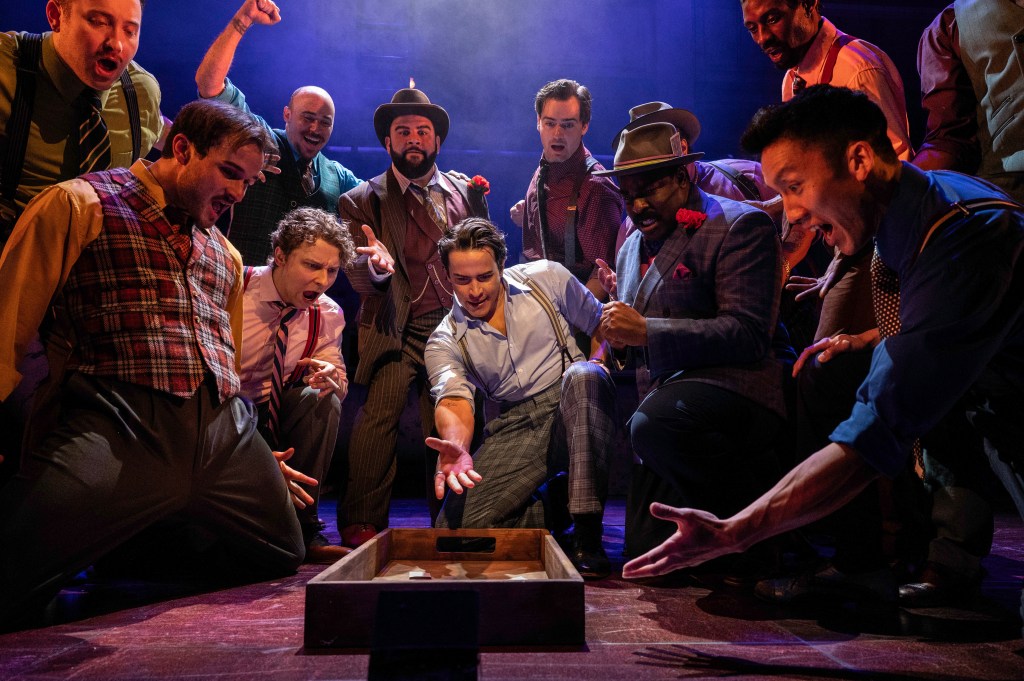
Top left – bottom: The cast of Guys and Dolls at Shakespeare Theatre Company. Photo by Teresa Castracane Photography. Lawrence Redmond, John Syger, Julie Benko, Jimena Flores Sanchez, and Katherine Riddle in Guys and Dolls at Shakespeare Theatre Company. Photo by Teresa Castracane Photography. Calvin McCullough and Kyle Taylor Parker in Guys and Dolls at Shakespeare Theatre Company. Photo by Teresa Castracane Photography. The cast of Guys and Dolls at Shakespeare Theatre Company. Photo by Teresa Castracane Photography.

After months of attending powerful productions at the Shakespeare Theatre Company, I found myself at a Preview that offered something refreshingly different. The company was opening Guys and Dolls at Harman Hall. The beloved American musical is presented here with remarkable vibrancy. I was fortunate to see it before the official opening, catching the energy of a nearly sold-out house. It opened to such acclaim and demand that four additional performances were added.

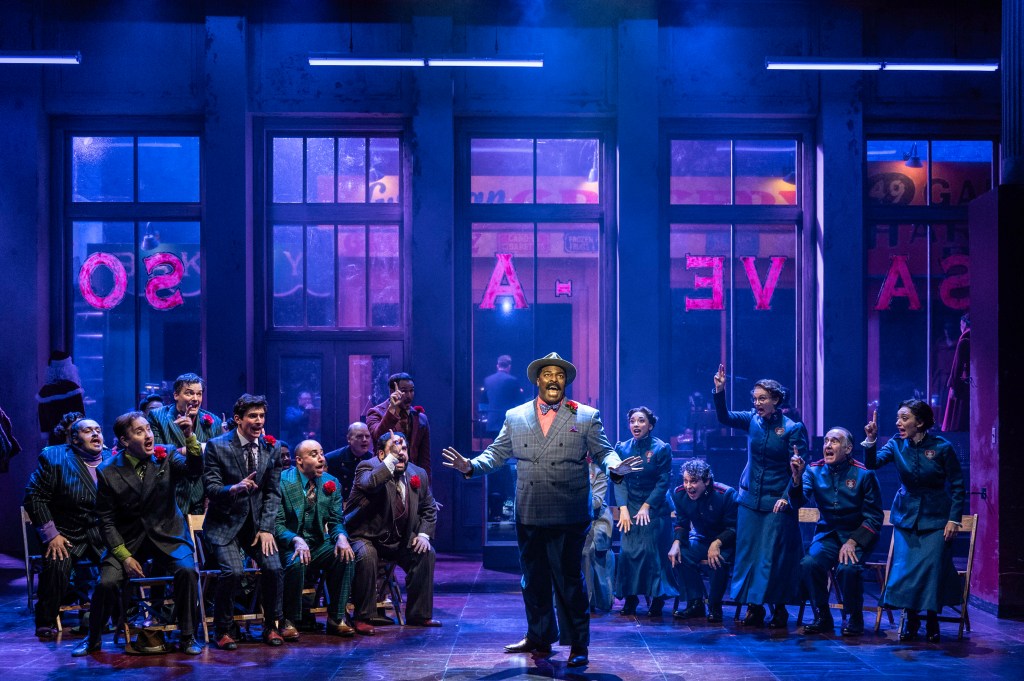
This is not critique. This is anticipation. This is the excitement building toward what promises to be a joyful and spirited theatrical experience, perfect for the season of hope and joy. The live music set outside the picture windows of the Salvation Army, with the perfectly attired band leader, created the ideal atmosphere for the memorable performance.

The artistic team behind this production is impressive. Director Francesca Zambello, Artistic Director of Washington National Opera, brings operatic sensibilities to Damon Runyon’s stylized world. Choreographer Joshua Bergasse, whose Broadway credits include On the Town, delivers legitimate musical theater dancing that feels both classic and fresh. STC continues to expand its presentation range while maintaining its exacting artistic standards, thanks in great part to the vision of Artistic Director, Simon Godwin.

Top Left to Bottom: Julie Benko in Guys and Dolls at Shakespeare Theatre Company. Photo by Teresa Castracane Photography. Hayley Podschun in Guys and Dolls at Shakespeare Theatre Company. Photo by Teresa Castracane Photography. Nick Alvino, Tommy Gedrich, and the cast of Guys and Dolls at Shakespeare Theatre Company. Photo by Teresa Castracane Photography. The cast of Guys and Dolls

What makes Guys and Dolls endlessly enjoyable is its ‘plausible relatability’ in the world it creates – the gamblers, the nightclubs, the dance scenes, the romance, and the comedic timing that lands perfectly again and again. There are no ‘bad guys.’ Some just had a few ‘bad habits.’ Damon Runyon’s language and characters form a theatrical universe that is playful, distinct, and instantly recognizable. Frank Loesser understood this when he composed the score in 1950. He did not try to naturalize Runyon’s style; he amplified it. He gave it music, and that music carries the story with humor, color, and emotional lift.

Top Left to Bottom Right: Hayley Podschun and Julie Benko in Guys and Dolls at Shakespeare Theatre Company. Photo by Teresa Castracane Photography. Jacob Dickey and Julie Benko in Guys and Dolls at Shakespeare Theatre Company. Photo by Teresa Castracane Photography. Hayley Podschun and Rob Colletti in Guys and Dolls at Shakespeare Theatre Company. Photo by Teresa Castracane Photography. Jacob Dickey and Julie Benko in Guys and Dolls at Shakespeare Theatre Company. Photo by Teresa Castracane Photography.

At Harman Hall, I experienced this world take shape. Sarah Brown was uncompromising, Sky Masterson made impossible bets, Nathan Detroit ran the oldest established permanent floating crap game in New York, and Miss Adelaide developed psychosomatic colds from fourteen years of broken marriage promises. It was all there: the charm, the humor, the rhythm, the dancing, the romance, and the fun. The performance quality of acting, singing, and dancing was exceptional. See for yourself –  buy your tickets and make it a holiday event for your family. You too can walk out with a big smile.

Luck be a Lady Tonight – Roll the Dice!

Left: Graciela Rey, Aria Christina Evans, Hayley Podschun, Jessie Peltier, and Jimena Flores Sanchez in Guys and Dolls at Shakespeare Theatre Company. Photo by Teresa Castracane Photography. Right: The cast of Guys and Dolls at Shakespeare Theatre Company. Photo by Teresa Castracane Photography.

Julius X – A Triple Treat

Playwright Al Letson PC: Amir Arsalan Shamsabadi on Unsplash Julius X Played by Brandon Carter

Julius X was born from rejection. When Al Letson was not cast as Mark Antony in a Julius Caesar production because of race, he decided, “Screw it, I’m going to write my own.” This was not bravado. It was love. He had fallen for Mark Antony’s speech in 10th grade and read Malcolm X’s autobiography in 7th. Both stayed with him. Years later, he realized Julius Caesar’s arc fit almost perfectly with Malcolm X’s life. This is how a dyslexic kid who learned to read through comics, a flight attendant who competed in poetry slams across America, an award-winning journalist and Shakespearean, spent over two years creating what is now playing at the Folger Theatre through October 26. I discovered Al Letson through Julius X.

Julius Caesar by William Shakespeare is a popular high school literature topic. How it is studied and how Shakespeare is presented often affects students for a lifetime. In Letson’s case, Caesar spoke to him. To others, it was just something to get through to close a chapter on high school English. I too studied Julius Caesar in high school. After my beloved Shakespeare teacher’s drowning the prior summer, I was uninspired to seriously pursue the play, and my new teacher was marking time. All was not lost for me. I read Shakespeare’s entire canon in five months in honor of my inspirational teacher’s 50th anniversary of his drowning and published a blog about him and Shakespeare. That blog remains the most read of all of my blogs. Julius Caesar was, of course, reread. This time with real interest.

In preparing to see Julius X, I opened my books once again. Marjorie Garber’s essay in her book, Shakespeare After All, and Paul Cantor’s Shakespeare and Politics lectures on YouTube helped me prepare. I then researched the life of Malcolm X. As a child, I remember hearing my parents discussing his assassination on the day it happened. The parallels between the two men are remarkable. Yes, they were different, however, their passion, their vision, and their boldness are indisputable.

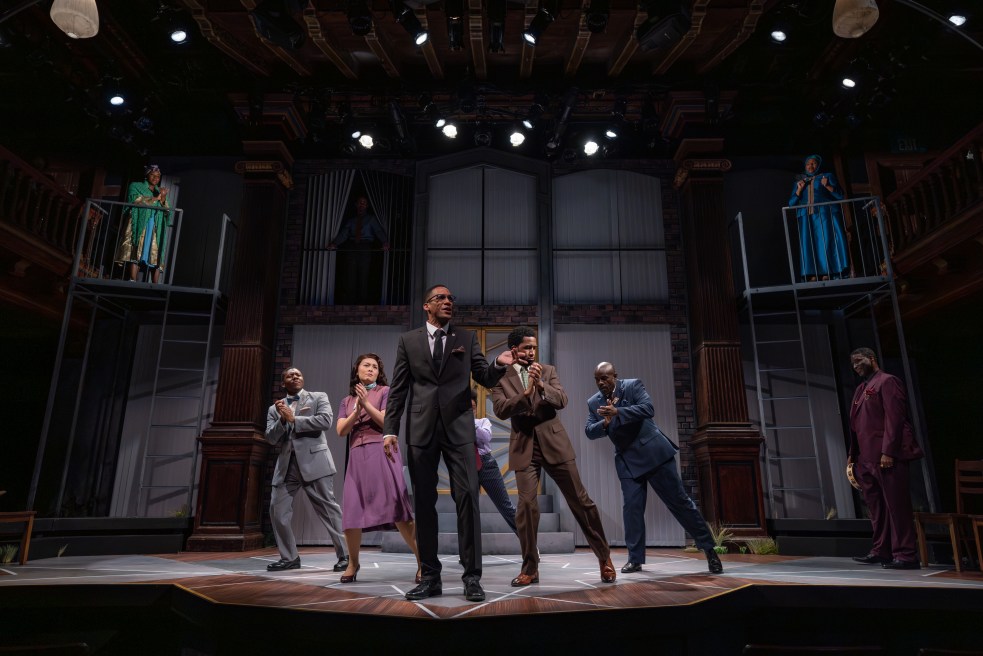
Al Letson so aptly married the two tragic heroes by meeting their arcs, their mission, their loyalty, and their fire. Having prepared, I was happy to feel like a participant rather than a spectator. I felt the rhythm of the verses, the drive of the characters, the commitment to community of the friends, and the loving fear of the wives. Sitting close to the stage, I saw facial expressions shift with each revelation – what performers call rubber faces, the ability to communicate entire thoughts through the smallest movement. The wives were remarkable: Julius’s wife in her impeccable teal suit with braid detailing, Portia animated and desperate, both showing love and intuition that their husbands would not, could not, hear. Julius X is fast paced. There is no time to wallow or worry. Things happen quickly, and while the interpretation is impressive and surprising, being prepared was key to my Julius X journey.  I was enthralled rather than bewildered.

Harlem of the 1960s was not Rome. Rome was regal, authoritative, imperial. But Harlem was home—brownstones and street corners, community and belonging. Its residents cannot live in Harlem without loving it. Harlem was Malcolm X’s ‘Rome.’  It was intimate, not monumental. It was his world. He had a burning passion. He wanted more for himself, his family, and his people. A militant who reconsidered his path but never abandoned his passion posed a threat to his supporters. The key? Ambition.

Caesar is a pivotal character. He has been compared to Alexander the Great by Plutarch in his biographies, Parallel Lives, in approximately 110 AD, to being featured by Shakespeare in the Tragedy of Julius Caesar in 1599, to being analyzed by Paul Cantor in the 21st century, juxtaposing him between Coriolanus and Antony and Cleopatra, and now, to being reimagined as Julius X by Letson in the 2020s. Almost 2000 years have passed. There is nothing new under the sun. Ambition is considered threatening by those with opposing vision or small thinking.

Julius X is entertaining, thought provoking, classic, and unapologetically bold. Playing through October 26 at the Folger Theatre, it rewards preparation and challenges assumptions. Good that Letson was not pigeonholed as Mark Antony. You can buy tickets now.

All photo credits: Erika Nizborski and Brittany Diliberto.

Merry Wives

When Community Meets Comedy

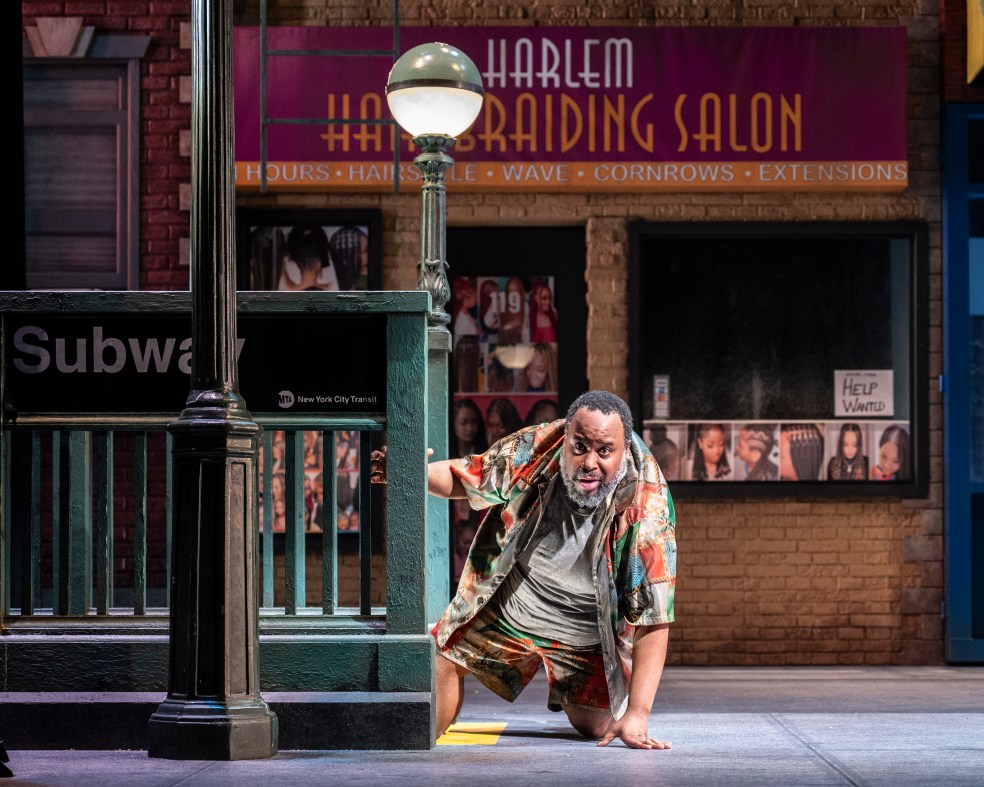
Jacob Ming-Trent in Merry Wives at Shakespeare Theatre Company. Photo by Teresa Castracane Photography.

Last Friday, I witnessed something magical happen in a theater. An entire audience jumped to their feet in spontaneous, thunderous applause. Not the polite, obligatory standing ovation that often closes shows, but the real thing: pure, uncontainable joy erupting from people who had just experienced something extraordinary.

That something was Shakespeare Theatre Company’s brilliant production of Merry Wives.

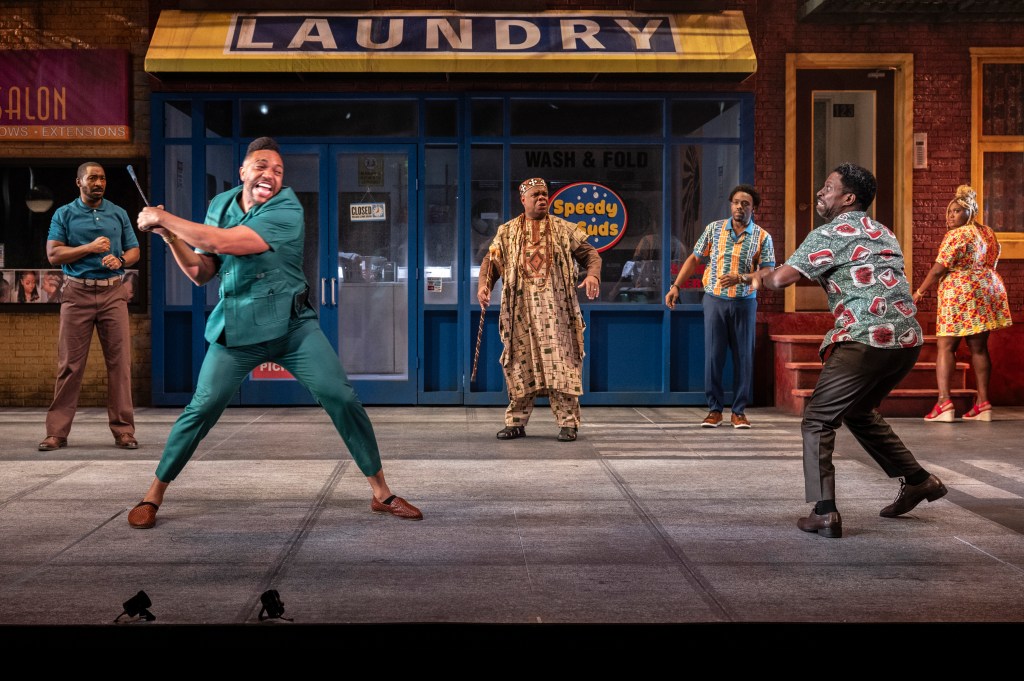
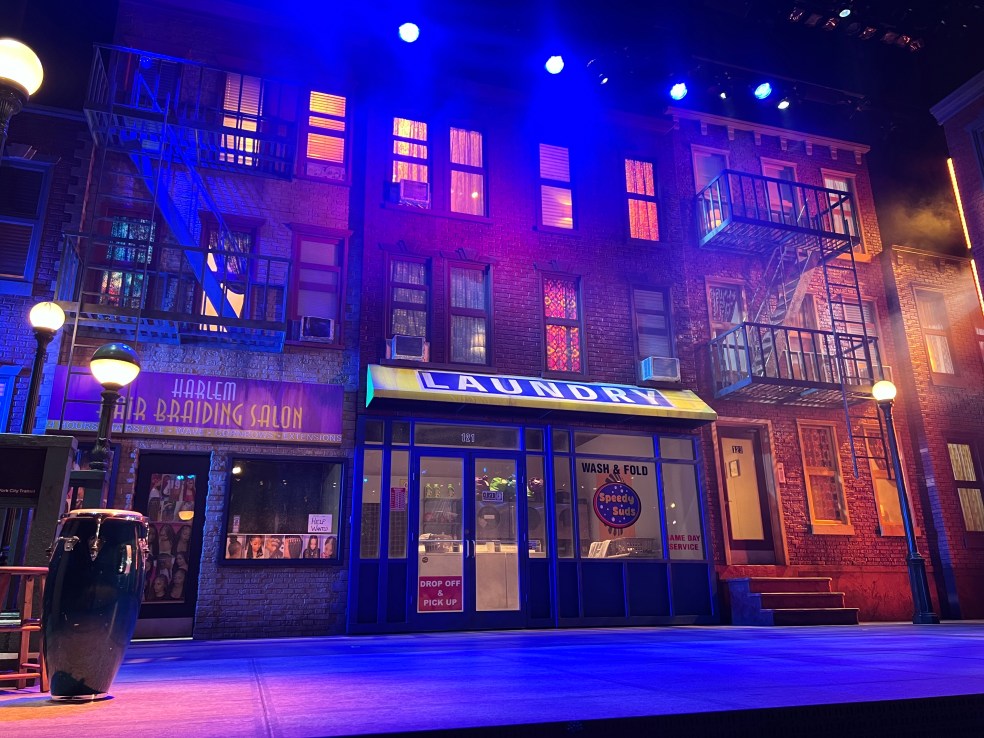
Jocelyn Bioh’s adaptation of Shakespeare’s The Merry Wives of Windsor sets this domestic comedy in modern day Harlem, centered around the neighborhood laundromat. Suddenly, Shakespeare’s 400-year-old tale of clever wives, bumbling suitors, and one roguish Falstaff feels fresh and immediate.

Jacob Ming-Trent, Felicia Curry, and Oneika Phillips The cast of Merry Wives.

Photos by Teresa Castracane Photography

The laundromat becomes the beating heart of community life where everyone knows everyone else’s business, schemes are hatched over folding clothes, and the famous laundry basket scenes take on brilliant new meaning. This is the kind of creative adaptation that makes us think, “Of course! Most every Shakespeare play has a duel – this play is no exception. However, the weapons are a golf club and a baseball bat! What a great place for drama to ‘unfold’!”

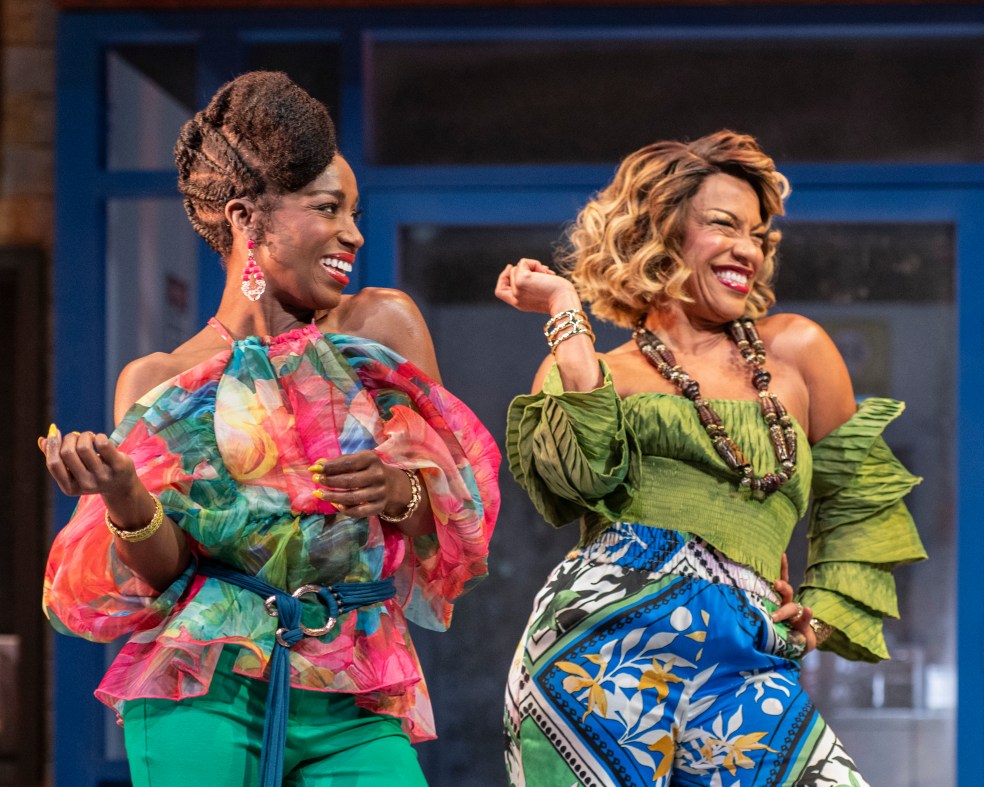
This production soars in how perfectly Shakespeare’s celebration of community wisdom translates to Harlem. The Merry Wives – played by Oneika Phillips as Madam Page and Felicia Curry as Madam Ford – are not simple individual characters pulling pranks. They are part of a vibrant neighborhood that looks out for each other, celebrates together, and collectively deals with troublemakers like Falstaff. They provide the wisdom and cunning for the others.

From L- R : (all PC: Teresa Castracane Photography: Felicia Curry, Jordan Barbour, Nick Rashad Burroughs, Sekou Laidlow, and JaBen Early; Felicia Curry, Jacob Ming-Trent, and Oneika Phillips; Jacob Ming-Trent and Kelli Blackwell

Ah, Falstaff! He is a pivotal character in four of Shakespeare’s plays – Henry IV Parts 1 and 2, Henry V, and The Merry Wives of Windsor. The role is a theatrical tightrope walk – he must be funny enough to carry comedy, charming enough to appreciate his schemes, and ridiculous enough to root for the wives to outwit him. When Falstaff works, everything works, and in this production, he works. In the Harlem laundromat setting, he becomes the beloved neighborhood character that everyone knows and tolerates despite his nonsense – probably holding court, spinning tales, completely convinced that he is irresistible to these smart women who are already three steps ahead of him. The knowing eye-rolls and exasperated gestures reveal their collective tolerance. They see through his schemes while enjoying the entertainment that he provides.

The physical comedy works brilliantly in the setting. When the audience delights in Falstaff’s schemes throughout the evening, his final downfall creates the perfect comic climax sending everyone to their feet cheering. The result is comedy that feels both timeless and completely of-the-moment. Shakespeare’s brilliant character dynamics unfold, as a love letter to community strength, female friendship, and the kind of neighborhood solidarity that makes cities feel like home. One audience member shared that she found the natural energy, wisdom, and strength of the “wives” enveloping.

Oneika Phillips and Felicia Curry (All Photos by Teresa Castracane Photography) The cast of Merry Wives

Streaming services or movies cannot produce the electric moments when an entire audience realizes they are experiencing something special together. When Oneika Phillips delivers a particularly brilliant line, when the ensemble moves in perfect comic synchronization, when the costumes and music and performances align to create theatrical dexterity. This is a joint experience of the audience. The costume design tells its own story – the rich colors and fabrics suggest social hierarchy within this Harlem community, while those amazing shoes worn by both Madams Page and Quickly signal their status and confidence. Every visual choice reinforces character relationships.

The shared experience, the collective intake of breath, and bursts of laughter, make live theater irreplaceable. Last Friday’s standing ovation went beyond appreciation for a good performance. It was a roomful of people celebrating the joy of being surprised, delighted, and moved together in one space at one moment in time.

This production does what great theaters do – taking the familiar and showing aspects never before noticed. Shakespeare’s genius for human psychology emerges through how naturally his insights translate across centuries and cultures. Communities have always been strengthened by clever women who refuse to let pretentious men get away with nonsense. The affected speech patterns – characters moving between Shakespeare’s elevated language and natural vernacular – create layers of authenticity that honor both the original text and the Harlem setting.

The laughter is infectious – not polite chuckles of recognizing a clever line, but the deep, surprising laughter that comes when brilliant performers make centuries-old words feel like they were written yesterday for people you could meet on any neighborhood corner – the genius of Shakespeare.

The romantic subplots raise intriguing questions about love versus social maneuvering. Are these genuine affections or strategic alliances? The production suggests that in tight-knit communities, the line between the two often blurs.

Shakespeare Theatre Company has created a production that honors the original text while making it accessible and relevant to the 21st Century audiences. The performance sparkles, the design choices are inspired, and the production feels like a celebration.

Go see this show. Go for the love of Shakespeare or for the fear of Shakespeare. Go because of the curiosity of Harlem’s cultural richness or simply for the desire to discover it. The experience is worth the effort. Some experiences only happen when we are all in the same room, witnessing brilliance together. Go enjoy the creative sets and gorgeous costumes – and of course, the acting.

The Details

Merry Wives is currently running at Shakespeare Theatre Company. Check their website for tickets and showtimes. Do not wait too long. This production closes on October 5. Tickets sell out quickly.