Tally-Ho!

A Glorious Morning for the 126th Opening Meet of The Loudoun Hunt
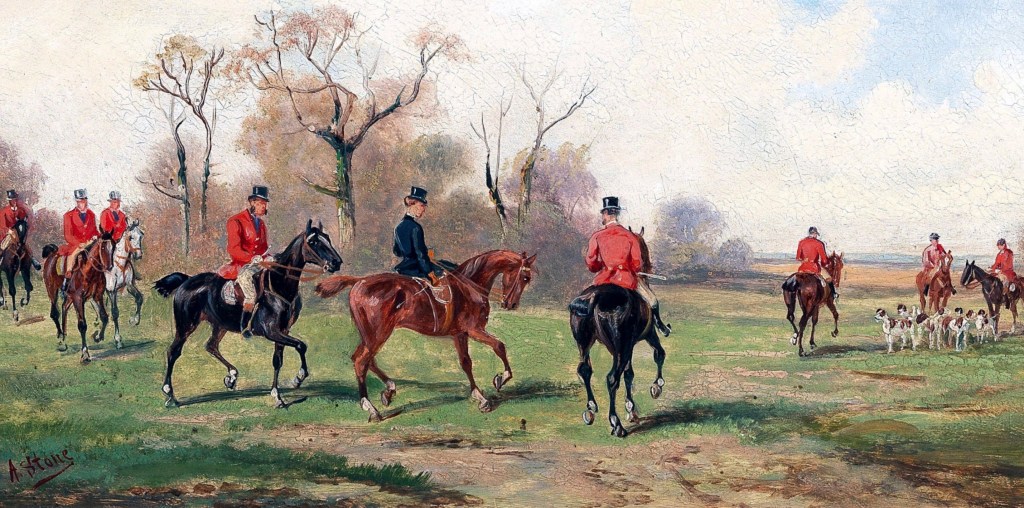
A Classic Hunt Scene (painting in the public domain)

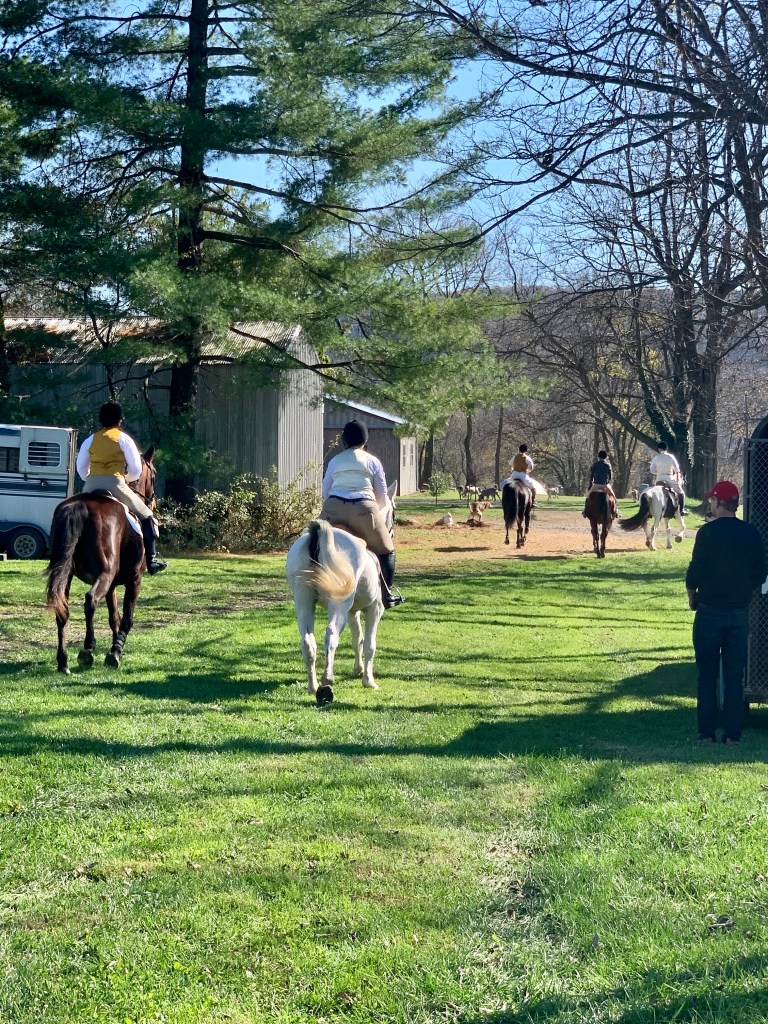
Trucks pulling horse trailers kept arriving. Some fortunate riders who live close to the meet, hacked over. It is THAT Time of the Year – Opening Meet! There is a cheer and anticipation unlike other meets. What is special about today? Tradition, the hard work leading up to this day, and the anticipation of the combination of formality with fellowship.

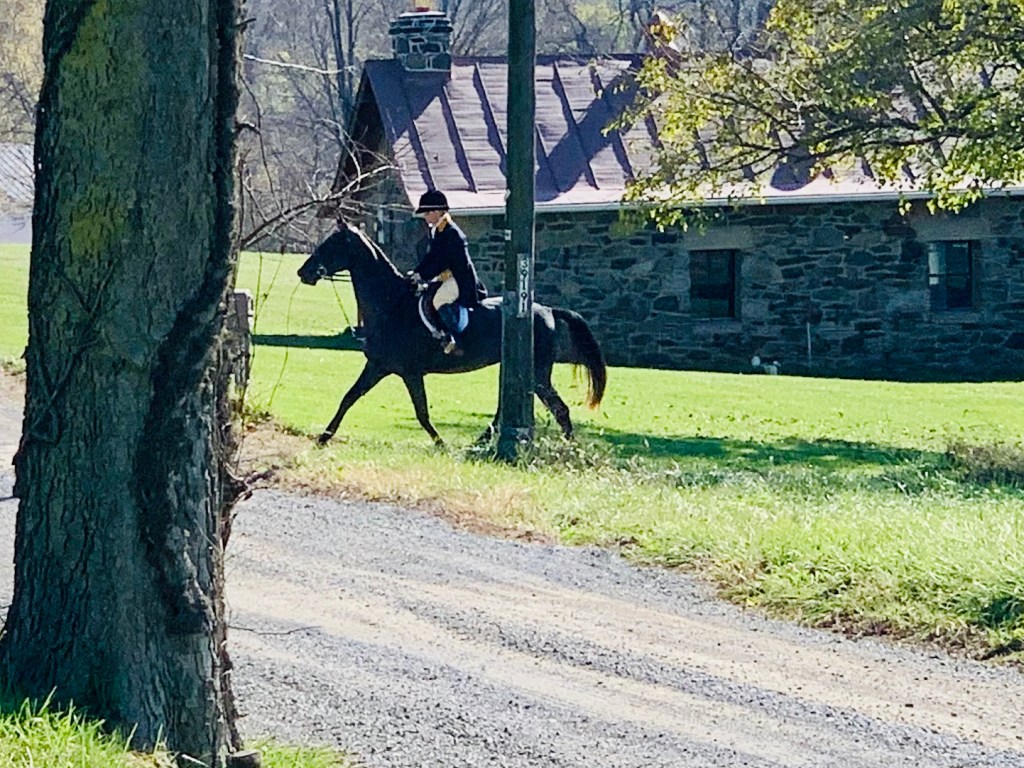
Perfection! The term, “perfection,”  used in the same sentence with the word, horse, can get tricky, but everyone aims for perfection or as close as possible, even if for just a moment, especially for t his day.

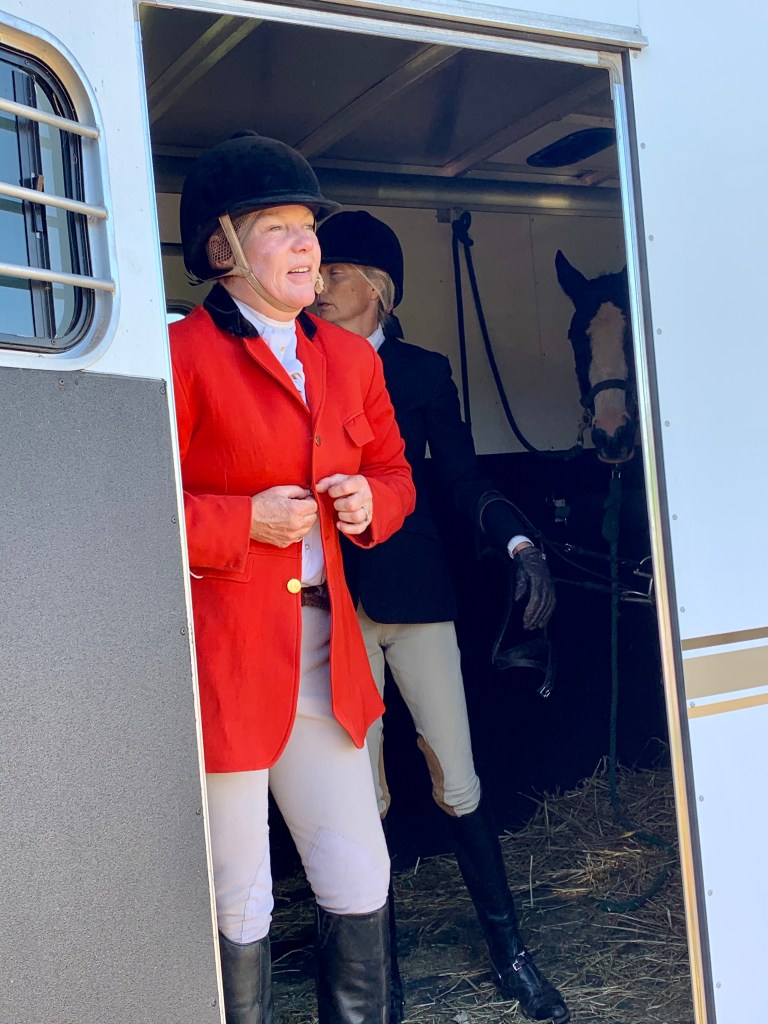
The well turned out riders in their formal attire, the horses with their braided manes and fancy clips, are finally clean and sparkly. For the moment. The pageantry of Opening Meet starts days before the appointed date. Horses are bathed, their hair clipped, their manes pulled, their hooves polished, their tack cleaned, trucks have been washed and trailers have been rearranged, jackets have been picked up from the cleaners, boots gleam, and breeches are spotless.
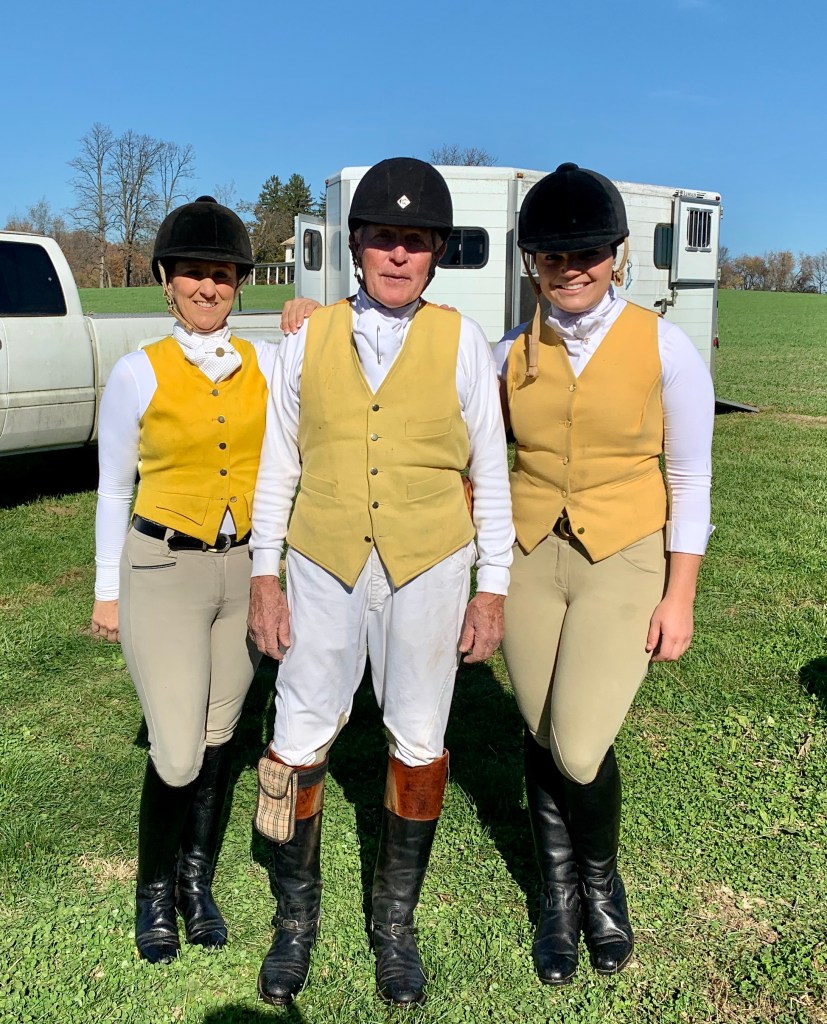
On the morning of the meet, most riders begin before dawn preparing their horses and organizing their tack and clothes. Time flies. Arriving on time is a must. All want to present an elegant classic image.

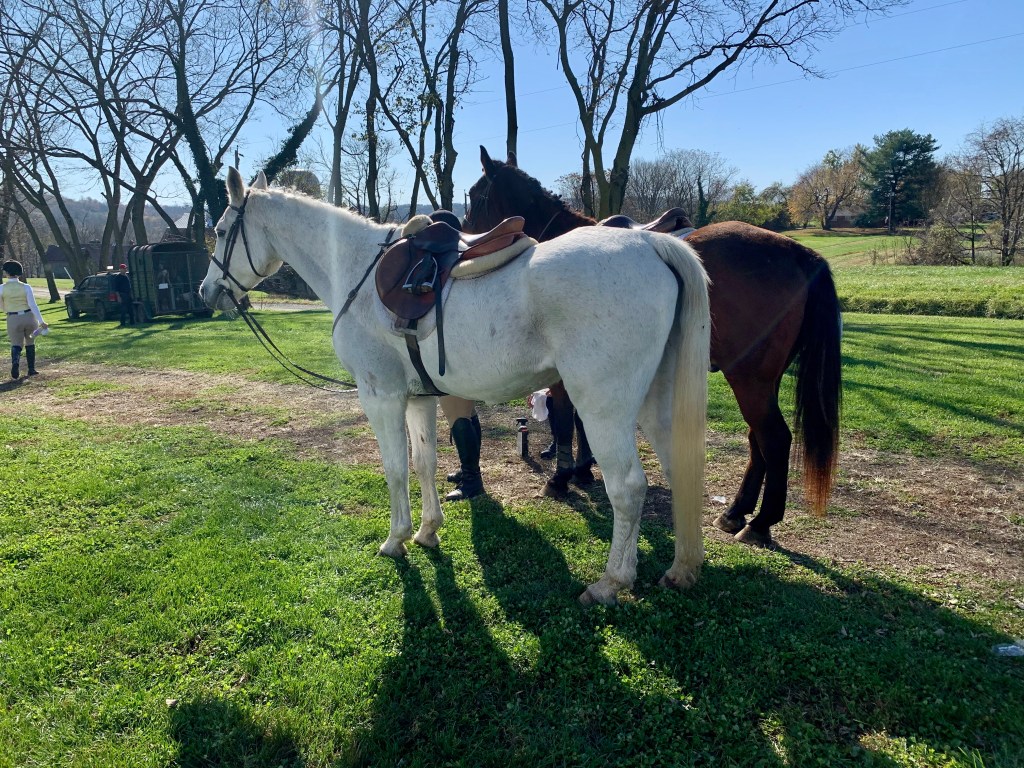
The horses, on the other hand, have spent the night rolling in the grass or in their stall, scratching their necks to release any pre-braided portions of their manes, and if they can find a nice fresh pile of manure, especially if they are a grey horse, roll extra hard to leave contrasting  spots and stains. They eat their breakfasts knowing that this is a special day. They can smell and feel the upcoming event.

With stains defeated, horses tacked up and loaded, riders dressed, trailers packed, and lists checked; the truck engines start and the trailers slowly pull out. On to the Meet!

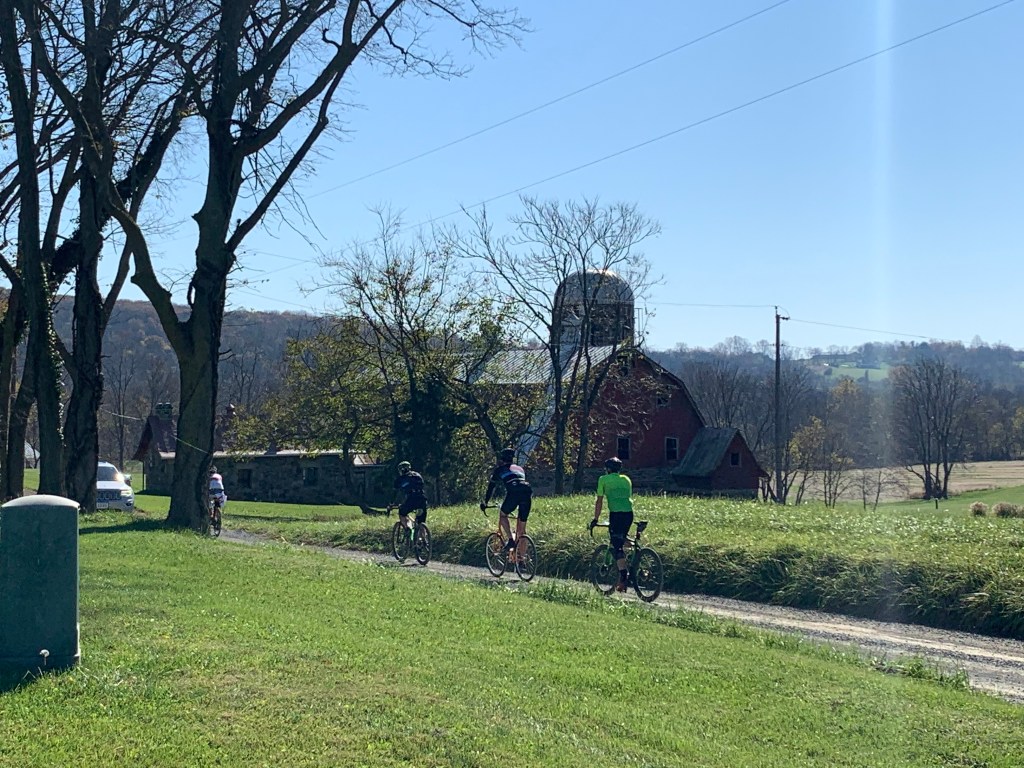
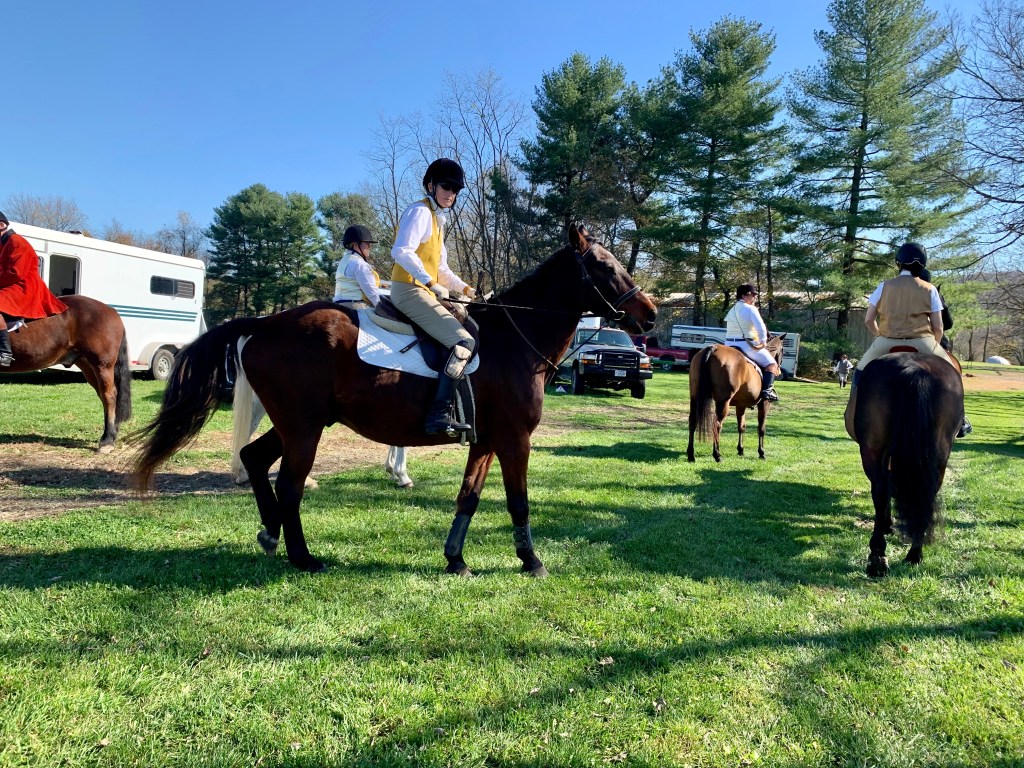
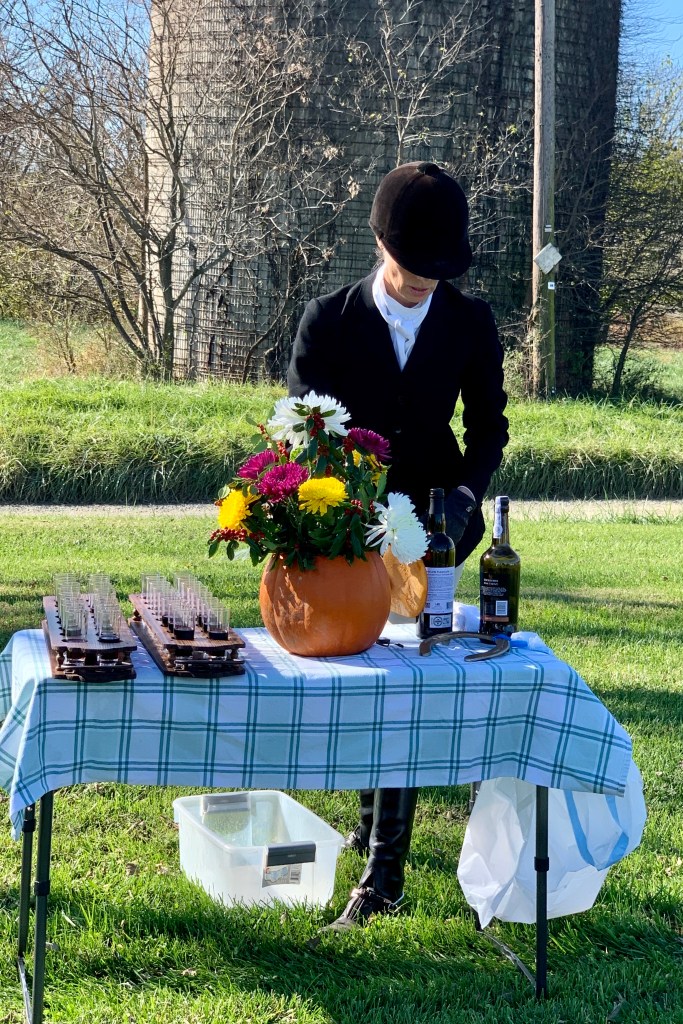
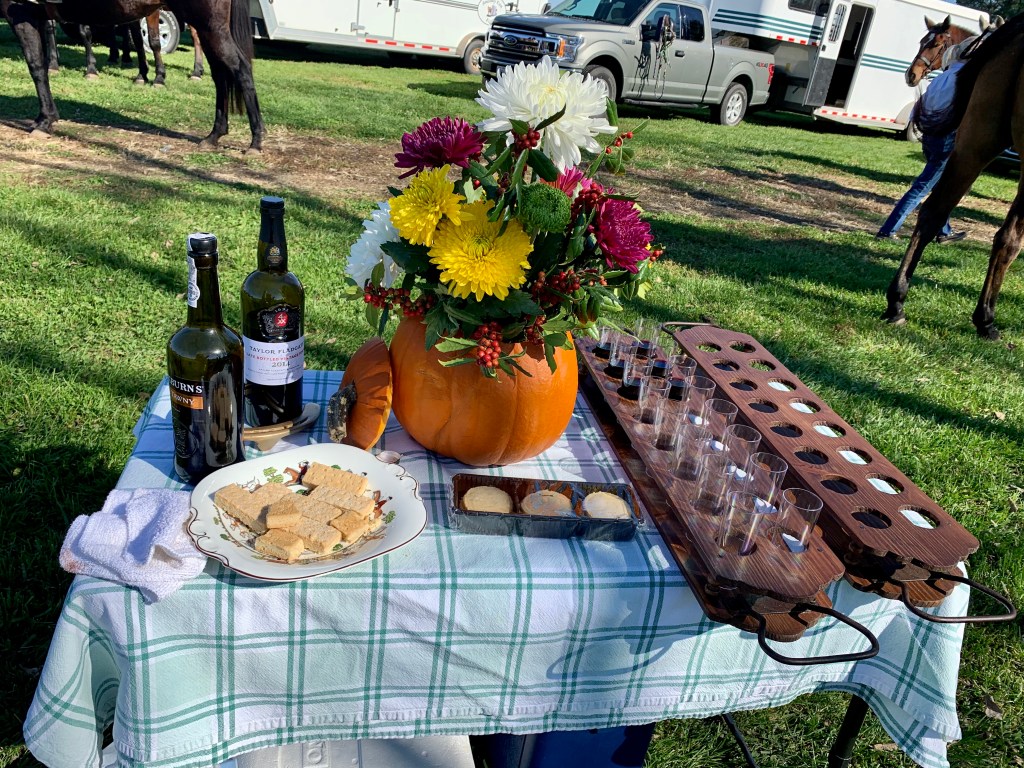
Arriving early assures the plumb parking spots. The larger rigs covet those spots for ease of unloading, loading, and leaving. At the meet, tables are set with festive tablecloths, shot glasses, bottles of port, and cookies for the stirrup cup. In the meantime, each trailer is a small hub of energy – horses eagerly stamping their feet and giving an occasional whinny;  riders tying stock tires, putting on their vests and coat, pulling on their gloves, and reaching for their whip; they finally lead their horses from their trailers,  adjusting tack before mounting. This is an important process and no steps can be omitted without a consequence. Finally, girths are cinched and riders mount.

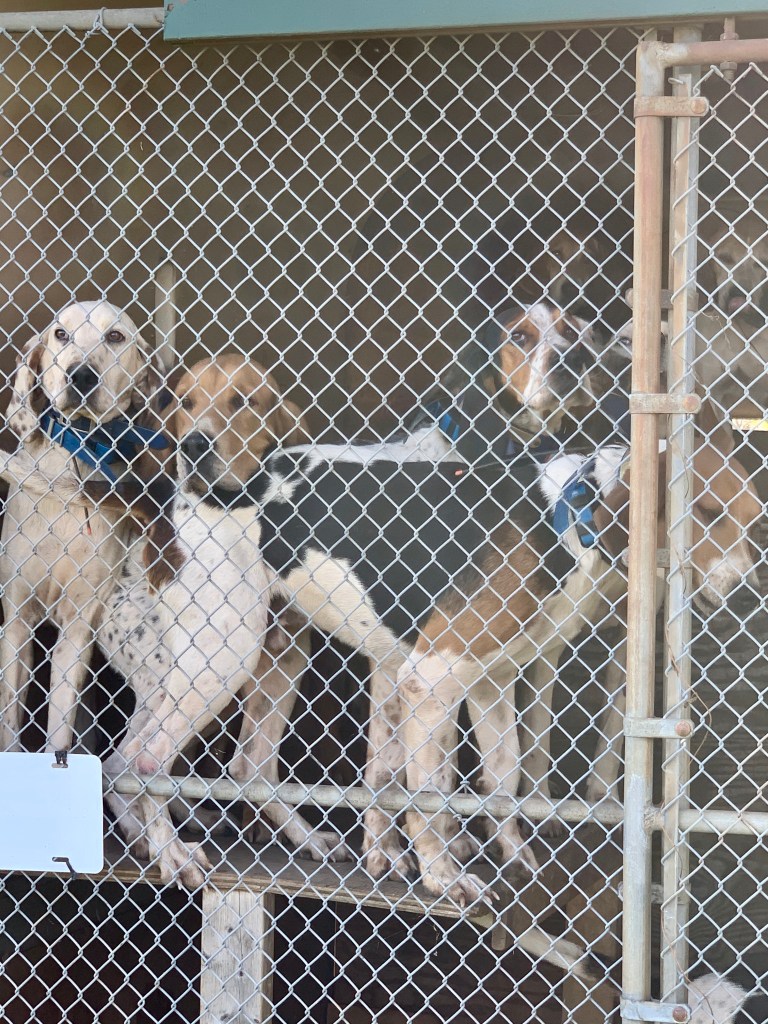
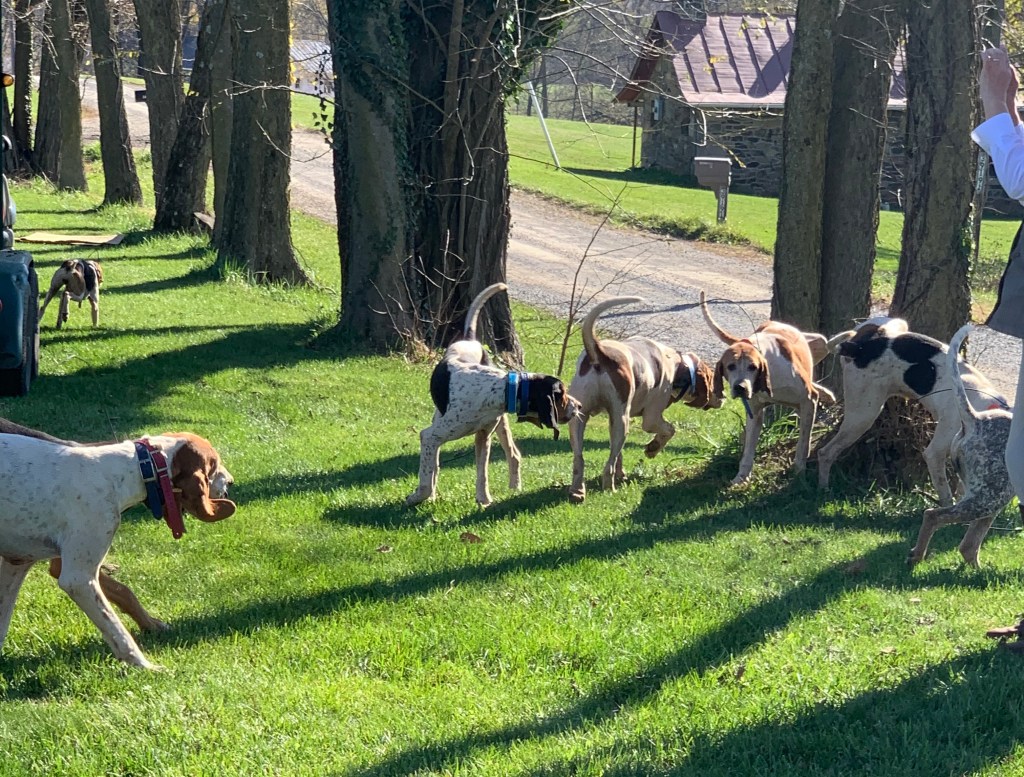
There is congeniality, greetings, and a toast to the day’s hunt. The masters and huntsman confer on strategy and direction.  Finally, the hounds are released from their  trailer. With tails (“masts” in fox hunting terms”) wagging, sniffing, and  hound camaraderie, they settle down and await their orders from the huntsman. Announcements,  compliments and gratitude to landowners for the privilege to hunt their land, the masters lead off in search for the elusive fox.

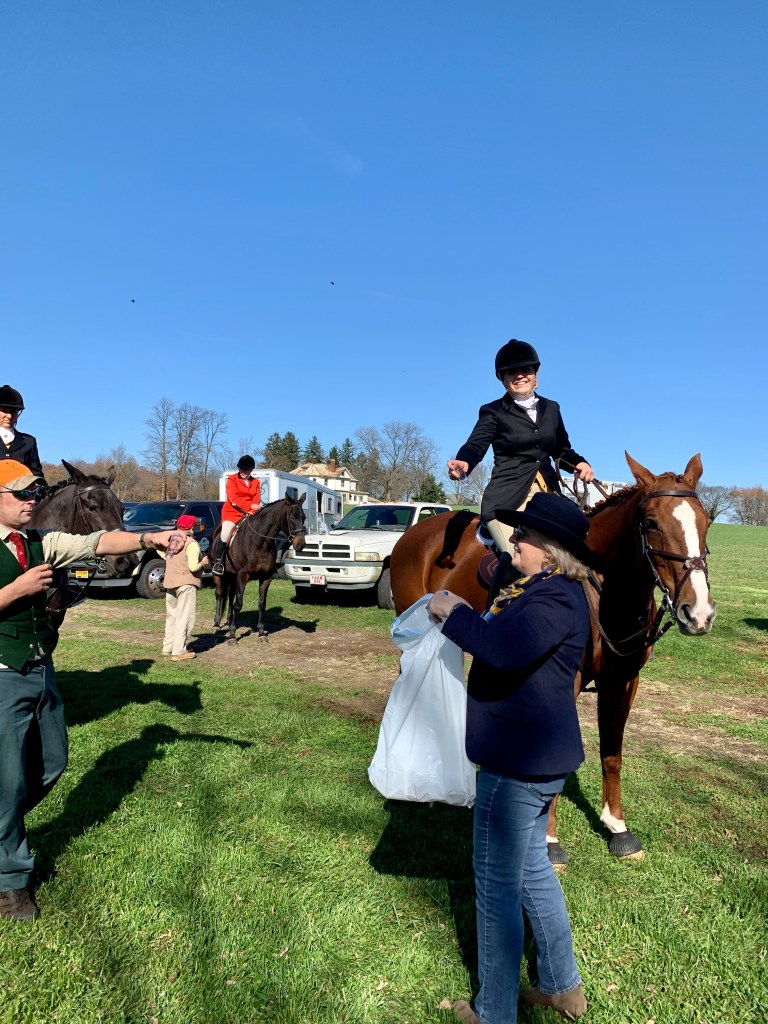
The art of the hunt is steeped in tradition that is hundreds of years old. Upholding tradition is paramount. However, today, on a nearly 80 degree day, the traditional Melton hunt coats were waived. Visitors re always welcome to see the hunt off. Loudoun Fairfax Hunt Joint Master, Donna Rogers and Middletown Valley Beagles Huntsman, Alasldair (Ally) Storer, were among the day’s guests.

Fox hunting today is not hunting with intent to kill, It is “hunting” in the hope of viewing the fox,  watching the hounds work, riding across beautiful open country, while riding one’s favorite horse, and enjoying good fellowship.

The Loudoun Hunt was established in 1894 making 2020 its 126th season. Joint Masters, Lawrence T. Dale III, Mary Sell, and Carroll Galvin took the field with huntsman, Ron Johnsey, and their pack of American fox hounds. Tally-Ho! (That is the call when the fox is viewed).

Those spotlessly clean horses with their polished hooves and the riders with their clean shiny boots will return with leaves in their pockets, mud splatters, and sometimes a few cuts and scrapes on noses and cheeks from low-lying branches and brambles. The conversation will revolve around which way the fox went, and how the hounds worked, while sipping appropriate refreshments and enjoying bites of tasty delights that had been lovingly prepared the day before. And the fox(es)? They snicker on a log that all those humans on their horses and their dogs were no match for their cunning and agility.

Happy Hunting!

Happy Hanukkah! History and Traditions Remembered

Hanukkah – the celebration of light and thanksgiving for the miracle of the oil. In the year 139 BC, the Macabees’  victory over the Syrian-Greek occupiers liberated Jerusalem. This event was recognized by the lighting of the Menorah but the oil supply was sufficient for barely one day. Miraculously, the oil lasted for eight days. Therefore, the eight days of prayers and thanksgiving at Hanukkah. This event is historical and not biblical, therefore is not a major holiday, according to my Jewish sources. The thanksgiving is for God’s provision and extending the tiny bit of oil from barely one day to eight, reminding the Israelites that He is with them.

Friends from many parts of the world shared some beautiful memories and traditions of their Hanukkah celebrations.

Jam-filled Hole-less doughnuts – sufganiot

Jonathan – Ra’anana – a suburb of Tel Aviv Israel

Jonathan spent much of his childhood and youth in Canada and the United States. He told me. “You can see lit menorah candles in peoples’ windows. Israelis love to eat  hole-less doughnuts called “sufganiot” filled with various creams and jams. We ate fried potato pancakes, latkes, with apple sauce,” he said.

Recalling his childhood, he told me that his family followed the German-Jewish custom, “My parents would buy gifts, set them on the table, and cover them with a sheet. After we lit the candles and sang the religious prayers, we would head to the dining room and they would remove the sheet. My sister and I would get our gifts on the first night. I would play with my new toys and we would play games together. I remember getting a toy plane with lights. It was fantastic!”

Jonathan shared one particular memory of holiday times as a five-year-old kindergartner in Canada – “The teacher asked us to sit in a circle cross-legged and sing Christmas songs. My non-Jewish neighbor and friend (his father had served in the Wermacht) was also in the circle. When I couldn’t sing any of the songs, the teacher was quite cross. She asked me angrily why I wasn’t singing the Christmas songs with the other children. I told her that I was Jewish and was not familiar with the songs. She told me to leave the circle and to sit by myself. A few minutes passed and my friend, also five years old, realized the unfairness of it all. He stood up and stated angrily, ‘If my friend, Jonathan,  will not be allowed to sit with us in the circle, then I’d prefer to sit outside the circle with my friend!”

Also in Canada, Jonathan and his friend visited Santa. He remembers, “When it was my turn to sit on Santa’s lap, I was hesitant but curious. When he asked me what I wanted for Christmas, I whispered in his ear that I was Jewish. He told me, ‘That’s OK, so am I!’”

Danielle – Leesburg, VA

Family Time
Photo Credit – Marc Sirinsky

“When I was a child, Hanukkah was not commercial and there were not many holiday decorations in the stores. My sister and I would make paper chains and decorate our house. One year at school, I noticed that there were Christmas decoration but nothing for Hanukkah. There were not many Jewish children in my school. I asked my teacher if we could have some Hanukkah decorations. She told my sister and me that we could make some and they would be put up. My sister and I made decorations and they were installed along with the other ones,” recalled Danielle.

“Hanukkah is not a high holiday. It is a celebration. So, we usually stay close to home with immediate family. My sister is a cantor in a synagogue so we will go there on the first night. We eat latkes – fried potato pancakes and  there is a bakery that makes the hole-less doughnuts,” explained Danielle.  On the first night, the first candle in the menorah is lit and three prayers are said/sung. On the subsequent seven nights, two prayers are said as each night one more candle is lit.

“We give one large gift and then smaller gifts during the celebration. Our first night is bigger so we have a larger meal, usually a pot roast,  and give and receive the largest present,” explained Danielle. The fried foods represents the miraculous oil, she told me. Danielle’s husband and two daughters enjoy family time during the celebration.

Joan – Purcellville, Virginia; originally from Brooklyn, New York

“We are a multicultural family today so we celebrate Hanukkah as well as Christmas. Typically, we don’t put up the  Christmas tree until after Hanukkah. This year we put up the tree early because Hanukkah falls at Christmastime,” explained Joan. “I grew up in Brooklyn. On Christmas Eve, we were always at our neighbor’s Chinese restaurant. They were good friends. I never sat with my parents,  I sat with the owner’s children and  we ate authentic Chinese food,” said Joan.

In her family, the first day of Hanukkah is the day that has the biggest present and the one the recipient wants. On the second day, the gift is major but is what the parents believe the child needs – “Typically shoes. On the third day, it will be socks, the pajamas, and on down the list of importance. This can be called the festival of feet,” said Joan.

‘We played dreidel with pennies. Some people use gold chocolate coins,” explained Joan. The dreidel is a four-sided spinning top. On each of the four sides a Hebrew character is inscribed. The meaning of the each of the characters  – none (you win nothing); half (you win half the pot), All (you win the entire pot), and  sorry, you have to put in another coin. The game ends when the latkes are gone or the sun comes up, or the players lose interest.

From Canada to Israel, from Chicago to Leesburg and from Brooklyn to Purcellville, the prevailing tradition of Hanukkah is one of thanksgiving and family. Wishing all of my Jewish friends a happy Hanukkah!

Happy Hanukkah!