

Ann Lowe, Couturier to the Social Register
Silk flowers cascade down the back of a silk shantung evening dress. A pink tulle gown shimmers with sugared beading. A satin gown is overlayed with lace; adorned with a matching satin bow. These describe just three of the myriad beautiful gowns and dresses designed by African American designer to the Social Register of the 20th Century, Ann Lowe.
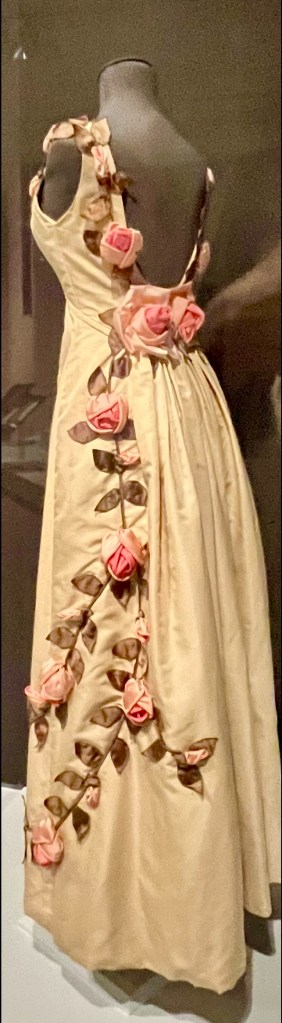


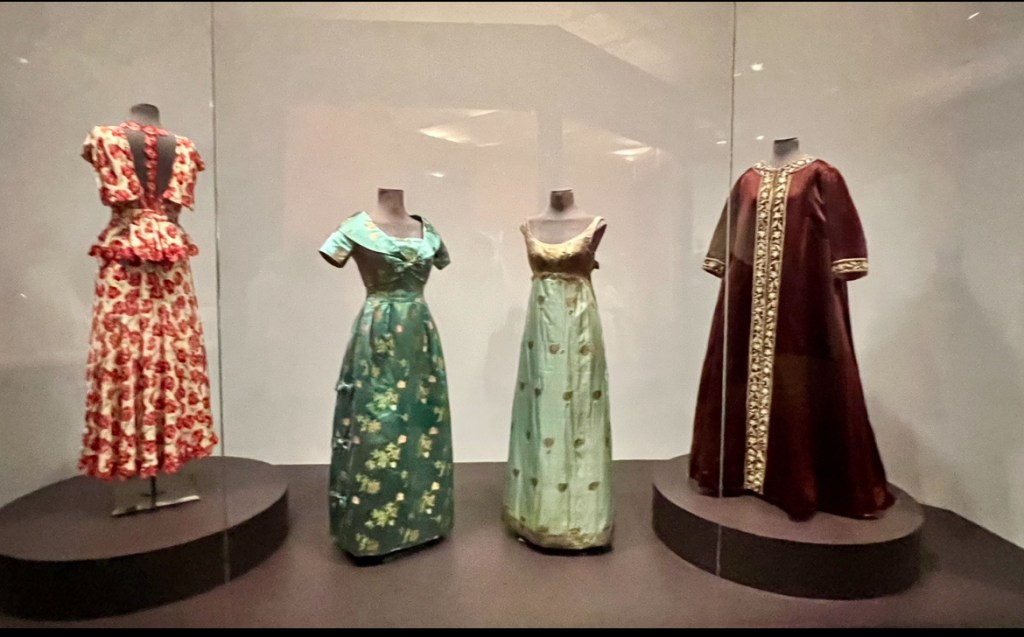
In 2023, the Winterthur Estate Museum and Library put on an incredible exposition of the work of Ann Lowe. One visit was not enough so I went two more times. Each time, I brought a different friend to share the luxury and elegance of the exhibit. Each friend saw new and interesting details that helped me “see through their eyes.”
Debutante gowns, wedding gowns, ball gowns, cocktail dresses, daytime suites, sparkled and shimmered with embellishments or simply by the drape of the carefully chosen fabric. The exhibit was a visual delight and a marvelous peek into society dressing at a time I could not have personally observed. That time was replete with luxury, texture, design, and sublime style.
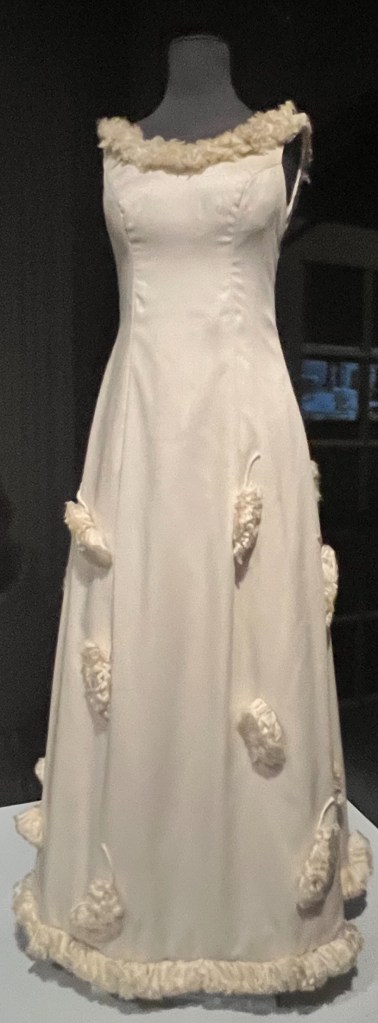
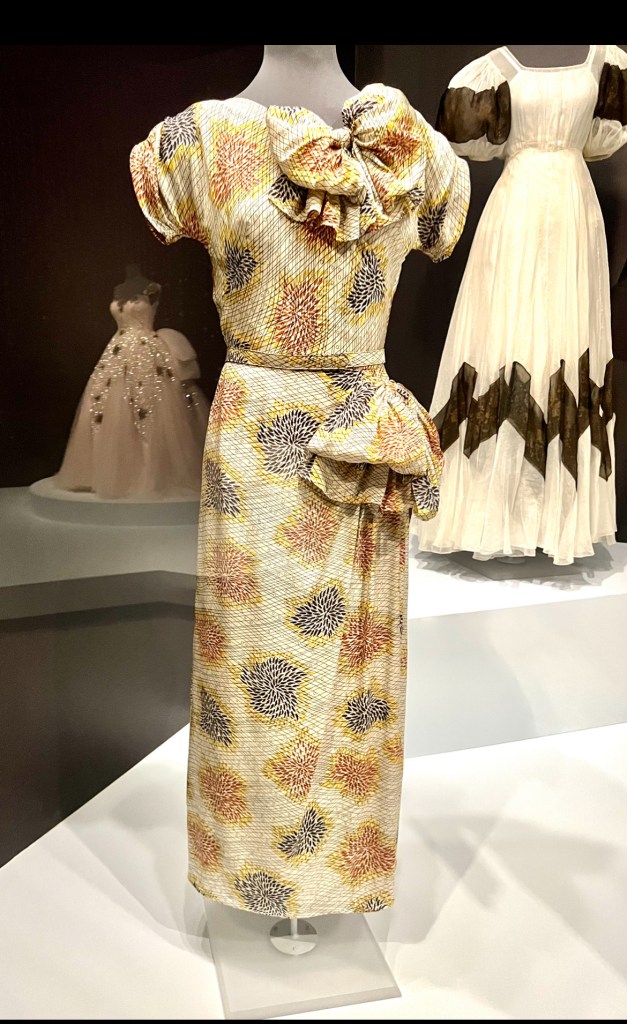

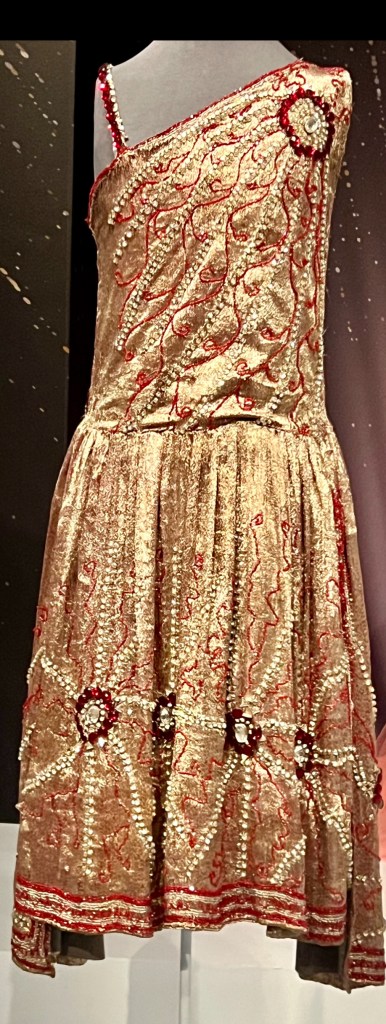
The time, while immersed in style and luxury for the fortunate few, was a time of “equal but separate,” some sat in the back of the bus while others wore their couture suites in limousines. It was “normal” to take the best work of the back of the bus people and revel in the glitter of the times. One such couturier was Ann Lowe. She was the “colored woman,” whom Jackie Kennedy “credited” for the creation of her wedding gown. In 1947, Elizabeth Arden took credit for the debutante gowns of Jackie and her sister, Lee Bouvier.


A gray silk ball gown worn by Marjorie Merriweather Post has been attributed to Ann Lowe; previously listed as an unidentified seamstress. In her portrait, Ms. Post wears the dress adorned by her own sapphire and diamond brooch. The scholarship indicates that the dress was hastily created for a portrait sitting and was never quite finished.


Ann Lowe was a favorite designer of Janet Auchincloss, mother of Jaqueline Bouvier (later Kennedy). She commissioned Jackie’s wedding dress. Jackie attended several fittings with Ann. The “Ann Lowe” label was sewn into the back of the gown. Jackie claimed that it had been made by, “A colored woman.” Jackie disliked the dress and asserted that she felt like she was wearing a “lampshade.” The subject of Jackie’s wedding dress has been addressed in countless articles and documentaries.


This is not about color or gender, but about humanity and the erasure of “insignificant” people, be it artists, composers, authors, and couturiers. A female African American was a double whammy. Winterthur’s exhibit has shed light on the amazing life and talent of Ann Lowe – her vision, passion, and dedication.
The exhibition was a “memorial and tribute to the life and legacy of Ann Lowe as an American couturier, marked by Winterthur with the largest exhibit of Ann Lowe’s work to date.” (From Preface by Alexandra Deutsch, John L. And Marjorie P. McGraw Director of Collections Winterthur Museum, Gardens, and Library – Book Ann Lowe American Couturier by Elizabeth Way).
The exhibit, per the book, “traces the evolution of Lowe’s long career, persuasively building a history of a remarkable and influential American designer who deserves a firmly established place in the canon of American fashion.” She created fashion from 1910 through the 1960s. Lowe serves as more than a fashion designer. “She becomes a window into the lived experience of a Black designer navigating a career from the Jim Crow South and to the metropolis of New York City… Through the extensive scholarship of Margaret Powell, the exhibit came to life and to the consciousness of visitors of the 21st Century.”

Ann Lowe was “Society’s Best Kept Secret,” according to a 1964 article in the Saturday Evening Post. Her designs were inspired and unusual. Her dresses sold immediately, and commissions included wedding and debutant gowns, among others. Her passion remains palpable. An ex-husband of Ann’s complained that she was “forever jumping out of bed to sketch a dress.” Driven by her vision, she was quoted, “I feel so happy when I am making clothes, . . . that I could jump up and down with joy.”
An Ebony article quoted Ann saying of herself that she was “An awful snob. I love my clothes and I am particular about who wears them. I am not interested in sewing for café society or social climbers…. I sew for the families of the Social Register.” She herself was listed in the National Social Directory; an annual publication used by members of the Social Register.
In Paris, when Marjorie Merriweather Post and Lowe attended the same fashion show, Post introduced Ann Lowe as the “Head of American House of Ann Lowe.” Ann was not entirely without recognition. Saks Fifth Avenue recognized Ann in their advertising, although left off her name from their couture labels.
Lowe created “wearable” clothing. Gowns were constructed to be easily and comfortably worn with complete and appropriate underpinnings. The wedding gown that she created for Jackie Kennedy was one such garment. The directions of pleating, the pleat sizes, the placement of sleeves, the attachment of the skirt, and the built-in undergarments made it easy for Jackie to casually “float” in her gown on her historic day.
Lowe visualized then created amazing embellishments from shaded silk roses to impeccably dyed feathers. Vines, grapes, bows, and flourishes embellished bespoke gowns. She created velvet roses for a debutante gown. Her beading work was unsurpassed.


In the mid 1960’s, for concert pianist, Elizabeth Mance, Lowe created a blue satin with lace “concert dress.” The lace was cut to “mold to the silhouette” of the pianist. Since she would be visible on stage from the side, Lowe created the gown’s focus to be off center facing toward the audience. Additionally, the lace placement was such to allow for comfortable sitting for the pianist. Her vision and attention to detail were unmatched. The careful placement of crystals and lace created sparkling illusions without detracting from the pianist or her performance.


Finances were not Ann Lowe’s forté, and although she managed to stay “afloat,” in her final years she experienced difficult financial circumstances as well as the loss of her eyesight. The IRS closed her business for back taxes. Lowes believed that Jackie Kennedy paid that debt for her. Friends at Henri Bendel and Neiman-Marcus loaned her money to keep operating. Her life was focused on creating, designing, and executing her passion. Her clients’ events were elevated by their couture choices.
Before the Winterthur exhibit, I had only seen photographs of Jackie Kennedy in her wedding gown and viewed the actual gown at the Kennedy Library in Boston. That was the extent of my view of the “American House of Ann Lowe.” It is with gratitude that I write this blog to bring additional note and attention to a woman who was mostly “erased” during an “era” of our history. Ann Lowe continues to inspire fashion.




 Good News. Reviews. Events.