The Real Macbeth:

Shakespeare’s Greatest Con Job?

So many theater lovers and English majors banter the name Macbeth. Murderer. Usurper. Tyrant. The ambitious thane manipulated by his evil wife into regicide and madness. We think we know the story. Do we?

Let’s unpack this myth and discover the deception.

Shakespeare was not writing history when he penned Macbeth around 1606. He was writing for his job security. The playwright understood his audience with surgical precision, and his most important audience member had just ascended the English throne three years prior. James VI of Scotland had become James I of England in 1603. Shakespeare needed the new royal patronage. The new Scottish king needed legitimacy on English soil.

The Match Made in Theatrical Heaven
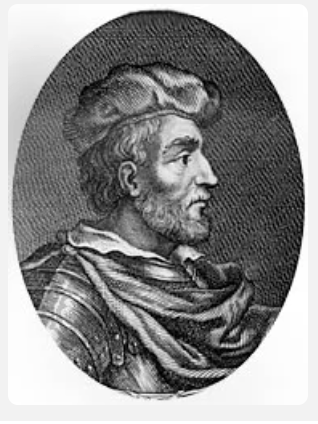
The Historical Macbeth

Mac Bethad mac Findlaích ruled Scotland from 1040 to 1057. That was seventeen years of stable rule in medieval Scotland. This was unheard of in the Scotland of the 1000’s where kings were routinely murdered, deposed, or challenged. Tyrants did not last seventeen years.

The historical Duncan I bears no resemblance to Shakespeare’s wise, elderly, benevolent king. The real Duncan I was young, weak, and foolishly aggressive. He invaded Macbeth’s territory of Moray in 1040. Macbeth slew him in the of Battle of Pitgaveny near Elgin. Warrior to warrior – an honorable death between combatants rather than the stabbing of an elderly sleeping guest in his bedchamber.

Macbeth possessed legitimate claim to the Scottish throne through his wife, Gruoch, granddaughter of King Kenneth III. Under the tanistry system of Scottish succession, Macbeth’s claim stood as valid as Duncan’s. Arguably stronger.

During his reign, Macbeth made a pilgrimage to Rome in 1050 to meet with the Pope – a pilgrimage possible only by a secure monarch. Chroniclers of the period recorded that he “scattered money like seed to the poor.” A guilt-ridden, paranoid murderer does not leave his kingdom for months to distribute charity abroad. Only a secure, prosperous, pious king would do so at the time.

The real Macbeth wore regal clothes. Shakespeare stripped them off and dressed him in villain’s rags.

Why the Lies?

Follow the money. Follow the power. This is how we uncover truth in any century.

James I needed several things when he took the English throne. He needed legitimacy, as a Scottish king ruling England was hardly popular with English subjects. He needed cultural acceptance. He craved flattery of his royal lineage. And he demanded entertainment that reinforced his divine right to rule.

Shakespeare delivered all of it with the precision of a master.

By making Duncan righteous and murdered, James’s ancestor became the martyred good king whose death must be avenged. By making Macbeth the evil usurper, anyone who would challenge rightful succession became damned by association. By making Banquo noble and prophesied to father a line of kings, Shakespeare flattered James’s other claimed ancestor as the hero whose bloodline fulfilled destiny. By adding witches and supernatural elements, the playwright appealed directly to James’s obsession with witchcraft. The king had written Daemonologie and fancied himself an expert on the subject. And by showing divine punishment for regicide, Shakespeare reinforced James’s claim to rule by divine right.

This was not art. This was propaganda dressed in iambic pentameter. Magnificent propaganda, certainly. Effective beyond measure. Propaganda, nonetheless.

The Matilda Connection

The bloodlines become truly fascinating when we examine how Scottish royal heritage eventually claimed the English throne.

After Macbeth’s death in 1057, Malcolm III assumed the Scottish crown. This is the “Malcolm” who defeats Macbeth in Shakespeare’s play, the son who avenges his father Duncan’s death. Malcolm married Margaret of Wessex, an Anglo-Saxon princess who fled to Scotland after the Norman Conquest of England.

Their daughter, Edith of Scotland, was born around 1080. When Edith married King Henry I of England in 1100, she changed her name to Matilda. The name sounded more Norman, more acceptable, less conspicuously Scottish to English ears.

This Matilda, born Edith, became the crucial bridge between kingdoms. Through her, Duncan’s blood flowed into the English monarchy via Malcolm III. Through her mother Margaret, descended from Alfred the Great, Anglo-Saxon royal blood joined the mixture. Matilda became the convergence point of Scottish and English royal heritage.

Matilda’s daughter, Empress Matilda, fought for England’s throne during the civil war known as the Anarchy. Her descendants became the Plantagenet kings who ruled England for centuries. The bloodline continued its steady march through history.

When Elizabeth I died childless in 1603, James VI of Scotland possessed the strongest claim to the English throne precisely because of these bloodlines. They traced back through the centuries, through Matilda the name-changer, through Margaret of Wessex the refugee princess, through Malcolm III the avenger, through Duncan the historical king Shakespeare would later slander.

James was not merely some Scottish king seizing an English throne. He represented the convergence of Scottish, Anglo-Saxon, and Norman royal blood meeting in one person. His legitimacy ran deep, and he knew it. He needed others to know it as well.

Shakespeare ensured they did.

A Small Digression

The Shakespeare 2020 Project founded by author, Ian Doescher, had a complete syllabus and timeframe for reading. I read and listened fast and thoroughly, then dug deep into historical relevance. I often listened to the plays while walking my dogs along the magnificent trails of parks and paths in my area. When I arrived at my ‘magiclands’ to find them closed due to the dread virus, I ushered the dogs back into their seats in my car and drove non-stop to a closer park. Furious, I decided that NOW was the time to hear Macbeth! Hear it, I did! We walked for the entire reading. When I returned to my book – I read it in its entirety with the readings still ringing in my ears. Yet, the play was enough. It did not send me on a single rabbit trail. I was too mesmerized by the psychological depth to worry about historical veracity. Until now, that it. Why? Nothing terribly intellectual – a short YouTube video addressing the very topic. I was hooked and the rabbit trail led me to rooms and rooms of pre-1000’s Scottish, English, and Norman history to the assertion of the throne by Macbeth.

What happened to King Macbeth? He was killed at the Battle of Lumphanan by Malcolm Canmore (later Malcolm III), son of Duncan I.

Why has Macbeth been an ill-fated play – sets fell, and actors died then theatrically referred to as simply “that Scottish Play?” Marginalizing and demonizing a past king? Lincoln quoted lines from Macbeth, “Out, out brief candle…” following the fall of Richmond on April 9, 1865. On April 15, 1865, SIX days later, he was assassinated by John Wilkes Booth who had played the title role in Boston two years earlier. Exactly who assassinated Lincoln? Booth or Macbeth?  Where is Macbeth’s reach?

Perhaps we should view all historical narratives with a skeptical eye. Whether from 1606 or from 2025, those who write the story control what becomes truth. Those who flatter power shape how the past is remembered.

The Lesson

I love Shakespeare for his poetry, his psychological insight, his timeless exploration of ambition, guilt, and the human condition. He was a genius wordsmith. In reality – he was a businessman, a survivor, a man who understood power and how to serve it while appearing to entertain.

Macbeth is splendid theater. The poetry soars across centuries. Lady Macbeth’s guilt, the dagger speech, “tomorrow and tomorrow and tomorrow” are extraordinary achievements in dramatic writing. The play deserves its place in the canon.

History? Not close.

The real Macbeth deserves better than four centuries of slander. He ruled well. He ruled long. He had legitimate claim to his throne. He was pious enough to pilgrimage to Rome and generous enough to scatter money to the poor. History should remember him as he was, not as Shakespeare portrayed him.

Politicians make promises. Playwrights craft myths. The winner writes history. The powerful control narratives.

Whether the emperor wears clothes or stands naked before us depends entirely on who holds the pen.

I like to see for myself.

A Tribute to William Teunis

I dreamt that I told you about the love,
Of Shakespeare and literature that you inspired.
Oh, for another sleep, that I might thank you,
For the minds you influenced and
For the lives you changed.

Might we be different had you stayed?
Your literary passion fueled our curiosity.
To see through other’s eyes,
To feel through other’s hearts,
I would have stayed longer, for one more class with you.

With book in hand, you strode before us,
A mischievous twinkle in your eye,
Discussing symbolism from Freud’s or Socrates’ perspectives,
You evoked the vivid colors of the verbal art,
Challenging us to search for meaning.

From Alger to Albee,
From Shakespeare to Beckett,
From Eliot to Hemmingway and Poe,
We read, we explored, and we wrote and wrote.
Our assignments were remarkable.

We wrote plays and essays,
Short stories and book reports,
Verses, sonnets, ballads, limericks, and quatrains,
Little nothings, and parodies.
Your reactions were inspiring.

You challenged us to ask, “Why not?”
Your questions gave space for discovery,
Our discussions left us wanting more.
You insisted on simplicity.
Our rewrites became more elegant.

Your sense of humor was sublime,
You were dignified and frank,
Your generosity surprised and encouraged the sixteen-year-old me.
You are yet my standard-bearer,
For I question while I write, “What would Mr. Teunis think?”

There was so much more to glean.
Our fledgling skills were just emerging.
Your orders to “Condense and simplify,”
Resonate a half century later.
Alas, you left too soon.

In my dream, you would see that we turned out alright,
That the seeds you planted are well tended,
That your gifts of literary curiosity and challenging the status quo are well worn.
Had you stayed, I see you an esteemed professor, writer, or producer,
Subtly stretching and pushing limits.

WILLIAM TEUNIS

The Teunis Experience

Changed Lives

Subtle, eloquent, shy. He was a master of words. Words are all that remain with which to honor the all to short life of William Teunis, a man who quietly changed the lives of hundreds of his students.  On this, the fiftieth anniversary of his drowning, I remember my remarkable  teacher  (really, a professor), with fondness, gratitude, and still with a bit of surprise. This endeavor is perhaps, the hardest of all of my writing assignments – one for which I volunteered. I believe that it would be the height of ingratitude not to share his contribution to our lives’ successes. It was his influence that gave me the love and confidence to write, hence this blog.

William Teunis was the chair of the English Department of John F. Kennedy High School in Montgomery County, Maryland. He was Harvard educated (BA and MA and MFA from the University of Iowa). He was a Shakespeare scholar. He was creative and demanding. How did we get so lucky? Why did he give a wit about kids when he could have been producing and staging Shakespeare plays?

Our education at John F. Kennedy High School (Kennedy) was extraordinary. The school opened in 1964 as an “experimental “school. There were no bells, no dress codes, no hall passes, and no honor roll. Students  chose their classes each trimester and then decided whether to be graded, to pass/fail, or to audit the courses. Class attendance was optional; independent study was encouraged. The campus was “open.” We went  out for breakfast or lunch. There were several smoking lounges. As in many Shakespeare plays, going into the woods to discover, contemplate, or play was standard procedure.

As You Like It October 1969 Production PC: John F. Kennedy Yearbook 1970

Many outsiders considered Kennedy a free-for-all. Yet, much learning took place and we turned out remarkably well. There, a young (not that we thought teachers could be young) English teacher, William Teunis, believed in pressing the limits and did not shy from controversy. He staged a Shakespeare play every autumn. The play of my sophomore year was As You Like It. It was his fourth such production, following, Hamlet, Richard III, and King Lear. I was  astonished by its professionalism. While he officially taught 11th and 12th grade English and creative writing, I found myself in his class.

My schooling had been rigorous and traditional. I attended Kennedy under protest. My parents moved. Kennedy became my new school. My boyfriend, friends, horses, and everything I loved were left behind.

Although bright, I had limited motivation. My goal was to get out and get back to my friends. I completed assignments with minimal care and in minimum time. THEN, Mr. Teunis happened. Being somewhat “preppy,” I feared being censured by the liberal leanings of the Kennedy establishment.  I was wrong.  In Teunis’ class it was minimalism that was unacceptable. His passion for the English language and literature was contagious. He ignited our curiosity changing our lives forever.

On our first day of  class studying Shakespeare’s As you Like It, we read roles around the class. Somewhere in the midst of an Act, he stopped. He clued us in to the fact that Shakespeare wrote plays. He wrote plays that would be performed within two to four hours. His audience was torn between attending public hangings, bear baiting, cockfighting, or watching a play. To survive, Shakespeare had to be  competitive.  He further pointed out that many in the audience were illiterate;  while they knew oral histories and mythology, few delved deeply into the plays. There were no Shakespearean scholars then. Teunis tore the curtain from the mystery of Shakespeare and made us see that the plays were created (not written in books to be read) as entertainment, subject to political correctness and scrutiny of the time.  There we were, in awe and relieved. Suddenly, Shakespeare became attainable. He shared that it was not rocket science and that one of the most enjoyable aspects of the Bard was the rhythm and energy of the language. He explained that every play contained multiple layers and levels and that at every reading or performance, there would be more revelations and more meanings.

During the 13 weeks that followed, we read plays, poems, and stories. We wrote complex assignments in iambic pentameter, we wrote sonnets, and we wrote plays. Overnight we would write an act of a play. We developed characters, wrote dialogue, and wrote summaries. Many of my topics dealt with loss and  personal protest.

Protest. Kennedy students were proficient protesters. They protested the  Vietnam War and the demise of the earth. The first Earth Day was observed that year.  I had my own protest and wanted to simply finish my  assignments and get on with my life. Mr. Teunis diplomatically returned my graded papers with instructions to “rewrite” a better product.

William Teunis respected his students. His low but bold voice urged us to question and reach for more. He gave examples of quality work.  One student’s writing  stood out. He often read her papers aloud as examples of a “well written paper.” Finally, I heard him,  “Oh . . . that’s what he wants!” I thought. My competitiveness emerged, “I can do that.” Minimalism vanished; curiosity and determination took its place. My  papers came back with A’s on first draft.

Reflecting upon the experience, I regret wasting his time with my marginal drivel. His kindness and patience remain  constant reminders to be better. I am immensely grateful for every minute that I spent in his presence and for the world that he opened to our class and to me. Mr. Teunis changed my life. Fifty years later, I still ask myself while I write, “What will Mr. Teunis think?” then, I take more time and care.

At the age of 34, he was the English Department Chair. He built an English program unrivaled by any educational system that I have experienced either as a student or a parent. He challenged us to read, interpret, comprehend, and emulate literature uncommon for high schools. He challenged us with  among others, T.S. Eliot, Hemingway, Poe, Beckett, Albee, and much Shakespeare. By my  second trimester, I eagerly anticipated his class and wrote assignments from the heart; taking extra care. Our compelling discussions delved  into the phycological, the Freudian, the personal, and the historical or contemporary. One classmate said, “He encouraged us to go beyond the story.”

One day, we found that our classroom was dark. There was lit candle on a small table beside his chair. Suddenly, Mr. Teunis appeared, wearing a dark cape and began reading Edgar Allan Poe’s “The Pit and the Pendulum.” So began our spring trimester. Our topics ranged from the journalistic approach of Hemingway, to the disillusionment of T.S. Eliot’s “The Wasteland,”  to the tales of Poe, to the absurdity of Albee’s Who’s Afraid of Virginia Woolf? And Beckett’s Waiting for Gadot. I was spellbound. I remember writing and loving every moment. Every assignment was life-changing. Today, I cannot walk past the Café de Flore or Les Deux Magot on the left bank of the Seine without remembering Mr. Teunis’ stories of  the heated conversations between Hemingway, Ezra Pound, Gertrude Stein, and other ex-pats of the time, over demitasse coffee.

The “Teunis Experience” has never left many of us. Regardless of the years, Teunis’ students remain grateful and devoted to his impact on their lives. While not all of us went on to study English, literature, or theater, the pull has remained strong to write everything carefully and clearly. Many, following successful careers elsewhere, are returning to their first love of writing, acting, and teaching. One student summarized it elegantly, “The Teunis-echoes became unbearably loud.  Playwriting beckoned me.” Another, returned to community theater after fifty years.

PC: PHI DELTA KAPPA January 2008

The far-reaching experience has literally circumnavigated the globe. Former student, Richard Isenberg, took Shakespeare to Mongolia and taught 11-year-olds to perform Romeo and Juliet. In his article published in the January 2008 PHI DELTA KAPPAN Richard wrote, “My school experience was saved pretty much at the last minute, in large part because of a little bit of attention and encouragement that came my way from Mr. Teunis. Had it not been for that, I doubt that I would have mustered the confidence to continue my academic life. A few years later, when I entered upon my own teaching career, I was heavily in his debt.’

‘Mr. Teunis could never have imagined that one of the seeds he planted would bring his beloved Shakespeare to a stage in Inner Mongolia. We all have much to give and much to pay back. And we are all the richer for such a world of wonderfully improbable possibilities.’”

Attorney, Jeff Gorsky, who acted in the Teunis production, Richard III and in A Midsummer Night’s Dream later,in college, writes, “My favorite teacher. I took every class I could with him. Teunis was one of the best teachers of my life, maybe the most influential. Aside from the works he introduced me to—Shakespeare, T.S. Elliot, the essays of Orwell—he passed to me two ideas that shaped my intellectual development. The first was the idea of the canon, a core body of works that every educated person should know. He passed around a multipage mimeographed bibliography of the core works of American literature, and while I haven’t read everything on this list I used it heavily to shape my self-education in American literature. The other idea was the highbrow/middlebrow/lowbrow division, something he probably picked up from the writer Dwight MacDonald. The idea is that middlebrow—much of what used to be in the “Book of the Month Club” tends to be blandly conventional, while lowbrow pulp fiction has an imaginative power that can have important literary qualities as the highbrow. Like Feste, Teunis could sing both high and low. One of the books he assigned was Montana Rides, by Evans Evans, a pen name of Frederick Faust, who was best known as Max Brand. He was open to sci-fi and horror, and as a sci-fi/fantasy geek in high school who also was reading the classics, I found that idea very attractive. I’ve kept to that. While I’ve written high – my peer reviewed academic history Exiles in Sepharad: TheJewish Millennium in Spain (Univ. of Neb. Press/Jewish Publication Society), as well as the legal analysis I write for Law360 such as “An Alternative Legal Argument Against Trump’s Travel Ban,” I have self-published on Kindle a thriller, a Y.A. fantasy, and I am on my third draft of a Sci-fi novel called The Dark Forever, about dark matter and the Kabballah.”

Teunis student, Gail Robinson, said, “He was an amazing teacher. As a writer and occasional teacher of writing, I think of him often.”

John Diamond, Professor of Psychiatry  at East Carolina University, remarked, “That man changed my life in many ways. His loss was such a tragedy.”

Julie Tyrrell wrote,  “He was a remarkable teacher”

One classmate explained, “Our experience with Mr. Teunis gave us exposure to writers from the Western canon that I did not encounter again in the educational process, despite a liberal-arts education at a respectable college. That is important because a familiarity with those writers, and their style of writing, is helpful in appreciating the richness of the English language and in understanding literary references in later works. In a real sense, Mr. Teunis’ class was the first college course I took, and what he taught me was essentially English as a Second Language for someone who thought it was his first language.”

Images Courtesy of Sue-Ann Staake-Wayne

Sue-Ann Staake-Wayne, Class of 1968, was one of the Teunis Shakespeare performers. She shared, “The creative aspect never left me. He was a big influence for my love of theater.”  She played Reagan in King Lear and Queen Elizabeth in Richard III. “Play preparations and rehearsals stared in the summer and performed the following October. Tickets were $1.00,” she recalled.

“That summer I will never forget. Who thought that a 15-year-old could memorize Shakespeare? It was intense. He [Teunis] was everybody’s understudy – he knew the entire play without a script! He would leave us performance notes in our cast mailboxes. In one note, he stressed the importance to make my scene emotionally and physically intense – ‘You are to be making out with Cornwall, not just touching hands. The handholding must be extremely sensual.’”

Image Courtesy of Sue-Ann Staake-Wayne

“He was a shy man. We worked to please him. It was hard to tell, but we learned that if he didn’t say anything, it was OK.”

“The following summer after classes ended, he took our cast to his Shenandoah retreat We swam and relaxed. It was the same place that he died two years later.”

Additional tributes claim, “Mr. Teunis significantly influenced the form of my life. I still look back in awe at all that he taught us. What a gifted teacher he was – he made us think and grow to do more than we ever thought we could.”

“Mr. Teunis’ intellectual challenges, his modesty, humor, and cartoons. still inspired me. He was a true hero and for me, a lifetime role model.”

“What genius, patience, generosity. What a man!”

Before coming to teach at Kennedy, Mr. Teunis taught at another Montgomery County high school. One of  their alumni recalled his statement  at the beginning of a school year, “I’ve reviewed the English syllabus and reading list prescribed by the Montgomery County Board of Education. And, after careful consideration, have decided to dispense with it.” Several weeks before the end of that school year, he told the class, “It has been brought to my attention that we’ve ignored the whole required course of study. I can’t understand how this happened. To remedy the oversight, I am posting a list of the books we should have covered over the past year. Please hand in a three-page report on any one of them by next week.” Classic Teunis.

He was with us just a short time before perishing at 34, in the Shenandoah River on June 20, 1970.  His influence continues. Perhaps, that is the meaning of immortality. 

Respectful yet irreverent, conservative yet liberal, generous yet demanding, quiet yet assertive,  he disregarded convention, pushing limits out of bounds. William Teunis taught us so much more than reading and writing. He taught us to think, to question, to look beyond the story, and  to never settle, but to be extraordinary. We are who we are because he was who he was when our lives met at just the right time.  It was an honor to be his student. It is terrifying to write this tribute. We write in hopes of not disappointing him.