Riders, horses and hounds gather for Loudoun Fairfax opening hunt in Hamilton, BVA

The Thrill of the Chase:

Loudoun Fairfax Hunt Opening Meet

Huntsman Jeff Woodall leads hounds

The Loudoun Fairfax Hunt “opening meet” on November 2 marked the official start of the fox hunting season. A “stirrup cup” to toast to the season welcomed riders and all guests. The meet was held at Overbrook Farm, the club’s hunt property, in Hamilton, Virginia.

Steffanie Burgevin Serves A stirrup cup Jon Henkel serving with Paul’s tray Bervely Dickerson serves apple cider

Fox hunting on horseback is a heart-racing, sport where good riding skills and instincts are key. The goals of the hunt club are camaraderie, sport, and the preservation of open land. The goal is not to kill the fox but to view it. A good view feeds week-long conversations, stories, and delight.

L: A whipper in ready at the position, Center:Kate Dendinger and Rita Caseman, R: Lawrence T. Dale, MFH and Mrs. Carroll Galvin (Nadine)

The pageantry is poetic, but the autumnal landscape takes one’s breath away. There Is nothing more delightful and invigorating than riding along a ridge engulfed in autumn color and feeling the brisk fall air across the cheeks.

Turnout is an important part in the pageantry of Opening meet – MFH Carroll Galvin’s Horse is study in refined braiding and turnout

The horses were cleaned, bathed, clipped, and braided to be at their absolute show best. They understand and feel the excitement. They too, have friends in the hunt field. It is not uncommon to hear stablemates call for each other when they separate.

Stirrup cups of sherry, whiskey, port, and apple cider were served on elegant wood trays crafted by Master Paul Ritsema. Beyond tradition, the stirrup cup gives just the right warmth and ‘confidence’ with which to commence the ride.

Lining up five horses with ears forward is a challenge – the rider-horse connection works miracles

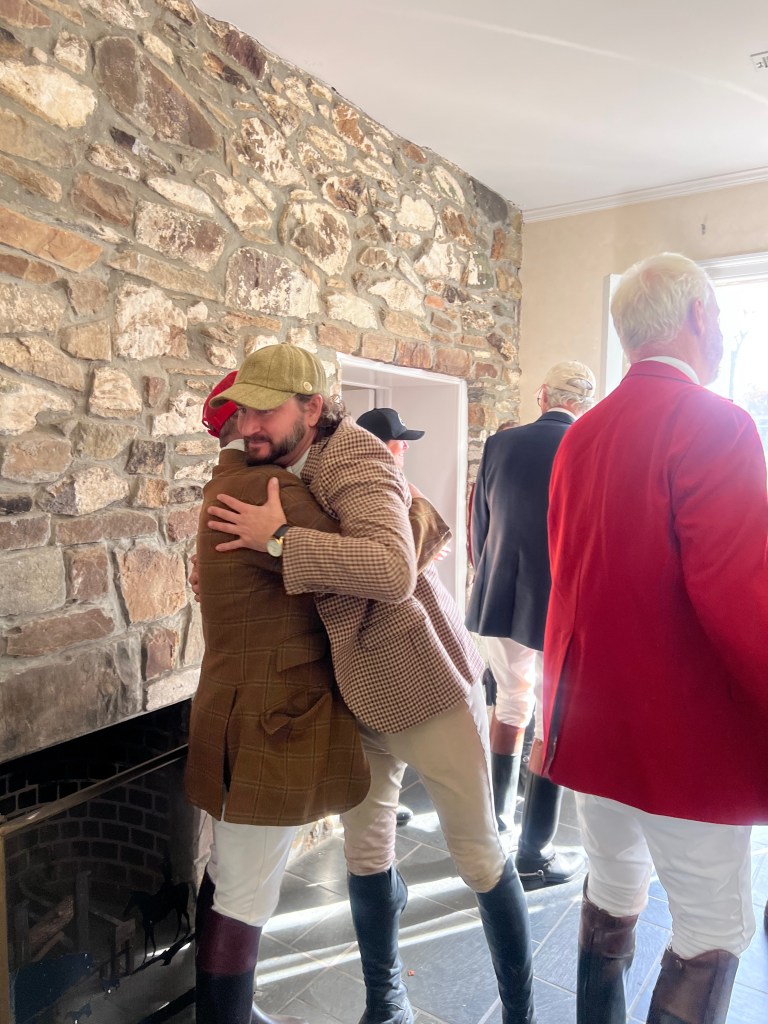
The hunt protocol is simple – good manners, proper dress, well behaved horses. The members of the hunt and their guests dressed in “formal attire” – gentlemen who are members with “colors” wore scarlet coats and the ladies with colors wear black or navy blue.  Color members reflect their club affiliation by the ‘colors: on the collars of their coats. The Loudoun Fairfax colors are yellow/gold. Coats display the club’s buttons. With LH monogramed.

Master of the Hunt: top L: Paul Ritsema. top C: Michael Harper. R: Mary Sell. Bottom: Dr. Carroll Galvin

 Members who do not have colors wear black. Breeches are buff, beige, or canary. Of course, proper safety helmets are a must. The tall black dress boots are polished to a gleam. Showing wear on boots denotes avid hunting but polished and clean.

The attire and horse turn out are not only for show, but to honor and respect the landowners who permit the sport on their farms. Having 20-40 horses gallop on one’s farm is a big deal for which the hunt is grateful and very respectful.

Larry Campbell Brooke Rogers Hannah Rogers

Fox hunting is a centuries old English sport that is steeped in tradition and protocol. Proper manners, proper ‘turnout” for both horse and human are expected. Tradition dictates clean and simple, in every aspect. Besides attire, horse tack and equipment consists of plain flat brown bridles, martingales, simple saddles, well fitted saddle pads, laced leather reins (although progress in technology has loosened this). The simplicity of design also helps in the cleaning of mud-caked tack after a rigorous hunt.

A great hunt horse will be relaxed, calm, and attentive as demonstrated by Paul Ritsema’s relaxed mount, Twins – Heather and Lisa’s horses who accommodated hugs and photos; Carrol Galvin’s horse who took the cast off in stride.

To be deemed a hunt horse, a horse has been trained to professional standards for obedience (HALT is the foremost order), agility, respecting the hounds and giving them priority – never kicking. In addition, the hunt horse must have strength and stamina to comfortably go for up to four hours. Some days the hunting is slow, others days, the fox give good sport that everyone rips through the countryside. Even on the fast days, there is order and decorum. Once they are credible hunters, the training continues with reinforcement. We ride animals of prey, creatures with a flight instinct. Our calm leadership builds their trust which keeps us safe, most of the time.

Having hunted the beautiful Loudoun territory for nearly 20 years, I write from experience albeit a bit wistfully. To be able to fully enjoy the sport of fox hunting, a steady, responsive horse is necessary. I had the privilege of having the golden horse who learned hunting quickly and was remarkably adept and obedient. At a downhill gallop, there is no time to negotiate with a horse. When she passed away, try as I might to find another suitable mount I repeatedly wound up with and collected dressage horses. After the third one, I determined that it was a message to stop hunting.  

The Hilltoppers follow Master David Moyes in front of the Overbrook Club House

Master (MFH) David Moyes welcomed the riders and asked Huntsman, Jeff Woodall, to ready the hounds. Dr. Carroll Galvin, MFH, expressed gratitude to the landowners for their generosity.

Members relax after the morning’s ride, sharing stories and laughter over the Hunt Breakfast at Overbrook Farm. Top R: Dr. Kathy Stern and Lawrence T. Dale, MFH; Middle L: Twins Heather and Lisa; Paul Ritsema, MFH and Grill Master; Rita Caseman and Steffanie Burevin; L; Master Lawrernce T. Dale; Bottom Row: David Moyes, MFH (profile); Old hunting buddies – Krasi Henkel and Joseph Keusch

The warm temperature made scenting difficult for the hounds and the riders returned after a few hours of sport to enjoy an opulent hunt breakfast and camaraderie. The horses were watered and comfortably eating hay in their trailers while the riders happily retold their riding and fox-viewing adventures.
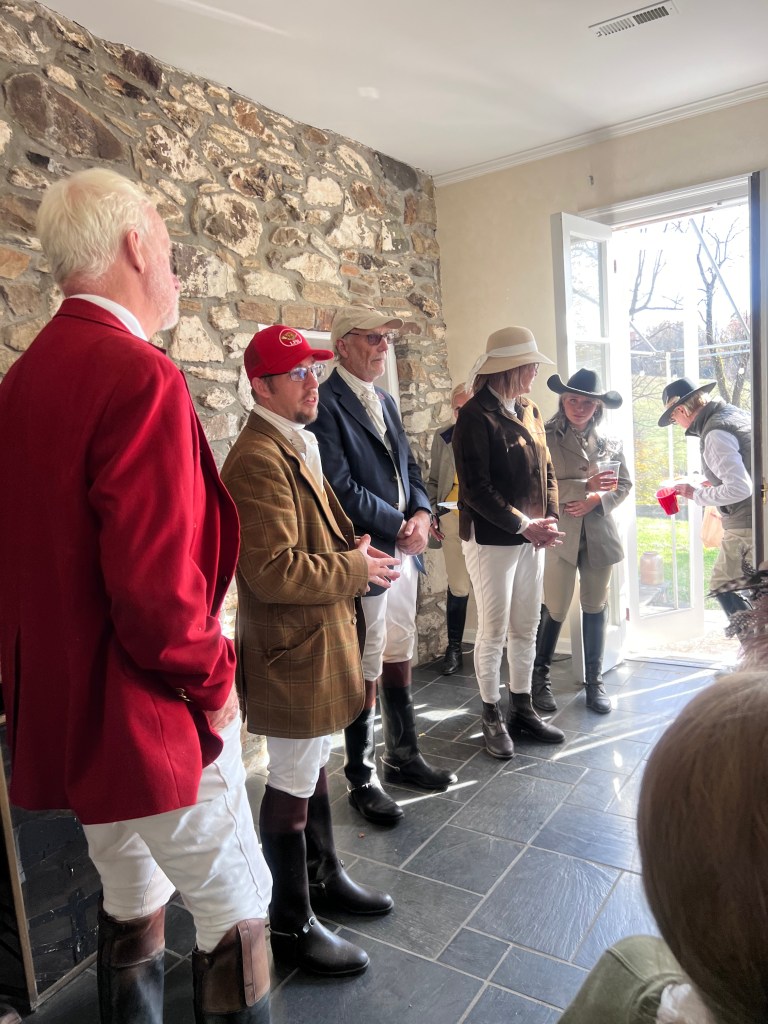
Russell Shifflet and Andrew Camp receive their Colors from the Master of Loudoun Fairfax Hunt in recognition of service to the Loudoun Fairfax Hunt.

At the Hunt Breakfast, two industrious and generous members were awarded their Colors. Russell Shifflet and Andrew Camp were recognized for their tireless work on helping clear trails and jumps, helping with social events, and working on the Hunter Pace, the Point-to-Point races and at the Hound Show. Getting one’s colors is a significant milestone in one’s fox hunting career. As Color Members, the gentlemen will sport scarlet coats with the club colors on their collars as well as the buttons of their coats will be engraved with the club’s initials. It is indeed a high honor and well deserved. As in all social clubs, it takes everyone’s contribution to reach success.

The beauty of the hunt club is that whether one rides or not, the social gatherings and friendships do not disappear. The 2025/26 season opened on a brilliant November morning. There will be a subsequent hunt for the Blessing of the Hounds, and a Hunt Ball will be held at the Birkby House before Christmas.

Rows of trailers

Have you dreamed of riding with the hunt? There are many ways you can accomplish that if you already ride well. A call to the Masters for permission to ride might be all that is needed. If you are a beginner, there are outstanding training facilities for you and your horse. My advice: do not risk being hurt if you are not a secure rider, and your horse is not up to the job.

Though my hunting days are behind me, my heart still leaps at the sound of the horn and the sight of the field setting off into the morning mist.

The stars of the hunt: the hardworking, obedient, and lovable hounds of the Loudoun Fairfax Hunt

Hounds go out on Fridays and Sundays. We encourage juniors and guests to join us and experience the thrill of our sport. We are always happy to see new faces in the hunt field! Information on capping can be found  here.

An Original

Orchestral Conductor, Nancia D’Alimonte, D.M.A.

Conducting Tchaikovsky’s Fourth Symphony. The power is palpable.  
Photo Credit: Toby Marquez

From the moment Conductor, Nancia  D’Alimonte,  walks toward the podium, there is a spark that ignites the atmosphere. There is energy and joyfulness. Her sincerity to the audience and empathy for the musicians is unquestionable. A master storyteller, she involves the audience by revealing some hidden secrets and giving intriguing history about each piece.
What separates Nancia from many other conductors? Unity. There is a rare connection between conductor and orchestra. She brings the best out of the orchestra at the precise moment of every note of every score. They create each other- it is a sense where each makes the other. It seems as if she “sends” the music to the musicians and they return it to the audience. “When I step on the podium, something unique happens,” she said. The music comes through her.
Nancia D’Ailmonte is conductor of the Loudoun Symphony Orchestra (LSO).  She is also founder (2006) and conductor of the NIH Philharmonia. At Christmastime, Nancia conducts the beloved Kennedy Center Messiah Sing-Along. She is a busy person of great depth, with exceptional talents, a delightful sense of humor, and a variety of interests.

Nancia Leads the Messiah Sing-Along at Kennedy Center – photo courtesy of Nancia D’Alimonte

Conductor positions are tightly held and highly coveted. With approximately 1250 symphony orchestras in the United States, with anywhere from 60 – 115 musicians; there are approximately 90,000 musicians. There are  only about 1300 conductors.  A 2014 survey discovered that of the top 150 orchestras, there were only five conductors who are women.

Meticulous details – Photo Credit: Toby Marquez

In the November 10, 2019, conversation about the arts and law at the Kennedy Center, the late Supreme Court Justice, Ruth Bader Ginsburg, shared, “In my growing up years, I never saw a woman in a symphony orchestra.” She recounted the advent of the “dropped curtain” after a New York Times critic was certain that he could tell the difference between a male and female pianist only to get “it all mixed up” after he was blindfolded.

French conductor and composer, Nadia Boulanger (1987 – 1979), was asked in 1947, about being a woman and a conductor.  She said, “I’ve been a woman for a little over 50 years and have gotten over my initial astonishment. As for conducting an orchestra, that’s a job where I don’t think sex plays much part.”  

Conductors have their own styles. Some are flamboyant making the performance all about themselves; some are timekeepers, and some are dreamers. Then, there is the rare conductor who  brings music to life. Nancia is that conductor. Having been principal horn for 12 years, she says of conductors’ styles, “I know, I was a player.” Hence, her empathy and consideration for the musicians.

Knowing the scarcity and competitiveness of conducting positions, Nancia chose to follow this path. She tells her incredible story, “When I had been principal horn for 12 years with the Oshawa Symphony Orchestra (outside of Toronto, Canada), our beloved conductor was stepping down. I was on the search committee. We viewed endless video tapes of less than stellar conducting examples – all by men. After every video, I would think to myself, “I could do much better than that!” Then came the final guest conducting experiences… one conductor led more with his non-baton hand (left), being quite flamboyant, and kept shouting to the orchestra, ‘play with me, you’re behind, you’re behind!’ ‘

‘During that time, I was teaching high school music and art. A friend told me about a conducting workshop with John Paynter, guest clinician. I hadn’t a clue who he was, but I went anyway. During his talk, I was captivated by his demeanor, his gentleness, his every word, and his examples of conducting! I elbowed my friend and kept saying, ‘I do that… I do that… I do that too!’ At the break, I could barely contain myself… I had to introduce myself to Mr. Paynter. He was just as genuine in person. He gave me his full attention; I was honored.’

‘I began taking private conducting lessons with John Paynter. I would fly to Chicago about every six weeks for private lessons with him. John was Director of Bands at Northwestern University; only the second director in 100 years.’

‘A friend once posed a hypothetical scenario to me… ‘Supposed the Boston Symphony calls you and says their principal horn player is out sick, and they need you as a sub. The repertoire is an all-John Williams concert. You have 24 hours to let them know. Then, another person of the Boston Symphony organization calls you, and says their conductor is out sick, and they need you as a guest conductor. The repertoire is an all-John Williams concert. You have 24 hours to let them know. Which do you choose?” This hypothetical scenario made me look at my musical career. I was at the top of my game with horn playing but continuing that for the next 30+ years wasn’t too enticing.  After watching the uninspiring conducting videos and then meeting John Paynter who saw something in me to give me a few precious moments of his time, I made the decision to conduct.’

‘One final thing about this story – once I entered the Eastman School of Music to work on my Doctorate in Orchestral Conducting, I had the absolute pleasure to meet John Williams when he guest conducted the Eastman Philharmonia in an all-John Williams concert. I was able to share my story of how I decided to go into conducting with him… talk about full circle!”

With Mendi Rodan, Nancia’s Teacher at Eastman School of Music – Image Courtesy of Nancia D’Alimonte

An Alumnus of ESM – Nancia D’Alimonte, D.M.A. – Image courtesy of Nancia D’Alimonte

About her goals for LSO, Nancia explained,  “I want to grow the orchestra and I want to make them irresistible.” She loves the Orchestra because she says, “The beauty of the Loudoun Symphony Orchestra is that they have good bones, they are super players, and have a positive attitude.” What about classical music not being terribly popular? “If you build it good . . . they will come,” is Nancia’s solution. She is on a mission to make a great orchestra exceptional.

Nancia described her relationship with members of the orchestra as,  “Always one of mutual respect. I do not follow the tradition of the dictator on the podium. Because I come from within the orchestra, the musicians know that I know their position, thus there is an appreciation from them.”

Among the roles of the conductor is designing the program. Nancia’s thoughtfulness and depth of musical knowledge give her the scope with which to make wise choices. Her goal is to please the audience and encourage and grow the musicians. Her musical selections and programming take into consideration the players’ strengths and the total number of players. She explained, “Some compositions work for 60-65 members while others like Mahler need over 100.” She explained that undertaking a composition designed for a very large orchestra and imposing it on a smaller one will not produce success of the composition or the musicians. She selects music to showcase the strengths of the performers which will ultimately please the audience and encourage the individual players.

Nancia has mastered her conducting image. She explained, “My conducting ‘costume’ is my own creation. After some experimenting, I decided on the tea-length skirt with satin stripes on the sides and a feminine slit, tails, and a beautiful brocade vest and matching bow tie. I want to be impeccable. Appearance is very important in this male-dominated environment.”

“The connection to my “instrument” (the orchestra) are my batons,” says Nancia.  She has six custom-made batons by Tate Newland. Nancia says, “He is the best, in my opinion. I have been working with him for almost 30 years – I have known him for longer than I know my husband.” Nancia explained that the white shaft is made of maple wood. The handle must be large enough to fit in her hand and hers are of interesting and exotic woods including cocobolo, 100-year-old cherry, curly maple, rosewood, and even a champagne cork (for fun). The baton must be perfectly balanced at the joint where the shaft meets the handle.  She always brings two batons with her.

Attention For Every Musician – Image courtesy of Nancia D’Alimonte

Asked whether she prefers to conduct with a score or from memory,” Nancia explained, “Conducting without a score… this phenomenon came about from Arturo Toscanini, famed Italian conductor (early-mid 20th C.) who conducted at La Scala in Milan, the NY Philharmonic, and later led the NBC radio orchestra. He had an impeccable ear and began as a cellist. One thing lacking for him was good eyesight… he was farsighted. In order for Toscanini to see a score, he had to be bent over, with his face about 6 inches from the score… that is no way to run a rehearsal! He could memorize really well, out of necessity, he studied and memorized all his scores. It’s an impressive feat, to be sure, and made for intimidating rehearsals (he knew every part and would stare down musicians when asking them to play a passage – nerve-racking). While some conductors memorize today, it’s not because they have bad vision, it’s a parlor trick… it is not a requirement.’

‘I use a score as I’m not sure I would have enough time to properly memorize my scores. I like to be able to immediately help a musician in the event they miss something.’

‘The next time you see a conductor not using a score, watch his/her face and see where their eyes are directed. Usually, there is no connection to the orchestra… and being disconnected is not a good thing… the musicians will actually lead the conductor through the performance.”

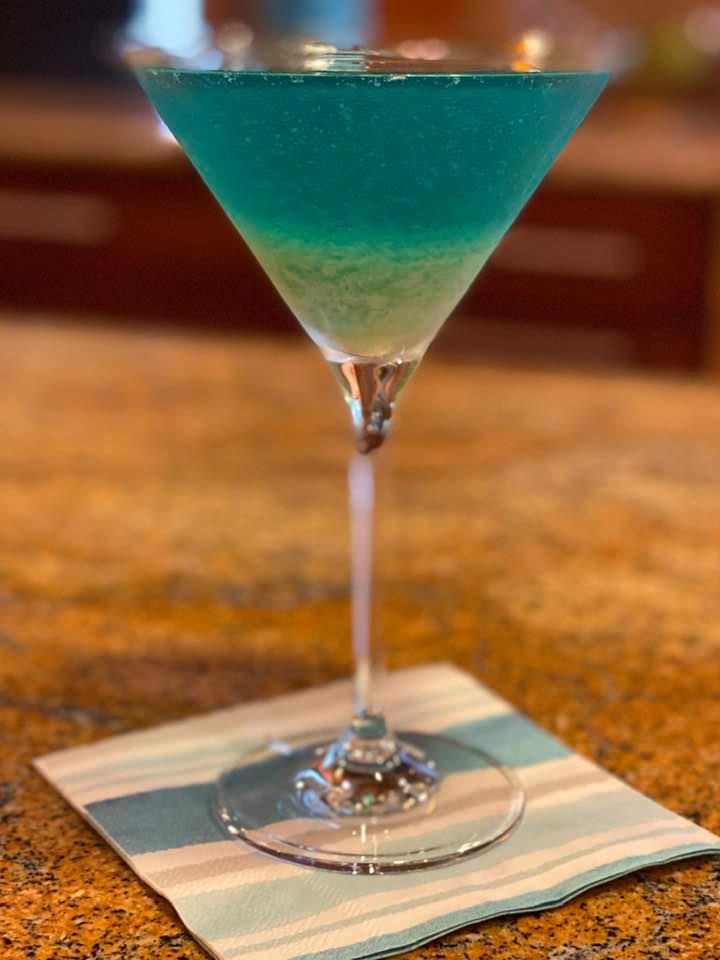
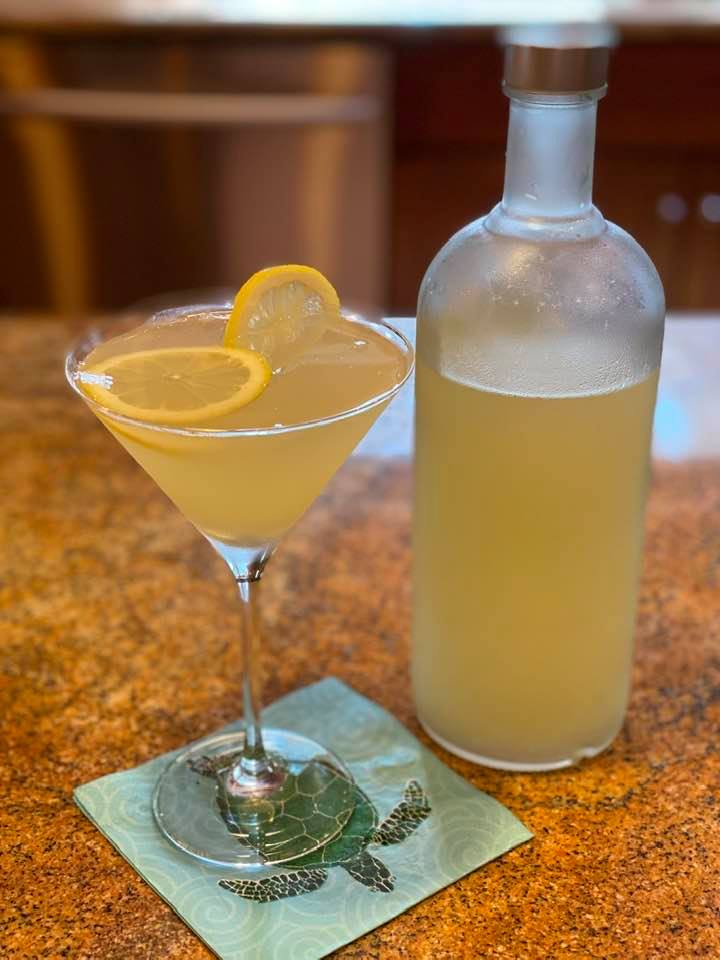
Aside from conducting, Nancia’s friends know her for her sublime “refreshments.”  “My martinis are legendary. My Negroni is renowned, you should try one sometime” she said.

Taste, Presentation, and Artistry: Lemon Drop Martini; a proper Manhattan; just a simple spread; Making Limoncello – Images courtesy of Nancia D’Alimonte

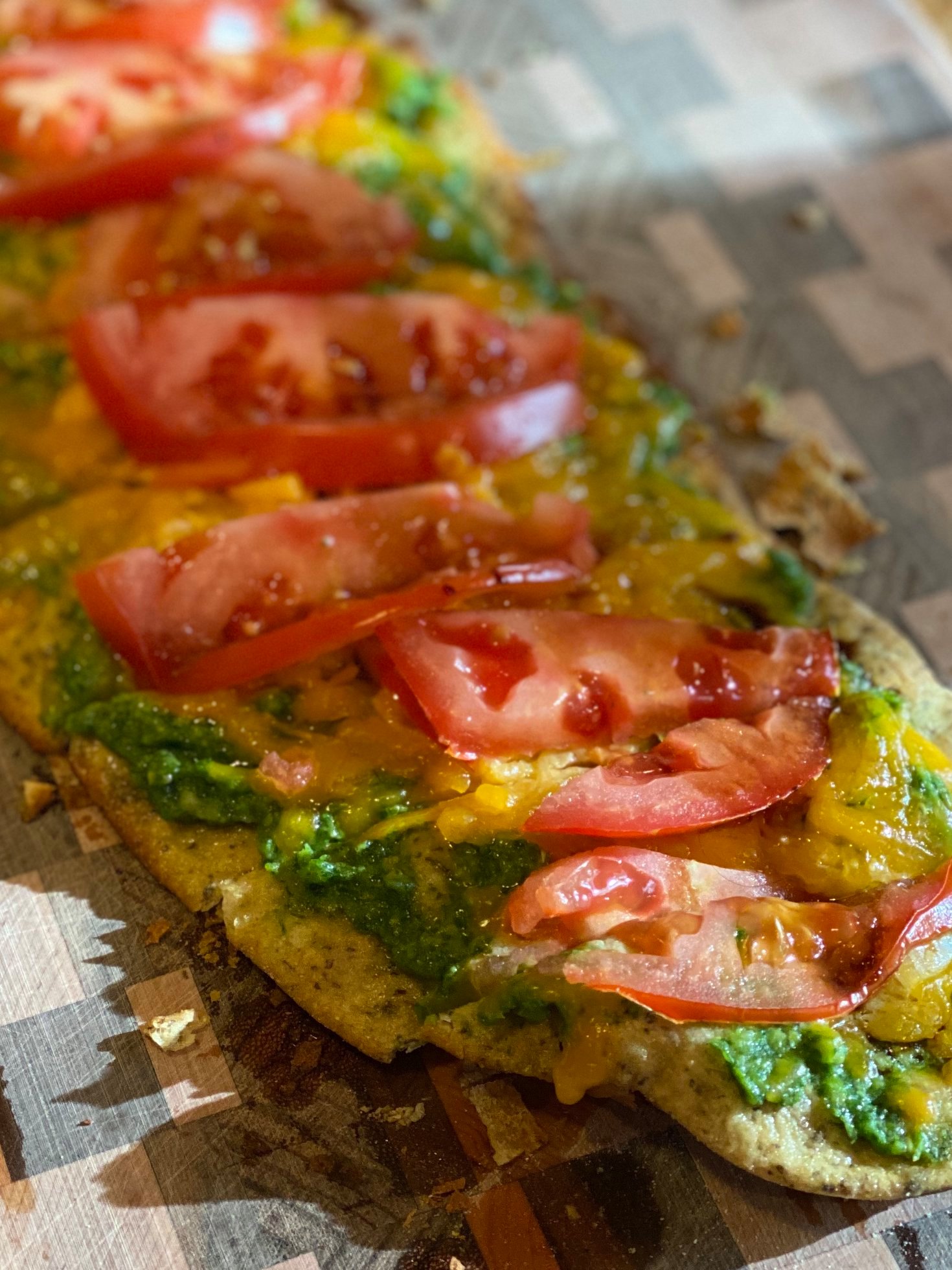
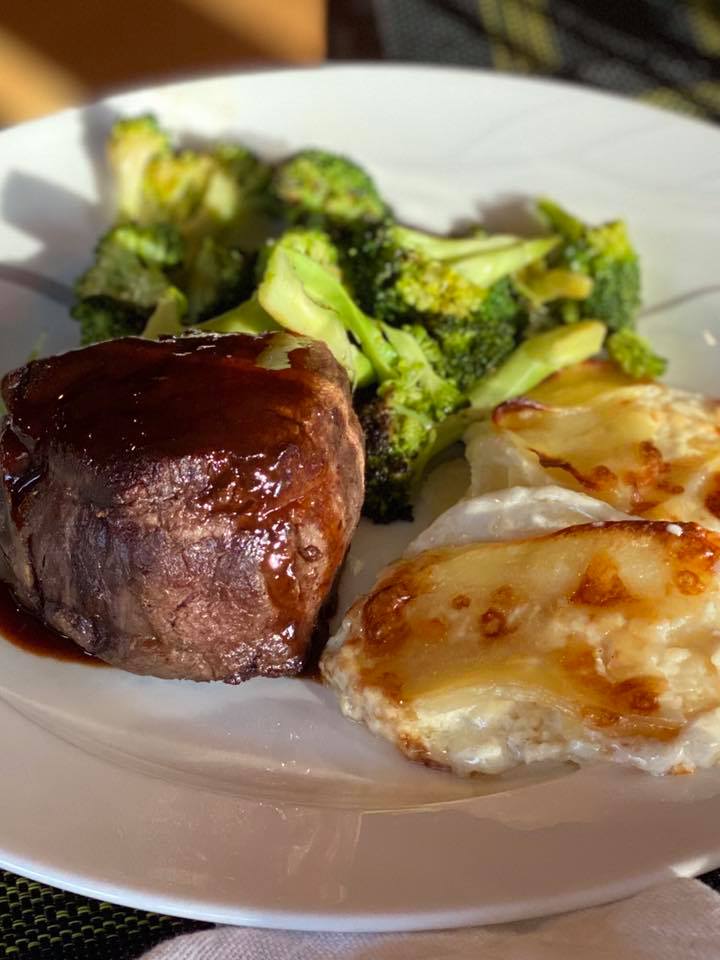
A self-professed “foodie,” Nancia likes to keep her knives sharp even cooking at home. She once made butter from scratch for a special dinner. As in her orchestral conducting, she is precise. Her planning  and presentation are meticulous.

Mouthwatering Creations by Nancia – Images courtesy of Nancia D’Alimonte

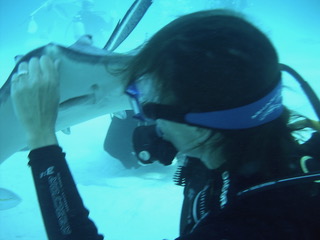
A woman of great passions, Nancia’s world is extensive. From her legendary Negroni martini, to her superb shrimp (and her knives are precisely sharp), to her underwater scuba adventures (where she says is her second favorite place on earth), to her world travels, and of course, to her music, Nancia is infinitely curious and devoted to impeccable excellence. She shares her life and passions with her husband, Giancarlo.

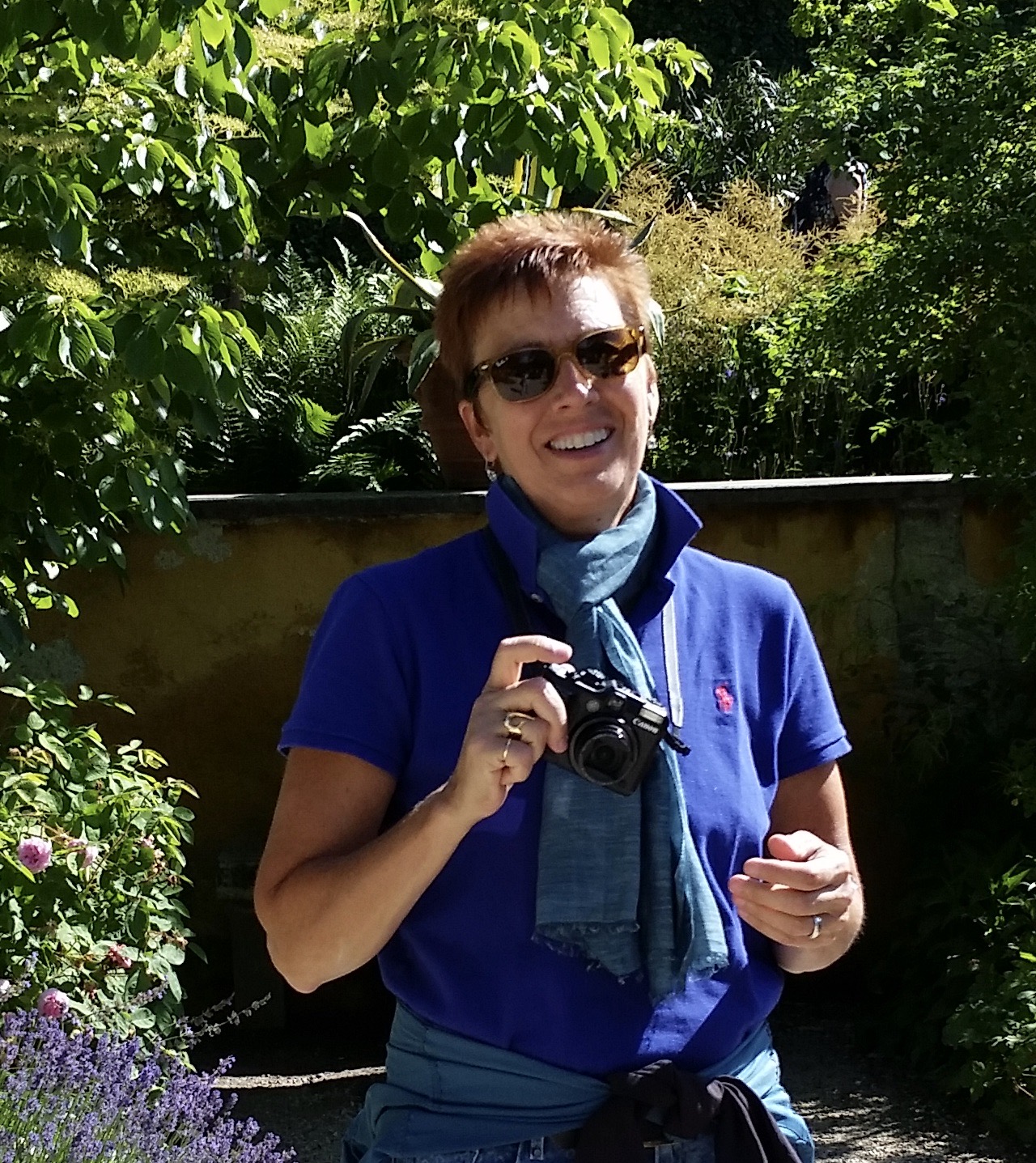
Travel Experiences and Adventures – Images courtesy of Nancia D’Alimonte

Nancia’s “second favorite place on earth” – Images courtesy of Nancia D’Alimonte

What kind of music does a conductor listen to when not working? “I love a wide variety of music. I love jazz, New Age, World Music, and of course the classics.” She enjoys Brahms, Bartok, and Mozart.  The Rite of Spring by Igor Stravinsky and Mahler’s Symphony No. 1 are among her favorites.

Nancia – Authentic; Unstoppable.

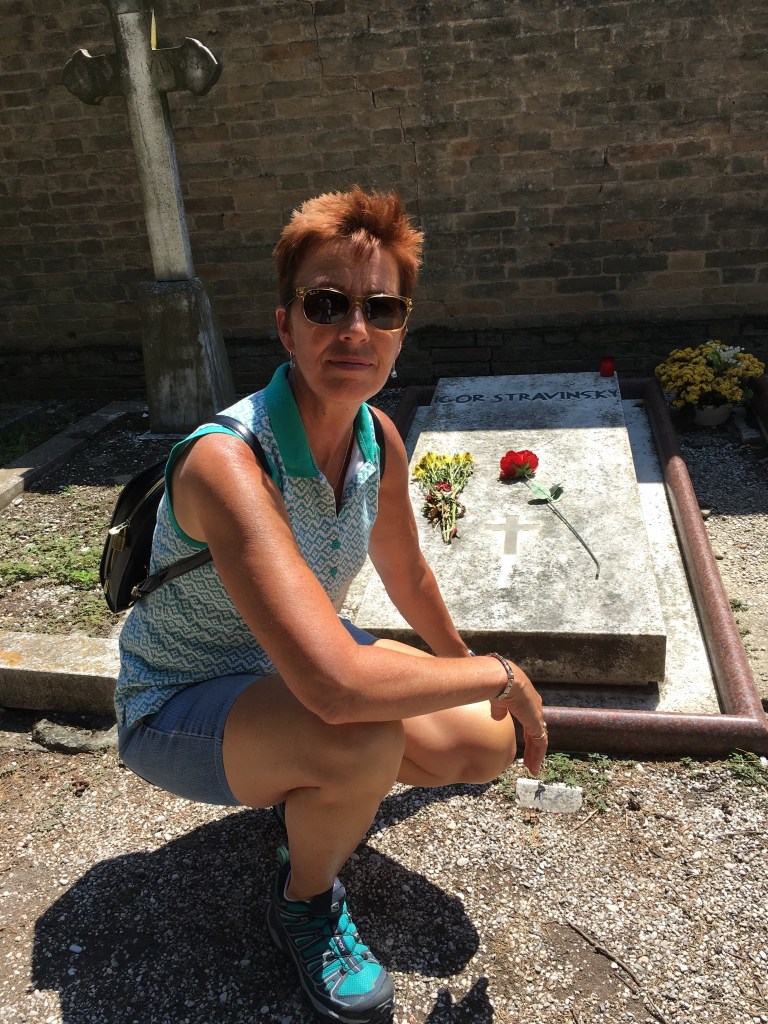
“Humbled to be at the foot of Igor Stravinsky’s grave – Venice – Image courtesy of Nancia D’Alimonte