
On His 212th Birthday

Songs Without Words, A Midsummer Night’s Dream, the Italian Symphony, The Hebrides Overture, The oratorio St. Paul, The Scottish Symphony are among some of Felix Mendelssohn’s most famous compositions. He was born 212 years ago, on February 3, 1809. If someone were to ask me to list my favorite composers and my favorite compositions, Jakob Ludwig Felix Mendelssohn Bartholdy (AKA Felix Mendelsohn) would be my top three with his Songs Without Words as my favorite of his.
Born to a Jewish family in Germany, Mendelsohn was a child prodigy, much like Mozart had been 53 years earlier. Felix Mendelssohn was a composer, pianist, organist and conductor of the early Romantic period. His family converted from Judaism to Protestantism before his birth. The Mendelsohn family was in banking and left Hamburg in disguise in fear of French reprisal for the Mendelssohn bank‘s role in breaking Napoleon‘s Continental System blockade. While they moved to Berlin and lived there as Christians, antisemitic sentiment clouded his virtuosity. It was not until almost the mid-20th century that his music was reevaluated and finally appreciated.
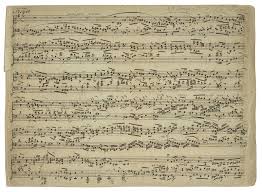
Schumann wrote of Mendelssohn that he was “the Mozart of the nineteenth century, the most brilliant musician, the one who most clearly sees through the contradictions of the age and for the first time reconciles them. In 2009, the BBC Press wrote, “Felix Mendelssohn has today been crowned the greatest child prodigy of all time by a selection of 16 of the country’s leading classical music critics.”
When Felix was 12, he met the then over 70-year-old Johann Wolfgang von Goethe. Not one to be easily impressed, he declared “… but what your pupil already accomplishes, bears the same relation to the Mozart of that time that the cultivated talk of a grown-up person bears to the prattle of a child.” (Todd, R. Larry (2003). Mendelssohn – A Life in Music. Oxford; New York: Oxford University Press). Mendelssohn set a number of Goethe’s poems to music.

I remember vividly my first time hearing Mendelssohn’s Italian Symphony. I was spellbound and wanted to hear and rehear every note.My conscious awakened. Thereafter, I sought out his music at every opportunity. I discovered his music to A Midsummer Night’s Dream which took my breath away (until the over-played “Wedding March”). What a shame that the “Wedding March” has become cliché. Is it the desire for the “magic” or a couple’s lack of creativity in selecting wedding music? Aside from his awe-inspiring compositions, he was a prolific artist.
The musicologist Greg Vitercik considers that, while “Mendelssohn’s music only rarely aspires to provoke”, the stylistic innovations evident from his earliest works solve some of the contradictions between classical forms and the sentiments of Romanticism.
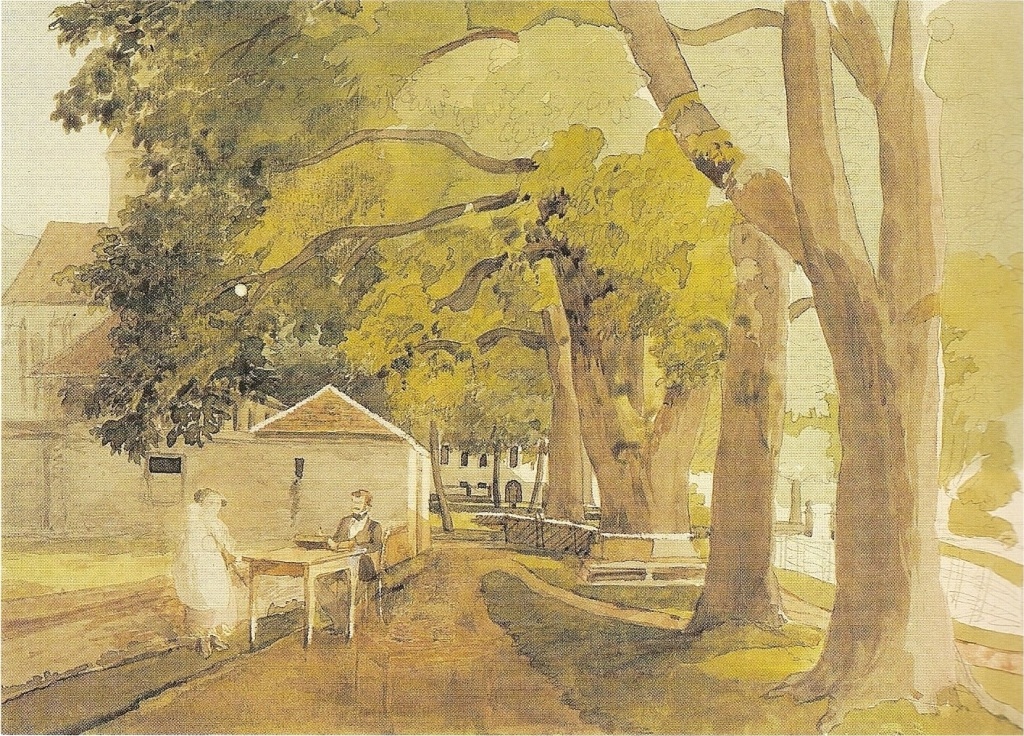

Perhaps it is Mendelssohn’s non-provocative conciliatory style that gives the listener space to hear and appreciate.
Like so many musical geniuses, Mendelssohn did not live to be 40. He died of several strokes at 38. In his short life, he created some of the most beautiful and poignant music that touches the core of one’s heart.
 Good News. Reviews. Events.