What I Wanted to Say

Artist’s Talk Delves Into Intent at Fred Schnider Gallery
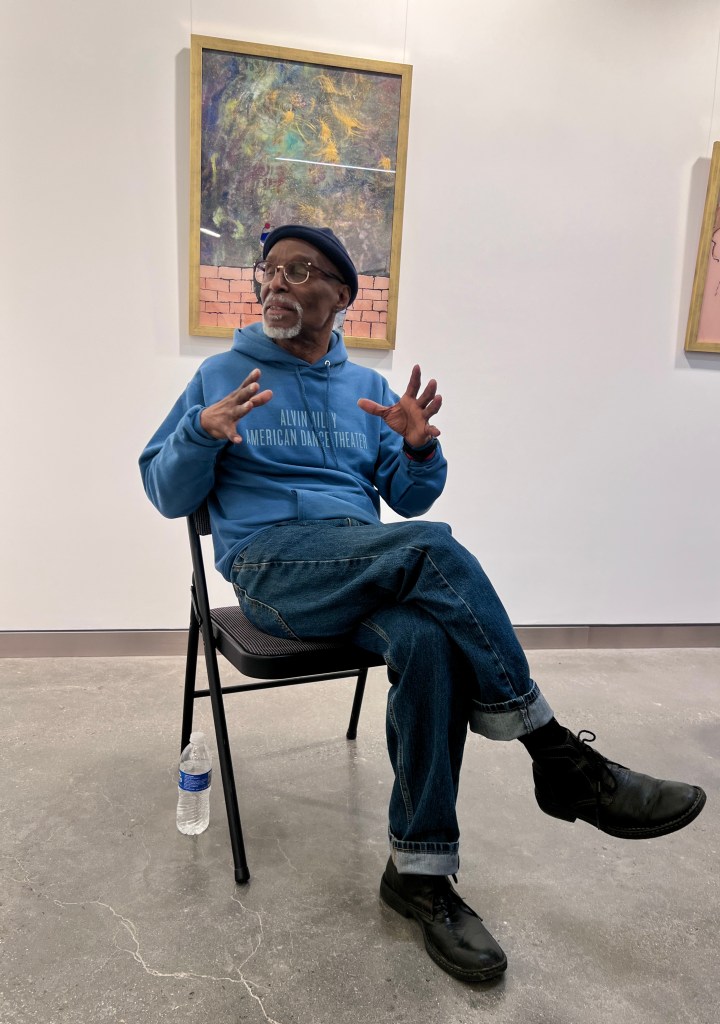
Tim Davis shares his vision, intentions, and development ideas

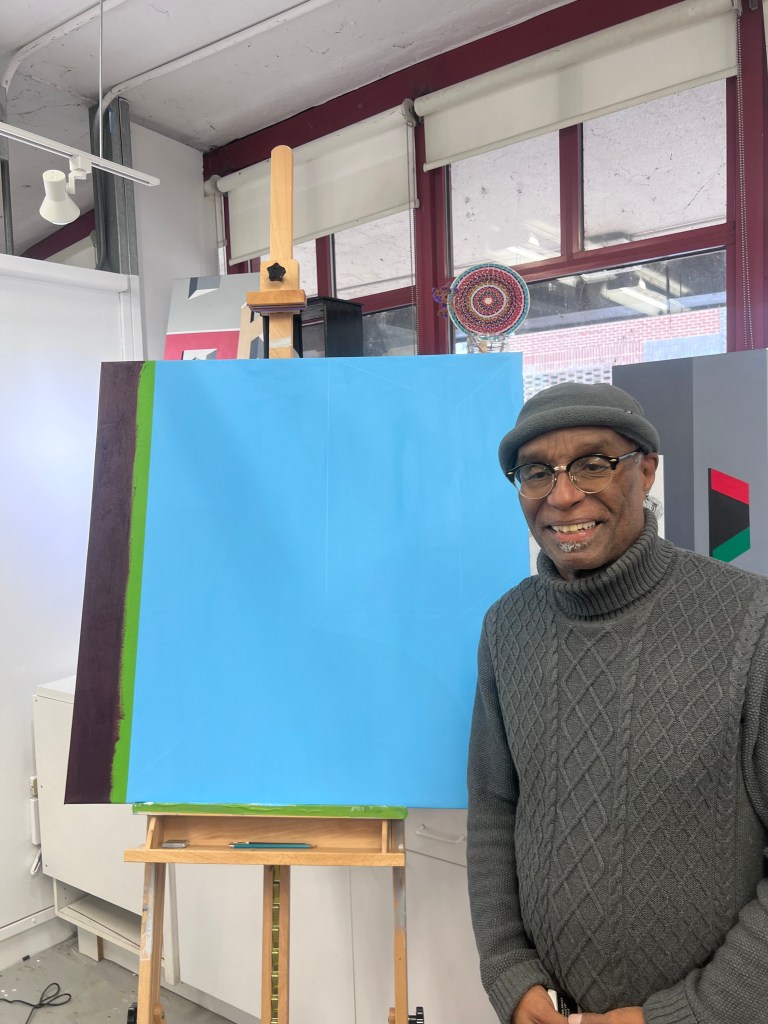
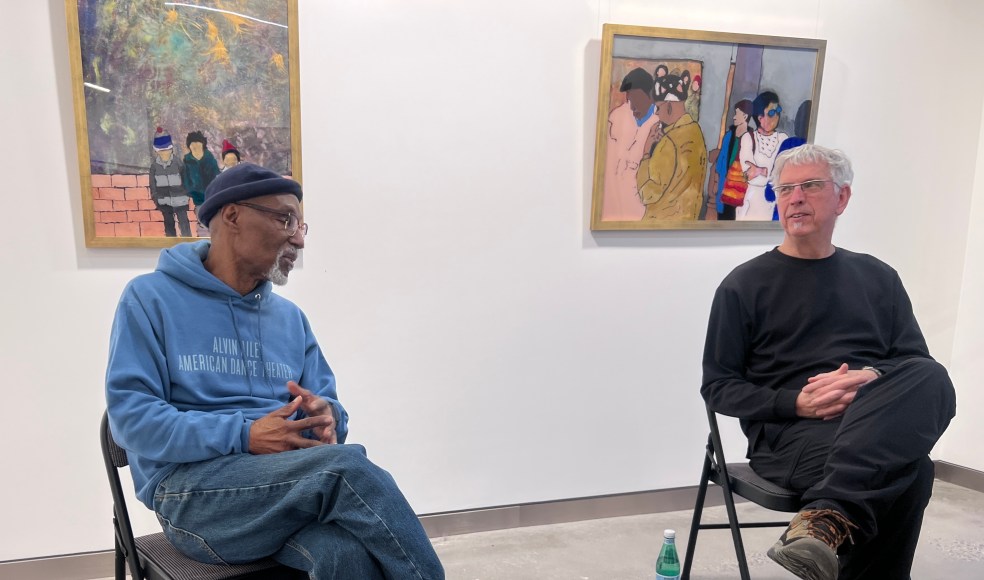
The gallery was bright, warm, and shielding from the bitter cold and gusting winds through which I walked after parking my car along the snow-mounded street. Once inside, I experienced a comfortable and encouraging feeling. My artist and designer friend accompanied me to Tim Davis’ Artist Talk at the Fred Schnider Gallery. Curator, David Carlson, recognized me as we entered. I was impressed by his memory.

My friend and I reviewed the art installation, and I eagerly introduced her to the piece I selected to purchase. She told me that it looks like me and that my choice was on point.

I saw Tim who gave me a big hug. I felt delighted to be “at home” among art lovers, artists, and ‘what-if’ thinkers.

Tim Davis’ art invites deliberation. Every piece makes a statement, and the collections create the conversation. A casual gallery visitor might simply see pretty art with unusual structure. The ‘Talk’ brought the art to life. My artist friend later shared that she gained much deeper appreciation of the work, methodology, and context after hearing Tim’s discussion.

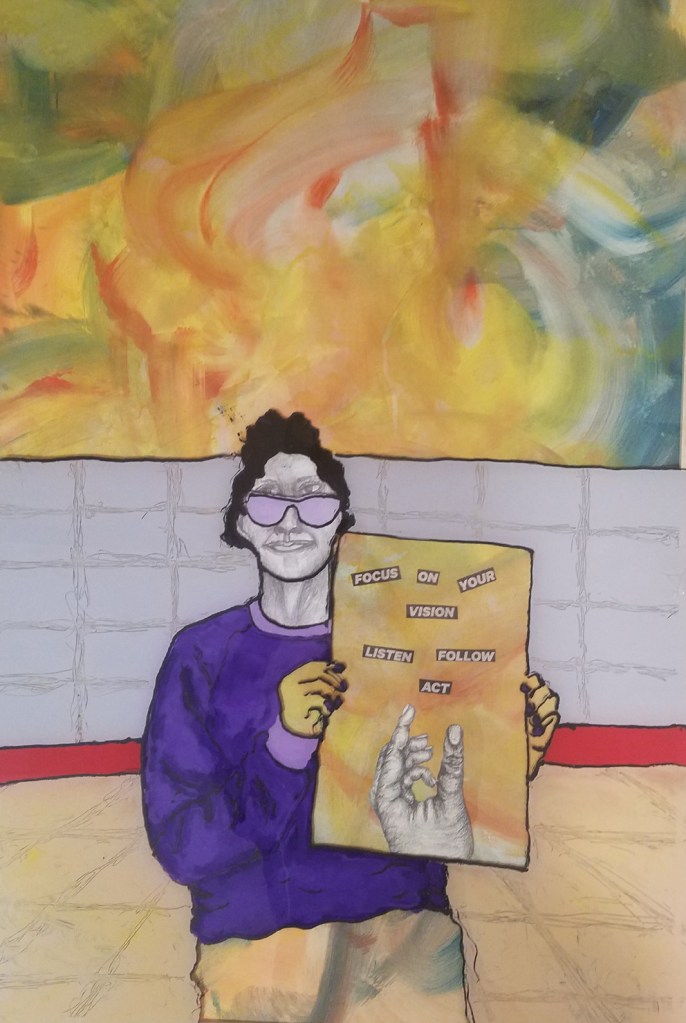
The ‘Talk’ opened with matters of race, division, and the human conditions of avoidance and the yearning to be acknowledged. Carlson opened with a discussion of race and the lived experiences shaped by black-and-white divisions. I admit that my immediate reaction was conflicted. Having always been colorblind as to humanity, I was instinctively wary of frameworks that emphasize division rather than transcend it. That emphasis felt insensitive to me, and potentially divisive rather than unifying. Additionally, I worried about Tim feeling uneasy. I wrote my notes wondering how the conversation would resolve. I willed myself to listen, follow, and focus. Reflection matters. Listening matters.

As the evening unfolded, I reconsidered my initial response. While my principles remained unchanged, the conversation asked a more serious question. Honoring a people’s experience and attempting to see life through the eyes of others is not a matter of color or slogans. It is about recognition of their contribution, engagement, and struggle.

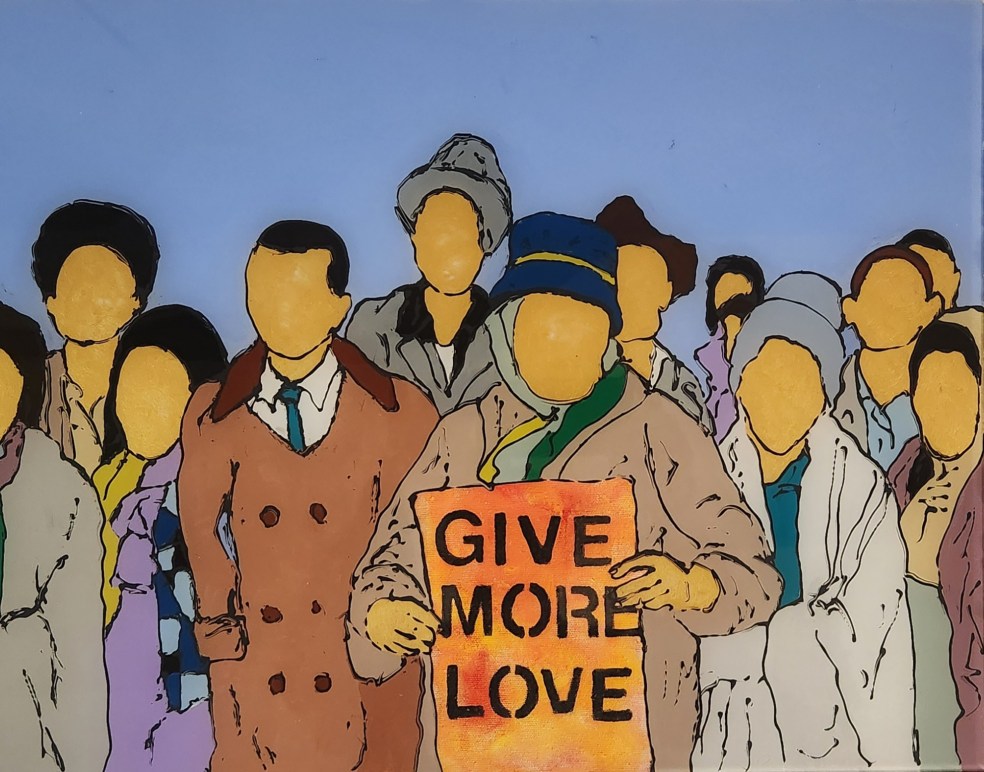
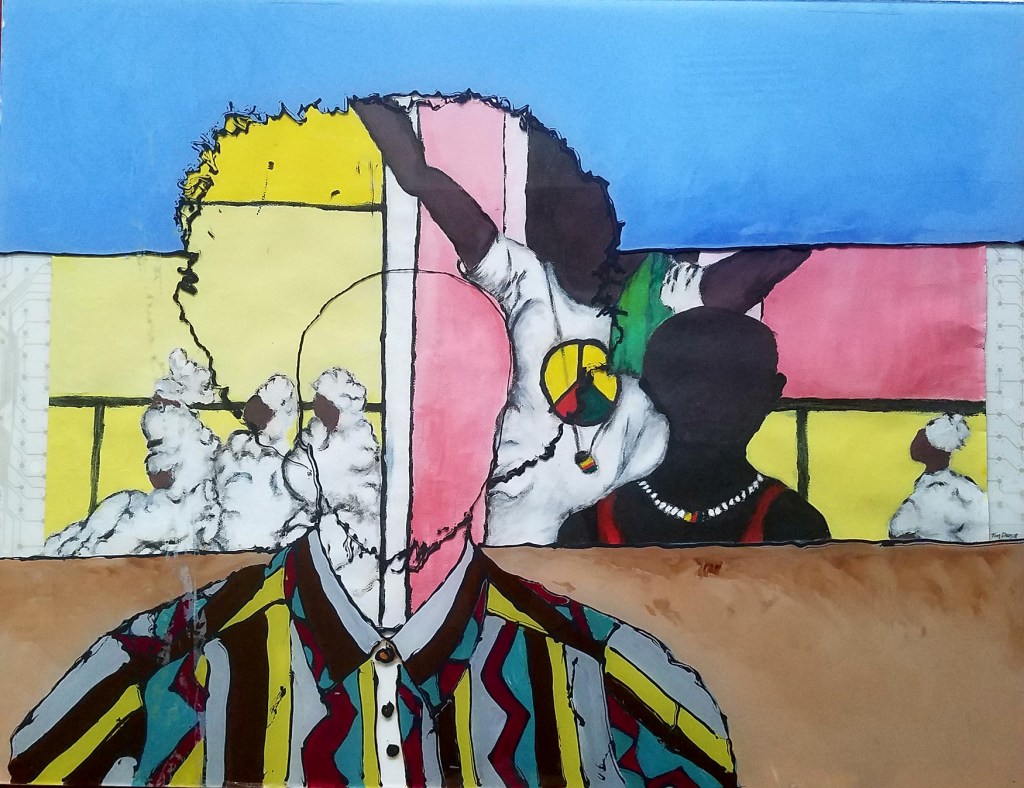
One of the central pieces in the exhibition is titled Do You See Us? The work references a Chicago protest that shut down a highway along the lakefront. The title does not accuse. It does not instruct. Seeing is not the same as reacting, and it is certainly not the same as performing agreement.
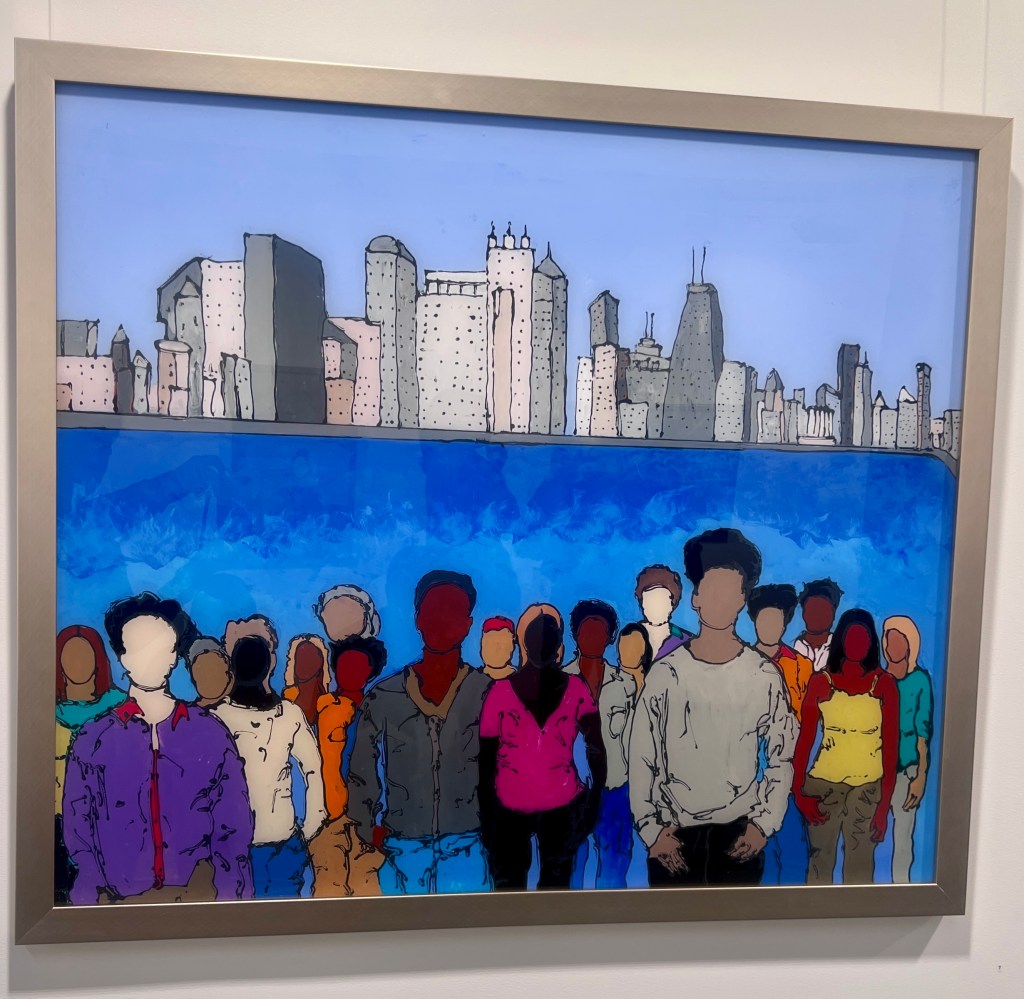
“Do You See US?” Acrylic on Plexiglass (reverse painting)

Another piece, Should We Go or Should We Stay? includes language suggesting that silence itself is a form of agreement. Taken out of context, that idea can feel confrontational. Within the broader conversation of the exhibition, however, it reads less as a slogan and more as a provocation.  It prompts an examination of presence, absence, and responsibility. Tim was clear that his goal is to build bridges — between people, between cities, between states, between countries, and cultures. His work, he explained, is about connection.

Tim describes the works in this exhibition as assemblages. In its creation, he asked himself how disparate parts can be brought together into a coherent whole. His backgrounds are layered and intentional, whether executed on canvas, wood, or panel. He spoke candidly about allowing himself to play with color in those backgrounds. He described letting go, experimenting, and seeing what works. Yet that play is anchored in discipline. The visible looseness sits on top of careful structure.

Many of the pieces incorporate photography, often people-based, embedded within the painting itself. At first glance, the works are visually engaging and complete. Only with further observation does the photograph emerge, grounding the abstraction in human presence. The effect is subtle and deliberate, rewarding patience rather than demanding attention.

The piece of Arthur Ashe is packed with symbolism and familiarity. Tim told us that as a tennis player and a Virginia resident, he wanted to ground Arthur Ashe as a Virginia-born Black tennis great. An old map of Virginia creates the background for the piece and for Ashe’s legs. The bold colors and the framing within the piece reference colors used in many African national flags. In keeping with his use of color language for faces and distinction, Ashe’s glasses and the face of his tennis racquet are gold. This denotes Ashe’s ‘royal’ status among the tennis greats and as the first Black player to win Wimbledon.
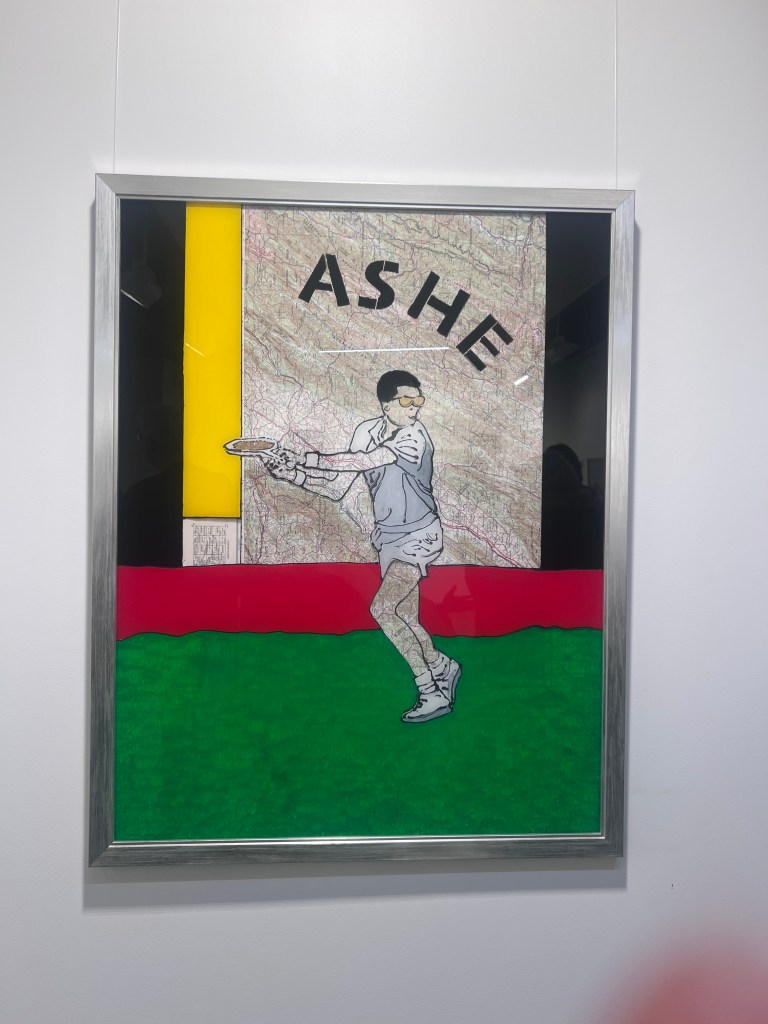
“Ashe” acrylic on plexiglass with a map of Virginia

Tim’s choice of plexiglass as a medium was driven by his interest in illumination and the sculptural qualities it introduces. Reverse painting on plexiglass is unforgiving. Once color and texture are applied, removing them is nearly impossible. Because of that, decisions must be made in advance — palette, layering, sequence. Guesswork disappears. There is no room for expressive thrashing or revisionist rescue. What remains is intention. Tim explained that he must think in ‘reverse’ and fully synthesize where and how the figures will look from the front. Despite the absence of faces, those figures express exactly their actions – body language – curiosity, connection, and intent. This is an artist who is disciplined in the parts that truly matter.

The finished works do not shout or plead. They do not overexplain themselves. They hold their ground – ‘will you see us?’
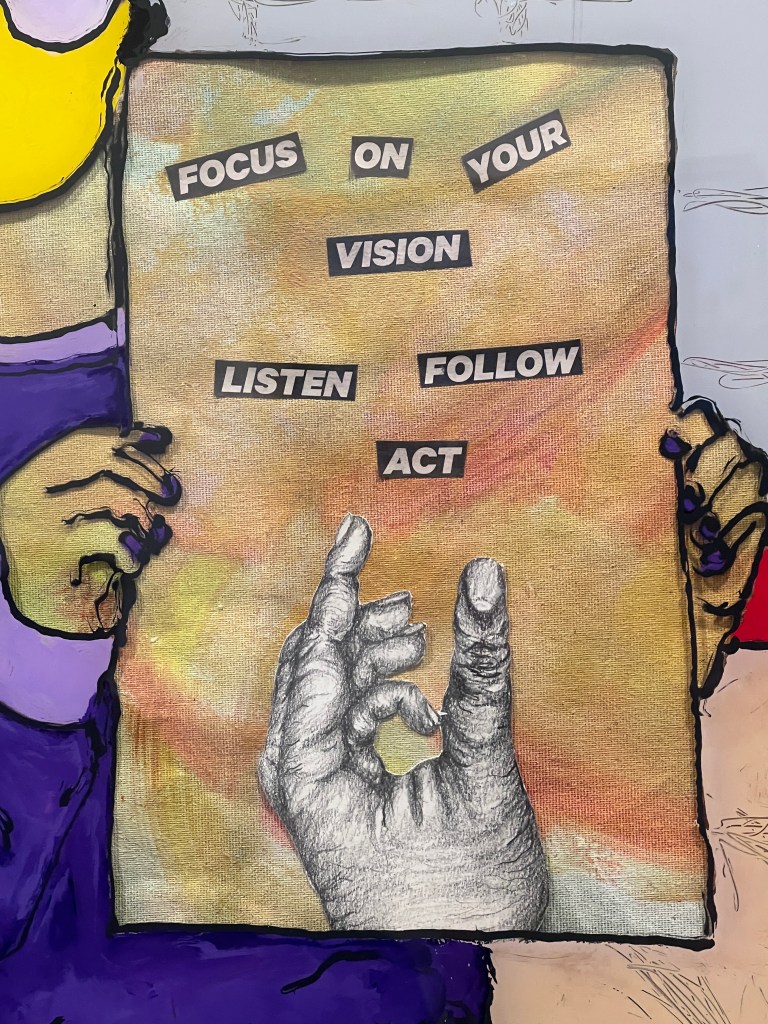
During the conversation, Tim spoke about hope. Yes, he holds enormous hope.  Hope in conversation. Hope in the human spirit. Hope in connection. Hope in positivity and love. He offered a moment from his 38-year teaching practice, sharing that he would often begin a session by asking students, “What color are you?” Not only skin color, but what color they feel. I tried to think about my own answer.

I left the gallery having considered more carefully about my initial resistance. The conversations and deeper dive into the work did not ask me to abandon principle. It asked me to slow down, to look, and to consider connection with lives lived through their history. This was not a conversation about division. It was art about bridges and conversation, about being seen without shouting, about being heard without performance. Tim said it perfectly.

The next event at the Schnider Gallery of Art will be on Sunday, February 15, at 4 PM when there will be a poetry reading and a call and response as it relates to a selected work by Davis. One very special note: Alison Davis  and  Donny Brocs are Tim’s adult children. Alison is a writer and Tim is a singer/rapper.  Poets, Carol Beane and Bennie Herron will complete the event.
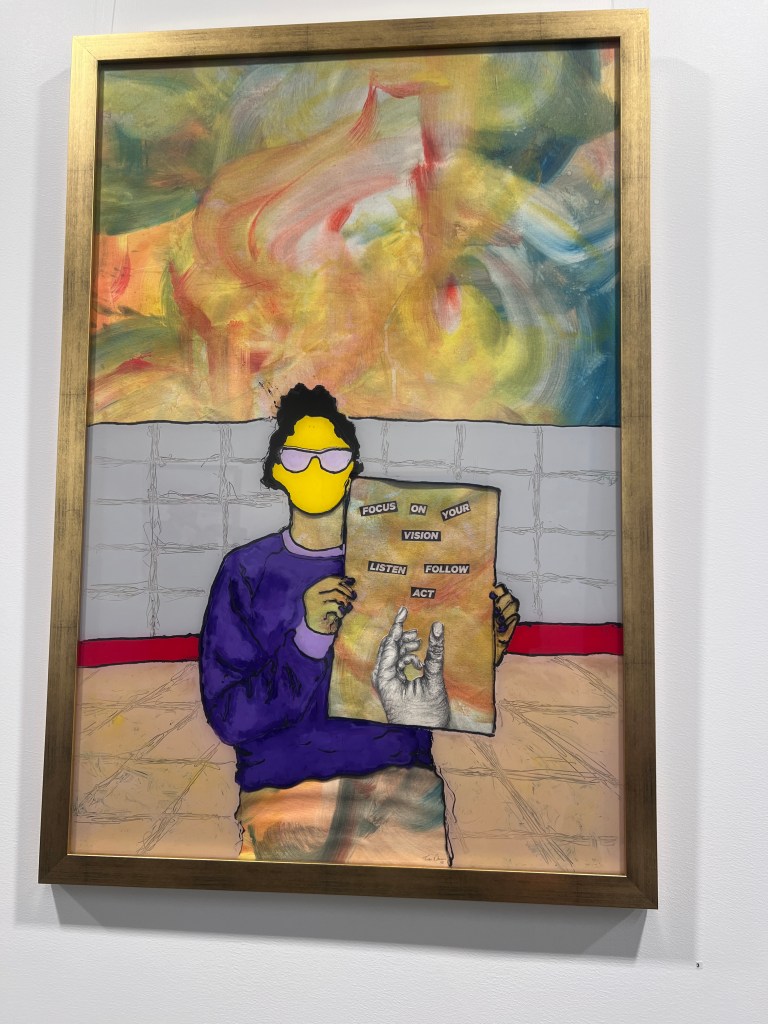
“Act” by Tim Davis mixed media acrylic on canvas and plexi with graphite and collage
Just Spend a Little Time Here

Artist Tim Davis Shares His Art

Unlocking curiosity

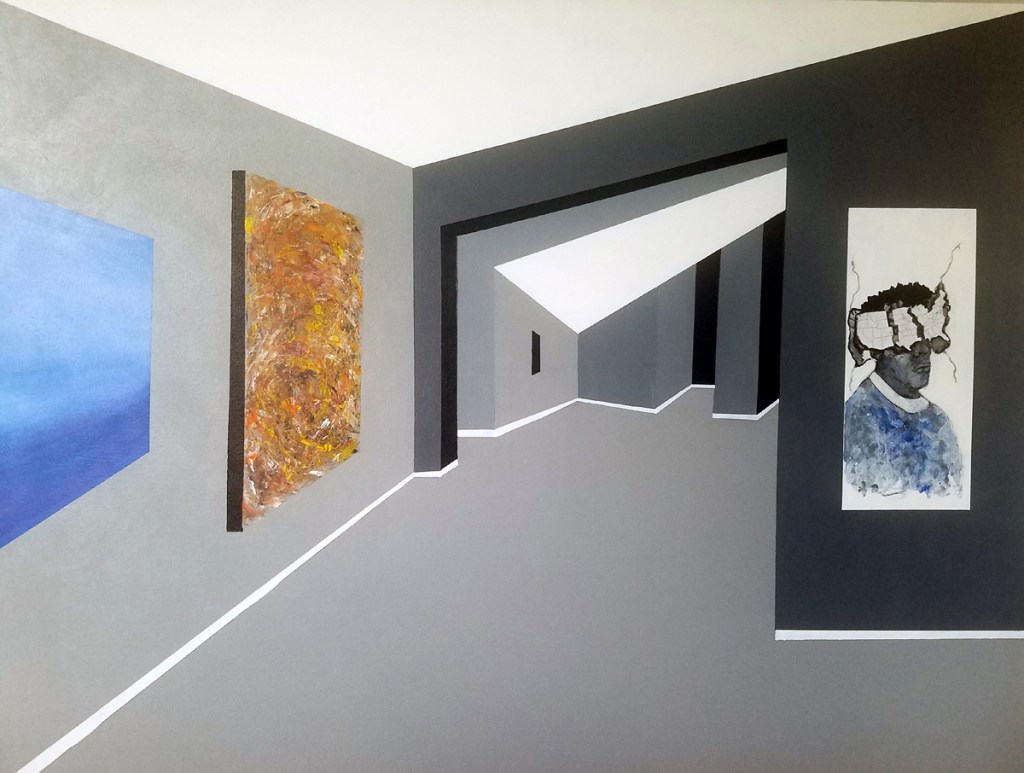
The gallery light reflected from a bright white line of the architectural painting on the right side of the gallery wall. I caught that light in the corner of my eye while walking past several closed galleries in the Torpedo Factory in Alexandria, Virginia. As if leading me into the studio, the light guided me to the real work of art where I was fortunate to meet the artist – Tim Davis.

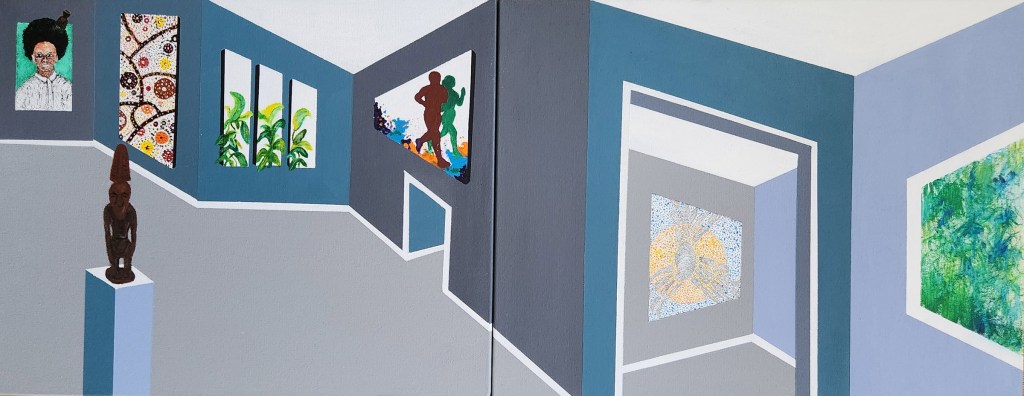
Tim’s studio illuminated art. From fresh beginnings to fully completed pieces available for sale. The piece that brought me in was an architectural image with lines and perspective that guided the viewer down hallways and into rooms. Something about the piece spoke to me and encouraged my curiosity.

Versatility in medium combined with the curiosity of ‘why not,’ presents thoughtful innovation

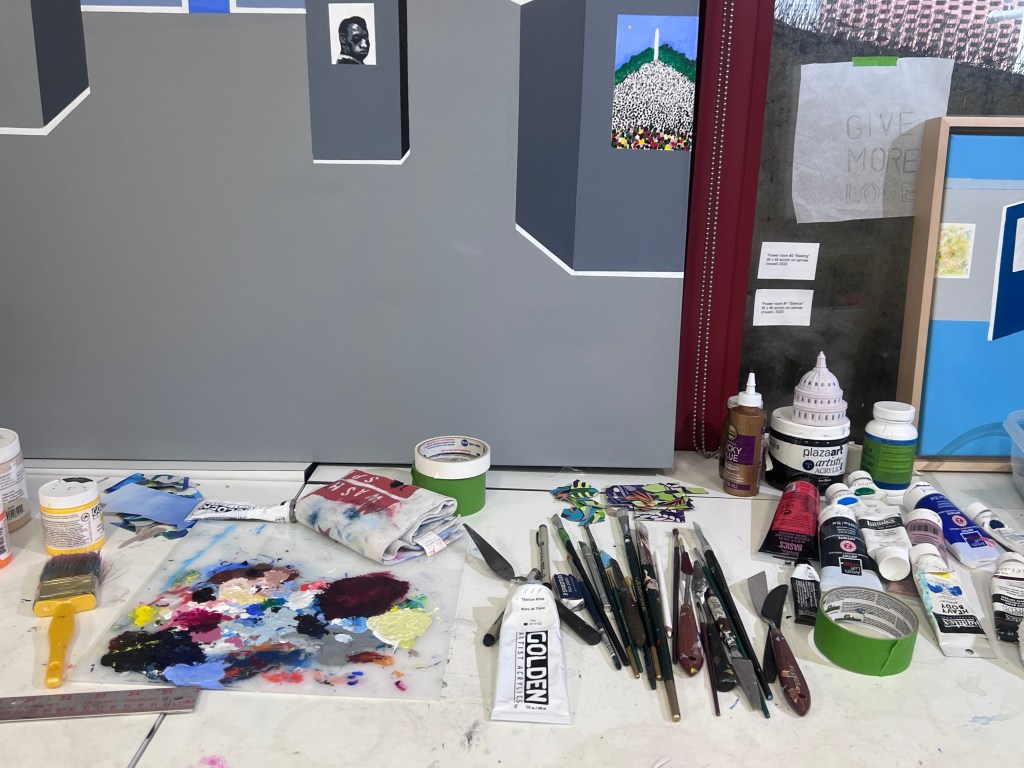
Tim Davis welcomed me to his gallery and studio. More than even the paintings themselves, he exhibited a kindness, gentleness, and genuine hospitality that captured my spirit. We started a conversation that meandered throughout the studio. He showed me his creative works as well as some works in progress. I observed his brushes, paints, supplies, and a preparatory canvas. I felt as though I was viewing something sacred – the tools of creativity and a man’s spirit.

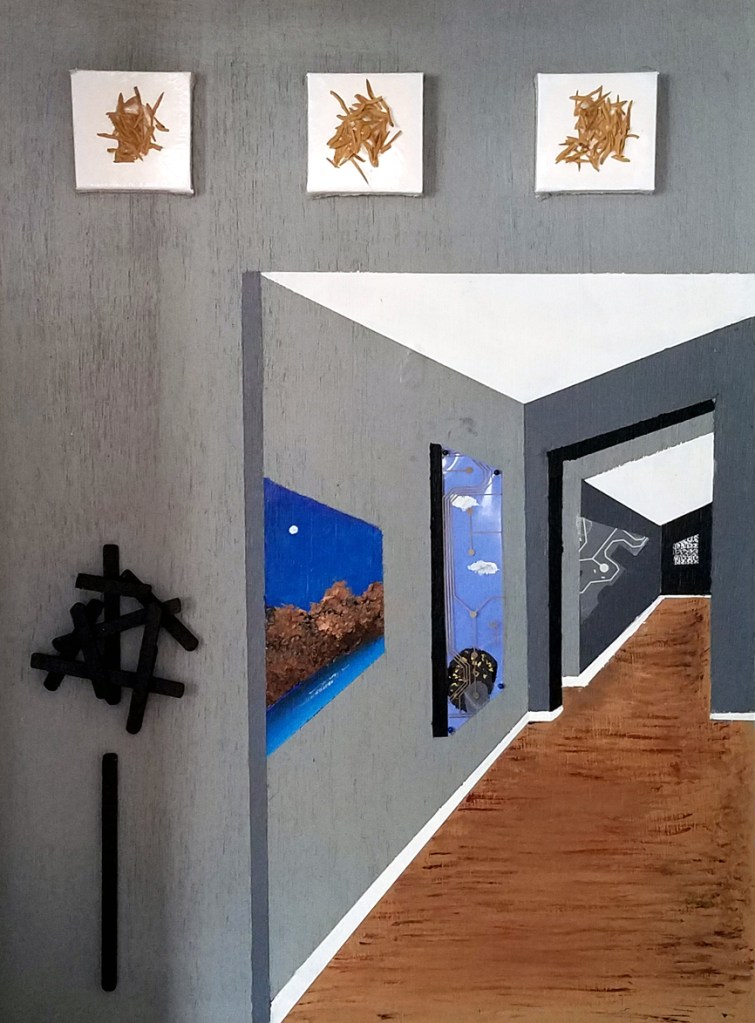
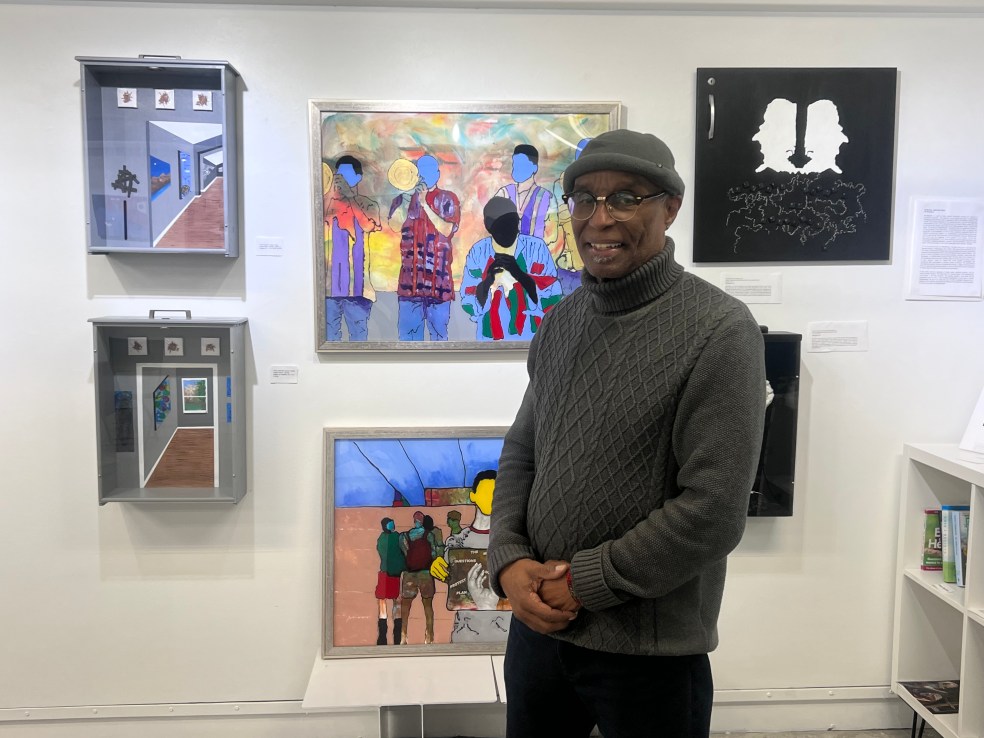
The more we spoke, the more I wanted to know. I took some photos which, in reflection, capture the ease with which the work and the man flowed. He shared how he repurposed drawers into works of art. He explained that his work is diverse and that he enjoys capturing and disclosing ideas.

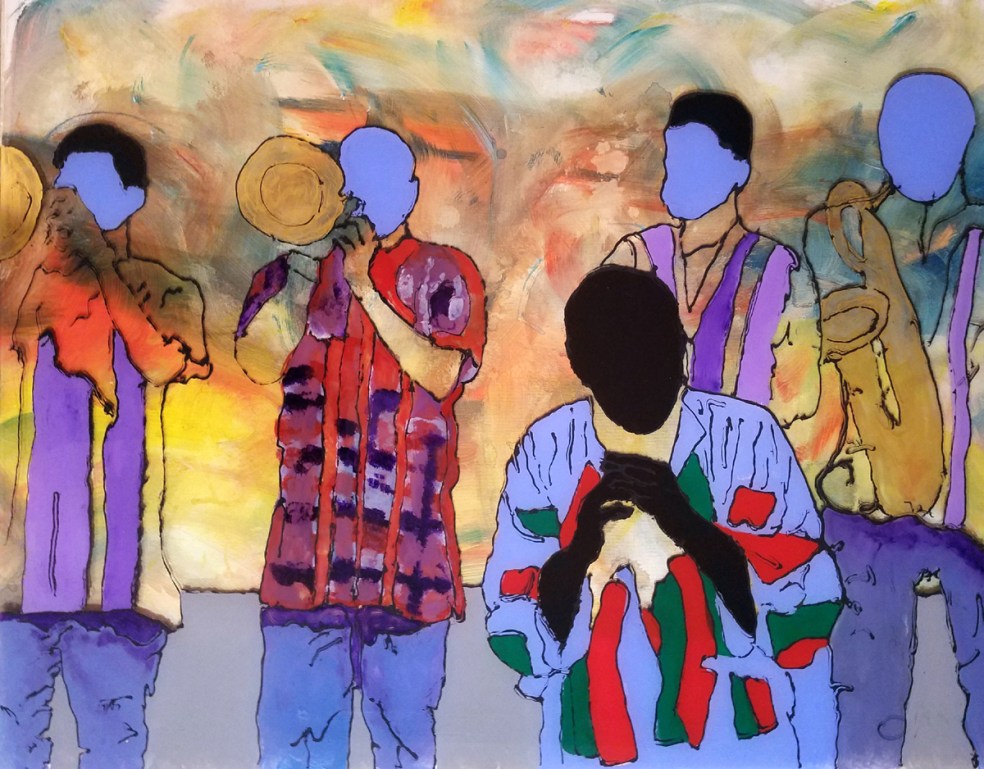
The prevailing theme of his work is space and statement. Or is that statement with space? His interiors paintings guide and lead. His paintings of people beckon friendship and collectiveness. While the humans are ‘faceless,’ their energy is palpable. I easily imagined hearing the trumpets, clarinet, and saxophone of the jazz players. They were in mid-measure and immersed in their music.

“In the pocket.” Musicians playing perfectly in time with a strong, locked-in groove.

Asked why he painted his subjects without faces, Tim explained that he wants to bring the soul and spirit of the subject to the viewer to discover the context of narrative. He allows the viewer to project and infer. He told me that, “Blue is hopeful, gold is royal, clear space brings openness and thoughtfulness.”

The artist and the man are one and the same. Tim’s persona is expression through art. He taught art for 38 years. The last school where he taught was Thomas Jefferson School in Alexandria, Virginia. He spent years teaching, inspiring, and giving back to future generations. He shared that his high school art teacher saw something in him and took him “in hand to develop.” Tim is the youngest in his family and the only one to go to college in his family.  His instructor saw promise. Tim told me that, “He pushed me to say what I needed to say,”

Golden Faces

Born in Chicago, Tim observed and endured division, separation, and segregation. He explained that Chicago was designed by Mayor Daley into communities – Italian, Polish, Black, Hispanic, and so forth. While very young, Tim instinctively knew, “This is wrong.” This shaped his beliefs and attitude about separation. His art ‘gives voice to the voiceless.’ His figures do not need faces to breathe – they allow their viewers to see with their hearts and experience unity of spirit.  His ambition for his art is to bring awareness to the Black community – to become a beacon of art in a large scope – to demonstrate that connectivity is a key to understanding.  He brings collectors together because art is important in place and space.

Tim Davis’ credentials are deep both academically and professionally. To capture the full breadth of his credentials, a visit to his website will be worth your time.  His exhibitions and accomplishments are extensive.  His art resides in collectors’ offices and homes and has been exhibited in prestigious galleries.

Tim Davis standing before his paintings of Oxen Hill Park for his commission for Cedar Hill Regional Medical Center, 2025 – Photo by: Roy Lewis

Davis began his art journey as a sculptor with intentions of working with bronze. He loved working with form and found it more important than realism. Sculpture’s demand for large spaces caused him to evolve to alternative media.

As an instructor, Tim regularly worked in varieties of media from clay to collage, from pastels to oils, from sketching to charcoals, and from 3-D to canvas. He loved the versatility of teaching alternate media to his students. Through this diversity, he has captured and inspired students in art to pursue their media passions.

With his main studio in the Torpedo Factory, he and his work are on constant exhibit to visitors. Asked how he feels about the steady stream of eyes and potential questions, Tim loves the engagement. He explained that some people walk by, others look in the window, and others step inside. He loves visitors to spend some time – whether they just look or engage with him. He told me, “As artists, we hope they just spend a little time here.” As a teacher, he relishes the opportunity to ‘teach and answer questions.”

“The process” described by Tim Davis

Tim generously shared his artistic process with me. He told me that he can look at a blank canvas for days and weeks. He likes to work from photographs that he often captures while sitting in a park or walking along the Potomac River. He looks at colors and shapes. He sketches, then at a moment – he steps into his craft – and becomes enveloped into the flow of his work. He views his research to be key for his process. Trees, water, even people play important roles in his work.

Architectural geometry flows to ideas and expression

The Torpedo Factory is in Old Town Alexandria. The area is rich in American history, and offers endless water, river, and city views. Tim loves to walk along the banks of the Potomac and enjoys many of the area’s good restaurants. He values his time in the environment as rich sources for ideas and inspiration.

Tim Davis is the featured artist at a new exhibition, ‘Conversations,’ at the Fred Schnider Gallery of Art in Arlington Virginia. The opening reception will be on January 10, 2026, from 5:00-8:00 PM. The exhibition runs through February 28.

Christmas Arrived in Song:

The Kennedy Center Messiah Sing-Along Experience

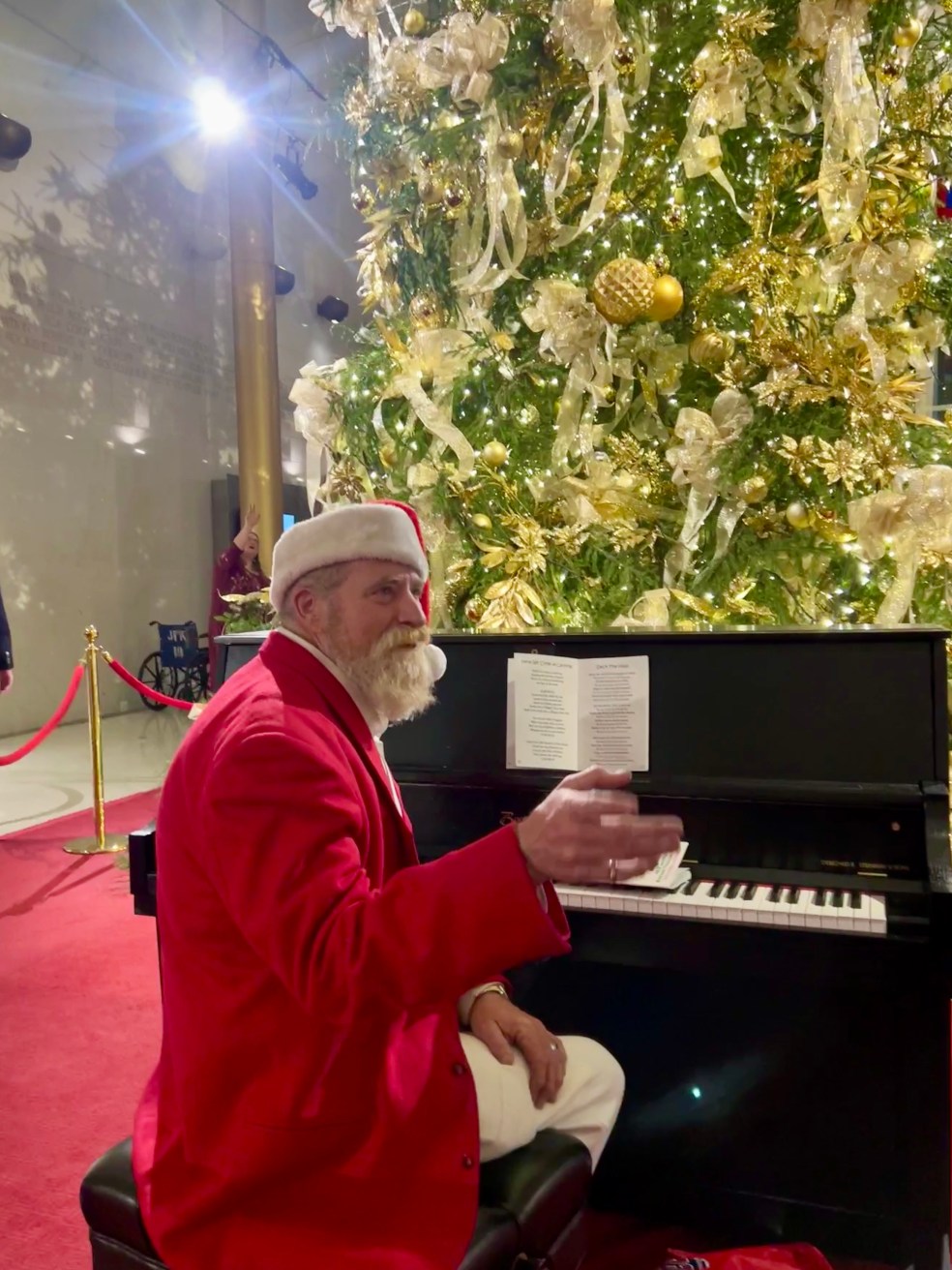
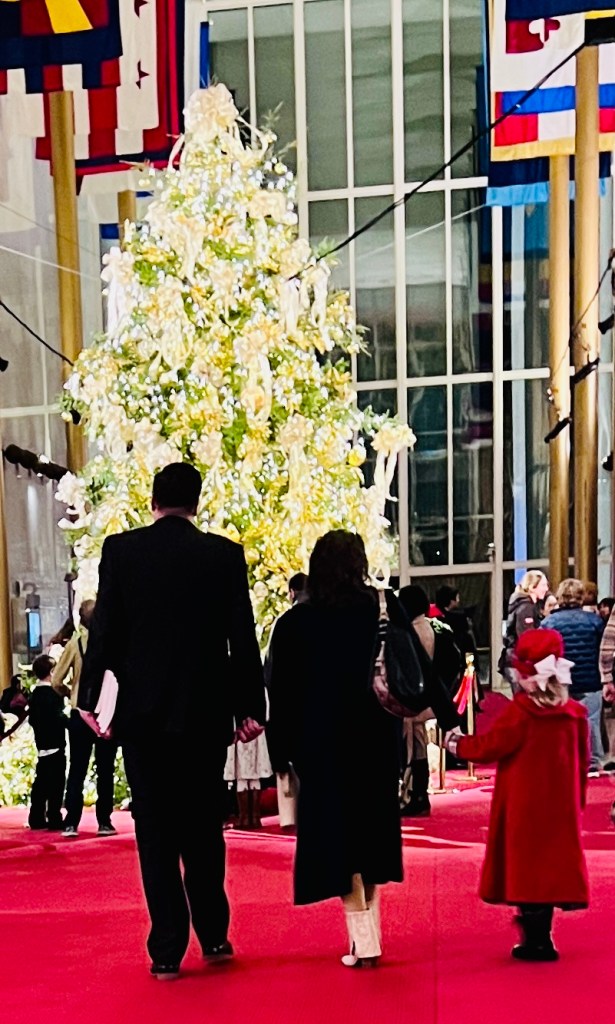
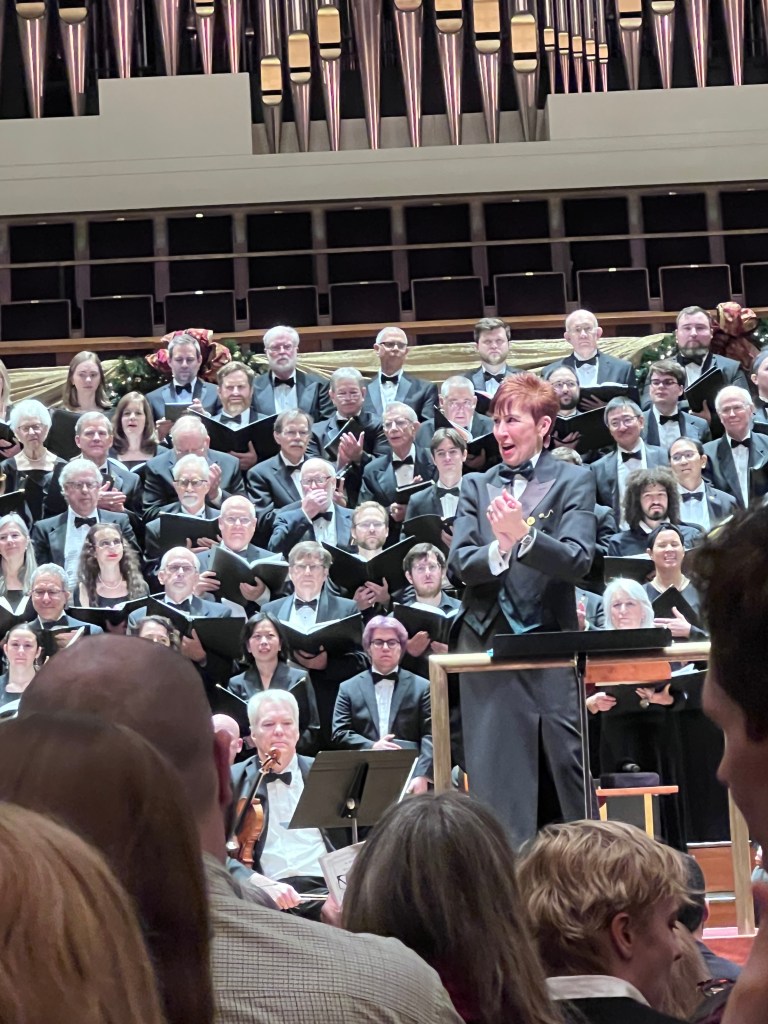
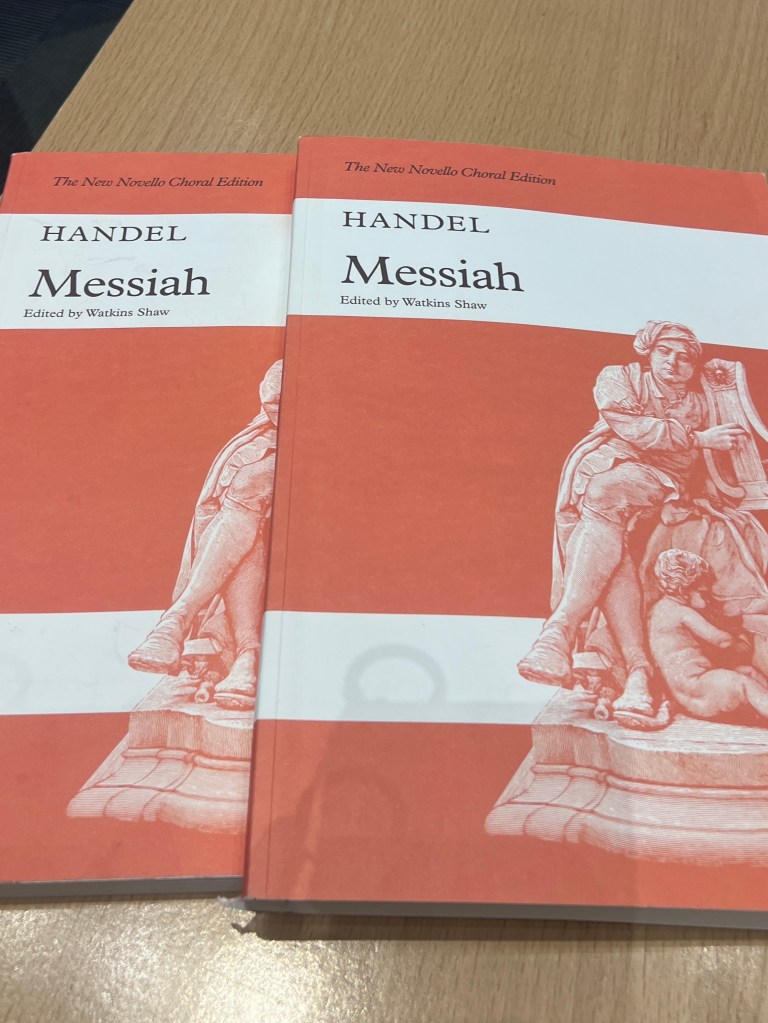
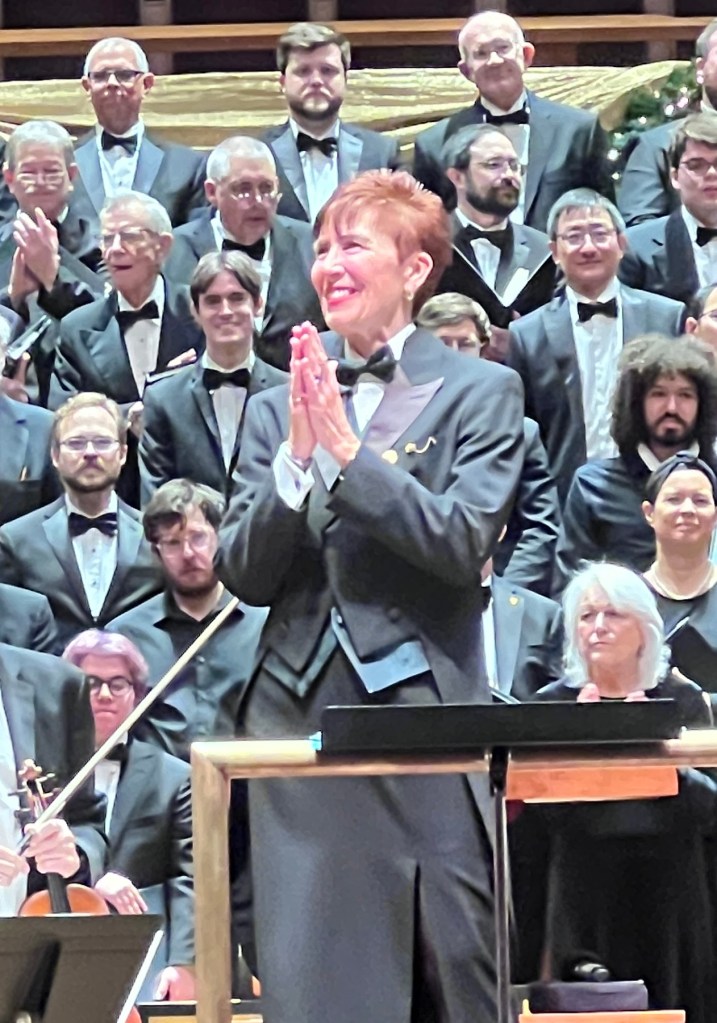
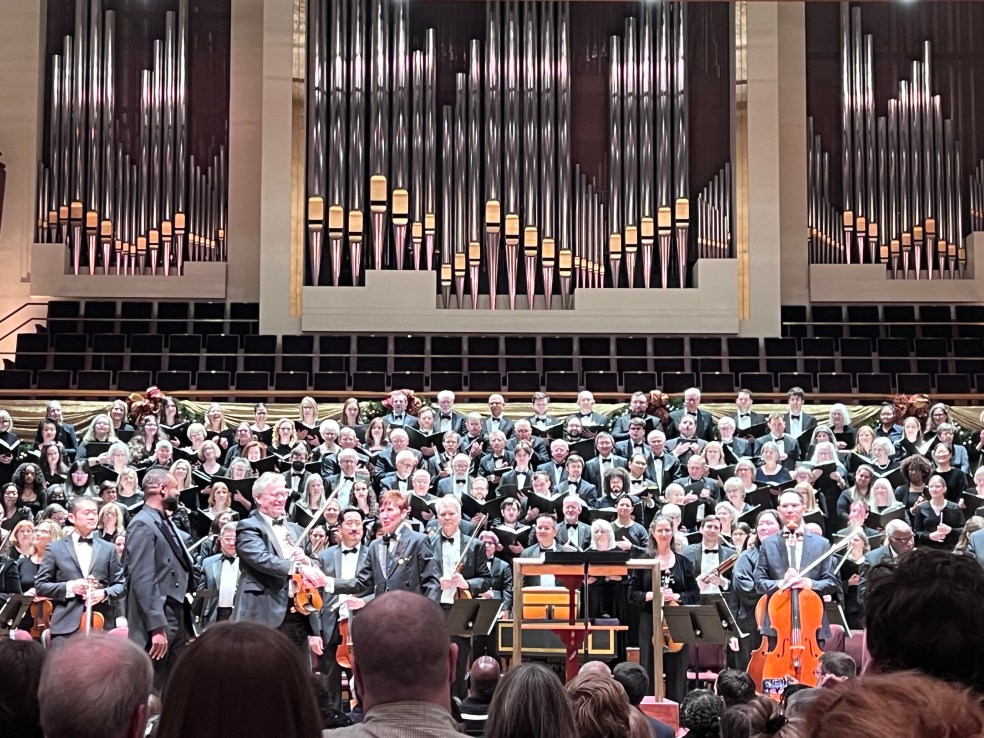
There is a moment every December when Christmas arrives for me. This year, it was during the 53rd Annual Kennedy Center Messiah Sing-Along, drawn from Handel’s oratorio and brought to life under the baton of Dr. Nancia D’Alimonte, Music Director.

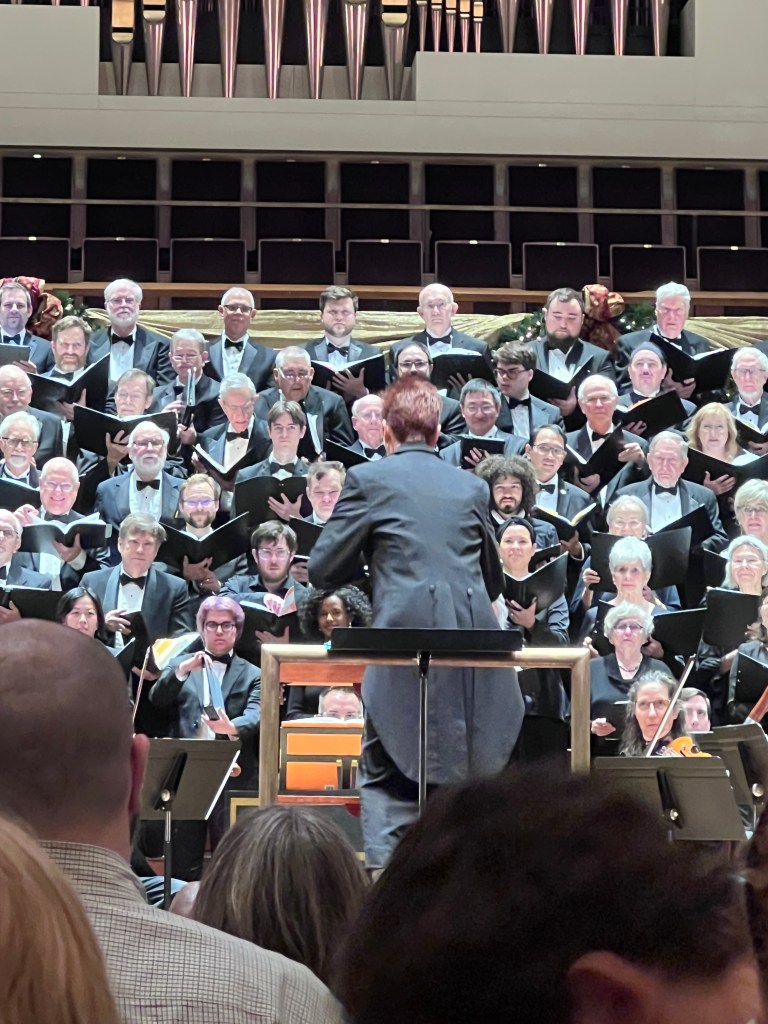
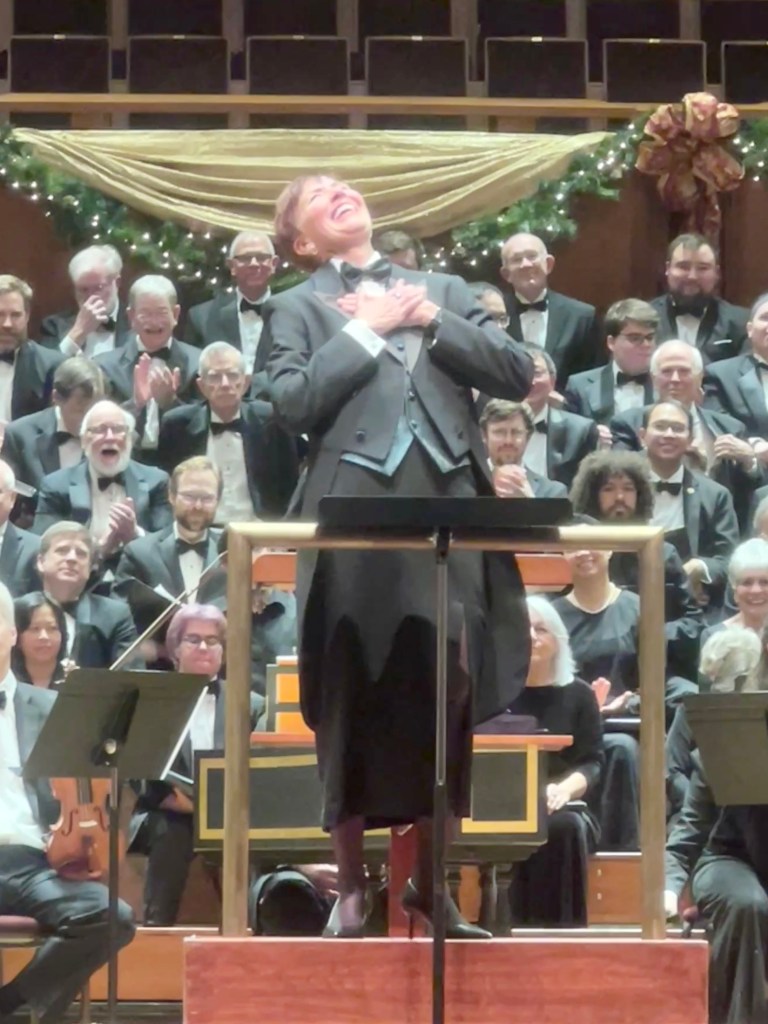
Music Director, Nancia D’Alimonte, delights in performer excellence and audience participation

Nancia’s conducting felt both deeply personal and profoundly communal. She engaged each musician with intention, while simultaneously holding the entire hall in shared purpose. Four choirs, including members of the New Dominion Chorale, Northern Virginia Community Chorus, Thomas Circle Singers, and Vocal Arts of Fairfax joined forces with the Kennedy Center Opera House Orchestra, and a hall of approximately 2,500 singing audience participants.

Nancia wrote on her social media, “Last evening, I conducted the Messiah Sing-Along at the Kennedy Center to a very enthusiastic audience who sang their hearts out! It was an opportunity to bring joy to so many who really needed it . . . and that is what happened – a joyful event! “

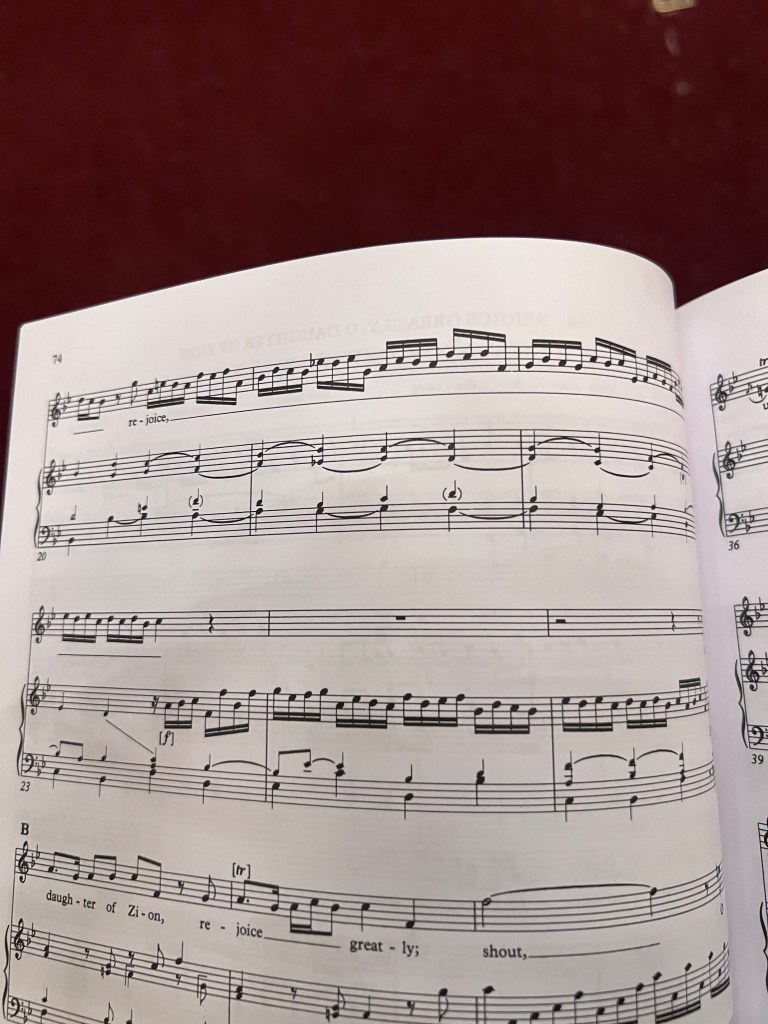
This year, I managed to keep my place in the score and sing my alto line. I was certainly not perfect, but I managed to stay faithfully focused. Some passages live in memory. Others still required careful reading and courage. There are always fewer altos than sopranos at a sing-along. There were moments when the alto came in alone. I hoped to hear another alto nearby but trusted the line. The sopranos around us were extraordinary. Their voices soared, bright and fearless. I wondered what it might feel like to have that vocal ability.

Music notation at first felt like a foreign language:  dots, lines, measures, rests (I do appreciate consecutive rests). Eventually, I stepped into the music.

My husband sang tenor, as did the gentleman behind us, who began beautifully and gradually shifted into something closer to projection than tone. Afterward, my husband and I shared a laugh about our own voices. My second alto is lower than his tenor. Humor is a necessary part of communal singing. Everyone offers what they have, and somehow it makes a joyful sound.

The soloists were exceptional partners in Nancia’s musical conversation. Each soloist demonstrated artistry anchored in trust. They met Nancia with intelligence, precision, and warmth. Their collaboration lifted us all.

Nancia’s personal journey is remarkable. She holds a Doctor of Musical Arts in Orchestral Conducting from the Eastman School of Music, where she studied with Mendi Rodan. She also holds a Master of Music in horn performance from Ithaca College and studied horn at the Royal Flemish Music Conservatory in Brussels, Belgium. She was a professional horn player with the Oshawa Symphony in Canada.

Nancia recently joined the Board of Directors of the John S. Mulholland Family Foundation, supporting food assistance for the working poor of Washington, D.C. She and her husband, Giancarlo, live in Falls Church. They are avid scuba divers, travelers, cooks, and devoted companions to their delightful moyen poodle, Lupo.

Credentials are not what made the evening extraordinary.

What was most moving was the text. It was the Biblical narrative of promise, struggle, prophecy, and hope that was sung not as performance, but as recognition. Thousands of voices carried it forward: steady, reverent, and joyful.

This is when Christmas arrived for me. It arrived not through decorations or ritual, but through music, meaning, and shared breath.

We left the hall grateful, lifted, and were reminded that Handel still takes us to great heights then gently brings us home in celebration of the meaning of the season.

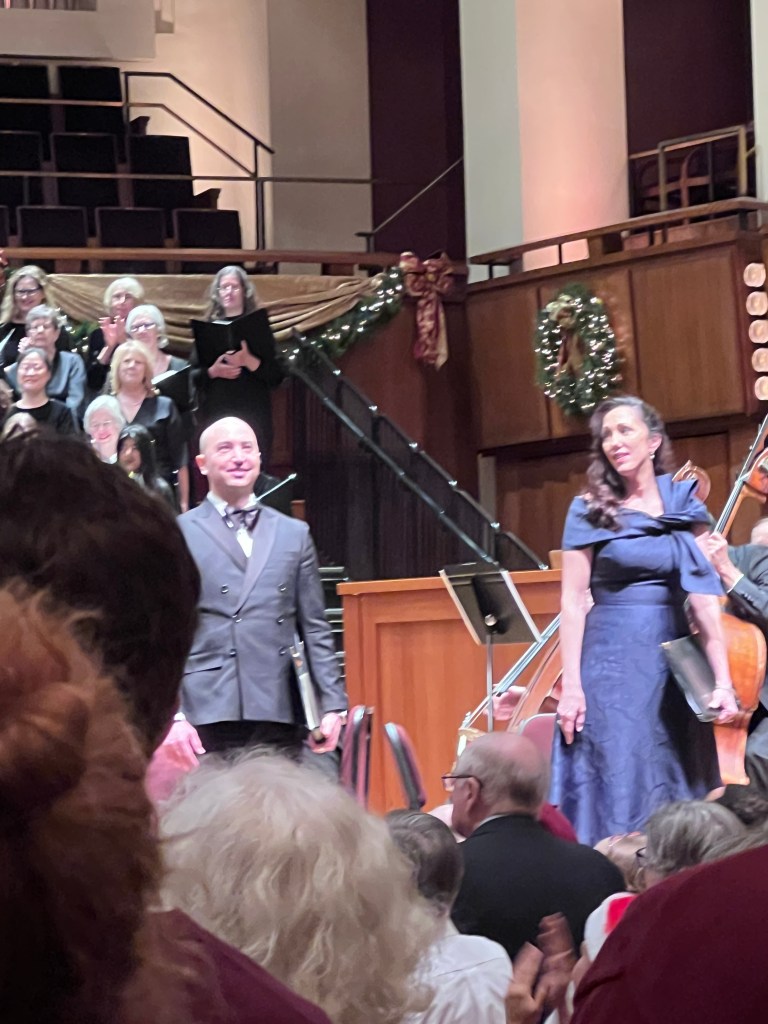
Conductor, Nancia D’Alimonte congratulates Concertmaster, Oleg Rylatko