Artist Tim Davis Shares His Art
Unlocking curiosity
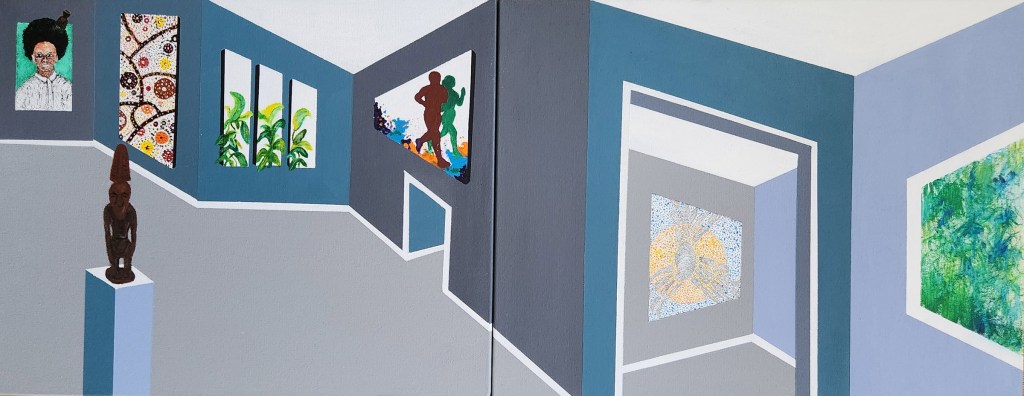
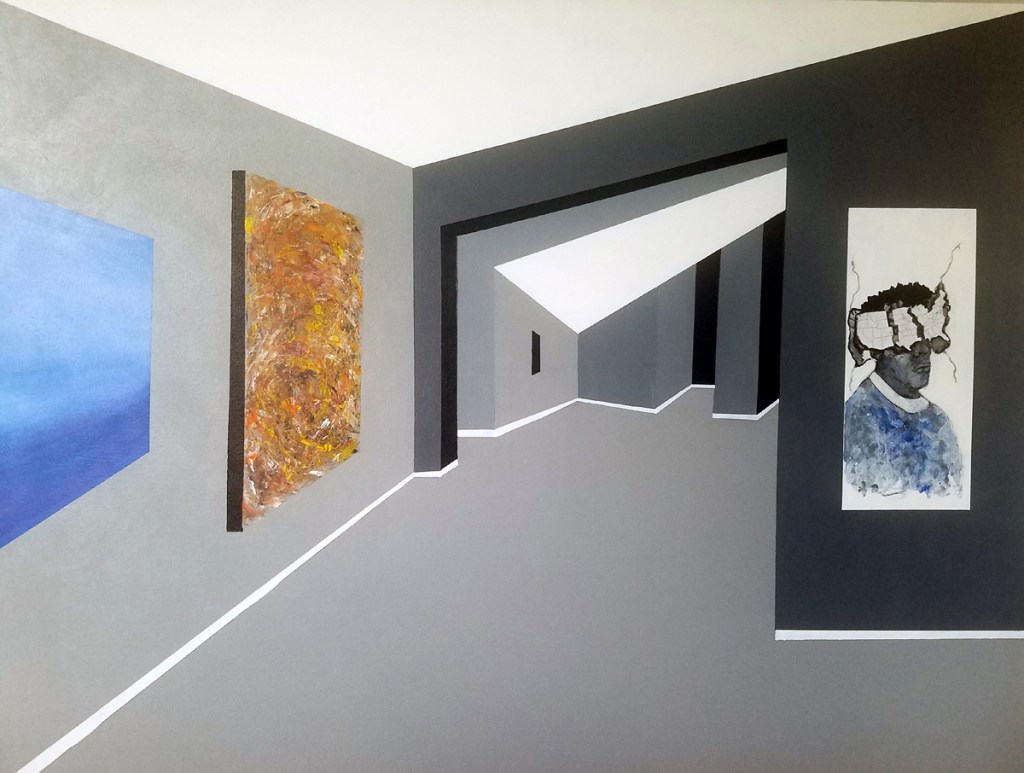
The gallery light reflected from a bright white line of the architectural painting on the right side of the gallery wall. I caught that light in the corner of my eye while walking past several closed galleries in the Torpedo Factory in Alexandria, Virginia. As if leading me into the studio, the light guided me to the real work of art where I was fortunate to meet the artist – Tim Davis.
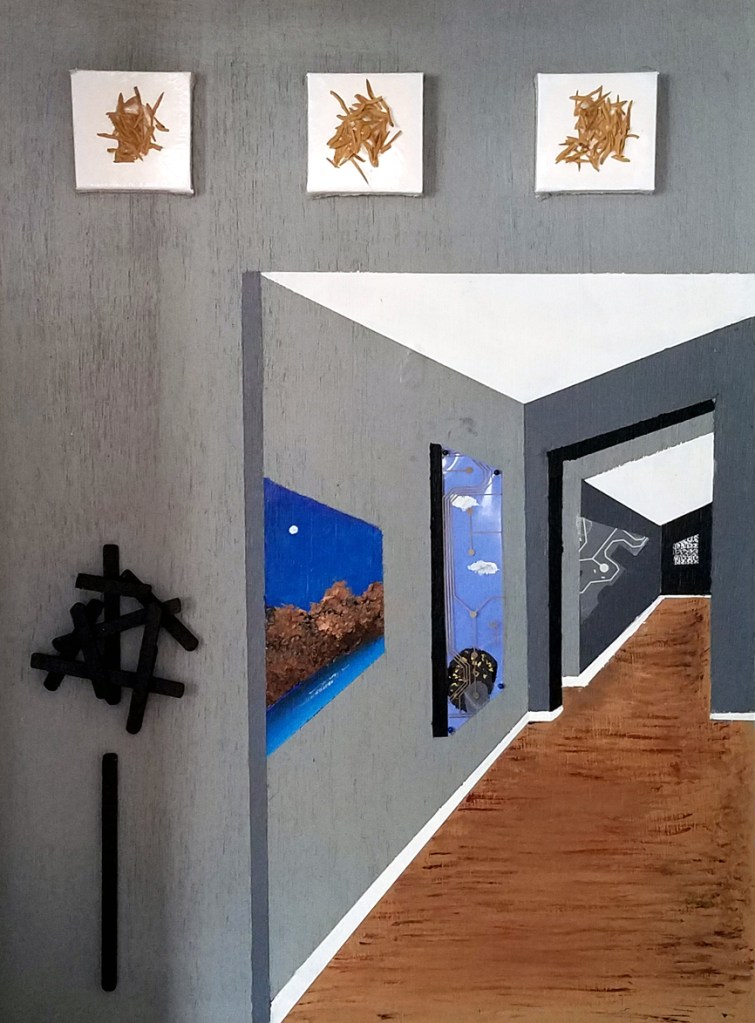
Tim’s studio illuminated art. From fresh beginnings to fully completed pieces available for sale. The piece that brought me in was an architectural image with lines and perspective that guided the viewer down hallways and into rooms. Something about the piece spoke to me and encouraged my curiosity.
Versatility in medium combined with the curiosity of ‘why not,’ presents thoughtful innovation
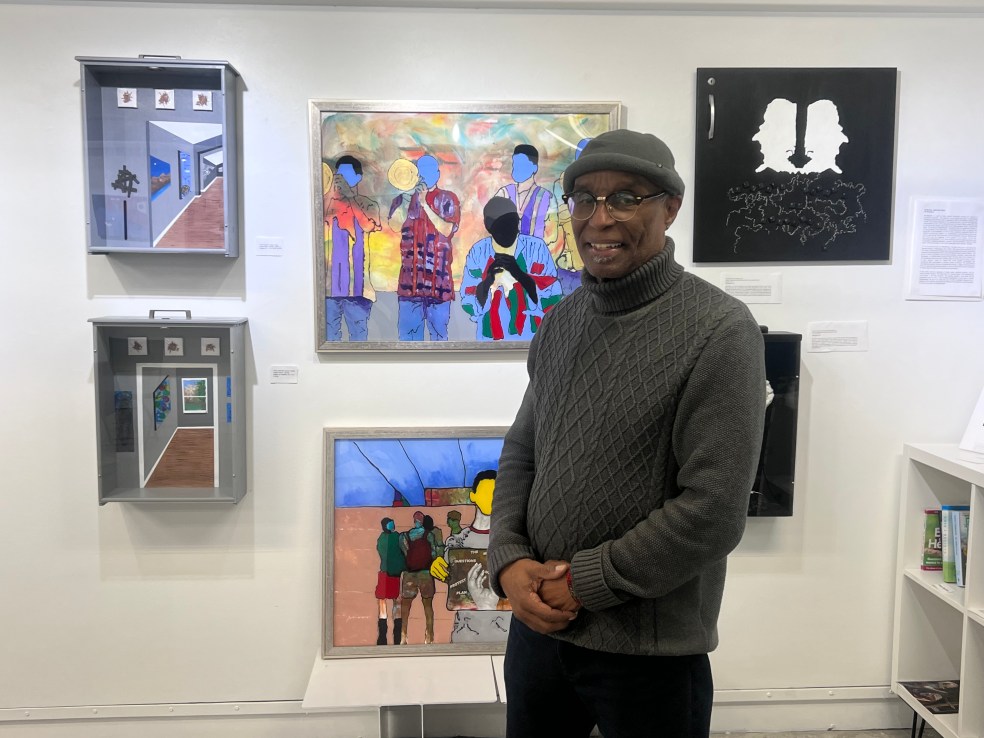
Tim Davis welcomed me to his gallery and studio. More than even the paintings themselves, he exhibited a kindness, gentleness, and genuine hospitality that captured my spirit. We started a conversation that meandered throughout the studio. He showed me his creative works as well as some works in progress. I observed his brushes, paints, supplies, and a preparatory canvas. I felt as though I was viewing something sacred – the tools of creativity and a man’s spirit.
The more we spoke, the more I wanted to know. I took some photos which, in reflection, capture the ease with which the work and the man flowed. He shared how he repurposed drawers into works of art. He explained that his work is diverse and that he enjoys capturing and disclosing ideas.
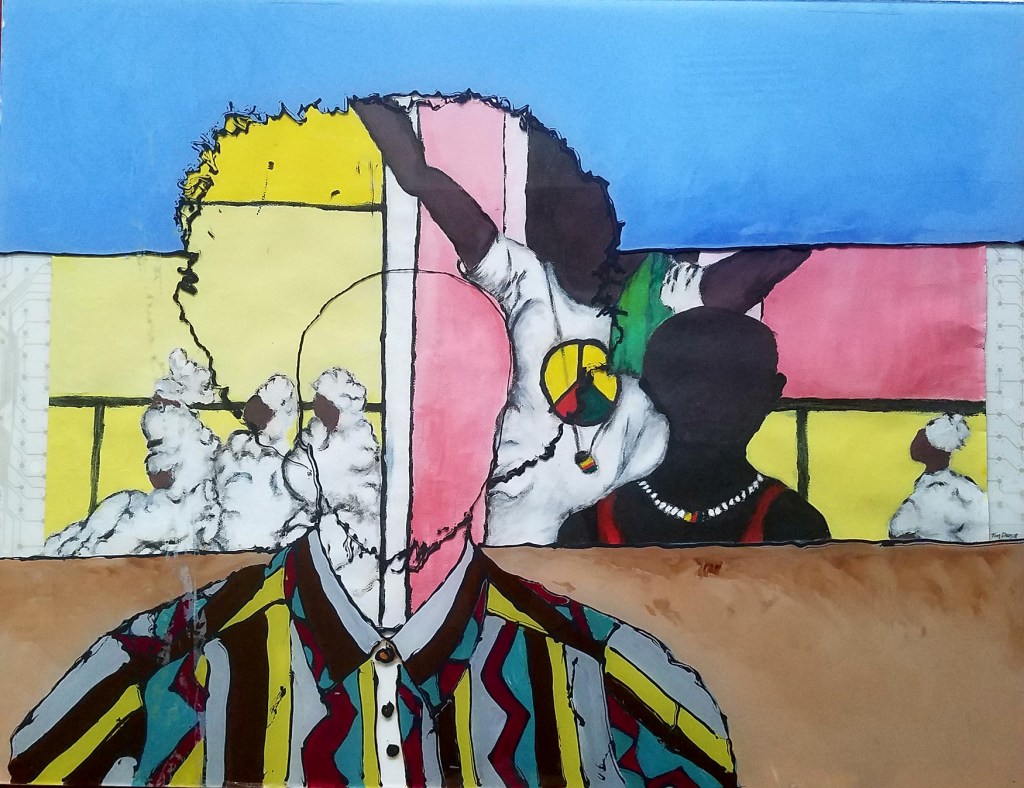
The prevailing theme of his work is space and statement. Or is that statement with space? His interiors paintings guide and lead. His paintings of people beckon friendship and collectiveness. While the humans are ‘faceless,’ their energy is palpable. I easily imagined hearing the trumpets, clarinet, and saxophone of the jazz players. They were in mid-measure and immersed in their music.
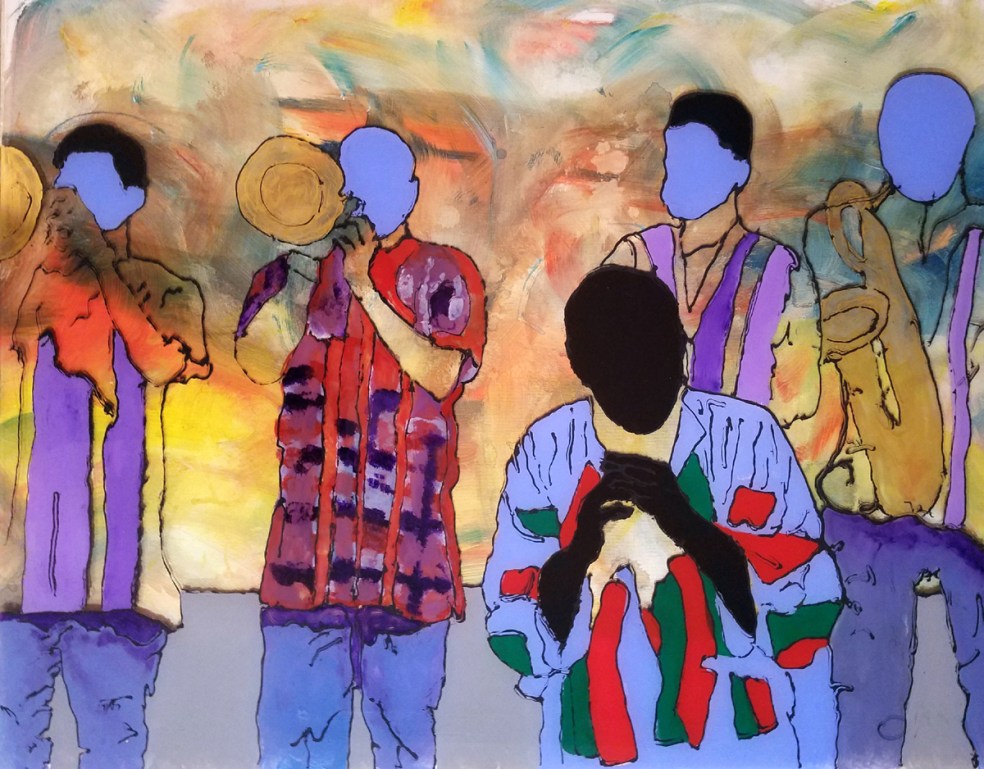
“In the pocket.” Musicians playing perfectly in time with a strong, locked-in groove.
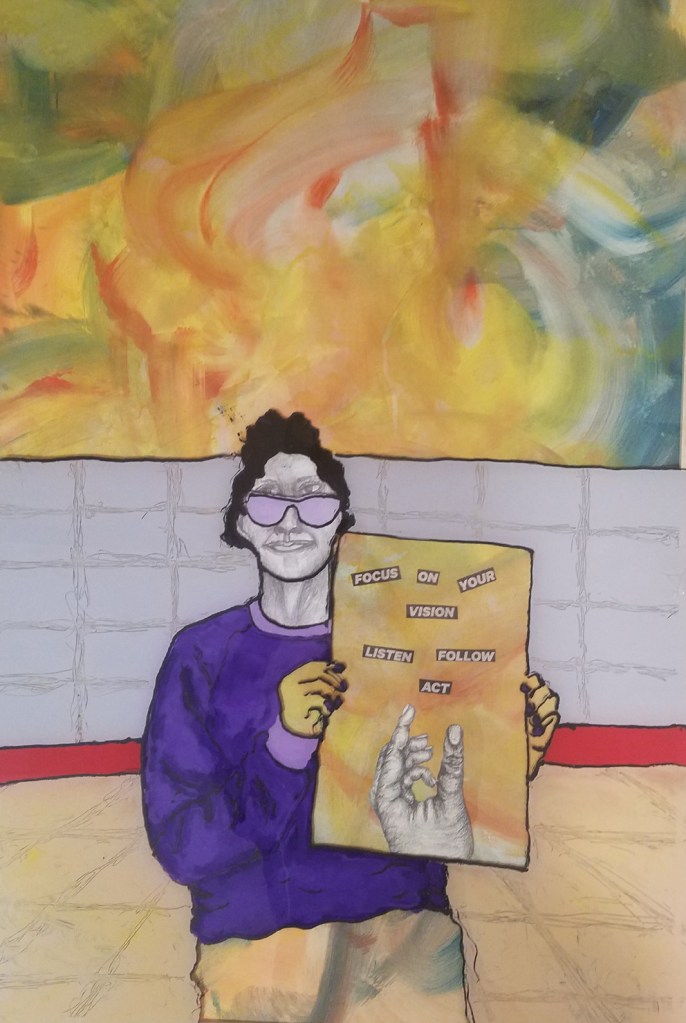
Asked why he painted his subjects without faces, Tim explained that he wants to bring the soul and spirit of the subject to the viewer to discover the context of narrative. He allows the viewer to project and infer. He told me that, “Blue is hopeful, gold is royal, clear space brings openness and thoughtfulness.”
The artist and the man are one and the same. Tim’s persona is expression through art. He taught art for 38 years. The last school where he taught was Thomas Jefferson School in Alexandria, Virginia. He spent years teaching, inspiring, and giving back to future generations. He shared that his high school art teacher saw something in him and took him “in hand to develop.” Tim is the youngest in his family and the only one to go to college in his family. His instructor saw promise. Tim told me that, “He pushed me to say what I needed to say,”
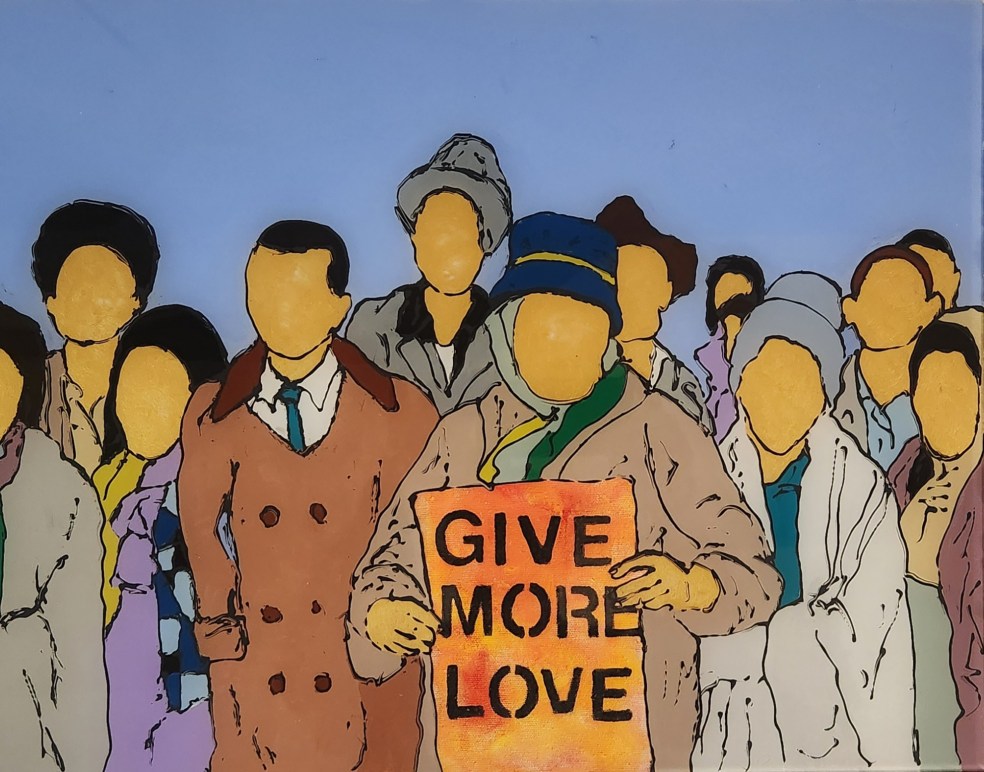
Golden Faces
Born in Chicago, Tim observed and endured division, separation, and segregation. He explained that Chicago was designed by Mayor Daley into communities – Italian, Polish, Black, Hispanic, and so forth. While very young, Tim instinctively knew, “This is wrong.” This shaped his beliefs and attitude about separation. His art ‘gives voice to the voiceless.’ His figures do not need faces to breathe – they allow their viewers to see with their hearts and experience unity of spirit. His ambition for his art is to bring awareness to the Black community – to become a beacon of art in a large scope – to demonstrate that connectivity is a key to understanding. He brings collectors together because art is important in place and space.
Tim Davis’ credentials are deep both academically and professionally. To capture the full breadth of his credentials, a visit to his website will be worth your time. His exhibitions and accomplishments are extensive. His art resides in collectors’ offices and homes and has been exhibited in prestigious galleries.

Tim Davis standing before his paintings of Oxen Hill Park for his commission for Cedar Hill Regional Medical Center, 2025 – Photo by: Roy Lewis
Davis began his art journey as a sculptor with intentions of working with bronze. He loved working with form and found it more important than realism. Sculpture’s demand for large spaces caused him to evolve to alternative media.
As an instructor, Tim regularly worked in varieties of media from clay to collage, from pastels to oils, from sketching to charcoals, and from 3-D to canvas. He loved the versatility of teaching alternate media to his students. Through this diversity, he has captured and inspired students in art to pursue their media passions.
With his main studio in the Torpedo Factory, he and his work are on constant exhibit to visitors. Asked how he feels about the steady stream of eyes and potential questions, Tim loves the engagement. He explained that some people walk by, others look in the window, and others step inside. He loves visitors to spend some time – whether they just look or engage with him. He told me, “As artists, we hope they just spend a little time here.” As a teacher, he relishes the opportunity to ‘teach and answer questions.”
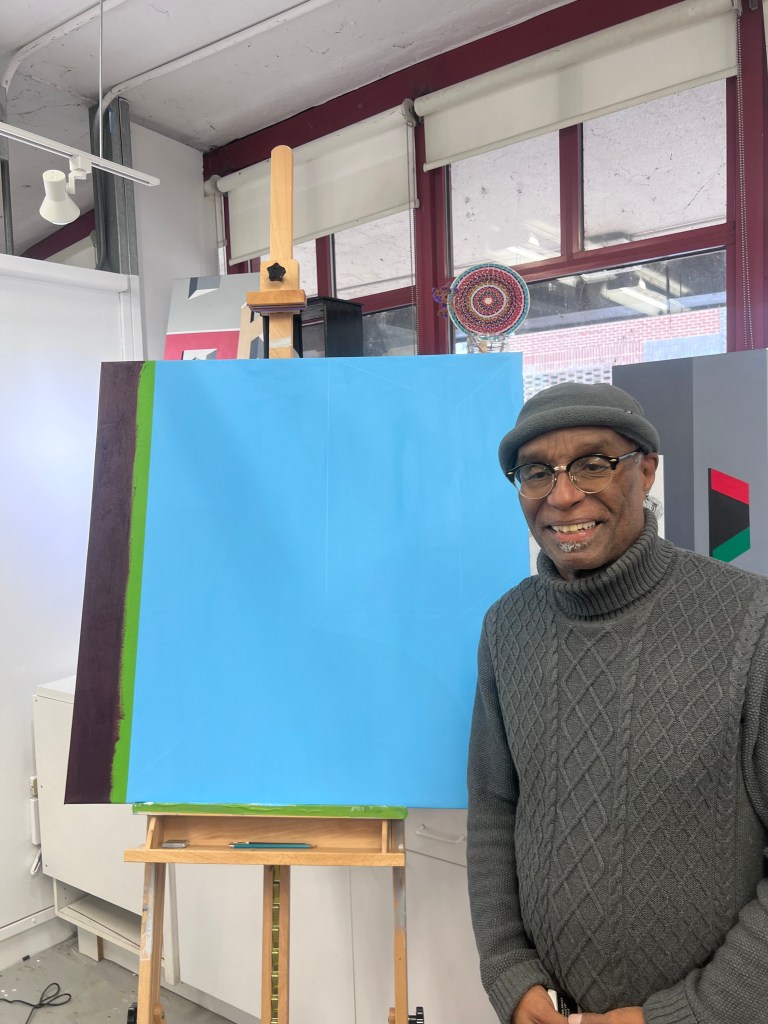
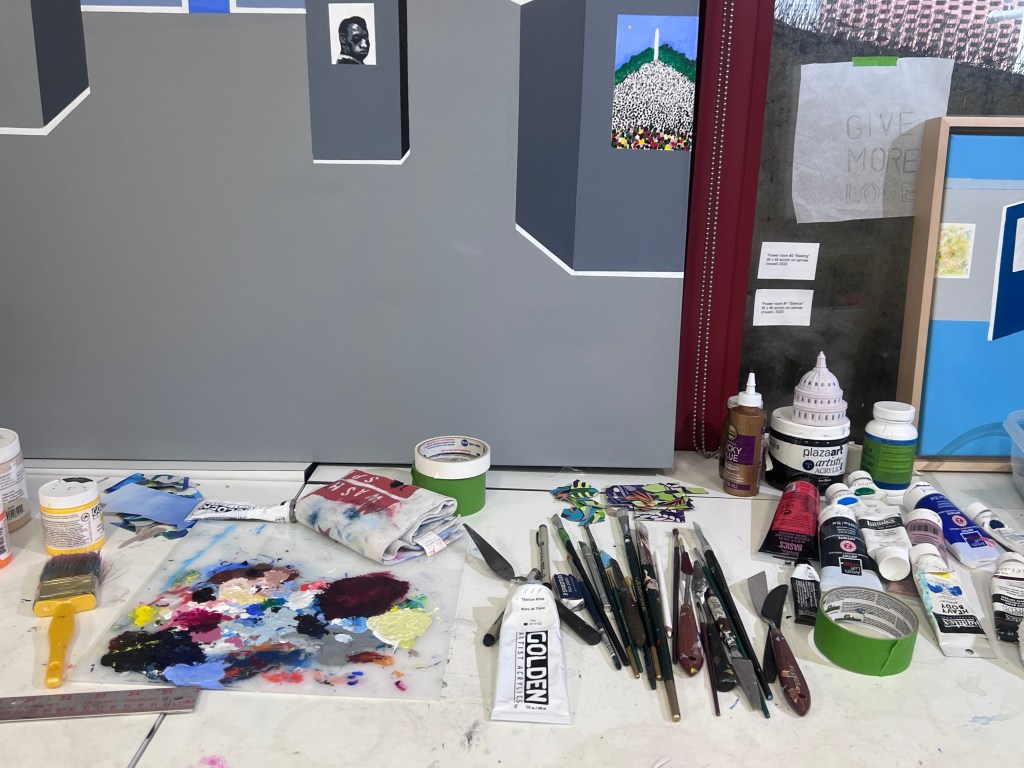
“The process” described by Tim Davis
Tim generously shared his artistic process with me. He told me that he can look at a blank canvas for days and weeks. He likes to work from photographs that he often captures while sitting in a park or walking along the Potomac River. He looks at colors and shapes. He sketches, then at a moment – he steps into his craft – and becomes enveloped into the flow of his work. He views his research to be key for his process. Trees, water, even people play important roles in his work.
Architectural geometry flows to ideas and expression
The Torpedo Factory is in Old Town Alexandria. The area is rich in American history, and offers endless water, river, and city views. Tim loves to walk along the banks of the Potomac and enjoys many of the area’s good restaurants. He values his time in the environment as rich sources for ideas and inspiration.
Tim Davis is the featured artist at a new exhibition, ‘Conversations,’ at the Fred Schnider Gallery of Art in Arlington Virginia. The opening reception will be on January 10, 2026, from 5:00-8:00 PM. The exhibition runs through February 28.