Artist Fellow Elise Ansel's interpretation of Macbeth's witches

When Shakespeare Meets Canvas:

From Old Masters to Modern Mavericks

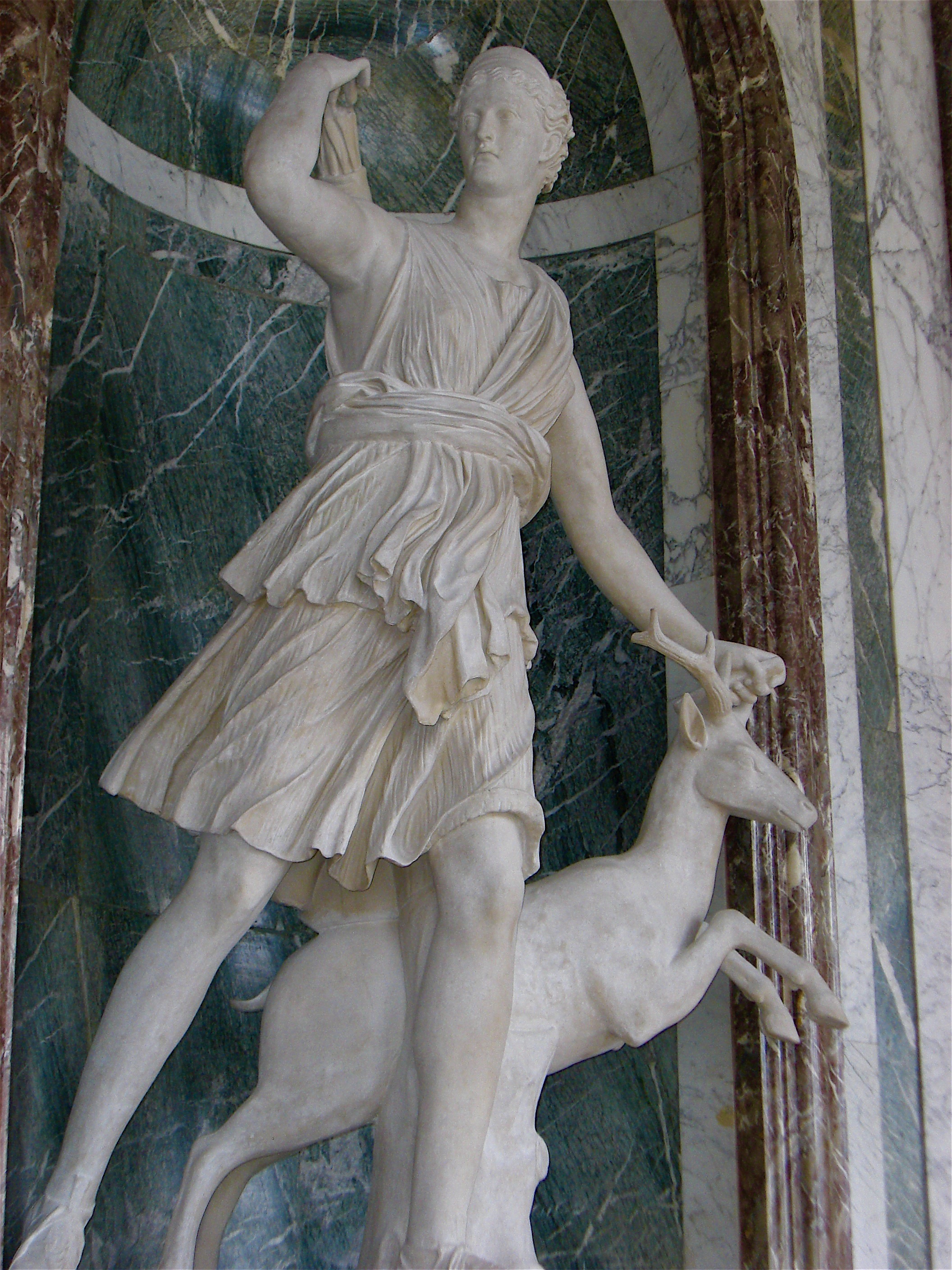
Excerpt from Image No. 6. Romeo and Juliet. Act 5. Scene 3. Painted by Mr. Northcote, R.A.

Before the play, Julius X, started I spent the early evening viewing the latest Folger Shakespeare Library exhibition, Imagining Shakespeare: Mythmaking and Storytelling in the Regency Era. I realized that different artists perceive the same Shakespeare scenes in wildly different facets. At the entrance to the exhibit, I was greeted by Henry Fuseli’s witches from 1793, complete with dramatic robes and theatrical setting, juxtaposed with Artist Fellow Elise Ansel’s 2024 abstract interpretation of that same scene, where the witches dissolve into swirling brushstrokes of orange, white, and red against deep black.

Same story. Different worlds.

The Boydell Collection: Shakespeare as Blockbuster

Walking past modernism, I was greeted with Regency Era historical heavyweights. The fourteen canvases now hanging at the Folger come from the Boydell Shakespeare Gallery—the 18th century’s attempt at a Shakespeare cinematic universe. John Boydell and his nephew Josiah opened this fashionable London gallery in 1789, amassing 173 paintings (almost half of them life-size) by 35 different artists. Think of it as the Metropolitan Museum meets a Shakespeare theme park.

Only about one third of these paintings survive today. The Folger has the largest remaining collection. When seen together for the first time since 1805, one realizes that these were not simply illustrations. They were storytelling on a grand scale.

The artists read like a who’s who of British painting: Robert Smirke (32 paintings), William Hamilton, Richard Westall, Francis Wheatley, George Romney, James Northcote, and Julius Ibbetson. Each brought their own style to Shakespeare’s words, sharing a common vision: make the drama leap off the page and into visual space.

When Witches Get a Modern Makeover

Artist Fellows “…tease out the threads connecting the early modern world to our lives today.” Above, Henry Fuseli’s Macbeth Consulting the Vision of the Armed Head (1793) has been reinterpreted by Artist Fellow, Elise Ansel with color, light, and shape.

Fast-forward to today where Folger Artist Fellow Elise Ansel takes on the same Macbeth witches that Fuseli painted in 1793. Instead of recognizable figures in a dark landscape, she renders visual energy—what she calls “graceful, wavelike brushstrokes, echoed in watts of gold.”

In her piece The Nature of Witches, abstract shapes suggest bodies without defining them. In Untying the Winds, the witches become more elemental—muted swirls that might “untie” the winds from Macbeth. The gray brushstrokes feel darker, more aggressive, as if the painting itself embodies the storm building in the play.

Where Fuseli’s witches are frightening and haggish (as Shakespeare wrote them), Ansel transforms them into something more ambiguous. They are powerful, fluid, almost beautiful in their danger.

What Makes Old Master Paintings “Old Master?”

I noticed, as noted, when standing in front of the Boydell paintings that they were created by men for men. That is not a value judgment. This was the art world of the early 19th C. The subjects, the perspectives, the portrayal of women reflected a specific and limited viewpoint.

In her contemporary pieces, Ansel deliberately disrupts the male thesis. By using color and abstraction in what she calls “open-ended visual languages,” she creates “new ways of looking and engaging for modern viewers.” She is not replacing the original stories. She is showing us different angles, different emotional temperatures.

Like hearing a jazz musician interpret a classical piece, the original composition remains; suddenly revealing notes and rhythms never before noticed. One such piece: Beethoven’s Für Elise as updated and performed by jazz pianist, Chick Corea in 1993.

Looking at the Paintings

The Folger stays true to the original Boydell Shakespeare Gallery tradition by providing visitors free booklets listing each painting denoted with a number. Further in the booklet, the paintings are described by play title, act and scene, a description of the scene’s events, the artist’s name, and excerpts from the play’s text.

In the gallery, I was on my own to view, search and interpret. Without immediate instructional labels, the exhibition affords space for interpretation while the booklet affords greater depth, if desired. Standing before the massive canvas of the awakening woman in white, I felt the folly of the deception and ignorance of the friar. When you look, you can recognize your feelings and reactions to the play. Having deep-seated conflict about that play, I first saw deception then agony. What you see will depend on your attitude.

Digging further into the context of the paintings, I opened the booklet to learn about the artist, the play, and the scene. Who painted this? When? What was happening in their world? How did knowing that painting No.10 was from King Lear affect my view? I did not need the booklet to tell me. I also did not need the booklet for painting No. 8. However, painting No.1 could have been any one of Shakespeare’s female characters dressed in men’s clothing. Painting No. 14 is not a play scene; it is a semi-deification of the Bard himself.

From British Imperialism to You

There is truth embedded in these beautiful paintings. By the time the Boydell Gallery closed in 1805, Shakespeare had become “The Bard.” He was no longer a brilliant playwright, but “a larger-than-life symbol of British imperialism and economic power.” These paintings were not simply representational art. They were essentially cultural propaganda.

Two hundred twenty years later, we appreciate the artistry while acknowledging the intent. Shakespeare’s words have always been interpreted through the lens of whoever is doing the looking—whether that is a Royal Academy painter in 1790 or a contemporary Artist Fellow in 2025.

The Contemporary Conversation Continues

The Folger’s Artist Fellowship program ensures that this conversation does not stop with historical canvases. Current Fellows like Elise Ansel join Missy Dunaway, Dominick Porras, Mandy Cano Villalobos, and Alexander D’Agostino create art works “…grounded in research on the stories, art, and objects in our collection,” per the introductory statement.

These artists are not merely making art about Shakespeare. They are using the collection as a springboard to explore how art and literature shape each other; how visual language can expand or challenge written words, how what we see influences what we think we know.

Come See for Yourself

These are not paintings you can experience on a screen. You should stand before them and feel their scale, see the brushwork up close, and notice details that disappear in photographs: how light plays across Ansel’s textured surfaces, the depth of detail and scope of the Boydell canvases, designed to overwhelm and impress.

The 14 Boydell paintings are now permanent residents at the Folger. The contemporary art rotates with each fellowship. Both are free to visit. Both will make you think about Shakespeare in ways you have not before.

Next time you are near Capitol Hill, visit the collection. Spend some time with witches old and new. See what happens when you allow visual artists to have their say about those famous words.

Shakespeare wrote for theater—a visual, physical space where words created the story. These artists are continuing that tradition, reminding us that these plays are as much visual as they are heard.


The Contemporary Art at the Folger exhibition featuring Elise Ansel runs October 3–November 9, 2025. The Boydell Shakespeare Gallery paintings are on permanent display. The Folger Shakespeare Library is located on Capitol Hill in Washington, DC, and admission is free.

Virginia National Ballet’s “Bohemian Rhapsody”:

Where Classical Ballet Meets Rock Energy

The Virginia National Ballet delivered a spectacular trio of performances at their recent “Bohemian Rhapsody” show, showcasing their remarkable versatility and technical prowess through three distinct repertoire pieces.

The evening began with “Tango Nights,” set to the passionate music of Astor Piazzolla. The atmospheric stage design evoked an Argentine nightclub where dancers explored the complex emotional landscape of pursuit, betrayal, and romance. The choreography captured tango’s sultry essence while maintaining the company’s signature balletic precision; a captivating introduction that immediately drew the audience into the performance’s emotional world.

“Moonlight Sonata,” a new world premier by Rafik Hegab, and choreographed to Beethoven’s timeless composition cooled the atmosphere with three phases of the moon.. This piece displayed ballet in its most powerful form, with over fifteen dancers executing intricate patterns across the intimate stage. What struck me most was the remarkable juxtaposition of strength and gracefulness – forceful movements executed with extraordinary finesse. The dancers’ stamina and control were evident as they embodied the music’s emotional journey, with visual elements representing lunar phases complementing the crescendos of both music and movement. Sierra Stipetich delivered a particularly breathtaking performance with her fearless pas de trois featuring gravity-defying lifts and seamless transitions between her male counterparts.

The culminating piece, “Bohemian Rhapsody,” was nothing short of transformative. Choreographer Rafik Hegab, brilliantly fused classical ballet techniques with the electric energy of Queen’s iconic music, creating a synthesis that honored both traditions while creating something entirely new. Six Queen compositions flowed together in a performance that had me repeatedly smiling with sheer delight. The dancers embodied Freddie Mercury’s theatrical spirit while maintaining their classical foundation; a combination that felt organic rather than forced.

Throughout the evening, the company demonstrated remarkable emotional range, transitioning from the moody intensity of tango to the structural elegance of Beethoven, and finally to the bold theatricality of Queen. This versatility speaks to the vision of company founder and managing director, Elysabeth Muscat, and the choreographic genius of Rafik Hegab, who have clearly created an environment where technical excellence and artistic expression flourish equally.

For those who missed this extraordinary performance, there’s one more opportunity to experience it on May 17, 2025, at the Ailey Citigroup Theater in Manhattan. This is a production that deserves to be seen – repeatedly, if possible. It  showcases ballet’s timeless ability to evolve while honoring its classical foundations.

The Virginia National Ballet has proven once again that they are a company worth watching, not just for their technical precision, but for their willingness to push the boundaries of what ballet can express.

Photo Credits: Photos by David Pearson, Compliments of Elysabeth Muscat, Managing Director, Virginia National Ballet

From Rock Anthems to Moonlight: Virginia National Ballet’s Bold Artistic Expression

The familiar notes of Queen’s iconic “Bohemian Rhapsody” echo through the studio as dancers leap, lunge, and spin with unexpected intensity. I’m standing at the front of the rehearsal room of Virginia National Ballet’s rehearsal space, watching a rock masterpiece transform into classical movement before my eyes. This is no ordinary ballet rehearsal, and what’s coming to the stage is certainly no ordinary performance.

A Triple Bill of Transformation

Virginia National Ballet’s upcoming production dissolves boundaries with an ambitious triple bill showcasing their versatility and technical prowess. Back by popular demand, “Bohemian Rhapsody” returns after its 2017 debut, joined by the revival of “Tango Nights,” a sophisticated ballet set to Astor Piazzolla’s music, and “Moonlight Sonata,” a beautiful world premiere by Artistic Director Rafik Hegab.

“We wanted to create something that honors both Queen’s revolutionary spirit and ballet’s timeless grace,” explains Elysabeth Muscat, Founder of Virginia National Ballet. “But this program goes further—it demonstrates our dancers’ ability to completely reinvent themselves across different musical worlds in a single evening,” she adds.

When Rock Meets Ballet: “Bohemian Rhapsody”

Returning after its acclaimed 2017 debut, “Bohemian Rhapsody” stands as the Virginia National Ballet’s most audacious offering. This enhanced production captures Mercury’s vocal journey with stunning fidelity—dancers physically transform as the music shifts from tender ballad to operatic crescendo to hard rock intensity. The masterful blend of classical ballet storytelling with rock-inspired movement creates a visual symphony that reveals entirely new dimensions in Queen’s familiar anthem.

“Just as the song shifts from ballad to operatic drama to hard rock, our dancers embody these transitions physically. It’s not just about dancing to music; it’s about becoming the music’s physical manifestation,” explained Muscat.

I’ve heard “Bohemian Rhapsody” hundreds of times, but never like this. The music crashes through the studio as the dancers respond, and in these fleeting moments, I witness the perfect marriage of rock and ballet—two art forms that shouldn’t work together, yet somehow create something entirely new in their collision.

Passion and Precision: “Tango Nights”

Without pausing, the rehearsal flows into “Tango Nights,” and the studio’s atmosphere immediately shifts. Bodies that moments ago were interpreting rock now embody the sophisticated language of tango. Set to Astor Piazzolla’s evocative compositions, this ballet explores sensuality and passion through movement that feels both precisely calibrated and dangerously spontaneous.

The dancers’ expressions change, their postures transform, and suddenly we’re transported to the intimate milieu of Argentine dance halls. Rather than echoing vocal complexities as in “Bohemian Rhapsody,” the dancers’ bodies now capture the distinctive tensions and releases in Piazzolla’s bandoneon, creating visual manifestations of the instrument’s breathing quality.

Ethereal Contemplation: “Moonlight Sonata”

The rehearsal included Artistic Director Rafik Hegab’s latest creation, “Moonlight Sonata.” If “Bohemian Rhapsody” represents bold artistic fusion and “Tango Nights” embodies passionate sophistication, then “Moonlight Sonata” offers yet another transformation—into ethereal contemplation.

Beethoven’s haunting composition guides dancers through movements that seem to capture moonlight itself—from the First Quarter, to the Full, to the Waning Moon—sometimes clear and defined, other times elusive and mysterious. With remarkable sensitivity, Hegab has created choreography that responds to the music’s tonal qualities, allowing dancers to become physical embodiments of Beethoven’s emotional landscape. A highlight of this program is a striking pas de trois featuring two men and one woman, showcasing lifts, shapes, and “tosses” so innovative I have rarely observed them, much less in a single variation.

What makes this program so remarkable isn’t just the juxtaposition of these diverse pieces, but the seamless resonance the company achieves between sound and movement across wildly different musical worlds.

The Art of Shapeshifting

The dancers of Virginia National Ballet demonstrate remarkable versatility as they navigate through this ambitious triple-bill program. Moving from Queen to Piazzolla to Beethoven in a single performance showcases not just their technical mastery but their extraordinary artistic adaptability. This constant metamorphosis is evident in every aspect of the rehearsal. Dancers transform from classical technicians to rock interpreters to tango masters with seamless fluidity—a shapeshifting quality that demands an entirely new approach to both training and performance.

Sweat glistens on foreheads (mostly the men) as dancers move with precision through the complex choreography. This is a working rehearsal – as the intensity gears up, the dancers shed layers, from full leggings and sweater wraps to bare legs and spaghetti straps. Yet even in these practical moments, their commitment to artistic transformation never wavers.

Sitting in on Virginia National Ballet’s rehearsal, I’m witnessing familiar anthems and classical masterpieces reimagined through the language of dance in ways I never imagined possible. Three distinct musical voices. Three unique movement vocabularies. One company bold enough to transform itself completely, multiple times in a single evening.

Virginia National Ballet’s upcoming performance promises to be a masterclass in artistic shapeshifting—a journey through sound and motion that audiences won’t soon forget. Based in Manassas, Virginia, this company is quietly creating and producing incredible, high-quality productions. But make no mistake—their “Bohemian Rhapsody” will be anything but quiet! I can’t wait to experience this production.

Virginia National Ballet’s triple bill featuring “Bohemian Rhapsody,” “Tango Nights,” and the world premiere of “Moonlight Sonata” will be performed at Hylton Performing Arts Center, Manassas, Virginia on Sunday, April 27 at 3 PM. Purchase Tickets. I purchased 10 tickets ! Everyone I have mentioned this performance is fascinated. Get your tickets soon.

You can see it in New Yor City on May 17 at the Ailey Citygroup Theater – buy tickets here.

Photo Credits: Professional photos curtesy of VNB

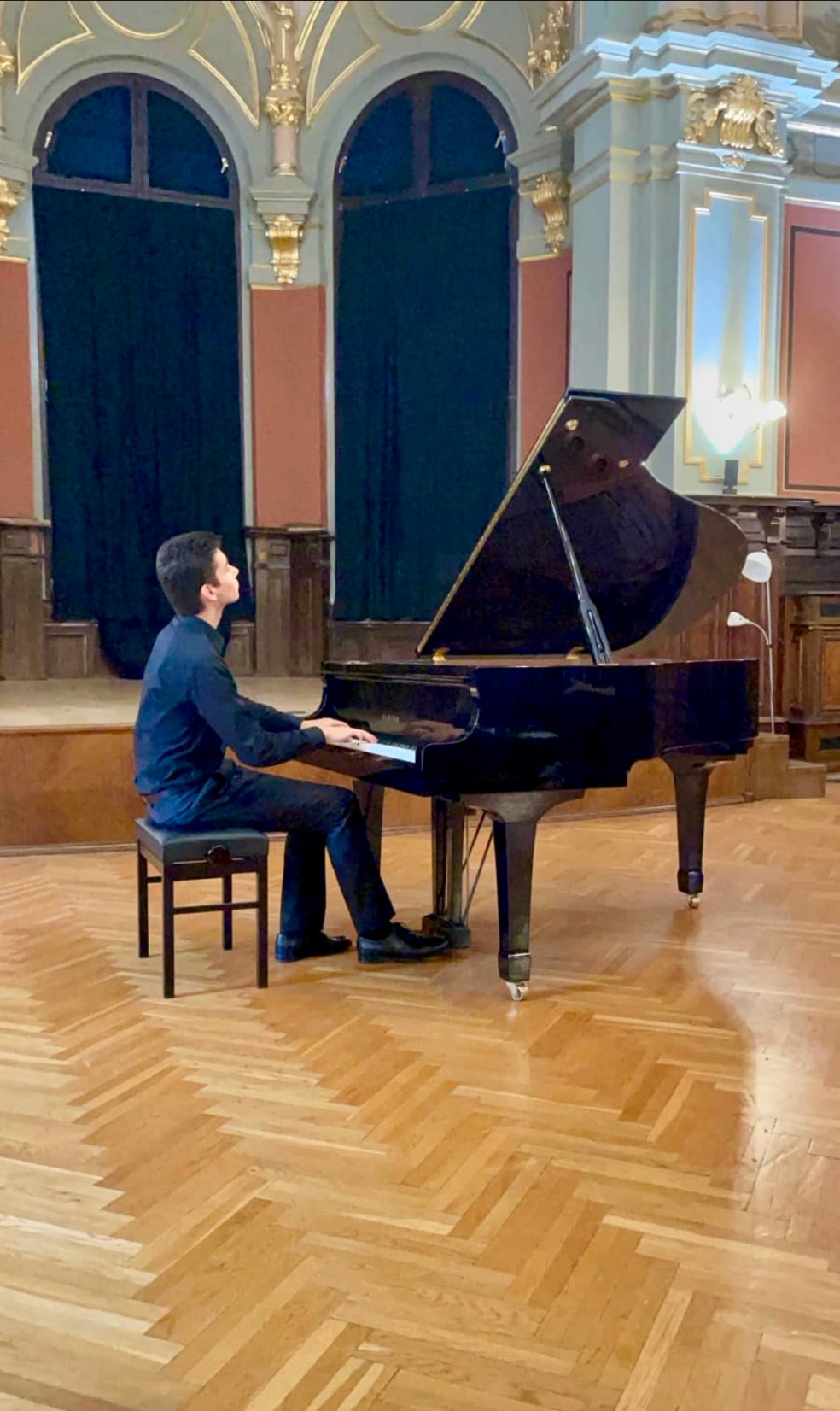
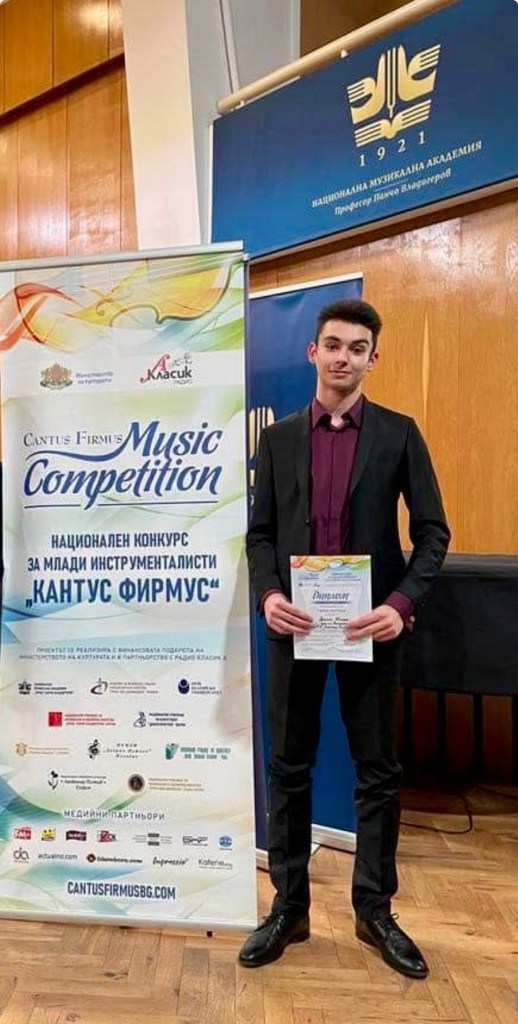
The Rising Star of Classical Piano: Philip Iliev

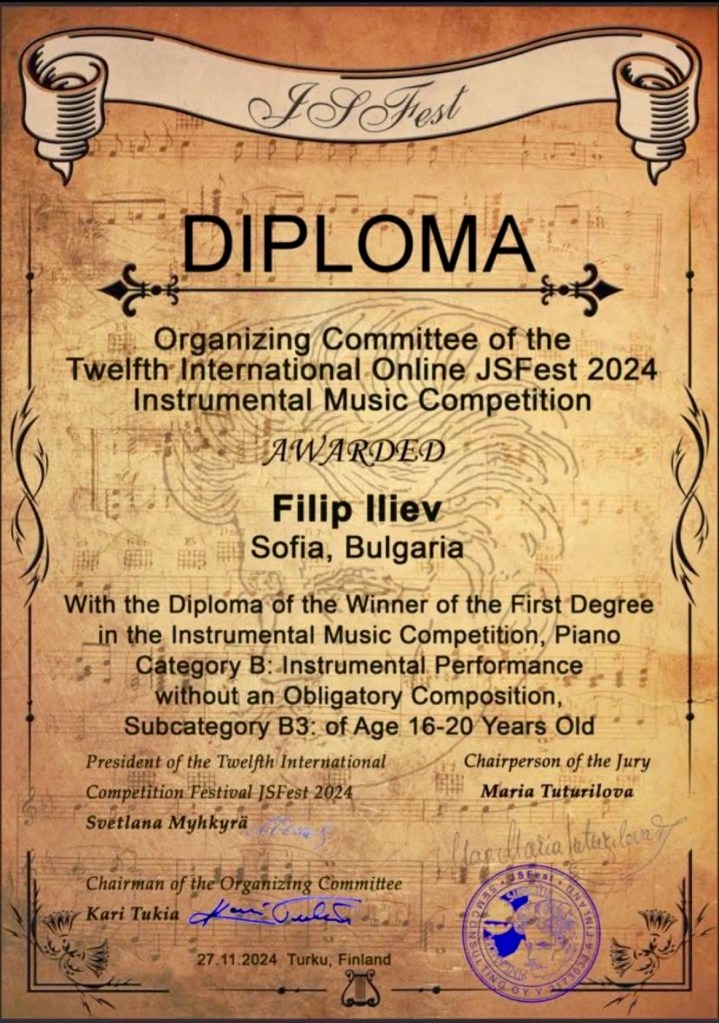
In the heart of Sofia, Bulgaria, a remarkable musical talent is blooming. At just 17 years old, Philip Iliev stands out as a classical pianist whose journey began with a simple moment of childhood curiosity – catching a glimpse of a piano on children’s television at age five. He has won over 30 national and international prizes for his virtuosity.

A Natural Calling

Unlike many prodigies pushed into music from infancy, Philip’s path to piano excellence was organic. His mother, Elena Kostova, waited to see genuine motivation before arranging his first lesson. That patience led to a serendipitous encounter with a top piano pedagogue, Angela Tosheva, in an unexpected setting – a garage studio workshop. By 2016, what started as childhood curiosity had crystallized into an unwavering calling.

Aviation Meets Artistry

Perhaps the most intriguing aspect of Philip’s background is his unique family heritage. Born to parents working in air traffic control, he inherited their exceptional attention to detail and capacity for total focus – crucial attributes for a classical pianist. While his father’s passion lies in aviation and the air, Philip found his calling in the grounded precision of piano keys. Though neither parent is a professional musician, their home resonated with the sounds of Italian opera and Mozart, creating a rich musical environment that nurtured his developing talent.

Technical Mastery

One cannot discuss Philip’s abilities without mentioning his remarkable physical gift – hands that can span 12 tones, reminiscent of Rachmaninov himself. While he’s quick to acknowledge that smaller hands can achieve excellence, these natural attributes give him additional versatility at the keyboard. His approach to practice is uncompromising and holistic – when tackling Chopin’s etudes, he aims to master all 24 (the entirety of the original 2 Opuses), elevating each composition to its highest potential. Of the Chopin etudes, his favorites are opus 25 no. 10 in B minor and opus 25 no. 12 in C minor. Philip stresses that “Music is a tapestry of tones, emotions, intentions, and mathematics. To create a pleasing, technically correct, and moving performance, every aspect of a composition must be assessed, studied, then played slowly at first, gaining momentum as confidence and understanding grow.”

Musical Philosophy

What sets Philip apart is not just his technical prowess but his mature approach to interpretation. He raises the spirit and soul of the music. He holds a particular fascination with Rachmaninov, noting how the composer’s relatively recent place in musical history allows for a more immediate connection to his intentions. “We can hear him,” Philip explains, suggesting a direct line of artistic interpretation that bridges the temporal gap. He also mentions that his hands have been compared to the composer.

His repertoire choices reflect a sophisticated understanding of classical music’s breadth. Rather than claiming a favorite composer, he allows his mood to guide him through the works of Brahms, Chopin, Liszt, and Bach. This emotional intelligence in his musical choices speaks to a maturity beyond his years.

He Studies at a High Level

Philip is a student at an immersive musical arts school in Sofia where academics blend with his art. “Truth be told, I prefer the music,” he shared. His school, National Music School, Lyubomir Pipkov  , believes that “Music Comes First.” He currently stuies with Professor Alexander Vassilenko.  In addition to academics and his school Philip takes masterclasses at almost every opportunity. In addition to his school, his motivation and curiosity has taken him on three occasions to Salzburg, Austria, where  he attended the Mozarteum University, ClavoCologne Master Class, then returned to follow up classes with a particular professor that he found most  inspiring.

The Competition Circuit

Since his first professional competition at age ten, Philip has been making waves in the classical music world. His competition preparations are methodical and thorough.He  often performs in venues including the concert halls of the National School of Music and National Academy of Music in Sofia, and the Plovdiv School of Music’s concert hall. His recent recognition for interpreting the works of Lyubomir Pipkov, a leading Bulgarian composer, demonstrates his ability to master both traditional repertoire and more contemporary pieces. Listen to his latest competition performance of Liszt-Paganini Etude No 6

Looking Forward

As Philip continues to develop his artistry, his goals remain ambitious yet focused. He has immersed himself in the complete works of the great composers, having listened to thousands of hours of Chopin, alone. His systematic approach to mastering entire collections – from ballads and scherzos to sonatas and concertos – suggests a promising future in the international classical music scene. His goal for the 2025 season is to prepare for the Bulgarian competition circuit in the fall with future goals for international opportunities.

In an era where classical music sometimes struggles to find its place among younger generations, Philip Iliev represents a bright hope for the future. His combination of technical excellence, emotional maturity, and unwavering dedication marks him as a rising star in the classical piano world, one whose journey has only just begun.

An Original

Orchestral Conductor, Nancia D’Alimonte, D.M.A.

Conducting Tchaikovsky’s Fourth Symphony. The power is palpable.  
Photo Credit: Toby Marquez

From the moment Conductor, Nancia  D’Alimonte,  walks toward the podium, there is a spark that ignites the atmosphere. There is energy and joyfulness. Her sincerity to the audience and empathy for the musicians is unquestionable. A master storyteller, she involves the audience by revealing some hidden secrets and giving intriguing history about each piece.

What separates Nancia from many other conductors? Unity. There is a rare connection between conductor and orchestra. She brings the best out of the orchestra at the precise moment of every note of every score. They create each other- it is a sense where each makes the other. It seems as if she “sends” the music to the musicians and they return it to the audience. “When I step on the podium, something unique happens,” she said. The music comes through her.

Nancia D’Ailmonte is conductor of the Loudoun Symphony Orchestra (LSO).  She is also founder (2006) and conductor of the NIH Philharmonia. At Christmastime, Nancia conducts the beloved Kennedy Center Messiah Sing-Along. She is a busy person of great depth, with exceptional talents, a delightful sense of humor, and a variety of interests.

Nancia Leads the Messiah Sing-Along at Kennedy Center – photo courtesy of Nancia D’Alimonte

Conductor positions are tightly held and highly coveted. With approximately 1250 symphony orchestras in the United States, with anywhere from 60 – 115 musicians; there are approximately 90,000 musicians. There are  only about 1300 conductors.  A 2014 survey discovered that of the top 150 orchestras, there were only five conductors who are women.

Meticulous details – Photo Credit: Toby Marquez

In the November 10, 2019, conversation about the arts and law at the Kennedy Center, the late Supreme Court Justice, Ruth Bader Ginsburg, shared, “In my growing up years, I never saw a woman in a symphony orchestra.” She recounted the advent of the “dropped curtain” after a New York Times critic was certain that he could tell the difference between a male and female pianist only to get “it all mixed up” after he was blindfolded.

French conductor and composer, Nadia Boulanger (1987 – 1979), was asked in 1947, about being a woman and a conductor.  She said, “I’ve been a woman for a little over 50 years and have gotten over my initial astonishment. As for conducting an orchestra, that’s a job where I don’t think sex plays much part.”  

Conductors have their own styles. Some are flamboyant making the performance all about themselves; some are timekeepers, and some are dreamers. Then, there is the rare conductor who  brings music to life. Nancia is that conductor. Having been principal horn for 12 years, she says of conductors’ styles, “I know, I was a player.” Hence, her empathy and consideration for the musicians.

Knowing the scarcity and competitiveness of conducting positions, Nancia chose to follow this path. She tells her incredible story, “When I had been principal horn for 12 years with the Oshawa Symphony Orchestra (outside of Toronto, Canada), our beloved conductor was stepping down. I was on the search committee. We viewed endless video tapes of less than stellar conducting examples – all by men. After every video, I would think to myself, “I could do much better than that!” Then came the final guest conducting experiences… one conductor led more with his non-baton hand (left), being quite flamboyant, and kept shouting to the orchestra, ‘play with me, you’re behind, you’re behind!’ ‘

‘During that time, I was teaching high school music and art. A friend told me about a conducting workshop with John Paynter, guest clinician. I hadn’t a clue who he was, but I went anyway. During his talk, I was captivated by his demeanor, his gentleness, his every word, and his examples of conducting! I elbowed my friend and kept saying, ‘I do that… I do that… I do that too!’ At the break, I could barely contain myself… I had to introduce myself to Mr. Paynter. He was just as genuine in person. He gave me his full attention; I was honored.’

‘I began taking private conducting lessons with John Paynter. I would fly to Chicago about every six weeks for private lessons with him. John was Director of Bands at Northwestern University; only the second director in 100 years.’

‘A friend once posed a hypothetical scenario to me… ‘Supposed the Boston Symphony calls you and says their principal horn player is out sick, and they need you as a sub. The repertoire is an all-John Williams concert. You have 24 hours to let them know. Then, another person of the Boston Symphony organization calls you, and says their conductor is out sick, and they need you as a guest conductor. The repertoire is an all-John Williams concert. You have 24 hours to let them know. Which do you choose?” This hypothetical scenario made me look at my musical career. I was at the top of my game with horn playing but continuing that for the next 30+ years wasn’t too enticing.  After watching the uninspiring conducting videos and then meeting John Paynter who saw something in me to give me a few precious moments of his time, I made the decision to conduct.’

‘One final thing about this story – once I entered the Eastman School of Music to work on my Doctorate in Orchestral Conducting, I had the absolute pleasure to meet John Williams when he guest conducted the Eastman Philharmonia in an all-John Williams concert. I was able to share my story of how I decided to go into conducting with him… talk about full circle!”

With Mendi Rodan, Nancia’s Teacher at Eastman School of Music – Image Courtesy of Nancia D’Alimonte

An Alumnus of ESM – Nancia D’Alimonte, D.M.A. – Image courtesy of Nancia D’Alimonte

About her goals for LSO, Nancia explained,  “I want to grow the orchestra and I want to make them irresistible.” She loves the Orchestra because she says, “The beauty of the Loudoun Symphony Orchestra is that they have good bones, they are super players, and have a positive attitude.” What about classical music not being terribly popular? “If you build it good . . . they will come,” is Nancia’s solution. She is on a mission to make a great orchestra exceptional.

Nancia described her relationship with members of the orchestra as,  “Always one of mutual respect. I do not follow the tradition of the dictator on the podium. Because I come from within the orchestra, the musicians know that I know their position, thus there is an appreciation from them.”

Among the roles of the conductor is designing the program. Nancia’s thoughtfulness and depth of musical knowledge give her the scope with which to make wise choices. Her goal is to please the audience and encourage and grow the musicians. Her musical selections and programming take into consideration the players’ strengths and the total number of players. She explained, “Some compositions work for 60-65 members while others like Mahler need over 100.” She explained that undertaking a composition designed for a very large orchestra and imposing it on a smaller one will not produce success of the composition or the musicians. She selects music to showcase the strengths of the performers which will ultimately please the audience and encourage the individual players.

Nancia has mastered her conducting image. She explained, “My conducting ‘costume’ is my own creation. After some experimenting, I decided on the tea-length skirt with satin stripes on the sides and a feminine slit, tails, and a beautiful brocade vest and matching bow tie. I want to be impeccable. Appearance is very important in this male-dominated environment.”

“The connection to my “instrument” (the orchestra) are my batons,” says Nancia.  She has six custom-made batons by Tate Newland. Nancia says, “He is the best, in my opinion. I have been working with him for almost 30 years – I have known him for longer than I know my husband.” Nancia explained that the white shaft is made of maple wood. The handle must be large enough to fit in her hand and hers are of interesting and exotic woods including cocobolo, 100-year-old cherry, curly maple, rosewood, and even a champagne cork (for fun). The baton must be perfectly balanced at the joint where the shaft meets the handle.  She always brings two batons with her.

Attention For Every Musician – Image courtesy of Nancia D’Alimonte

Asked whether she prefers to conduct with a score or from memory,” Nancia explained, “Conducting without a score… this phenomenon came about from Arturo Toscanini, famed Italian conductor (early-mid 20th C.) who conducted at La Scala in Milan, the NY Philharmonic, and later led the NBC radio orchestra. He had an impeccable ear and began as a cellist. One thing lacking for him was good eyesight… he was farsighted. In order for Toscanini to see a score, he had to be bent over, with his face about 6 inches from the score… that is no way to run a rehearsal! He could memorize really well, out of necessity, he studied and memorized all his scores. It’s an impressive feat, to be sure, and made for intimidating rehearsals (he knew every part and would stare down musicians when asking them to play a passage – nerve-racking). While some conductors memorize today, it’s not because they have bad vision, it’s a parlor trick… it is not a requirement.’

‘I use a score as I’m not sure I would have enough time to properly memorize my scores. I like to be able to immediately help a musician in the event they miss something.’

‘The next time you see a conductor not using a score, watch his/her face and see where their eyes are directed. Usually, there is no connection to the orchestra… and being disconnected is not a good thing… the musicians will actually lead the conductor through the performance.”

Aside from conducting, Nancia’s friends know her for her sublime “refreshments.”  “My martinis are legendary. My Negroni is renowned, you should try one sometime” she said.

Taste, Presentation, and Artistry: Lemon Drop Martini; a proper Manhattan; just a simple spread; Making Limoncello – Images courtesy of Nancia D’Alimonte

A self-professed “foodie,” Nancia likes to keep her knives sharp even cooking at home. She once made butter from scratch for a special dinner. As in her orchestral conducting, she is precise. Her planning  and presentation are meticulous.

Mouthwatering Creations by Nancia – Images courtesy of Nancia D’Alimonte

A woman of great passions, Nancia’s world is extensive. From her legendary Negroni martini, to her superb shrimp (and her knives are precisely sharp), to her underwater scuba adventures (where she says is her second favorite place on earth), to her world travels, and of course, to her music, Nancia is infinitely curious and devoted to impeccable excellence. She shares her life and passions with her husband, Giancarlo.

Travel Experiences and Adventures – Images courtesy of Nancia D’Alimonte

Nancia’s “second favorite place on earth” – Images courtesy of Nancia D’Alimonte

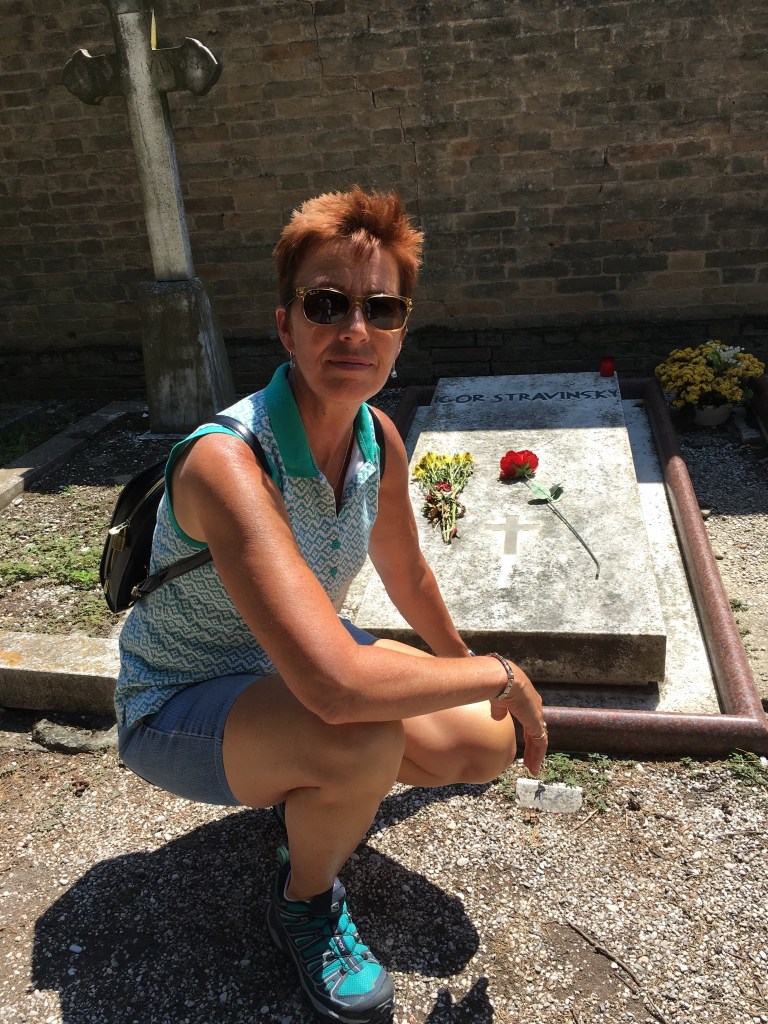
What kind of music does a conductor listen to when not working? “I love a wide variety of music. I love jazz, New Age, World Music, and of course the classics.” She enjoys Brahms, Bartok, and Mozart.  The Rite of Spring by Igor Stravinsky and Mahler’s Symphony No. 1 are among her favorites.

Nancia – Authentic; Unstoppable.

“Humbled to be at the foot of Igor Stravinsky’s grave – Venice – Image courtesy of Nancia D’Alimonte