Celebrating Felix Mendelssohn

On His 212th Birthday

Felix Mendessohn (Febryart 3, 1809 – November 4, 1847 (Photo in Public Domain)

Songs Without Words, A Midsummer Night’s Dream, the Italian Symphony, The Hebrides Overture, The oratorio  St. Paul, The Scottish Symphony are among some of Felix Mendelssohn’s most famous compositions.  He was born 212 years ago, on February 3, 1809. If someone were to ask me to list my favorite composers and my favorite compositions, Jakob Ludwig Felix Mendelssohn Bartholdy (AKA Felix Mendelsohn) would be my top three with his Songs Without Words as my favorite of his.

Born to a Jewish family in Germany, Mendelsohn was a child prodigy, much like Mozart had been 53 years earlier. Felix Mendelssohn was a composer, pianist, organist and conductor of the early Romantic period. His family converted from Judaism to Protestantism before his birth. The Mendelsohn family was in banking and left Hamburg in disguise in fear of French reprisal for the Mendelssohn bank‘s role in breaking Napoleon‘s Continental System blockade. While they moved to Berlin and  lived there as Christians, antisemitic sentiment clouded his virtuosity. It was not until  almost the mid-20th century that his music was reevaluated and finally appreciated.
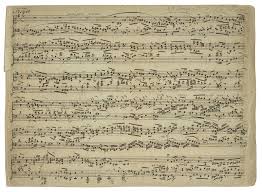
Manuscript (PC: In Public Domain)

Schumann wrote of Mendelssohn that he was “the Mozart of the nineteenth century, the most brilliant musician, the one who most clearly sees through the contradictions of the age and for the first time reconciles them. In 2009, the BBC Press wrote,  “Felix Mendelssohn has today been crowned the greatest child prodigy of all time by a selection of 16 of the country’s leading classical music critics.” 

When Felix was 12, he met the then over 70-year-old Johann Wolfgang von Goethe. Not one to be easily impressed, he declared “… but what your pupil already accomplishes, bears the same relation to the Mozart of that time that the cultivated talk of a grown-up person bears to the prattle of a child.” (Todd, R. Larry (2003). Mendelssohn – A Life in Music. Oxford; New York: Oxford University Press). Mendelssohn set a number of Goethe’s poems to music.

Felix Mendelssohn (PC: In the Public Domain)

I remember vividly my first time hearing Mendelssohn’s Italian Symphony. I was spellbound and wanted to hear and rehear every note.My conscious awakened. Thereafter, I sought out his music at every opportunity. I discovered his music to A Midsummer Night’s Dream which took my breath away (until the over-played “Wedding March”). What a shame that the “Wedding March” has become cliché. Is it the desire for the “magic” or a couple’s lack of creativity in selecting wedding music? Aside from his awe-inspiring compositions, he was a prolific artist.

The musicologist Greg Vitercik considers that, while “Mendelssohn’s music only rarely aspires to provoke”, the stylistic innovations evident from his earliest works solve some of the contradictions between classical forms and the sentiments of Romanticism. 
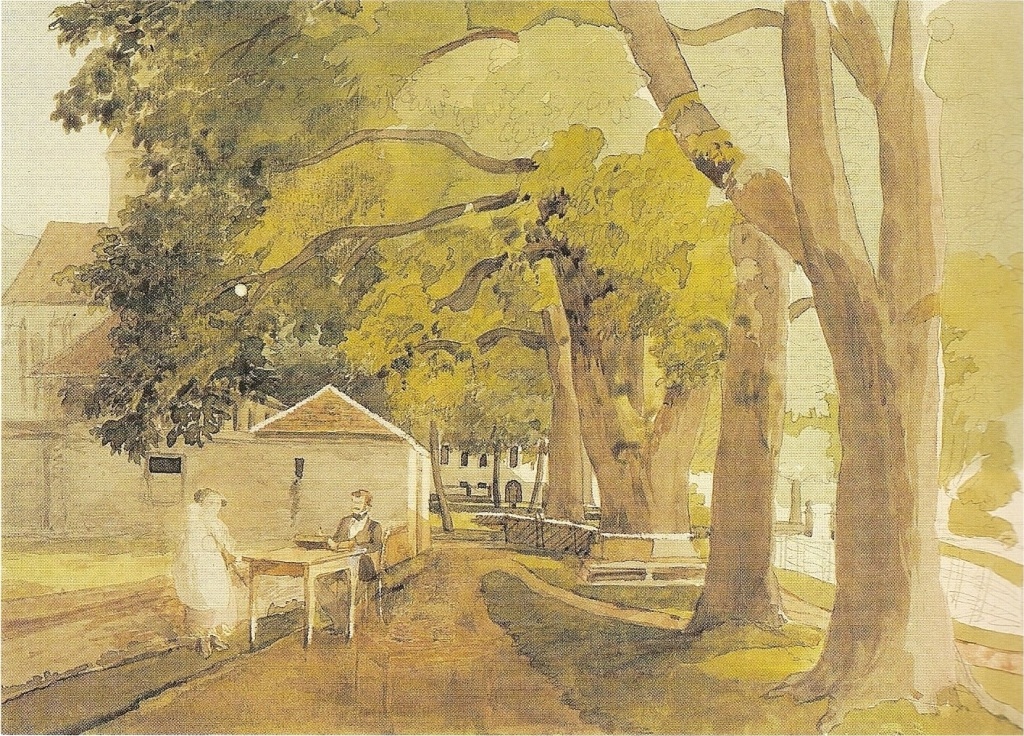
Perhaps it is Mendelssohn’s non-provocative conciliatory style that gives the listener space to hear and appreciate.

Like so many musical geniuses, Mendelssohn did not live to be 40. He died of several strokes at 38. In his short life, he created some of the most beautiful and poignant music that touches the core of one’s heart.

They Surprised Their Parents With a Composition!

Imagine being greeted by a sophisticated musical composition by your children! That is exactly what happened when 13-year-old Sofia and 10-year-old Saul played their newly composed music for violin and cello.

World Premier Composition for S 8
Video Courtesy of Alan Saucedo

Of their first composition together, Sofia said, “We wanted to surprise our parents. I composed the melody and Saul helped arrange it for cello.” This is what the Saucedo children do in their spare time between school work, music lessons in violin, cello, and piano, and working toward their Second Degree Taekwondo Black Belts.

Their musical family thrives on love, beautiful music, tasty meals and delicious cakes. The Saucedos, father, Alan, is a PhD cellist, mother, Miho Sato, is a pianist and singer who works in music therapy and teaches voice and piano, the children, Saul and Sofia, study under their parents’ and aunt, Cynthia’s tutelage. Alan loves to prepare meals and bake amazing cakes.

What did their parents think about their composition? “I liked it very much! It was very touching and beautiful – look what they did for us,” said Miho. Dad, Alan said, “ I loved it! I encouraged the children to write it all down before it disappeared. I videoed it several times until they were happy with the video.”

I asked Saul to tell me about his arranging process. He told me, “I listened to Sophia’s melody. Then, I experimented with notes and phrases until we liked the sound.” And that is how the composition came to life!

1/4th Cello and full size cello – Sweet Music!
Video Courtesy of Alan Saucedo

“Is it difficult learning from your parents?” I asked Saul and Sofia. “It’s fun! We understand each other and we like to learn,” Said Sofia. Dad, chimed in, “There have been some tears, but at this stage, they have the tools with which to problem solve and teaching is more guidance and skill honing. The lessons address specific things to make the music beautiful and expressive.”

Sofia and Saul both take piano in addition to their individual string instruments, they volunteered that while they love the piano as well as their strings, that strings are their favorites.  Mom teaches them piano. Alan teaches cello. Their aunt, Alan’s sister, Cynthia, a concert violinist, teaches violin.

Saul plays a ¼ cello while Sofia plays a full sized violin. Saul started with a 1/10th cello at 4 years old and Sofia began with a 1/8th  sized violin at four and a half years old.

The Entire Family – Pachelbel’s Cannon in D
MIho on Piano, Cynthia on Violin, Sofia on Violin, Saul on Cello, Alan on Cello
Video Courtesy of Alan Saucedo

The entire family creates beautiful music together. Alan, is always researching interesting music from around the world, and likes to introduce Mexican and Spanish classical works. Miho majored in voice from an oratorio perspective as well as piano. One of her favorite songs is Schumann’s “Lotus Flower.”

What are the children’s hobbies besides music and martial arts? Art – drawing and collages. They are precise in everything that they do. It goes without saying that they excel in their academics as much as they do in their other endeavors. They attend public school where Saul is in fourth grade and Sofia is in seventh grade. Their favorite subjects are science, math, history, and social studies.

The day that we spoke, was Miho’s birthday. Alan had a fun meal planned with barbecue ribs and a chocolate flan cake, “a Mexican chocolate cake.” Saul and Sofia like ice cream. Saul likes mango ice cream and chocolate mint chip. Sofia likes cookies and cream, vanilla, or strawberry. With so many wonderful flavors, it is hard to choose just one!

Miho in concert
Sofia
Image Courtesy of Alan Saucedo

One parting question for Sofia and Saul – how much practicing do they do? They replied that they practice and study as much as is necessary to meet individual goals. Sometimes 20 minutes, other times, an one hour. They are goals centered and know what they want to accomplish.

Sofia and Saul call themselves, “S 8”

I hope that you love and enjoy their wonderful music!