Celebrating Felix Mendelssohn

On His 212th Birthday

Felix Mendessohn (Febryart 3, 1809 – November 4, 1847 (Photo in Public Domain)

Songs Without Words, A Midsummer Night’s Dream, the Italian Symphony, The Hebrides Overture, The oratorio  St. Paul, The Scottish Symphony are among some of Felix Mendelssohn’s most famous compositions.  He was born 212 years ago, on February 3, 1809. If someone were to ask me to list my favorite composers and my favorite compositions, Jakob Ludwig Felix Mendelssohn Bartholdy (AKA Felix Mendelsohn) would be my top three with his Songs Without Words as my favorite of his.

Born to a Jewish family in Germany, Mendelsohn was a child prodigy, much like Mozart had been 53 years earlier. Felix Mendelssohn was a composer, pianist, organist and conductor of the early Romantic period. His family converted from Judaism to Protestantism before his birth. The Mendelsohn family was in banking and left Hamburg in disguise in fear of French reprisal for the Mendelssohn bank‘s role in breaking Napoleon‘s Continental System blockade. While they moved to Berlin and  lived there as Christians, antisemitic sentiment clouded his virtuosity. It was not until  almost the mid-20th century that his music was reevaluated and finally appreciated.
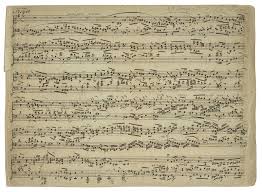
Manuscript (PC: In Public Domain)

Schumann wrote of Mendelssohn that he was “the Mozart of the nineteenth century, the most brilliant musician, the one who most clearly sees through the contradictions of the age and for the first time reconciles them. In 2009, the BBC Press wrote,  “Felix Mendelssohn has today been crowned the greatest child prodigy of all time by a selection of 16 of the country’s leading classical music critics.” 

When Felix was 12, he met the then over 70-year-old Johann Wolfgang von Goethe. Not one to be easily impressed, he declared “… but what your pupil already accomplishes, bears the same relation to the Mozart of that time that the cultivated talk of a grown-up person bears to the prattle of a child.” (Todd, R. Larry (2003). Mendelssohn – A Life in Music. Oxford; New York: Oxford University Press). Mendelssohn set a number of Goethe’s poems to music.

Felix Mendelssohn (PC: In the Public Domain)

I remember vividly my first time hearing Mendelssohn’s Italian Symphony. I was spellbound and wanted to hear and rehear every note.My conscious awakened. Thereafter, I sought out his music at every opportunity. I discovered his music to A Midsummer Night’s Dream which took my breath away (until the over-played “Wedding March”). What a shame that the “Wedding March” has become cliché. Is it the desire for the “magic” or a couple’s lack of creativity in selecting wedding music? Aside from his awe-inspiring compositions, he was a prolific artist.

The musicologist Greg Vitercik considers that, while “Mendelssohn’s music only rarely aspires to provoke”, the stylistic innovations evident from his earliest works solve some of the contradictions between classical forms and the sentiments of Romanticism. 
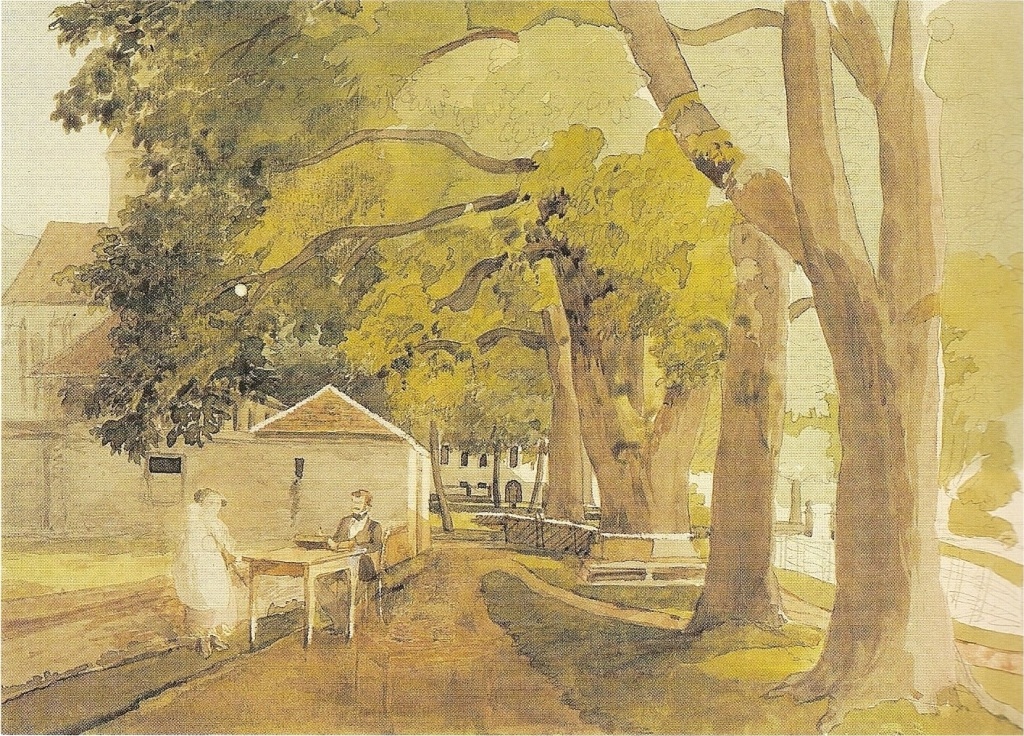
Perhaps it is Mendelssohn’s non-provocative conciliatory style that gives the listener space to hear and appreciate.

Like so many musical geniuses, Mendelssohn did not live to be 40. He died of several strokes at 38. In his short life, he created some of the most beautiful and poignant music that touches the core of one’s heart.

Happy Hanukkah! History and Traditions Remembered

Hanukkah – the celebration of light and thanksgiving for the miracle of the oil. In the year 139 BC, the Macabees’  victory over the Syrian-Greek occupiers liberated Jerusalem. This event was recognized by the lighting of the Menorah but the oil supply was sufficient for barely one day. Miraculously, the oil lasted for eight days. Therefore, the eight days of prayers and thanksgiving at Hanukkah. This event is historical and not biblical, therefore is not a major holiday, according to my Jewish sources. The thanksgiving is for God’s provision and extending the tiny bit of oil from barely one day to eight, reminding the Israelites that He is with them.

Friends from many parts of the world shared some beautiful memories and traditions of their Hanukkah celebrations.

Jam-filled Hole-less doughnuts – sufganiot

Jonathan – Ra’anana – a suburb of Tel Aviv Israel

Jonathan spent much of his childhood and youth in Canada and the United States. He told me. “You can see lit menorah candles in peoples’ windows. Israelis love to eat  hole-less doughnuts called “sufganiot” filled with various creams and jams. We ate fried potato pancakes, latkes, with apple sauce,” he said.

Recalling his childhood, he told me that his family followed the German-Jewish custom, “My parents would buy gifts, set them on the table, and cover them with a sheet. After we lit the candles and sang the religious prayers, we would head to the dining room and they would remove the sheet. My sister and I would get our gifts on the first night. I would play with my new toys and we would play games together. I remember getting a toy plane with lights. It was fantastic!”

Jonathan shared one particular memory of holiday times as a five-year-old kindergartner in Canada – “The teacher asked us to sit in a circle cross-legged and sing Christmas songs. My non-Jewish neighbor and friend (his father had served in the Wermacht) was also in the circle. When I couldn’t sing any of the songs, the teacher was quite cross. She asked me angrily why I wasn’t singing the Christmas songs with the other children. I told her that I was Jewish and was not familiar with the songs. She told me to leave the circle and to sit by myself. A few minutes passed and my friend, also five years old, realized the unfairness of it all. He stood up and stated angrily, ‘If my friend, Jonathan,  will not be allowed to sit with us in the circle, then I’d prefer to sit outside the circle with my friend!”

Also in Canada, Jonathan and his friend visited Santa. He remembers, “When it was my turn to sit on Santa’s lap, I was hesitant but curious. When he asked me what I wanted for Christmas, I whispered in his ear that I was Jewish. He told me, ‘That’s OK, so am I!’”

Danielle – Leesburg, VA

Family Time
Photo Credit – Marc Sirinsky

“When I was a child, Hanukkah was not commercial and there were not many holiday decorations in the stores. My sister and I would make paper chains and decorate our house. One year at school, I noticed that there were Christmas decoration but nothing for Hanukkah. There were not many Jewish children in my school. I asked my teacher if we could have some Hanukkah decorations. She told my sister and me that we could make some and they would be put up. My sister and I made decorations and they were installed along with the other ones,” recalled Danielle.

“Hanukkah is not a high holiday. It is a celebration. So, we usually stay close to home with immediate family. My sister is a cantor in a synagogue so we will go there on the first night. We eat latkes – fried potato pancakes and  there is a bakery that makes the hole-less doughnuts,” explained Danielle.  On the first night, the first candle in the menorah is lit and three prayers are said/sung. On the subsequent seven nights, two prayers are said as each night one more candle is lit.

“We give one large gift and then smaller gifts during the celebration. Our first night is bigger so we have a larger meal, usually a pot roast,  and give and receive the largest present,” explained Danielle. The fried foods represents the miraculous oil, she told me. Danielle’s husband and two daughters enjoy family time during the celebration.

Joan – Purcellville, Virginia; originally from Brooklyn, New York

“We are a multicultural family today so we celebrate Hanukkah as well as Christmas. Typically, we don’t put up the  Christmas tree until after Hanukkah. This year we put up the tree early because Hanukkah falls at Christmastime,” explained Joan. “I grew up in Brooklyn. On Christmas Eve, we were always at our neighbor’s Chinese restaurant. They were good friends. I never sat with my parents,  I sat with the owner’s children and  we ate authentic Chinese food,” said Joan.

In her family, the first day of Hanukkah is the day that has the biggest present and the one the recipient wants. On the second day, the gift is major but is what the parents believe the child needs – “Typically shoes. On the third day, it will be socks, the pajamas, and on down the list of importance. This can be called the festival of feet,” said Joan.

‘We played dreidel with pennies. Some people use gold chocolate coins,” explained Joan. The dreidel is a four-sided spinning top. On each of the four sides a Hebrew character is inscribed. The meaning of the each of the characters  – none (you win nothing); half (you win half the pot), All (you win the entire pot), and  sorry, you have to put in another coin. The game ends when the latkes are gone or the sun comes up, or the players lose interest.

From Canada to Israel, from Chicago to Leesburg and from Brooklyn to Purcellville, the prevailing tradition of Hanukkah is one of thanksgiving and family. Wishing all of my Jewish friends a happy Hanukkah!

Happy Hanukkah!