Born to a Jewish family in Germany, Mendelsohn was a child prodigy, much like Mozart had been 53 years earlier. Felix Mendelssohn was a composer, pianist, organist and conductor of the early Romantic period. His family converted from Judaism to Protestantism before his birth. The Mendelsohn family was in banking and left Hamburg in disguise in fear of French reprisal for the Mendelssohn bank‘s role in breaking Napoleon‘s Continental System blockade. While they moved to Berlin and lived there as Christians, antisemitic sentiment clouded his virtuosity. It was not until almost the mid-20th century that his music was reevaluated and finally appreciated.
When Felix was 12, he met the then over 70-year-old Johann Wolfgang von Goethe. Not one to be easily impressed, he declared “… but what your pupil already accomplishes, bears the same relation to the Mozart of that time that the cultivated talk of a grown-up person bears to the prattle of a child.”(Todd, R. Larry (2003). Mendelssohn – A Life in Music. Oxford; New York: Oxford University Press). Mendelssohn set a number of Goethe’s poems to music.
Felix Mendelssohn (PC: In the Public Domain)
I remember vividly my first time hearing Mendelssohn’s Italian Symphony. I was spellbound and wanted to hear and rehear every note.My conscious awakened. Thereafter, I sought out his music at every opportunity. I discovered his music to A Midsummer Night’s Dream which took my breath away (until the over-played “Wedding March”). What a shame that the “Wedding March” has become cliché. Is it the desire for the “magic” or a couple’s lack of creativity in selecting wedding music? Aside from his awe-inspiring compositions, he was a prolific artist.
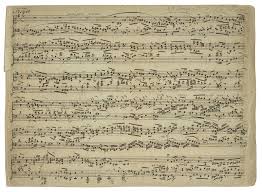
The musicologist Greg Vitercik considers that, while “Mendelssohn’s music only rarely aspires to provoke”, the stylistic innovations evident from his earliest works solve some of the contradictions between classical forms and the sentiments of Romanticism.
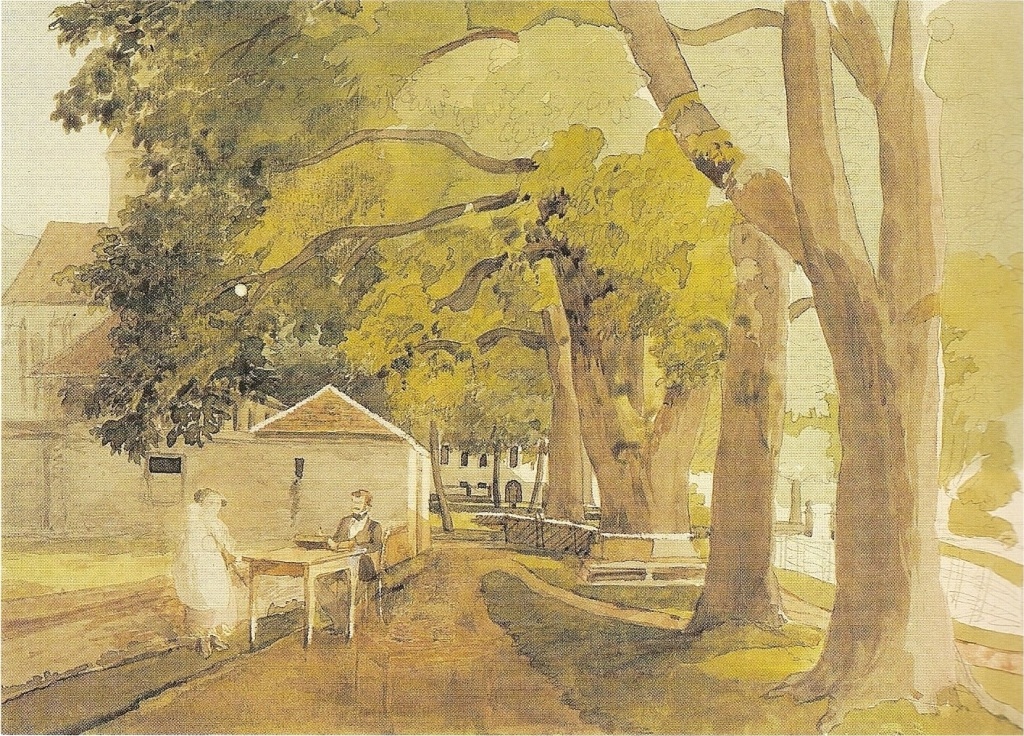
Watercolors by Mendelssohn (PC: Public Domain)
Perhaps it is Mendelssohn’s non-provocative conciliatory style that gives the listener space to hear and appreciate.
Like so many musical geniuses, Mendelssohn did not live to be 40. He died of several strokes at 38. In his short life, he created some of the most beautiful and poignant music that touches the core of one’s heart.
Celebrating 75 years of the Washington School of Ballet
Rising Star – Katherine Barkman PC: Screenshot of web production
Ballet lovers from around the world were invited to tune in for the first-ever LIVE online celebration of The Washington Ballet! Performances by The Washington Ballet artists and stories from students and faculty highlighted the event.
Ballet in Washington, D.C., under Artistic Director, Julie Kent, was beginning to soar and rival many American and international ballet companies. Their 2020 season promised to deliver breathtaking performances of classical ballets and repertoire. The season started with their exceptional production of Balanchine + Ashton in February to be followed by the full-length Swan Lake – music by Tchaikovsky. The classic ballet, Coppélia, to the music of Léo Delibes, was scheduled to premiere in May. Casting, choreography, costuming, and rehearsals were in progress. I planned to attend Coppélia and write a blog article about the performance.
PC: Screenshot
Producing a full length classical ballet is an very expensive and laborious process. The costuming alone, is extremely expensive with a single tutu potentially costing over $3000. The cost of costumes added to the salaries, overhead, and theater rental runs into the hundreds of thousands of dollars. Sold out productions, sponsors, grants, and patrons help cover these expenses. What happens when the curtain does not rise? The last Washington Ballet rehearsal was held on March 13 where snippets of a dress rehearsal of Act 3 were filmed.
The company staff and dancers are incredibly supportive, gracious, and optimistic for something wonderful to emerge from the current circumstances. Having been president of a pre-professional ballet company, I am aware of the magnificent cost involved in the production of every ballet.
Ballet Dancer Corey Landolt was honorary Mixologistfor the Gala PC: Screenshot
Tonight’s public virtual Gala was a wonderful way to bring the Washington Ballet to the City and to the world. The Gala were beautifully produced. There was a mix of executive, sponsor, and philanthropic recognitions along with a generous portion of stunning ballet performances. The 75th anniversary of the Washington School of Ballet begun by Mary Day and her mentor, Lisa Gardiner, was celebrated with joy and dignity.
Artistic Director, Julie Kent PC: Screenshot
The growth of The Washington Ballet under Julie Kent in just under four full years, has been remarkable. Like many Company patrons, I was eagarly anticipating the brilliance and excitement of the upcoming season. The Gala was elegant, classic, and was generously shared with the City and the world free of charge. The hope, being that donations would offset expenses and generate funds. During the event, donations came in ranging from just a few dollars to some with a several zeros at the end.
Monica Stephenson, Head of School, Southeast Campus. PC: Screenshot
In recognition of the 75th anniversary of the Washington School of Ballet, The Washington Ballet expressed their focus and goal of reaching city dancers and providing teaching and training opportunities regardless of dancers’ economic circumstances. Monica Stephenson, Head of School, Southeast Campus, The Washington Ballet, shared, “For our community of 1200 students, we kindle love, passion, interest and commitment. We encourage talent, creativity and integrity on all levels of the art stressing excellence in the classroom and on the stage. “ The interactive on-line ballet classes are helping students stay involved, active, and healthy. Ms. Stephenson emphasized the goal of, “Engaging in relevant dialogues in an unwavering commitment to our aspiration for the extraordinary. We work toward equitable excellence in artistic education and expanded diversity in classical ballet. It feels wonderful to be a part of dancers’ growth.”
“You can inspire the world with you dancing.” DC ballet student. PC: ScreenshotStudents ofThe WashingtonSchool of Ballet PC: Screenshot
Ms. Kent, in her mild, soft-spoken manner, introduced “An incredible evening of inspired performances.” Five performances, all very different and extremely engaging culminated with the final rehearsal of Act 3 of Swan Lake. At the end of each, I wished for “just a little more,” the mark of an exceptional artistic director.
Pas De Deux – Tamás Krizsa and Maki Onuki Performing “Together Apart” with “Backdrop of the Glorious National Cathedra,” JK PC: Screenshot Rench Soriano from the Philippines is a Washington Ballet Studio Company dancer performing 5 Variations on a theme by David Fernandez PC: Screenshot Women of the Company performing “Summer’s Heat” reliving the “Center Stage” movie experience. PC: Screenshot
Gil Delelio, Corey Landolt, Gian Carlo Perez, and Andile Ndlovu performing final scene from Somberisimo by Annabelle Lopez Ochoa TWB men representing Belgium, America, South Africa, and Cuba. PC: Screenshot
Katherine Barkman and Masanori Takiguchi in rehearsal of Act 3 Swan Lake PC:Screenshot
Ms. Kent closed the evening by saying, “At this time of tremendous loss and vulnerability, dance art is a celebration of humanity. We, at The Washington Ballet are ensuring artistic hopes and careers will live on and thrive. Thank you for your love and support.”
What can we do to support The Washington Ballet? Consider donating The art of dance transforms lives every contribution will help.
The Chamber Dance Project of Washington, D.C. Carries on Their Mission
When circumstances derail plans, creativity sets artists free to experiment with and present exceptional virtual opportunities to even more people than would have originally enjoyed performances. Such is the case for the Chamber Dance Project (CDP) in Washington, D.C.
Artistic Director and choreographer, Diane Coburn Bruning, founded the CDP because she believed that dance should be a collaborative process between dancers, musicians and the audience. That process, she says, “Deepens the audience’s experience.” They have grown to be Washington’s premier contemporary ballet company.
Their ballet season takes place in the summer when other companies and dancers are off. Because of this, CPD attracts and features exceptional dancers. Two such dancers are Austin Powers and his wife, Grace-Anne Powers. They are slated to dance in this summer’s CDP performances.
With theaters being dark now, this is an opportunity to expand creativity and communication with audience and patrons. CPD has moved their Open Rehearsals and Evenings with the Artist to on-line adventures via Zoom.
A recent Evening with the Artist featured Emmy Award – Winning ballerina, Grace-Anne Powers. She is a ballerina with Ohio’s BalletMet in the regular season. Grace-Anne met us from her living room in Ohio where she and her husband built a sprung wood floor upon which to rehearse. Typically, a dance floor is covered with a sheet of plastic called Marley which is both smooth and anti-slip for safe dancing. Resourcefully, the couple covered their floor with a fish pond liner instead. This decision was made based on economics and size of the floor.
The Shoe Must Fit – Grace-Anne Powers via Zoom
Pointe shoes are the quintessential piece of equipment for a ballerina. Pointe shoes are generally pink satin with pink ribbons that crisscross over the ankles. What else is there? Grace-Anne calls them, “The most beautiful and torturous item.” She spoke about the manufacturers, the construction, the fragility, and the importance of perfect fit of the beloved pointe shoe in a recent CDP Evening With An Artist.
Grace-Anne’s favorite pointe shoes are made by Freed of London. Every shoe is handmade by highly skilled craftsmen. The craftsmen each have their own mark that they place on the leather sole of the shoe. The “Butterfly” is the shoe that she finds most comfortable. The shoes are handmade just for her. “When I get a new pair of pointe shoes, I have to prepare them for dancing. The toe box is round. The first thing I do is flatten it so that it sits flat on top of my foot,” she demonstrated the process of putting the perfectly new shoe on the floor and unceremoniously stomps on it with her foot. The process continues with the insoles – tearing and cutting away until the arch is in the perfect place. Elastics and ribbons are sewed on and more maneuvering of the shoe continue until it fits like a glove. “It takes about two hours to prepare a pair of pointe shoes,” she told us.
A pair of shoes costs up to $125. Grace-Anne gets 40 pairs of pointe shoes form her home ballet company. “I have bendy feet that are stronger, so I tend to go through my shoes faster,” she explained. She tries to extend their lives with some unorthodox techniques involving jet glue.
pc: Austin Powers
Customizing The Custom Pointe Shoes Austin and Grace-Anne Powers
There is a fine line between being perfectly comfortable and “dead.” Dead shoes are not fit for dancing and can be harmful to the dancer. Did you know that the life of a pointe shoe is very short? Sometimes it is just a week and sometimes two weeks. Let’s see, they are satin, there is a leather outer sole, the sides are canvas with a satin outer shell. The “box” is made of fabric and cardboard and biodegradable materials like water soluble glue. Perspiration tends to dissolve the hardening materials of the box. For that reason, Grace-Anne has devised to coat inside of her well-fitting shoes with jet glue.
“There can be no movement in my shoe, so I double the elastics to keep them tight against my foot. Also, my ribbons are not just ribbons, I like my ribbons to give a little so they have some stretch and give. After the shoes have been flattened, potions cut out, and glued, Grace-Anne darns the pointe part of the shoe and creates a “box.” That also extends the life of the shoe and provides a flat space to “stand.” She uses a doubled macramé cord to create the rim then sews it onto the satin of the shoe. This further helps save the shoe in the contemporary repertoire when the angles become more exaggerated. “I wear a shoe that is a little larger than my foot to help me pad so that I keep corns and bunions from forming.”
The Life of the Pointe Shoe – from flat to “over-the-top”
Ill fitted shoes can cause blisters, bruised toe nails, bunions, even stress reactions. Properly fitted shoes are key to successful classes and performances. Grace-Anne experimented with different shoes, “Some had plastic in the toe. They lasted longer, but did not give me the correct fit and I could not fully articulate my foot. The Freed of London shoes give me the fit and articulation for artistry that I need. It is hard finding the right shoe. When you find the right shoe, it is no longer a foot inside a shoe, but it becomes a part of you.“
pc: Jennifer Zmuda
pc: Belimnda Carhartt
pc: Belimnda Carhartt
pc: Quinn B. Wharton
The Many Shapes of Grace-Anne Powers From Classical to Contemporary en pointe. Images courtesy of Grace-Anne Powers
A world-class ballerina, Grace-Anne, is comfortable with both the classical ballet repertoire and the contemporary realm. She is a perfect fit for CDP with her classical background and ability to extend into the extraordinary. “Contemporary ballet pushes you beyond the vertical and many times off-center. That is when pointe shoes deteriorate even faster since the contact with the floor changes dramatically and parts touch and wear faster,” she explained.
What does Grace-Anne find rewarding in dancing with CDP? “Working in smaller groups is very satisfying. Getting to know the people and the creativity is exciting,” she shared. She likes having the musicians on stage, “They help make dance spontaneous and interactive.” This season she and her husband, Austin, will have the opportunity to dance together. It will be a new experience for them to dance in a partnering capacity.
Grace-Anne Powers pc: Jennifer Zmuda Image courtesy of Grace-Anne Powers
Concluding the evening’s program, Grace-Anne and Austin demonstrated some partnering techniques and the resilience of their new floor. “With a partner, there is greater scope of movement, extension, and reach,” explained Grace-Anne and Austin. They are both able to stay in shape by working together, doing their own barre workouts, Austin works with weights, and there is lots of gardening for the both of them at their new home.
About the 2020 Season, Diane Coburn Bruning said, “I have utmost optimism for our season. For now, we will remain virtual. We are Nimble and creatively flexible.”
Powers’ presentation and Q&A is the first of four planned for May with dancer Julia Erickson discussed transitioning from classical to contemporary ballet roles on May 12. Luz San Miguel and Davit Hovhannisyan will demonstrate classical ballet partnering on May 19 and contemporary ballet partnering on May 26. For further scheduling, please visit the CDP website.
Imagine being greeted by a sophisticated musical composition by your children! That is exactly what happened when 13-year-old Sofia and 10-year-old Saul played their newly composed music for violin and cello.
World Premier Composition for S 8 Video Courtesy of Alan Saucedo
Of their first composition together, Sofia said, “We wanted to surprise our parents. I composed the melody and Saul helped arrange it for cello.” This is what the Saucedo children do in their spare time between school work, music lessons in violin, cello, and piano, and working toward their Second Degree Taekwondo Black Belts.
Their musical family thrives on love, beautiful music, tasty meals and delicious cakes. The Saucedos, father, Alan, is a PhD cellist, mother, Miho Sato, is a pianist and singer who works in music therapy and teaches voice and piano, the children, Saul and Sofia, study under their parents’ and aunt, Cynthia’s tutelage. Alan loves to prepare meals and bake amazing cakes.
What did their parents think about their composition? “I liked it very much! It was very touching and beautiful – look what they did for us,” said Miho. Dad, Alan said, “ I loved it! I encouraged the children to write it all down before it disappeared. I videoed it several times until they were happy with the video.”
I asked Saul to tell me about his arranging process. He told me, “I listened to Sophia’s melody. Then, I experimented with notes and phrases until we liked the sound.” And that is how the composition came to life!
1/4th Cello and full size cello – Sweet Music! Video Courtesy of Alan Saucedo
“Is it difficult learning from your parents?” I asked Saul and Sofia. “It’s fun! We understand each other and we like to learn,” Said Sofia. Dad, chimed in, “There have been some tears, but at this stage, they have the tools with which to problem solve and teaching is more guidance and skill honing. The lessons address specific things to make the music beautiful and expressive.”
Sofia and Saul both take piano in addition to their individual string instruments, they volunteered that while they love the piano as well as their strings, that strings are their favorites. Mom teaches them piano. Alan teaches cello. Their aunt, Alan’s sister, Cynthia, a concert violinist, teaches violin.
Saul plays a ¼ cello while Sofia plays a full sized violin. Saul started with a 1/10th cello at 4 years old and Sofia began with a 1/8th sized violin at four and a half years old.
The Entire Family – Pachelbel’s Cannon in D MIho on Piano, Cynthia on Violin, Sofia on Violin, Saul on Cello, Alan on Cello Video Courtesy of Alan Saucedo
The entire family creates beautiful music together. Alan, is always researching interesting music from around the world, and likes to introduce Mexican and Spanish classical works. Miho majored in voice from an oratorio perspective as well as piano. One of her favorite songs is Schumann’s “Lotus Flower.”
What are the children’s hobbies besides music and martial arts? Art – drawing and collages. They are precise in everything that they do. It goes without saying that they excel in their academics as much as they do in their other endeavors. They attend public school where Saul is in fourth grade and Sofia is in seventh grade. Their favorite subjects are science, math, history, and social studies.
Beautiful Birthday Cards Created by Saul (left) and Sofia (R) for Miho’s Birthday
The day that we spoke, was Miho’s birthday. Alan had a fun meal planned with barbecue ribs and a chocolate flan cake, “a Mexican chocolate cake.” Saul and Sofia like ice cream. Saul likes mango ice cream and chocolate mint chip. Sofia likes cookies and cream, vanilla, or strawberry. With so many wonderful flavors, it is hard to choose just one!
Saul, S and Alanin concertMiho in concertSofia Image Courtesy of Alan Saucedo
One parting question for Sofia and Saul – how much practicing do they do? They replied that they practice and study as much as is necessary to meet individual goals. Sometimes 20 minutes, other times, an one hour. They are goals centered and know what they want to accomplish.
Sofia and Saul call themselves, “S 8”
I hope that you love and enjoy their wonderful music!





 Good News. Reviews. Events.