
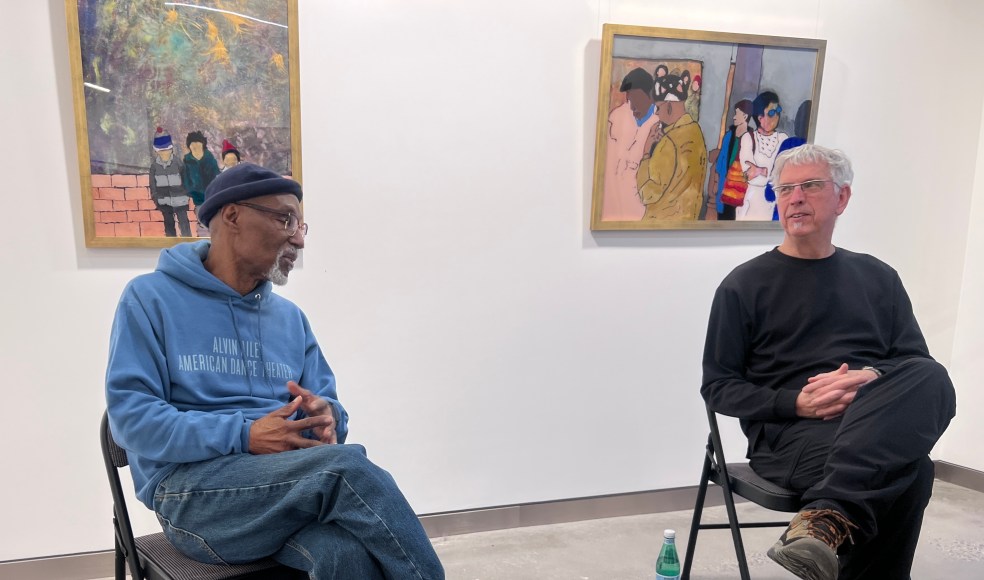
Artist’s Talk Delves Into Intent at Fred Schnider Gallery
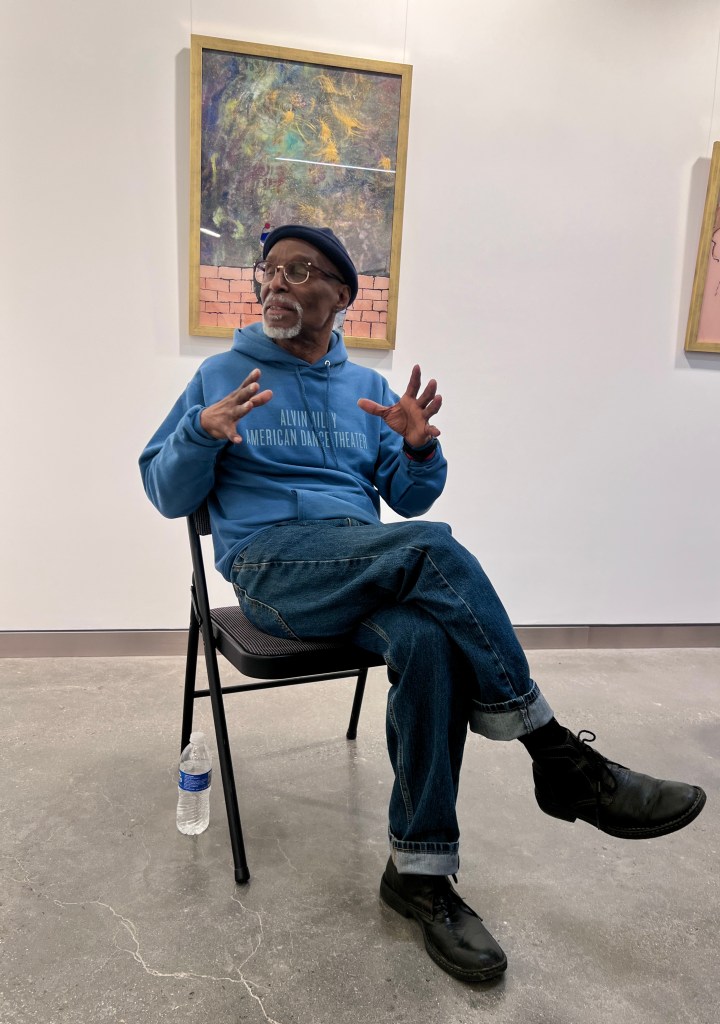
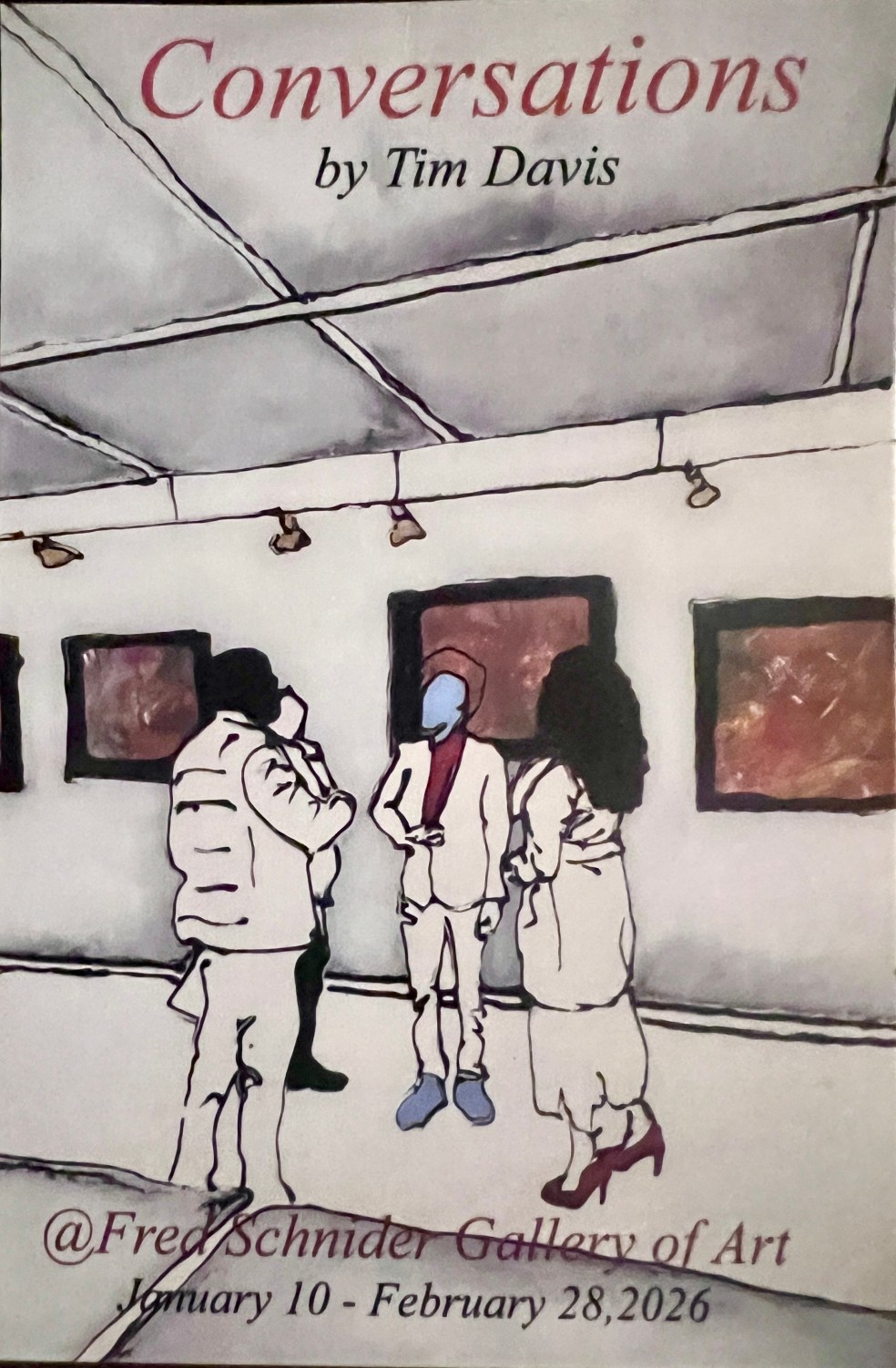
Tim Davis shares his vision, intentions, and development ideas
The gallery was bright, warm, and shielding from the bitter cold and gusting winds through which I walked after parking my car along the snow-mounded street. Once inside, I experienced a comfortable and encouraging feeling. My artist and designer friend accompanied me to Tim Davis’ Artist Talk at the Fred Schnider Gallery. Curator, David Carlson, recognized me as we entered. I was impressed by his memory.
My friend and I reviewed the art installation, and I eagerly introduced her to the piece I selected to purchase. She told me that it looks like me and that my choice was on point.
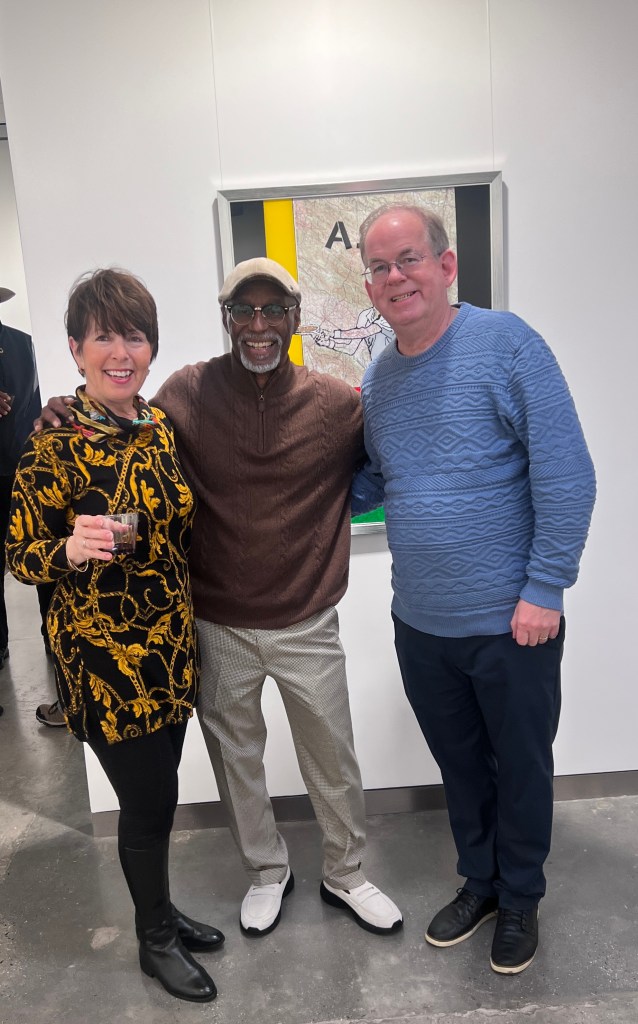
I saw Tim who gave me a big hug. I felt delighted to be “at home” among art lovers, artists, and ‘what-if’ thinkers.
Tim Davis’ art invites deliberation. Every piece makes a statement, and the collections create the conversation. A casual gallery visitor might simply see pretty art with unusual structure. The ‘Talk’ brought the art to life. My artist friend later shared that she gained much deeper appreciation of the work, methodology, and context after hearing Tim’s discussion.
The ‘Talk’ opened with matters of race, division, and the human conditions of avoidance and the yearning to be acknowledged. Carlson opened with a discussion of race and the lived experiences shaped by black-and-white divisions. I admit that my immediate reaction was conflicted. Having always been colorblind as to humanity, I was instinctively wary of frameworks that emphasize division rather than transcend it. That emphasis felt insensitive to me, and potentially divisive rather than unifying. Additionally, I worried about Tim feeling uneasy. I wrote my notes wondering how the conversation would resolve. I willed myself to listen, follow, and focus. Reflection matters. Listening matters.
As the evening unfolded, I reconsidered my initial response. While my principles remained unchanged, the conversation asked a more serious question. Honoring a people’s experience and attempting to see life through the eyes of others is not a matter of color or slogans. It is about recognition of their contribution, engagement, and struggle.
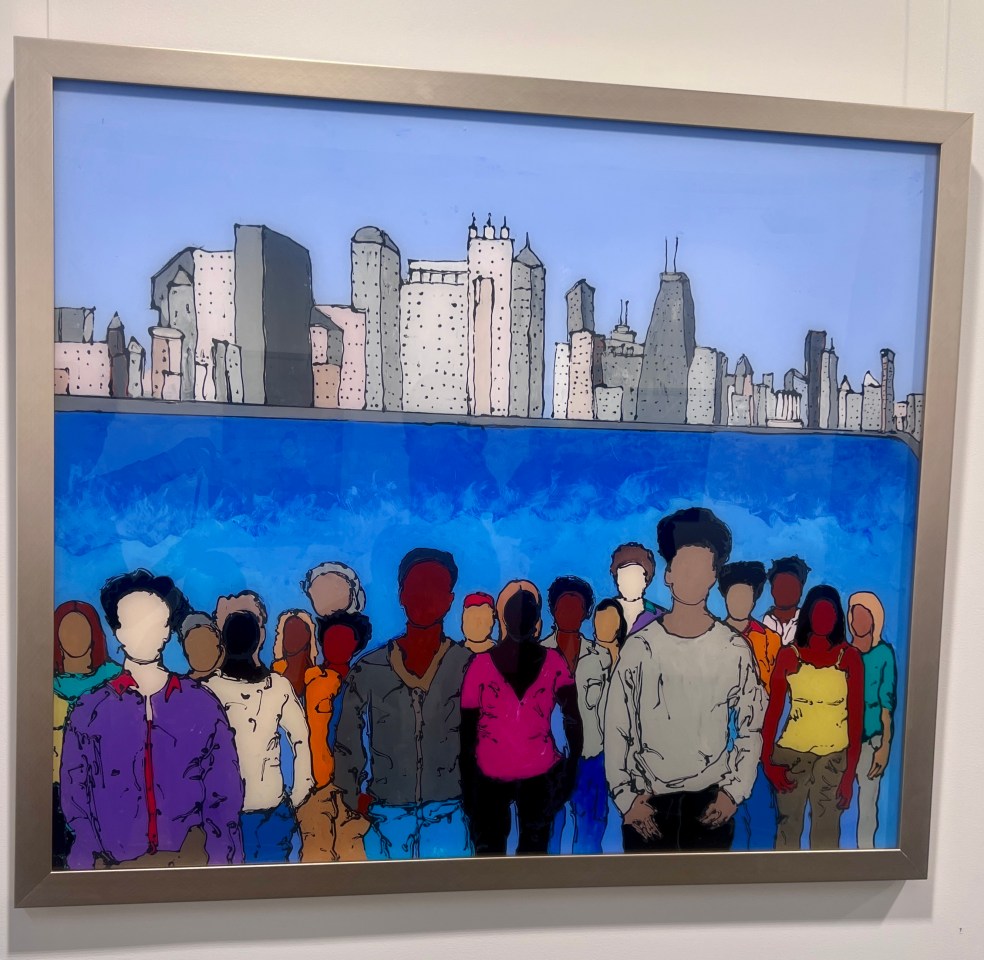
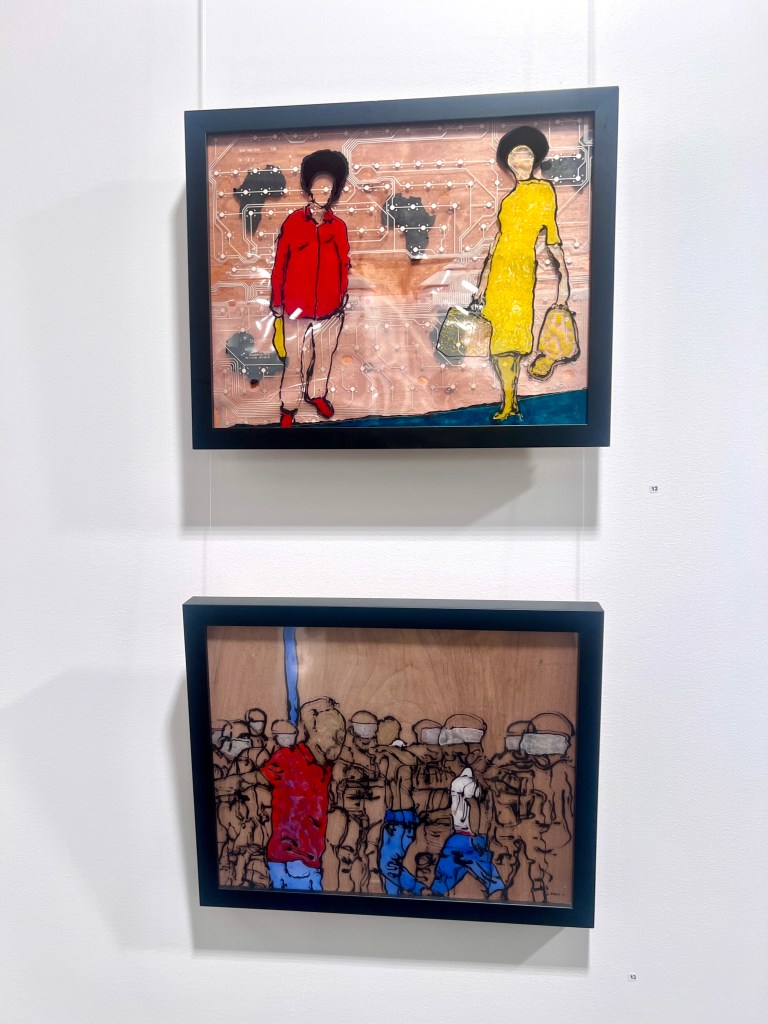
One of the central pieces in the exhibition is titled Do You See Us? The work references a Chicago protest that shut down a highway along the lakefront. The title does not accuse. It does not instruct. Seeing is not the same as reacting, and it is certainly not the same as performing agreement.
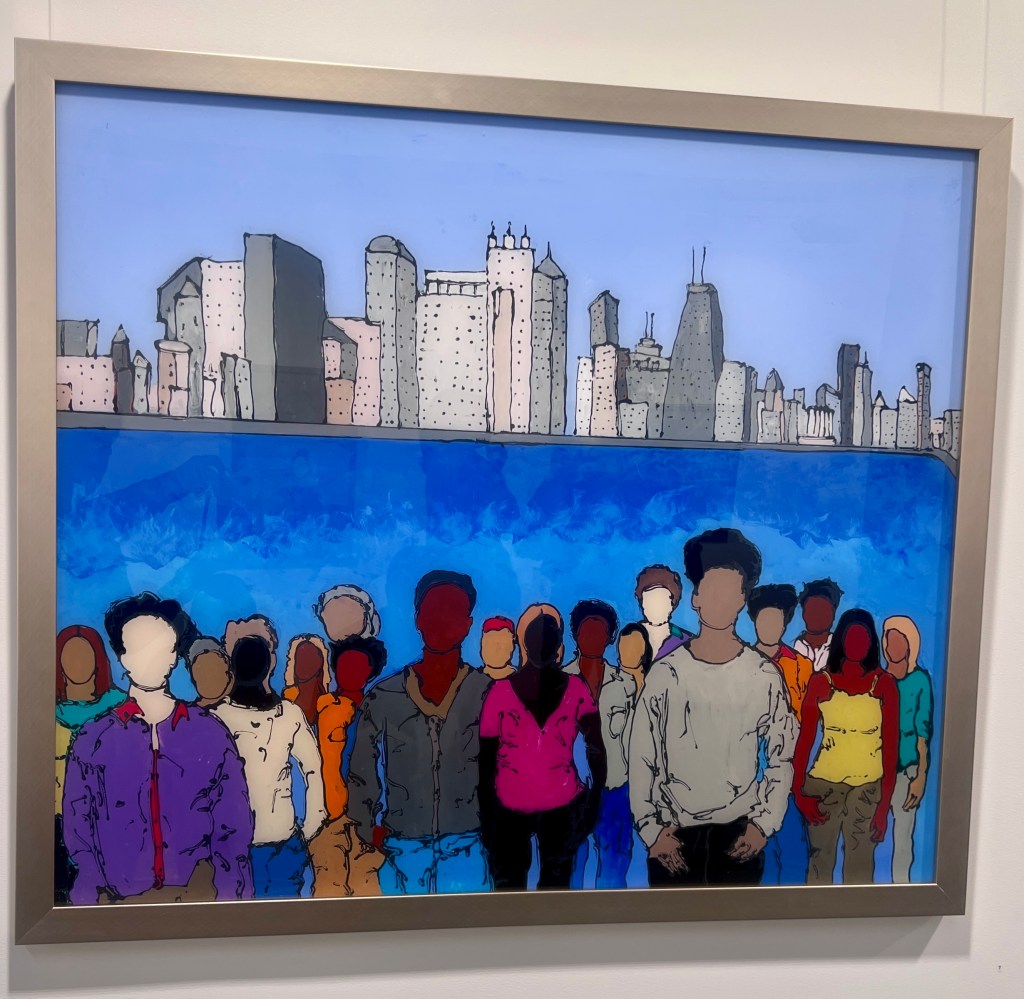
“Do You See US?” Acrylic on Plexiglass (reverse painting)
Another piece, Should We Go or Should We Stay? includes language suggesting that silence itself is a form of agreement. Taken out of context, that idea can feel confrontational. Within the broader conversation of the exhibition, however, it reads less as a slogan and more as a provocation. It prompts an examination of presence, absence, and responsibility. Tim was clear that his goal is to build bridges — between people, between cities, between states, between countries, and cultures. His work, he explained, is about connection.
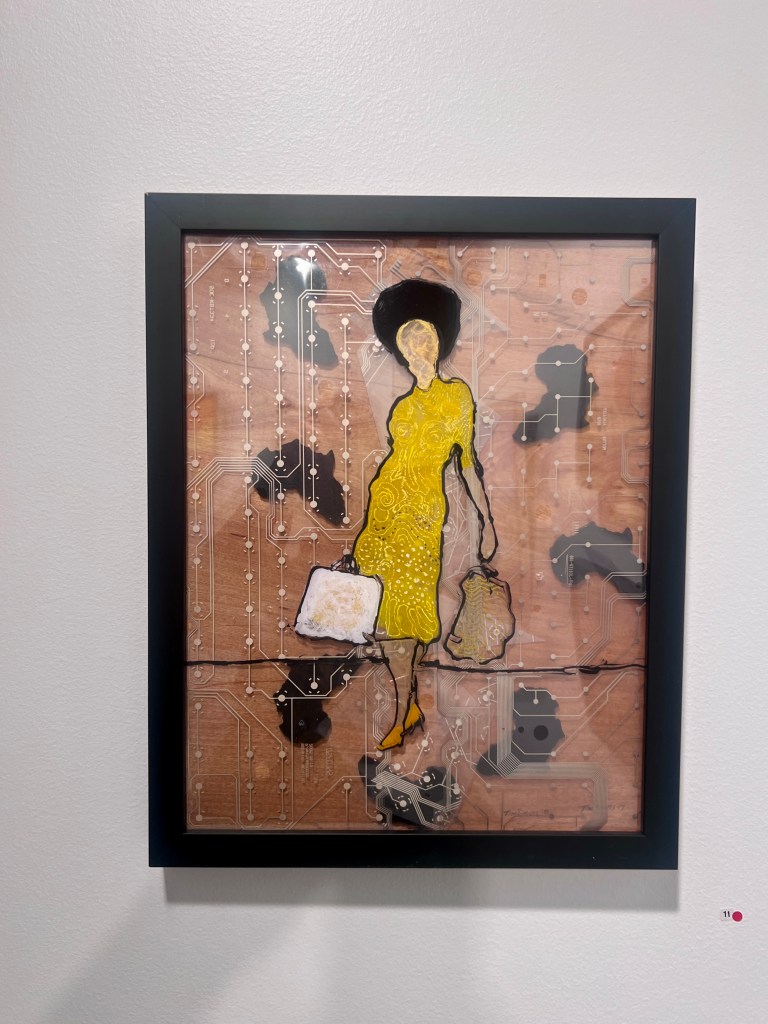
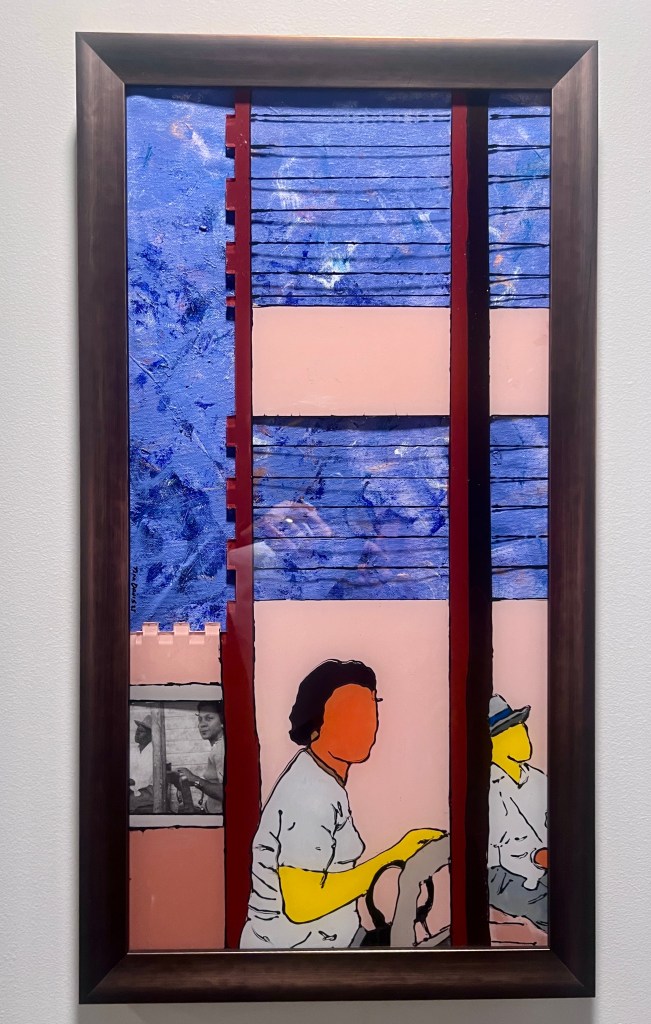
Tim describes the works in this exhibition as assemblages. In its creation, he asked himself how disparate parts can be brought together into a coherent whole. His backgrounds are layered and intentional, whether executed on canvas, wood, or panel. He spoke candidly about allowing himself to play with color in those backgrounds. He described letting go, experimenting, and seeing what works. Yet that play is anchored in discipline. The visible looseness sits on top of careful structure.
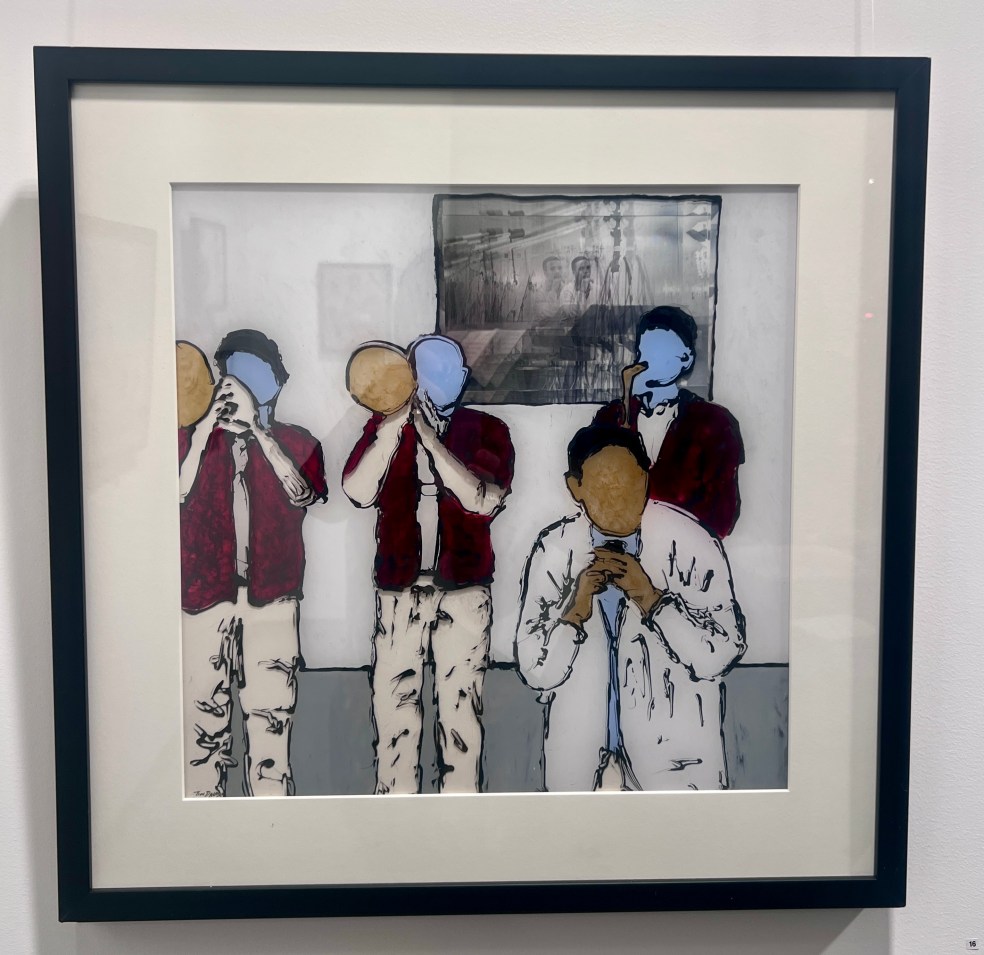
Many of the pieces incorporate photography, often people-based, embedded within the painting itself. At first glance, the works are visually engaging and complete. Only with further observation does the photograph emerge, grounding the abstraction in human presence. The effect is subtle and deliberate, rewarding patience rather than demanding attention.
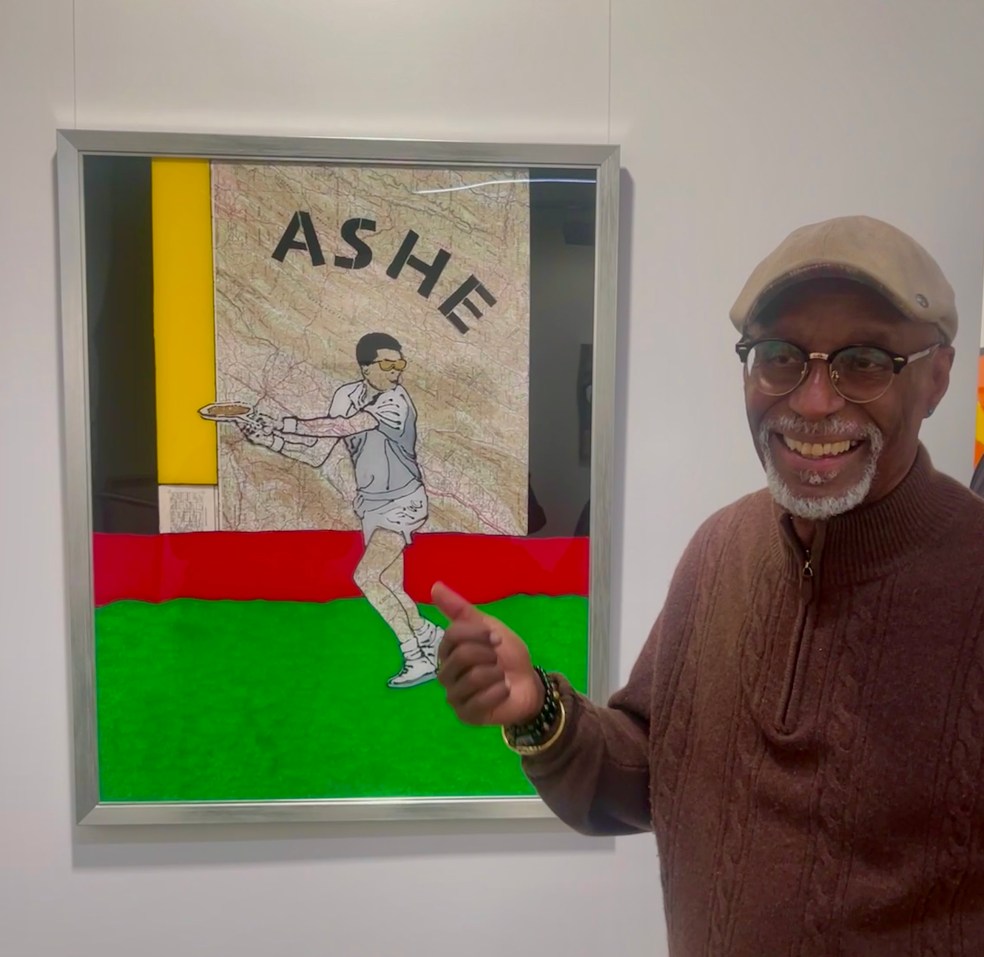
The piece of Arthur Ashe is packed with symbolism and familiarity. Tim told us that as a tennis player and a Virginia resident, he wanted to ground Arthur Ashe as a Virginia-born Black tennis great. An old map of Virginia creates the background for the piece and for Ashe’s legs. The bold colors and the framing within the piece reference colors used in many African national flags. In keeping with his use of color language for faces and distinction, Ashe’s glasses and the face of his tennis racquet are gold. This denotes Ashe’s ‘royal’ status among the tennis greats and as the first Black player to win Wimbledon.
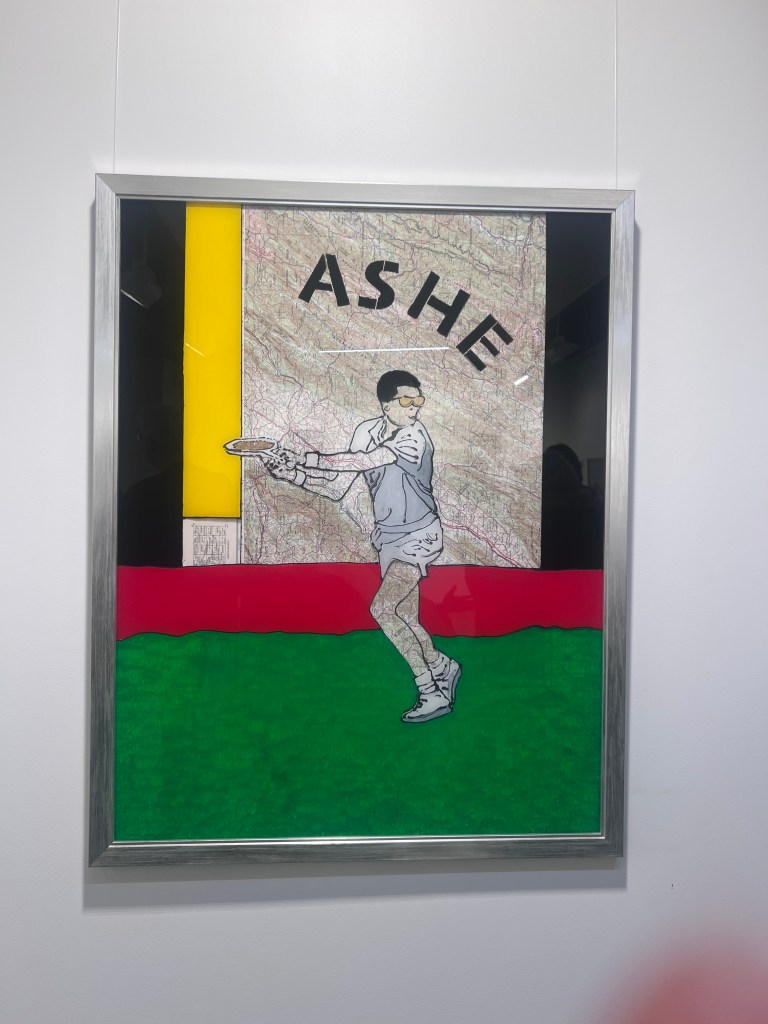
“Ashe” acrylic on plexiglass with a map of Virginia
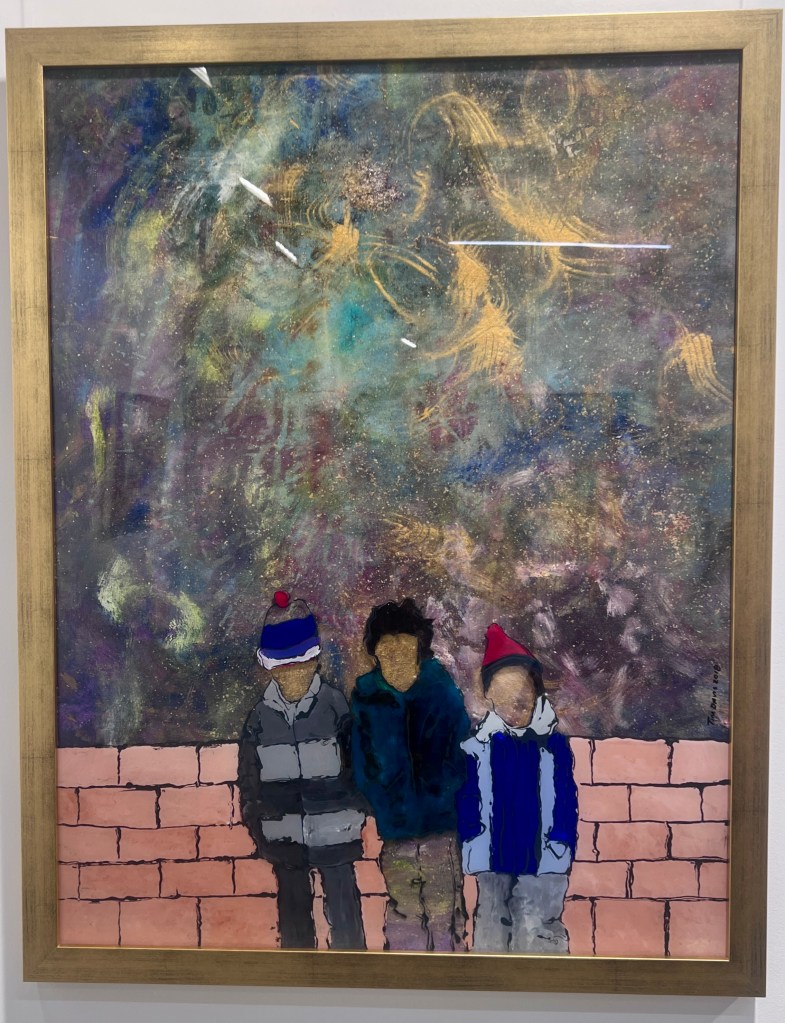
Tim’s choice of plexiglass as a medium was driven by his interest in illumination and the sculptural qualities it introduces. Reverse painting on plexiglass is unforgiving. Once color and texture are applied, removing them is nearly impossible. Because of that, decisions must be made in advance — palette, layering, sequence. Guesswork disappears. There is no room for expressive thrashing or revisionist rescue. What remains is intention. Tim explained that he must think in ‘reverse’ and fully synthesize where and how the figures will look from the front. Despite the absence of faces, those figures express exactly their actions – body language – curiosity, connection, and intent. This is an artist who is disciplined in the parts that truly matter.
The finished works do not shout or plead. They do not overexplain themselves. They hold their ground – ‘will you see us?’
During the conversation, Tim spoke about hope. Yes, he holds enormous hope. Hope in conversation. Hope in the human spirit. Hope in connection. Hope in positivity and love. He offered a moment from his 38-year teaching practice, sharing that he would often begin a session by asking students, “What color are you?” Not only skin color, but what color they feel. I tried to think about my own answer.
I left the gallery having considered more carefully about my initial resistance. The conversations and deeper dive into the work did not ask me to abandon principle. It asked me to slow down, to look, and to consider connection with lives lived through their history. This was not a conversation about division. It was art about bridges and conversation, about being seen without shouting, about being heard without performance. Tim said it perfectly.
The next event at the Schnider Gallery of Art will be on Sunday, February 15, at 4 PM when there will be a poetry reading and a call and response as it relates to a selected work by Davis. One very special note: Alison Davis and Donny Brocs are Tim’s adult children. Alison is a writer and Tim is a singer/rapper. Poets, Carol Beane and Bennie Herron will complete the event.
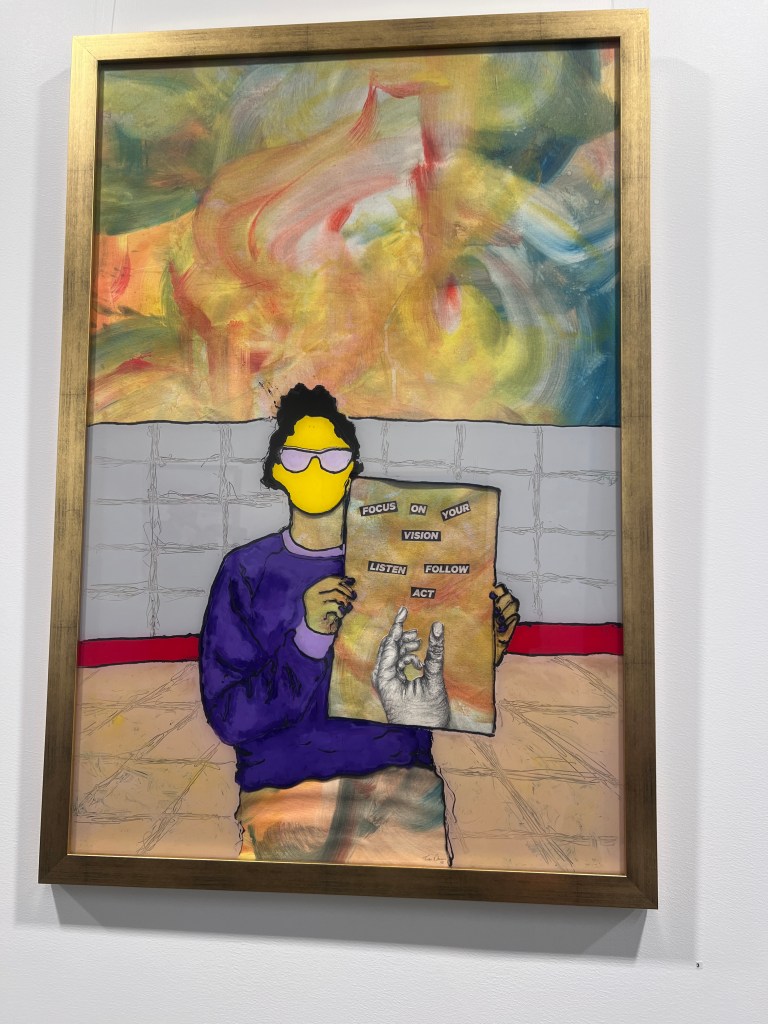
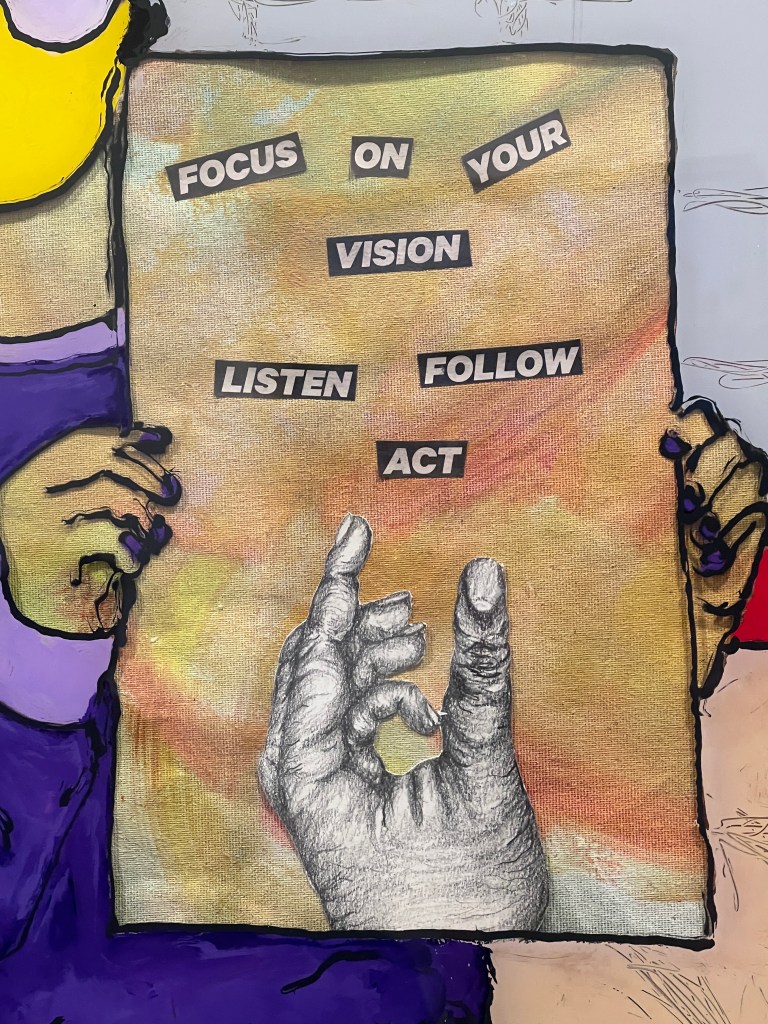
“Act” by Tim Davis mixed media acrylic on canvas and plexi with graphite and collage
 Good News. Reviews. Events.