For my birthday, my daughter gave me a ticket to see Lady Gaga’s Mayhem Ball Concert at Madison Square Garden. I immediately began mentally making excuses not to go—too much work, too far to travel, too complicated. Then I bit the bullet and went to New York for the show.
What would I have missed had I stayed home working? A transformative cultural experience. That would have been my loss, despite whatever tasks I might have accomplished at my desk.
I have been attending concerts since the Who opened for Herman’s Hermits (yes, I was young once). After countless shows in theaters, stadiums, and arenas, I grew jaded. I thought having seen some of the best, I was done.
Not so fast.
These concerts are not merely performers singing their songs loudly while audiences cheer. This is an experience like none other: music, costumes, dance, theater, sociology, spectacular lighting, elaborate sets, powerful themes, and above all—generosity of spirit.
The Artist Who Delivers
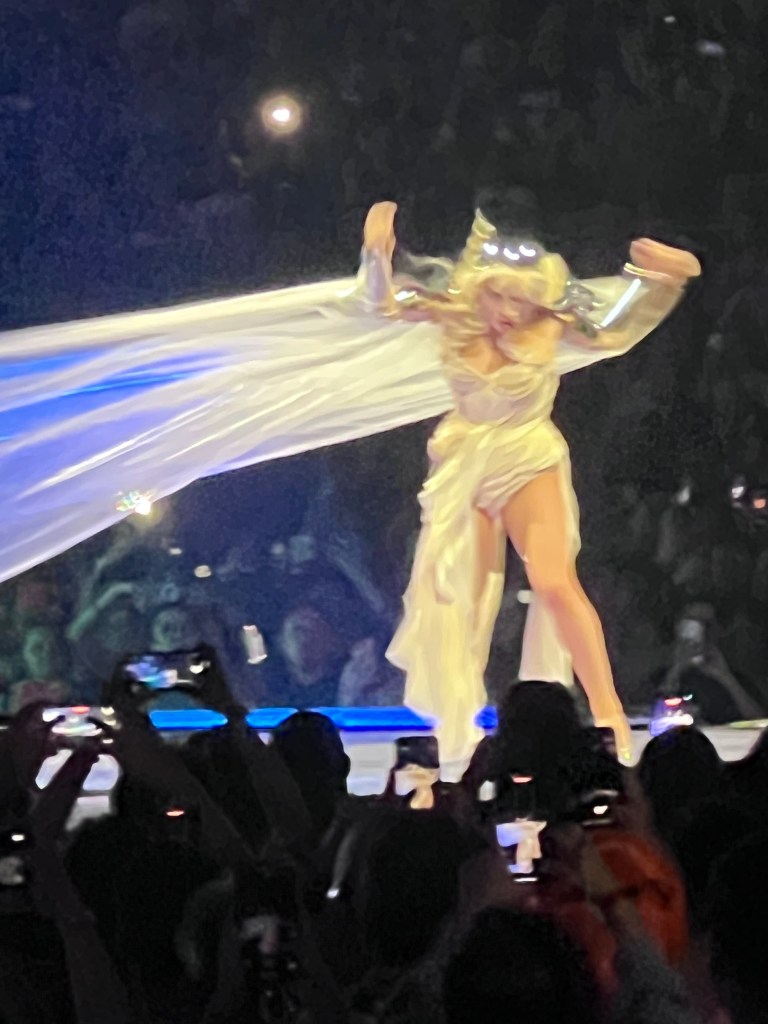
We have all read about difficult performers who show up angry, battling group dynamics and technical problems. The performance I witnessed had none of those issues and all of the magic. Gaga delayed the concert start by several hours to accept the 2025 MTV Video Music Awards, including Artist of the Year. Then she arrived and gave us her heart. She had already put in a whole day’s work, then performed an electrifying two-and-a-half-hour concert. And yes, she incorporated her award statues into one of the acts.
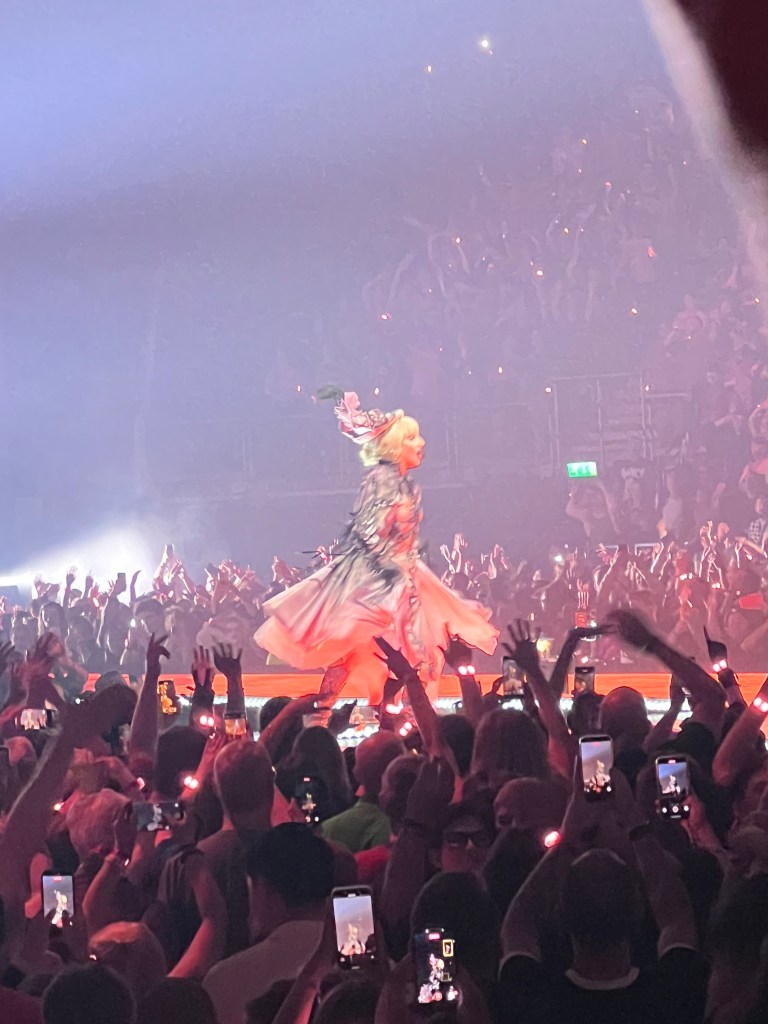
The later start gave us time to enjoy a leisurely dinner and a relaxed entry into Madison Square Garden. The music and performance were exceptional—but you don’t need me to review an exceptional artist’s performance. Of course it was off-the-charts wonderful. What captivated me was the audience and the atmosphere they created with the performer.
London!
The Magic of the Crowd
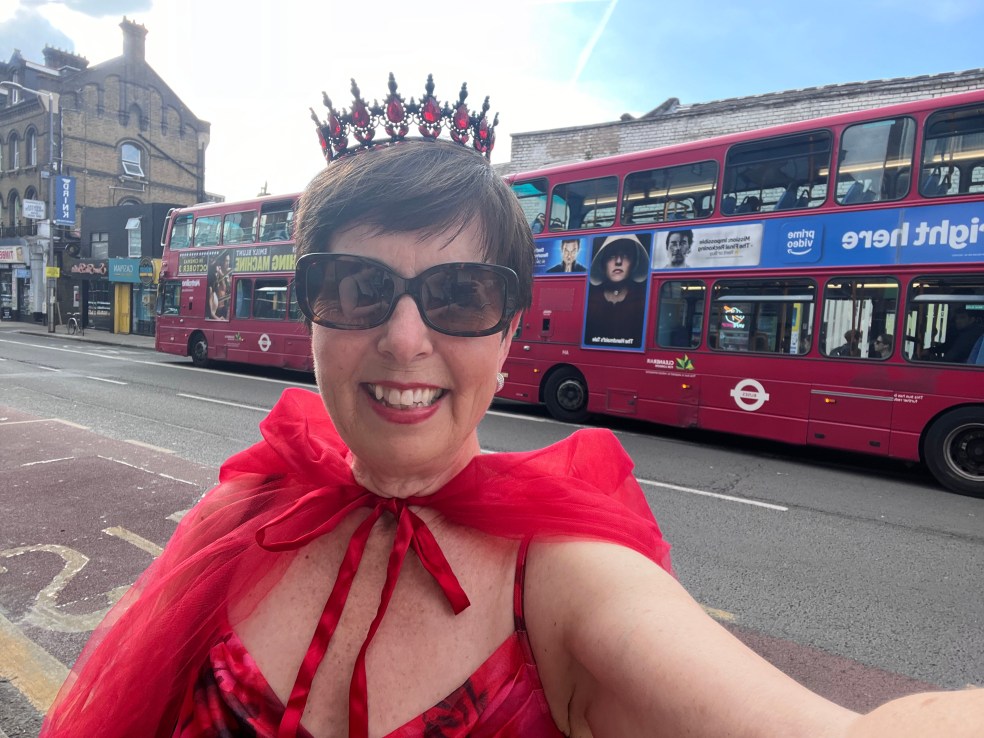
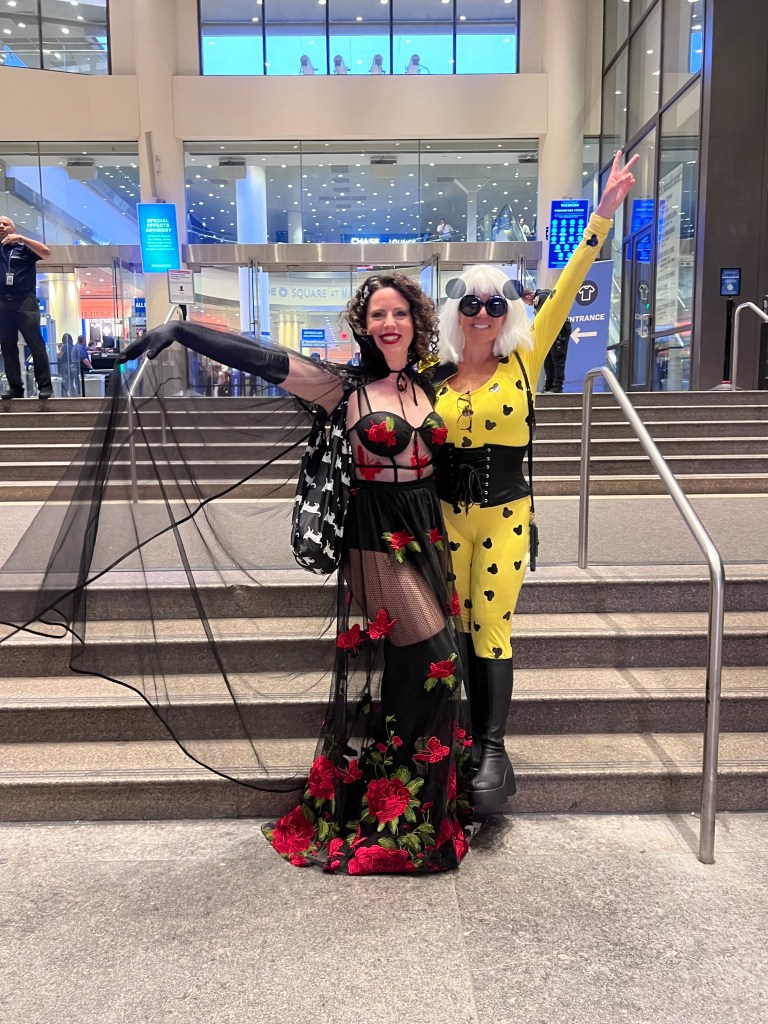
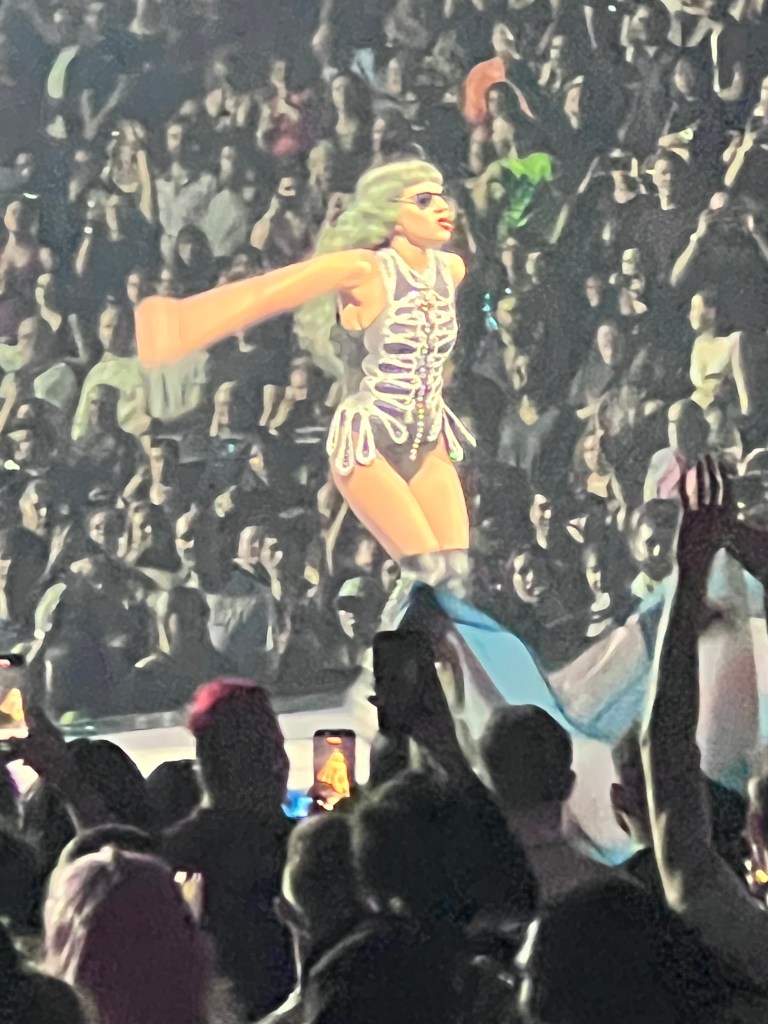
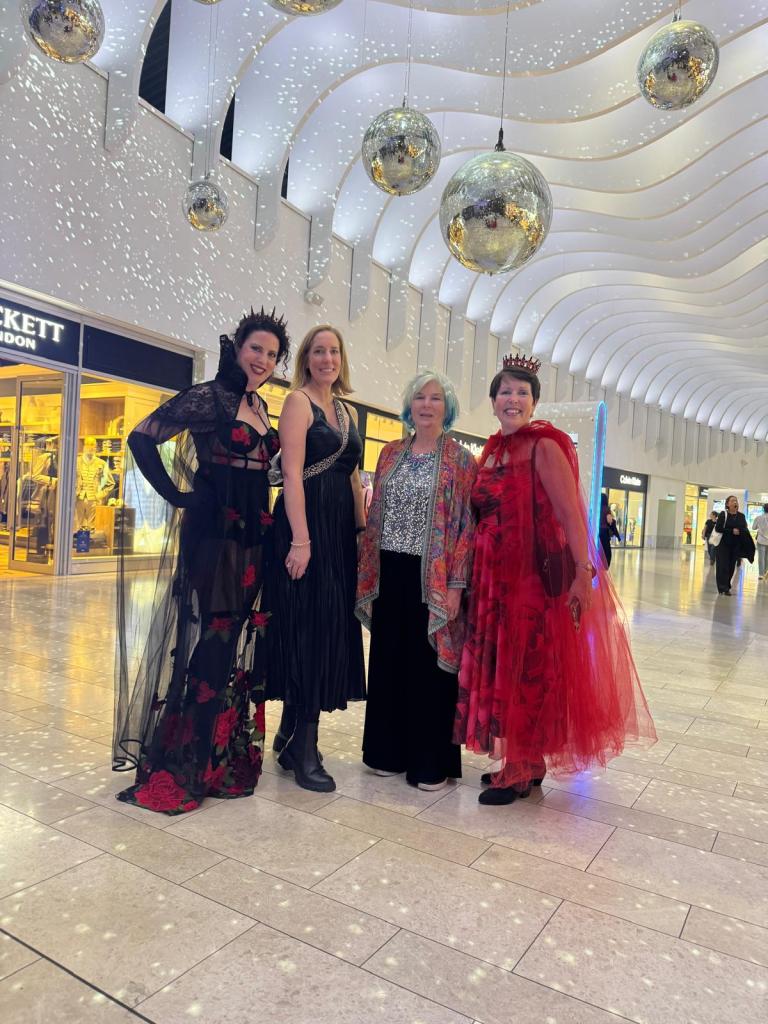
So many people came dressed as Mayhem characters. There was me in a nice colorful cocktail dress, all the way to the full Lady Mayhem complete with lace mask, crown, and red costume. In my party, the costumes were breathtaking. I felt a bit underdressed, but the show went on.
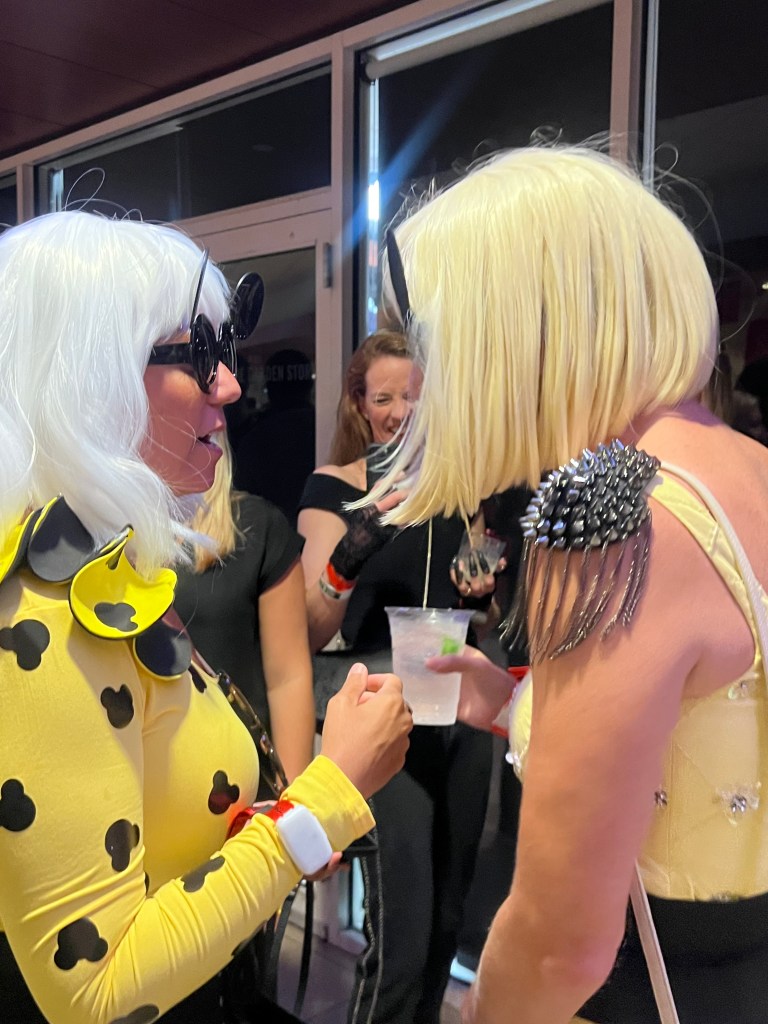
The audience was gracious and kind. It was delightful to meet so many enthusiastic fans who came to enjoy both the performance and the camaraderie. People stopped to admire costumes and introduce themselves. The atmosphere was electric.
I spotted Gaga’s parents in the audience. They must have been over the moon—awards and adulation: proof that those voice and piano lessons paid off.
Breaking My Own Rules
I loved the NYC concert so much that I made a rash decision: I would see it again in London. I broke my promise not to travel in 2025 and booked a flight. While the NYC concert was out of this world, somehow the London performance exceeded my expectations. The audience’s appreciation and Gaga’s acknowledgment and gratitude were palpable.
The London performance was at O2 Arena, where 20,000 people entered, reached their seats, experienced the magic of the performance, and then miraculously filed out onto the Tube without pushing, shoving, or even loud words. They were gentle and patient—even in the very crowded, shoulder-to-shoulder train cars. Twenty thousand people, some dressed in their finest Mayhem costumes, made their way home peacefully. We were a bit less conspicuous on the return trip than we had been heading to the venue.
Before the concert, I worried about wearing our regalia on the Tube and causing other riders consternation. But Londoners are tactful and uninvolved with the strangers with whom they share the evening commute. A few Gaga fans even cheered us on.
Having just seen the NYC show, I was prepared for excellence. But I wasn’t prepared for excellence multiplied. How can perfection improve? The London audience’s energy was supercharged. They cheered, sang, and hugged their neighbors. The costumes weren’t as over-the-top as in NYC, but some were incredible. This time, I made better plans and packed a crown, cape, and dress in my suitcase. I WAS Lady Mayhem! Although, looking at the pictures – maybe more like Little Red Riding Hood?
The Real Gift
After the performance ended and we returned to my friend’s house in London, I pondered what I’d just experienced. This was more than entertainment—it was an entire sensory event that spoke not only to my musical and dramatic interests but to my soul. To my sense of joy and gratitude.
To those of us who have seen many concerts: go to the new ones. To those who haven’t experienced such events: this is a cultural phenomenon worthy of the cost—even if you don’t dress up and look silly on the Tube or Metro.
I thank Lady Gaga for her generosity in sharing her talents with us and creating an impeccable experience worthy of causing me to break my travel moratorium. I thank my lovely and incredible daughter for inviting me and for such a memorable birthday gift.
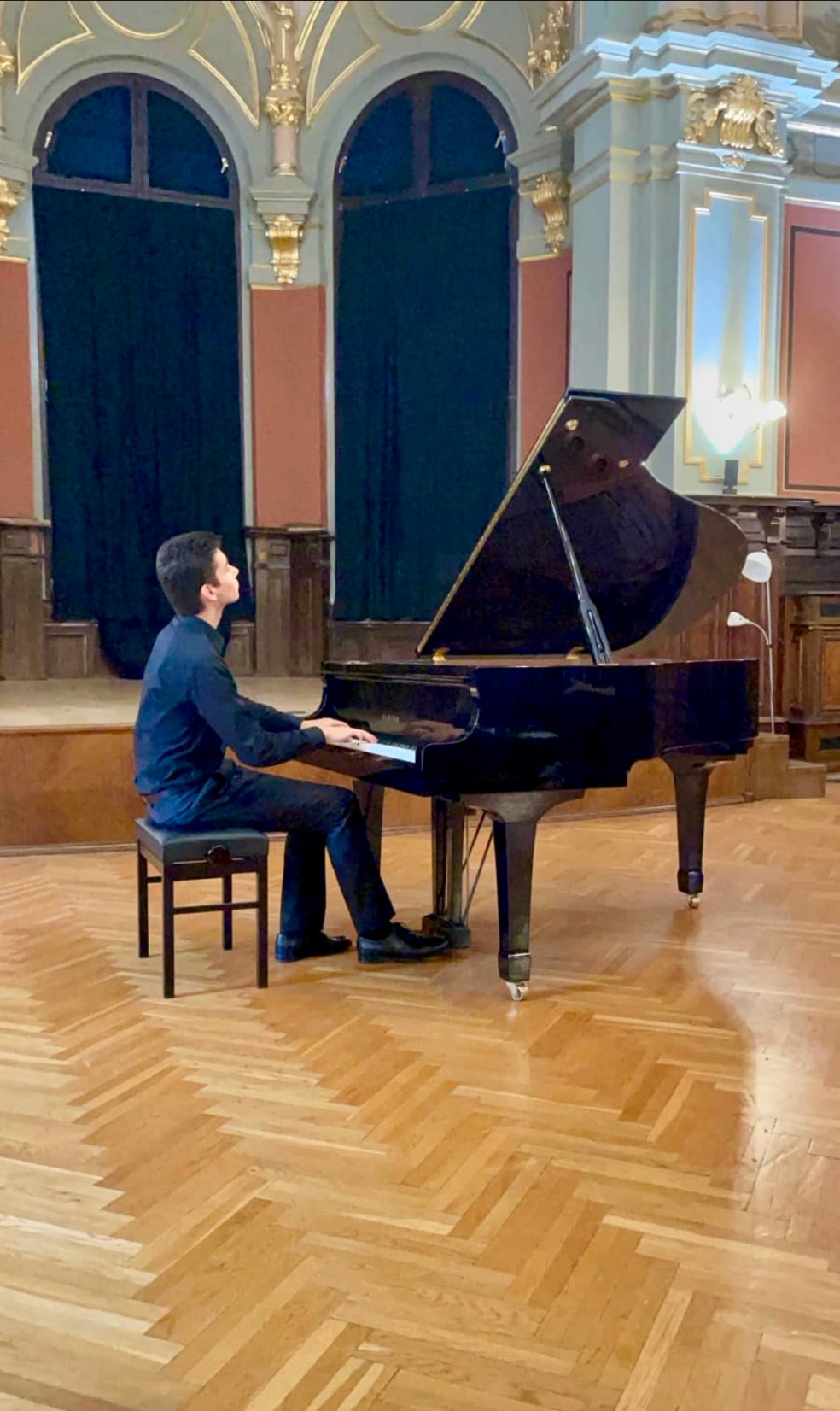
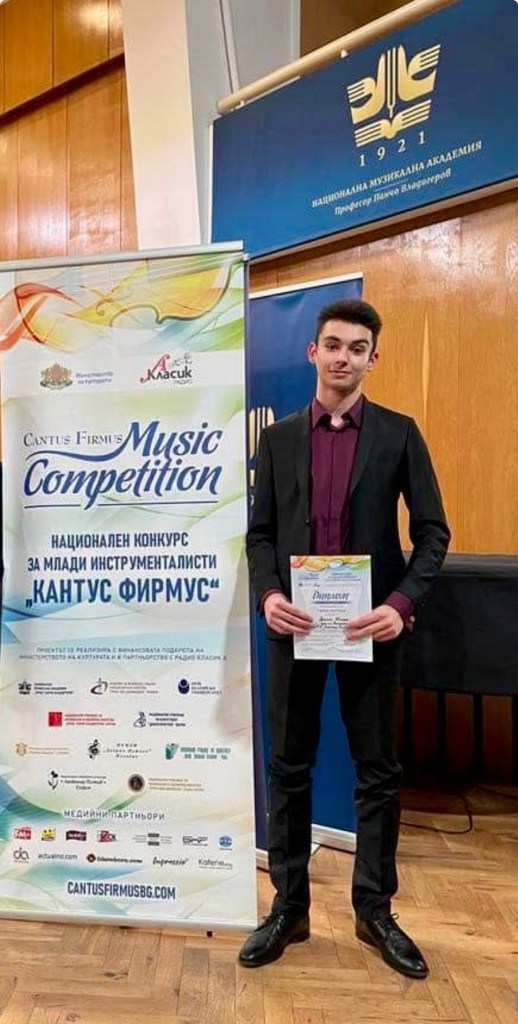
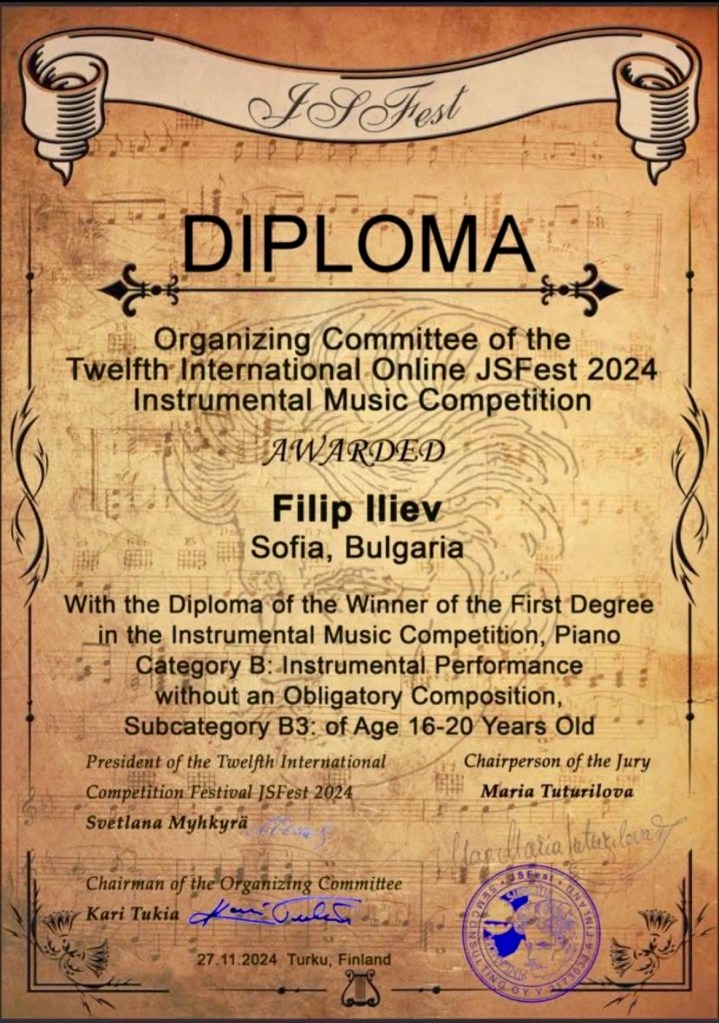
In the heart of Sofia, Bulgaria, a remarkable musical talent is blooming. At just 17 years old, Philip Iliev stands out as a classical pianist whose journey began with a simple moment of childhood curiosity – catching a glimpse of a piano on children’s television at age five. He has won over 30 national and international prizes for his virtuosity.
A Natural Calling
Unlike many prodigies pushed into music from infancy, Philip’s path to piano excellence was organic. His mother, Elena Kostova, waited to see genuine motivation before arranging his first lesson. That patience led to a serendipitous encounter with a top piano pedagogue, Angela Tosheva, in an unexpected setting – a garage studio workshop. By 2016, what started as childhood curiosity had crystallized into an unwavering calling.
Aviation Meets Artistry
Perhaps the most intriguing aspect of Philip’s background is his unique family heritage. Born to parents working in air traffic control, he inherited their exceptional attention to detail and capacity for total focus – crucial attributes for a classical pianist. While his father’s passion lies in aviation and the air, Philip found his calling in the grounded precision of piano keys. Though neither parent is a professional musician, their home resonated with the sounds of Italian opera and Mozart, creating a rich musical environment that nurtured his developing talent.
Technical Mastery
One cannot discuss Philip’s abilities without mentioning his remarkable physical gift – hands that can span 12 tones, reminiscent of Rachmaninov himself. While he’s quick to acknowledge that smaller hands can achieve excellence, these natural attributes give him additional versatility at the keyboard. His approach to practice is uncompromising and holistic – when tackling Chopin’s etudes, he aims to master all 24 (the entirety of the original 2 Opuses), elevating each composition to its highest potential. Of the Chopin etudes, his favorites are opus 25 no. 10 in B minor and opus 25 no. 12 in C minor. Philip stresses that “Music is a tapestry of tones, emotions, intentions, and mathematics. To create a pleasing, technically correct, and moving performance, every aspect of a composition must be assessed, studied, then played slowly at first, gaining momentum as confidence and understanding grow.”
Musical Philosophy
What sets Philip apart is not just his technical prowess but his mature approach to interpretation. He raises the spirit and soul of the music. He holds a particular fascination with Rachmaninov, noting how the composer’s relatively recent place in musical history allows for a more immediate connection to his intentions. “We can hear him,” Philip explains, suggesting a direct line of artistic interpretation that bridges the temporal gap. He also mentions that his hands have been compared to the composer.
His repertoire choices reflect a sophisticated understanding of classical music’s breadth. Rather than claiming a favorite composer, he allows his mood to guide him through the works of Brahms, Chopin, Liszt, and Bach. This emotional intelligence in his musical choices speaks to a maturity beyond his years.
He Studies at a High Level
Philip is a student at an immersive musical arts school in Sofia where academics blend with his art. “Truth be told, I prefer the music,” he shared. His school, National Music School, Lyubomir Pipkov , believes that “Music Comes First.” He currently stuies with Professor Alexander Vassilenko. In addition to academics and his school Philip takes masterclasses at almost every opportunity. In addition to his school, his motivation and curiosity has taken him on three occasions to Salzburg, Austria, where he attended the Mozarteum University, ClavoCologne Master Class, then returned to follow up classes with a particular professor that he found most inspiring.
The Competition Circuit
Since his first professional competition at age ten, Philip has been making waves in the classical music world. His competition preparations are methodical and thorough.He often performs in venues including the concert halls of the National School of Music and National Academy of Music in Sofia, and the Plovdiv School of Music’s concert hall. His recent recognition for interpreting the works of Lyubomir Pipkov, a leading Bulgarian composer, demonstrates his ability to master both traditional repertoire and more contemporary pieces. Listen to his latest competition performance of Liszt-Paganini Etude No 6
Looking Forward
As Philip continues to develop his artistry, his goals remain ambitious yet focused. He has immersed himself in the complete works of the great composers, having listened to thousands of hours of Chopin, alone. His systematic approach to mastering entire collections – from ballads and scherzos to sonatas and concertos – suggests a promising future in the international classical music scene. His goal for the 2025 season is to prepare for the Bulgarian competition circuit in the fall with future goals for international opportunities.
In an era where classical music sometimes struggles to find its place among younger generations, Philip Iliev represents a bright hope for the future. His combination of technical excellence, emotional maturity, and unwavering dedication marks him as a rising star in the classical piano world, one whose journey has only just begun.
The sound was big! This was not the symphonic music that I have listened to on my earPods or Sonos for the past 18 months – this was REAL! The sound of the brass section of the Loudoun Symphony Orchestra (LSO) filled the packed auditorium. It caught my attention and put a smile on my face behind my bedazzled mask. How wonderful, to finally hear real music performed by real people!
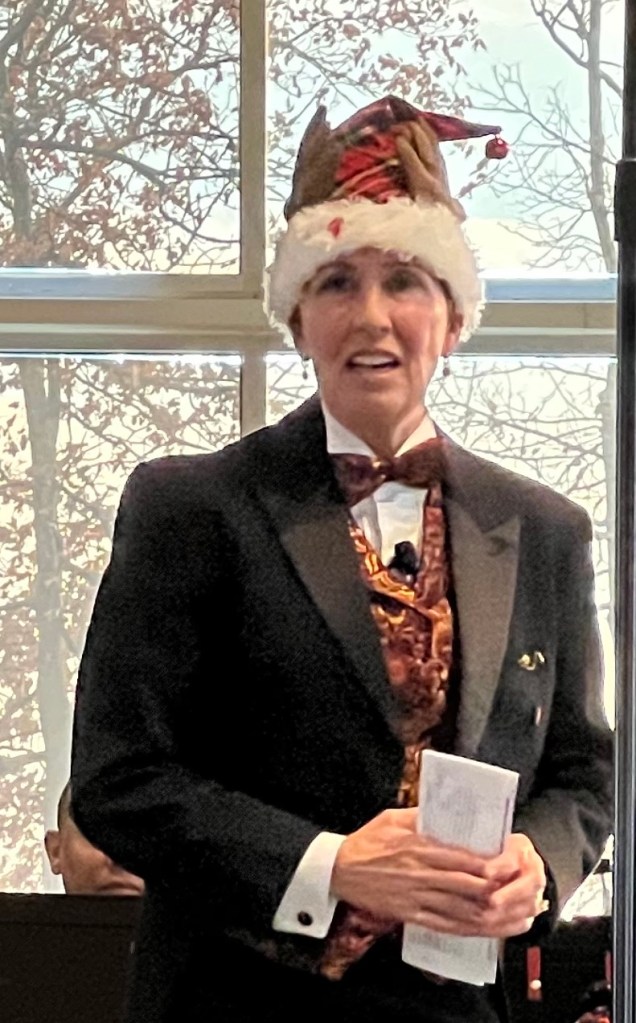
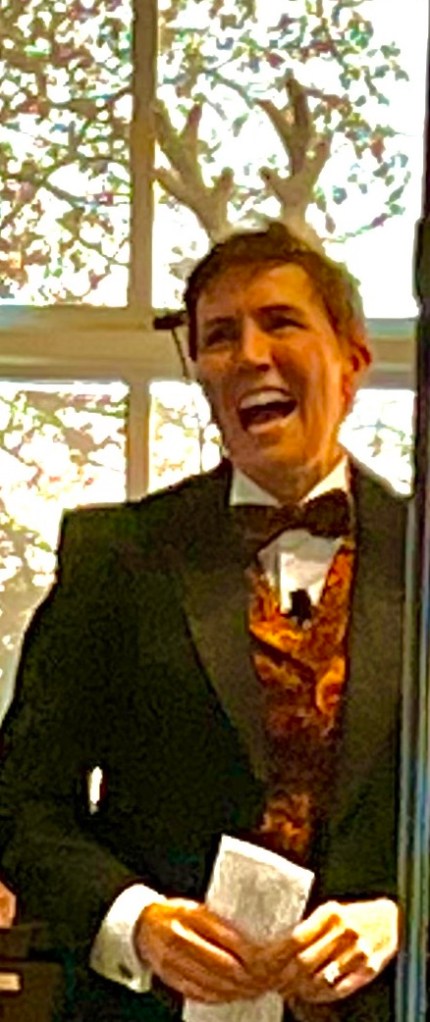
Wearing Santa hats, twinkling vests, and bows, the musicians captured the holiday spirit down to their light-wrapped music stands.
Maestra, Nancia DAlimonte, LSO Music Director and Conductor, lead the Symphony in a holiday program that was dramatic, funny, wistful, and energetic. From Grinchy to lyrical, the performance was polished to perfection and full with joy.
Nancia brought wisdom, cheer, and humor to every part of the program. She introduced the pieces with stories, wit, and context. Her impeccable timing and connection with the musicians was, of course, exceptional. Her head dresses changed from a festive holiday plaid Santa hat to crystalline antlers, to a shark head. She not only lead the orchestra, but she lead the audience to create the sound of the cracking whip in the closing piece, Sleigh Ride.
LSO brought Christmas music by train, with music from the Polar Express; by nightmare from Tim Burton’s Nightmare Before Christmas, Making Christmas; en pointe with excerpts from The Nutcracker; by sleigh; by reindeer; by wooden soldiers; from the movies with Miracle on 34th Street, Somewhere in My Memory from Home Alone, Where are You Christmas? From the Grinch.
Expressive Headdresses Enhanced the Joyful Spirit of the Concert
The one hour concert heralded the Christmas season and inspirited the audience to start making their lists and tying bows. Best of all – there was magnificent live music once again. Our souls have awakened. The concert was held in the sun-filled ST. David’s Episcopal Church in Ashburn, Virginia on Saturday, December 4.
To learn more about LSO and to see their 2022 performance schedule, please visit their website – https://www.loudounsymphony.org/
Born to a Jewish family in Germany, Mendelsohn was a child prodigy, much like Mozart had been 53 years earlier. Felix Mendelssohn was a composer, pianist, organist and conductor of the early Romantic period. His family converted from Judaism to Protestantism before his birth. The Mendelsohn family was in banking and left Hamburg in disguise in fear of French reprisal for the Mendelssohn bank‘s role in breaking Napoleon‘s Continental System blockade. While they moved to Berlin and lived there as Christians, antisemitic sentiment clouded his virtuosity. It was not until almost the mid-20th century that his music was reevaluated and finally appreciated.
When Felix was 12, he met the then over 70-year-old Johann Wolfgang von Goethe. Not one to be easily impressed, he declared “… but what your pupil already accomplishes, bears the same relation to the Mozart of that time that the cultivated talk of a grown-up person bears to the prattle of a child.”(Todd, R. Larry (2003). Mendelssohn – A Life in Music. Oxford; New York: Oxford University Press). Mendelssohn set a number of Goethe’s poems to music.
Felix Mendelssohn (PC: In the Public Domain)
I remember vividly my first time hearing Mendelssohn’s Italian Symphony. I was spellbound and wanted to hear and rehear every note.My conscious awakened. Thereafter, I sought out his music at every opportunity. I discovered his music to A Midsummer Night’s Dream which took my breath away (until the over-played “Wedding March”). What a shame that the “Wedding March” has become cliché. Is it the desire for the “magic” or a couple’s lack of creativity in selecting wedding music? Aside from his awe-inspiring compositions, he was a prolific artist.
The musicologist Greg Vitercik considers that, while “Mendelssohn’s music only rarely aspires to provoke”, the stylistic innovations evident from his earliest works solve some of the contradictions between classical forms and the sentiments of Romanticism.
Watercolors by Mendelssohn (PC: Public Domain)
Perhaps it is Mendelssohn’s non-provocative conciliatory style that gives the listener space to hear and appreciate.
Like so many musical geniuses, Mendelssohn did not live to be 40. He died of several strokes at 38. In his short life, he created some of the most beautiful and poignant music that touches the core of one’s heart.
Conducting Tchaikovsky’s Fourth Symphony. The power is palpable. Photo Credit: Toby Marquez
From the moment Conductor, Nancia D’Alimonte, walks toward the podium, there is a spark that ignites the atmosphere. There is energy and joyfulness. Her sincerity to the audience and empathy for the musicians is unquestionable. A master storyteller, she involves the audience by revealing some hidden secrets and giving intriguing history about each piece.
What separates Nancia from many other conductors? Unity. There is a rare connection between conductor and orchestra. She brings the best out of the orchestra at the precise moment of every note of every score. They create each other- it is a sense where each makes the other. It seems as if she “sends” the music to the musicians and they return it to the audience. “When I step on the podium, something unique happens,” she said. The music comes through her.
A unique connection with the musicians – Photo Credit: Toby Marquez
Nancia D’Ailmonte is conductor of the Loudoun Symphony Orchestra (LSO). She is also founder (2006) and conductor of the NIH Philharmonia. At Christmastime, Nancia conducts the beloved Kennedy Center Messiah Sing-Along. She is a busy person of great depth, with exceptional talents, a delightful sense of humor, and a variety of interests.
Nancia Leadsthe Messiah Sing-Along at Kennedy Center – photo courtesy of Nancia D’Alimonte
Conductor positions are tightly held and highly coveted. With approximately 1250 symphony orchestras in the United States, with anywhere from 60 – 115 musicians; there are approximately 90,000 musicians. There are only about 1300 conductors. A 2014 survey discovered that of the top 150 orchestras, there were only five conductors who are women.
Meticulous details – Photo Credit: Toby Marquez
In the November 10, 2019, conversation about the arts and law at the Kennedy Center, the late Supreme Court Justice, Ruth Bader Ginsburg, shared, “In my growing up years, I never saw a woman in a symphony orchestra.” She recounted the advent of the “dropped curtain” after a New York Times critic was certain that he could tell the difference between a male and female pianist only to get “it all mixed up” after he was blindfolded.
French conductor and composer, Nadia Boulanger (1987 – 1979), was asked in 1947, about being a woman and a conductor. She said, “I’ve been a woman for a little over 50 years and have gotten over my initial astonishment. As for conducting an orchestra, that’s a job where I don’t think sex plays much part.”
Conductors have their own styles. Some are flamboyant making the performance all about themselves; some are timekeepers, and some are dreamers. Then, there is the rare conductor who brings music to life. Nancia is that conductor. Having been principal horn for 12 years, she says of conductors’ styles, “I know, I was a player.” Hence, her empathy and consideration for the musicians.
Knowing the scarcity and competitiveness of conducting positions, Nancia chose to follow this path. She tells her incredible story, “When I had been principal horn for 12 years with the Oshawa Symphony Orchestra (outside of Toronto, Canada), our beloved conductor was stepping down. I was on the search committee. We viewed endless video tapes of less than stellar conducting examples – all by men. After every video, I would think to myself, “I could do much better than that!” Then came the final guest conducting experiences… one conductor led more with his non-baton hand (left), being quite flamboyant, and kept shouting to the orchestra, ‘play with me, you’re behind, you’re behind!’ ‘
‘During that time, I was teaching high school music and art. A friend told me about a conducting workshop with John Paynter, guest clinician. I hadn’t a clue who he was, but I went anyway. During his talk, I was captivated by his demeanor, his gentleness, his every word, and his examples of conducting! I elbowed my friend and kept saying, ‘I do that… I do that… I do that too!’ At the break, I could barely contain myself… I had to introduce myself to Mr. Paynter. He was just as genuine in person. He gave me his full attention; I was honored.’
‘I began taking private conducting lessons with John Paynter. I would fly to Chicago about every six weeks for private lessons with him. John was Director of Bands at Northwestern University; only the second director in 100 years.’
‘A friend once posed a hypothetical scenario to me… ‘Supposed the Boston Symphony calls you and says their principal horn player is out sick, and they need you as a sub. The repertoire is an all-John Williams concert. You have 24 hours to let them know. Then, another person of the Boston Symphony organization calls you, and says their conductor is out sick, and they need you as a guest conductor. The repertoire is an all-John Williams concert. You have 24 hours to let them know. Which do you choose?” This hypothetical scenario made me look at my musical career. I was at the top of my game with horn playing but continuing that for the next 30+ years wasn’t too enticing. After watching the uninspiring conducting videos and then meeting John Paynter who saw something in me to give me a few precious moments of his time, I made the decision to conduct.’
‘One final thing about this story – once I entered the Eastman School of Music to work on my Doctorate in Orchestral Conducting, I had the absolute pleasure to meet John Williams when he guest conducted the Eastman Philharmonia in an all-John Williams concert. I was able to share my story of how I decided to go into conducting with him… talk about full circle!”
With Mendi Rodan, Nancia’s Teacher at Eastman School of Music – Image Courtesy of Nancia D’AlimonteAn Alumnus of ESM – Nancia D’Alimonte, D.M.A. – Image courtesy of Nancia D’Alimonte
About her goals for LSO, Nancia explained, “I want to grow the orchestra and I want to make them irresistible.” She loves the Orchestra because she says, “The beauty of the Loudoun Symphony Orchestra is that they have good bones, they are super players, and have a positive attitude.” What about classical music not being terribly popular? “If you build it good . . . they will come,” is Nancia’s solution. She is on a mission to make a great orchestra exceptional.
Nancia described her relationship with members of the orchestra as, “Always one of mutual respect. I do not follow the tradition of the dictator on the podium. Because I come from within the orchestra, the musicians know that I know their position, thus there is an appreciation from them.”
Among the roles of the conductor is designing the program. Nancia’s thoughtfulness and depth of musical knowledge give her the scope with which to make wise choices. Her goal is to please the audience and encourage and grow the musicians. Her musical selections and programming take into consideration the players’ strengths and the total number of players. She explained, “Some compositions work for 60-65 members while others like Mahler need over 100.” She explained that undertaking a composition designed for a very large orchestra and imposing it on a smaller one will not produce success of the composition or the musicians. She selects music to showcase the strengths of the performers which will ultimately please the audience and encourage the individual players.
Impeccable Style – Images courtesy of Nancia D’Alimmonte
Nancia has mastered her conducting image. She explained, “My conducting ‘costume’ is my own creation. After some experimenting, I decided on the tea-length skirt with satin stripes on the sides and a feminine slit, tails, and a beautiful brocade vest and matching bow tie. I want to be impeccable. Appearance is very important in this male-dominated environment.”
“The connection to my “instrument” (the orchestra) are my batons,” says Nancia. She has six custom-made batons by Tate Newland. Nancia says, “He is the best, in my opinion. I have been working with him for almost 30 years – I have known him for longer than I know my husband.” Nancia explained that the white shaft is made of maple wood. The handle must be large enough to fit in her hand and hers are of interesting and exotic woods including cocobolo, 100-year-old cherry, curly maple, rosewood, and even a champagne cork (for fun). The baton must be perfectly balanced at the joint where the shaft meets the handle. She always brings two batons with her.
Attention For Every Musician – Image courtesy of Nancia D’Alimonte
Asked whether she prefers to conduct with a score or from memory,” Nancia explained, “Conducting without a score… this phenomenon came about from Arturo Toscanini, famed Italian conductor (early-mid 20th C.) who conducted at La Scala in Milan, the NY Philharmonic, and later led the NBC radio orchestra. He had an impeccable ear and began as a cellist. One thing lacking for him was good eyesight… he was farsighted. In order for Toscanini to see a score, he had to be bent over, with his face about 6 inches from the score… that is no way to run a rehearsal! He could memorize really well, out of necessity, he studied and memorized all his scores. It’s an impressive feat, to be sure, and made for intimidating rehearsals (he knew every part and would stare down musicians when asking them to play a passage – nerve-racking). While some conductors memorize today, it’s not because they have bad vision, it’s a parlor trick… it is not a requirement.’
‘I use a score as I’m not sure I would have enough time to properly memorize my scores. I like to be able to immediately help a musician in the event they miss something.’
‘The next time you see a conductor not using a score, watch his/her face and see where their eyes are directed. Usually, there is no connection to the orchestra… and being disconnected is not a good thing… the musicians will actually lead the conductor through the performance.”
Aside from conducting, Nancia’s friends know her for her sublime “refreshments.” “My martinis are legendary. My Negroni is renowned, you should try one sometime” she said.
Taste, Presentation, and Artistry: Lemon Drop Martini; a proper Manhattan; just a simple spread; Making Limoncello – Images courtesy of Nancia D’Alimonte
A self-professed “foodie,” Nancia likes to keep her knives sharp even cooking at home. She once made butter from scratch for a special dinner. As in her orchestral conducting, she is precise. Her planning and presentation are meticulous.
Mouthwatering Creations by Nancia – Images courtesy of Nancia D’Alimonte
A woman of great passions, Nancia’s world is extensive. From her legendary Negroni martini, to her superb shrimp (and her knives are precisely sharp), to her underwater scuba adventures (where she says is her second favorite place on earth), to her world travels, and of course, to her music, Nancia is infinitely curious and devoted to impeccable excellence. She shares her life and passions with her husband, Giancarlo.
Travel Experiences and Adventures – Images courtesy of Nancia D’Alimonte
Nancia’s “second favorite place on earth” – Images courtesy of Nancia D’Alimonte
Nancia with her husband, Giancarlo D’Alimonte – images courtesy of Nancia D’Alimonte
What kind of music does a conductor listen to when not working? “I love a wide variety of music. I love jazz, New Age, World Music, and of course the classics.” She enjoys Brahms, Bartok, and Mozart. The Rite of Spring by Igor Stravinsky and Mahler’s Symphony No. 1 are among her favorites.
Nancia – Authentic; Unstoppable.
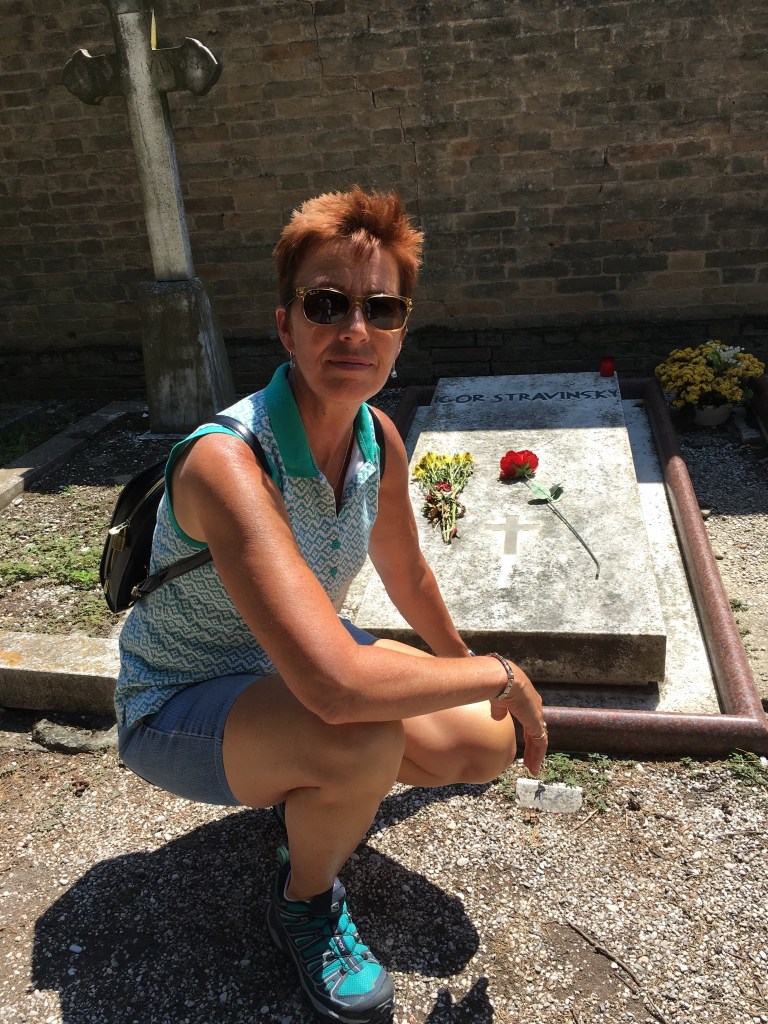
“Humbled to be at the foot of Igor Stravinsky’s grave – Venice – Image courtesy of Nancia D’Alimonte
Imagine being greeted by a sophisticated musical composition by your children! That is exactly what happened when 13-year-old Sofia and 10-year-old Saul played their newly composed music for violin and cello.
World Premier Composition for S 8 Video Courtesy of Alan Saucedo
Of their first composition together, Sofia said, “We wanted to surprise our parents. I composed the melody and Saul helped arrange it for cello.” This is what the Saucedo children do in their spare time between school work, music lessons in violin, cello, and piano, and working toward their Second Degree Taekwondo Black Belts.
Their musical family thrives on love, beautiful music, tasty meals and delicious cakes. The Saucedos, father, Alan, is a PhD cellist, mother, Miho Sato, is a pianist and singer who works in music therapy and teaches voice and piano, the children, Saul and Sofia, study under their parents’ and aunt, Cynthia’s tutelage. Alan loves to prepare meals and bake amazing cakes.
What did their parents think about their composition? “I liked it very much! It was very touching and beautiful – look what they did for us,” said Miho. Dad, Alan said, “ I loved it! I encouraged the children to write it all down before it disappeared. I videoed it several times until they were happy with the video.”
I asked Saul to tell me about his arranging process. He told me, “I listened to Sophia’s melody. Then, I experimented with notes and phrases until we liked the sound.” And that is how the composition came to life!
1/4th Cello and full size cello – Sweet Music! Video Courtesy of Alan Saucedo
“Is it difficult learning from your parents?” I asked Saul and Sofia. “It’s fun! We understand each other and we like to learn,” Said Sofia. Dad, chimed in, “There have been some tears, but at this stage, they have the tools with which to problem solve and teaching is more guidance and skill honing. The lessons address specific things to make the music beautiful and expressive.”
Sofia and Saul both take piano in addition to their individual string instruments, they volunteered that while they love the piano as well as their strings, that strings are their favorites. Mom teaches them piano. Alan teaches cello. Their aunt, Alan’s sister, Cynthia, a concert violinist, teaches violin.
Saul plays a ¼ cello while Sofia plays a full sized violin. Saul started with a 1/10th cello at 4 years old and Sofia began with a 1/8th sized violin at four and a half years old.
The Entire Family – Pachelbel’s Cannon in D MIho on Piano, Cynthia on Violin, Sofia on Violin, Saul on Cello, Alan on Cello Video Courtesy of Alan Saucedo
The entire family creates beautiful music together. Alan, is always researching interesting music from around the world, and likes to introduce Mexican and Spanish classical works. Miho majored in voice from an oratorio perspective as well as piano. One of her favorite songs is Schumann’s “Lotus Flower.”
What are the children’s hobbies besides music and martial arts? Art – drawing and collages. They are precise in everything that they do. It goes without saying that they excel in their academics as much as they do in their other endeavors. They attend public school where Saul is in fourth grade and Sofia is in seventh grade. Their favorite subjects are science, math, history, and social studies.
Beautiful Birthday Cards Created by Saul (left) and Sofia (R) for Miho’s Birthday
The day that we spoke, was Miho’s birthday. Alan had a fun meal planned with barbecue ribs and a chocolate flan cake, “a Mexican chocolate cake.” Saul and Sofia like ice cream. Saul likes mango ice cream and chocolate mint chip. Sofia likes cookies and cream, vanilla, or strawberry. With so many wonderful flavors, it is hard to choose just one!
Saul, S and Alanin concertMiho in concertSofia Image Courtesy of Alan Saucedo
One parting question for Sofia and Saul – how much practicing do they do? They replied that they practice and study as much as is necessary to meet individual goals. Sometimes 20 minutes, other times, an one hour. They are goals centered and know what they want to accomplish.
Sofia and Saul call themselves, “S 8”
I hope that you love and enjoy their wonderful music!












































 Good News. Reviews. Events.