Christmas Arrived in Song:

The Kennedy Center Messiah Sing-Along Experience
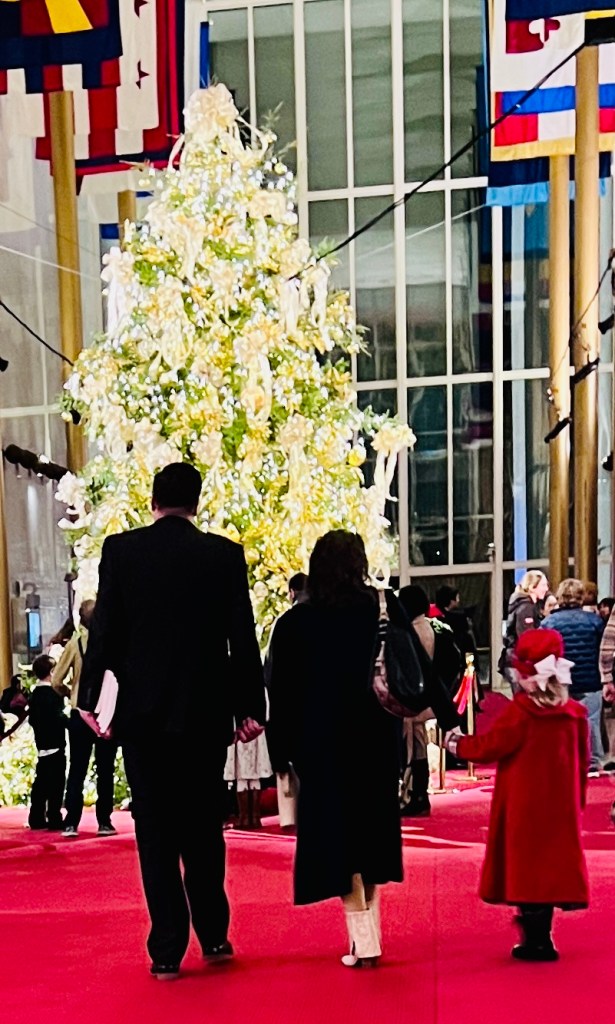
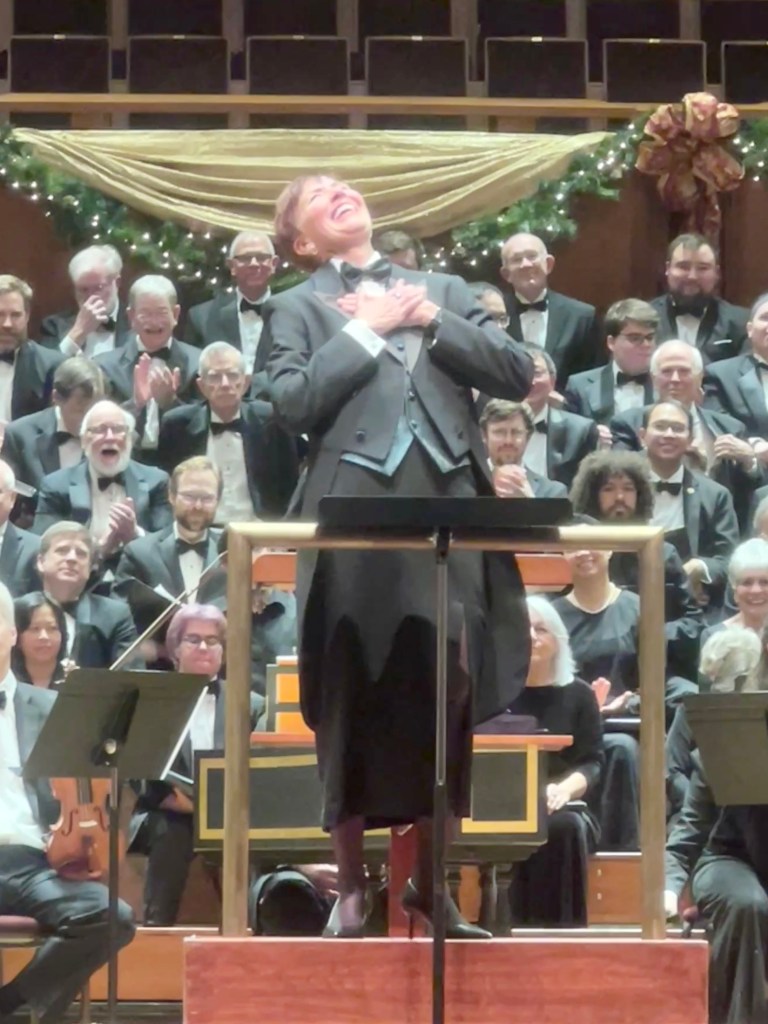
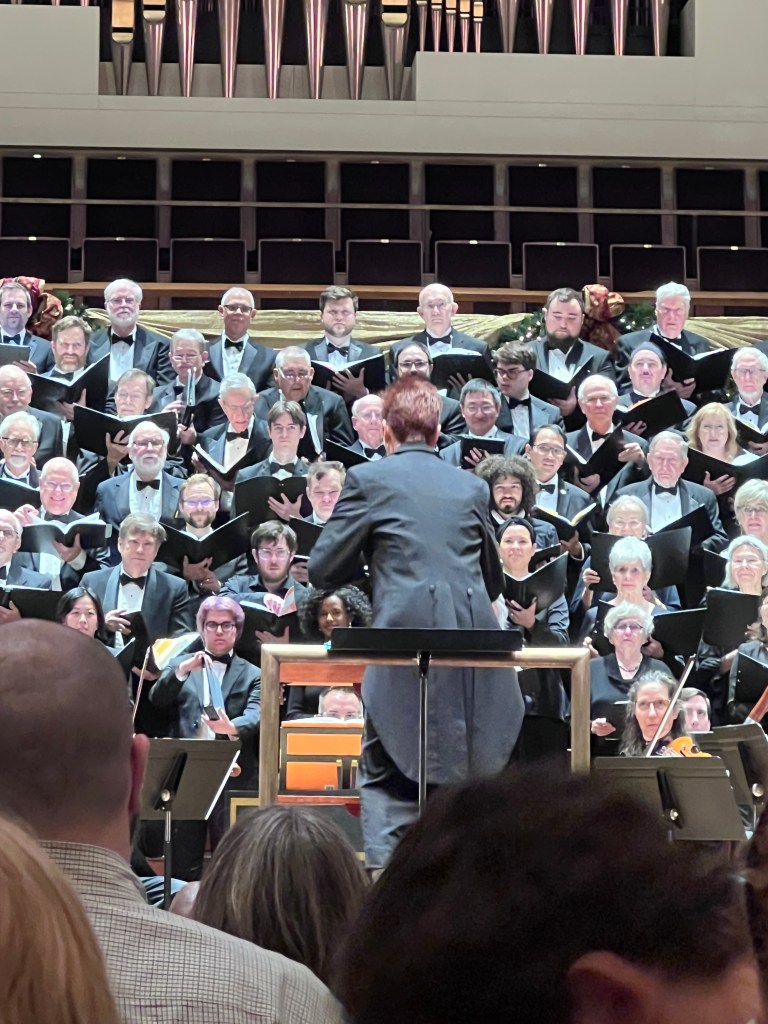
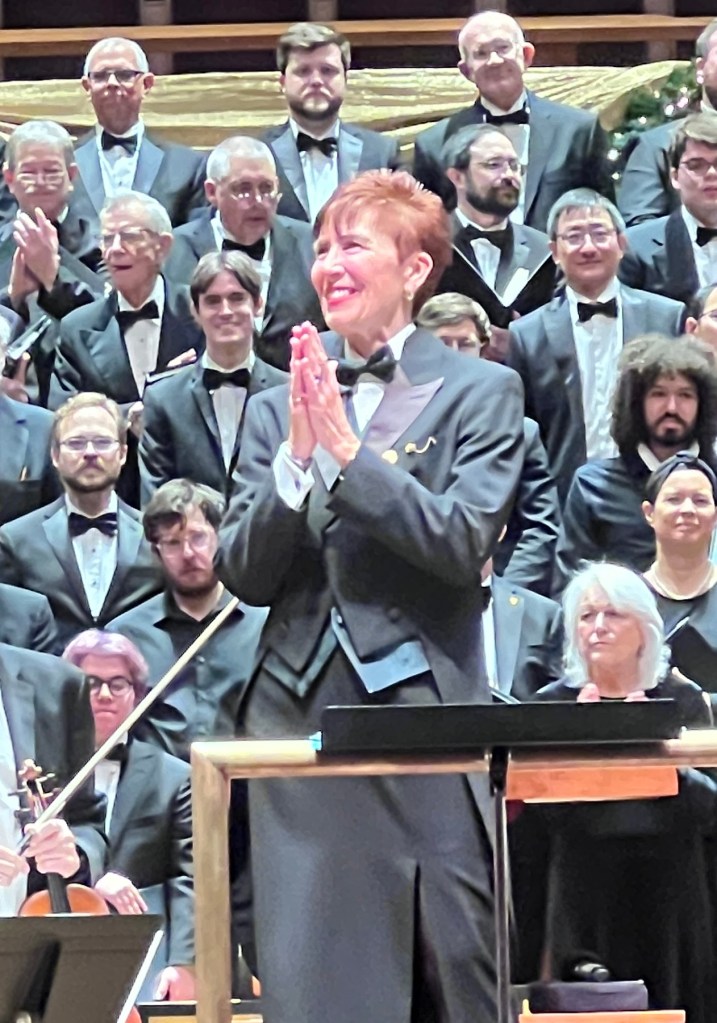
There is a moment every December when Christmas arrives for me. This year, it was during the 53rd Annual Kennedy Center Messiah Sing-Along, drawn from Handel’s oratorio and brought to life under the baton of Dr. Nancia D’Alimonte, Music Director.
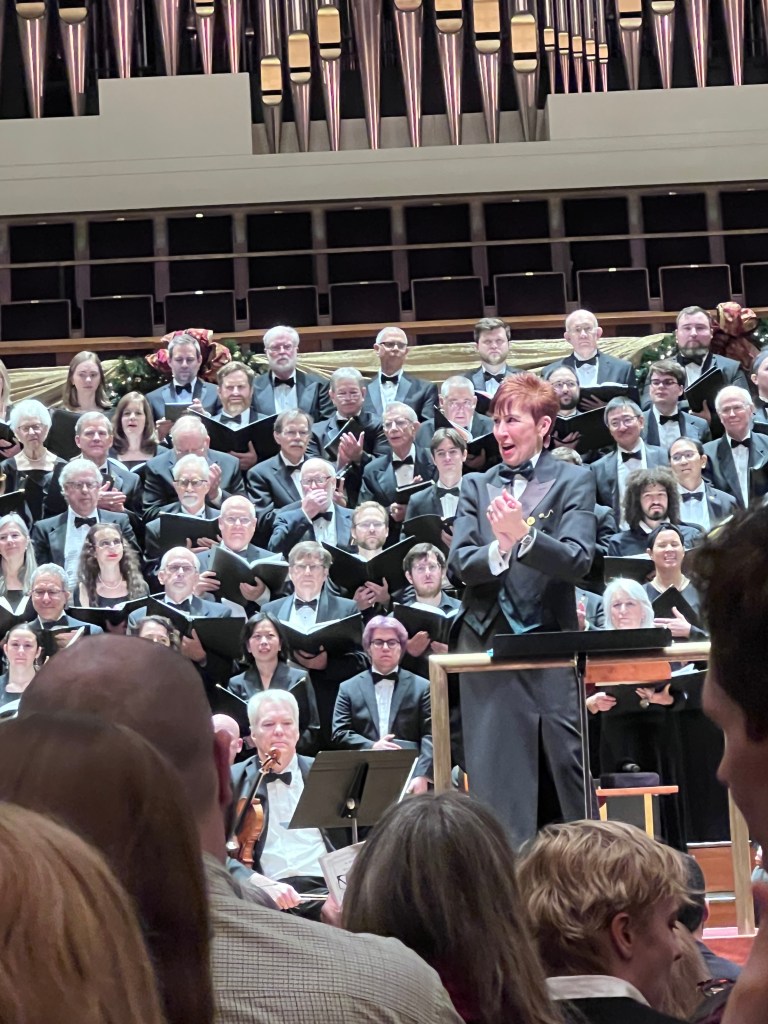
Music Director, Nancia D’Alimonte, delights in performer excellence and audience participation

Nancia’s conducting felt both deeply personal and profoundly communal. She engaged each musician with intention, while simultaneously holding the entire hall in shared purpose. Four choirs, including members of the New Dominion Chorale, Northern Virginia Community Chorus, Thomas Circle Singers, and Vocal Arts of Fairfax joined forces with the Kennedy Center Opera House Orchestra, and a hall of approximately 2,500 singing audience participants.

Nancia wrote on her social media, “Last evening, I conducted the Messiah Sing-Along at the Kennedy Center to a very enthusiastic audience who sang their hearts out! It was an opportunity to bring joy to so many who really needed it . . . and that is what happened – a joyful event! “

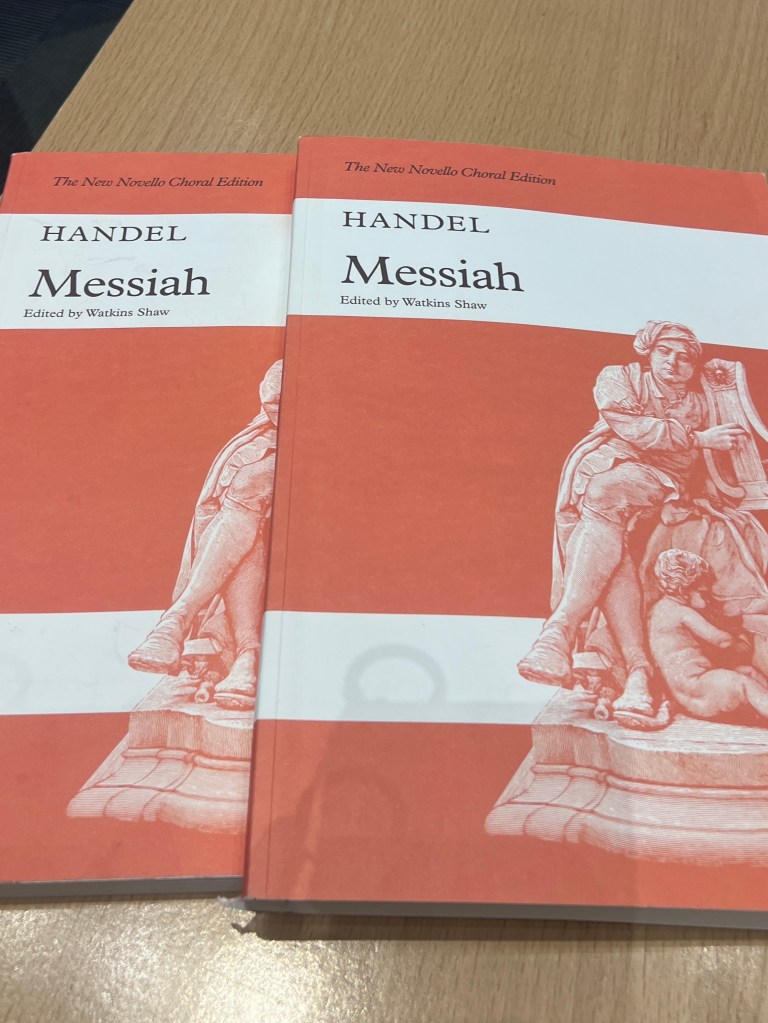
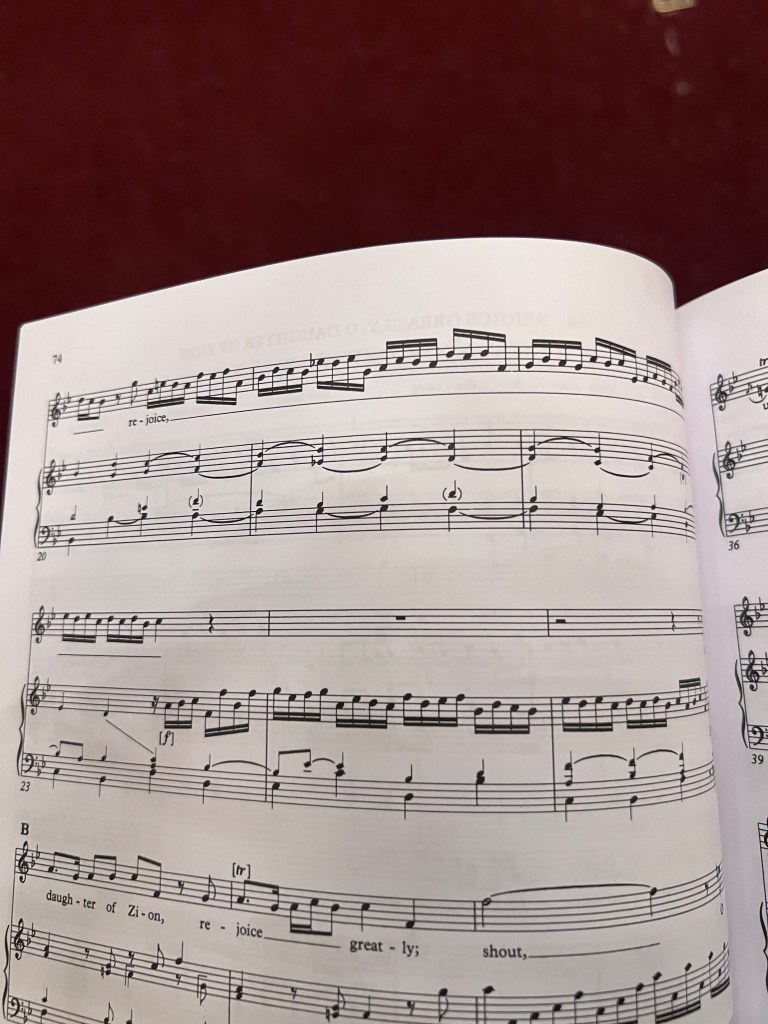
This year, I managed to keep my place in the score and sing my alto line. I was certainly not perfect, but I managed to stay faithfully focused. Some passages live in memory. Others still required careful reading and courage. There are always fewer altos than sopranos at a sing-along. There were moments when the alto came in alone. I hoped to hear another alto nearby but trusted the line. The sopranos around us were extraordinary. Their voices soared, bright and fearless. I wondered what it might feel like to have that vocal ability.

Music notation at first felt like a foreign language:  dots, lines, measures, rests (I do appreciate consecutive rests). Eventually, I stepped into the music.

My husband sang tenor, as did the gentleman behind us, who began beautifully and gradually shifted into something closer to projection than tone. Afterward, my husband and I shared a laugh about our own voices. My second alto is lower than his tenor. Humor is a necessary part of communal singing. Everyone offers what they have, and somehow it makes a joyful sound.

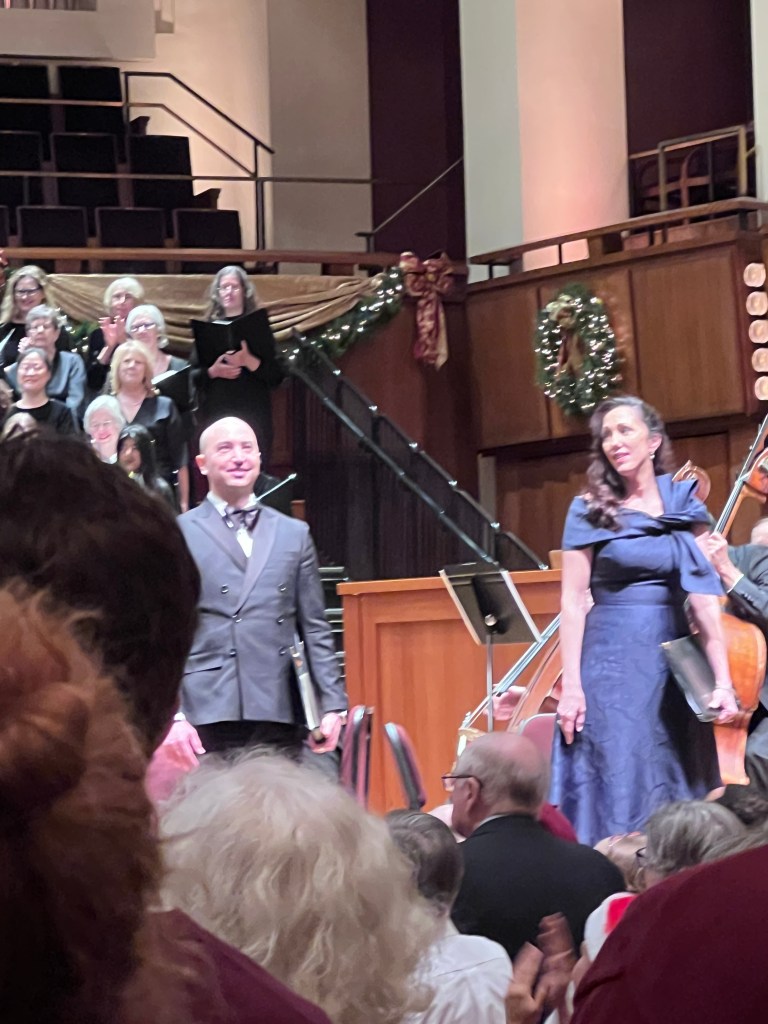
The soloists were exceptional partners in Nancia’s musical conversation. Each soloist demonstrated artistry anchored in trust. They met Nancia with intelligence, precision, and warmth. Their collaboration lifted us all.

Nancia’s personal journey is remarkable. She holds a Doctor of Musical Arts in Orchestral Conducting from the Eastman School of Music, where she studied with Mendi Rodan. She also holds a Master of Music in horn performance from Ithaca College and studied horn at the Royal Flemish Music Conservatory in Brussels, Belgium. She was a professional horn player with the Oshawa Symphony in Canada.

Nancia recently joined the Board of Directors of the John S. Mulholland Family Foundation, supporting food assistance for the working poor of Washington, D.C. She and her husband, Giancarlo, live in Falls Church. They are avid scuba divers, travelers, cooks, and devoted companions to their delightful moyen poodle, Lupo.

Credentials are not what made the evening extraordinary.
What was most moving was the text. It was the Biblical narrative of promise, struggle, prophecy, and hope that was sung not as performance, but as recognition. Thousands of voices carried it forward: steady, reverent, and joyful.

This is when Christmas arrived for me. It arrived not through decorations or ritual, but through music, meaning, and shared breath.

We left the hall grateful, lifted, and were reminded that Handel still takes us to great heights then gently brings us home in celebration of the meaning of the season.
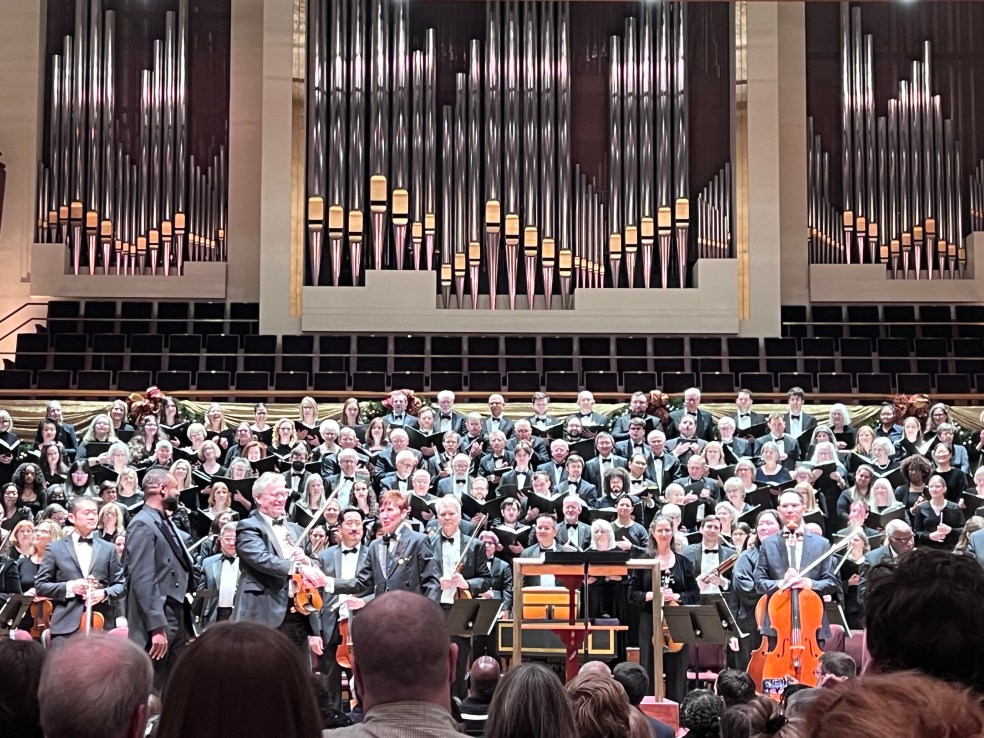
Conductor, Nancia D’Alimonte congratulates Concertmaster, Oleg Rylatko

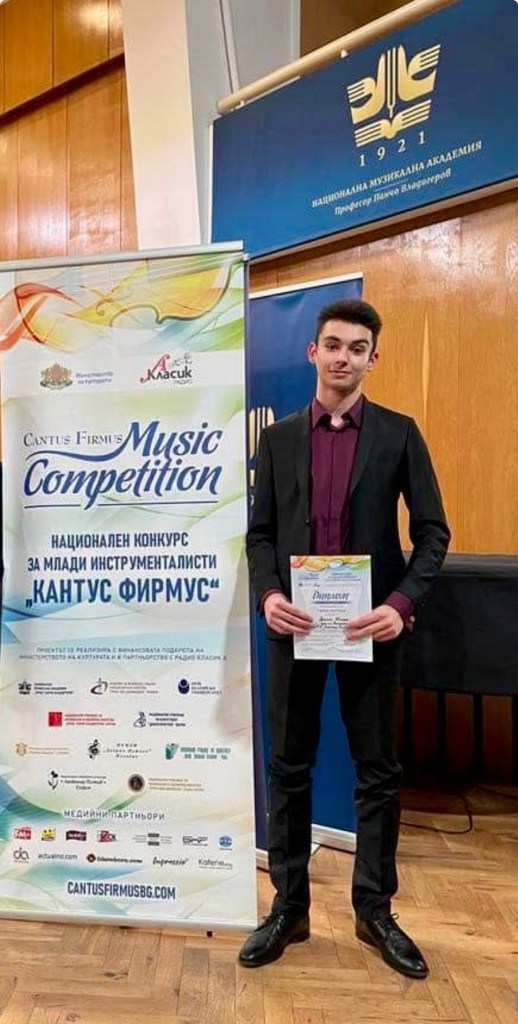
The Rising Star of Classical Piano: Philip Iliev

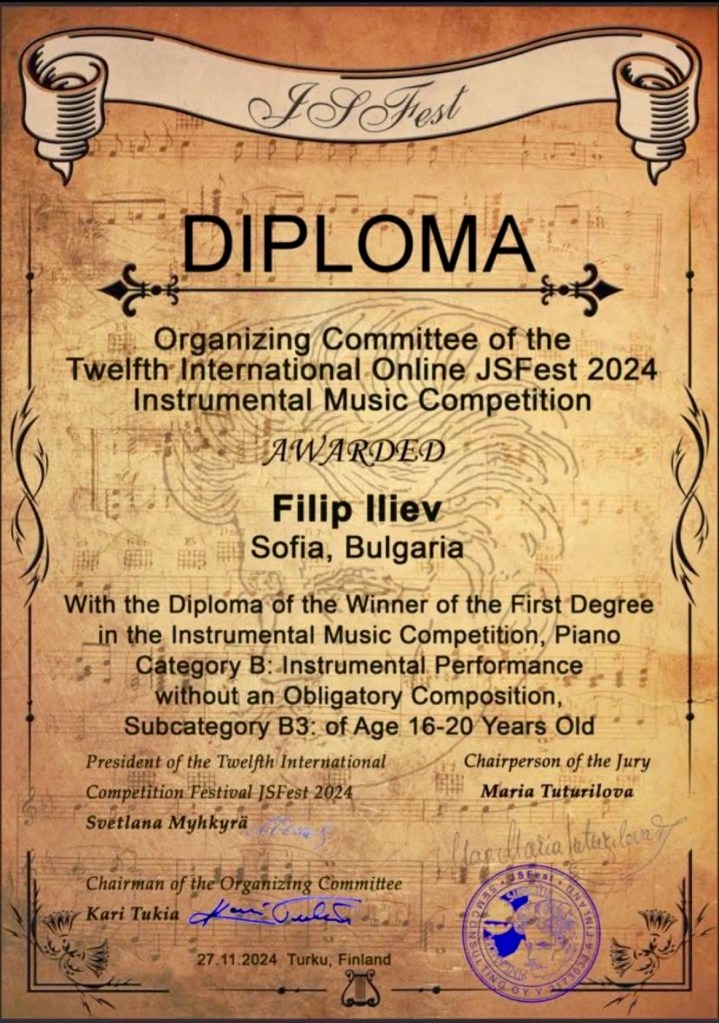
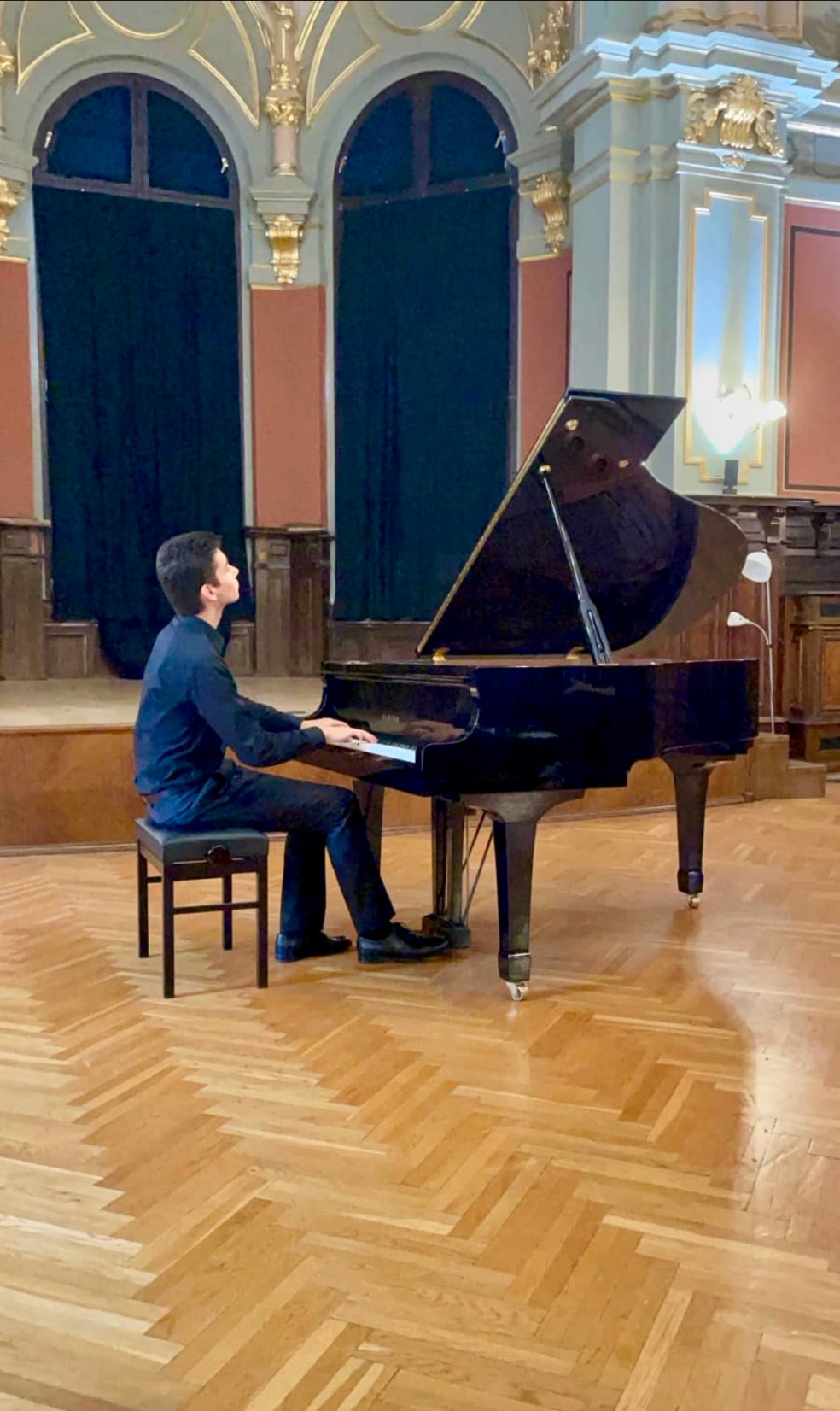
In the heart of Sofia, Bulgaria, a remarkable musical talent is blooming. At just 17 years old, Philip Iliev stands out as a classical pianist whose journey began with a simple moment of childhood curiosity – catching a glimpse of a piano on children’s television at age five. He has won over 30 national and international prizes for his virtuosity.

A Natural Calling

Unlike many prodigies pushed into music from infancy, Philip’s path to piano excellence was organic. His mother, Elena Kostova, waited to see genuine motivation before arranging his first lesson. That patience led to a serendipitous encounter with a top piano pedagogue, Angela Tosheva, in an unexpected setting – a garage studio workshop. By 2016, what started as childhood curiosity had crystallized into an unwavering calling.

Aviation Meets Artistry

Perhaps the most intriguing aspect of Philip’s background is his unique family heritage. Born to parents working in air traffic control, he inherited their exceptional attention to detail and capacity for total focus – crucial attributes for a classical pianist. While his father’s passion lies in aviation and the air, Philip found his calling in the grounded precision of piano keys. Though neither parent is a professional musician, their home resonated with the sounds of Italian opera and Mozart, creating a rich musical environment that nurtured his developing talent.

Technical Mastery

One cannot discuss Philip’s abilities without mentioning his remarkable physical gift – hands that can span 12 tones, reminiscent of Rachmaninov himself. While he’s quick to acknowledge that smaller hands can achieve excellence, these natural attributes give him additional versatility at the keyboard. His approach to practice is uncompromising and holistic – when tackling Chopin’s etudes, he aims to master all 24 (the entirety of the original 2 Opuses), elevating each composition to its highest potential. Of the Chopin etudes, his favorites are opus 25 no. 10 in B minor and opus 25 no. 12 in C minor. Philip stresses that “Music is a tapestry of tones, emotions, intentions, and mathematics. To create a pleasing, technically correct, and moving performance, every aspect of a composition must be assessed, studied, then played slowly at first, gaining momentum as confidence and understanding grow.”

Musical Philosophy

What sets Philip apart is not just his technical prowess but his mature approach to interpretation. He raises the spirit and soul of the music. He holds a particular fascination with Rachmaninov, noting how the composer’s relatively recent place in musical history allows for a more immediate connection to his intentions. “We can hear him,” Philip explains, suggesting a direct line of artistic interpretation that bridges the temporal gap. He also mentions that his hands have been compared to the composer.

His repertoire choices reflect a sophisticated understanding of classical music’s breadth. Rather than claiming a favorite composer, he allows his mood to guide him through the works of Brahms, Chopin, Liszt, and Bach. This emotional intelligence in his musical choices speaks to a maturity beyond his years.

He Studies at a High Level

Philip is a student at an immersive musical arts school in Sofia where academics blend with his art. “Truth be told, I prefer the music,” he shared. His school, National Music School, Lyubomir Pipkov  , believes that “Music Comes First.” He currently stuies with Professor Alexander Vassilenko.  In addition to academics and his school Philip takes masterclasses at almost every opportunity. In addition to his school, his motivation and curiosity has taken him on three occasions to Salzburg, Austria, where  he attended the Mozarteum University, ClavoCologne Master Class, then returned to follow up classes with a particular professor that he found most  inspiring.

The Competition Circuit

Since his first professional competition at age ten, Philip has been making waves in the classical music world. His competition preparations are methodical and thorough.He  often performs in venues including the concert halls of the National School of Music and National Academy of Music in Sofia, and the Plovdiv School of Music’s concert hall. His recent recognition for interpreting the works of Lyubomir Pipkov, a leading Bulgarian composer, demonstrates his ability to master both traditional repertoire and more contemporary pieces. Listen to his latest competition performance of Liszt-Paganini Etude No 6

Looking Forward

As Philip continues to develop his artistry, his goals remain ambitious yet focused. He has immersed himself in the complete works of the great composers, having listened to thousands of hours of Chopin, alone. His systematic approach to mastering entire collections – from ballads and scherzos to sonatas and concertos – suggests a promising future in the international classical music scene. His goal for the 2025 season is to prepare for the Bulgarian competition circuit in the fall with future goals for international opportunities.

In an era where classical music sometimes struggles to find its place among younger generations, Philip Iliev represents a bright hope for the future. His combination of technical excellence, emotional maturity, and unwavering dedication marks him as a rising star in the classical piano world, one whose journey has only just begun.